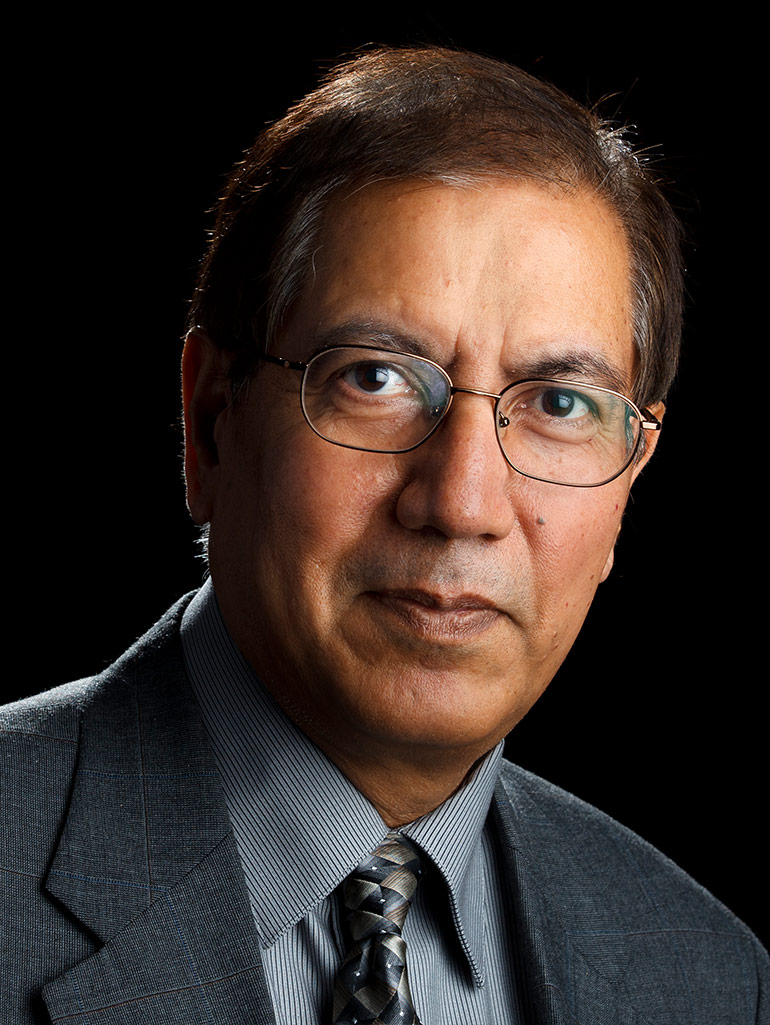
Amos H. C. Ng is a Professor at the School of Engineering Science, University of Skövde, specializing in simulation-based optimization and Industry 4.0 technologies. His research bridges production engineering with human-robot collaboration, ergonomics evaluation, and cloud-based cyber-physical systems for manufacturing efficiency. Key Affiliations: University of Skövde (School of Engineering Science), Uppsala University (Industrial Engineering and Management) Research Themes: Multi-objective optimization, Digital Twin frameworks, Human-centric production systems, Reconfigurable manufacturing, Throughput bottleneck analysis Projects: ACCURATE 4.0 (Knowledge Foundation), VF-KDO (Virtual Factories with Knowledge-Driven Optimization), EWASS (Wire Harness Assembly Optimization) His recent publications demonstrate expertise in applying evolutionary algorithms, machine learning models, and digital human modeling tools to solve complex manufacturing problems ranging from crankshaft machining to wood supply chain robustness. Current work integrates motion capture technology with DHM tools for objective ergonomic assessments in assembly stations. Amos collaborates extensively with industrial partners like Volvo Penta and academic institutions, utilizing simulation-based approaches to enhance decision-making in production systems. His methodological focus includes non-dominated sorting genetic algorithms, surrogate modeling, and parallel computing architectures for optimization tasks.
Prof. Yossi Bukchin is a Professor in the Department of Industrial Engineering at The Iby and Aladar Fleischman Faculty of Engineering, Tel Aviv University. His research focuses on manufacturing systems, production engineering, and operations research with particular expertise in assembly line design and optimization. His primary research interests include: Assembly systems design Assembly line balancing Facility design Operational scheduling Human factors engineering Warehouse and storage systems Prof. Bukchin's recent work demonstrates a strong focus on puzzle-based storage systems, assembly line optimization, and operations management. His research spans both theoretical developments in scheduling algorithms and practical applications in manufacturing and logistics systems. He has made significant contributions to the understanding of Bucket Brigade systems, puzzle-based storage optimization, and assembly line balancing with mixed-model production. His scholarly output shows evolution from early work on robotic assembly lines to contemporary research on machine learning applications in warehouse systems and advanced optimization techniques for modern manufacturing challenges. Contact information: Email: bukchin@tau.ac.il Phone: 03-6407941 Fax: 03-6407669 Office: Wolfson - Engineering
Prof. Tal Raviv is an Associate Professor in the Department of Industrial Engineering at the Iby and Aladar Fleischman Faculty of Engineering, Tel Aviv University. He serves as head of the Shlomo Shmeltzer Institute for Smart Transportation and co-heads the Transportation and Logistics Lab. His educational background includes: BA in Economics from Tel Aviv University (1993) MBA from Recanati School of Business, Tel Aviv University (1997) PhD in Operations Research from Technion (2003) Postdoctoral fellowship at Sauder School of Business, University of British Columbia (2004-2006) Prof. Raviv's research focuses on operations research with emphasis on transportation and logistics, particularly smart transportation and sustainable logistics. His work develops optimization models for bike-sharing systems, vehicle routing, and urban mobility to enhance efficiency and user satisfaction while addressing sustainability challenges. Recent publications reveal a strong trend in shared mobility systems optimization, including inventory control and repositioning strategies for bike-sharing networks, analysis of user dissatisfaction due to unusable vehicles, and flexible delivery solutions using parcel lockers. His research bridges theoretical operations research with practical industry applications in transportation networks. Prof. Raviv has advised startup companies, applying his expertise to real-world business challenges. While specific grant details are not provided, his work demonstrates significant industry relevance through practical implementations. He leads the Transportation and Logistics Lab and the Shlomo Shmeltzer Institute for Smart Transportation, where his team develops innovative solutions for modern transportation challenges including data-driven routing, sustainable logistics, and smart infrastructure optimization.
Catrina Chivu is an Associate Professor at the Department of Engineering and Industrial Management within the Faculty of Technological Engineering and Industrial Management at Transilvania University of Brașov, Romania. Research focus: Industrial Automation, Logistics, and Programming Her recent work explores intersections of industrial systems with emerging technologies, including ethical implications of large language models, conveyor/AGV design software, and assembly line optimization through virtual platforms. Publications emphasize practical engineering solutions and educational technology integration. Key trends show applications of automation in logistics systems, AI ethics frameworks, and digital resource management tools for industry and academia.
Prof. Dr. Hadis Bajrić is a Full Professor at the Faculty of Mechanical Engineering, University of Sarajevo, where he is affiliated with the Department of Industrial Engineering and Management. He has been serving as a regular professor since June 2024, following his promotion from Associate Professor (2018-2024). He also serves as the Head of the Lean Learning Factory Laboratory at the University of Sarajevo since April 2022. His educational background includes: PhD in Mechanical Engineering from University of Sarajevo (2013), with dissertation on "Development of models and expert system for inventory management with deterministic ordering times and stochastic demand" Master's degree in Industrial Engineering and Management from University of Sarajevo (2008) Bachelor's degree in Mechanical Engineering from University of Sarajevo (2006), with thesis on "Modeling portfolios for issuers of the Sarajevo Stock Exchange from SASX index" Prof. Bajrić's research focuses on industrial engineering and management, with particular expertise in lean management, supply chain management, inventory optimization, and data envelopment analysis. His work bridges theoretical frameworks with practical applications in manufacturing, healthcare, education, and public administration sectors. He has developed numerous models for inventory management, production optimization, and efficiency assessment across various industries. His recent publications demonstrate a strong trend toward applying lean principles in manufacturing systems, energy efficiency in building design (particularly healthcare facilities), and data-driven approaches to organizational efficiency. His research increasingly incorporates machine learning techniques and advanced analytics for prediction and optimization problems. Prof. Bajrić has received significant research funding through multiple EU-funded projects including BOOST, PRODIGI, ErgoLAB, ABCD, and UMANE, where he has served as project leader or key team member. These projects focus on innovation, digitalization of SMEs, human-centered entrepreneurship, and deep tech applications in the Western Balkans region. His scientific contributions include: Over 30 peer-reviewed journal articles and conference papers Three textbooks: "Supply Chain Management: Inventory" (2024), "Numerical Methods for Engineers" (2023), and "Six Sigma - Basic Statistical Tools" (2018) Extensive consulting work with numerous companies implementing lean and six sigma methodologies Prof. Bajrić has supervised more than 25 master's theses on topics ranging from lean manufacturing and supply chain optimization to quality management systems and Industry 4.0 adoption. His students have explored practical applications in diverse industries including furniture manufacturing, automotive supply chains, and healthcare logistics. He has established strong industry connections through his role as co-founder of Frontline d.o.o. Sarajevo (2022-present) and Stamen d.o.o. Sarajevo (2021-2022), as well as through numerous consulting projects with manufacturing companies across Bosnia and Herzegovina. His practical experience includes designing solar power plants and hydroelectric facilities, demonstrating his engineering expertise beyond academia.
M. Selim Akturk is a Professor in the Department of Industrial Engineering at Bilkent University's Faculty of Engineering in Ankara, Turkey. His academic career spans over three decades since earning his Ph.D. from Lehigh University in 1990, during which he has established himself as a leading researcher in operations research and production systems. Education: Ph.D. in Industrial Engineering, Lehigh University (1990) M.S. in Industrial Engineering, Middle East Technical University (METU) (1984) B.S. in Industrial Engineering, Middle East Technical University (METU) (1982) Akturk's research focuses on Production Management Systems, Disruption Management, Cellular Manufacturing Systems, Production Scheduling, and Advanced Manufacturing Technologies. His work demonstrates particular expertise in scheduling problems with controllable processing times, airline operations optimization, and robotic cell scheduling. His research bridges theoretical advances with practical applications in manufacturing and transportation systems. His extensive publication record shows a consistent trajectory of high-impact research, with recent work (2016-2022) focusing on airline scheduling with cruise speed control, risk-averse stochastic programming, and robotic cell optimization. His publications appear in top-tier journals including Operations Research, Transportation Research Part B/C, and European Journal of Operational Research, demonstrating both theoretical rigor and practical relevance. Scientific Awards: Fellow, Class of 2023, The Institute for Operations Research and the Management Sciences (INFORMS) 2008 Winner of the Bilkent University Distinguished Teaching Award 1988 Winner of the Lehigh University Arthur E. Humphrey Outstanding Teaching Assistant Award Akturk has taught numerous courses at multiple institutions including Bilkent University (IE 376, IE 463, IE 561, IE 573), Lehigh University (MSE 433, IE 222), and McGill University (305-529, 277-601). His teaching spans production systems design, operations scheduling, manufacturing processes, and stochastic models, reflecting his broad expertise in industrial engineering principles and applications.
Rui SA SHIBASAKI is a Lecturer at the University of Picardie Jules Verne (UPJV), France, affiliated with research unit UR 4290. Her work bridges optimization theory and industrial applications, with a growing focus on sustainable manufacturing and robust decision-making under uncertainty. She maintains active collaborations across France, Brazil, and the USA. Her research spans optimization , artificial intelligence , and operations research , specializing in constraint programming applications for assembly line balancing, network design, and energy efficiency. Recent work innovates by applying MaxSAT solvers to combinatorial problems and developing robustness metrics for production systems. Analysis of her 13 publications (2020-2025) reveals three dominant trends: (1) Energy-aware manufacturing optimization (40% of recent work), (2) Advanced decomposition techniques for network problems (30%), and (3) Diversified solution approaches for satisfiability (20%). Her research increasingly addresses sustainability through energy peak minimization in production systems. Dr. Shibasaki actively supervises graduate students and collaborates internationally with researchers from Federal University of Minas Gerais (Brazil), CNRS (France), and IBM Research (USA). Her work is supported by competitive grants enabling participation in major conferences like ROADEF and IEEE ICTAI. As part of UPJV's UR 4290 research unit, she contributes to optimization and cryptography initiatives. While no formal lab name is specified, her work centers on developing practical AI-driven optimization tools for industrial challenges, particularly in manufacturing and logistics.
Hany Osman is an Associate Professor in the Master of Data Analytics program at the University of Niagara Falls Canada, holding a PhD in Industrial Engineering from Concordia University and a Professional Engineer (PEng) license in Ontario. His academic-industrial career bridges theoretical research with practical applications across multiple sectors. Dr. Osman's research spans three interconnected domains: Machine Learning & Data Analytics : Specializing in logical analysis of data, cost-sensitive learning, and ensemble techniques for industrial applications Operations Research : Developing nature-inspired metaheuristics (cuckoo search, ant colony optimization) for NP-hard problems in manufacturing and logistics Supply Chain Management : Focusing on sustainable optimization of lot sizing, production planning, and inventory control under stochastic conditions His recent publications (2023-2024) reveal a strategic pivot toward AI-integrated manufacturing systems, notably the CAPP-GPT framework for generative AI in process planning and emission-aware lot sizing models. This work demonstrates consistent translation of theoretical advances into industrial solutions for rail, oil, and smart manufacturing sectors. Professional credentials include: IBM Mastery Certificate in Predictive Data Analytics Professional Engineer (PEng) license from Ontario Dr. Osman leverages extensive industrial experience in supply chain logistics, oil industry optimization, and education technology to inform both research and teaching. His supervision in the Master of Data Analytics program emphasizes hands-on application of machine learning to real-world operational challenges, with students contributing to publications in Manufacturing Letters and related journals. While no formal lab is specified, his research group operates at the intersection of data science and industrial engineering, maintaining strong industry partnerships that drive applied projects.
Serena Finco serves as an Assistant Professor in Industrial Plants and Logistics within the Department of Management and Engineering at the University of Padova, Italy, based at the Vicenza campus (Stradella San Nicola, 3 - 36100 Vicenza). Her research focuses on digital transformation in manufacturing systems, with core expertise in: Digital Twin methodologies for industrial applications Real-time algorithms for assembly line design, balancing, and dynamic rebalancing Simulation-driven optimization of production planning in flexible manufacturing environments Dr. Finco chairs the Working Group for TC 5.2 (Management and Control in Manufacturing and Logistics) under IFAC's Technical Committee 5 on Cyber-Physical Manufacturing Enterprises, driving international collaboration in smart manufacturing logistics.
Sameer Kumar is a Professor and holds the CenturyLink Endowed Chair in Global Communications and Technology Management at the University of St. Thomas' Opus College of Business, where he has served since 2002. He also held a professorship in Engineering and Technology Management at the University of St. Thomas School of Engineering from 1997-2002, and previously was an Associate Professor at University of Wisconsin-Stout. His educational background includes: PhD in Industrial Engineering from University of Minnesota MS in Industrial Engineering and Operations Research from University of Minnesota MS in Computer Science from University of Nebraska MS in Mathematics from University of Delhi BS in Mathematics, Physics and Chemistry from University of Delhi Professor Kumar's research focuses on five primary areas: health care systems, humanitarian operations, sustainability and environment, supply chain modeling, and new product development. His work bridges theoretical operations research with practical applications in healthcare delivery, disaster response, and sustainable business practices. He has developed innovative models for vaccine distribution during pandemics, humanitarian logistics for disaster relief, and green supply chain management systems that balance economic and environmental objectives. His extensive publication record shows a clear trend toward increasingly complex modeling of interconnected systems, with recent work focusing on pandemic response, supply chain disruptions, and sustainability integration. His research spans multiple disciplines including operations management, healthcare systems, humanitarian logistics, and sustainable supply chains, with publications in top journals across these fields. Professor Kumar has received significant recognition for his scholarly contributions: Ranked among the top 2% of most-cited scientists in Business and Management globally (Stanford University, 2020) Recipient of the John Ireland Presidential Professor award for outstanding teaching and scholarship (2013) Awarded the Goodeve Medal for best paper in Journal of Operational Research Society (2009) Honored with Medtronic's Star of Excellence Quality award for assembly line design (2000) As an educator and researcher, Professor Kumar has secured research funding from the National Science Foundation, the state of Wisconsin, and the Society of Manufacturing Engineers. He serves on multiple editorial boards including as associate editor for Journal of Manufacturing Systems and Decision Sciences Journal. His teaching focuses on supply chain management principles, with his current course OPMT 350 developing students' understanding of supply chain management both within and beyond organizational boundaries. Beyond his formal academic role, he maintains active professional memberships in numerous organizations including INFORMS, POMS, and DSI. Professor Kumar leads research initiatives that connect academic theory with real-world business challenges, particularly in healthcare operations and sustainable supply chain management. His work often involves interdisciplinary collaboration with healthcare professionals, government agencies, and industry partners to develop practical solutions to complex operational problems.
John Olson serves as Professor and Associate Dean for Academic Programs and Innovation at the University of St. Thomas' Opus College of Business. He has been a core faculty member since 2004, previously chairing the Operations and Supply Chain Management Department (2009-2015) and directing the Business Analytics Program (2015-2020). Currently, he leads the Healthcare Research Center while teaching operations management, quality management, and analytics courses. His educational foundation includes: PhD in Operations Management from University of Nebraska MBA in Operations Management from St. Cloud State University BS in Economics and Mathematics from University of Minnesota Olson's research centers on healthcare technology transformation , specifically examining how blockchain and data systems can reduce costs while improving care quality. His work bridges operations management and healthcare ecosystems , exploring quality improvement programs, hospital organizational culture, and technology adoption patterns. He emphasizes practical applications, translating complex systems dynamics into strategic healthcare decision-making frameworks through experiential teaching methods. His publication trajectory reveals a distinct shift toward healthcare technology since 2010, with 70% of recent work focusing on healthcare operations. Earlier research (2002-2006) covered manufacturing optimization, nonprofit operations, and consumer behavior, demonstrating methodological versatility across assembly line design, internet purchasing models, and cross-cultural quality perception studies. His scientific recognition includes: Department of Management Teaching Award (2003) As an educator, Olson has mentored numerous graduate students while maintaining active industry consultation. His grant leadership spans roles as Principal Investigator at DePaul University (2000-2001) and Grant Coordinator at University of Nebraska (1996-1999), focusing on operational research in healthcare and manufacturing contexts. Through the Healthcare Research Center, he directs interdisciplinary teams investigating data-driven solutions for healthcare delivery systems, fostering partnerships between academic researchers and healthcare providers to implement evidence-based operational improvements.