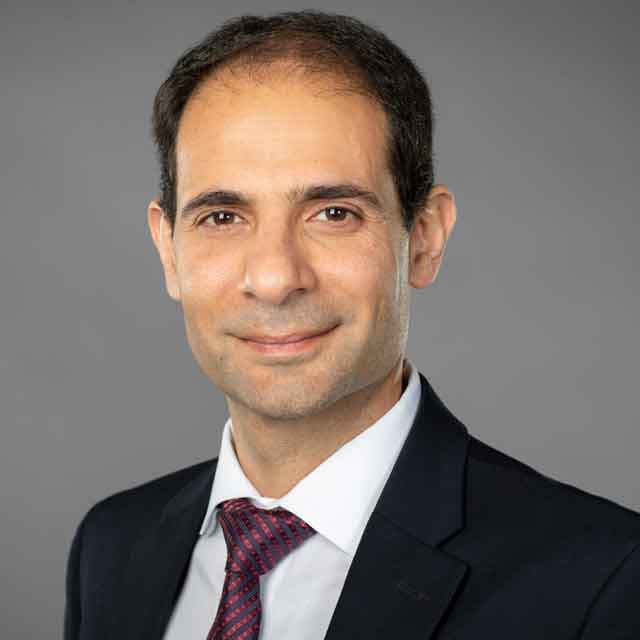
Scientia Professor Nasser Khalili is the Head of the School of Civil and Environmental Engineering at the University of New South Wales (UNSW). He also serves as the Director of the ARC Research Hub for Resilient and Intelligent Infrastructure Systems (RIIS), President of the Australian Association for Computational Mechanics (AACM), and a core member of the International Technical Committee on Unsaturated Soil (TC106). His research focuses on geotechnical engineering, computational mechanics, porous media behavior, and sustainable infrastructure systems. Key areas of expertise include unsaturated soils, hydraulic fracturing modeling, and advanced material characterization for asphalt mixtures. Professor Khalili's work integrates computational methods with experimental analysis to address challenges in infrastructure resilience and environmental sustainability. He has pioneered studies on pore pressure dynamics, fracture mechanics in porous media, and the application of waste materials in construction. His leadership roles in national and international committees reflect his influence in advancing geotechnical and computational engineering practices. His scientific contributions include over 150 peer-reviewed articles, with recent work emphasizing machine learning applications in civil engineering and innovative solutions for sustainable asphalt mixes. Awards include Fellowship of the Academy, recognizing his significant impact on the field.
Imad L. Al-Qadi is the Grainger Distinguished Chair in Engineering and Director of the Illinois Center for Transportation (ICT) at the University of Illinois at Urbana-Champaign (UIUC). He holds a Ph.D. in Civil Engineering from Penn State and has held faculty positions at Virginia Tech and Penn State. His research focuses on sustainable transportation infrastructure, pavement mechanics, and advanced materials. Al-Qadi leads initiatives like the Illinois Autonomous and Connected Track (I-ACT), a high-speed test facility for autonomous vehicles and energy harvesting systems. Key roles include: Director of ICT, advancing multimodal transportation infrastructure Pioneer of the Smart Road and full-scale pavement testing Founder of the Academy of Pavement Science and Engineering Research interests span: Highway/airfield sustainability Tire-pavement interaction Energy harvesting Electric vehicles' infrastructure impact Leadership roles include past presidency of ASCE's Transportation and Development Institute and editorship of the International Journal of Pavement Engineering. He has authored over 1,000 publications, including 390 refereed papers, and secured over 180 research grants from federal agencies and industry. Awards include NSF Young Investigator Award (1994), TRB Crum Award (2023), and 2024 Executive Leadership Fellow. His work is internationally recognized, with honorary professorships at institutions in China, Sweden, and the UK.
Professor Inge Hoff is affiliated with the Norwegian University of Science and Technology (NTNU) in the Department of Civil and Environmental Engineering, where he has served since 2009. Prior to this, he held roles as senior researcher and research leader at SINTEF. Research Interests : Materials for road construction, frost protection, laboratory testing, pavement dimensioning, road rehabilitation, state development modeling, ground-penetrating radar surveys, and concrete/natural stone coverings. Students : Mentors active PhD fellows Lisa Hannasvik, Arman Hamidi, Clara Weber, and Shoiab Ahmad. Teaching : Coordinates courses like TBA4204/BYGT1102 Transport Infrastructure , BYGT2204 Road and Railway Construction , and BA8600 Pavement Structure Dimensioning . Recent publications highlight his expertise in granular material behavior, asphalt durability under climate stressors, and advanced structural assessment techniques. Collaborations with international researchers and presentations at major conferences (TRB, International Conference on Bituminous Mixtures) demonstrate his ongoing contributions to road engineering.
Elie Hajj is a Professor in the Department of Civil & Environmental Engineering at the University of Nevada, Reno (UNR), serving as Associate Director of the Western Regional Superpave Center. His research focuses on asphalt pavement engineering, sustainable materials, and infrastructure resilience. He specializes in pavement rehabilitation, numerical modeling of dynamic load impacts, and economic analysis of pavement preservation strategies. Dr. Hajj has received recognition for his 2016 ASTM award for outstanding work on pavement rehabilitation economics. He actively engages in professional service, including TRB webinars and academic seminars on topics like pavement damage assessment and vehicle operating costs. His teaching spans graduate and undergraduate courses in pavement design, materials engineering, and advanced pavement analysis. His research integrates experimental and computational methods to address challenges in pavement performance under superheavy loads, recycled material utilization, and energy-efficient construction practices. Collaborations with industry and government agencies enhance the practical applicability of his findings.
Andrew F. Braham is a Professor in the Department of Civil Engineering at the University of Arkansas, College of Engineering. He holds a Ph.D. from the University of Illinois at Urbana-Champaign and is a licensed Professional Engineer (P.E.). His research focuses on asphalt emulsion technology, pavement maintenance and rehabilitation, and sustainability in civil engineering. Dr. Braham directs a comprehensive laboratory specializing in flexible pavement materials research and serves as Associate Director of the Southern Plains Transportation Center. Dr. Braham earned his Ph.D. from the University of Illinois at Urbana-Champaign (2008), M.S. (2002) and B.S. (2000) from the University of Wisconsin-Madison. Following his doctoral studies, he completed a Post-Doctoral Research Fellowship at Southeast University in Nanjing, China (2009-2010). His research interests center on asphalt emulsion technology, pavement maintenance and rehabilitation techniques, and sustainability applications in civil engineering. Dr. Braham has developed innovative testing methodologies for asphalt emulsion particle size analysis and has extensively studied cold in-place recycling and full-depth reclamation processes. His work bridges laboratory research with practical field applications, focusing on extending pavement life while reducing costs and environmental impacts. Analysis of Dr. Braham's recent publications reveals a strong focus on asphalt emulsion characterization, pavement preservation techniques, and sustainable infrastructure solutions. His research spans material science, transportation engineering, and environmental considerations, with particular emphasis on practical applications for state transportation agencies. The work demonstrates progression from fundamental material characterization to applied field implementation and economic analysis. Associate Director of Southern Plains Transportation Center (SPTC) (2023-present) Chair of TRB Committee AKN18 'Pavement Maintenance, Preservation, and Rehabilitation' (2025-present) Co-chair of AASHTO TSP-2 Emulsion Task Force Research Subcommittee (2023-present) Member of International Slurry Surfacing Association (ISSA) Sustainability Committee (2025-present) Dr. Braham has advised numerous graduate students through their doctoral and master's research, with many now working in transportation agencies and research institutions. His research has been funded by diverse sources including the Arkansas Department of Transportation, Federal Highway Administration, National Science Foundation, and various industry associations. He has developed and taught multiple courses on transportation infrastructure, sustainability in civil engineering, and pavement design. His laboratory capabilities include comprehensive testing for asphalt binder, asphalt emulsion, and asphalt mixture analysis. He also directs the TREAT Mobile Lab, which provides hands-on training for asphalt emulsion applications and pavement preservation techniques across the country.
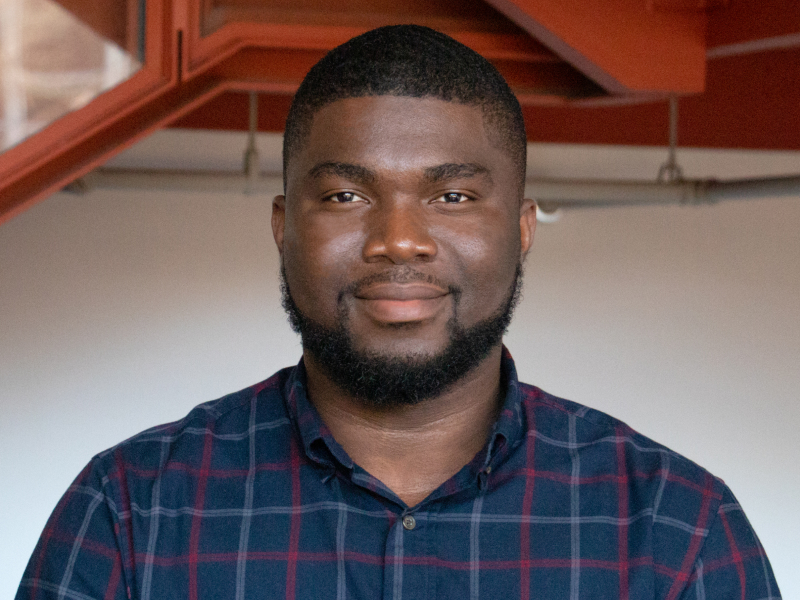
Ebenezer Fanijo is an Assistant Professor at the School of Building Construction, part of the College of Design at Georgia Institute of Technology. He joined in Spring 2023 and specializes in sustainable and smart-resilient infrastructure, focusing on low-carbon construction materials and alternative energy sources. His work addresses carbon emissions in building materials and processes through advanced research on cementitious composites, recycled materials, and green technologies. Dr. Fanijo holds a B.S. in Building Construction (Obafemi Awolowo University, Nigeria), M.S. in Civil Engineering (University of Idaho, 2019), and a Ph.D. in Civil Engineering with a concurrent MEng in Materials Science and Engineering from Virginia Tech (2022). He is also a Professional Engineer (P.E.) and LEED Green Associate with over five years of construction sector experience. Education: B.S. Building Construction, Obafemi Awolowo University, Nigeria (First Class Honours) M.S. Civil Engineering, University of Idaho (2019) Ph.D. Civil Engineering & MEng Materials Science, Virginia Tech (2022) Research Interests: His research spans sustainable construction materials, concrete durability, green technologies using recycled/by-product materials, 3D-printed cementitious materials, and advanced sensing for structural monitoring. He emphasizes decarbonizing infrastructure and developing innovative composites to reduce lifecycle emissions. Awards: NSBE Golden Torch Award (2022) – Recognized as Graduate Student of the Year National/international awards for research excellence Teaching & Advising: Dr. Fanijo teaches courses on construction materials, green technologies, and sustainable practices. He developed core curricula such as Construction Materials and Methods and Green Construction Technology . His advising focuses on student mastery of material properties and their integration into environmental performance frameworks. Professional Contributions: He has led funded research projects, published widely in peer-reviewed journals, and pioneered work on alkali-silica reactivity mitigation, asphalt mix design optimization, and corrosion monitoring. His lab integrates AI and nanoscale techniques for material analysis.
Engin Yener is a Professor at the Department of Civil Engineering, Faculty of Engineering, Iğdır University. His academic career includes roles such as Department Head and Dean's Assistant at both Iğdır University and Bayburt University. He holds a PhD from Atatürk University (2010) in Civil Engineering with a thesis on asphalt mixture workability, and earlier degrees in Civil Engineering from the same institution. Education: PhD: Atatürk University (2004–2010), Thesis: 'A New Workability Method for Asphalt Mixtures' MSc: Atatürk University (2000–2004), Thesis: 'Durability Study of Fly Ash and Silica Fume-Added Road Concrete' BSc: Atatürk University (1996–2000), Thesis: 22222 Research Interests: Focuses on geopolymer materials, concrete durability, asphalt binder properties, and sustainable construction materials. His work includes optimizing pumice-based geopolymers, evaluating freeze-thaw damage mechanisms in pavements, and improving asphalt mixture performance through aggregate analysis. Grants & Projects: Leads research projects on geopolymers for transportation infrastructure and alternative cement binders. Recent projects include 'Development of Geopolymer Concrete for Water Structures' (2021) and 'Use of Perlite in Acid-Resistant Concrete' (2019). Courses Taught: Special Topics in Civil Engineering, Advanced Pavement Technology, Asphalt Materials, and Transportation Engineering fundamentals at both undergraduate and graduate levels.
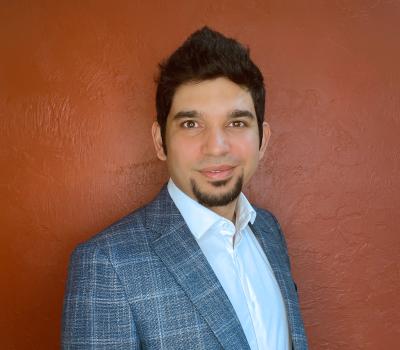
Dr. Zahid Hossain is a Professor of Civil Engineering and Director of Graduate Programs in Engineering at Arkansas State University (A-State). He specializes in Transportation Engineering, Sustainable Materials, and Geotechnical Engineering. His research focuses on innovative pavement materials, environmental sustainability, and advanced material characterization techniques. Dr. Hossain holds a Ph.D. from The University of Oklahoma and has been recognized with the Fellow of ASCE and President's Gold Medal from Khulna University. Education: Ph.D., Civil Engineering, University of Oklahoma (Norman, OK) M.S., Computer Science, University of Oklahoma M.S., Civil Engineering, University of Oklahoma B.Sc., Civil Engineering, Khulna University of Engineering and Technology (Bangladesh) Research Interests: Dr. Hossain’s work emphasizes sustainable infrastructure, including asphalt modification with recycled materials, soil stabilization, and lean construction methodologies. His recent studies involve nanotechnology applications in materials science, moisture resistance of binders, and seismic site analysis in Arkansas. He employs advanced techniques like FTIR spectroscopy and AFM for material characterization. Scientific Awards & Affiliations: Fellow, ASCE Green Belt Certification (Lean/Six Sigma) Member, American Concrete Institute and National Dean List Advising & Research: Dr. Hossain leads interdisciplinary teams at the Center for Efficient and Sustainable Use of Resources (CESUR), focusing on green technologies and pavement durability. His grants include projects on warm mix asphalt feasibility and corrosion mitigation in metal culverts. Labs & Teams: Active in CESUR, he collaborates on projects involving rice husk ash utilization, soil stabilization, and pavement performance evaluation.
Dr. TÓTH Csaba is an Associate Professor at the Department of Highway and Railway Engineering, Budapest University of Technology and Economics (BME), Faculty of Civil Engineering. He teaches courses such as Highway and Railway Structures (BMEEOUVAI41) and Pavement Structures (BMEEOUVMU63), while previously teaching Pavement Analysis and Design (BMEEOUVDT81) and Project Management in Transportation (BMEEOUVMU-4). His research focuses on asphalt technology, pavement diagnostics, and sustainable road construction. Phone: +36 1 463 1154 Room: ÉL. ép / 206/E Research Interests: His work emphasizes non-destructive evaluation methods (e.g., Ground-Penetrating Radar), rheological modeling of asphalt binders, recycled asphalt pavement applications, and climate-adapted pavement design. Key methodologies include the Ramberg-Osgood model for dynamic modulus prediction and the virtual inertial point method for structural diagnostics. Scientific Contributions: Recent research trends highlight sustainable road rating systems, thermal stress analysis in asphalt pavements, and advanced diagnostic techniques for infrastructure monitoring. Scientific Awards: Magyar Felvételi Scholarship (#építő250)
Bjorn Birgisson is the Chair of the School of Environmental, Civil, Agricultural and Mechanical Engineering and holds the Georgia Power E-Mobility Distinguished Professorship at the University of Georgia. His research focuses on infrastructure resilience, pavement engineering, materials science, and novel construction technologies. He has pioneered work on asphalt mixture performance, autonomous vehicle impacts on roadways, and extraterrestrial construction materials using lunar regolith. His interdisciplinary approach integrates computational modeling, experimental testing, and environmental sustainability. Educational Background: Ph.D., P.E. credentials are highlighted but formal education details are not provided in the text. His professional appointments emphasize practical application of research to real-world infrastructure challenges. Research Interests include: Transportation infrastructure resilience to climate change Advanced material characterization for pavements Additive manufacturing for space exploration Non-destructive evaluation techniques His recent publications (2020-2025) address: Moisture variation in clayey soils Pavement crack initiation modeling Autonomous truck infrastructure impacts Lunar regolith utilization Scientific Awards: Georgia Power E-Mobility Distinguished Professorship recognizes his contributions to sustainable transportation infrastructure. Advising/Grants: While student names are not listed, his research teams focus on doctoral-level projects in geotechnical engineering and materials science. Grant activities likely include federal/state transportation initiatives and space exploration partnerships. Labs/Teams: Active in the Boyd Research and Education Center, collaborating with industry partners on pavement testing and additive manufacturing technologies.
Mihai Marasteanu serves as Professor and Miles Kersten Chair in the Department of Civil, Environmental, and Geo-Engineering at the University of Minnesota, with affiliations at the Center for Transportation Studies. His research bridges fundamental material science and practical pavement engineering solutions for Minnesota's infrastructure network. His primary research focuses on asphalt pavement engineering , specializing in fracture mechanics and viscoelasticity applied to low-temperature cracking analysis. Key interests include recycled material integration , asphalt binder-mixture property relationships , and innovative testing methodologies for quality control. His work emphasizes cost-effective solutions for local roads while advancing predictive models for pavement performance. Recent publications (2022-2024) demonstrate strong trends in asphalt mixture optimization , probabilistic density modeling , and nanomaterial-enhanced asphalt (e.g., graphene nanoplatelets). The research consistently targets Minnesota-specific challenges including cold-climate durability, recycled material validation, and field-compaction efficiency. Professor Marasteanu maintains active funding through 9 current projects including: Tools to improve asphalt pavement durability (MN DOT, 2025-2027) Asphalt lift thickness impact on density (MN DOT, 2024-2026) Sawing/sealing joints for cracking control (MN DOT, 2023-2026) EV data for pavement quality assessment (FHWA, 2023-2025) His national leadership includes coordinating pooled fund studies with Wisconsin, Iowa State, and Illinois researchers on low-temperature cracking. While specific lab names aren't documented, his team operates within University of Minnesota's testing facilities, utilizing advanced rheometers and computational models to validate size-effect theories and representative volume element concepts for asphalt mixtures.
Erdem Coleri is an Associate Professor at Oregon State University's College of Engineering, Department of Civil and Construction Engineering. He joined OSU in 2014 after postdoctoral work at the University of California Pavement Research Center. His research focuses on sustainable pavement materials, energy-efficient design, and infrastructure health monitoring using wireless sensor networks. He directs the OSU Asphalt Materials and Pavements (AMaP) Lab, emphasizing recycled materials and pavement sustainability. Education: Ph.D., Civil and Environmental Engineering (UC Davis, 2011); M.S. and B.S., Civil Engineering (Middle East Technical University, Turkey). Research interests include asphalt characterization, pavement management systems, and wireless sensor networks for infrastructure monitoring. Notable awards include the John and Jean Loosley Faculty Fellow (2015) and Oregon State University Teaching Excellence (2020). He advises students like David Covey and Aiman Mahmoud, focusing on tack coat performance and recycled materials. His lab develops technologies to reduce environmental impact and improve pavement longevity. Key projects include the AMaP Lab's work on permeable pavements, warm-mix asphalt, and energy-efficient designs. He collaborates with ODOT and agencies on field tests and sensor systems. Recent publications address balanced mix design, recycled materials, and fuel efficiency linked to pavement roughness.
Dr. Prasad Rao Rangaraju is a Professor of Civil Engineering at Clemson University's Glenn Department of Civil Engineering. His research focuses on sustainable materials engineering, decarbonization of cement production, and concrete durability. He holds a B.Tech from Jawaharlal Nehru Technical University (India), an M.S. from Iowa State University, and a Ph.D. from Purdue University. Professional affiliations include the American Society of Civil Engineers, American Concrete Institute, and Transportation Research Board. His work emphasizes eco-friendly material innovations like geopolymer alternatives, recycled glass utilization, and additive manufacturing with cementitious materials. He teaches courses on sustainable construction, advanced concrete technology, and materials characterization techniques. Key research contributions include developing rapid testing methods for alkali-silica reactivity, optimizing ternary blends for durability, and advancing full-depth reclamation techniques for pavements. His lab explores cutting-edge solutions for infrastructure rehabilitation and low-carbon construction practices.
Suri Gatiganti serves as an Assistant Research Professor at the National Center for Asphalt Technology (NCAT) at Auburn University . Her work focuses on asphalt mixtures, pavement mechanics, and sustainable infrastructure solutions. Ph.D., Auburn University M.Tech., Indian Institute of Technology B.E., Andhra University Her research spans multiple subfields: Development of balanced mix design methodologies Environmental impact analysis of asphalt production Thermal properties and heat transfer in aggregate materials Recycling technology for cold-mix and reclaimed asphalt Life cycle assessment of pavements and construction equipment Pavement durability and failure analysis Recent publications emphasize asphalt sustainability , emissions quantification , and innovative testing methodologies for pavement performance. She is affiliated with NCAT, a leading research center for asphalt technology.
Raquel Moraes serves as an Associate Research Professor at the National Center for Asphalt Technology (NCAT) within Auburn University's Samuel Ginn College of Engineering, focusing on advancing sustainable pavement technologies through innovative asphalt research. Her academic credentials include: Ph.D. in Civil and Environmental Engineering from the University of Wisconsin-Madison M.S. in Civil and Environmental Engineering from the University of Wisconsin-Madison M.S. in Inorganic Chemistry from the Federal University of Ceará, Brazil B.S. in Industrial Chemistry from the Federal University of Ceará, Brazil Dr. Moraes specializes in asphalt technology with expertise in recycled asphalt pavements (RAP) , asphalt binder modification , and durability enhancement . Her research addresses critical industry challenges including cracking resistance, moisture susceptibility, and sustainable material integration through bio-based recycling agents and recycled plastics. She develops balanced mix designs for high-recycled-content asphalt that maintain structural integrity while reducing environmental impact. Analysis of her 2023-2025 publications reveals a concentrated research trajectory on high-recycled-content asphalt mixtures, with 60% of recent work focused on recycling agent optimization and 30% addressing airfield pavement joint performance. Key trends include the development of bio-based modifiers (15% of publications), recycled plastic integration (10%), and durability assessment protocols for mixtures with >30% recycled content. Her work bridges laboratory innovation with field applications, particularly through NCAT's industry partnerships. As a core researcher at the National Center for Asphalt Technology, Dr. Moraes contributes to this globally recognized pavement research facility that conducts full-scale accelerated testing and develops industry standards. Her 2024 promotion to Associate Research Professor reflects significant contributions to sustainable pavement engineering, though specific grant details and advising activities were not documented in available sources.