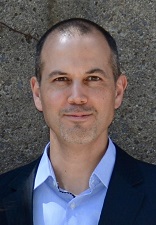
Nomair Naeem is a Lecturer and CS Advisor at the David R. Cheriton School of Computer Science, University of Waterloo. He holds a Ph.D. from the University of Waterloo where he developed static program analysis techniques for object-oriented languages, focusing on reducing runtime overhead of safety verification. His research interests include: Static program analysis and verification Compiler design and optimization Java decompilation and obfuscation Algorithmic improvements for program analysis His publications focus primarily on program analysis techniques, particularly efficient alias analysis and verification methods for AspectJ constructs. Recent teaching includes courses on compiler design, data structures, and software development principles.
Dr. Johanathan Woodworth is an Assistant Professor in the Faculty of Education at Mount Saint Vincent University (MSVU). His research focuses on critical perspectives of technology in education, equity/diversity/inclusion in digital pedagogies, and computer/mobile-assisted language learning (CALL/MALL). Prior to joining MSVU, he worked at York University as Academic Coordinator for the York English Language Test and held teaching roles in South Korea and China. His interdisciplinary background spans computer science, applied linguistics, and education. He teaches graduate/undergraduate courses on AI, data analytics in education, and critical digital literacy. Education : Ph.D. in Education, York University (2022) M.A. in Applied Linguistics, University of New England (2006) B.Sc. in Computer Science, University of Victoria (2001) Research Interests : Dr. Woodworth investigates how AI tools, adaptive learning systems, and learning analytics can enhance equitable access and participation in education. His work emphasizes inclusive digital pedagogies and the socio-cultural dimensions of technology-mediated learning. Recent studies include hybrid feedback systems in writing instruction and automated writing evaluation in ESL/EAP contexts. Teaching Philosophy : He prioritizes active engagement with educational technologies, critical digital literacy, and 21st-century skill development. Courses include 'AI and Data Analytics in Education' and 'Critical Examinations of Technology in Educational Praxis.'
Professor Wolfram Kahl is a faculty member in the Department of Computing and Software at McMaster University . He has served as an instructor for courses such as Logical Reasoning for Computer Science , Formal Specification Techniques , and Certified Programming with Dependent Types , reflecting his expertise in formal methods and educational technologies. Research Interests : His work focuses on Relational algebraic approaches to software verification Term graph rewriting systems Haskell-based tool development for formal specification Category theory applications in computer science Interactive learning tools for discrete mathematics Parallel and distributed system modeling Publication Trends : Over the last decade, his publications have concentrated on formal verification techniques, graph transformation systems, and educational tool development. Notable works include mechanized relational algebraic proofs, parallel multicore verification frameworks, and contributions to Haskell module design for type class systems. Collaborations : Professor Kahl has collaborated extensively with researchers like Christopher Anand, Jacques Carette, and Alan Wassyng, and has contributed to major conferences including Relational and Algebraic Methods in Computer Science (RAMiCS) .
Martin Robillard is a Professor at McGill University's School of Computer Science, where he leads the McGill Software Technology Lab. He holds a Ph.D. from the University of British Columbia. His research focuses on software engineering, emphasizing human aspects of development, including documentation design, test suite quality, and information privacy. He has authored the textbook Introduction to Software Design with Java and developed the JetUML tool, recognized with the 2024 ACM SIGSOFT Influential Educator Award. He has co-chaired major conferences (FSE 2012, ICSE 2017) and is a Distinguished Member of the ACM. Research Interests: His work bridges software engineering, AI, and HCI, addressing challenges in API usability, automated documentation generation, and privacy-preserving software design. Recent projects include dynamic documentation tools like Casdoc and studies on developer documentation formats. Professional Activities: He serves on editorial boards for IEEE TSE and Empirical Software Engineering, and chairs workshops like DySDoc. His contributions include over 100 publications, six SIGSOFT Distinguished Paper Awards, and leadership in software engineering education. Teaching: Teaches courses on software design (COMP 303), information privacy (COMP 555), and software architecture. His courses emphasize practical skills and ethical considerations in software development. Labs & Collaborations: The McGill Software Technology Lab investigates knowledge discovery in software systems, with projects on API documentation, test quality, and privacy in health contexts. Collaborators include industry partners like ActiveEon and General Motors.
Gregor Kiczales is a Professor of Computer Science at the University of British Columbia , with a career spanning over three decades. His work focuses on programming language design, modularity, and aspect-oriented programming (AOP). Primary affiliation: University of British Columbia Verification email: gregor@cs.ubc.ca Kiczales' research centers around modularity and aspect-oriented programming , with significant contributions to understanding crosscutting concerns, developing AOP frameworks like AspectJ, and exploring novel abstractions for software systems. His work includes: Foundational research in AOP semantics and implementation Studies on code-design alignment and software architecture Developing registration-based abstractions and late-binding mechanisms Investigating scalability challenges in AOP systems