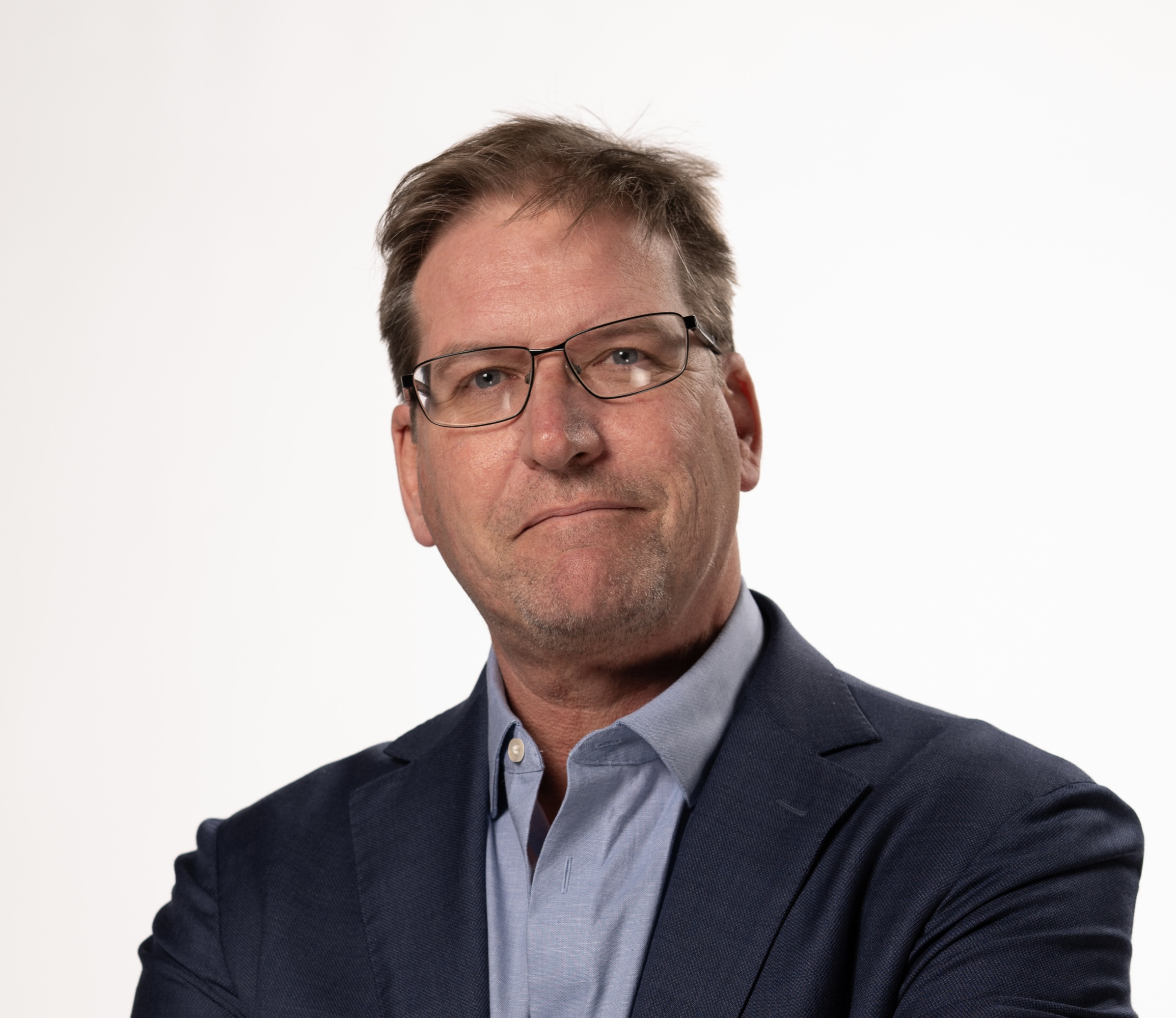
Dr. Gavin Mount is a researcher at UNSW Canberra , specializing in non-traditional security studies , ethnic conflict , and the sociopolitical implications of emerging technologies . His work bridges theoretical analysis with practical applications in conflict transformation and defense studies. Research Focus: Global politics of ethnic conflict, hybrid peace/war frameworks, and socio-political impacts of drone technology. Teaching: Courses like Ethnic Conflict in World Politics and Law, Force and Legitimacy , with a focus on military education and strategic studies. Publications: Recent work includes contributions to Thinking Swarms (2025) and Hybridity on the Ground in Peacebuilding and Development (2018). Grants: Leads the Curricula Integration of Student Wellbeing Resources project under HERDSA. Key Themes across his research include the intersection of technology and conflict, evolving defense paradigms, and pedagogical innovations in security studies.
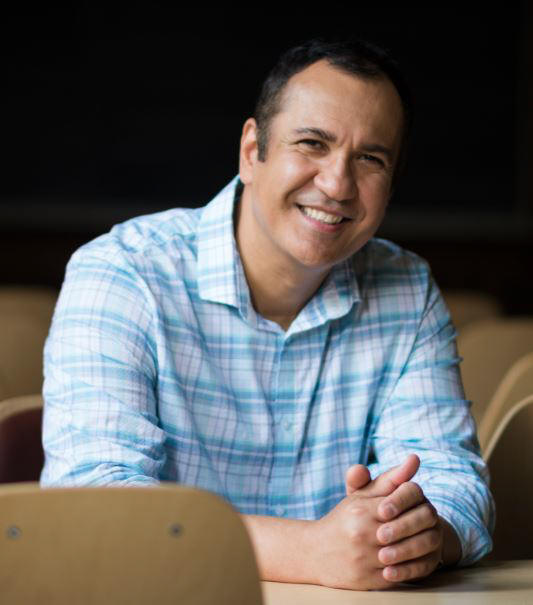
Romin W. Tafarodi is an Associate Professor in the Department of Psychology at the University of Toronto, where he researches cultured subjectivity and identity formation. He holds a B.A. from the University of Waterloo and a Ph.D. from the University of Texas at Austin. His work examines how societal symbols and institutional relations shape human individuality and interpersonal understanding, with secondary interests in metapsychology and philosophy of science. Research interests focus on: Self-consciousness as culturally-mediated subjectivity Contingencies of identity in social relations Cross-cultural perspectives on selfhood and personhood Philosophical foundations of psychological science His publications demonstrate consistent focus on cross-cultural identity, self-esteem mechanisms, and social perception, with frequent comparative studies between Eastern and Western societies. Recent works explore multicultural adjustment, implicit bias awareness, and narrative identity in diverse cultural contexts. Current and former graduate students include: Siobhan Flanagan (current) Tara Marshall Greg Bonn Jeff Yen Courses taught in 2024-2025: PSY197: The Extended Mind PSY428: Critical Psychology PSY425: Self and Identity
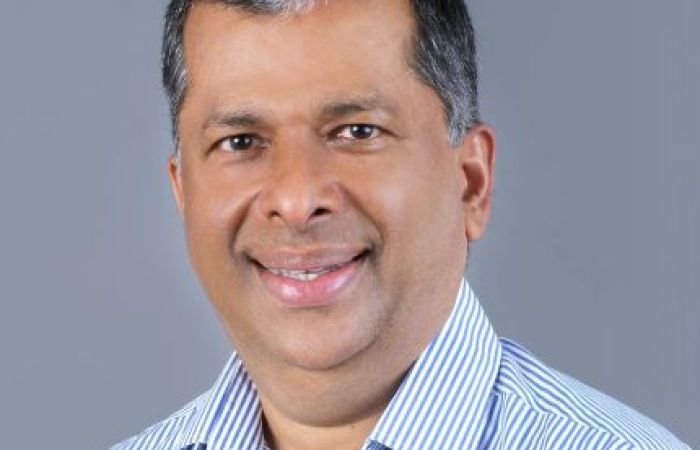
Professor George Palattiyil is a Personal Chair of Social Work and Refugee Studies at the University of Edinburgh , with a focus on forced migration, HIV/AIDS, human rights, and social work education. He leads interdisciplinary initiatives like the Global Refugee Health Research Network and contributes to teaching across BSc, MSW, and MSc programmes. PhD in Social Work (University of Strathclyde, 1999) Masters in Social Work (Kerala, India) His research bridges social work and public health, emphasizing lived experiences of refugees, HIV-affected families, and older populations. Recent projects include: Impact of COVID-19 on families of care home residents in Scotland Adolescent reproductive health in Uganda, Jordan, and Bangladesh HIV/TB care barriers for refugees in Kampala Human rights of HIV-positive asylum seekers Cross-border surrogacy ethics Scientific achievements include: Senior Fellow , UK Higher Education Academy Best Personal Tutor Award (2019) Editorial work on Social Work in a Global Context He supervises PhD projects on topics like Queer women in Kerala , Refugee detention alternatives , and intergenerational care in China . His teaching integrates cross-cultural experiences, including abroad programmes to India.
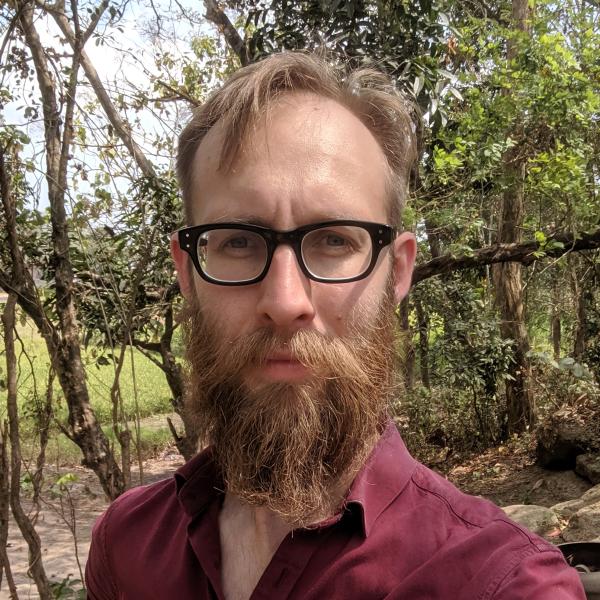
Andrew Ollett is an Associate Professor and Director of Graduate Studies in the Department of South Asian Languages and Civilizations at the University of Chicago , where he has taught since 2019. His research focuses on the literary and intellectual traditions of South and Southeast Asia, particularly through works in Sanskrit, Prakrit, Apabhramsha, and Kannada from the first millennium CE. Co-founder and editor of NESAR (New Explorations in South Asia Research) Director of NEH-funded edition/translation of the Kavirājamārga (earliest Kannada literary manual) Expert in Prakrit and Kannada literary traditions His work explores the 'question of language'—examining how language choice shaped cultural production and change in premodern India. Current projects include a monograph on context-sensitivity in Indian language theories and a study of manuscript technology's impact on early South Asian knowledge communities. He has authored The Mirror of Ornaments (Naples: Unior Press, 2025) and Language of the Snakes (UC Press, 2017), and co-authored Lilavai (Harvard, 2021). Recent publications include interdisciplinary studies on: Sanskrit-Prakrit campū genre reevaluation Pragmatics in Mīmāṁsā interpretive concepts Manuscript literacy's influence on literary forms Historical linguistics of Middle Indic syllable reduction Philosophy of language in Śālikanātha and Kumārila Bhaṭṭa Awarded the NEH 'Scholarly Editions and Translations' grant , he teaches classical South Asian literature courses covering Sanskrit, Prakrit, and Tamil traditions. He maintains digital resources including a Prakrit Digital Texts Project and Mīmāṁsādigdarśinī digital text repository, and actively contributes to open-access scholarship.
Tong Lam is an Associate Professor in the Department of Historical Studies and the Graduate Department of History at the University of Toronto, where he also directs the Dr. David Chu Program in Asia-Pacific Studies at the Asian Institute. His research sits at the intersection of media studies, environmental history, and science and technology studies (STS), focusing on the politics and aesthetics of mobilization in China’s special zones across socialist and postsocialist eras. Employing interdisciplinary methodologies, his work explores themes such as state-precipitated violence, industrial ruination, and the socio-political implications of technology. He is a visual artist whose lens-based projects interrogate military violence, surveillance, and postindustrial landscapes. His recent scholarship analyzes postsocialist urbanism, digital governance, and the temporalities of infrastructure. While the absence of explicit scientific awards or student advisement records in the provided text precludes their inclusion here, his publications and creative practice reflect a sustained engagement with critical historical inquiry and contemporary socio-technological challenges.
ONG Soh Khim is a Professor in the Department of Mechanical Engineering at the National University of Singapore (NUS) and a member of the NUS Graduate School. She is a Fellow of CIRP (International Academy for Production Engineering), the first Asian and fourth female Fellow globally. Her research focuses on augmented reality (AR) and digital twins in manufacturing, with applications in assistive technology and sustainable design. She has authored/co-edited 6 books, over 300 journal/conference papers, and holds an H-index of 66 (Google Scholar) and 52 (Scopus). She has held leadership roles, including serving as a Nominated Member of the Singapore Parliament (2005–2006) and on multiple NUS governance boards. Her honors include the Singapore Youth Award (2004), M. Eugene Merchant Award (2004), and the 2021 Long Service Medal. She advocates for gender diversity in STEM, leading initiatives like the Girls2Pioneers program. Her current roles include Senior Principal Investigator at NUS Research Institutes in Suzhou and Guangzhou, and Visiting Professorships at Chinese universities.
Roles and Affiliations: Tien Foo Sing is the Provost's Chair Professor in the Department of Real Estate at the NUS Business School, National University of Singapore. He serves on the Management Board of the Institute of Real Estate and Urban Studies (IREUS) and was its former Director (2017–2022). He has held leadership roles including Head of the Department of Real Estate (2020–2022) and past President of the Asian Real Estate Society (AsRES). He is a CLC Fellow (2024–2026), Fellow of AsRES, and a Fellow of the Weimer School of Advanced Studies. He edits the International Real Estate Review and serves on editorial boards of journals like Real Estate Economics and Journal of Real Estate Finance and Economics. Education: PhD (Land Economy) and MPhil (Land Economy) from the University of Cambridge, UK; BSc (Estate Management) from NUS. Research Interests: Focuses on urban planning, real estate economics, housing markets, climate finance, transport economics, and environmental policy. His work bridges theory and policy, addressing issues like urban resilience, intergenerational mobility, and environmental externalities. Recent studies include impacts of sea level rise on housing prices, ESG-REIT linkages, and PropTech adoption. Awards: Recognized with the Outstanding Referee Award (2017) for Real Estate Economics, Fellowships from AsRES and the Weimer School, and book awards for his 'Kiasunomics' series. Professional Activities: Serves on government boards (e.g., Valuation Review Board, Singapore Chapter of APREA) and advises organizations like the PropTech Association of Singapore. His work influences policy on housing, transportation, and sustainable development. Labs/Teams: Leads research initiatives through IREUS and collaborates with institutions like the Sustainable & Green Finance Institute (SGFIN). His projects often involve large-scale data analysis (e.g., smart card transit data, housing transactions).
Dr. Rajesh Sharma is an Associate Professor in the School of Global, Urban and Social Studies (GUSS) at RMIT University, Melbourne, Australia. He specializes in Dispute Resolution, Investment Arbitration, and International Trade Law. His research focuses on arbitration laws in Asia, WTO-related issues, and mediation innovations. He holds a PhD in Law from China's Chinese University of Political Science and Law, complemented by degrees from Monash University and the University of Delhi. Dr. Sharma has advised governments and transnational companies on trade policies and has conducted trainings in over 20 countries. He is a winner of the ADR Teacher Award 2022 in Australia. His professional roles include: Associate Editor of the Manchester Journal of International Economic Law Editorial Board member of China and WTO Review and Asia-Pacific Mediation Journal Member of ICC Australia National Committee and Singapore Convention preparation He has designed unique moot competitions, including the Asia-Pacific Vis Pre Moot, promoting disability inclusion in legal advocacy. His current projects include a book comparing China-India investment laws and commentary on the Singapore Convention. Dr. Sharma's service engagements include roles as Panel Arbitrator for the Shanghai Arbitration Commission and leadership in organizations like the Hong Kong Basic Law Education Association.
Mark Baker is a Professor of Linguistics and Cognitive Science at Rutgers University. His work focuses on comparative syntax, linguistic universals, semantic roles, and the study of Amerindian and African languages. He holds the title of Distinguished Professor and maintains an office in Scott Hall. As of 2021, his office hours were by appointment due to sabbatical leave. His research interests include syntactic diversity, its limits, and patterns across languages. Notable themes in his work involve logophoric pronouns, switch-reference mechanisms, and the relationship between case systems and agreement structures. He has contributed to discussions on language typology, formal syntax, and the cognitive foundations of linguistic structures. Baker teaches advanced syntax courses and has published extensively on topics ranging from Panoan languages to theoretical models in generative grammar. His recent articles explore syntactic variation, morphosyntactic alignment, and interdisciplinary connections between linguistics and cognitive science. He serves on editorial boards and has reviewed for journals such as Journal of East Asian Linguistics and Yearbook of Corpus Linguistics and Pragmatics . His work bridges formal linguistic theory with empirical cross-linguistic analysis, emphasizing the interplay between universal grammatical principles and lineage-specific traits.
Dr. Amir Hakami is a Professor in the Department of Civil & Environmental Engineering at Carleton University , where he leads the Carleton Atmospheric Modelling Group . His research focuses on advanced air quality modeling techniques to inform environmental policy. Degrees: B.Sc. (Polytechnic of Tehran), M.Sc., Ph.D. (Georgia Tech), Postdoc (Caltech) Contact: Office 3454 Mackenzie Building, Phone: 613-520-2600 ext. 8609, Email: amir.hakami@carleton.ca Research Interests: Air quality modeling at multiple spatial scales Adjoint sensitivity analysis for atmospheric response Inverse modeling and data assimilation techniques Uncertainty quantification in environmental systems Interdisciplinary applications in policy, public health, and economics Teaching: Courses include Environmental Engineering Systems Modeling , Contaminant Transport , and Air Pollution & Emissions Control at undergraduate and graduate levels. Research Group: The group includes Ph.D. candidates, postdoctoral fellows, and alumni working on topics ranging from atmospheric chemistry to sustainable energy systems. Members come from diverse backgrounds in engineering, science, and policy disciplines.
Wael B. Hallaq is the Avalon Foundation Professor in the Humanities at Columbia University’s Department of Middle Eastern, South Asian, and African Studies. His work focuses on Islamic law, intellectual history, and the socio-political impacts of modernity. He critiques Orientalist paradigms and explores the interplay between moral theory and legal history in Islamic traditions. His research spans structural dynamics of legal change in pre-modern law, moral theory’s role in Islamic legal history, and the critique of modern state sovereignty. His influential books include *The Impossible State* (2013), which earned Columbia University Press’s Distinguished Book Award, and *Shari‘a: Theory, Practice, Transformations* (2009). Education: No explicit educational details provided in text. His writings bridge legal theory, history, and political thought, challenging Eurocentric frameworks in Islamic studies. His analyses of pre-modern legal systems and modernity’s moral dilemmas have been translated into multiple languages, including Arabic, Hebrew, and Persian. Awards: Columbia University Press Distinguished Book Award (2013–2015) No grants, labs, or advising details explicitly mentioned in the text.
Meg Rithmire serves as the James E. Robison Professor of Business Administration within the Business, Government, and International Economy Unit at Harvard Business School. She holds concurrent faculty affiliations at Harvard's Weatherhead Center for International Affairs, Fairbank Center for East Asian Studies, and Harvard Faculty Committee on Southeast Asia, where she convenes the Chinese Economy Seminar. Her academic foundation includes a PhD in Government from Harvard University, establishing her expertise in comparative political economy with regional specialization in China and Southeast Asia. Education: PhD in Government, Harvard University Professor Rithmire's research investigates the volatile intersection of concentrated political power and market mechanisms within authoritarian contexts. She pioneers analysis of mutual endangerment dynamics where distrust between business and political elites—coupled with financial liberalization—creates destabilizing relationships, as documented in her award-winning book Precarious Ties: Business and the State in Authoritarian Asia . Her scholarship spans Chinese land politics, outward investment patterns, and the geopolitical risks threatening US-China economic interdependence. Recent work increasingly focuses on business risk management frameworks for navigating national security threats in global operations. Analysis of her 15 most recent publications reveals a sharp pivot toward geopolitical risk governance, with 60% of her 2022-2025 output addressing business resilience in deteriorating US-China relations. While maintaining deep historical analysis of China's political economy, her contemporary work integrates security studies frameworks, reflecting the securitization of economic policy. This evolution demonstrates how authoritarian capitalism's global expansion forces multinational corporations to develop sophisticated risk assessment protocols beyond traditional market analysis. Awards & Honors: 2023 HBS Student Association Faculty Teaching Award for Outstanding Teaching in the Elective Curriculum 2020 Greenhill Award for Outstanding Service to the HBS Community 2015 Charles M. Williams Award for Teaching Excellence 2015 HBS Student Association Faculty Award for Outstanding Teaching in the Required Curriculum Professor Rithmire advises executive education programs on geopolitical risk management while co-chairing the U.S. Chamber of Commerce Foundation's Business Geopolitical Risk and Resilience initiative. Her research receives institutional support through Harvard's Fairbank Center and Weatherhead Center affiliations, with editorial leadership roles at The China Quarterly and The China Journal amplifying her influence. Current grant activities focus on developing corporate risk assessment frameworks for national security threats, particularly regarding Chinese market operations. She leads the Business Geopolitical Risk and Resilience initiative with the U.S. Chamber of Commerce Foundation, convening multinational executives and policymakers to develop practical risk management protocols. Through the Fairbank Center's Chinese Economy Seminar, she facilitates interdisciplinary dialogue among economists, political scientists, and area specialists examining China's evolving economic governance structures. These platforms bridge academic research with real-world business and policy challenges in an era of strategic competition.
John T. Sidel Summary Professor John T. Sidel is the Sir Patrick Gillam Chair in International and Comparative Politics at the London School of Economics and Political Science (LSE), holding joint appointments in the Government and International Relations Departments. He is also Director of the Saw Swee Hock Southeast Asia Centre. His career spans over three decades of research on Southeast Asia, with a focus on the Philippines, Indonesia, and Vietnam. Education B.A. and M.A. in Political Science from Yale University Ph.D. in Government from Cornell University Research Interests Sidel specializes in Southeast Asian politics, including local power dynamics, comparative historical sociology, Islam in politics, reform advocacy campaigns, and infrastructure politics. Key themes include: Local Politics: Analysis of political bossism, dynasties, and subnational governance in the Philippines and beyond. Comparative History: Long-term patterns of state-building, nationalism, and colonial legacies in Southeast Asia. Islam & Politics: Study of religious violence, political mobilization, and transnational Islam in Indonesia. Reform Advocacy: Advising development initiatives like the Philippines' Coalitions for Change program. Infrastructure Politics: Urban transport reforms and their socio-political implications in Metro Manila. Key Publications Major works include Republicanism, Communism, Islam: Cosmopolitan Origins of Revolution in Southeast Asia (2021), Riots, Pogroms, Jihad (2006), and Capital, Coercion, and Crime (1999). His recent research explores transport policy reforms and the political economy of development in the Philippines. Teaching Sidel teaches courses on Southeast Asian politics, comparative historical sociology, and Islam in world politics at LSE. Notable courses include GV4D3 (Local Power in Globalization) and IR461 (Islam in International Relations). Public Engagement He advises international organizations such as The Asia Foundation and UNHCR, contributing reports on Indonesia's refugee policies and Philippine development initiatives. Active in public lectures and podcasts, he promotes Southeast Asian studies through platforms like the LSE's 'Dialogues on Southeast Asia' series.
Professor Catherine Allerton is a faculty member in the Department of Anthropology at the London School of Economics and Political Science (LSE). She specializes in the materialities and mobilities of everyday life, with a focus on place, kinship, childhood, migration, and temporalities in island Southeast Asia. Her fieldwork spans a two-placed village in Flores, Indonesia, and Kota Kinabalu, Sabah, East Malaysia. Her research emphasizes interdisciplinary ethnographic methods, particularly involving child participants to challenge adult-centric approaches. She launched the 'Childhood in the Migrant City' exhibition using child-taken photographs from her ESRC-sponsored research. Current projects include exploring discordant temporalities between migration systems and childhood development, as well as completing a book manuscript on moral economies of belonging. Key research interests include the social and political dimensions of landscapes, the anthropology of children, and the impacts of legal status on marginalized youth. She teaches an LSE course on 'Children and Youth in Contemporary Ethnography' and actively supervises PhD students focusing on childhood, migration, citizenship, and Southeast Asian studies. Her work addresses exclusionary practices tied to race, religion, and legal frameworks in Malaysia and Indonesia. Languages spoken include Bahasa Manggarai, English, Indonesian, and Malay. No part-time status is mentioned, indicating full-time faculty commitment.
Dr. Ellen Posman is a Professor and Chair of the Department of Religion at Baldwin Wallace University, Ohio. She also chairs the Faith & Life program and holds a Ph.D. from the University of California, Santa Barbara (UCSB), an M.T.S. from Harvard Divinity School, and a B.A. from Stanford University. Her research focuses on comparative religion, particularly Asian religions and Judaism, with specialties in exile/diaspora studies, Buddhism, and religious violence. She has conducted ethnographic research in India, Nepal, Israel, Palestine, Turkey, Taiwan, Thailand, and Sri Lanka, exploring topics like Theravada Buddhist nuns' ordination rights and the intersection of religion with globalization. Posman’s teaching spans introductory religion courses to specialized topics such as Asian religions, religion and violence, and women in religion. She led a study-abroad initiative to India (2007–2008) examining religion’s role in poverty and development. Her work emphasizes civic engagement pedagogy, including contributions to the Spotlight on Teaching section of Religious Studies News. She co-edited a special journal issue on religious communities in exile and has published widely on Buddhism, interfaith dialogue, and religious pedagogy. Posman’s research has been funded by grants, including an NEH summer seminar on classical Buddhist texts. She is featured in the documentary Bhikkhuni: Buddhism, Sri Lanka, Revolution , highlighting her expertise on Theravada nuns. Her academic service includes roles as a reviewer for the American Academy of Religion and collaborative projects on transnational pedagogy and interfaith engagement.