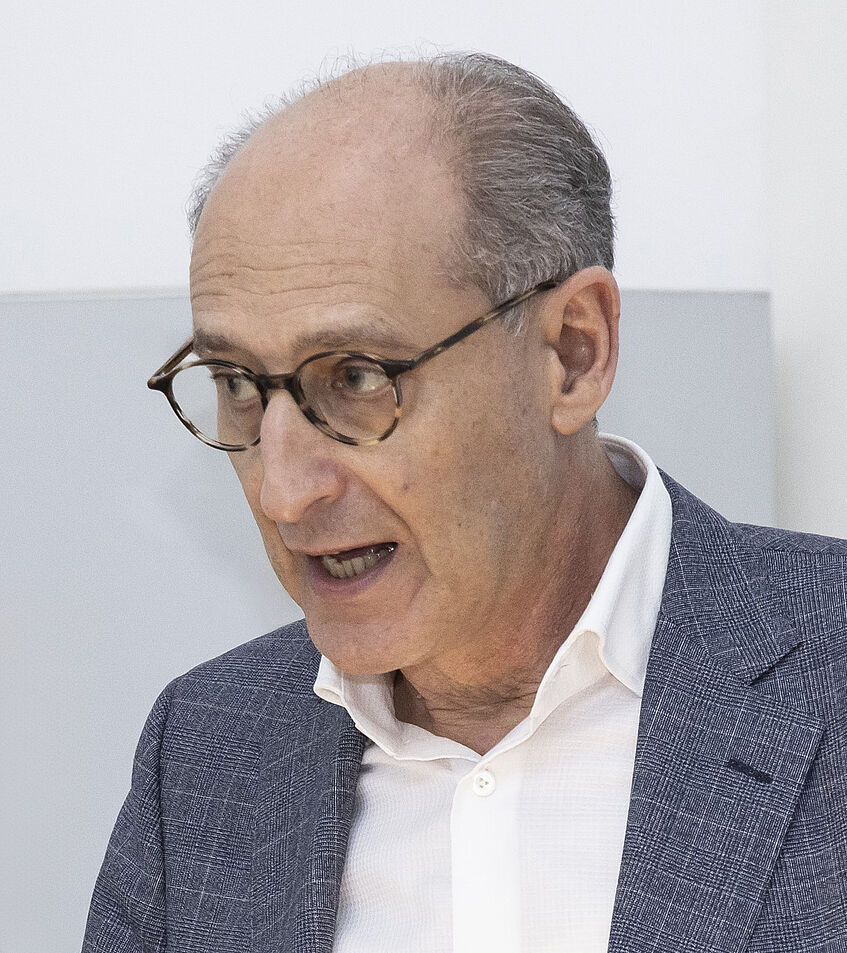
Sugata Banerji is an Associate Professor of Computer Science at Lake Forest College and Director of the Applied Data Center. His research focuses on computer vision, scene understanding, and machine learning, with applications in medical imaging and image retrieval. He holds a PhD in Computer Science from New Jersey Institute of Technology (2013) and a Postdoctoral fellowship in Computer Vision at George Mason University (2013–present). His educational background also includes a BE in Information Technology from West Bengal University of Technology. Research Interests include image processing, pattern recognition, and novel descriptors for object and scene classification. His work spans deep learning for medical diagnostics, efficient feature extraction methods like EFM-HOG, and geo-localization of buildings using computer vision. He has received the Department of Computer Science Travel Award (2012) and served as a Teaching Assistant (2008–2013). Key contributions include advancements in HOG descriptor variants (e.g., HaarHOG), color-based feature integration, and solar energy growth modeling. He teaches courses such as Roadmap to Computing with Python and Introduction to Computer Science, emphasizing practical programming and graphics problem-solving.
Mariya Senyk is a Senior Lecturer at the Department of Law, Lund University, with affiliations to the Lund Tax Academy and Public Law. Her research focuses on indirect taxes, particularly EU VAT law, international tax law, and the interplay between digitalization and taxation. She investigates challenges arising from digital economy taxation, including jurisdictional issues and VAT allocation. Her recent projects explore the role of taxes in achieving sustainability goals, examining environmental taxation mechanisms within EU frameworks. She teaches international/EU tax law and VAT law at advanced levels, including directing the course 'Beskattning i den digitala eran' (Taxation in the Digital Era). Her research projects include the Territorial Allocation of VAT (EU-focused), the Digitax initiative studying taxation in the digital era, and sustainability-linked tax policy analysis. She participates in interdisciplinary workshops and conferences, such as the Swedish Tax Force for the Future and the 15th GREIT Conference. Her work frequently addresses CJEU case law interpretations and EU tax policy developments. Key contributions include analyzing VAT digitalization challenges, the impact of EU tax-based own resources on sovereignty, and the nexus between tax policy and environmental goals. She has provided expert consultation responses to Swedish tax reforms (e.g., modernization of labor tax rules) and contributed to peer-reviewed journals like EU Law Live and Skattenytt .
Oggie Arandelovic is a Senior Lecturer at the University of St Andrews, School of Computer Science. His research focuses on computer vision, machine learning, and their applications in healthcare and data analysis. He holds a PhD from the University of Cambridge (2007) and a Master of Engineering from the University of Oxford (2003). His work spans health informatics, clinical trial design, and mathematical modeling. Notable contributions include deep learning methods for pathology slide classification, adversarial attacks on signature verification systems, and semi-supervised crowd counting techniques. He has authored over 200 publications and led projects like the ICAIRD initiative in AI-driven diagnostics. Current research trends emphasize medical imaging analysis, robust machine learning models, and interdisciplinary applications of AI in healthcare. His projects are funded by institutions like the Technology Strategy Board and Scottish Funding Council.
Prof. habil. dr. Gintautas Dzemyda is a leading Lithuanian computer scientist, Professor and Senior Researcher at Vilnius University Institute of Data Science and Digital Technologies (VU DMSTI), and Head of the Cognitive Computing Group . He is simultaneously affiliated with the Institute of Mathematics and Informatics (MII) in Vilnius, where he has built an internationally recognized scientific school in visual data analysis. Education & Qualifications 1984 – Candidate of Technical Sciences (PhD equivalent), thesis on “Problem Structure Analysis – a Tool for More Effective Optimization”. 1997 – Habilitation Doctor of Technical Sciences, dissertation on “Isolation of Necessary Knowledge to Improve Optimization Efficiency”. 1992 – Associate Professor, Institute of Mathematics and Informatics, Vilnius. 1998 – Professor, Kaunas University of Technology. Research Interests Prof. Dzemyda’s research integrates data science, artificial intelligence, optimization, and cognitive computing . Core topics include dimensionality reduction, multidimensional data visualization, neural-network–based analytics, parallel and distributed computing, multi-criteria decision support, and advanced AI applications in medicine (ophthalmology, cardiology, oncology). His work has pioneered Lithuanian capabilities in visual analytics and large-scale data exploration. Publication Trends Across 270+ refereed works and 2 Springer monographs (2013, 2023), recent outputs (2021–2025) emphasize geometric multidimensional scaling for big-data visualization, deep learning for pancreatic-cancer detection on CT images, reinforcement learning for autonomous navigation, and fraud-detection techniques for highly imbalanced financial datasets. These contributions appear in Springer LNCS/LNNS, Informatica, Journal of Global Optimization, Engineering Applications of Artificial Intelligence , and other top venues. Awards & Recognition Lithuanian State Science Prize (2001 & 2021) Honorary Doctor of the University of Latvia (2019) Knight's Cross of the Order “For Merit to Lithuania” (2007) Doctoral Supervision & Committees He has mentored 28 doctoral graduates (15 direct, 13 through academic descendants) and currently supervises: Dalia Breskuvienė – Classifier training-set optimization Modestas Motiejauskas – Emotion recognition in photographs Victor Bulava – Machine-learning methods for cyber-incident early detection He also chairs or serves on doctoral and habilitation committees at VU, KTU, VGTU, VMU and MII. Laboratory & Projects As Head of the Cognitive Computing Group , Prof. Dzemyda coordinates several national and EU projects, including the current Lithuanian Research Council grant “Geometric Method for Multidimensional Scaling” (S-MIP-20-19, 2020-2022) and the SMART programme project “CognitiveSTATS” (2021-2023) focused on combating misinformation during pandemics. His team develops open-access tools for large-scale data visualization and contributes to the MIDAS national research-data archive.
Raphael Rosenberg serves as Professor and Deputy Head of the Department of Art History at the University of Vienna within the Faculty of Historical and Cultural Studies. His academic profile demonstrates a unique blend of traditional art historical expertise with cutting-edge interdisciplinary approaches, particularly in applying cognitive science methodologies to the study of art perception. Rosenberg maintains an active teaching schedule covering core art history methodology, thesis supervision, and specialized courses on avant-garde movements and art networks. Rosenberg's research interests focus on the intersection of art history with cognitive science and digital humanities. He has pioneered the application of eye-tracking technology to investigate how viewers engage with artworks, challenging traditional assumptions about visual perception in art. His work spans from Renaissance studies (particularly Michelangelo) to early 20th century avant-garde movements, with a special emphasis on the role of exhibitions as platforms for artistic innovation. The Database of Modern Exhibitions (DoME) project represents a significant contribution to documenting European painting and drawing exhibitions between 1905-1915. Analysis of Rosenberg's recent publications reveals a clear trajectory toward increasingly interdisciplinary research that bridges art historical scholarship with empirical methods from cognitive science. His work consistently demonstrates how digital tools and empirical methodologies can enhance traditional art historical inquiry, particularly in understanding viewer engagement with artworks. The recurring themes across his publications include the cognitive processes involved in art perception, the historical development of exhibition practices, and methodological innovations in art historical research. Rosenberg maintains an extensive collaborative network across disciplines, frequently working with psychologists, computer scientists, and other art historians. His research group appears to focus on empirical approaches to art history, particularly through the use of eye-tracking technology in museum settings. The Database of Modern Exhibitions project represents a major collaborative effort to document exhibition practices during a crucial period of artistic innovation in the early 20th century.