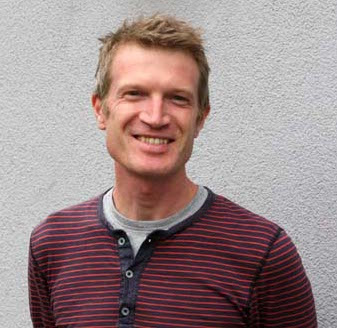
Antti Juvonen is a Lecturer at the School of Applied Educational Science and Teacher Education, University of Eastern Finland. His research focuses on music education, arts education, and pedagogical well-being, with an emphasis on creativity, multiculturalism, and technology integration. He has published extensively on topics such as student motivation, distance learning, and the role of arts in education. Fields of Expertise: Music Education, Arts Education, Educational Sciences, Creativity, Drama Education, School Well-being Email: antti.juvonen@uef.fi Phone: +358 50 593 8120 His recent work explores the paradigm shift in music education, ethnographic studies of community orchestras, and the impact of innovative learning environments on student well-being. He collaborates internationally, with publications in peer-reviewed journals and conferences across Finland, Estonia, Lithuania, and Latvia. Antti’s research includes studies on: Motivation in music and mathematics Distance music learning in primary education Professional competence in teacher training Multicultural reflections in arts education Digital tools in music and teacher education
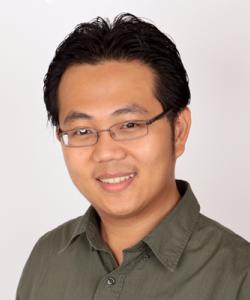
Tuan Nguyen is an Associate Professor of Educational Leadership and Policy Analysis at the University of Missouri, affiliated with both the Truman School of Government and Public Affairs and the College of Arts and Science. His research focuses on teacher leadership, school improvement, teacher labor markets, and the impact of financial aid on postsecondary education outcomes. He maintains an active public engagement presence through policy briefs, media commentary, and a dedicated website analyzing U.S. teacher shortages (teachershortages.com). Nguyen's work examines systemic challenges in educator recruitment and retention, particularly in rural and high-need settings. His research integrates policy analysis with practitioner insights, addressing issues like the distribution of qualified teachers, the effects of federal initiatives (e.g., Race to the Top), and the interplay between teacher working conditions and attrition. He has contributed to national conversations on STEM teacher shortages, special educator workforce diversity, and the role of financial aid in student persistence. His media engagements include appearances on PBS, NBC Today Show, and AAAS SciLine, where he discusses teacher turnover, merit pay, and rural education challenges. Nguyen emphasizes equity-focused research, advocating for evidence-based policies to address disparities in access to high-quality educators. His teaching philosophy emphasizes diverse pedagogical approaches and has been recognized through strong student evaluations across secondary and graduate education contexts.
Sabine MAS is a Full Professor at the School of Library and Information Studies, Faculty of Arts and Sciences at the University of Montreal. Her research focuses on classification systems for digital archives, typology of contemporary archives, and user-centric information management. She has supervised 5 major theses and leads/co-leads 9 research projects including the Centre de recherche interuniversitaire sur les humanités numériques (CRIHN). Teaches courses like Introduction à l'archivistique and Diplomatique contemporaine Active in digital humanities and legal documentation fields Recipient of multiple grants from CRSH and FRQSC Research highlights include development of faceted indexing models for legal documents and studies on emotion-driven archival description. She co-edited Typologie des documents des organisations (2019) and modernized the Portail International Archivistique Francophone (PIAF). Grants include a 2024-2028 strategic research grant (FQRSC) and 2023 CRSH exploration grant for studying archival practices. Her work bridges archival theory with practical applications in digital environments.
Gillian Calder is a Professor at the University of Victoria’s Faculty of Law and currently Acting Chair of Gender Studies (2023-2024). She joined the faculty in 2004 after practicing Aboriginal law and teaching at the University of New Brunswick. Her academic roles include serving as Associate Dean, Academic and Student Relations (2015–2020) and Chair of the UVic Academic Women’s Caucus (2019–2022). Education: B.A. (History, UBC, 1993), LL.B. (UBC, 1997), Diploma in University Teaching (UNB, 2002), LLM (Osgoode Hall, 2003). Her LLM thesis addressed gender, social reproduction, and Canada’s welfare state. Research focuses on legal pedagogy (critical, arts-based, and experiential learning), feminist legal theory, Indigenous legal frameworks, and the intersection of law with performance and emotion. She prioritizes anti-oppressive and decolonial approaches, particularly engaging Indigenous ways of knowing. Notable contributions include co-editing Polygamy’s Rights and Wrongs (UBC Press, 2014) and pioneering Theatre of the Oppressed techniques in legal education. Her work emphasizes empathy, creativity, and imagination in teaching. Awards include multiple Terry Wuester Teaching Excellence Awards (2008–2015), SSHRC grants, and grants supporting projects like #ReconciliationSyllabus . She has held visiting fellowships at institutions including the University of Edinburgh and Emory University. Administratively, she contributed to curricular reforms, Indigenous legal initiatives (e.g., Bachelor of Indigenous Laws), and equity initiatives such as the UVic Equity Committee. She also advises organizations like West Coast LEAF and the National Abortion Federation.
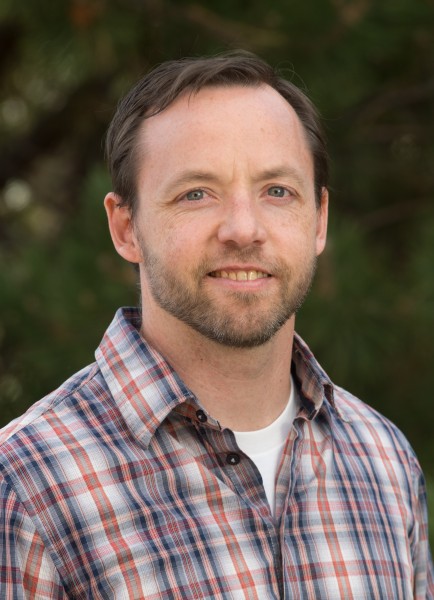
Terrence Iverson is a Professor of Economics at Colorado State University, affiliated with the College of Liberal Arts. His research focuses on environmental macroeconomics, climate change policy, and ecological resource economics. He holds a Ph.D. in Economics from the University of Wisconsin-Madison (2009). Dr. Iverson's work emphasizes global climate policy frameworks, particularly the design of climate clubs to achieve emissions reductions without broad multilateral agreements. He has explored tiered systems where leading countries use trade incentives to encourage partial compliance in other nations. His recent book contract with Cambridge University Press addresses systemic challenges in climate change mitigation. His research also covers pandemic economics, including optimal social distancing strategies during uncertain vaccine deployment. He teaches graduate courses on environmental economics and climate change, and his work has been featured in The New Yorker for its innovative approaches to public health crises. Key contributions include analyzing carbon tax effectiveness under non-constant time preferences and evaluating the economic impacts of policies like carbon capture and storage. His interdisciplinary approach bridges environmental science, political economy, and applied mathematics.
Isaiah Speight is an Assistant Professor in the Department of Chemistry at William & Mary, where he teaches organic chemistry. His research focuses on advancing organic synthesis and catalysis through mechanochemistry, sustainable chemistry, and 3D printing technologies. Dr. Speight earned his B.S. in Chemistry from Norfolk State University and his Ph.D. in Chemistry from Vanderbilt University, followed by postdoctoral work at the University of California, Irvine, and a Visiting Scientist role at AbbVie. Education: B.S. in Chemistry (Norfolk State University), Ph.D. in Chemistry (Vanderbilt University) Dr. Speight's research integrates mechanochemistry to develop solvent-free synthetic methods, emphasizing sustainability and innovative material design. His work explores polymorphism control in metal-organic frameworks, activation of solid-state reactions, and application of ball milling for organic and inorganic synthesis. Recent publications highlight advancements in mechanochemical Grignard reactions, nickel complex reactivity, and dimensional control of crystalline materials. His 15 most recent articles focus on mechanochemistry, organic synthesis, catalysis, and sustainable chemical technologies. These studies span topics such as ball milling optimization, polymorph stabilization, and solid-state reaction mechanisms. Dr. Speight also advocates for diversity in science as a catalyst for innovation and ethical progress.
Christina M. Rost is an Assistant Professor in the Department of Materials Science and Engineering at Virginia Polytechnic Institute and State University (Virginia Tech) , part of the College of Engineering . She holds a Ph.D. in Materials Science and Engineering from North Carolina State University (2016), following a B.S. and M.S. in Physics from Indiana University of Pennsylvania. Prior to joining Virginia Tech, she served as an Assistant Professor of Physics at James Madison University. Research Focus: Atomic-level disorder in ceramics, particularly high entropy and compositionally complex systems. Key Techniques: X-ray absorption/emission spectroscopy, multi-length-scale characterization. Applications: Functional materials for extreme environments, energy, and electronics. Research Interests include designing materials with tunable properties via controlled disorder, leveraging high entropy oxides and amorphous systems. Her work integrates advanced spectroscopy, computational modeling, and machine learning to accelerate materials discovery. Recent emphases include understanding local structure- property relationships in entropy-stabilized oxides and spinel ferrites. Publications reflect a focus on high entropy materials' synthesis, thermal stability, magnetic behavior, and functional applications. Notable trends include: (1) exploring cation roles in rock salt oxides, (2) optimizing thin film growth for pyroelectric applications, and (3) studying phase evolution under thermal/mechanical stress. Scientific Awards : 2023 Provost Award for Excellence in Research (James Madison University) 2017 Postdoctoral Teaching Fellowship (University of Virginia) 2015 First Place, Best Student Presentation (ACerS) Lab Team includes 5 graduate students (e.g., John Barber, Gerald Bejger), 4 undergraduates, and former members now at institutions like Pratt & Whitney. Lab Facilities : Located in Holden Hall, equipped with state-of-the-art characterization tools.
B. Stephen Carpenter II serves as Professor at the School of Visual Arts within the College of Arts and Architecture at The Pennsylvania State University. Based in Borland Building (124 Shortlidge Road, University Park, PA 16802), he contributes to university initiatives including the Invent Penn State Tech Tournament and embodied carbon discussions in the built environment. His Executive Committee membership and active editorial roles demonstrate institutional leadership. Professor Carpenter’s research centers on critical art education with emphases on visual culture, social justice, and anti-racist pedagogy. He investigates ceramics as a vehicle for imagination and social commentary while addressing contemporary challenges like digital integration in art education. His scholarship consistently explores public pedagogy, emotional dimensions of art teaching, and equity-focused practices that bridge theory and community engagement. Analysis of his 2012-2023 publications reveals evolving focus from foundational art education theory toward urgent social applications. Recent works increasingly address racism, social-emotional learning, and systemic change in art education, with editorials in Art Education and Studies in Art Education framing art as a catalyst for societal transformation. This trajectory demonstrates growing emphasis on actionable justice-oriented practices alongside traditional art pedagogy.
Dr Alexis Kirke is a Senior Research Fellow in Computer Music at the School of Art, Design and Architecture (Faculty of Arts, Humanities and Business) at the University of Plymouth. As a composer-in-residence, he specializes in interdisciplinary research at the intersection of music, computing, and healthcare. His work includes developing adaptive music systems like RadioMe for dementia care, applying quantum computing to music composition, and exploring affective computing through brain-computer interfaces. Teaching roles include associate lecturer positions in modules such as Collaborative Practice (BA Sound and Music Production), Psychology (BA Music), and MRes Computer Music. He has supervised five PhD students as a second supervisor and served as an internal PhD examiner. His research focuses on algorithmic composition, music technology for healthcare, quantum computing applications in music, and multi-agent systems inspired by natural phenomena like humpback whale song evolution. Recent projects include the Plymouth Marine Institute collaboration and the Cloud Chamber performance involving real-time interaction with subatomic particles. Key contributions include innovative systems like RadioMe, which combines adaptive radio with reminder systems for dementia patients, and Q-Muse, a quantum computer music system. His work bridges computational creativity with human-centric applications, emphasizing ethical and accessible technology. Grants & Awards: No specific awards listed, but active in collaborative research projects Lab/Teams: Plymouth Marine Institute, Cloud Chamber Project
Angela Rieck is a Senior Lecturer in Early Childhood Education at the Department of Education, ICT and Learning at Østfold University College, Norway. She holds a Master's degree in Early Childhood Education (2017) and a Bachelor's degree in Drama and Theatre Communication (2014), both from Oslo and Akershus University College. Her academic interests focus on children’s play, aesthetic experiences, and learning processes, particularly for children aged 0-3 years. Rieck has extensive practical experience, including 21 years in kindergarten roles such as educational leader and drama educator. Her research emphasizes toddler science (småbarnsvitenskap), exploring how aesthetic and sensory experiences shape early learning. She co-leads the Regional Arrangements for Competence Development (REKOMP) project, promoting partnerships between kindergartens and higher education institutions. Rieck teaches courses like Children’s Development, Play and Learning and Bachelor Thesis in the Early Childhood Education program. Rieck’s publications span academic articles and book chapters on topics such as bodily interactions in early childhood, pedagogical documentation ethics, and aesthetic learning processes. She actively contributes to podcast discussions on aesthetics and play. Her work bridges theoretical frameworks with practical pedagogical innovations, emphasizing interdisciplinary approaches to early childhood education.
Doç. Dr. Gökhan MURA is an Associate Professor and Deputy Dean of the Faculty of Fine Arts and Design at İzmir Ekonomi Üniversitesi, specializing in Visual Communication Design. He holds a PhD in Industrial Product Design from Istanbul Technical University (2014), an MSc in Visual Communication Design from Istanbul Bilgi University (2004), and a BSc in Industrial Product Design from Middle East Technical University (2001). His career includes international research stints in Sweden, the UK, and Finland, focusing on empathic design, wearable technologies, and cultural heritage preservation. Key research areas include Design for Experience, Empathic Design, and User-Centered methodologies. He has contributed to EU-funded projects like ENGAGE (2006-2007) and trans-making, exploring migration narratives through design. His teaching spans undergraduate and graduate courses in Visual Communication Design, Interaction Design, and Design Methods. Administrative roles include leading departmental initiatives, organizing international exhibitions, and supervising academic programs. Recent publications focus on migrant cultural practices, medical education visualization, and digital heritage dissemination. He actively participates in academic workshops and contributes to international conferences, emphasizing interdisciplinary approaches to design challenges.
Dr. Jim Pope is a Principal Academic in English and Communication at Bournemouth University, Faculty of Media and Communication. He is based at Talbot Campus and has been a key figure in advancing interactive digital storytelling in both academic and public spheres. His work bridges creative writing, media education, and digital technology, with a strong focus on reader engagement and narrative design. His research interests include: Interactive Digital Storytelling Children's Literature and Reader Response Media Education and Digital Literacy Narrative Design in New Media Arts-based Research Hyper-narrative and Non-linear Texts Jim Pope's recent publications reflect a consistent focus on digital narrative tools like Genarrator and the New Media Writing Prize, exploring how interface design, user experience, and interactivity shape reading and writing practices. His work spans journals in digital humanities, media studies, and creative writing education, demonstrating interdisciplinary reach and practical impact in both pedagogy and public engagement. He is actively involved in outreach, including co-chairing the digital art exhibition at the International Conference for Interactive Digital Storytelling (2019–2020) and contributing to the British Library’s Emerging Formats archive. He founded and maintains the Genarrator platform and the New Media Writing Prize, key resources in the digital storytelling community. Jim Pope supervises undergraduate dissertations and teaches courses in Children's Literature, Interactive Digital Storytelling, and Creative Writing. He holds a PhD from Bournemouth University (2007) on readers' responses to interactive fiction and is a member of NAWE and MeCCSA.
Tijana Rakic is a Lecturer in Tourism and Events at the Brighton Business School, University of Brighton, where she serves as Course Leader for the MSc International Tourism Management and MSc International Event Management programs. She leads the Tourism, Hospitality and Events Research and Enterprise Group and is Chair of the Geographies of Tourism and Leisure Research Group at the Royal Geographical Society with the Institute of British Geographers. She also co-edits the Routledge book series Current Developments in the Geographies of Leisure and Tourism . Her research focuses on visual research methods, heritage tourism, national identity, and the representation of cultures in tourism media. She completed her PhD at Edinburgh Napier University in 2009, exploring the Acropolis in Athens as a World Heritage site intertwined with national identity and tourism. Her interdisciplinary approach emphasizes creative and visual methodologies in tourism studies. Tijana has co-edited several influential publications, including An Introduction to Visual Research Methods in Tourism (2012), Travel, Tourism and Art (2013), and special journal issues on gender and visual methods in event studies. Her recent publications explore visitor taxonomies at film-induced heritage sites, future research agendas in urban tourism, and visual methodologies in event research. These works reflect a strong trend toward interdisciplinary, visual, and critical approaches in tourism scholarship. Shortlisted for Brighton Students' Union Awards – Course Leader of the Year (2022) Tijana is an experienced PhD supervisor, currently guiding five doctoral candidates on topics related to national identity, heritage, and visual methods in tourism. She is a regular reviewer and serves on the editorial boards of Tourist Studies , Tourism Geographies , International Journal of Tourism Cities , and others. She also leads research groups and collaborates internationally, contributing to the advancement of tourism and leisure geographies. She has produced two academic documentaries— Visiting the Athenian Acropolis (2008) and Of Holidays and Olives (2006)—which have been used in teaching and shown at film festivals, demonstrating her commitment to innovative and accessible research outputs.
Dr. Andrea Balbo is a Scientific Collaborator in Geoarchaeology and Paleogeography at the University of Geneva, affiliated with the Department of Earth Sciences within the Faculty of Sciences. His research is supported by major grants, including the Swiss National Science Foundation (SNSF) project 'Specialized Craftsmen on the Move,' and he collaborates with institutions across Switzerland, France, Italy, Spain, India, and beyond. PhD in Archaeology (Geoarchaeology), University of Cambridge (2007) Associate Professor Accreditation, Italian Ministry of University and Research (2013) Accreditation for Advanced Research, Catalan University Quality Agency (2015) Senior Research Fellow, Alexander von Humboldt Foundation, University of Hamburg (2015–2018) His research focuses on human-environment interactions during the Holocene, particularly in mountainous, arid, and coastal zones. He integrates archaeological fieldwork with paleoenvironmental and paleoclimatic data, using techniques such as soil micromorphology, remote sensing, and agent-based modeling. His work spans diverse regions including the Alps, Mediterranean wetlands, North Gujarat (India), the Sahara, Tierra del Fuego, and the Antarctic Peninsula. The recent publications highlight a strong trend in interdisciplinary environmental archaeology, with emphasis on climate change impacts, land use sustainability, terrace agriculture, and the use of advanced technologies like SAR remote sensing and simulation modeling. His articles appear in leading journals such as Quaternary Science Reviews , The Holocene , PLOS ONE , and WIREs Water . Senior Research Fellow, Alexander von Humboldt Foundation (2015–2018) Associate Professor Accreditation, MIUR, Italy (2013) Accreditation for Advanced Research, AQU Catalunya (2015) Dr. Balbo has served as a lecturer and teaching director at multiple universities, including the University of Geneva, Politecnico di Milano, University of Bologna, and University of the Philippines. He has supervised laboratory and field training at the University of Cambridge and coordinated international summer schools. He is also an active peer reviewer for the European Commission, National Geographic Society, IUCN, and over 20 scientific journals. His work at ALIPH Foundation on heritage conservation in conflict zones further demonstrates his engagement with real-world applications of archaeological science. He has contributed to projects involving heritage conservation, climate-conflict interactions, and illicit trafficking of cultural goods, and helped design e-learning platforms for heritage diplomacy. His affiliations include the Humboldt Foundation, Darwin College (Cambridge), Marie Skłodowska-Curie Association, and the SDG Academy Alumni Network.
Georgios Styliaras serves as an Associate Professor in the Department of Computer Engineering and Informatics at the University of Patras, where he teaches Informatics I and II courses. His office is located in the Old Building on the 1st floor at G. Seferi 2, with regular office hours Tuesday-Wednesday from 12:00-14:00. His research focuses on Multimedia Systems , Cultural Technology , and Spatial Hypermedia , with particular emphasis on applications in cultural heritage environments. His work bridges computer science with cultural preservation, creating innovative solutions for museums and educational contexts. Analysis of his publication record from 2009-2013 reveals a strong trajectory toward mobile applications for cultural heritage sites, with increasing focus on smartphone-based multimedia services. His research consistently addresses security, trustworthiness, and user experience in digital cultural environments, demonstrating both technical expertise and cultural sensitivity. His scientific contributions include collaborations with researchers like Dimitrios Koukopoulos across multiple publications in journals such as Journal of Educational Multimedia and Hypermedia, Journal of Cultural Heritage, and Electronic Commerce Research.