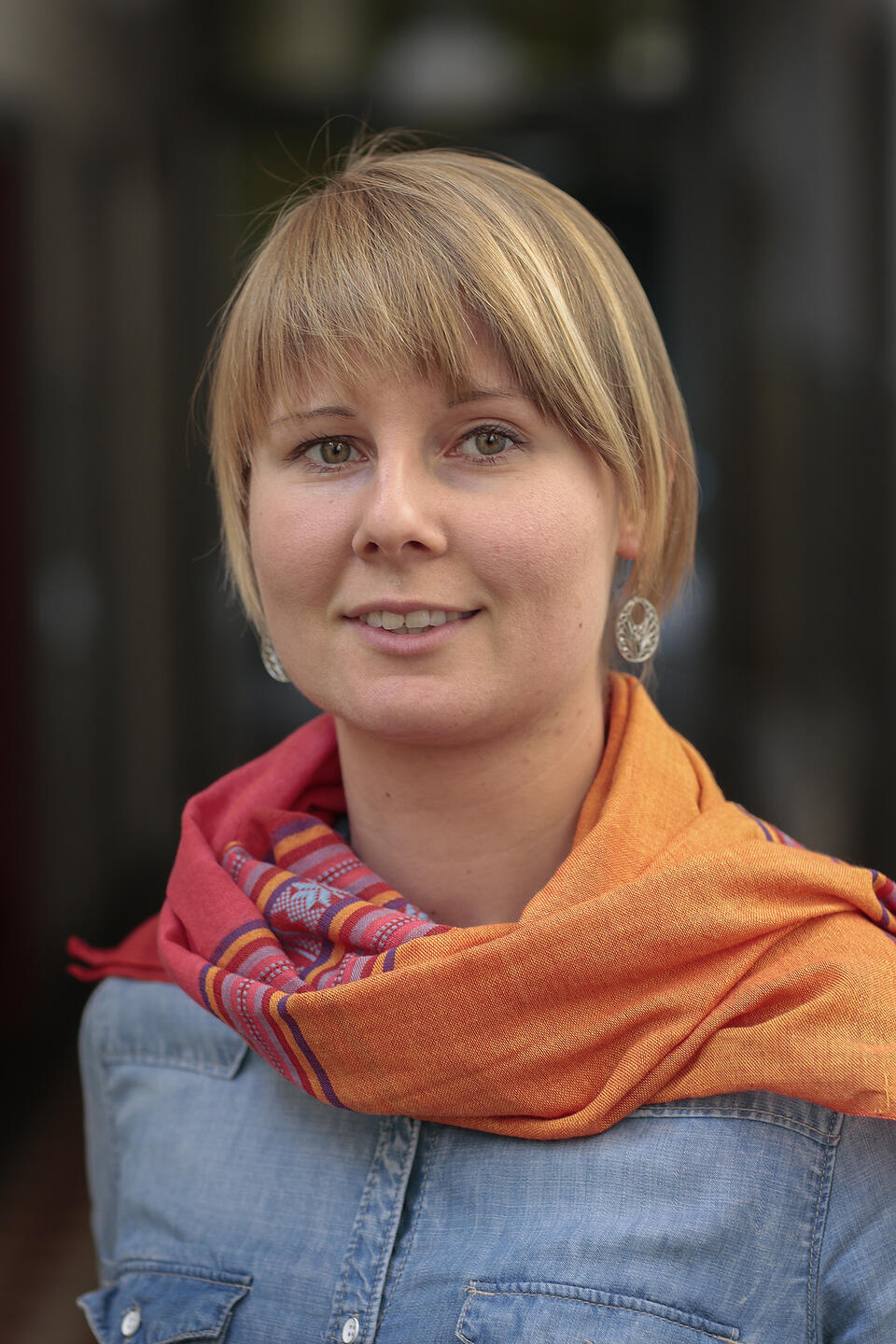
Dr. Mellinee Lesley is a Professor in the Language, Diversity & Literacy Studies program at Texas Tech University's College of Education. She serves as Associate Vice Provost for Outreach and Engagement, leading the Community Engaged Learning initiative. Previously, she worked as a high school English teacher and directed a developmental reading program. Ph.D. in Language in Education, Reading/Writing/Literacy from University of Pennsylvania M.A. in English, Rhetoric and Teaching of Composition from New Mexico State University B.A. in English from University of Iowa Her research focuses on critical literacy , disciplinary writing , and equity in education , particularly for marginalized student populations. She explores intersections of media literacies , gender identity , and literacy reform in K-12 settings. Recent publications highlight trends in adolescent writing pedagogy , critical media frameworks , and community-engaged scholarship . Her work bridges high-stakes testing contexts with student-centered literacy approaches . Community Engagement Scholarship Award for Exemplary Projects (APLU/W.K. Kellogg Foundation) Fellow of the National Writing Project Dr. Lesley mentors graduate students in engaged scholarship and examines the democratization of knowledge through collaborative research methodologies . She co-founded the Llano Estacado Writers' Alliance to support equitable literacy practices.
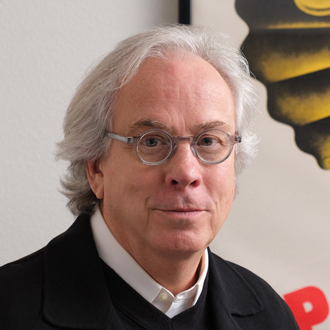
Audrey Berger Cardany is an Associate Professor of Music and Director of Music Education at the University of Rhode Island, specializing in undergraduate and graduate music education. Her work bridges music, language, movement , and technology , with certifications in Orff-Schulwerk and Kodály methods. Education: D.M.A. in Music Education (Arizona State University), M.M. in Vocal Performance and Choral Conducting (University of Nevada, Reno), B.M. in Music Education and Vocal Performance (University of Wyoming) Her research emphasizes early childhood music education , literacy integration , and technology-enhanced pedagogy . She pioneered programs like Musical Story Time at Baltimore’s Enoch Pratt Free Library and contributes to journals such as General Music Today and Journal of Research in Music Education . Dr. Cardany serves as Associate Editor for Research for the Rhode Island Music Educators Review and has received the 2020 Fritz Wenisch Award for her service to the Faculty Senate. Selected Scientific Awards 2020 Fritz Wenisch Award for Exceptional Contributions to the Faculty Senate Her publications highlight inclusive music classrooms , literature-based activities , and interdisciplinary approaches across early childhood to elementary education. She has presented at conferences like NAfME, OAKE, and NAEYC, focusing on parental engagement and pedagogical innovation .
A.S. Richterich is an Associate Professor in Digital Cultures at Maastricht University’s Faculty of Arts and Social Sciences (FASoS), Department of Literature & Art. Their research focuses on social practices involving digital technology, particularly in hacker/maker communities and feminist technocultural spaces. They hold a PhD in Digital Media Studies from the University of Siegen (2012) and conducted postdoctoral research at the University of Sussex as a Marie Skłodowska-Curie Fellow (2019-2021). Key areas of expertise include hacker/makerspace dynamics, digital literacy, feminist technology activism, and ethnographic methods. Richterich has published widely in journals such as *Information, Communication & Society* and *Learning, Media, & Technology*, examining topics like data solidarity, design thinking critiques, and gendered participation in tech communities. Recent projects include investigating feminist automation ethics and the socio-political implications of hackathons. They received the Marie Skłodowska-Curie Fellowship (2019-2021) for research on experiential learning in maker cultures. Current work explores marginalized groups’ engagement with digital technologies, including women-only developer communities and feminist hackerspaces.
Jessica Vasquez-Tokos is a Professor in the Department of Sociology at the University of Oregon's College of Arts and Sciences, holding a joint appointment with the Institute for Excellence in Racial and Ethnic Studies (IRES). Her office is located in PLC 715 with Spring 2025 office hours by appointment. Her educational background includes: B.A. in English from Princeton University (1998) Ph.D. in Sociology from the University of California, Berkeley (2007) Professor Vasquez-Tokos's research centers on race/ethnicity, Mexican Americans/Latinos/as/xs, social inequalities, gender, family, and intermarriage. She employs qualitative approaches to examine racial identity formation across generations, the racialization of privacy within families, and Latino middle-class experiences. Her work reveals how racial status fundamentally shapes national belonging and family dynamics through life course perspectives, challenging assimilationist frameworks while documenting persistent structural inequalities. Her publication trajectory shows deepening engagement with racial formation theory, evolving from early work on generational identity shifts to recent investigations of national belonging in her 2025 book Burdens of Belonging . The 2024 articles on the Latino middle class and couple identity work demonstrate her dual focus on structural inequality and micro-interactional processes. Recurring methodological themes include life course analysis and reflexive qualitative interviewing techniques. Her scholarly contributions have earned significant recognition: Distinguished Contribution to Scholarship Article Award (ASA Race, Gender, and Class Section, 2021) Fund for Faculty Excellence Award (University of Oregon, 2017) Choice Outstanding Academic Title (2012) Best Article Award (ASA Latino/a Sociology Section, 2010) Professor Vasquez-Tokos's career includes a Ford Foundation Postdoctoral Fellowship and Russell Sage Foundation Visiting Scholar position. While specific student advising details aren't listed, her professorship involves graduate mentorship in sociology. Her research consistently addresses how racial hierarchies permeate intimate family spaces and national identity formation. As an IRES affiliate, she contributes to interdisciplinary initiatives examining racial and ethnic dynamics through the Institute for Excellence in Racial and Ethnic Studies at the University of Oregon.
Douglas May is an Associate Professor in the Department of Communication Design at the University of North Texas (UNT) College of Visual Arts and Design (CVAD). He holds a B.F.A. in Advertising Art from UNT (1977) and an M.F.A. in Visual Communication from Texas A&M Commerce (2017). His academic research focuses on transcoding in communication design, bridging conceptual ideas with visual solutions. As an educator, May emphasizes creativity, critical thinking, and resilience against risk-averse practices. His professional career includes founding May&Co., a Dallas-based design firm, which supported clients like Neiman Marcus and Texas Instruments. He received the prestigious 2023 Golden Egg Award for lifetime achievement in visual communications and is an AIGA Fellow (2011). Educations: B.F.A., Advertising Art, University of North Texas, 1977 M.F.A., Visual Communication, Texas A&M Commerce, 2017 May’s teaching philosophy integrates real-world projects, such as collaborations with UNT’s Opera Department and a mural project in Frisco, Texas. His students have secured roles at firms like TikTok, American Airlines, and Fossil. Awards: 2023 Golden Egg Award AIGA Fellow (2011) AAF Dallas Educator of the Year (2020)
Dennis Prather is the Engineering Alumni Distinguished Professor at the University of Delaware's Department of Electrical and Computer Engineering within the College of Engineering. A retired U.S. Navy Captain with over 38 years of service, he holds BSEE, MSEE, and PhD degrees from the University of Maryland. His research focuses on RF-photonic devices, including ultra-high bandwidth modulators, silicon photonic RF sources, and integrated RF-photonic phased array antennas. He leads projects in Silicon Photonics, Conformal Antennas, Passive Millimeter-wave Imaging, and High-Frequency Optical Modulators. Professor Prather is an IEEE Fellow, SPIE Fellow, OSA Fellow, and National Academy of Inventors Fellow. He has authored over 650 papers, holds 40+ patents, and authored 16 books/chapters. His work emphasizes photonic integration for advanced phased array systems, microwave photonic radiometry, and high-power photodiode engineering. Current research includes ultra-wideband photonic receivers, holographic beam conversion, and thin-film lithium niobate modulators. His lab develops fabrication processes for state-of-the-art devices, with applications in imaging, communications, and radar. Notable projects include modular antenna systems, optically-fed phased arrays, and photonics-based microwave radiometers. Awards include multiple fellowships recognizing his contributions to photonics and engineering innovation.
Helen Martin is a Lecturer in the School of Education at the University of Aberdeen. She holds a BSc (Hons) in Mathematics from the University of St. Andrews, a PGDE(S) in Mathematics from the University of Edinburgh, and a PhD in Mathematics Education from the University of Aberdeen. Her research focuses on innovative pedagogical approaches, particularly in mathematics education, Indigenous education, Arctic pedagogy, and the integration of drama into teaching practices. She has collaborated with organizations like the Scottish Mathematical Challenge and Techfest Setpoint on initiatives such as Enterprising Maths Challenge and Royal Institution Maths Masterclass. Her work emphasizes culturally responsive teaching methods, the revitalization of minority languages (e.g., Scots and Sámi), and the intersection of education with healing and community engagement. Recent publications explore topics such as cognitive dissonance in Indigenous education, Sámi perspectives in leadership, and Arctic pedagogy through Scots language revitalization. She is also involved in editorial roles for the Education in the North journal, overseeing thematic issues on drama conventions, northern pedagogy, and vocational education. Her teaching responsibilities include courses on mathematics education for undergraduate and postgraduate programs (BEd and PGDE). She actively engages in educational collaborations, promoting inclusive and community-centered learning approaches. Her research often intersects with global educational challenges, addressing equity, cultural preservation, and the adaptation of teaching methods to diverse contexts.
Javier Vela is a University Professor and Associate Chair of the Department of Chemistry at Iowa State University, where he also serves as a faculty scientist with the Ames National Laboratory. His research program focuses on the synthesis and characterization of nanostructured materials with applications in energy conversion, chemical catalysis, and fluorescence imaging, with over one hundred peer-reviewed publications and patents to his name. Dr. Vela received his educational training at prestigious institutions: B.S. (with Honors) in Chemistry from UNAM (2001) M.S. in Chemistry from University of Rochester (2003) Ph.D. in Chemistry from University of Rochester (2005) Following his doctoral studies, he completed postdoctoral research at the University of Chicago and Los Alamos National Laboratory before joining Iowa State University in 2009, where he received tenure in 2015, became a full professor in 2019, and was named University Professor in 2020. Dr. Vela's research program centers on the development of novel nanomaterials, particularly focusing on: Synthesis of nanostructured materials for energy applications Development of inorganic compounds for chemical catalysis Design of fluorescent materials for imaging applications Surface chemistry and structural characterization of nanocrystals Lead-free semiconductor materials for sustainable technologies Advanced solid-state NMR techniques for nanomaterial characterization His group employs a range of advanced techniques including solid-state NMR spectroscopy, dynamic nuclear polarization, and computational methods to understand nanomaterial structure-property relationships at the atomic level. Analysis of Dr. Vela's recent publication record reveals a strong focus on advanced materials characterization techniques, particularly solid-state NMR applications to nanomaterials. His work spans multiple disciplines including materials science, analytical chemistry, and environmental chemistry, with particular emphasis on sustainable energy solutions and advanced characterization methods. A significant portion of his recent work addresses challenges in nitrate reduction for sustainable ammonia production and the development of lead-free semiconductor alternatives through innovative synthesis approaches. Dr. Vela has received numerous prestigious awards and honors: Fulbright Scholar in Italy (2024) ACS Fellow (2021) John D. Corbett Endowed Professor (2020-2023) AAAS Fellow (2018) NSF CAREER Award (2013) Multiple LAS awards including Cassling Innovator (2018) and Early Achievement in Research (2014) ACS Midwest Stanley C. Israel Award (2014) As an educator and mentor, Dr. Vela has directed twenty doctoral and four master's theses while successfully mentoring numerous undergraduate researchers, including three NSF graduate research fellowship awardees. His research has been supported by significant funding including the NSF CAREER Award and various other grants that have enabled his group to investigate nanostructured materials for energy conversion, chemical catalysis, and fluorescence imaging applications. His service to the chemical community includes serving as Councilor for the Ames local section of the American Chemical Society, Program Chair for the Midwest Regional Meeting in 2018, and Treasurer of the Division of Inorganic Chemistry. Dr. Vela leads an active research group focused on inorganic and materials chemistry, with strong connections to the Ames National Laboratory where he has been a faculty scientist since 2010. His group collaborates extensively with researchers across disciplines to address challenges in sustainable energy and advanced materials development, maintaining an active presence in the scientific community through publications, conference presentations, and editorial board service for journals including ACS Energy Letters, Chemistry of Materials, and ACS Applied Engineering Materials.
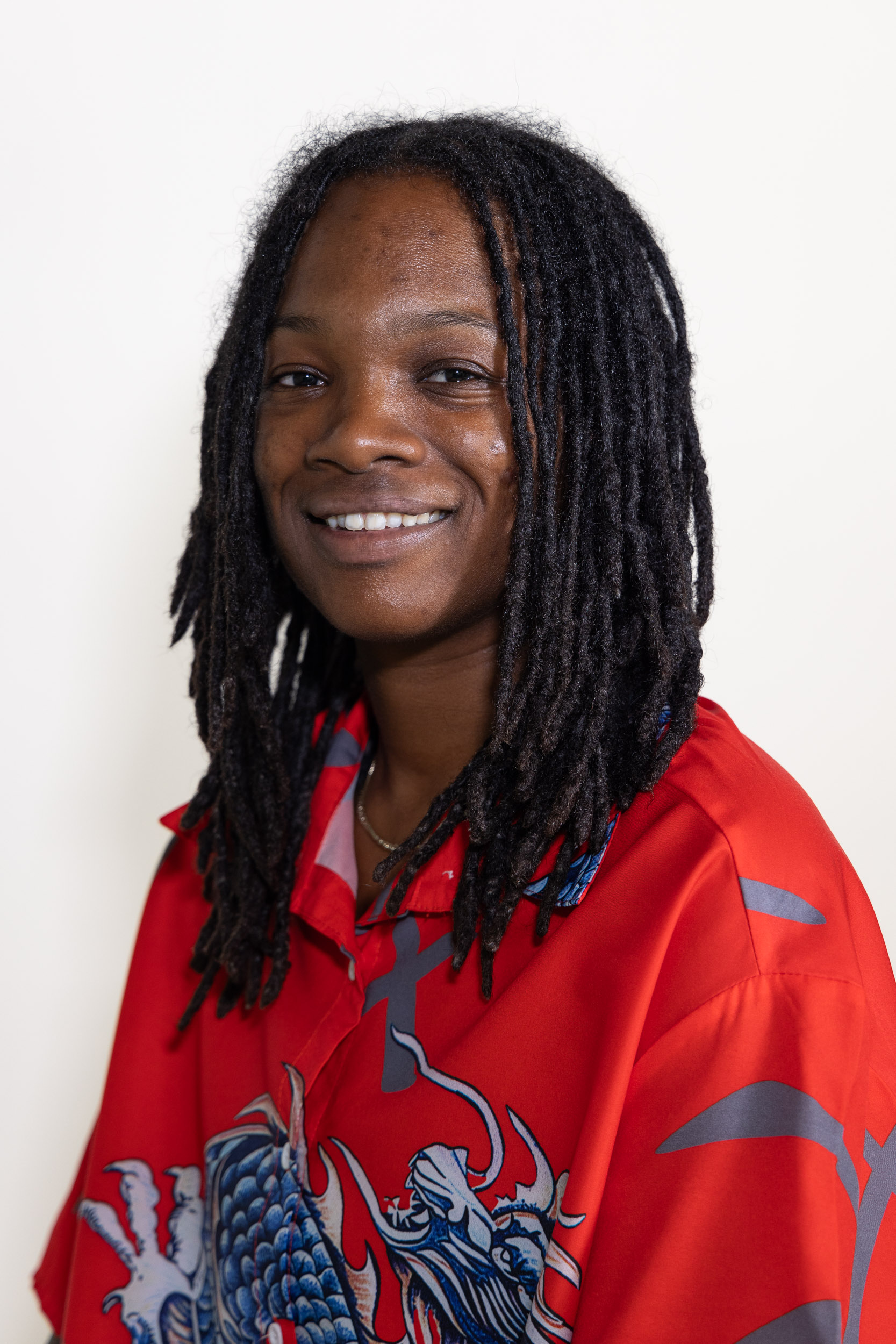
Robyn B. Adams is an Assistant Professor in the Department of Advertising & Brand Strategy at Texas Tech University's College of Media & Communication. Their research focuses on Black feminist health communication, particularly exploring reproductive justice for Black LGBTQ+ communities through narrative-based methodologies. Robyn holds a B.A. and M.A. from Texas Tech University and is completing a Ph.D. in Information and Media from Michigan State University. Key research areas include: Reproductive health disparities among marginalized populations Storytelling as an empowerment tool in healthcare Health communication in digital spaces Intersectional approaches to public health advocacy Current projects center on a groundbreaking dataset of Black queer birthing experiences, combining ethnographic storytelling with health justice frameworks. Their work frequently intersects with community activism, including volunteer efforts at Dallas-based reproductive justice organizations. Publications span topics from vaccine hesitancy to telemedicine barriers, consistently emphasizing equity-centered communication strategies. Methodological interests include qualitative content analysis and participatory action research.
Professor Sandra Wilson holds a personal chair in Ecological Metal Design at the University of Dundee's Duncan of Jordanstone College of Art and Design (DJCAD). Her work bridges art, science, and sustainability, focusing on precious metal recovery from e-waste and traditional silversmithing techniques. She leads major projects like the EPSRC-funded Chemical Recycling of Electronic Waste in India and collaborates with Edinburgh University, National Institute of Design, and IIT (BHU). Her research outputs include 54 publications across exhibitions, articles, and project catalogues, with recent focus on sustainable material innovation and cultural heritage preservation. Notable projects include: Developing gold recovery methods with Edinburgh University's Love Chemistry Group Reviving Ecuadorian 'Dutch raising' silversmithing techniques Organizing international exhibitions like AMBERIF (Poland) and the European Silversmiths Forum (Dundee) Wilson has received awards from the Scottish Arts Council, Audi Foundation, and British European Designers Group. Her work appears in Princess Anne's collection and addresses UN SDGs 9 (Industry), 12 (Sustainability), and 13 (Climate Action). She actively engages the public through exhibitions, media (e.g., BBC interviews), and educational outreach. Current initiatives include the EU-funded OpenDoTT project exploring ethical wearable tech and the Craft Hub Journey documenting sustainable design practices. Her lab-based work emphasizes bridging artisanal craft traditions with modern recycling technologies.
Henrik Mouritsen is a Professor of Roman History at King's College London, based in the Department of Classics within the Faculty of Arts & Humanities. His research focuses on the political history of the Roman Republic, Roman slavery and manumission, Pompeii, Latin epigraphy, and the reception of antiquity. Previously, he held a Leverhulme Major Research Fellowship (2005–2008) and led an AHRC-funded digital prosopography project on the Roman Republic. He has served as Head of the Department of Classics (2009–2013). His work bridges ancient and modern historiography, emphasizing cultural change and social structures in Roman Italy. Education: PhD on Pompeii, Denmark Postdoctoral research at University of Cambridge and UCL Lectureship at University of Leicester before joining King’s in 1999 Research Interests: Mouritsen explores the political dynamics of the Roman Republic, including local governance in Italy, slavery, and the reception of ancient texts. His projects integrate epigraphic and archaeological evidence to reconstruct social hierarchies and elite networks. Recent work examines populism in ancient Rome and its parallels with modern contexts. Grants & Awards: Leverhulme Major Research Fellowship (2005–2008) Lead Investigator for AHRC-funded 'Digital Prosopography of the Roman Republic' (2013–2016) Labs/Teams: Directs the Prosopographic Database of the Roman Republic , a collaborative digital resource for scholarly research.
Arjen Wals is a Personal Professor at Wageningen University & Research , specializing in Education for Sustainable Development (ESD) and transdisciplinary sustainability research. His work bridges academia, policy, and community action, focusing on transformative learning, climate change adaptation, and systemic societal challenges. Research interests include: Relational education and outdoor pedagogies Transdisciplinary knowledge co-creation Decolonization of sustainability education Role of AI (e.g., ChatGPT) in educational practices Whole school approaches to sustainability Key Projects: Supervising PhD research on regenerative farming, nature-based education, and business models for sustainability Leading initiatives like the 'Whole School Approach' to integrate sustainability across educational systems Co-designing river co-learning arenas for multi-stakeholder environmental governance Media Contributions: Regularly provides expert commentary on sustainability education, climate policy, and societal transitions in Dutch and international media. Advising: Mentor to 18 PhD candidates exploring themes like wild pedagogies, food systems governance, and climate resilience.
Eric Breton is a Professor of Health Promotion at the French School of Public Health (EHESP) in Rennes, where he conducts research at the Arènes laboratory (UMR CNRS 6051) and the Research on Health Services and Management team (RSMS: INSERM U1309). Holding a Doctorate in Public Health, he brings extensive international research experience from Canada, Australia, and the UAE to his work on health promotion systems and social determinants of health. His educational background includes a Master of Arts and Doctorate in Public Health, with professional development through the Santé publique France Chair (2010-2018) and co-authorship of the seminal reference manual Health Promotion: Understanding to Act in the French-speaking World (Presses de l'EHESP, 2017). Dr. Breton's research focuses on strengthening local health promotion capacities to address upstream social determinants of health inequalities, with expertise in realist evaluation methods and policy analysis. His work examines community health systems, tobacco control advocacy, sugary drink taxation impacts (SODA-TAX project), and intergenerational addiction prevention (PATTERN project), emphasizing intersectoral action and health equity. His recent publications reveal dominant trends in community-based health promotion evaluation, Health in All Policies implementation, and local health contract mechanisms for reducing social inequalities. Key themes include realist program evaluation frameworks, health equity impact assessment methodologies, and contextual factors influencing policy transfer in public health. PATTERN 2 project (2022-2023, €64k): Prevention of intergenerational transmission of addictive behavior through "A Family Affair!" program PATTERN project (2020-2021, €98k): Intervention research on addictive behavior transmission SODA-TAX project (2019-2023, €164k): Analysis of France's sugary drink tax implementation and effects CLoterreS project (2017-2020, €200k): Local health contracts as mechanisms for territorializing regional prevention policies National Cancer Institute projects (2017, €29k; 2012-2016, €400k): Reducing social inequalities in cancer prevention As Educational Manager of EHESP's Population Health Promotion Certificate and coordinator of multiple Master of Public Health modules (including "Health promotion and disease prevention program planning"), Dr. Breton shapes public health education internationally. He contributes to national health governance through the High Council for Public Health (HCSP), serves on the Supervisory Board of Brittany's Regional Health Agency, and was Associate Editor for Health Education & Behavior (2018-2021). His research operates within the Arènes laboratory (CNRS) and RSMS team (INSERM), focusing on health services organization and policy implementation. He co-organizes the annual Global Community Health Workshop with UNESCO's Chair in Health & Education, fostering international collaboration on community-based health promotion strategies.
Pedro Ferreira is a Professor at Iscte Business School, ISCTE - IUL, Lisbon, Portugal. His academic work spans multiple disciplines including business model innovation, cultural management, digital display systems, and consumer behavior. Key research areas: Business Model Innovation, Cultural Management, Digital Display Systems Interdisciplinary work: Healthcare Management, Energy Efficiency, Sensory Marketing Notable collaborations: Rock in Rio, Ferreira's de Castro Cultural Complex His publications demonstrate ecosystem-based approaches to cultural economics, with applications in virtual reality exhibitions and sustainable business practices. Recent work focuses on technology integration in perfume exhibitions and energy efficiency strategies. Earlier research includes pharmacological studies on P2X7 receptors in colitis and foundational financial accounting textbooks. He has analyzed group buying systems in Portugal and explored intersections between management theory and art. Academic contributions span 45 years, with a 2024 patent on digital display systems and a 1979 report on tomato industry economics. Current affiliations include: Iscte Business School ExecED at ISCTE INDEG-ISCTE Edifício INDEG-ISCTE, Lisbon
Ioannis Stamos is a Professor of Computer Science at Hunter College, City University of New York (CUNY), within the School of Arts and Sciences. His research focuses on Computer Vision, Robotics, Computer Graphics, and 3D Visualization, with emphasis on 3D modeling using range and image data. He earned his Ph.D. in Computer Science from Columbia University (2001), followed by an M.S. and M.Phil. from Columbia's Computer Science Department, and a Diploma of Engineering from the University of Patras, Greece. Dr. Stamos has received prestigious awards including the NSF CAREER Award (2003) and Google Research Awards (2014, 2017). His work integrates 2D images and 3D range data for urban scene modeling, sensor fusion, and real-time object detection. Notable contributions include advancements in 6DoF pose estimation, LiDAR-based curb detection, and Kronecker product models for repeated patterns in urban imagery. He leads the Computer Vision & Robotics Lab and teaches graduate courses in 3D Computer Vision and Photorealistic Modeling. His research is supported by NSF grants, including MRI awards for mobile robotics and large-scale 3D modeling. He serves as Area Editor for the Journal of Computer Vision and Image Understanding and has co-chaired conferences like 3DV 2013. His lab collaborates on projects involving procedural modeling of urban environments and online classification of 3D point clouds.