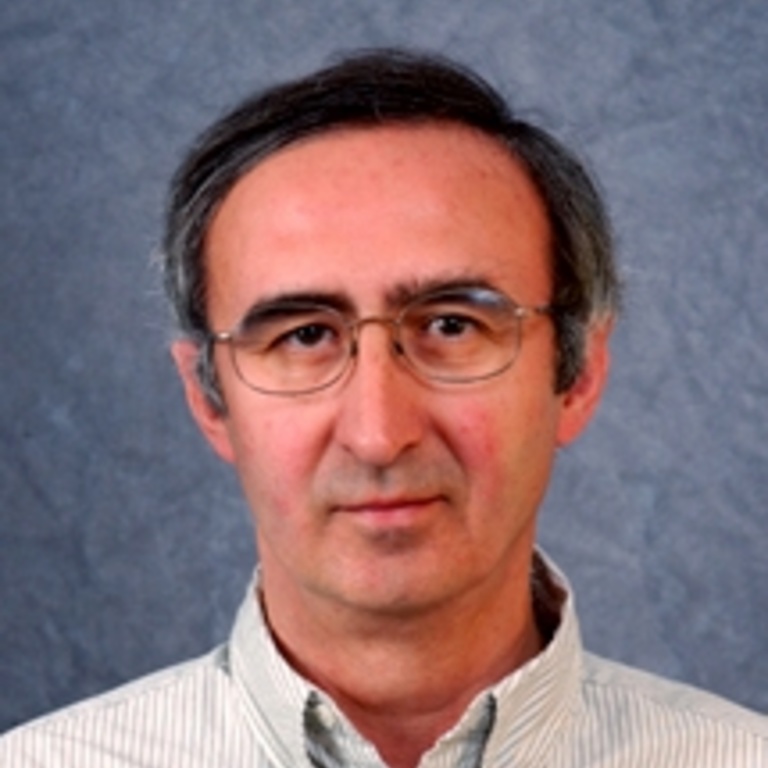
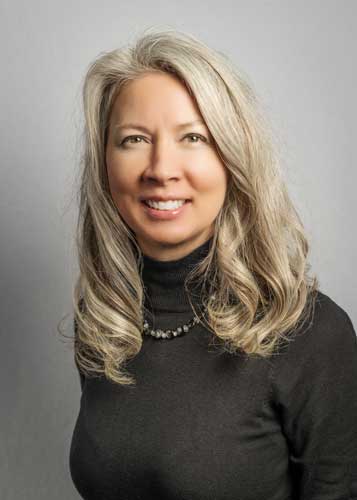
Daniel Livingstone is a researcher at The Glasgow School of Art (GSA) specializing in the application of games and 3D technologies to enhance learning and public engagement. His work spans medical visualization, heritage interpretation, and broader educational technology domains. Current PGR supervisee: Shaojie Ni (AR & Gamification in Museums) Email: D.Livingstone@gsa.ac.uk Research Themes : Serious games, virtual reality, 3D anatomical modeling, disease education, digital heritage preservation, and AI-driven simulations. Highlights include AR tools for rheumatology engagement, VR applications in diabetes management, and digital reconstructions of historical surgical instruments. Article Trends : Focus on merging immersive technologies with healthcare education, heritage storytelling, and interdisciplinary applications of game engines. Recurring keywords: Augmented Reality , 3D Visualization , Medical Education , Public Health , Virtual Environments .
Romain Bordes is a Researcher in Applied Chemistry at Chalmers University of Technology, specializing in colloid and interface science with applications spanning sustainable materials development, art conservation science, and environmental remediation technologies. His work bridges fundamental chemical research with practical applications addressing contemporary challenges in cultural heritage preservation and green chemistry. Dr. Bordes' research interests focus on several interconnected domains: Development and application of amino acid-based surfactants and green chemistry solutions for sustainable applications Nanocellulose and biomaterials for art conservation, packaging, and textile applications Surface chemistry and interfacial phenomena in complex colloidal systems Novel separation techniques for environmental remediation, particularly heavy metal removal Sustainable materials development for cultural heritage preservation Analysis of Dr. Bordes' extensive publication record reveals a consistent trajectory toward increasingly sophisticated applications of colloid science. His recent work demonstrates a growing integration of advanced characterization techniques like acoustic levitation with traditional colloid chemistry approaches, enabling non-contact analysis of delicate materials. A significant portion of his research addresses practical challenges in art conservation, with particular emphasis on developing sustainable alternatives to traditional conservation methods. His work on beeswax nanoemulsions and nanocellulose-based consolidants represents innovative approaches to longstanding challenges in cultural heritage preservation. Dr. Bordes has secured substantial research funding from multiple prestigious sources including VINNOVA, the European Commission (EC), the Swedish Research Council (VR), and the Swedish Foundation for Strategic Research (SSF). His collaborative projects demonstrate strong interdisciplinary connections across chemistry, materials science, conservation science, and environmental engineering. The GREENART project (2022-2025) and NANORESTART project (2015-2018) particularly highlight his leadership in applying advanced materials science to cultural heritage challenges. His research group appears to focus on developing sustainable chemical solutions that address real-world problems at the intersection of environmental science, cultural preservation, and materials innovation, with particular emphasis on replacing hazardous chemicals with bio-based alternatives in conservation practices and industrial applications.
Prof. Dr. Willi Meier serves as a Lecturer for mathematics and cryptology at the Institute for Sensors and Electronics within the School of Engineering and Environment at FHNW (University of Applied Sciences and Arts Northwestern Switzerland) in Windisch, Switzerland. With an extensive publication record spanning over three decades (1988-2025), he maintains an active research profile in cryptographic analysis. Dr. Meier's research primarily focuses on cryptanalysis of symmetric cryptographic primitives, with particular expertise in stream ciphers, block ciphers, and hash functions. His work frequently employs algebraic techniques, differential cryptanalysis, and mathematical modeling approaches to analyze cryptographic security. Recent research has centered on analyzing modern ciphers like Grain, Keccak, RIPEMD-160, and various lightweight cryptographic designs, often developing novel attack methodologies such as coefficient grouping and algebraic meet-in-the-middle approaches. His publication trends over the last five years show consistent high productivity in top-tier venues including CRYPTO, EUROCRYPT, ASIACRYPT, and IACR Transactions on Symmetric Cryptology. The research spans both theoretical advancements in cryptanalytic techniques and practical applications to real-world cryptographic standards. A significant portion of his recent work involves collaborations with international researchers, particularly Fukang Liu, Takanori Isobe, and Santanu Sarkar, reflecting his integration within the global cryptographic research community. Dr. Meier's work has practical implications for cryptographic standardization and implementation security, with analyses of protocols used in telecommunications (TETRA), lightweight IoT applications, and post-quantum cryptographic candidates. His research continues to contribute to the fundamental understanding of symmetric cryptographic primitives and their security margins.
Derek Duncan serves as Professor of Italian at the University of St Andrews' School of Modern Languages, specializing in Italian Cultural Studies. Previously holding a professorship at the University of Bristol, he directs the Italian Centre for Contemporary Art and contributes significantly to transnational humanities research. His educational background includes French and Italian studies at Aberdeen University followed by doctoral work at Edinburgh. Duncan's research centers on intersections of sexuality/gender and race/ethnicity in modern Italian culture through queer and critical race theory frameworks, with notable courses including 'Black Italians,' 'Fascist Italy,' and 'Cultures of Migration.' Analysis of his recent publications reveals consistent focus on Mediterranean migration narratives, transnational identity formation, and creative humanities methodologies. His work frequently connects historical events like the Arandora Star sinking with contemporary migration crises, emphasizing transcolonial continuities. Leverhulme Major Research Fellowship (2019-2022) Multiple AHRC-funded projects including Transnationalizing Modern Languages Founding editor of Liverpool University Press series: Transnational Italian Cultures and Transnational Modern Languages Duncan actively supervises research and collaborates with artists like Davide D'Elia on projects such as Tiepido Cool. His work with the Centre for Poetic Innovation demonstrates commitment to bridging academic research and artistic practice, while his global challenges project in Namibia reflects international engagement. Current research examines Mediterranean migration through the lens of the Arandora Star disaster and its contemporary resonances.
Stacey A. Langwick is a cultural and medical anthropologist at Cornell University , where she holds a joint position in the Department of Anthropology and Science and Technology Studies . An active member of Cornell's Global Health Program and Feminist, Gender and Sexuality Studies Program , she leads the Qualities of Life working group at the Einaudi Center while co-organizing the Ecological Learning Collaboratory and Translating Vitalities international collective. Education : PhD in Anthropology (UNC Chapel Hill) Master of Public Health (UNC Chapel Hill) Bachelor of Arts (Agnes Scott College) Her groundbreaking research examines healing practices in East Africa, particularly Tanzania, focusing on toxicity , ontological politics , and plant-based sovereignty . Through ethnographic studies of dawa lishe (nutritious medicine) and mlonge tree therapies, she challenges conventional boundaries between food/medicine, traditional/modern, and human/non-human. Current publications like " Properties of (Dis)Possession " (2021) and " Groundwork for Planetary Health " (2022) reveal how Tanzanian healers navigate neoliberal restructuring while cultivating postcolonial knowledge production . Earlier works including " Bodies, Politics and African Healing " (2011) established her as a leading voice in medical anthropology's ontological turn. Major Awards : Mellon Foundation New Directions Fellowship Multiple grants from NSF, Wenner-Gren, and Fulbright Langwick actively bridges art and anthropology through the Johnson Art Museum collaboration and Moshi medical school garden project. She mentors medical students in Tanzania while co-leading the Uzima Collective , a transnational group of scholars, clinicians, and artists reimagining 21st-century medicine.
Justin Harvey is a Lecturer at the University of Technology Sydney (UTS) within the Faculty of Design, Architecture and Building, specializing in Media Arts and Production. He is an active member of the Creative Practice Research Group and serves on the Faculty Board and Faculty Research Committee. Harvey holds a PhD in Media Art & Design from the University of New South Wales and a Bachelor of Arts in Communication (Media Arts & Production) with First Class Honors from UTS. Harvey's research interests focus on creative uses of generative Artificial Intelligence, experimental approaches to media art making, and creative practice led research. His artistic practice spans moving image, installation, and virtual reality experiences, with a particular fascination for human-machine interaction and the creative potentials of digital technologies. He explores glitch aesthetics, digital video feedback, and imagery generated using diffusion models, often collaborating with AI systems in unexpected ways. Harvey has exhibited his work internationally at venues including VIVID Sydney, ISEA (International Symposium on Electronic Art) in Vancouver, Hong Kong, and South Korea. His 2023 collaboration with generative AI, Unprompted Studies 1-3 , was a finalist in the Fisher's Ghost Art Award. In 2024, he was selected as a Scholar in the Sydney Powerhouse Museum's Research Scholars Program for the "Knit Forward" project, which reimagines historical garments using generative AI and seamless knitwear technology. His research on creative applications of GenAI directly informs his teaching in Experimental Media and Creative Project Development. Harvey has extensive studio-based teaching experience since 2010, covering subjects such as Situated Media Installation Studio, Drama Production, and Experimental Media. Fisher's Ghost Art Award (2023 finalist) Powerhouse Museum Scholars Program funding (2024) UTS ECR Capability Development Initiative funding (2024) FASS ECR Funding (2024) Harvey supervises PhD and Masters of Research students in creative practice research and has mentored hundreds of students through capstone projects in drama, documentary, animation, and media arts installation. His current research projects include collaborations with Dr. Doris Li on reimagining historical garments using AI, and exploring the intersection of Surrealist techniques with generative AI in works like Oneironaut , exhibited at VIVID Sydney 2025.
Ayşe Zeynep Aydemir is an Assistant Professor of Architecture at MEF University's Faculty of Arts, Design and Architecture since 2017. She earned her PhD in 2017 from a joint program between Istanbul Technical University and KU Leuven, focusing on architectural design studio practices. Her academic journey includes a TÜBİTAK 2219 Research Fellowship at Royal College of Art (2019–2020) and a TÜBİTAK 2214 fellowship at KU Leuven (2014–2016). Her research interests span architectural education, design studio pedagogy, adaptive reuse of urban structures, and the intersection of architectural humanities with practice-based research. She emphasizes process-driven design, horizontal learning, and the role of spatial experience in education. Key publication trends include studies on adaptive reuse of office buildings for housing practice-led research in small architectural firms parallax views in metropolitan analysis Her work bridges academic theory with real-world applications, particularly in Istanbul's urban context. Scientific awards include TÜBİTAK 2219 and 2214 fellowships. She also led the Kilyos Boathouse design-build studio (2018), which won recognition in Turkey.
Andrew Mactavish serves as an Associate Professor in the Department of Communication Studies & Media Arts at McMaster University, actively teaching courses including Digital Cultures (MEDIAART 3B03), Media Arts (MEDIAART 1A03), Environmental and Wildlife Photography (MEDIAART 3EW3), and Senior Thesis Research and Production (MEDIAART 4ST6A/B) from 2006 through 2025. His institutional affiliation is consistently tied to McMaster's media and communication programs, with course instruction spanning undergraduate and graduate levels. His research centers on Digital Media and Communication Studies, emphasizing Game Studies (particularly player modifications in digital games), Environmental Photography, and Multimedia Education in arts contexts. He investigates intellectual property dynamics in gaming culture, user-generated content frameworks, and pedagogical applications of digital tools across humanities disciplines, bridging theoretical analysis with creative production practices. Andrew Mactavish's publications reveal a thematic evolution from foundational multimedia education (2006-2007) to critical examinations of digital game culture (2013), consistently addressing societal impacts of media production. Key trends include legal-creative tensions in player modifications, cross-cultural digital exchange, and environmental visual rhetoric within multimedia ecosystems. He demonstrates extensive advising experience through recurring instruction in Senior Thesis Research and Production courses (MEDIAART/MMEDIA 4ST6A/B), guiding student projects in media arts and communication studies since 2017. While specific grant funding isn't documented, his curriculum development for courses like Digital Media and Cultural Exchange (CMSTMM 705) and Selected Topics in Communication and New Media (CMSTMM 708) indicates active scholarly mentorship and program leadership.
Aaron Sandel is an Associate Professor in the Department of Anthropology at the University of Texas at Austin , where he has been affiliated since at least 2012. He co-directs the Ngogo Chimpanzee Project and leads the Primate Ethology & Endocrinology (PEE) Lab . His research focuses on primate social bonds, emotions, and physiological metrics, with fieldwork based in Kibale National Park, Uganda . He teaches courses on biological anthropology, primate conservation, and the origins of friendship. Research Interests : Social bond formation across species Primate emotion quantification Life history and physiology Machine learning behavior analysis Comparative endocrinology Conservation biology Article Trends : Recent publications emphasize chimpanzee social dynamics, emotional/physiological metrics (via urine and breathing rate), and comparative evolutionary analysis. His work spans primatology , evolutionary anthropology , and machine learning applications , with increasing focus on gorilla sociality and human evolution in recent years.
Leslie Del Carpio is an Assistant Professor in the Department of Spanish and Portuguese at Indiana University Bloomington’s College of Arts & Sciences. Her research focuses on Sociolinguistics, particularly Heritage Language Studies, Pedagogy, and Language Variation in Spanish-speaking communities. Education: Ph.D. in Spanish Linguistics (Arizona State University), M.A. and B.A. in Spanish Linguistics (University of Illinois at Urbana-Champaign), and A.S. in Sciences (Parkland College). Leslie investigates the role of Critical Language Awareness in improving educational experiences for Spanish Heritage Language Learners in Indiana and the morphosyntactic legitimacy of Spanish varieties in the United States. She also studies Spanish-Quechua/Kichwa contact in Peru and Ecuador, extending to linguistic attitudes and ideologies. Her recent publications address phonological variation, Spanglish in media, and equity in heritage language education. As co-principal investigator for the Peruzonians project, she contributes to creating a Living Archive of Peruvian migrant experiences in Arizona, emphasizing interculturality and identity. Her teaching includes undergraduate courses on Spanish for Heritage Speakers, US Spanish, and bilingualism, as well as graduate-level heritage language pedagogy and research methods.
Ryo Ikeshiro is an Assistant Professor at the School of Creative Media, City University of Hong Kong, and co-director of the spatial audio art/research unit SoundLab. His work bridges sound art, computational creativity, and cultural studies through immersive installations, algorithmic audio-visual systems, and sonification techniques. PhD in Creative Practice (Goldsmiths, University of London) MPhil in Music (University of Cambridge) BMus (King's College London) Ikeshiro's research interrogates the materiality of sound through: Multichannel Ambisonics and directional audio Neural network-driven temporal dislocation Sonification of climate data and historical soundscapes Machine learning for artistic interpretation Interplay of identity and technology East Asian ideophonic traditions His 2010-2024 publications and installations reveal cross-disciplinary engagement with: Fractal mathematics in audiovisual art Algorithmic composition systems Interactive installation technologies Sonic cartography Historical memory in sound Collaborative research frameworks SoundLab, which he co-directs, develops spatial audio research at the intersection of: Technical innovation Cultural representation Experimental pedagogy Public engagement International artistic exchange Practice-based research
Dr Carolina Escobar-Tello is a Senior Lecturer and Postgraduate Year Tutor in the Design School at Loughborough University, part of the School of Design and Creative Arts. She holds a PhD in 'Design for Happiness' from Loughborough University (2010) and has professional experience across government and industry, including DEFRA and UNICEF. Her research focuses on sustainability, happiness, and wellbeing, with a particular emphasis on social innovation and systemic approaches to design. Education: MSc Sustainable Product Design (Distinction, Bournemouth University), BA (Hons) Industrial Design (Universidad de Los Andes, Colombia). She co-leads the Design Research Society’s Sustainability Special Interest Group (SustainabilitySIG) and founded Riant by Design, a company promoting sustainable and happier lifestyles through design frameworks. In 2013, she won the HE Social Entrepreneurship Award for her 'Design for Happiness' toolkit. Her work bridges academia and industry, emphasizing participatory methods and cultural contexts in design. Research areas include decolonial design, healthcare systems, art therapy techniques for wellbeing, and service design for marginalized communities. She currently supervises four PhD students exploring sustainable societies and social innovation. Grants & Projects: Funded research on textile artisan communities, healthcare systems, and cultural contexts in service design. Labs/Teams: Co-leads SustainabilitySIG; collaborates with Riant by Design.
Yasser Arafat Payne is a Professor of Sociology & Criminal Justice at the University of Delaware's College of Arts & Sciences, with a joint appointment as an associate professor in the Department of Africana Studies. His academic work focuses on street ethnographic research examining policing and reentry, economic well-being and educational inequality, and gun violence with street-identified Black Americans through the innovative Street Participatory Action Research (Street PAR) framework. Payne earned his Ph.D. and M.Phil. from the City University of New York Graduate Center, an M.A. from Seton Hall University, and a B.A. from Wagner College. His educational background has informed his distinctive approach to studying marginalized communities through the lens of those who live within them. Payne's research program challenges dominant arguments in the literature by asserting that all of the streets of Black and Brown America are resilient. His work focuses on racial identity, street identity, school violence, physical violence, Gangster Rap music and culture, and the methodology of street participatory action research. He has developed Street PAR as a framework that includes three essential features: research orientation, intervention for Street PAR members, and a vehicle for action and activism in local communities. His recent publications reveal a consistent focus on violence exposure, police-community relations, reentry challenges, and resilience among street-identified Black populations. Payne's work spans multiple disciplines including criminology, sociology, public health, and urban studies, with particular attention to the intersection of structural inequality and individual experience. Payne actively engages with media on issues of policing and structural violence, as evidenced by his July 2024 commentary on stop-and-frisk policies for NBC News and his August 2023 presentation to the Wilmington Reparations Task Force. He co-authored the book 'Murder Town, USA: Homicide, Structural Violence and Activism in Wilmington' (Rutgers University Press, 2023), which has become a key resource for understanding gun violence in urban communities. As an educator, Payne teaches specialized courses on street ethnography, Gangster Rap Music and Culture, Racial Stratification, and core courses on Race, Class & Gender and Race, Gender & Poverty. His teaching philosophy centers on bringing the lived experiences of street-identified populations into academic discourse through innovative pedagogical approaches. Payne leads a research lab focused on Street PAR methodology, training community members to document experiences of street-identified Black populations through surveys, interviews, and dual interviews. His approach emphasizes community ownership of research and the transformative potential of participatory methodologies in addressing structural violence.
Oguz Durumeric is an Associate Professor in the Department of Mathematics at the University of Iowa, part of the College of Liberal Arts and Sciences. His research focuses on differential geometry, medical image analysis, and geometric topology. He earned his PhD from SUNY Stony Brook and has contributed to interdisciplinary applications of geometry in medical imaging, particularly in lung biomechanics and radiation therapy planning. Education: PhD in Mathematics from SUNY Stony Brook. Research Interests: Dr. Durumeric’s work bridges pure and applied mathematics. In differential geometry, he explores knot energies and curvature properties. In medical imaging, he develops advanced registration techniques for 4DCT and MRI data to study lung ventilation patterns and improve cancer treatment accuracy. His geometric topology research includes ideal knot structures and conformal transformation analysis. Recent Research Trends: His articles highlight innovations in medical image registration (e.g., lung motion artifact correction, out-of-phase ventilation detection) and geometric models for biomedical applications. He also addresses foundational challenges like shape collapse in large-deformation registration. Grants & Collaborations: While specific grants are not listed, his work implies collaboration with medical imaging labs and oncology teams. No formal advisees are documented here. Labs/Teams: Affiliated with the University of Iowa Mathematics Department’s research groups in geometry and applied mathematics. His website provides further details on ongoing projects.
Dr. Mellinee Lesley is a Professor in the Language, Diversity & Literacy Studies program at Texas Tech University's College of Education. She serves as Associate Vice Provost for Outreach and Engagement, leading the Community Engaged Learning initiative. Previously, she worked as a high school English teacher and directed a developmental reading program. Ph.D. in Language in Education, Reading/Writing/Literacy from University of Pennsylvania M.A. in English, Rhetoric and Teaching of Composition from New Mexico State University B.A. in English from University of Iowa Her research focuses on critical literacy , disciplinary writing , and equity in education , particularly for marginalized student populations. She explores intersections of media literacies , gender identity , and literacy reform in K-12 settings. Recent publications highlight trends in adolescent writing pedagogy , critical media frameworks , and community-engaged scholarship . Her work bridges high-stakes testing contexts with student-centered literacy approaches . Community Engagement Scholarship Award for Exemplary Projects (APLU/W.K. Kellogg Foundation) Fellow of the National Writing Project Dr. Lesley mentors graduate students in engaged scholarship and examines the democratization of knowledge through collaborative research methodologies . She co-founded the Llano Estacado Writers' Alliance to support equitable literacy practices.