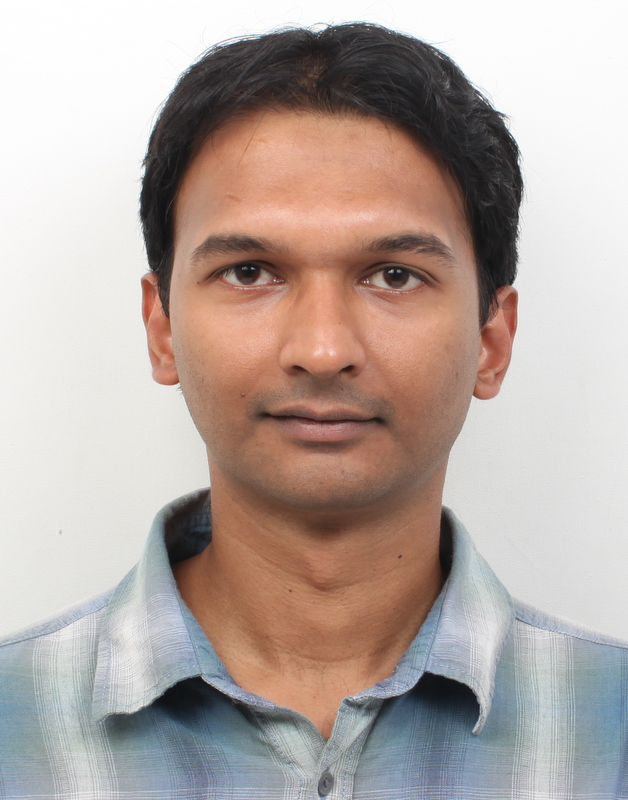
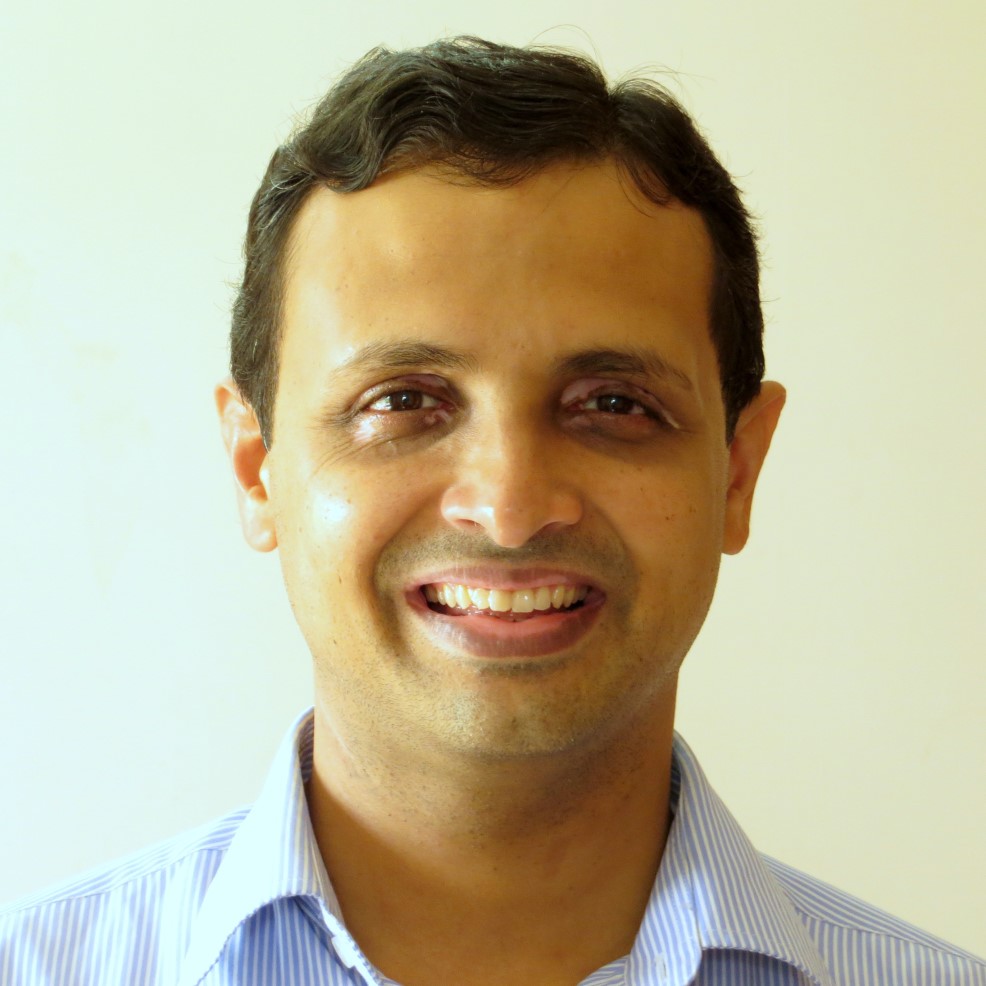
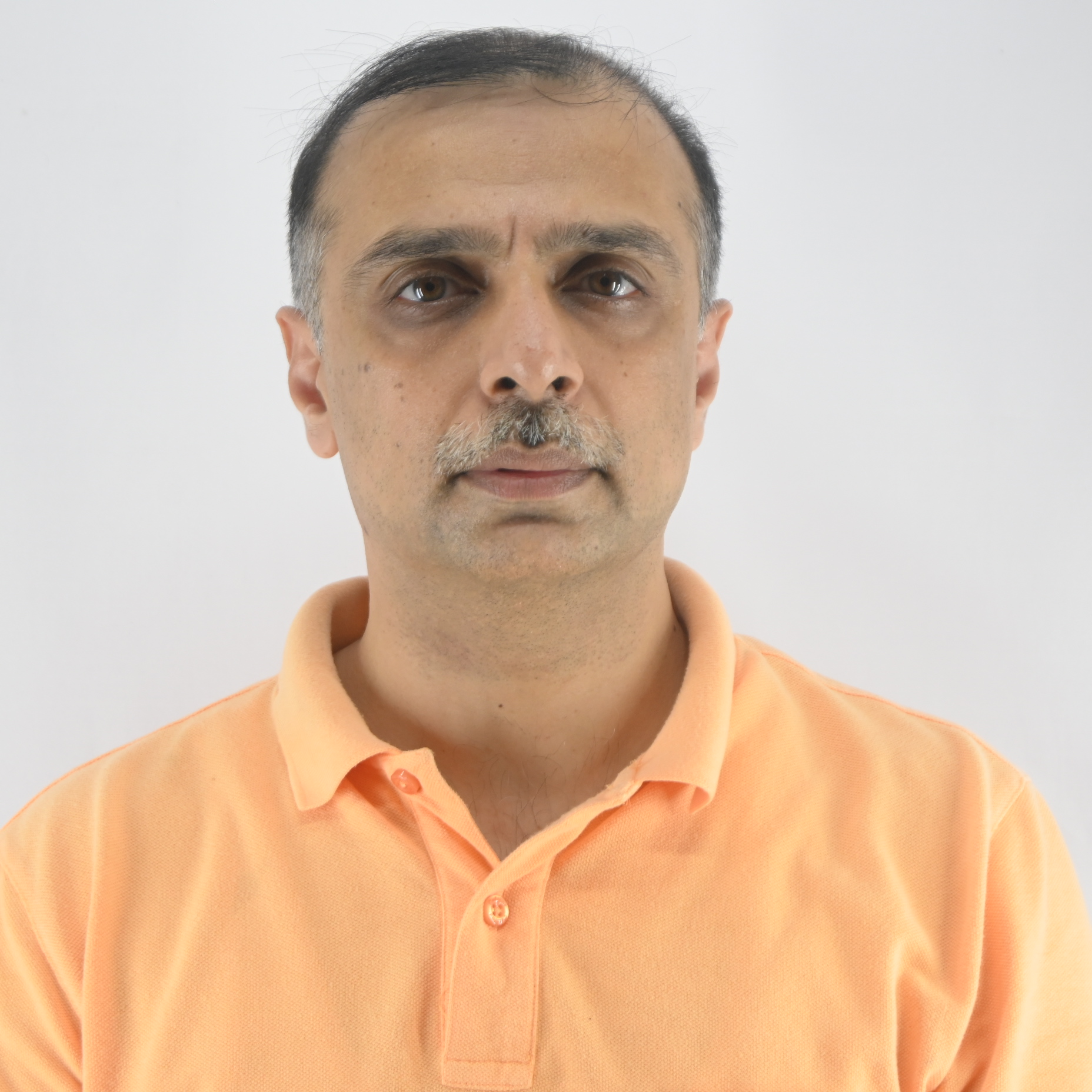
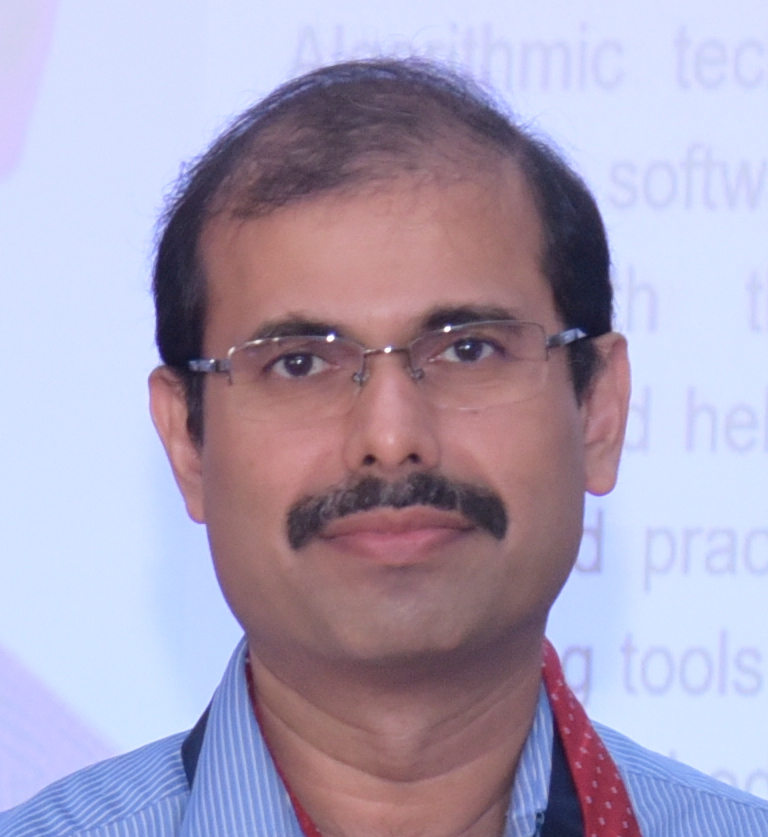
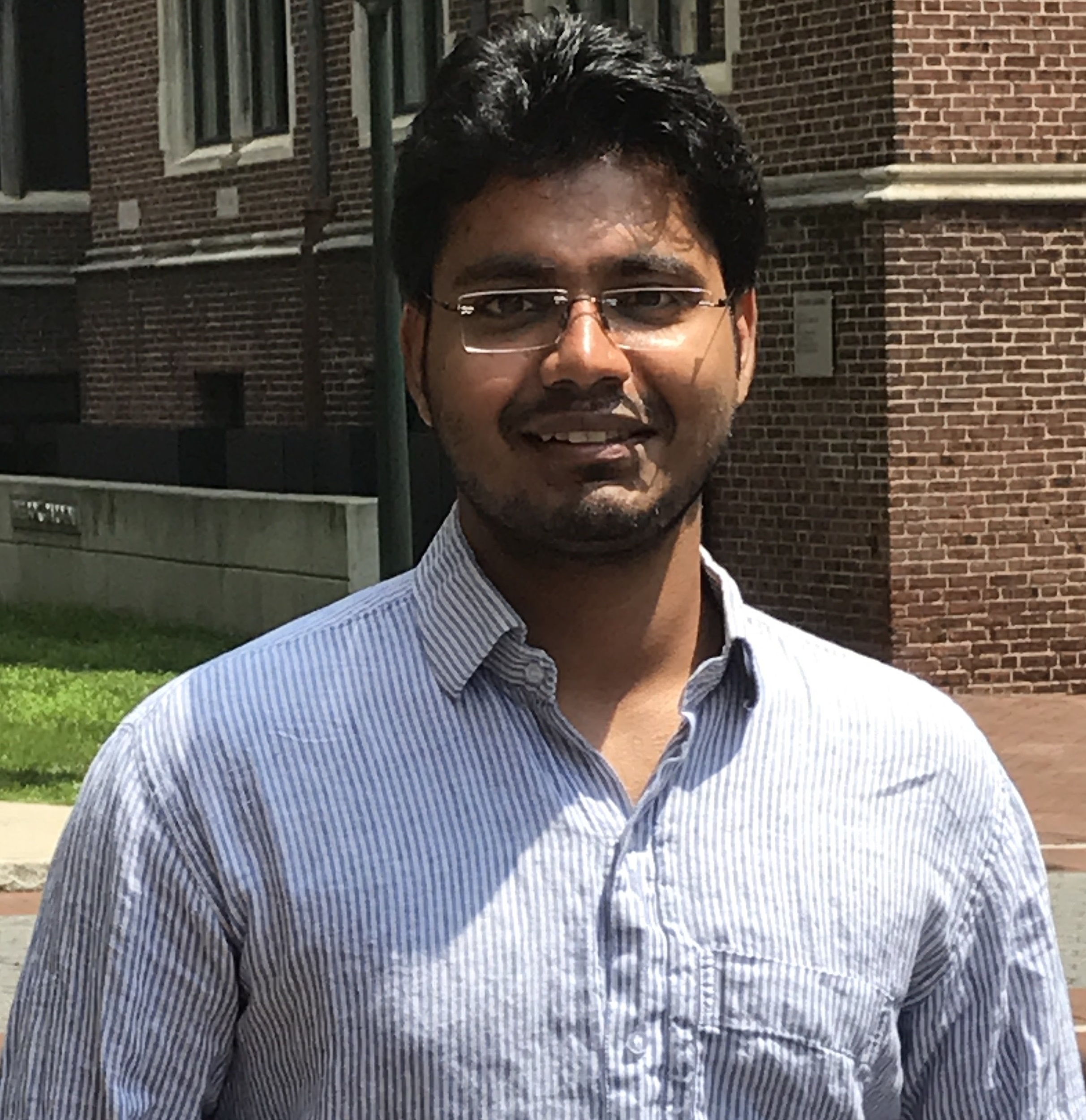
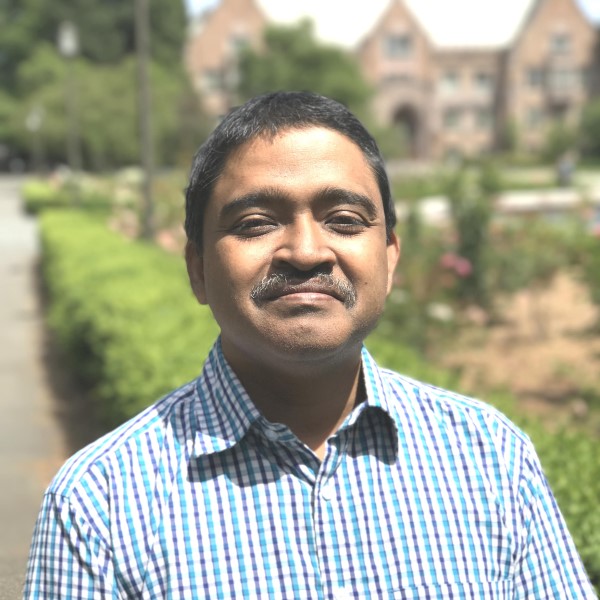
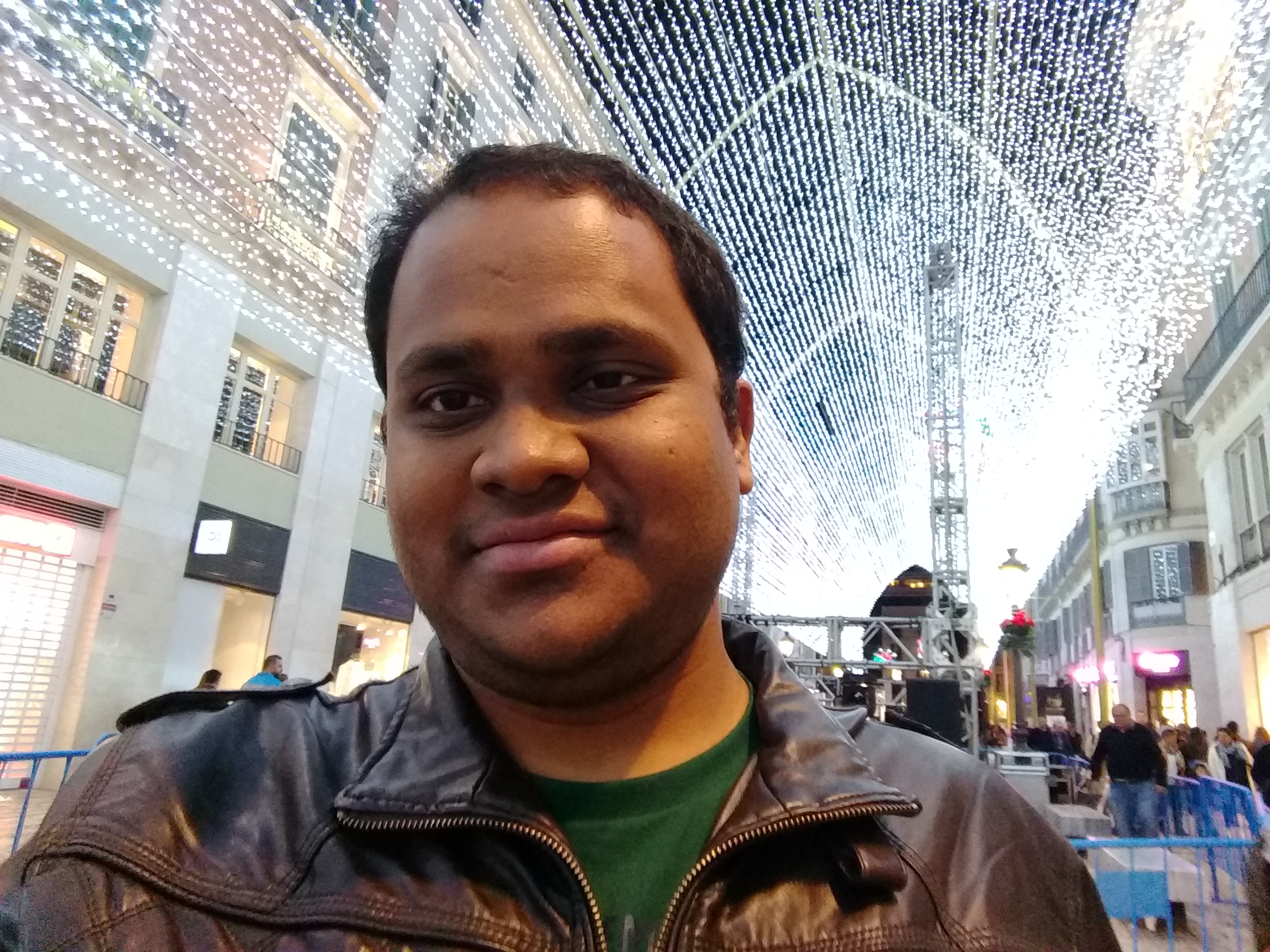
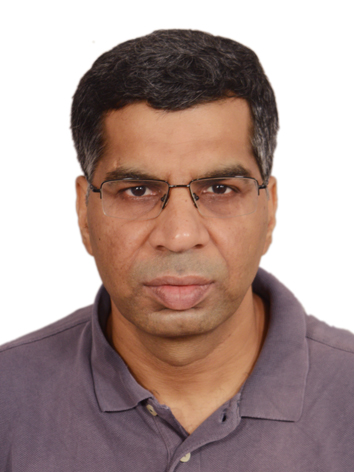
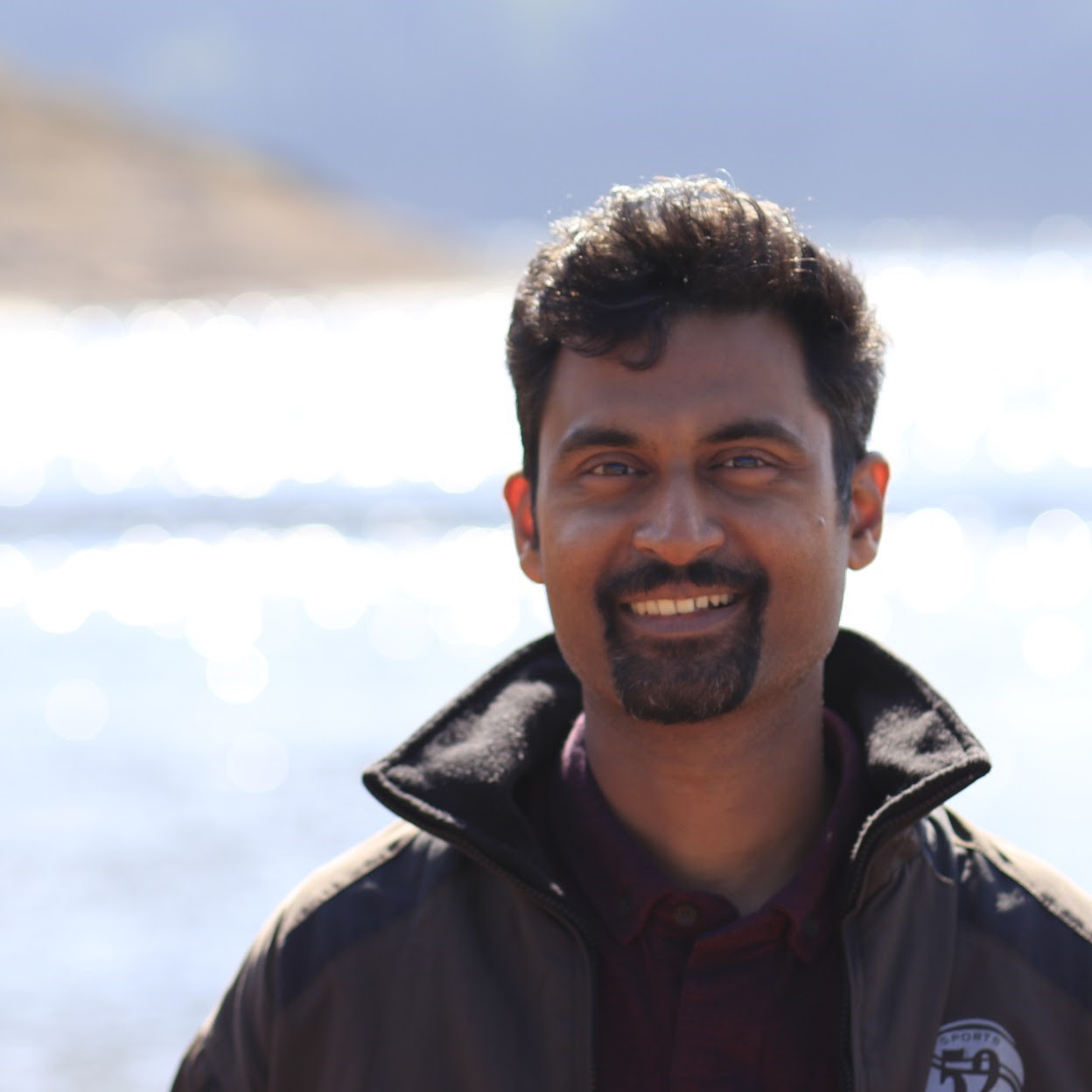
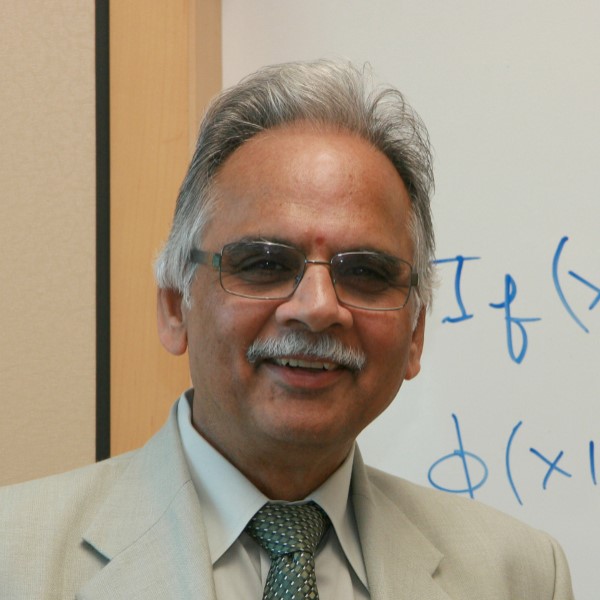
Dr. Balaraman Ravindran is a Professor and Head of the Department of Data Science and Artificial Intelligence (DSAI) at IIT Madras. He also leads the Robert Bosch Centre for Data Science & Artificial Intelligence (RBCDSAI) and the Centre for Responsible AI (CeRAI). His research focuses on reinforcement learning, geometric deep learning, and ethical AI deployment. Education includes a PhD from the University of Massachusetts Amherst (2004) and MSc from the Indian Institute of Science, Bangalore (1996). He holds prestigious fellowships from AAAI and INAE, and is an ACM Distinguished Member. Key contributions include work on class imbalance learning (e.g., TODUS algorithm) and applications in healthcare, transportation, and social networks. He has advised over 20 students and secured grants from Google, TCS Research, and others. Labs/Teams: Heads RBCDSAI and CeRAI, collaborates with TCS Research and Google.
Shivaram Kalyanakrishnan is an Associate Professor at the Department of Computer Science and Engineering , Indian Institute of Technology Bombay , specialising in Artificial Intelligence and Machine Learning . His research spans sequential decision making , multiagent learning , multi-armed bandits , and humanoid robotics , with applications in robot soccer , computer games , and online advertising . He teaches advanced courses like CS 747: Foundations of Intelligent and Learning Agents and CS 748: Advances in Intelligent and Learning Agents , focusing on end-to-end system design and theoretical analysis. His scientific awards include the Best Student Paper Award at RoboCup International Symposium 2006 and nomination for Best Student Paper Award at AAMAS 2007 . His work on reinforcement learning and policy iteration has been published in leading venues such as IJCAI , ICML , and COLT , with recent contributions to railway scheduling and bandit algorithms. While no explicit list of advisees is provided, his research projects and publications suggest mentorship of students in collaborative efforts. Contact : shivaram@cse.iitb.ac.in .
Indian Institute of Technology Hyderabad (IITH)India
Vineeth N Balasubramanian is a Professor in the Department of Computer Science & Engineering at the Indian Institute of Technology Hyderabad, with affiliate faculty status in the Department of Artificial Intelligence. His research focuses on the intersection of deep learning, machine learning, and computer vision, emphasizing explainability, robustness, and real-world applications. He leads Lab 1055, which investigates problems such as Explainable and robust AI/ML systems Lifelong learning in evolving environments Multimodal vision-language models Applications in agriculture, autonomous navigation, and human behavior analysis His recent work includes causal reasoning in transformers, vision-language model capabilities, and drone-based object detection. Funded by organizations like Google, Microsoft, Intel, and DST, he has received multiple awards including the World's Top 2% Scientists (2022-23), INSA/INAE Fellowships, and Best Paper recognitions. Lab 1055 collaborates with institutions like CMU, UBC, and Monash University, contributing to cutting-edge advancements in AI.
Ajit Rajwade is a Professor at the Department of Computer Science and Engineering , Indian Institute of Technology Bombay. His research spans Artificial Intelligence , Compressed Sensing , and Medical Imaging , with affiliations to the Centre for Machine Intelligence and Data Science and the Koita Centre for Digital Health . Education : PhD in Computer and Information Science and Engineering, University of Florida (2010) MSc in Computer Science, McGill University (2004) BTech in Computer Engineering, University of Pune (2002) His research interests focus on intelligent data acquisition, particularly in neural network analysis , graph signal processing , and medical imaging . He develops compressed sensing algorithms for inverse problems like tomography and MRI reconstruction , alongside applying group testing to pandemic response. Scientific awards include the Prof. S. P. Sukhatme Award (2024) and Departmental Teaching Excellence (2019). His publications demonstrate expertise in image restoration , noise modeling , and epidemiological algorithms . He has advised PhD students like Sabyasachi Ghosh and Jerin Geo James , with a focus on computationally efficient methods in medical imaging and machine learning .
Supratik Chakraborty serves as the Bajaj Group Chair Professor in the Department of Computer Science and Engineering at Indian Institute of Technology Bombay. He maintains dual affiliations with the Centre for Formal Design and Verification of Software and the Centre for Liberal Education at IIT Bombay, demonstrating his cross-disciplinary engagement. Professor Chakraborty's research spans formal methods with focus on formal verification, rigorous analysis of system models, and automated synthesis of systems from specifications. His work bridges theoretical foundations with practical applications, particularly in developing mathematically provable guarantees for increasingly complex hardware, software, and intelligent systems. Current research interests include constrained counting and sampling, scalable formal verification of software and hardware systems, automated synthesis of programs and circuits, and applications of automata, logic and finite model theory to practical verification challenges. His publication trajectory shows a significant evolution from traditional hardware and software verification toward addressing verification challenges in machine learning and AI systems. Recent work increasingly focuses on interpretability of black-box models, verification of neural networks, and synthesis techniques applicable to intelligent systems. The research demonstrates strong interdisciplinary connections between formal methods, programming languages, and artificial intelligence. IIT Bombay Excellence in Thesis (CSE) Award 2011 (for Bhargav Gulavani's thesis) IIT Bombay Excellence in Thesis (CSE) Award 2017 (for Abhisekh Sankaran's thesis) Best Paper in Algorithms and Architecture track at IEEE International Conference on Computer Design: VLSI in Computers and Processors, 1998 Professor Chakraborty has successfully supervised 11 doctoral students, with research spanning formal verification techniques, Boolean functional synthesis, constrained counting, and applications to hardware and software systems. His students have gone on to positions at major institutions including Microsoft Research, TCS Research, Georgia Tech, and BARC, reflecting the strong industry and academic impact of his mentorship. Current research directions show increasing emphasis on verification challenges posed by machine learning systems and AI. His research group at IIT Bombay, while not explicitly named in the materials, appears to focus on formal methods with strong connections to the Centre for Formal Design and Verification of Software. The group maintains active collaborations with international researchers including Moshe Y. Vardi at Rice University, and has made significant contributions to verification tools like VeriAbs that bridge theoretical advances with practical applications.
Arpit Agarwal is an Assistant Professor in the Department of Computer Science & Engineering at the Indian Institute of Technology, Bombay. He previously held postdoctoral positions at FAIR Labs (Meta) working with Max Nickel and at the Data Science Institute at Columbia University hosted by Prof. Yash Kanoria and Prof. Tim Roughgarden. He completed his PhD from the Department of Computer & Information Science at the University of Pennsylvania under the guidance of Prof. Shivani Agarwal. His research focuses on the intersection of human behavior and machine learning systems, with particular interest in learning from implicit, strategic, and heterogeneous human feedback. His work spans multiple dimensions of human-AI interaction including understanding long-term dynamics between humans and AI systems, designing responsible AI, and studying misalignment between user preferences and system objectives. His research methodology often combines theoretical machine learning with practical applications in recommendation systems and social AI. His recent publications reveal a strong focus on bandit algorithms, preference learning, and recommendation systems, with increasing attention to responsible AI design and human-centered considerations. His work demonstrates expertise in theoretical machine learning with applications to real-world problems, particularly in understanding how humans interact with and are influenced by AI systems over time. Dr. Agarwal teaches advanced courses including CS767 Theoretical Machine Learning (Autumn 2025) and CS6103 Human-Centered AI: From Learning Models to Responsible Systems (Spring 2025), which covers topics such as AI alignment, learning from pairwise comparisons, crowdsourcing, human-in-the-loop decision making, recommendation systems, interpretability, privacy, fairness, causality, and AI governance.
Dr. Arnab Bhattacharya is a Professor in the Department of Computer Science and Engineering at the Indian Institute of Technology (IIT) Kanpur since December 2020. He previously served as Associate Professor (2014–2020) and Assistant Professor (2007–2014) at IIT Kanpur. Education: PhD in Computer Science (2007), University of California, Santa Barbara MS in Computer Science (2007), University of California, Santa Barbara Bachelor of Computer Science and Engineering (2001), Jadavpur University Research Focus spans Databases , Data Mining , Information Retrieval , and Artificial Intelligence . His work emphasizes graph analytics , skyline queries , probabilistic data , and knowledge graph management . Article Trends reveal expertise in graph neural networks , trajectory-aware systems , statistical significance in databases , and legal/medical data mining . His methodologies often integrate chi-square statistics , approximate indexing , and provenance tracking . Scientific Awards: IBM Faculty Research Award Yahoo! Faculty Research and Engagement Program Award Best Paper at COMAD 2011 Best Student Paper at COMAD 2010 Top-Five Student Paper at ICDM 2005 ICDM Student Travel Award sponsored by IBM Contact: Office RM 409, Department of Computer Science and Engineering, IIT Kanpur Email: arnabb@iitk.ac.in | Phone: +91-512-259-7650
Indian Institute of Technology Hyderabad (IITH)India
Aditya T Siripuram is an Associate Professor at the Indian Institute of Technology Hyderabad (IITH), holding joint appointments in the Department of Electrical Engineering and the Department of Artificial Intelligence. He completed his PhD at Stanford University and holds B.Tech and M.Tech degrees from IIT Bombay. Education: PhD in Electrical Engineering, Stanford University (2017) - GPA: 4.17/4 M.Tech in Electrical Engineering, IIT Bombay (2009) - GPA: 9.79/10 B.Tech in Electrical Engineering, IIT Bombay (2009) - GPA: 9.79/10 Research Interests: His research spans Fourier analysis, signal processing, machine learning, convex and combinatorial optimization, with applications in AI/ML and applied mathematics. His work particularly focuses on computational aspects of Fourier analysis, including fast DFT computation for structured signals, convolution idempotents, and graph-based signal processing techniques. His recent research directions involve developing efficient algorithms for computing Discrete Fourier Transforms for signals with structured frequency support, investigating relationships between additive structures in frequency domains and computational complexity, and exploring graph learning techniques under spectral constraints. Awards and Recognition: Excellence in Teaching Award, IIT Hyderabad (2019, 2022) Stanford Graduate Fellowship Qualcomm Innovation Fellowship (awarded to his PhD student Charantej Reddy P in 2021) Teaching and Service: He has taught courses including AI1110 Probability and Stochastic Processes, EE5609 Matrix Theory, EE5606 Convex Optimization, and EE5328 Introduction to Submodular Functions. He serves as Departmental Undergraduate Committee Chair for the Department of AI at IITH (2020-present) and was MTech Admissions Coordinator for the same department (2019-2022). Research Group: He currently advises three PhD students working on signal processing based graph learning techniques, DFT computation for structured signals, and coded computing problems.
Indian Institute of Technology Hyderabad (IITH)India
Kishalay Mitra is a Professor at the Indian Institute of Technology Hyderabad , with affiliations to the Department of Chemical Engineering , Department of Climate Change , and Department of Artificial Intelligence . He also holds visiting professorships at Washington University in St. Louis and University of Washington, Seattle . His work in the Global Optimization & Knowledge Unearthing Laboratory (GOKUL) spans interdisciplinary optimization, machine learning, and their applications in industrial-scale engineering problems. Education : Ph.D. from IIT Bombay. Research Interests : Mitra's research focuses on optimization under uncertainty , surrogate modeling , multi-objective optimization , and integrating machine learning with physics-based models . His work addresses real-world challenges in wind energy , bioenergy supply chains , chemical process control , nanoscience , and environmental modeling (e.g., PM10 spatiotemporal analysis, forest fire prediction, and carbon capture). Article Trends : His recent publications emphasize wind energy systems (layout optimization, yaw control, forecasting), materials science (precipitate growth prediction, polymerization), and industrial processes (crystallization, grinding circuits). Techniques include neural operators , Bayesian optimization , generative adversarial networks (GANs) , and explainable AI .
Angshuman Karmakar is an Assistant Professor in the Department of Computer Science and Engineering at the Indian Institute of Technology Kanpur, India. His research focuses primarily on Post-Quantum Cryptography (PQC) and Computation On Encrypted Data (COED), which are critical areas in modern cryptography and computer security. Dr. Karmakar received his Ph.D. from Katholieke Universiteit Leuven (KU Leuven), Belgium, where he worked under Prof. Ingrid Verbauwhede in the COSIC research group. He was awarded the prestigious Erasmus Mundus fellowship for his doctoral studies and the FWO (Fonds voor Wetenschappelijk Onderzoek – Vlaanderen) fellowship for his post-doctoral research at KU Leuven. His research spans theoretical development of cryptographic schemes, implementation algorithms, side-channel and fault attack analysis, and countermeasure development. Dr. Karmakar has established extensive international collaborations with researchers and engineers worldwide to address complex challenges in cryptography and security. Recent publications demonstrate a strong focus on practical post-quantum cryptographic implementations with particular attention to hardware and software efficiency, side-channel resistance, and novel attack methodologies. His work bridges theoretical cryptography with real-world implementation challenges across diverse platforms from IoT devices to high-performance computing systems. Erasmus Mundus fellowship for doctoral studies at KU Leuven FWO fellowship for post-doctoral study at KU Leuven Google India Research Award for work on practical transition to post-quantum cryptography Dr. Karmakar is actively seeking graduate students and postdoctoral researchers to collaborate on cutting-edge research in cryptography and computer security. His work has significant implications for securing future communication systems against quantum computing threats, with applications spanning blockchain technologies, IoT security, and general-purpose computing systems.
Om P. Damani is a Professor in the Department of Computer Science and Engineering at Indian Institute of Technology Bombay. He serves as Faculty In-Charge of the Sustainable Development unit of the Center for Policy Studies and is also associated with the Centre for Technology Alternatives for Rural Areas (CTARA). His work bridges computer science with social development challenges, focusing on practical applications for rural communities. Dr. Damani's research interests span Technology for Development of the bottom 80%, System Dynamics: Modeling and Simulation for Social Development, System Architecture, and Data Science. His work demonstrates how computational approaches can address complex development challenges through projects like GramDrishti (for detecting rural infrastructure in satellite images), JalTantra (for optimizing water distribution networks), and FAI (Farm Assessment Index for holistic farming practice evaluation). His publications reveal a consistent focus on applying computer science to solve real-world problems in water management, agricultural systems, and rural infrastructure. His research has been recognized with significant awards including the IIT Bombay Industrial Impact Award 2010, IIT Bombay Impactful Research Award 2019, and Best Poster Award at Agriculture Science Congress 2017. Dr. Damani has successfully translated theoretical research into practical tools that address development challenges, particularly in water resource management and agricultural systems. As an educator, he has mentored numerous PhD students including Chintan Tundia, Shreenivas Kunte, Nikhil Hooda, Sivamuthu Prakash Murugan, Dipak L. Chaudhari, Prateek Kapadia, and Manoj K. Chinnakotla. His teaching portfolio includes courses on System Dynamics: Modeling and Simulation for Development (CS 752), Program Derivation (CS 420), and ICT for Development. Dr. Damani's educational background includes a Ph.D. in Computer Sciences from the University of Texas at Austin (1994-1999), B.Tech. in Computer Science and Engineering from IIT Kanpur (1990-1994), and prior professional experience at IBM T J Watson Research Lab and Akamai Technologies.
Rajesh M. Hegde is a Professor in the Department of Electrical Engineering at the Indian Institute of Technology Kanpur. He holds a PhD in Computer Science from IIT Madras (2005), an M.E. in Electronics Engineering from Bangalore University (1988), and a B.E. in IT Engineering from Mysore University. His research focuses on Machine Learning , AI , and multimodal systems, with applications in wireless networks, IoT, and speech/audio processing. Specific interests include federated learning, WSN, and information fusion for ASR/VR systems. His lab is located in ACES 203-204. Publications predominantly explore signal processing techniques for multimedia and speech applications, showing consistent focus on feature extraction, multimodal fusion, and real-time system design across 15+ years of research. Awards & Honors: P.K Kelkar Research Fellowship (2009-2013) Undergraduate design mentorship award, UC San Diego ISCA Grant at INTERSPEECH-ICSLP 2004 IBM Best Thesis Award recommendation Teaching excellence commendation
Indian Institute of Technology Hyderabad (IITH)India
Dr. Srijith P.K. is an Associate Professor in the Department of Computer Science & Engineering at Indian Institute of Technology Hyderabad , where he leads research in probabilistic machine learning, Bayesian learning, and deep learning. He is affiliated with the BRAIN (Bayesian Reasoning And INtelligence) Lab , focusing on bridging human and machine learning through interdisciplinary applications in social networks, astrophysics, autonomous navigation, and sustainable cities. Research Interests : Probabilistic machine learning Bayesian learning Continual learning and causal learning Multi-modal learning and physics-informed neural networks Uncertainty quantification and generative modeling Scientific Awards : Sony Research Award 2021 Major Research Grants : Funding from AGC Inc, Japan, on Scientific Large Language Modeling Ministry of Education (MoE) funding for the Centre of Excellence in AI for Sustainable Cities Hyundai funding for Physics-Informed Neural Networks Sony Research India funding for Multimodal Learning JICA funding for Causal Learning in collaboration with RIKEN SERB and DST grants for projects on continual learning and astrophysical data analysis Advising : Supervises a team of students and researchers including Manisha Dubey, Rohan Tondulkar, Uddipta Bhattacharjee, Ayush Jain, Shamik Kundu, Posham Ramesh, Shikhar Sanjay, and Priyambada
Laxmidhar Behera is a Professor in the Department of Electrical Engineering at the Indian Institute of Technology Kanpur, specializing in Intelligent Systems and Control. With over two decades of academic experience at IIT Kanpur and international research experience at institutions including Fraunhofer Institute of Autonomous Intelligent Systems in Germany, ETH Zurich, and University of Ulster, he has established himself as a leading researcher in cognitive robotics and intelligent control systems. Dr. Behera's research spans multiple cutting-edge domains including Cognitive Robotics, Nano-robotics, Vision based Control, Soft Computing, Information Retrieval in music and language, Semantic Information Processing, Physics of Complex Systems, Cyber Physical Systems, Formation Control of UAVs, Brain-Computer Interface (BCI), and Sanskrit Computational Linguistics. His interdisciplinary approach bridges traditional control theory with modern computational intelligence techniques, creating innovative solutions for complex real-world problems. His extensive publication record in top-tier journals like IEEE Transactions demonstrates his leadership in areas such as brain-computer interfaces, visual servoing, multi-robot systems, and music information retrieval. Notably, his work on quantum neural networks for EEG filtering and multisatellite formation control has received significant attention in the research community. UKIERI Standard Research Award 2008 Best Paper at International Conf. on Intelligent Sensors and Information Processing (ICISIP-2004) Best Paper at WoSco,02, Int. Conf. High-Performance Computing (HiPC, 2002) AICTE career award for young teacher (1997) Senior Member IEEE Multiple IEEE top accessed articles (2009-2010) As an Associate Editor for Autosoft Journal and Technical Committee Member for Intelligent Control at IEEE Control System Society, Dr. Behera actively contributes to the academic community. His laboratory in the Western Lab - 212A of the Department of Electrical Engineering serves as a hub for research in intelligent systems, where he mentors students and collaborates with researchers worldwide on cutting-edge projects in robotics, control systems, and computational intelligence.
Indian Institute of Technology Hyderabad (IITH)India
Mathukumalli Vidyasagar is a Distinguished Professor at the Indian Institute of Technology Hyderabad and previously held the SERB National Science Chair and Cecil & Ida Green Chair in Systems Biology Science at the University of Texas at Dallas. He earned his Ph.D. from the University of Wisconsin, Madison, and has authored 13 books and over 160 peer-reviewed papers.