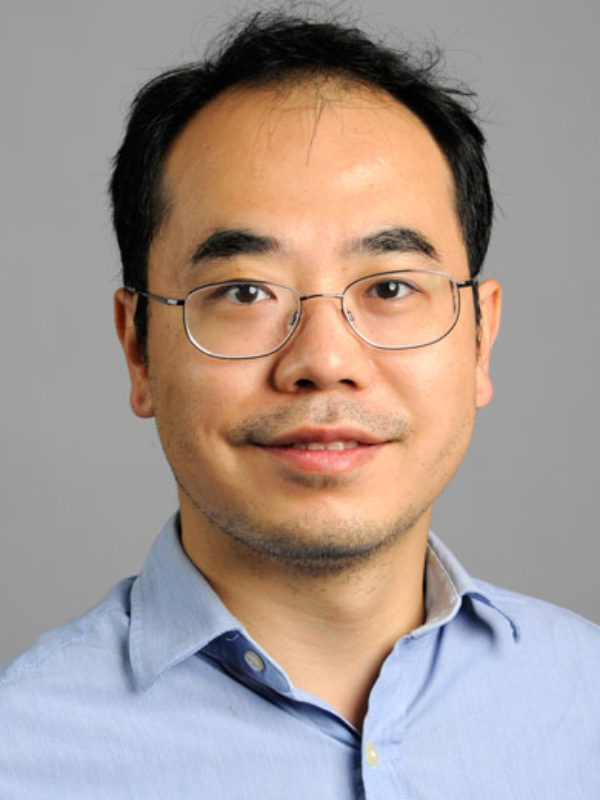
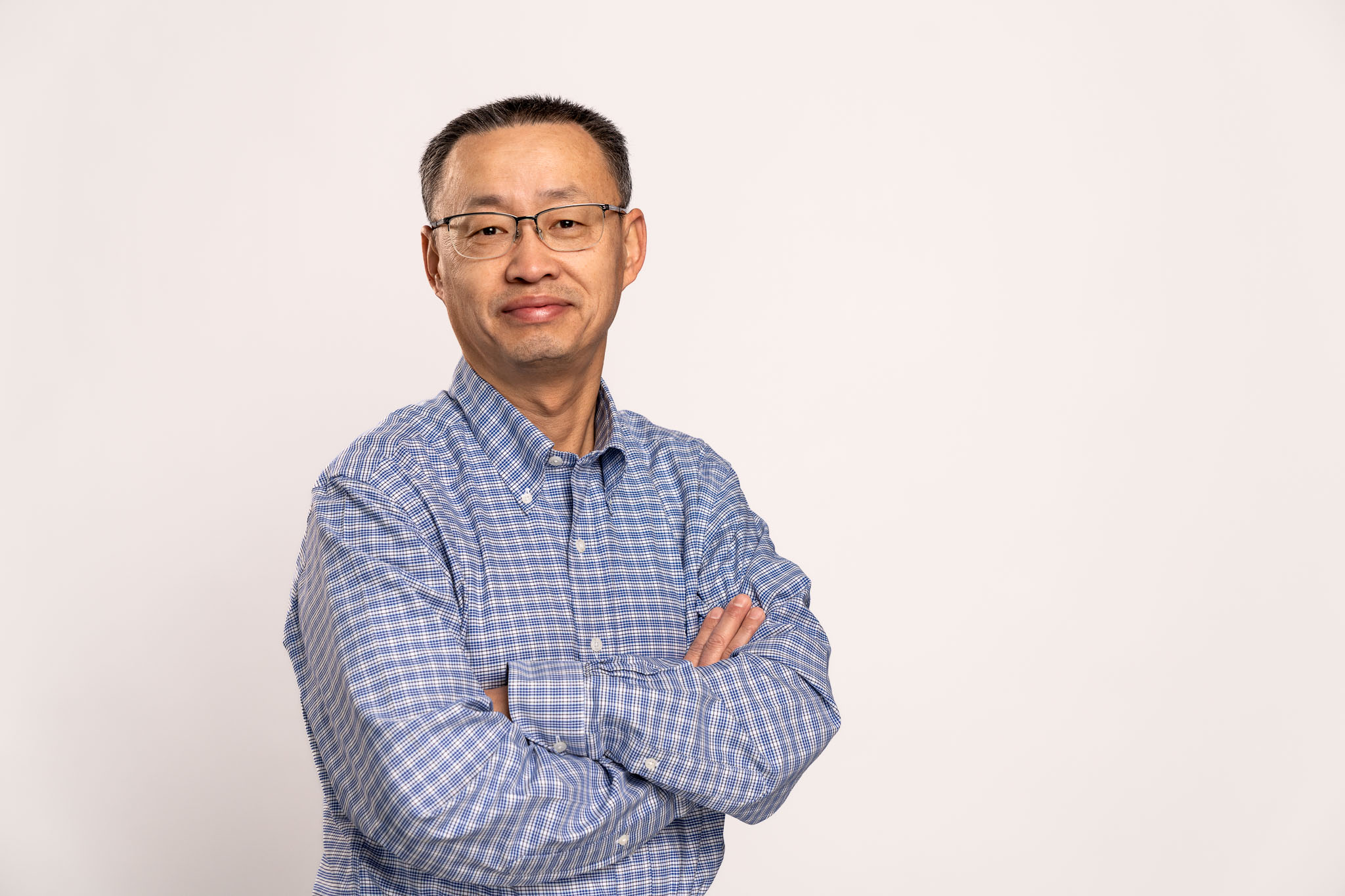
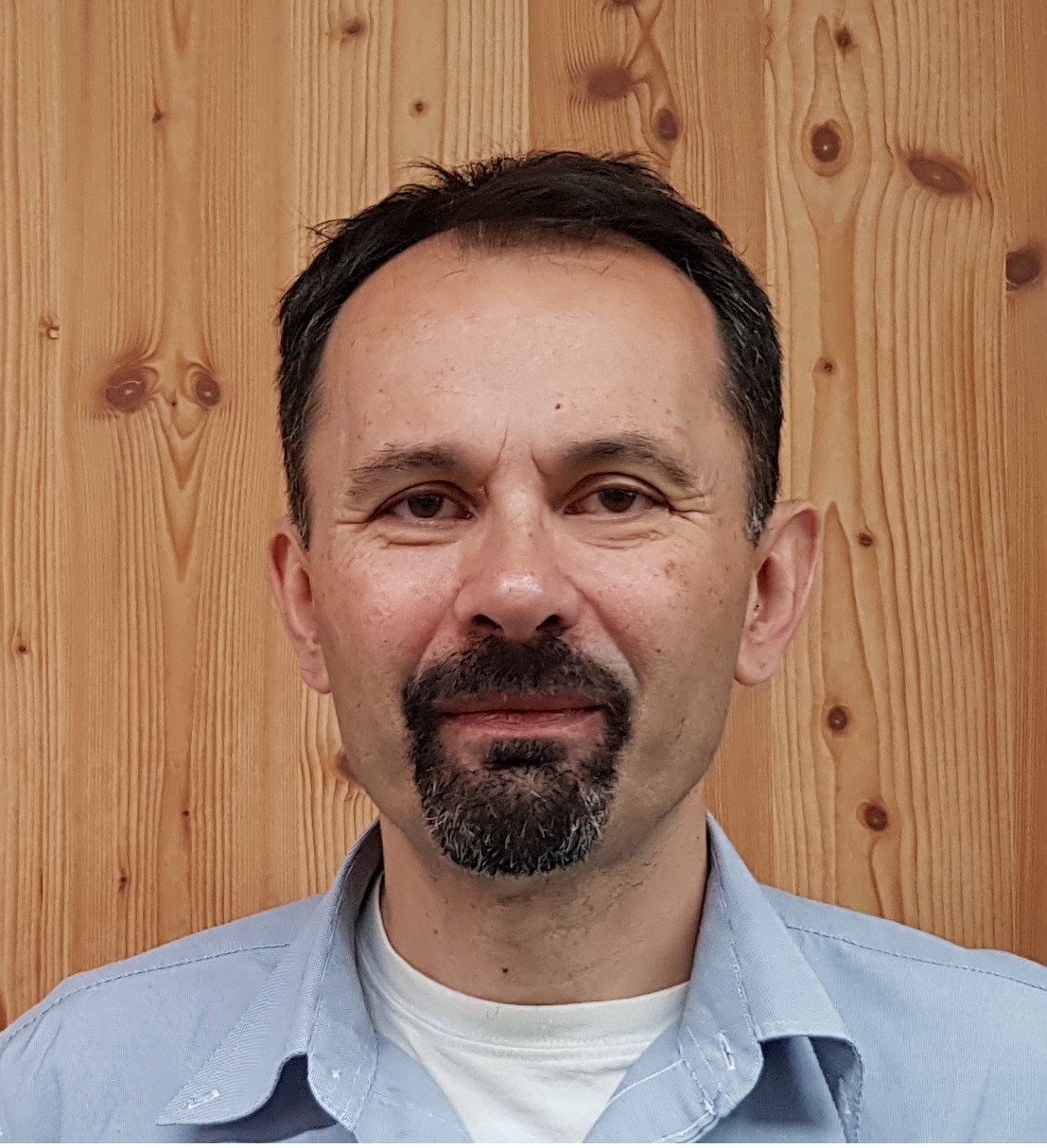
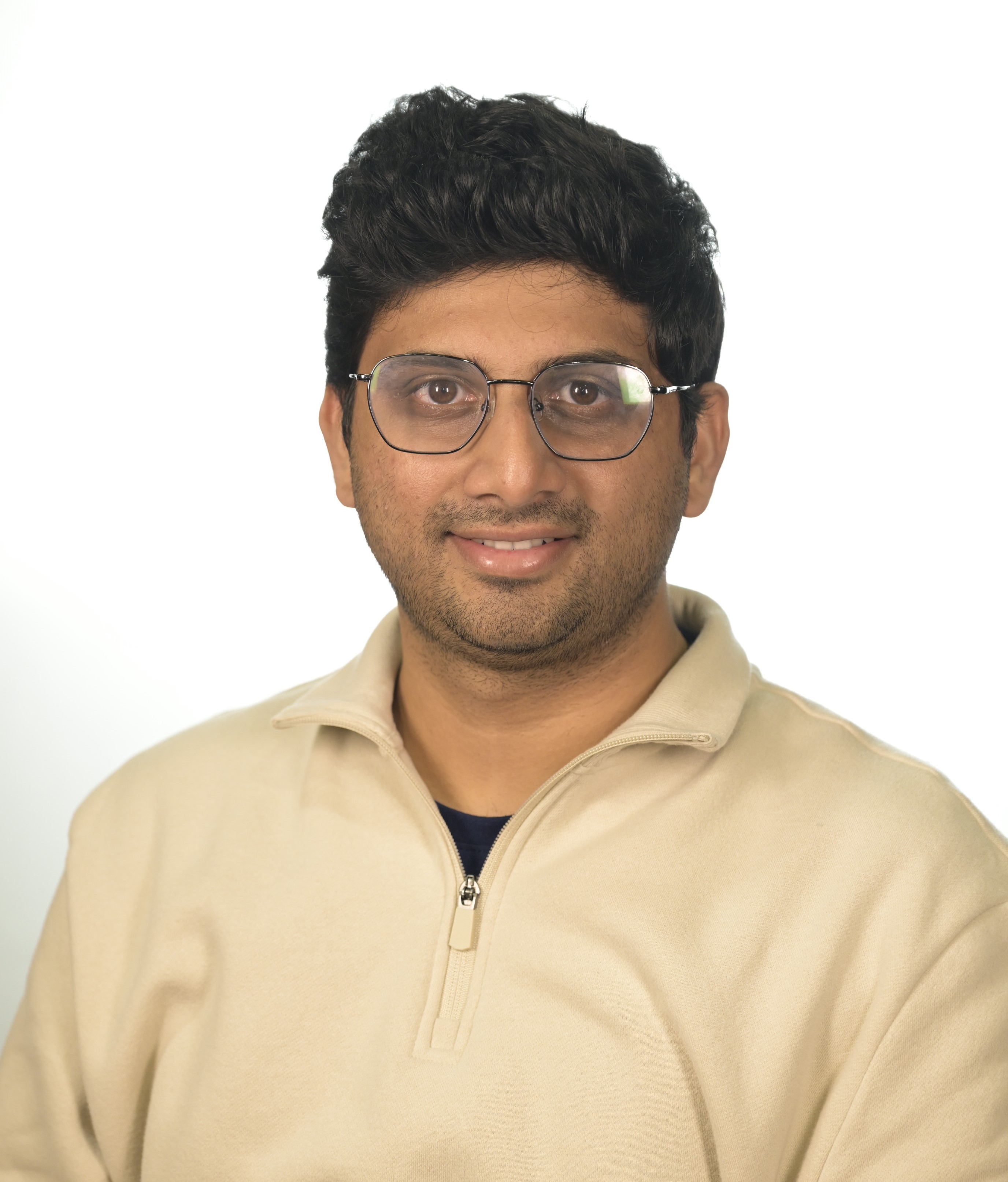
Ryan Qi Wang is an Assistant Professor of Civil and Environmental Engineering at Northeastern University, jointly appointed with the College of Social Sciences and Humanities. He serves as Associate Research Director for Social Media at the Boston Area Research Initiative (BARI), investigating urban mobility patterns, disaster resilience, and geosocial networks. His research combines urban informatics with complex systems analysis to understand human movement during crises, urban inequalities, and sustainable city development. Recent publications examine mobility responses to environmental hazards, algorithmic biases in mobility models, and data-driven approaches to urban sustainability.
Professor Liangxiu Han is Professor of Computational Science at Manchester Metropolitan University's Department of Computing and Mathematics, where she also serves as co-Director of the Centre for Advanced Computational Science and Deputy Director of the ManMet Crime and Well-Being Big Data Centre. Her research focuses on developing novel approaches to big data analytics, machine learning, and AI, with applications in precision agriculture, healthcare, smart cities, and cybersecurity. Professor Han's research integrates fundamental and applied work in large-scale data processing, intelligent management of distributed systems, and mathematical modeling. Her current activities aim to provide intelligent ICT-based solutions for societal challenges in food security, healthcare, and sustainable urban development. Her recent publications demonstrate leadership in applying AI to medical challenges like Alzheimer's drug discovery and glaucoma diagnosis. The research combines Bayesian deep learning, computational chemistry, and neuropharmacology to develop innovative therapeutic approaches and diagnostic tools.
Bence Palfi is a Lecturer in the Department of Psychology at Goldsmiths, University of London. His research focuses on human-AI interactions, meta-science, and improving research practices through Open Science initiatives. He actively develops LLM-based tools for preregistration validation via the ResearchCheck collaboration and explores Bayesian statistical methods in psychological research.
Professor Jinjun Shan is a Full Professor of Space Engineering and former Department Chair (2018-2023) in the Department of Earth and Space Science and Engineering at York University's Lassonde School of Engineering. An internationally recognized expert in dynamics, control and navigation, he joined York University as an Assistant Professor in 2006, was promoted to Associate Professor in 2011, and became a Full Professor in 2016. Dr. Shan received his B.Eng., M.Eng., and Ph.D. degrees from Harbin Institute of Technology, China, in 1997, 1999, and 2002, respectively. Before joining York, he was a Post-Doctoral Fellow at the University of Toronto Institute for Aerospace Studies (2003-2006) and a Research Assistant at City University of Hong Kong (2002-2003). His research focuses on dynamics, control and navigation, autonomous systems, multi-agent systems, smart materials and structures, space instrumentation, active vibration control, and orbit dynamics. Dr. Shan has made significant contributions to national and international space missions including NEOSSat and has attracted over $5 million in research funding from governmental agencies and industry partners. His laboratory, the Spacecraft Dynamics Control and Navigation Laboratory (SDCNLab), which he founded in 2006, conducts cutting-edge research in space engineering. Dr. Shan's extensive publication record includes over 200 peer-reviewed journal and conference papers, with his most recent work focusing on multi-agent formation control, autonomous vehicle decision-making, quadrotor control systems, and smart material applications. His research shows a clear progression from fundamental dynamics and control theory toward increasingly complex multi-agent systems and real-world applications in autonomous vehicles and space engineering. Fellow of Canadian Academy of Engineering (CAE) Fellow of Engineering Institute of Canada (EIC) Fellow of American Astronautical Society (AAS) Associate Fellow of AIAA Alexander von Humboldt Research Fellowship JSPS Fellowship Lassonde Educator of the Year Award (2022) Named in Stanford's list of world's top 2% researchers Dr. Shan has successfully mentored numerous graduate students and post-doctoral fellows, with current advisees working on cutting-edge projects in multi-agent systems, UAV control, and smart materials. His research is supported by substantial funding from NSERC, CSA, and industry partners. As the founding director of SDCNLab, he has built a comprehensive research facility for spacecraft dynamics, control, and navigation, recently expanding to include autonomous unmanned vehicle research through a CFI JELF award. His laboratory continues to make significant contributions to both theoretical advancements and practical applications in space engineering and autonomous systems.
Sana Maqsood is an Adjunct Professor at the School of Computer Science, Carleton University. Her affiliation is listed under the Faculty and Administration section of the School, though specific roles beyond this title are not elaborated. Her research interests are inferred from her department's focus areas, likely encompassing core computer science disciplines such as software engineering, AI, and cybersecurity. While no explicit details about her educational background, grants, or advising activities are provided, her presence in an academic role suggests engagement with research and teaching. No awards or publications are listed in the provided text. Contact information for the School is available, but no personal email or direct links to her work are specified.
Ricard Gavaldà is a Professor in the Department of Computer Science at Universitat Politècnica de Catalunya (UPC), affiliated with the LARCA research group. Since February 2020, he has been on academic leave to work full-time at Amalfi Analytics, focusing on healthcare data analytics. His research interests include Machine Learning, Data Mining, and their applications to healthcare and social good. He has supervised numerous PhD students and contributed to impactful projects in clinical decision support, traffic prediction, and energy-efficient systems. Education details are not explicitly mentioned in the provided texts. His work spans data stream mining, algorithmic frameworks (e.g., MOA), and healthcare informatics. He has co-founded Amalfi Analytics to develop AI-driven solutions for healthcare management. Notable recent activities include co-chairing the Nectar Track at ECML PKDD 2025 and organizing workshops on Data Science for Social Good. Key technical contributions include methods for adaptive learning, probabilistic modeling, and interpretable AI systems. His research bridges theoretical foundations and real-world applications, with a focus on improving healthcare outcomes and sustainable practices.
Dr Alina Bialkowski is a Senior Lecturer at the School of Electrical Engineering and Computer Science , part of the Faculty of Engineering, Architecture and Information Technology at The University of Queensland. Her research focuses on interpretable machine learning and computer vision to enhance AI transparency and solve real-world challenges. Prior to joining UQ in late 2017, she held postdoctoral positions at University College London (2015–2017), where she studied human perception in driving, and Disney Research Pittsburgh (2014), analyzing team sports using spatiotemporal data. Dr Bialkowski earned her PhD and Bachelor of Engineering (Electrical Engineering) from Queensland University of Technology, Australia. Her doctoral research centered on group behavior analysis from visual and spatiotemporal data, with applications in sports analytics and intelligent surveillance systems. Her research interests span medical imaging (especially electromagnetic imaging of strokes), human attention modeling in driving, intelligent transport systems , surveillance systems , and sports analytics . She emphasizes explainable AI to bridge the gap between technical systems and human understanding, employing methods like feature visualization and attribution. Her work also explores sensors for non-invasive imaging and machine learning frameworks to ensure ethical AI. Dr Bialkowski has received significant recognition, including the Best Paper Prize at the 2017 IEEE Winter Conference on Applications of Computer Vision (WACV) . Her research has led to 6 international patents with collaborators such as Disney Research, Toyota Motor Europe, and The University of Queensland, focusing on electromagnetic imaging and AI-driven solutions. She actively contributes to interdisciplinary projects like The Lanyard Project (traffic sensor fusion) and co-authored a SmartSat CRC-funded research report on machine learning for satellites. Dr Bialkowski is available for supervision and advocates for AI systems that integrate human-centric principles into their design and evaluation.
Tim French is an Associate Professor in the Department of Computer Science and Software Engineering at the University of Western Australia's School of Physics, Maths and Computing. He is affiliated with the UWA Oceans Institute and serves as Regional Contest Director for the South Pacific Programming Contest and Programme Chair for the Australasian Conference on Artificial Intelligence 2022. His research focuses on logic, artificial intelligence, knowledge representation, and reasoning about uncertainty in multi-agent systems, probabilistic reasoning in games, and industrial applications like automated planning and machine learning for complex processes. French holds a PhD in Computer Science (2007) and BSc in Computer and Mathematical Sciences (1999), both from UWA. His expertise spans algorithms, automated reasoning, formal methods in software, and temporal logic verification systems. He has led or contributed to 6 major research projects including the ARC Research Hub for Transforming Energy Infrastructure and the ARC Training Centre for Transforming Maintenance through Data Science. His research outputs include 118 publications covering topics like aleatoric logic for probabilistic reasoning, semantic knowledge extraction from industrial maintenance systems, and deep learning applications in wastewater treatment. He has developed novel methods for knowledge graph construction, state estimation in complex systems, and user interface design informed by work characteristics models. Key grants: 6 active/finished projects totaling $M+ funding Leadership roles: Programming contest director, conference chair Interdisciplinary focus: Combines formal logic with industrial automation challenges French's work contributes to UN Sustainable Development Goals through education and innovation in sustainable industrial processes and environmental systems modeling. His team has developed practical solutions for maintenance procedure digitization, wastewater plant optimization, and robust agent-based systems for uncertain environments.
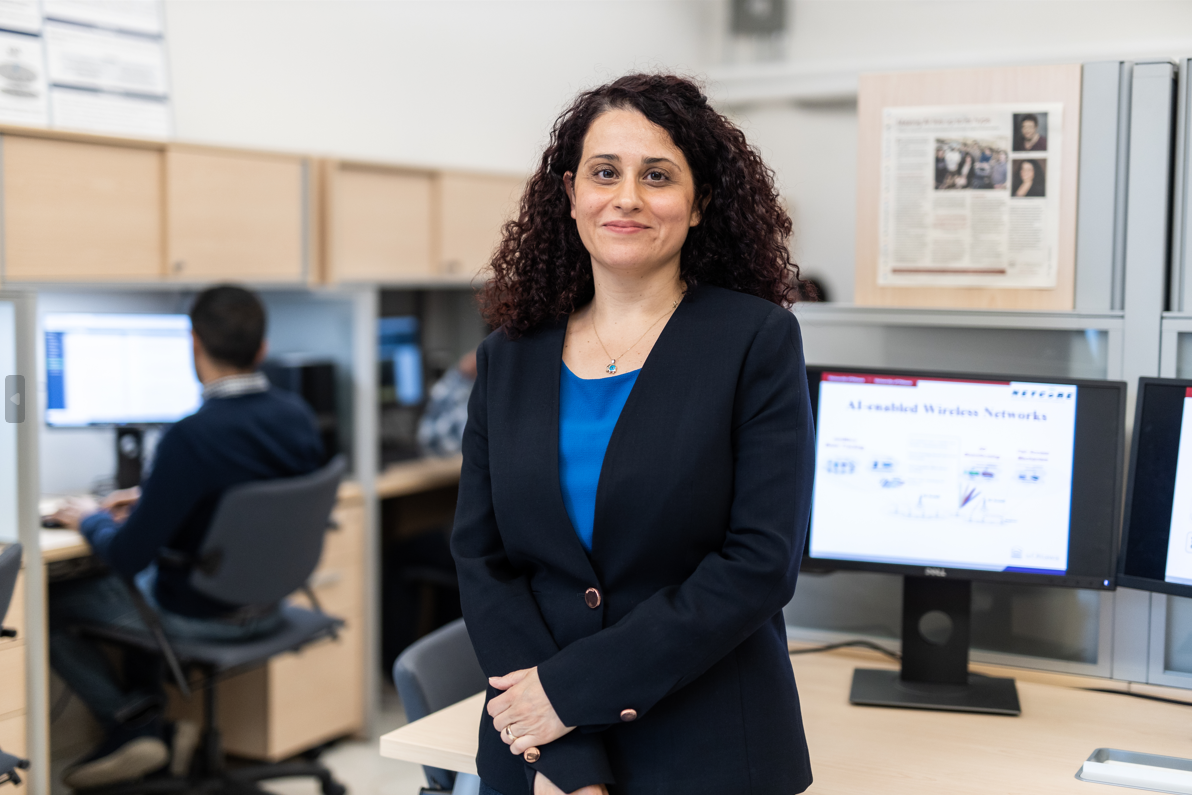
Melike Erol-Kantarci is an Associate Professor and Tier 2 Canada Research Chair in AI-enabled Next-Generation Wireless Networks at the School of Electrical Engineering and Computer Science, University of Ottawa. She is the founding director of the Networked Systems and Communications Research (NETCORE) laboratory. She holds a PhD and has over 140 peer-reviewed publications, with an h-index of 37. Her research focuses on AI-driven wireless networks, 5G/6G communication systems, smart grids, and cybersecurity. Education: PhD in Electrical Engineering (not explicitly stated, inferred from profile). Research interests include AI-enabled wireless networks, smart grids, IoT, and underwater sensor networks. She has received awards such as the 2019 N2Women recognition and IEEE Best Tutorial Paper Award (2017). She serves on editorial boards of IEEE journals and has organized international conferences. Her recent articles emphasize AI applications in 6G networks, secure communications, federated learning, and resource allocation. Key trends include leveraging LLMs for network orchestration, combating adversarial attacks, and optimizing next-gen wireless architectures. Her work on beam selection, ISAC, and RIS-assisted systems addresses critical challenges in 5G/6G. Awards include the Canada Research Chair and best paper recognitions. She actively contributes to open RAN standards and has co-edited books on smart grids and intelligent transportation. Her lab, NETCORE, drives innovation in networked systems.
Gianluca De Nard serves as a Senior Research Associate at the University of Zurich's Department of Economics, Research Fellow at New York University's Volatility and Risk Institute, and Head of Quantitative Research at OLZ AG in Zurich. His career bridges academic research and practical finance applications, with significant contributions across multiple institutions. Dr. De Nard specializes in quantitative finance with expertise in portfolio optimization, covariance matrix estimation, and financial econometrics. His research focuses on developing robust statistical methods for handling large-dimensional financial data, with particular emphasis on shrinkage techniques and factor models. His work addresses fundamental challenges in modern portfolio theory, including nonstandard errors in financial research, climate risk integration, and AI applications in investment management. Analysis of his recent publications reveals a clear evolution toward integrating machine learning with traditional financial econometrics. His 2024-2025 work shows increasing sophistication in applying AI techniques to portfolio construction while maintaining rigorous statistical foundations. The recurring themes across his research include improving covariance matrix estimation, developing factor models for portfolio selection, and addressing methodological challenges in financial research. Dr. De Nard has established collaborations with leading researchers including Nobel laureate Robert F. Engle, Olivier Ledoit, and Michael Wolf. His work appears in top finance journals including the Journal of Finance, Journal of Financial Econometrics, and Journal of Banking and Finance, with his 2024 paper 'Nonstandard Errors' accumulating over 17,000 downloads. At OLZ AG, he applies his academic research to practical investment challenges as Head of Quantitative Research, demonstrating his ability to translate theoretical advances into real-world solutions. His dual academic-industry roles position him at the forefront of quantitative finance research and application.
Masoumeh Ebrahimi is an Associate Professor at KTH Royal Institute of Technology, Division of Electronics and Embedded Systems, and holds an Adjunct Professor position at the University of Turku, Finland. She leads research in hardware acceleration, neural architecture search, and fault-tolerant systems. Her work bridges machine learning, embedded systems, and network-on-chip (NoC) design. Research Interests: Hardware-Accelerated Machine Learning 6G Network Architectures Fault-Tolerant Computing High-Performance GPU Systems Network-on-Chip (NoC) Design Federated Learning Key Projects: Co-supervisor of Hui Chen’s postdoc project Generalizing hardware acceleration for nonlinear functions . Active in Digital Futures, a cross-disciplinary center focusing on societal challenges using digital tech. Collaborates on edge computing, 6G networks, and resilient embedded systems. Labs & Teams: Core member of KTH’s Digital Futures initiative, advancing AI accelerators and next-gen communication systems. Engaged in EU-funded projects on NoC reliability and federated learning frameworks.
Dr. Paulo Rauber is a Lecturer in Artificial Intelligence at the School of Electronic Engineering and Computer Science, Queen Mary University of London. He holds a PhD from the joint program between University of Campinas (Brazil) and University of Groningen (Netherlands), and previously conducted postdoctoral research at the Swiss AI Lab (IDSIA) under Jürgen Schmidhuber. Education: BSc in Computer Science, Federal University of Santa Catarina (2011) PhD in Computer Science, University of Campinas & University of Groningen (2017) Research: Focuses on Bayesian reinforcement learning methods addressing exploration, planning, and generalization. His work spans scalable algorithms for non-stationary environments and deep reinforcement learning applications. Teaching: Teaches postgraduate courses such as Neural Networks and Deep Learning, Artificial Intelligence in Games, and Data Mining. Grants & Projects: Secured a Swiss National Science Foundation grant (NEUSYM, ~$700,000) in 2019, and leads projects like Colosseum and Hindsight Policy Gradients. Affiliations: Member of the Centre for Multimodal AI and actively supervises PhD students in reinforcement learning and Bayesian methods.
Konrad Paul Kording is the Nathan Francis Mossell University Professor at the University of Pennsylvania's School of Engineering and Applied Science, holding primary appointments in Bioengineering and Neuroscience, and a secondary appointment in Computer and Information Science. His research focuses on computational neuroscience, machine learning, and their applications to understanding neural systems and human behavior. He leads a research group located in Room 404 Richards and maintains an active research website and personal academic page. His work explores topics such as neural decoding, causal inference, and the alignment of artificial neural networks with biological systems. He has pioneered methods for analyzing neural activity in macaques, developing large-scale facial analysis resources like PrimateFace. His interdisciplinary approach integrates computer vision, medical informatics, and robotics to address challenges in neurology and developmental disorders. Recent research highlights include advancing techniques for early prediction of cerebral palsy using motion tracking and automated segmentation of synchrotron-scanned fossils. His contributions to causal discovery methodologies and neural network interpretability have been influential in both neuroscience and machine learning communities.
Dr. Jiayan Qiu is a Lecturer (Assistant Professor) at the University of Leicester's College of Computing and Mathematical Science. Previously, he was a postdoctoral research fellow collaborating with Prof. Zhou Wang at the University of Waterloo's Department of Electrical & Computer Engineering. He holds a Ph.D. from the University of Sydney (USYD), advised by Prof. Dacheng Tao, and completed his MPhil and Honorable B.S. at the Australian National University (ANU). His research focuses on computer vision, machine learning, and artificial intelligence, with notable contributions to visual relationship modeling, image outpainting, depth estimation, and generative models. His work has been published in top-tier venues like IEEE TPAMI, CVPR, ECCV, and ACM KDD. Professional service activities include serving as a reviewer for prestigious journals (e.g., IEEE T-PAMI, T-IP) and conferences (CVPR, ICCV, NeurIPS), as well as a member of program committees for leading AI conferences. He also contributes to academic leadership as a Guest Editor for Frontiers in Signal Processing and MDPI-Electronics .
Krishna Teja Chitty-Venkata is a Postdoctoral Researcher at the Argonne Leadership Computing Facility (ALCF), Argonne National Laboratory, USA, where he works in the AI/ML team (formerly Data Science group). His research lies at the intersection of systems and machine learning, focusing on optimizing neural network training, finetuning, and inference on general-purpose and AI-specific hardware platforms. He is actively involved in AI for science applications and high-performance computing for AI (HPC for AI). Education: PhD in Computer Engineering, Iowa State University, 2017–2023 Bachelor of Engineering in Electronics and Communication Engineering, University College of Engineering, Osmania University, Hyderabad, India, 2013–2017 Research Interests: Krishna's research spans hardware-aware inference optimization of deep neural networks, enhancing training and finetuning of large language models (LLMs) and vision-language models (VLMs), neural architecture search (AutoML), pruning and quantization techniques, performance modeling, and AI for science. He is particularly interested in efficient adaptation methods such as LoRA-NAS integration, structured pruning (e.g., WActiGrad), and KV cache optimization (e.g., Paged Compression). Publication Trends: His recent work emphasizes benchmarking and optimization of LLMs on diverse AI accelerators (e.g., LLM-Inference-Bench), developing scalable frameworks for CNN and ViT evaluation (ConVision Benchmark), and advancing structured pruning and mixed-precision search methods. His publications span high-impact journals and conferences in computer science, AI, and systems, reflecting a strong focus on practical, hardware-aware solutions for deep learning efficiency. Scientific Contributions: Developed LLM-Inference-Bench for evaluating LLM performance across hardware and frameworks. Created ConVision Benchmark for standardized evaluation of CNNs and Vision Transformers. Proposed WActiGrad, a structured pruning method for efficient LLM finetuning and inference. Introduced Paged Compression for efficient KV cache management in vLLM. Designed LangVision-LoRA-NAS for optimizing VLMs via NAS-integrated adapters. Professional Experience and Advising: Krishna has been mentored by Prof. Arun K. Somani (Iowa State) and supervisors Murali Emani and Venkatram Vishwanath at Argonne. He has interned at AMD, Intel, and Argonne, contributing to deep learning optimization projects. While no formal students are listed, he has co-authored multiple papers with researchers and students, indicating collaborative advising. He has no publicly listed grants, but his work at Argonne is likely supported by institutional and DOE funding. Labs and Teams: He is part of the AI/ML team within the Argonne Leadership Computing Facility, a premier HPC and AI research division. His work involves close collaboration with teams developing AI accelerators and scientific applications, positioning him at the forefront of AI for science initiatives.