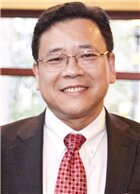
Larry Davis is a Professor in the Department of Computer Science and the Institute for Advanced Computer Studies (UMIACS) at the University of Maryland. He is affiliated with the Computer Vision Laboratory of the Center for Automation Research, where he previously served as head from 1981-1986. His research focuses on visual surveillance, human movement analysis, and advanced computer vision systems such as the Keck Laboratory for the Analysis of Visual Movement. Established in 1998, the Keck Lab uses a 64-camera array to study 3D human motion tracking and shape recognition. His work spans projects like codebook-based background subtraction for surveillance and clothing appearance models for persistent tracking. He leads interdisciplinary research on laser beam propagation through atmospheric turbulence and has secured significant grants, including a $4M Multidisciplinary Research Initiative contract. His recent publications emphasize AI-driven solutions for media forensics, generative models, and adversarial attacks on vision systems. Research contributions include innovations in neural rendering (FlexNeRF), personalized clothing compatibility frameworks, and systems for detecting deepfakes and video tampering. His work bridges theoretical advancements with real-world applications in security, healthcare, and retail technology.
Lucia Vitali is a Research Professor at the University of the Basque Country (UPV/EHU) and an Ikerbasque Research Professor affiliated with the Center for Materials Physics (CFM) and the Donostia International Physics Center (DIPC). She leads the Spectroscopy at Atomic Scale Group, focusing on experimental surface science and 2D materials. University of the Basque Country (UPV/EHU) Center for Materials Physics (CFM) Donostia International Physics Center (DIPC) Ikerbasque Basque Foundation for Science Her research explores quantum effects and electron transport in surface-supported nanostructures, emphasizing chemical reactivity, magnetic properties, and the role of atomic-scale displacement in modulating material behavior. Her work bridges physics and chemistry, utilizing scanning tunneling microscopy (STM) and atomic force microscopy (AFM) at cryogenic temperatures to study interfaces between organic/inorganic and 2D systems. With 15 recent publications spanning 2023–2011, her studies highlight electron-induced reactions, strain engineering, and non-covalent bond control in molecular assemblies. Key themes include Fermi level manipulation, Kondo effect, and hot-electron dynamics. Ikerbasque Research Professor fellowship She currently supervises PhD students Ana Barragan Duran and Alexander Correa Arristizabal, along with Master's student Ignacio Piquero Zulaica. Her lab investigates metal-organic networks, molecular debromination, and the interplay between structural and electronic properties in quantum systems.
Prof. Dr. Michael Farle is a leading academic at the Faculty of Physics, University of Duisburg-Essen , directing the research group "Struktur und Magnetismus nanoskaliger Systeme." His work spans magnetism in nanostructured materials , with a focus on Heusler compounds , MAX phases , and high-entropy alloys (HEAs) . His research explores unconventional phenomena such as "shell ferromagnetism" in Heuslers and magnetostriction in Mn 2 GaC . A key trend in his publications involves phase transitions , nanoscale magnetic anisotropy , and processing-induced microstructural modifications in alloys. Collaborations within the TRR270 HoMMage and MEGA grants highlight his funding profile. He leads a multidisciplinary team and has contributed to magnetocaloric refrigeration , spintronic devices , and green nanoparticle synthesis , emphasizing sustainability and resource efficiency.
Grzegorz Jaworski is a researcher at the Wrocław University of Science and Technology , affiliated with the Faculty of Information and Communication Technology, Department of Telecommunications and Teleinformatics. His work spans microwave engineering, antenna design, and dielectric material characterization, with a focus on high-power components, quasi-optical systems, and industrial sensing applications. Email: grzegorz.jaworski@pwr.edu.pl Location: ul. Z. Janiszewskiego 11/17, 50-372 Wrocław, building C-4, room 338 Office Hours: Wednesday 15.00-17.00, Friday 11.00-13.00 His research interests include: Microwave component design and testing Dielectric measurement systems Antenna array synthesis Quasi-optical mode converters RF sensors for industrial/medical applications Key publication trends show specialization in: Gyrotron microwave systems and diagnostics Beamforming and radiation pattern optimization Coaxial/resonator-based measurement techniques Integration of microwave sensors in industrial processes
Chad A. Mirkin is the George B. Rathmann Professor of Chemistry and holds concurrent professorships in Materials Science & Engineering, Biomedical Engineering, Chemical & Biological Engineering, and Medicine at Northwestern University. He directs the International Institute for Nanotechnology (IIN). Mirkin earned his B.S. from Dickinson College (1986) and Ph.D. from Penn State University (1989). His pioneering work includes spherical nucleic acids (SNAs), dip-pen nanolithography (DPN), and HARP 3D printing. His research spans nanomedicine, materials science, and diagnostic technologies. Affiliations: Director of IIN, multiple professorships across disciplines Education: B.S., Dickinson College (1986); Ph.D., Penn State (1989) Mirkin’s research focuses on nanoscale materials engineering, including SNAs for vaccines and diagnostics, colloidal crystal engineering with DNA, and high-throughput materials discovery. His work bridges chemistry, biology, and engineering to address challenges in healthcare, energy, and manufacturing. His articles span nanotechnology applications in energy, catalysis, and immunotherapy. He has founded companies like Nanosphere and TERA-print, translating research into commercial products. Awards: Kavli Prize, King Faisal Prize, SCI Perkin Medal, and membership in all three US National Academies Grants/Advising: Over $430M in patents, 320+ mentored students (130 became faculty) Labs/Teams: IIN, Mirkin Group, and collaborations across disciplines
Thomas Lee is a Professor of Electrical Engineering at Stanford University, affiliated with the Stanford SystemX Alliance. He holds a ScD from MIT (1990). His research focuses on analog circuit design, RF integrated circuits, and terahertz electronics. He teaches advanced courses such as Advanced Circuit Techniques and High-Frequency Circuit Design Laboratory . Education: ScD in Electrical Engineering, MIT, 1990 Professional Appointments: Professor at Stanford University Key Roles: Faculty Lead in CMOS RF Integrated Circuits, Terahertz Systems, and Bioelectronics His research spans CMOS RF design, low-power circuits, and biomedical sensors. Notable contributions include work on superregenerative receivers, wireless power transfer, and capacitive micromachined ultrasonic transducers (CMUTs). He advises numerous PhD and master's students and collaborates on projects like the Stanford Microwave Integrated Circuits Lab (SMIRC). Publications emphasize cutting-edge topics like quantum computing gate emulation, low-energy signaling, and terahertz systems. Awards and recognitions are not explicitly listed in the provided text.
Dr Luke Wilkinson is a Lecturer in Chemistry and Biology with expertise in molecular electronics and coordination chemistry. His research focuses on synthesizing inorganic/organometallic compounds for molecular electronics applications, particularly thermoelectric materials leveraging the Seebeck effect. Education: PhD in Chemistry from the University of Sheffield (2011–2015) MChem/MSc in Chemistry from the University of East Anglia (2011) Research Interests: Synthesis of thermoelectric materials C-H activation of arenes and biphenylenes Electron transfer studies in coordination complexes Metallo-ligand interactions Notable Awards: Leverhulme Early Career Research Fellowship (University of York, 2019–2023) Recent Research Trends: His publications emphasize thermoelectric materials, molecular electronics, and the structural optimization of compounds like anthracene derivatives and porphyrin ligands. Work spans experimental synthesis, computational modeling (e.g., quantum interference effects), and applications in high-performance energy systems.
Stephan Link is the Charles W. and Genevieve M. Walton Endowed Professor of Chemistry at the University of Illinois Urbana-Champaign, with joint appointments in Electrical and Computer Engineering and the Materials Research Lab. His research focuses on the photophysics and photochemistry of nanomaterials, plasmonics, and solar energy conversion. He employs ultrafast spectroscopy and single-particle imaging to study nanoparticle dynamics and interfacial processes. Education: PhD in Physical Chemistry, University of Notre Dame (2019–2024) Bachelor’s in Chemistry, Butler University (2015–2019) Research Interests: Plasmon-generated solvated electrons and energy transfer mechanisms Nanoparticle arrays and optical dichroism Plasmon-dephasing and acoustic modes in nanostructures Applications in solar energy conversion and biosensing Awards: AAAS Fellow (2024) Grants & Collaborations: Jenny and Antti Wihuri Foundation Grant (2025) for plasmonic solar energy projects Interdisciplinary collaborations with the Landes group on ultrafast spectroscopy Labs & Teams: Leads the Link Research Group, actively engaged in nanomaterial synthesis, spectroscopy, and device applications. Collaborates with experimental and computational groups across multiple disciplines.
Shuming Nie is the Grainger Distinguished Chair in Bioengineering and Professor of Chemistry at the University of Illinois at Urbana-Champaign. He holds additional professorships in Bioengineering, Micro and Nanotechnology Lab, Electrical and Computer Engineering, and Materials Science and Engineering. His research focuses on nanotechnology, biomedical imaging, and materials science with applications in cancer diagnostics and therapy. Nie leads interdisciplinary efforts in developing advanced optical sensors, plasmonic nanoparticles, and SERS-based imaging systems for precision medicine. His work spans innovations in perovskite nanocrystals for multispectral imaging, biomimetic nanoparticle design, and machine learning-aided diagnostic tools. He has pioneered techniques like intraoperative molecular imaging for real-time tumor detection during surgery. Nie's contributions include over 400 publications and inventions in nanomedicine, including US patents for targeted drug delivery systems and bioconjugated nanocarriers. Research interests include: 1) Nanoparticle engineering for biodiagnostics 2) Optical biosensors 3) Photothermal therapy materials 4) Image-guided surgery platforms 5) Cancer nanotechnology 6) Biocompatible materials development. His lab collaborates across disciplines to bridge nanoscience with clinical applications.
Giuseppe Castaldi is an Associate Professor in Electromagnetic Fields (ING-INF/02) at the University of Sannio, affiliated with the Faculty of Engineering and the Department of Engineering (DING). His office is located in the Bosco Lucarelli Palace. He holds a Laurea degree in Electronic Engineering from the University of Naples Federico II (1993, summa cum laude ) and a Ph.D. in Applied Electromagnetics from the University of Salerno (1999). His career includes postdoctoral research at the University of Sannio (1999) and TNO Physics and Electronics Laboratory in the Netherlands (2001). His research focuses on electromagnetic theory, transformation optics, metamaterials, and gravitational wave detection. He collaborates with major projects like LIGO and AURIGA, with work spanning antenna diagnostics, cloaking devices, and γ-ray burst analysis. His publications show strong emphasis on wave manipulation, sensor design, and astrophysical data analysis. He teaches courses including Wireless Applications for Automation and Multiphysics Modeling for Electronics Engineering programs. Office hours are held on Wednesdays from 11:00 to 13:00.
Prof. César Rodriguez-Emmenegger, PhD, is a Principal Investigator at the Institute for Bioengineering of Catalonia (IBEC) , leading the research group Bioinspired Interactive Materials and Protocellular Systems . His work focuses on designing synthetic materials that interact with biological systems, particularly antifouling polymer brushes and biomimetic vesicles. Education : Chemical Engineer, Universidad de la República (Uruguay); PhD in Biophysics, Charles University (Prague, Czech Republic) Postdoctoral Training : Karlsruhe Institute of Technology (Germany); University of Pennsylvania (USA) Research Interests : His research bridges materials science , surface chemistry , and synthetic biology to develop non-fouling interfaces , dendrimersomes , and smart coatings for medical devices. Key themes include protein adsorption resistance , hemocompatibility , and biofilm prevention . Scientific Contributions : His work has led to 15+ high-impact publications (2020-2023) in journals like Advanced Materials , ACS Nano , and PNAS , with a focus on dendrimersome self-assembly , light-triggered surface modifications , and medical implant coatings . Articles reveal expertise in glycoengineering , nanovesicle design , and complement activation in blood-plasma interactions. Grants & Collaborations : Supported by Alexander von Humboldt Postdoctoral Fellowship , with collaborations spanning Cambridge University , University of Pennsylvania , and Karlsruhe Institute of Technology . Holds patents on antifouling polymer brushes and co-authored a book on Biological Fluid-Surface Interactions . Labs & Teams : Currently leads a multidisciplinary team at IBEC , previously establishing junior groups at IMC Prague and DWI Aachen . Integrates polymer chemistry , biointerface engineering , and synthetic cell mimics for next-gen biomaterials.
Dr. Craig Donaldson is a Research Fellow in the Physics Department within the Faculty of Science at the University of Strathclyde, specializing in high-power mm-wave and terahertz technology development. His work focuses on gyrotron amplifiers and oscillators for applications spanning telecommunications, space object identification, and scientific instrumentation. His research interests center on broadband high-power mm-wave/THz gyrotron traveling wave amplifiers , gyrotron backward wave oscillators, electron beam generation, beam-wave interaction physics, and advanced manufacturing techniques including electrodeposition. Current projects exploit these technologies for space situational awareness, plasma diagnostics, and security imaging applications. Notable scientific recognition includes: IEEE Senior Member (2019) European Microwave Association Membership (2023) 2007 IEEE ICOPS Best Student Paper Award IEEE Member (2006) Dr. Donaldson serves as Co-investigator and Researcher on multiple high-impact projects including the RCloud ISAR2 satellite imaging program and AFOSR-funded Phase Locked High Powered Microwave Sources initiative. His work with the Atoms, Beams and Plasmas research group has demonstrated world-leading microwave output capabilities, including 13 kW gyrotron BWO systems and 3.4 kW gyrotron TWAs for real-world deployment in telecommunications and space monitoring infrastructure.
Vincent Hayward is a researcher specializing in haptics , tactile technology , and human-computer interaction . His work bridges robotics , biomechanics , and sensory feedback systems , focusing on advanced tactile interfaces, texture synthesis, and multimodal communication devices. Collaborations span institutions studying deafblind communication and microscale interactions .
David Ferrier is a Professor at the School of Biology in the University of St Andrews. His research focuses on the evolution of genome organization and developmental biology, particularly the role of homeobox-containing genes (Hox, ParaHox, NK clusters) in shaping animal diversity. He investigates organisms like amphioxus, polychaetes, and priapulids to reconstruct ancestral conditions in bilaterians, deuterostomes, and chordates. Research Highlights Evolution of Hox/ParaHox gene clusters Developmental system drift in Spiralia Comparative genomics of marine organisms MicroRNA cluster evolution Sustainable Development Goals (Life Below Water, Climate Action) Recent Publication Trends His 15 most recent articles (2021–2025) span evolutionary genomics, developmental biology, and marine microbiome studies. Key subfields include gene cluster dynamics , isoform diversity , annelid embryology , and microRNA evolution . Grants & Projects NERC : Wnt/TCF-mediated transcriptional repression (2023–2024) BBSRC : Vertebrate TCF diversification (2020–2022) Leverhulme Trust : ParaHox gene regulation (2017–2020) European Commission : CORBEL infrastructure (2015–2020)
Dr. Zeheng Wang is a CERC Fellow at CSIRO, specializing in quantum artificial intelligence, artificial intelligence for science (AI4Science), and semiconductor devices. With a PhD in Si quantum computing devices from the University of New South Wales (UNSW), he has published over 50 papers in top-tier venues including Nature , Advanced Materials (cover article), and IEEE transactions, establishing himself as a leading researcher in quantum-semiconductor integration. Education: PhD in Electrical Engineering and Telecommunications, University of New South Wales (UNSW), 2022 Research Interests: Dr. Wang's work bridges quantum computing and machine learning, focusing on quantum kernel methods for NISQ devices and AI4Science applications in materials discovery, electronic design, and clinical medicine. His semiconductor research leverages ML for fabrication optimization and device modeling, while his medical AI work develops deep learning frameworks for traditional Chinese medicine safety and pancreatic cancer prognosis. This interdisciplinary approach targets real-world problems from quantum chemistry to clinical decision support. Publication Trends: Recent publications reveal three dominant trajectories: (1) Quantum AI for semiconductor fabrication using kernel methods on small datasets, (2) Energy-efficient chemiresistive sensor arrays with ensemble learning, and (3) Clinical AI applications for TCM side-effect prediction and cancer survival analysis. His work consistently integrates quantum principles with practical engineering constraints, evidenced by multiple cover articles in advanced materials journals. Scientific Awards: CERC Fellowship (Impossible Without You campaign) Outstanding Reviewer Award (IOP Publishing, 2022) Experience Program Scholarship (Sydney Quantum Academy, 2019-2022) Tuition Fee + Stipend Scholarship (UNSW, 2019-2022) Top-up Scholarship (UNSW, 2019-2022) Grants and Editorial Roles: Currently holding the IWY Fellowship (2022-2025) for quantum AI and CAPEX funding (2023-2026) for high-performance computing infrastructure, Dr. Wang serves as Academic Editor for PLOS ONE , Guest Editor for Micromachines , and Advisory Board Member for Materials . His open-source semiconductor fabrication service has been adopted by 300+ researchers globally, demonstrating significant community impact beyond traditional academic metrics. Laboratory and Collaborations: While institutional lab details aren't explicitly stated, his Nature co-authorship with J.-K. Huang indicates active collaboration with UNSW's quantum materials groups. His research bridges CSIRO's national facilities with clinical partners for medical AI validation, and industry connections through semiconductor fabrication patents. The Impossible Without You campaign affiliation suggests strategic positioning within Australia's national quantum initiative.