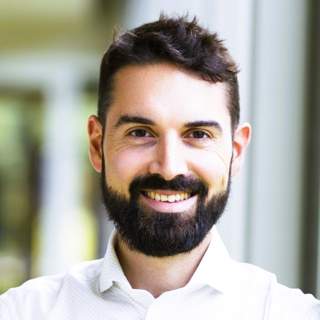
Justin Geerarts is a Researcher at Eindhoven University of Technology , specializing in Electromagnetic Theory and Antenna Design . His work focuses on the electromagnetic characterization of millimeter-wave antennas using spherical anechoic chambers, aiming to reduce measurement uncertainties and improve data processing efficiency through advanced spherical wave theory. Research Interests: Antenna arrays, millimeter-wave technology, quantum mechanics, wave propagation. Publications: Four peer-reviewed articles (2021-2024) on deterministic synthesis of aperiodic arrays and chaos in reverberation chambers. Activities: Organized the 2024 European Microwave Week workshop. Email: j.m.e.geerarts@tue.nl .
Martijn den Dekker is a researcher at Erasmus Medical Center in the Department of Pediatrics, focusing on perinatal and pediatric respiratory health. With 41 research outputs, their work spans: DNA Methylation Asthma Respiratory Tract Infections Meta-Analysis Lung Function Epigenetics Key research themes involve: Maternal asthma effects on neonatal epigenetics Early-life infection impacts on pulmonary development Multi-omics approaches to asthma pathogenesis Population-scale longitudinal pediatric health studies Pharmacogenomic responses in asthma treatment Publications demonstrate strong impact: High citation rates across key journals Significant social media and news coverage Collaborations with 27+ international research groups Contributions to clinical guidelines and policy documents
Margreet Wolfert is a Researcher at the Chemical Biology and Drug Discovery group within the Department of Pharmaceutical Sciences , Faculty of Sciences , Utrecht University (Netherlands). Her career spans multiple prestigious institutions including the University of Georgia (USA) and University of Birmingham (UK). Education Ph.D. in Biochemistry/Cancer Studies , University of Birmingham, UK (1998) M.Sc. in Biochemistry/Toxicology , University of Birmingham, UK (1995) H.B.O.-B in Medical-Chemical Direction , Van 't Hoff Instituut, Netherlands (1983) Research Interests focus on chemical biology of glycans, including Chemoenzymatic synthesis of complex carbohydrates Structure-function analysis of glycan-protein interactions Design of synthetic vaccines targeting MUC1 and TLRs Role of glycosylation in adaptive/innate immune activation Development of bioorthogonal labeling techniques Modulation of heparan sulfate and lipid A derivatives Scientific Trends from her publications reveal expertise in Glycan-based diagnostics for autoimmune diseases Influenza A virus receptor binding specificity Engineering nanoparticles for targeted cancer delivery Multi-component vaccine design with Toll-like receptor agonists Chemical reporter strategies for glycoprotein visualization Cu-free click chemistry for living cell labeling
Paul T.M. van Zeijl is a Researcher in the Department of Integrated Circuits at the Faculty of Electrical Engineering, Eindhoven University of Technology. His work focuses on advanced radar systems, antenna design, and microwave engineering with emphasis on integrated circuit solutions. He has contributed to single-chip millimeter-wave FMCW radar development and phase-locked loop (PLL) stability analysis. Research interests include Frequency Modulated Continuous Wave (FMCW) radar technology, antenna array integration, and high-isolation design for compact radar systems. His recent work addresses challenges in beamwidth enhancement using dielectric lenses and PLL phase noise mitigation for improved radar performance. Publications span topics like MIMO radar demonstrators, charge-pump PLL stability modeling, and antenna integration techniques. His research bridges circuit design and system-level applications in radar and microwave engineering.
David Prinsloo is an Assistant Professor in the Department of Electrical Engineering at Eindhoven University of Technology. His research focuses on antenna design, electromagnetic systems, and space-based instrumentation, particularly for lunar and radio astronomy applications. Key collaborations include projects like the Dark Ages Explorer (DEX) and the Netherlands-China Low-Frequency Explorer (NCLE). Research interests include phased array technologies, linear array synthesis, and sparse array configurations. He actively contributes to lunar-based detection systems for cosmic signals and low-frequency radio observations. His work bridges theoretical antenna design with practical implementation in extreme environments. Publications highlight advancements in array optimization, matrix pencil algorithms, and lunar instrument architecture. While no formal awards are listed, his contributions to lunar far side radio interferometry and collaborative international projects demonstrate significant impact. He teaches the course 'Phased array and smart antennas' since 2015, emphasizing practical engineering applications.
Jos E.M. Haverkort is a senior researcher at the Department of Applied Physics, Eindhoven University of Technology, affiliated with the Advanced Nanomaterials & Devices group and Institute for Photonic Integration. His work focuses on semiconductor nanowires for solar cells and silicon-based light sources, with major contributions to nanowire InP solar cell efficiency (17.8%) and hexagonal SiGe optical characterization. Leiden University - Physics (PhD, 1987) Research highlights: Developing nanowire solar cells with photon redirection mechanisms targeting >45% efficiency Pioneering hexagonal SiGe for direct bandgap light emission and nanolaser development Leading the European SiLAS consortium for integrated photonic applications Recent publications demonstrate breakthroughs in: Quantum well bandgap engineering (2024, 2025) Carrier cooling dynamics in hexagonal SiGe (2024) Polarized emission control from SiGe nanowires (2022) Thermodynamic limits of nanophotonic solar cells (2016) Collaborations span AMOLF, Oxford University, and industry leaders like IBM and Philips Lighting. His work aligns with UN SDG 7 (Affordable Energy) and SDG 13 (Climate Action).
Marco Altomare is a tenure track assistant professor in the Department of Chemical Engineering at the Faculty of Science and Technology, University of Twente. He leads the Nano-Materials for Electrochemical Conversion (N-MEC) research group, focusing on solid-state dewetting phenomena for designing nanostructured catalysts and electrodes. His international affiliations include collaboration with institutions in Germany, France, and Italy. Education and Career: Tenure Track Assistant Professor, University of Twente (2021-present) Principal Investigator and Habilitation Candidate, University of Erlangen-Nuremberg (2018-2021) Postdoctoral Researcher, University of Erlangen-Nuremberg (2015-2018) PhD in Metal Oxide Photoelectrocatalysis, University of Milan (2012-2015) Master in Applied & Environmental Chemistry, University of Milan (2010-2012) Research Themes: His work bridges nanoscale materials science with heterogeneous catalysis for sustainable fuel/chemical production. Key areas: solid-state dewetting, photoelectrochemistry, X-ray spectroscopy, and responsible innovation in electrochemical technologies. Article Trends: Recent publications focus on noble-metal-free photocatalysts (NiCu/TiO2), methane electro-oxidation mechanisms, dewetting-driven catalyst engineering, and operando/in-situ spectroscopic analysis of reaction dynamics. Scientific Recognition: ChemSusChem Early Career Advisory Board member (2023-2025) Organizing Committee member, Dutch ECCM graduate school (2022-2023) Grant Involvement: NWO DE-NL (2024), NWO MVI (2022-2025), DFG (2021-2025), NWO KICk start (2022-2023), and TKI Green Chemistry & Circularity projects.
Sissi de Beer is an Associate Professor at the University of Twente's Faculty of Science and Technology, affiliated with the MESA+ Institute and the Department of Applied Physics. Her research focuses on polymer brush systems, exploring their structure-property relationships in diverse applications such as stimuli-responsive coatings, vapor sensing, and anti-biofouling surfaces. She investigates topics like polymer brush swelling dynamics, tribology, and material design for sustainable and biomedical applications. Her work contributes to the UN Sustainable Development Goals, particularly in advancing materials science for environmental and health applications. Key research areas include vapor sorption, electrostatic interactions in polyelectrolyte brushes, and the development of degradable polymer brushes for circular economy initiatives. She has published extensively in journals like ACS Macro Letters , Macromolecules , and Polymer . Dr. de Beer collaborates internationally on projects involving surface functionalization, nanotechnology, and biomaterials. She has supervised six academic works, though specific student names are not detailed here. Her research integrates experimental and computational methods, with datasets openly shared on platforms like 4TU.Centre for Research Data. Scientific Contributions: Over 90 peer-reviewed publications, 17 h-index, and 2500+ citations. Notable achievements include pioneering studies on polymer brush topology effects, thermoresponsive surface wetting, and molecular design strategies for electro-responsive materials.
Marius Schoettle is a Research Fellow in the Self-Organizing Matter group at AMOLF , a research institute in Amsterdam, Netherlands. His work focuses on colloidal materials, thermal transport, and photonic gradients.
J.G.E. Gardeniers is a Full Professor at the University of Twente's MESA+ Institute, affiliated with the Mesoscale Chemical Systems department within the Faculty of Science and Technology. His research focuses on microfluidics, nanotechnology, and materials science, with a strong emphasis on 3D printing, catalytic systems, and biomedical applications. He has supervised 51 academic works and contributed to over 682 publications since 1984. His research spans topics like luminescent materials, electrochemical systems, and microfluidic device development. Key interests include: microfluidic fabrication for biomedical diagnostics, additive manufacturing of ceramic microarchitectures, and nanomaterials for energy applications. Recent work highlights include 3D-printed glass-ceramics for optics, palladium-decorated nanofibrous catalysts, and acoustic mixing systems. Collaborations span international institutions, with a focus on chemical engineering, photonics, and robotics. His activities include over 50 academic presentations and contributions to interdisciplinary projects like microfluidic oil recovery systems and space-compatible cell culture devices.
Prof. Daniël Vanmaekelbergh is a Professor of Chemistry and Physics of Nanostructures at Utrecht University's Department of Chemistry, affiliated with the Science Faculty and the Debye Institute for Nanomaterials Science. His research focuses on colloidal synthesis of low-dimensional semiconductors, cryogenic scanning tunneling microscopy (STM), and artificial lattices as quantum simulators . He leads the Vanmaekelbergh Lab, collaborating with SWARTLAB.EU on quantum materials. Grants include Dutch NWO projects (2019–2023, 2016–2022) and an ERC Advanced Grant (FIRSTSTEP, 2016–2022). His publications total 416 peer-reviewed papers with an H-index of 84 (Google Scholar, 2021). Education : PhD in Chemistry (1984, Rijksuniversiteit Gent) Roles : Director of Debye Institute (2018–2021), Editorial Board member of Physics Reports Research Interests span quantum emitters, Dirac materials, and nanocrystal superlattices. Key techniques include HAADF-STEM, optical spectroscopy, and STM manipulation. Awards include the Descartes–Huygens Prize (2017) and Honorary Membership in the Israel Chemical Society (2018). He has advised over 40 PhD students, with recent graduates including Dr. Maaike van der Sluijs (2024) and Dr. Jesper Moes (2024). Labs/Teams : Vanmaekelbergh Lab and SWARTLAB.EU collaboration focuses on "atomic-scale engineering of quantum materials" .