Mirko Lobino is an Associate Professor at the University of Trento, affiliated with the Department of Industrial Engineering. His work bridges theoretical concepts and practical applications in quantum optics, photonics, and material science. Teaches Fisica 1 (PARI) and Fisica 2 Co-teaches Physics and Thermodynamics of Materials with Alberto Quaranta and Francesco Parrino Research interests focus on quantum information science, laser physics, and graphene-based materials for strain sensing. He develops programmable photonic circuits for quantum computing and investigates thermodynamic principles in material transformations. Recent publications highlight advancements in photon number detection, quantum system control, and squeezed light generation for quantum networks. His work involves collaborations with the Department of Mathematics and integrates ion traps, photonic waveguides, and machine learning for quantum technologies. He explores applications in wearable sensors, electrochemical biosensing, and high-temperature electronics.
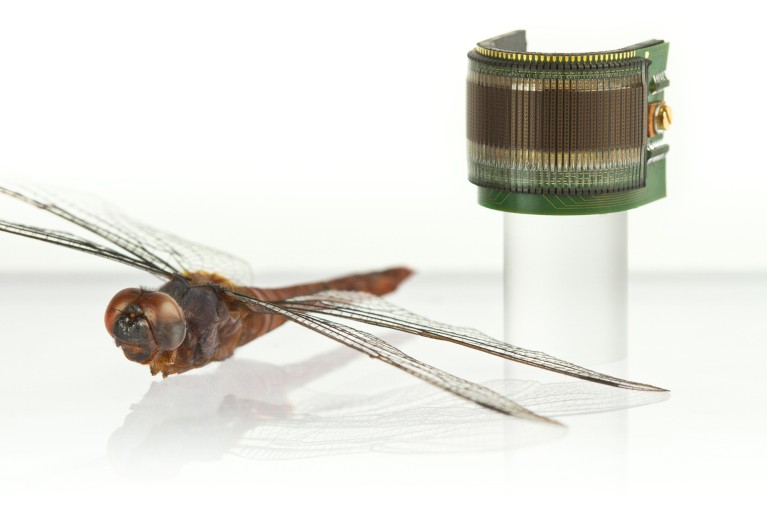
Professor Song Young-min is joining the Department of Electrical Engineering at Korea Advanced Institute of Science and Technology (KAIST) as a Professor, with his appointment beginning July 1, 2025. His research focuses on developing innovative bio-inspired optical systems for robotics, with particular expertise in biomimetic cameras and neuromorphic vision systems. Professor Song's research interests span flexible optoelectronic devices and nanophotonics, with specific applications in biomimetic cameras for intelligent robots , optoneuromorphic devices and systems , nanophotonics-based reflective displays , and infrared-controlled radiative cooling devices . His work bridges electrical engineering, materials science, and biological inspiration to create energy-efficient vision systems that reduce computational demands. His recent publications demonstrate significant advancements in bio-inspired vision technology, particularly in feline-inspired vertical pupil systems that improve object tracking stability and cuttlefish-inspired W-shaped pupil designs for uneven lighting conditions. These innovations show how hardware improvements can substantially reduce energy consumption in robotic vision systems. Professor Song has established significant research collaborations with institutions including MIT (working with Frédo Durand on the Artificial Compound Eyes with Artificial Intelligence project), EPFL, and Northwestern University. His work has been published in high-impact journals including Nature, Science Robotics, and Science Advances. His laboratory focuses on developing next-generation vision systems that integrate biological inspiration with cutting-edge optical engineering, with applications ranging from surveillance robots to autonomous vehicles. Current projects include improving wide-angle imaging capabilities and developing more efficient optic flow processing systems for drone navigation.
Ken Salem is a Professor at the Cheriton School of Computer Science, University of Waterloo. His research focuses on database systems, distributed systems, cloud computing, and storage management. He has supervised 12 PhD students to completion, with graduates now working at companies like Google, Qualcomm, and SAP. His research interests include: Database system architecture and optimization Distributed transaction processing Cloud-based data management Energy-efficient computing Storage systems and hardware interactions Recent publications show strong focus on transactional systems, durability mechanisms, and cloud-native database architectures. His work consistently appears in top-tier venues like VLDB, SIGMOD, and IEEE Transactions on Knowledge and Data Engineering. Key projects include: SHADOW systems for high availability DimmStore for memory power optimization NoSE for NoSQL schema design RemusDB for transparent database availability
Suren Gigoyan is an Adjunct Assistant Professor at the University of Waterloo, affiliated with its adjunct faculty. His research focuses on millimeter-wave and terahertz technologies, with a strong emphasis on antenna design, phase shifter development, and sensing applications. His work includes innovations in phased-array antennas, tunable components, and whispering-gallery-mode (WGM) resonators for biomedical and industrial uses. Key areas of exploration include: Phased array architectures for 5G/6G and satellite communication systems MEMS-based tunable phase shifters and variable attenuators Dielectric resonators and WGM sensors for glucose monitoring and oil quality analysis Low-profile, compact antenna designs for millimeter-wave integration His publications span over three decades, with recent contributions (2021–2025) addressing emerging challenges in W-Band systems, non-reciprocal devices, and passive beamforming. Notable trends include the integration of ferromagnetic materials and silicon-on-glass (SOG) technology for high-performance, cost-effective solutions. While no academic awards or grants are explicitly listed, his work reflects sustained innovation in RF and microwave engineering. Advising and team collaborations are not detailed in the available texts.
Peter Parbrook is a Stokes Professor at the University College Cork (UCC), jointly appointed between the School of Engineering and the Tyndall National Institute. He holds a first-class honors degree in Physics from the University of Strathclyde and a Ph.D. in wide-bandgap II-VI semiconductors. His career includes roles as a Toshiba Fellow at Toshiba Central Research and Development Center in Japan, followed by a lectureship at the University of Sheffield (1995–2009), where he became a Reader and later led the Nitride Team in the EPSRC National Centre for III-V Technologies. He has served as Head of the Electrical and Electronic Engineering Discipline within UCC's School of Engineering since 2016. Education: B.Sc. (Hons) Physics, University of Strathclyde, 1987 Ph.D. in Physics (wide-bandgap semiconductors), University of Strathclyde, 1991 Research Interests: Professor Parbrook specializes in III-nitride semiconductors for optoelectronics, focusing on GaN-based materials and devices. His work emphasizes metalorganic vapor phase epitaxy (MOVPE) growth, defect reduction in III-N materials, and ultraviolet (UV) light-emitting diodes (LEDs). Key areas include improving laser/LED efficiency at wavelengths below 360 nm and developing novel alloys/crystal orientations for nanostructured devices. Grants & Collaborations: Principal Investigator on multiple grants from Science Foundation Ireland (SFI), EU Framework Programmes, and the Irish Research Council. Research programs include 300–340 nm LEDs, deep UV LEDs for space applications, InAlN transistor reliability, and yellow LEDs. Labs & Teams: He leads the Nitride Materials Research Group at Tyndall National Institute, focusing on advanced MOVPE growth and device fabrication. His team collaborates with international partners on projects like the SFI Stokes Professorship and EU-funded initiatives.
Kanu Sinha is an Assistant Professor of Optical Sciences and Physics at the University of Arizona, serving as Joint Faculty in the College of Optical Sciences. His research focuses on quantum fluctuation phenomena, cavity and waveguide quantum electrodynamics (QED), collective atom-field interactions, and non-Markovian open quantum systems. He leads the Quantum Optics and Open Quantum Systems Group, which explores applications in quantum information processing and quantum sensing. His work emphasizes engineering light-matter interfaces to study macroscopic quantum behaviors. Education: Ph.D. in AMO Physics from the University of Maryland, College Park (2015). Research interests include collective radiation dynamics, quantum Brownian motion, and decoherence mechanisms. Recent publications highlight advancements in quantum sensing, entanglement engineering, and non-Markovian systems. His group collaborates closely with experimental teams to bridge theoretical models with real-world applications. Key contributions include studies on vacuum-induced quantum beats, collective decay mechanisms, and Casimir-Polder interactions. Current projects explore quantum fluctuation forces in nanoscale systems and mechanical quantum sensing for dark matter detection.
Univ.-Prof. Dr. Hannes Bernien is a Research Director at the Institut für Quantenoptik und Quanteninformation, University of Innsbruck. His work focuses on quantum information science, leveraging neutral atom arrays for quantum computing, simulation, and networking. Key research areas include scalable quantum systems, entanglement engineering, and hybrid quantum technologies. His lab develops platforms like Rydberg atom arrays and nanophotonic interfaces for quantum networks. Notable achievements include loophole-free Bell inequality violations and Schrödinger cat state generation. He has been honored as the CLEO 2024 Gordon Memorial Speaker. PhD students advised: Ka Hui Goh, Shankar G. Menon, Dahlia Ghoshal, and others. Postdocs: Justus Brüggenjürgen, Peng Yin. Recent publications emphasize error-correctable quantum RAM, deterministic entanglement distillation, and hybrid quantum repeaters. His team explores nonergodic chiral dynamics and dual-species Rydberg arrays, advancing both theoretical and experimental quantum frontiers.
Mohammad Fanaei is an Associate Teaching Professor in the Department of Electrical and Computer Engineering at Northeastern University, affiliated with the College of Engineering. His research focuses on machine learning applications, wireless sensor networks, automotive systems, and network security. He has contributed to advancements in vehicular communication protocols, distributed estimation techniques, and cybersecurity measures against tunneling attacks. Research Interests Fanaei’s work spans deep learning for autonomous systems , vehicular networks , and sensor fusion . He explores challenges in distributed signal processing, including power allocation strategies and robust communication protocols for automated vehicles. His cybersecurity research addresses vulnerabilities in vehicular ad hoc networks and sensor infrastructure. Key Contributions His publications highlight trends in 3D vehicle localization , DSRC receiver modeling , and modulation-channel coding interplay . Earlier work includes foundational studies on distributed detection algorithms and spatial randomness in sensor networks. Advising & Grants While specific advising/grants are not detailed, his academic role suggests involvement in teaching and mentoring in electrical engineering and computer science disciplines.
Prof. Nils Pohl is a Professor for High Frequency Integrated Circuits at Ruhr-Universität Bochum and Deputy Head of the Integrated Circuits and Sensor Systems Department at Fraunhofer Institute FHR. His research focuses on microwave and terahertz integrated circuits, radar systems, and high-frequency sensor technologies. He holds a Dr.-Ing. in electrical engineering from Ruhr-Universität Bochum (2010) and has led multiple collaborative projects in radar technology and sensor development. Prof. Pohl is actively involved in IEEE technical committees and serves as a reviewer for top conferences like IEEE MTT-S and ISSCC. His awards include the IEEE MTT-S Outstanding Young Engineer Award (2018) and the IHP Fellowship (2017). Education : PhD in Electrical Engineering (2010), Ruhr-Universität Bochum Doctoral thesis on 80 GHz radar system design Research Interests : High-frequency integrated circuits for radar (FMCW, MIMO), terahertz sensors, antenna design, and material characterization Applications in automotive radar, industrial sensing, and non-destructive testing Grants & Projects : Leadership in Fraunhofer-Government collaborations for radar sensor development EU-funded projects on terahertz imaging and 6G communication systems Labs/Teams : Integrated Systems Team at Ruhr-Universität Bochum Fraunhofer FHR’s Chip Design Team
Muhammad Zeeshan Shakir is a Professor in the Department of Electronic and Electrical Engineering at the University of Glasgow's College of Science and Engineering. With over 120 publications spanning from 2007 to present, his career demonstrates sustained research excellence in wireless communications and networking technologies. His work bridges theoretical foundations with practical applications, particularly in next-generation communication systems. Professor Shakir's research interests focus on the cutting edge of wireless technology evolution. His work spans 5G/6G networks, non-terrestrial communications, Internet of Things, and machine learning applications in networking. Early in his career, he made significant contributions to cognitive radio and device-to-device communications, which laid the foundation for his current work on 6G architectures and non-terrestrial networks. His recent publications demonstrate a strategic expansion into AI-driven networking solutions, edge computing applications, and metaverse-enabling technologies. This research trajectory reflects both technical depth in wireless communications and adaptability to emerging technological paradigms. His publication portfolio shows a consistent pattern of impactful contributions, with recent work analyzing trends in airborne networks, reconfigurable intelligent surfaces, and multi-RAT selection in 5G/6G environments. These publications frequently address critical industry challenges including coverage extension, energy efficiency, and seamless connectivity across heterogeneous network environments. His work on emotion recognition at the edge and virtual metaverse environment development demonstrates expanding interdisciplinary reach. Professor Shakir has successfully mentored numerous PhD students including Yusufu Gambo, Ifiok Anthony Umoren, and Cezar Anicai, whose research spans smart learning environments, energy trading in microgrids, and federated learning applications. His collaborative approach is evident through extensive co-authorship networks, particularly with researchers at University of Glasgow and international institutions. His research has been supported through various grants focused on next-generation wireless systems, with particular emphasis on practical implementations that address real-world connectivity challenges. Current projects appear to focus on integrating AI with wireless infrastructure to create more adaptive, efficient, and user-centric communication systems.
Randy Verdecia-Peña is a researcher specializing in wireless communication and 5G technologies, focusing on millimeter-wave (mmWave) systems, software-defined radio (SDR), and network protocols. His work emphasizes practical experimentation with advanced signal processing techniques, including machine learning for channel estimation and hardware prototyping for integrated access and backhaul (IAB) architectures. Key contributions include phased array-aided 5G prototypes, flexible layer 2 protocols, and cooperative relay node design in both indoor and outdoor environments. Collaborations frequently involve hardware validation and performance analysis across frequencies like 26 GHz and 60 GHz.
Sara Issaoun is an observational astronomer and NASA Einstein Fellow at the Harvard & Smithsonian Center for Astrophysics, where she also serves as a Systems Engineer for the Event Horizon Telescope (EHT) collaboration. Her research focuses on the collection, calibration, and imaging of millimeter-wave radio observations of supermassive black holes. PhD in Astrophysics from Radboud University (2021) MSc in Physics and Astronomy from Radboud University (2017) BSc in Physics from McGill University (2015) Research Focus Dr. Issaoun studies how supermassive black holes generate the highest energy processes in the Universe, ejecting jets of plasma that affect galaxy environments. She utilizes global networks of radio telescopes to image and study the immediate surroundings of supermassive black holes at the centers of our Galaxy and the galaxy M87. Her work aims to expand millimeter-wave radio imaging capabilities and forge connections between black hole shadow images and physics observed across the electromagnetic spectrum. Publication Trends Dr. Issaoun's recent work with the EHT collaboration demonstrates significant advances in black hole imaging, particularly in studying magnetic field structures around Sagittarius A*, long-term observations confirming the persistence of black hole shadows, and multi-wavelength analysis of gamma-ray outbursts from M87's powerful jet. Her research spans observational astronomy, theoretical physics, and advanced imaging techniques. Awards NASA Einstein Fellowship Collaborative Efforts As a key member of the international EHT collaboration, Dr. Issaoun contributes to one of astronomy's most ambitious projects, which operates a virtual observatory using telescopes spanning from Greenland to the South Pole. Her work integrates data from the Center for Astrophysics' Submillimeter Array and Greenland Telescope with other global facilities.
Shyamprasad Natarajan Raja is a Researcher at the Department of Micro and Nanosystems at KTH Royal Institute of Technology. His work focuses on developing solid-state nanogap and nanopore platforms for single molecule sensing applications. He holds a BEng in Mechanical Engineering from IIT Madras (India), and MSc and PhD degrees from ETH Zurich (Switzerland). His research spans nanomaterials, nanofabrication, microfluidics, and sensing technologies, with a strong emphasis on phonon transport in low-dimensional materials like nanowires and graphene. His research has been supported by grants such as the SSF Sweden Israel Research Collaboration (2022–2027) and the Ragnar Holm Foundation (2018). Key areas of exploration include nanofabrication techniques for precise sensors, molecular interactions using nanopores, and thermal properties of nanomaterials. Recent advancements include scalable fabrication of silicon nanopores, high-bandwidth measurement systems for tunnel junctions, and studies on graphene thermal conductivity under annealing conditions. Raja’s publications highlight interdisciplinary approaches, blending materials science, electronics, and biotechnology. His work on crack-defined gold break junctions and phonon transport limits in nanowires demonstrates a deep integration of experimental and theoretical methodologies. Future research directions include expanding applications of nanopore-based biosensors and optimizing nanogap platforms for real-time molecular analysis.
Alexandre BENOIT is a Professor at Polytech Annecy-Chambéry, Université Savoie Mont-Blanc, and a permanent member of the LISTIC laboratory. His research focuses on deep learning, federated learning, computer vision, remote sensing, and explainable AI, with applications in astrophysics, environmental monitoring, and healthcare. He leads projects on glacier modeling, federated learning bias mitigation, and satellite image analysis. His teaching activities include courses on deep learning (TensorFlow/PyTorch), image processing (Matlab/OpenCV), and programming (C/C++/Python) at undergraduate and graduate levels. He has supervised over 10 PhD students and collaborates with industries like Total, Renault, and startups on AI integration. Research highlights include developing the GammaLearn framework for Cherenkov Telescope Array data analysis and bio-inspired retina models integrated into OpenCV. He co-organized major conferences such as CBMI 2012 and EUSFLAT 2011, and serves on editorial boards for IEEE Transactions on Image Processing and other journals. Current projects address federated learning fairness, glacier thickness estimation via deep learning, and oil slick detection using SAR imagery. His work emphasizes frugal models, physically informed AI, and ethical AI practices in collaborative environments.
Fredrik Kjolstad is an Assistant Professor of Computer Science at Stanford University. His research focuses on compilers, programming models, and systems for sparse computing, with an emphasis on separating algorithms from data representation. He leads efforts in developing compilers like TACO, Simit, and Legate Sparse to optimize sparse tensor algebra and distributed computations. Kjolstad's work spans compiler design, hardware-software co-design, and programming languages for high-performance computing. His research group aims to enable portable applications across diverse data representations and architectures. Notable projects include the TACO compiler for sparse tensor algebra, the Simit programming language for physical simulations, and the Copy-and-Patch compilation technique for fast runtime code generation. He has also contributed to distributed systems like Legate Sparse and hardware accelerators such as Onyx. Kjolstad has received prestigious awards including the NSF CAREER Award and the MIT EECS PhD Thesis Award. His publications cover topics like sparse tensor compilation, compiler optimization, and agile hardware design. He advises multiple PhD students and collaborates with researchers like Kunle Olukotun and Alex Aiken. Key areas of impact include efficient sparse data processing, compiler-driven hardware design, and scalable distributed computing frameworks. His work bridges theoretical compiler techniques with practical system implementations, aiming to simplify and accelerate complex computational tasks.