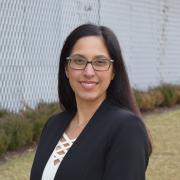
Dr. Dekel Rosenfeld is a Senior Lecturer in the Department of Biomedical Engineering at Tel Aviv University, affiliated with The Iby and Aladar Fleischman Faculty of Engineering. He holds a Ph.D. in Biomedical Engineering from the Technion (2015) and conducted postdoctoral research at MIT's Bioelectronics group (2016-2022), focusing on magnetothermal approaches for peripheral nerve/organ interfaces and gut-brain axis studies. Education: B.Sc. in Biomedical Engineering (Cum Laude, 2007), Technion M.Sc. in Biomedical Engineering (Direct Track, 2010), Technion Ph.D. in Biomedical Engineering (2015), Technion His research develops magnetic functional materials for remote neuromodulation and calcium-dependent processes in peripheral organs. Key applications include treating hormonal imbalances in mental health disorders like PTSD through adrenal stress hormone control , and advancing organ-brain communication understanding using minimally invasive techniques validated in vitro and in vivo . Recent publications (2020-2025) demonstrate expertise in magnetothermal stimulation , bioelectronic interfaces , and neuro-endocrine interactions , with notable work in Science Advances and Neuron . Current projects explore in silico thermal transducer optimization and 3D magnetic collagen gels for cellular control.
Daniel Mayer is a researcher affiliated with the Department of Physics at RPTU Kaiserslautern-Landau. His work focuses on quantum physics, particularly in ultracold atomic gases , nonequilibrium thermodynamics , and quantum simulation . Current position: Researcher in the Widera research group Email: dmayer@rhrk.uni-kl.de Research highlights include: Quantum thermometry using single atoms Spin dynamics in Bose-Einstein condensates Non-equilibrium processes in few-body systems Precision spectroscopy of rubidium atoms His publications (2015–2023) demonstrate expertise in quantum optics , atomic physics , and statistical mechanics . He has contributed to advancements in single-atom manipulation and quantum sensing technologies.
Markus Grebe serves as Professor and Head of the Department of Plant Physiology at the Institute of Biochemistry and Biology, University of Potsdam, where he leads a research group investigating fundamental mechanisms of plant cell polarity and development. His laboratory, located in building 20, room 0.08, focuses on molecular processes governing root morphogenesis and cellular organization in Arabidopsis thaliana. Research priorities include: Establishment of planar and tissue polarity in root systems Auxin signaling networks and polarized transport mechanisms Lipid domain organization and membrane dynamics ROP GTPase-mediated cytoskeletal regulation Cell plate assembly during cytokinesis Protein trafficking in polarized growth contexts Analysis of recent publications reveals consistent emphasis on integrating advanced imaging with genetic approaches to dissect how lipid microdomains, cytoskeletal elements, and signaling pathways coordinate to establish cellular asymmetry. The group has pioneered methodologies for visualizing membrane order and protein dynamics during root hair initiation and cell division. Professor Grebe has mentored fifteen graduate students to completion, including nine PhD candidates and four Master's students, while currently supervising two doctoral researchers. His laboratory utilizes state-of-the-art infrastructure including LSM 880 Airyscan microscopy for high-resolution live imaging of developmental processes.
Oliver Sander is a researcher at the Institute for Data Processing and Electronics (IPE) at Karlsruhe Institute of Technology (KIT) . His work focuses on advanced electronics systems for quantum computing, cryogenic sensors, and high-energy physics experiments. Academic Rank: Researcher Research Affiliation: Institute for Data Processing and Electronics (IPE), KIT Contact: oliver.sander@does-not-exist.kit.edu Dr. Sander's research spans multiple disciplines, including quantum engineering , microwave electronics , and real-time data acquisition . He has pioneered electronic solutions for superconducting qubit control, cryogenic sensor readout, and particle detector systems at the Large Hadron Collider. His recent publications highlight advancements in microwave SQUID multiplexers , RFSoC-based readout systems , and modular quantum interface controllers . These works demonstrate a strong focus on scalability, noise reduction, and integration of heterogeneous hardware for precision measurements. At IPE, Dr. Sander contributes to cutting-edge projects like the ECHo experiment for neutrino mass measurement and the QUBIC telescope for cosmic microwave background studies. His expertise in field-programmable gate arrays (FPGAs) and multi-core architectures enables robust solutions for safety-critical systems in both physics and automotive domains.
Matthias Löwe is a Professor at the Institute of Stochastics within the Faculty of Mathematics and Computer Science at the University of Münster. His academic career spans several decades with continuous contributions to probability theory and statistical physics. His research focuses on deep theoretical investigations of complex stochastic systems, particularly in the context of disordered systems and random structures. Löwe's research interests center on Probability Theory , Statistical Physics , and Random Matrix Theory . His work examines phase transitions in spin systems, fluctuation phenomena in random graphs, and the mathematical foundations of neural network models. His research program consistently bridges theoretical probability with applications in statistical physics, particularly in understanding the behavior of complex interacting particle systems at critical points. His publication record shows consistent output in top probability journals including Annals of Probability , Electronic Journal of Probability , and Annales de l'Institut Henri Poincaré . His most recent work (2020-2023) focuses on propagation of chaos in mean-field models, fluctuations in Ising models on random graphs, and exact recovery problems in block spin systems. Löwe frequently collaborates with researchers including Zakhar Kabluchko, Kristina Schubert, and Jonas Jalowy. Löwe has supervised multiple doctoral students including Raphael Meiners, Mirko Ebbers, Jens Ameskamp, and Sarah Behrens. His research group has included postdoctoral researchers and doctoral candidates working on various aspects of probability theory and its applications.
Christian Zidorn is a Professor at the Christian-Albrechts-Universität zu Kiel's Pharmaceutical Institute, leading the Kiel Pharmacognosy Group (AK Zidorn). His research spans bioactive plant natural products, chemophenetics, chemical ecology, and marine natural products, with a focus on Cichorieae tribe (Asteraceae), vegetable plant constituents, and seagrass metabolomics. Chair, Pharmacy Section Committee (Faculty of Mathematics and Natural Sciences, Kiel University) University Professors Committee for Young Scientists Promotion Equal Opportunities Committee member His work integrates chemophenetics (taxonomic classification through secondary metabolite arrays), marine natural products (Zosteraceae metabolites), and vegetable plant research (bioactive flavonoids and terpenoids). Key compound classes include flavonoid glycosides, lignans, sesquiterpene lactones, and diarylheptanoids. His group employs UHPLC-DAD-MS , NMR , and GC-MS for structural elucidation. Recent publications (2025-2019) demonstrate trends in studying seasonal metabolite variations (e.g., European beech), chemophenetic markers for plant hybrid detection (Doronicum × longeflorens), and natural product sequestration (Orobanche from Nicotiana). His 2019 editorial introduced the term plant chemophenetics to modernize chemotaxonomic studies. Current projects involve genetic-chemophenetic correlations in grassland species and anti-inflammatory/anti-diabetic compound discovery from South Asian Rubiaceae. The group emphasizes methodological rigor in plant metabolomics, advocating for voucher specimens and artefact-free extraction protocols.
Mahdi Vasighi is currently serving as an Assistant Professor at the Department of Computer Science and Information Technology, Institute for Advanced Studies in Basic Sciences (IASBS) in Zanjan, Iran, a position he has held since February 2012. Prior to this, he was a Post-doc Researcher at the same institution from February 2011 to February 2012. He has also served as a Visiting Researcher at the Milano Chemometrics and QSAR Research Group, University of Milano - Bicocca, Milan, Italy from September to October 2009, and as a Guest Lecturer at the Pasteur Institute, Tehran, Iran since September 2016. Dr. Vasighi earned his educational qualifications from the Institute for Advanced Studies in Basic Sciences (IASBS) in Zanjan, Iran, where he completed his Ph.D. in Chemometrics in May 2010 and his M.Sc. in Analytical Chemistry between 2002 and 2005. His undergraduate education was in Pure Chemistry at Imam Khomeini International University, Qazvin, Iran, from 1998 to 2002. Dr. Vasighi's primary research interests lie at the intersection of bioinformatics, machine learning, and data analysis. His work focuses on structural bioinformatics, particularly on modeling relationships between biological sequences and their corresponding structure or function. He has made significant contributions to the field of self-organizing maps with dynamic structure, developing innovative approaches like the Directed Batch Growing Self-Organizing Map (DBGSOM) that enhance topology preservation and visualization of high-dimensional data. His research spans multiple domains including protein structural classification, cancer diagnostics using fluorescence spectroscopy, and drug discovery for diseases like COVID-19. Dr. Vasighi's publication record demonstrates a strong trajectory in applying machine learning techniques to solve complex problems in bioinformatics and medical diagnostics. His recent work shows an increasing focus on applying computational approaches to healthcare challenges, including cancer detection, protein analysis, and drug discovery for viral diseases. He has successfully bridged the gap between theoretical machine learning advancements and practical applications in biology and medicine, with a particular emphasis on developing interpretable models that can be used by domain experts. Dr. Vasighi has actively contributed to the academic community through teaching and conference organization. He has served as Local Chair for the International Conference on Contemporary Issues in Data Science 2019 (CiDaS 19) and as Scientific Committee Member and Organizing Chair for previous CICIS conferences. His teaching portfolio includes graduate courses in Artificial Neural Networks, Computational Data Mining, Bioinformatics, Statistical Pattern Recognition, and Multimedia Systems. Dr. Vasighi has supervised numerous MSc students, with over twenty graduated students and nine current students listed in his profile. His research has been supported through collaborations with institutions like the Pasteur Institute, where he worked on projects related to nuclear magnetic resonance-based screening of thalassemia and determination of coronary heart disease risk using NMR spectra of plasma lipoproteins. Through his Directed Batch Growing Self-Organizing Map (DBGSOM) package and other software contributions, Dr. Vasighi has made his research tools accessible to the broader scientific community. His work continues to push the boundaries of how machine learning can be applied to solve challenging problems in bioinformatics and medical diagnostics.
Lars Nieder serves as a Research Fellow in the Observational Relativity and Cosmology department at an institution in Hannover, focusing on gravitational wave detection through pulsar timing arrays and relativistic astrophysics. His work directly contributes to cutting-edge projects including Einstein@Home and compact binary coalescence research. His primary research domains encompass Gravitational Wave Detection, Pulsar Timing, Relativity, Cosmology, Astrophysics, and Compact Binary Systems. Methodologically, he leverages high-performance computing resources like the Atlas cluster to analyze pulsar timing data, aiming to refine gravitational wave sensitivity and test general relativity predictions in extreme cosmic environments. The department maintains active collaborations through student internships and external partnerships, utilizing specialized infrastructure for observational cosmology. Dr. Nieder's current efforts prioritize advancing pulsar timing array techniques to probe low-frequency gravitational waves and their cosmological implications.
Dr. Prajwal Voraganti Padmanabh is a Research Fellow in the Observational Relativity and Cosmology department at the Leibniz University Hannover/Max Planck Institute for Gravitational Physics in Hannover, Germany. His work focuses on gravitational wave detection through pulsar timing arrays and data analysis using the Atlas computing cluster. Research Interests: Gravitational Wave Astronomy Pulsar Timing Arrays Compact Binary Systems High-Performance Computing Applications Additional Roles: He serves as a Postdoc Representative for the Pulsar Timing Arrays project and is involved with the Einstein@Home citizen science initiative.
Dr. David Champion is a Researcher at the Max Planck Institute for Radio Astronomy (MPIfR) in Bonn, Germany, affiliated with the Research Department of Radio Astronomical Fundamental Physics. He is a core member of the COMPACT Research Group, focusing on radio astronomical fundamental physics. His research utilizes major radio telescopes including Effelsberg, Arecibo, Green Bank, and Parkes for pulsar timing and gravitational wave detection. Education History: B.Sc. in Physics with Astrophysics from University of Bristol M.Sc. in Opto-electronics and Optical Information Processing from Queen's University Belfast Ph.D. in Pulsar Searching and Timing from University of Manchester (Jodrell Bank Observatory) Research Focus: Champion specializes in pulsar timing arrays, gravitational wave detection, and neutron star physics. His work includes the European Pulsar Timing Array project, pulsar surveys, analysis of relativistic binaries, and studies of the interstellar medium. Recent research explores dark matter signatures via pulsar polarimetry and developing methodologies for the Square Kilometre Array. Publication Trends: Over 15 recent publications (2024-2025) demonstrate consistent focus on pulsar timing arrays, gravitational wave detection, and neutron star systems. Key themes include MeerKAT data analysis, binary pulsar characterization, survey discoveries, and instrumentation for next-generation telescopes. Research emphasizes statistical methods for noise reduction and gravitational wave background mapping. Scientific Recognition: Natural Sciences and Engineering Research Council of Canada (NSERC) Postdoctoral Fellowship, supplemented by Canadian Space Agency Research Projects & Collaborations: Leads efforts in the European Pulsar Timing Array and Parkes Pulsar Timing Array projects. Manages observational programs using Effelsberg Radio Telescope and contributes to TRAPUM (Transients and Pulsars with MeerKAT). Collaborates internationally on gravitational wave detection and pulsar surveys. Laboratories & Teams: Heads the COMPACT Research Group at MPIfR. Previously worked with pulsar research groups at McGill University and Australia Telescope National Facility (CSIRO). Contributes to instrumentation development for neutron spectroscopy and radio astronomy.
Prof. Dr. Bernd Klein is a Professor at the University of Applied Sciences Bonn-Rhein-Sieg (H-BRS) and Head of the Department of Digital Signal Processing and Submillimeter Technology at the Max Planck Institute for Radio Astronomy (MPIfR) . He serves as Project Manager for the APEX Telescope in Chile and Co-PI for the GREAT Receiver on NASA/ESA's SOFIA Observatory. 1989–1993: Diplom (FH) in Electrical Engineering, FH Gießen-Friedberg 1993–1996: Supplemental Studies in General Electrical Engineering, University of Siegen 1999–2004: Doctoral Researcher, MPIfR 2005: PhD in Astronomy, University of Bonn His research focuses on digital signal processing , THz/spectrometer development , and radio astronomical instrumentation . He pioneered high-resolution Fast Fourier Transform Spectrometers (FFTS) for telescopes like Effelsberg, APEX, SOFIA, and MeerKAT, with applications in submillimeter astronomy and space debris analysis . Key trends in his 15 most recent publications span terahertz heterodyne systems , quantum cascade laser phase-locking , stellar feedback mechanisms , and atomic oxygen detection in planetary atmospheres. His work bridges instrumentation development and observational astrophysics . 2018 : THz Science and Technology Best Paper Award, IEEE Microwave Theory and Techniques Society He leads instrumentation projects for radio telescopes and contributes to large-scale collaborations like the SFB 1601 (2023–present) on digital signal processing. His technical expertise includes field-programmable gate arrays (FPGAs) , heterogeneous computing architectures , and machine learning for astronomical data .
Dr. Bernd Klein is a researcher at the University of Cologne , Department of Physics, specializing in terahertz heterodyne spectroscopy and heterodyne receiver systems . He collaborates extensively with institutions like SOFIA Observatory and APEX Telescope . Affiliated with University of Cologne (Department of Physics) Research focus on planetary atmospheric science, interstellar medium, and high-mass star formation Key instruments: upGREAT, GREAT, CHAI, U-Board Research Interests span submillimeter astronomy , planetary spectroscopy , and instrument development . His work includes detecting atomic oxygen isotopes in Earth's atmosphere (2023) and HeH+ in interstellar space (2019). Klein contributes to instrumentation projects like the CCAT-prime Heterodyne Array (2023) and upGREAT (2016), advancing THz technology for astronomical applications.
Maximilian Schüle serves as Assistant Professor in the Department of Data Engineering at the University of Bamberg's Faculty of Information Systems and Applied Computer Sciences since October 2022. Previously, he held research positions at Technical University of Munich (2017-2022). His research bridges database systems and machine learning through compiler-based approaches. His research focuses on in-database machine learning , GPU-accelerated query processing , and recursive SQL extensions . Key contributions include: Developing MLIR-based compilers for automatic differentiation in SQL (DuoLingo-AutoDiff) Creating GPU code generators for database kernels using NVRTC Designing higher-order lambda functions for expressive query languages Implementing end-to-end neural network training within database engines His recent publications (2023-2025) demonstrate consistent output in top venues including ICDE, VLDB workshops, and BTW conferences, with growing emphasis on hardware-aware optimization and compiler techniques for analytical workloads. He currently leads a DFG-funded project on elastic memory hierarchies for memory-intensive applications (2025-2028), supporting multiple PhD researchers. His supervision emphasizes open-source contributions to database systems like Umbra and practical implementation skills alongside theoretical foundations. As an active member of the database community, he serves as workshop chair for BTW 2025 and regularly reviews for ACM TODS, VLDB Journal, and Information Systems. His work on public transport analytics demonstrates real-world impact through collaborations with urban mobility initiatives in Bamberg.
Professor Peter Becker is a Full Professor and Head of the Molecular Biology Section at the Adolf-Butenandt-Institute, Faculty of Medicine, Ludwig-Maximilians-Universität München (LMU Munich). He serves as the Chair of Collaborative Research Center (CRC) 1064 and leads Project A01 on 'Domino nucleosome remodeling complexes and histone H2A.V dynamics in transcription and DNA repair.' His academic journey began with a Biology degree from Ruprecht-Karls-Universität Heidelberg (1978-1983), followed by a Diploma in Biology (1984) and a Promotion 'summa cum laude' (1987). After postdoctoral fellowships at the NIH and DKFZ, he became a Group Leader at EMBL Heidelberg (1991-1999) before joining LMU Munich as a Full Professor in 1999. Since 2015, he has served as Acting Chair of the Biomedical Center Munich. Professor Becker's research focuses on chromatin dynamics, particularly the mechanisms of nucleosome remodeling complexes and histone variant dynamics. His work specifically examines how DOMINO ATPase isoforms function in SWR1-type complexes to exchange histone variants like H2A.V, and how these processes are involved in transcription regulation and DNA repair. His lab uses Drosophila as a model system to study these fundamental chromatin regulatory mechanisms. Recent publications demonstrate a strong focus on understanding nucleosome array arrangements, chromatin fiber folding, and the genome-wide rules of nucleosome phasing, combining biochemical, genetic, and genomic approaches. Gottfried-Wilhelm Leibniz Prize of the Deutsche Forschungsgemeinschaft (2005) ERC Advanced Grant (2011) DFG Reinhardt-Koselleck Grant (2016) EMBO Membership (2000) Academia Europaea Membership (2007) German Academy of Science Leopoldina Membership (2007) Professor Becker actively mentors students through his involvement in multiple graduate programs including the International Max Planck Research School 'From Biology to Medicine' and the Graduate School 'Quantitative Biosciences, Munich'. His lab benefits from substantial funding through CRC 1064, ERC, and DFG grants, providing excellent resources for cutting-edge research in chromatin biology. He leads the 'Chromatin Dynamics and Nuclear Function' research group, which investigates fundamental mechanisms of chromatin regulation with implications for understanding gene expression, genome stability, and epigenetic inheritance.
Prof. Philipp Korber is a Professor in the Department of Molecular Biology at the Biomedical Center of Ludwig-Maximilians-Universität München (LMU Munich). He leads an independent research group focused on chromatin biology and nucleosome positioning, embedded within the Collaborative Research Center 1064 'Chromatin Dynamics' since 2013. His laboratory has established itself as a leader in developing genome-wide reconstitution approaches to study chromatin remodeling mechanisms. Prof. Korber's research centers on understanding how DNA sequence is read out to determine nucleosome positioning and how chromatin remodeling enzymes reorganize nucleosomes during different biological states. His lab uses unicellular yeasts (Saccharomyces cerevisiae and Schizosaccharomyces pombe) as model systems, combining powerful genetic tools with innovative biochemical approaches. A major contribution has been the development of genome-wide in vitro reconstitution methods that allow precise dissection of remodeling mechanisms. His conceptual framework views remodelers as information processing hubs that integrate DNA sequence features and protein inputs to position nucleosomes. His recent publications demonstrate continued productivity with articles in Nature (2023), Nature Communications (2021), and Cell (2016), among others. His work spans fundamental chromatin mechanisms, method development for nucleosome mapping, and applications to gene regulation at model promoters like the yeast PHO system. Scientific recognition includes: APL Professorship at LMU Munich (2022) Habilitation with Venia legendi in Biochemistry/Molecular Biology (2014) Editorial Board membership at Molecular and Cellular Biology (2014-2018) Associate junior group leader in BioSysNet (2012-2017) Member of EU Network of Excellence 'EpiGeneSys' (2011-2015) Prof. Korber maintains extensive collaborations with researchers across Germany and internationally, including groups at MPI Biophysical Chemistry, EMBL Heidelberg, Technical University of Munich, and Harvard Medical School. His laboratory currently includes at least two PhD students and benefits from the rich research environment of the SFB 1064 network with over 20 chromatin-focused research groups in Munich.