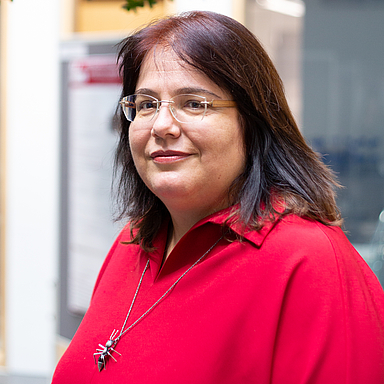
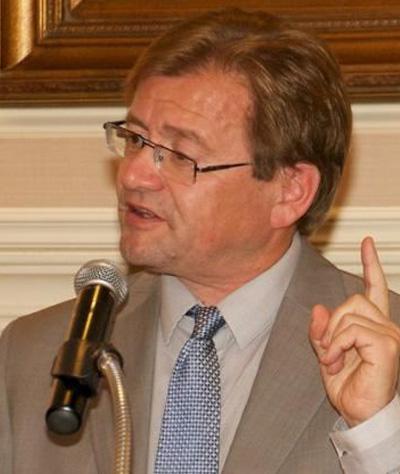
Sıtkı Egeli is an Associate Professor at the Department of Political Science and International Relations at İzmir University of Economics since 2015. With a PhD in International Relations from Bilkent University, an MA in Security Studies from University of Chicago, and a BA in Political Science from Boğaziçi University, he specializes in defense policy, security studies, and military technology. PhD: Bilkent University, International Relations (1993-1999) MA: University of Chicago, Security Studies (1988-1991) BA: Boğaziçi University, Political Science (1983-1988) His research focuses on weapons of mass destruction proliferation , air and missile defense , nuclear deterrence , space security , and disruptive military technologies . His publications analyze Turkish defense industrialization, Arctic geopolitics, and strategic stability in aerospace warfare contexts. Recent collaborative work (2017-2025) spans: • Balancing defense autarky (2025) • Arctic region involvement (2022) • Historical air power development (2021) • Military space operations (2021) • Turkish missile defense (2019) • Ballistic missile programs (2017)
Gervase Phillips is a Principal Lecturer in the Department of History at Manchester Metropolitan University. He serves as Head of the History Section and is a Faculty Timetable Champion. His research focuses on human conflict, including struggles between nations, religions, ideologies, and persecution. Key interests include technology in warfare, the military use of animals, and the causes/resolution of conflicts. Phillips also explores historical themes such as the Civil War, colonialism, and genocide. Teaching emphasizes fostering analytical thinking through engaging methods, including role-play and document analysis. He advocates for the importance of history in cultivating critical thinking, empathy, and adaptability. Phillips has authored books like Persecution and Genocide: A History (2024) and contributed to scholarly discussions on topics ranging from medieval warfare to modern military ethics. Administratively, he balances academic leadership with pedagogical innovation. His work bridges historical analysis and contemporary relevance, often highlighting the moral complexities of past conflicts and their legacies today.
Christopher Robert Way is an Associate Professor of Government at Cornell University, affiliated with the College of Arts and Sciences. He is a core faculty member of the Institute for European Studies and part of the Reppy Institute for Peace and Conflict Studies, where he contributes to the Peace Studies Minor. His research focuses on comparative political economy, international relations, and nuclear proliferation, with a particular emphasis on the effectiveness of non-proliferation regimes and the political drivers of weapons development. Way's academic interests span international/comparative political economy, the political economy of OECD democracies, and the impact of electoral cycles on policy-making. His work integrates quantitative and qualitative methods to analyze topics such as the relationship between conventional arms transfers and nuclear proliferation, the role of political insecurity in financial market liberalization, and the effects of economic interdependence on military conflict. His recent research on paid sick leave policies and democracy’s role in capitalism reflects his broader engagement with public policy and institutional adaptation. Way has also contributed to debates on nuclear energy as an 'ambiguous technology' and the dynamics of the Nuclear Non-Proliferation Treaty.
Professor Cati Connell is an Associate Professor of Sociology at Boston University and former Director of the BU Women’s, Gender, and Sexuality Studies Program. She holds a PhD in Sociology from the University of Texas at Austin (2010). Her research focuses on LGBTQ+ rights, military inclusion, gender dynamics, and workplace experiences. Key themes include queer identity formation, policy impacts on marginalized communities, and the intersection of labor practices with gender and sexuality. Education: PhD in Sociology from the University of Texas at Austin, 2010 Her research interests center on military integration post-DADT repeal, generational solidarities in LGBTQ+ communities, and the evolving meanings of self-identification terms like “lesbian.” She explores how institutions shape queer narratives, analyzing topics such as homonormativity, gendered compromises, and aesthetic labor in retail environments. Her work combines qualitative methodologies with theoretical frameworks like Bourdieu’s sociology of the body. In her recent publications (2015–2024), Connell examines the paradoxes of queer visibility in professional spaces, the tensions between civil rights and institutional policies, and digital platforms’ role in fostering LGBTQ+ solidarity. Her analysis often critiques how equality reforms can inadvertently reinforce exclusionary norms. Scientific awards: No awards explicitly mentioned in the provided texts. Advising and grants: While no specific advisees or grants are listed, Connell’s research trajectory suggests active mentorship in LGBTQ+ studies and sociology. Her work likely involves collaborative projects, though funding details remain undocumented. Labs/teams: Affiliated with Boston University’s Sociology Department and previously led the Women’s, Gender, and Sexuality Studies Program. No specific lab or team affiliations are noted in the texts, but her interdisciplinary focus implies potential collaborations across gender studies, queer theory, and military sociology initiatives.
Dr. Michael Baym is an Associate Professor of Biomedical Informatics at Harvard Medical School with affiliate appointments in Microbiology and the Laboratory of Systems Pharmacology, and as an Associate Member of the Broad Institute. He leads the Baym Lab, which studies microbial evolutionary genomics and antibiotic resistance through a hybrid of experimental, computational, and theoretical approaches. His research focuses on: Antibiotic Resistance Evolution and practical interventions Mobile Genetic Elements (plasmids, phages, transposons) Computational Genomic Algorithms for big data analysis Synthetic Biology tools and technologies Key recent publications explore phage discovery systems , phylogenetic compression of microbial genomes, and RNA-guided gene drives in plasmids. His work is supported by multiple NIH/NIGMS and NSF grants including a MIRA award. Scientific honors include: Packard Fellowship (2018) Pew Biomedical Scholarship (2020) Sloan Research Fellowship (2020) A. Clifford Barger Excellence in Mentoring Award (2021) SSQBio Mentorship Award (2022) The lab actively trains PhD students and postdoctoral fellows with alumni occupying academic and industry positions globally. Current team members include researchers from interdisciplinary backgrounds working at the intersection of experiment, computation, and theory .
Nicholas Guyatt serves as Professor of North American History in the Faculty of History at the University of Cambridge and is a Fellow of Jesus College. He joined Cambridge in 2014 after teaching positions at Princeton University, Simon Fraser University, and the University of York. His academic foundation includes a BA and M.Phil. from the University of Cambridge and a Ph.D. from Princeton University under Daniel T. Rodgers. Guyatt's research centers on race, national identity, and state formation in 18th-19th century America, with core expertise in colonial history, the Atlantic World, and intellectual history of American imperialism. His work critically examines racial segregation, maritime history, and evolving concepts of citizenship and world order. Analysis of his recent publications reveals consistent thematic focus on racial ideologies, colonization projects, and imperial thought across the early republic and Civil War eras. His scholarship demonstrates methodological breadth spanning political, intellectual, and social history with particular attention to African American experiences and transnational connections. His distinguished recognition includes: Stanford Humanities Center Faculty Fellow (2009-2010) British Academy Mid-Career Fellow (2013-2014) Senior Visiting Research Fellow at Oxford's Rothermere American Institute (2013-2014) He actively supervises M.Phil. and Ph.D. candidates in 18th-19th century American/Atlantic history, especially welcoming research on Native Americans, African Americans, slavery/abolition, and empire. His editorial leadership with Zed Books' 'Global History of the Present' series reflects commitment to diversifying historical scholarship beyond Eurocentric frameworks. Current major projects include co-authoring 'Jefferson's Wolf: The Struggle to End Slavery in the Founding Era' (Harvard University Press, 2026) and editing 'The Oxford Illustrated History of the United States' (OUP, 2026), demonstrating sustained scholarly productivity through collaborative academic networks.
Una-May O'Reilly is a Principal Research Scientist at MIT's Computer Science and Artificial Intelligence Laboratory (CSAIL), leading the ALFA group. She holds a PhD in Computer Science from Carleton University (1995), with prior roles including a postdoctoral appointment at MIT's Artificial Intelligence Laboratory. Her research focuses on cybersecurity, adversarial AI, software security, and disinformation dynamics, applying evolutionary algorithms and machine learning to address arms races in cyber defense and societal challenges like climate change communication. Education: B.Sc., University of Calgary M.C.S., Carleton University Ph.D., Carleton University (1995) Research Interests: Adversarial machine learning for secure systems Coevolutionary algorithms in cybersecurity and healthcare Program comprehension via neuroscience and AI Climate disinformation mitigation on social media Large language model applications in code synthesis and threat hunting Key Projects: Adversarial Cyber Security : Modeling cyber attack-defense arms races GIGABEATS : AI-driven medical sensor data analysis for critical care MOOC Learner Project : Data science for online education insights Awards: EvoStar Award (2013) for contributions to evolutionary computation Fellow of ACM Sig-EVO Leadership & Service: Co-founder and Vice-Chair of ACM Sig-EVO Former Chair of GECCO (2005), major evolutionary computation conference Editorial roles in Evolutionary Computation and Genetic Programming and Evolvable Machines Labs & Groups: Leads the AnyScale Learning for All (ALFA) group at CSAIL, focusing on scalable AI for cybersecurity, healthcare, and education.
Dr. Do Young Lee is an Assistant Professor and Postdoctoral Fellow at the Department of Political Science, University of Oslo, and a fellow at the Oslo Nuclear Project. Previously, he held postdoctoral positions at the University of California, San Diego (UCSD) and the George Washington University. He earned his PhD in Political Science from the University of Chicago (2020), with additional predoctoral fellowships at the Institute for Security and Conflict Studies. His research focuses on extended deterrence strategies, nuclear politics in the Asia-Pacific, and alliance dynamics. Education: PhD in Political Science, University of Chicago (2020) MA and BA in Political Science, Korea University Military service: Special Commando Battalion, Republic of Korea Marine Corps (2005–2007) Research Interests: Strategies of extended deterrence Nuclear weapons proliferation Alliance commitments and cohesion Technology diffusion in military contexts International relations of the Asia-Pacific Publications reflect a focus on US alliances with Japan/South Korea, nuclear cooperation between North Korea and Russia, and US nuclear assistance strategies. His work appears in Security Studies , The Chinese Journal of International Politics , and The Washington Quarterly . Research funding supported by the Smith Richardson Foundation, Charles Koch Foundation, Scowcroft Institute, and George Washington University. Teaches courses including 'Politics and Strategy in the Nuclear Age' and 'Conflict and Cooperation.'
Prof. Dr. Susanne Foitzik is a Professor of Evolutionary Biology at Johannes Gutenberg University Mainz since 2010, where she leads the Evolution & Behavioral Ecology of Ants research group at the Institute of Organismic and Molecular Evolution (IOME). Previously, she was Professor in Behavioral Ecology at LMU Munich (2004-2010) and Assistant Professor in Zoology at the University of Regensburg (2000-2004). She earned her PhD in Biology from Julius Maximilian University, Würzburg in 1998. Her research integrates approaches from behavioral ecology through genomics to epigenetics, focusing on ants as model organisms to study complex social behaviors. Host-parasite coevolution and social parasitism in ants Molecular mechanisms underlying division of labor Reversal of the fecundity-longevity trade-off in social insects Gene regulation in phenotypic plasticity Evolution of chemical communication systems Analysis of her recent publications (2022-2025) reveals a strong focus on molecular mechanisms of social behavior, with particular emphasis on host-parasite interactions, epigenetic regulation of behavior, and genomic adaptations in social insects. Her work increasingly combines transcriptomic, proteomic, and functional genomic approaches to understand the molecular basis of social evolution. Among her notable scientific achievements: Speaker of Research Training Group 2626 GenEvo: Gene Regulation in Evolution (2019-present) Speaker of EES Master Program funded by VW foundation (2007-2010) DAAD Fellow at State University of New York (1992-93) Prof. Foitzik has supervised numerous PhD students and postdocs, including Maide Macit, Tom Sistermans, and Marcel Caminer. Her research is supported by multiple DFG-funded projects investigating host-parasite coevolution, the role of gene regulation in division of labor, and parasite interference in host gene expression. She serves as Handling Editor for Biology Letters and previously served on the editorial board of Insectes Sociaux. Her research group operates within the Institute of Organismic and Molecular Evolution (IOME) at Mainz, with laboratory facilities at the Biozentrum I. The group collaborates extensively with researchers across Germany and internationally, including partnerships with institutions in Frankfurt, Freiburg, Bristol, and Tel Aviv.
Keir Lieber is a Professor at Georgetown University, holding dual appointments in the Edmund A. Walsh School of Foreign Service and the Department of Government. His work focuses on nuclear strategy, deterrence, and international relations theory. He co-authored The Myth of the Nuclear Revolution and authored War and the Engineers . Lieber holds a Ph.D. and M.A. from the University of Chicago and a B.A. from the University of Wisconsin-Madison. He has received major fellowships from institutions like the Brookings Institution and Carnegie Corporation. His research explores how technological change and power politics shape modern conflict, particularly in the nuclear realm. Education: Ph.D. and M.A. in Political Science, University of Chicago B.A. in Political Science and International Relations, University of Wisconsin-Madison Proud alumnus of D.C. public schools Research Interests: Lieber examines nuclear weapons policy, deterrence dynamics, and the interplay of technology with conflict causation. His work critiques assumptions about nuclear stability and emphasizes the enduring role of political choices over technological determinism. Article Trends: Recent publications address nuclear tripolarity, escalation management, and the evolving role of technology in deterrence. Key themes include the fragility of strategic stability and the risks posed by modernizing arsenals. Awards: Fellowships from Brookings Institution, Carnegie Corporation, Council on Foreign Relations, and Smith Richardson Foundation Advising & Grants: While no formal advisees are listed, Lieber’s mentorship is reflected in collaborative research on nuclear strategy. His grants fund studies on U.S. nuclear modernization and arms control.
Vladislav Zubok is a Professor of International History at the London School of Economics (LSE), where he also leads the Russia International Affairs Programme at LSE IDEAS. His career spans teaching roles at institutions like Amherst College, Ohio University, Stanford University, University of Michigan, and Temple University (tenured in 2004). Born and educated in Moscow (Moscow State University BA, PhD from the Institute for the USA and Canada), his work focuses on Cold War history , Soviet Union , Stalinism , and Russian intellectual history in the 20th century. Research Interests : Zubok’s scholarship bridges political history and cultural analysis , particularly examining the USSR’s Cold War dynamics, the collapse of authoritarian regimes, and the role of intellectuals in post-Stalinist Russia. His publications reveal trends in ideological evolution , geopolitical miscalculations , and economic fragility of superpowers. Recent works like Collapse (2021) emphasize authoritarian state failure and democratic populism in the USSR’s final decade. Awards & Grants : Lionel Gelber Prize (for A Failed Empire ) Marshall Shulman Prize (for A Failed Empire ) Grants from MacArthur Foundation, Carnegie Corporation of New York, Yeltsin Foundation, and Russkii Mir Foundation Fellowships at Norwegian Nobel Institute, Woodrow Wilson Center, Collegium Budapest, Rockefeller Center (Bellagio), Hoover Institute
Jeremy Julian Sarkin is a Distinguished Research Professor of Law at NOVA School of Law, NOVA University of Lisbon, and a member of the Centro de Investigação e Desenvolvimento sobre Direito e Sociedade (CEDIS). He holds the rank of Invited Full Professor, indicating a significant academic appointment within the institution's Law faculty. His research spans critical areas in International Law , with a focus on Human Rights Violations , Transitional Justice , and Refugee Law . His work addresses Conflict Zones , Gender-Based Violence , and Climate Justice . He has explored the intersection of technology and law, particularly regarding AI Arms Races , and contributed to studies on Truth Commissions and Amnesties globally. Recent publications analyze Migration Law through intersectional frameworks in Israel, Greece, and Uganda, and examine Drone Warfare in Ukraine. His articles reflect a commitment to International Humanitarian Law and Victim Rights . While no specific awards are listed, his 119 h-index and 78 research outputs (including books, articles, and reports) demonstrate substantial academic impact. He has no listed students, suggesting his work is primarily independent or collaborative with peers.
Dale Copeland is a Professor of International Affairs at the Frank Batten School of Leadership and Public Policy, University of Virginia. He holds a Ph.D. from the University of Chicago and is a leading scholar in international relations, specializing in security studies and international political economy. His research explores the interplay between economic interdependence, reputation, and state behavior, particularly in great power relations. Ph.D., University of Chicago His research focuses on security studies , international political economy , and IR theory , with particular emphasis on the causes of war, economic interdependence, bargaining and coercion, and the impact of rising and declining power. He investigates how trade, finance, and military behavior are interconnected and how states build reputations in international politics. His recent and past publications reveal a consistent focus on the conditions under which economic interdependence leads to peace or conflict. His work combines historical case studies with theoretical rigor, often engaging with realism, liberalism, and constructivism. Key themes include preventive war, reputation dynamics, trade expectations, and the strategic use of economic tools in foreign policy. His scientific awards include: International Studies Association Best Book Award (2017) MacArthur Fellowship Mellon Fellowship Post-doctoral Fellowship at the Belfer Center for Science and International Affairs, Harvard University Professor Copeland has advised numerous students and contributed to major scholarly debates through symposia on his work in International Security Studies Forum and Qualitative and Mixed Methods Research . He has received significant research support through prestigious fellowships and grants, enabling his influential publications. He is currently working on a book about commerce and American foreign policy and a new project on coercion without war. He is affiliated with the Frank Batten School and contributes to its mission of training future leaders in public policy and international affairs. His research informs both academic discourse and policy-relevant understanding of international conflict and cooperation.
Paolo Sellari is an Associate Professor in the Department of Political Science at Sapienza University of Rome, where he contributes significantly to research and teaching in political and economic geography, geopolitics, and infrastructure security. He is affiliated with the research group Geopolitics of the Sea and plays a key role in the Master in Geopolitics and Global Security , contributing to curriculum development and academic supervision. Department: Department of Political Science University: Sapienza University of Rome Email: paolo.sellari@uniroma1.it His research interests span a broad yet interconnected spectrum, including maritime geopolitics, Mediterranean and Arctic strategic dynamics, Chinese foreign policy (especially the Belt and Road Initiative), infrastructure as instruments of power, and the geopolitics of climate change. He also explores unconventional intersections such as sports and geopolitics. His scholarly work emphasizes spatial dimensions of power, resilience, and connectivity in a rapidly transforming global order. The analysis of his recent publications (2023–2025) reveals a strong thematic consistency focused on maritime routes, infrastructure security, and the evolving geopolitical roles of the Mediterranean and Arctic regions. His work frequently addresses the interplay between physical geography and power projection, with a particular interest in how climate change, technological evolution, and strategic investments reshape global and regional orders. He contributes to both academic journals and reference works, including the Italian Encyclopedia. While specific scientific awards are not listed in the provided texts, his consistent publication record in reputable venues and leadership in advanced academic programs suggest recognition within the academic community. Sellari advises students through the Master in Geopolitics and Global Security and is involved in organizing seminars and educational content. Although no direct mention of grants is made, his editorial roles and institutional leadership imply active engagement in academic projects and collaborations. He supervises thesis work and contributes to academic discourse through prefaces, introductions, and editorial reviews. He is a core member of the Geopolitics of the Sea research group, which focuses on maritime spatial dynamics, naval security, and the geopolitical implications of oceanic infrastructure and climate change. This group serves as a hub for interdisciplinary research connecting geography, political science, and security studies.
Dr. Jane Vaynman is an Assistant Professor of Strategic Studies at the Johns Hopkins School of Advanced International Studies (SAIS). She specializes in security cooperation between adversarial states, arms control agreements, and technological impacts on international relations. Previously, she served as a senior advisor in the U.S. Department of State's Bureau of Arms Control (2022–2024), and held academic roles at Temple University and George Washington University's Elliott School of International Affairs. Her research emphasizes technological challenges to arms control and adversarial state dynamics. Education: Ph.D. in Political Science, Harvard University B.A. in International Relations, Stanford University Research focuses on three pillars: 1) Design of arms control mechanisms under technological disruption, 2) Cooperation strategies between geopolitical rivals, 3) Emerging tech's role in reshaping international norms. Her work bridges theory and policy, informed by field experience in U.S. government and Russian institutions. Awards include Perry World House Lightning Scholar (202X), Council on Foreign Relations Stanton Nuclear Security Fellow (20XX), and Carnegie Moscow Center Fulbright Fellow (20XX). These fellowships supported field research in nuclear diplomacy and adversarial engagement strategies. Professional service includes advising on emerging tech policy at the U.S. Department of State, and academic leadership at multiple institutions. Her work has directly informed U.S. arms control strategy in the Indo-Pacific and Middle East regions.