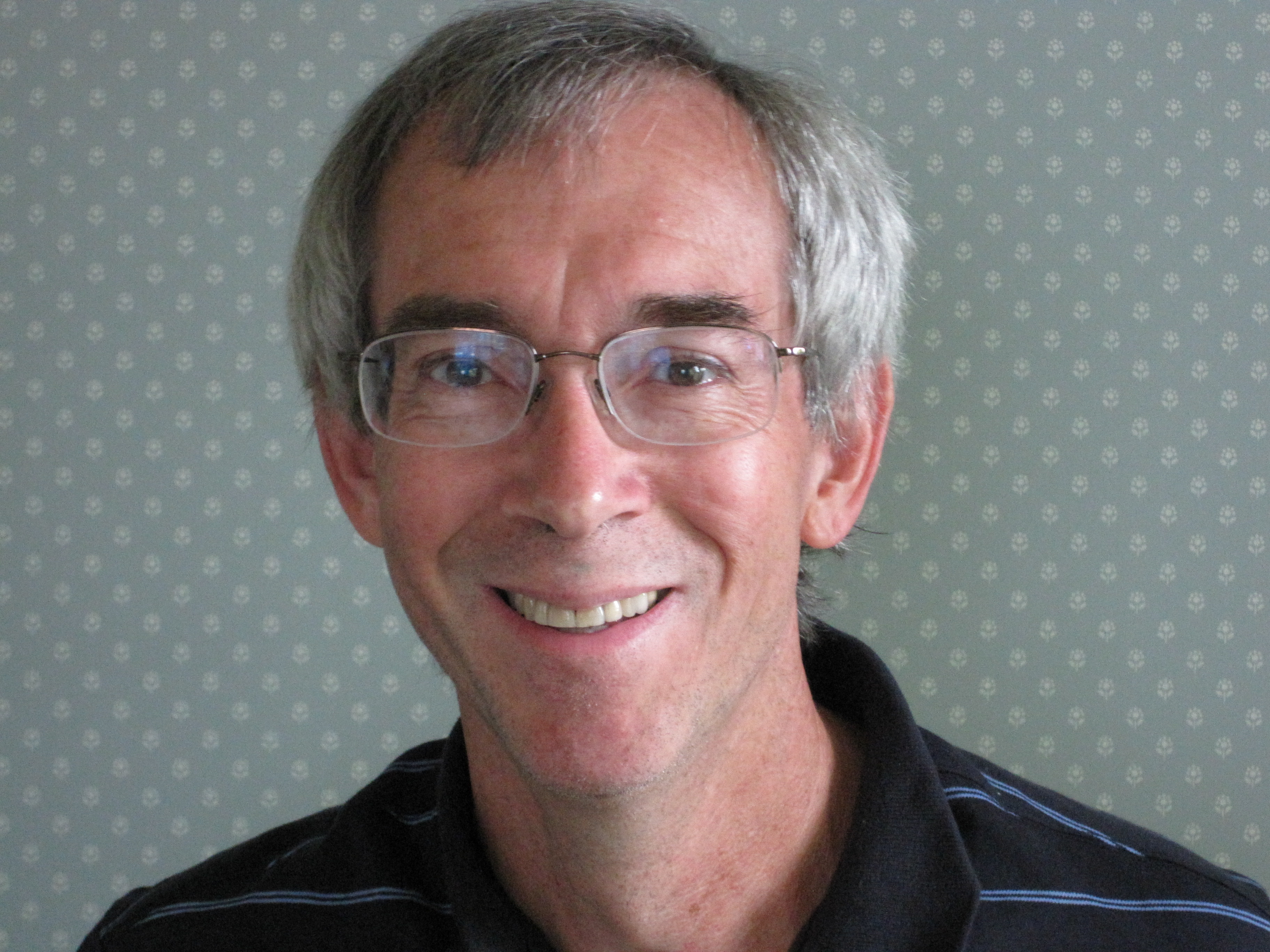
David Rohrlich is a Professor of Mathematics and Statistics at Boston University, serving as Director of Graduate Studies. His primary affiliation is with the Department of Mathematics and Statistics. He specializes in Number Theory, focusing on topics such as Artin representations, arithmetic statistics, and Galois theory. His research explores areas including algebraic number theory, arithmetic geometry, and representation theory. Notable contributions include studies on self-dual Artin representations, quaternionic structures in arithmetic statistics, and the interplay between Galois representations and L-functions. Rohrlich has published extensively on topics such as Mordell-Weil groups, average multiplicities, and dihedral Artin representations. His work often involves intricate connections between algebraic structures and number-theoretic phenomena. He holds a PhD and has advised numerous graduate students (though specific names are not listed here). His office is located in CDS 433, with regular in-person and virtual office hours.
Lawrence C. Washington is a Professor of Mathematics at the University of Maryland, College Park . His office is located in Mathematics Building 1105, and he can be reached at lcw@math.umd.edu . Teaching & Courses: In Spring 2023 he is teaching Cryptography 456 (TuTh 11:00–12:15) and co-organising the Algebra Seminar (MW 2–3). Office hours are held Tuesdays 1:30–2:30 and Thursdays 10:00–10:50. Research Interests: His work centres on number theory , with particular emphasis on cyclotomic fields , elliptic curves , cryptology , and Iwasawa theory . He has made extensive contributions to the study of p-adic L-functions , class groups , heuristics for class numbers , and the arithmetic of elliptic curves, often bridging deep theoretical questions with computational investigations. Textbooks & Scholarly Output: Washington is the author of several widely-used textbooks: Introduction to Cryptography with Coding Theory (3rd ed.) Introduction to Cyclotomic Fields Elliptic Curves: Number Theory and Cryptography An Introduction to Number Theory with Cryptography (2nd ed.) Elementary Number Theory Recent Publication Trends: Over the past five years his papers have focused on heuristics for Iwasawa invariants , anti-cyclotomic extensions , class groups of real cyclotomic fields , and analytic estimates for sums of prime powers . The work is characterised by a synthesis of algebraic, analytic, and computational techniques, frequently yielding explicit examples and numerical data that inform broader conjectures in algebraic number theory. Extracurricular Interests: Outside mathematics, Washington enjoys running and playing the bassoon , and he maintains a light-hearted page devoted to his favourite intersection in Chevy Chase, MD. Advising & Grants: While the provided text does not enumerate individual students or specific grants, his extensive publication record and long-standing professorship indicate ongoing supervision of graduate research and participation in funded projects in number theory and cryptography.
Shantanu Dutt is a full Professor in the Department of Electrical and Computer Engineering at the University of Illinois at Chicago , located in Chicago, IL. His office is in 930 SEO at 851 S. Morgan St, and he can be reached at dutt@uic.edu . Education Ph.D. in Computer Science and Engineering, University of Michigan, Ann Arbor (1990) M.Tech. in Computer Engineering, Indian Institute of Technology Kharagpur (1984) B.E. in Electronics and Communication Engineering, Maharaja Sayajirao University of Baroda (1983) Research Interests Professor Dutt’s research agenda centers on VLSI Computer-Aided Design (CAD) , with particular emphasis on physical design and incremental synthesis targeting both ASICs and FPGAs. He explores discrete optimization techniques to solve placement, routing, and partitioning problems. Another major thrust is FPGA built-in self-test (BIST) and trusted design , ensuring provable diagnosability and security against hardware Trojans. He also investigates fault-tolerant computing at both chip and system levels, and develops parallel and distributed computing algorithms for scalable performance. Scientific Awards 1996 Best Paper Award , ACM/IEEE Design Automation Conference, for “A probability-based approach to VLSI circuit partitioning” 1995 Most Influential Paper Award , Fault-Tolerant Computing Symposium, for “Design and reconfiguration strategies for near-optimal k-fault-tolerant tree architectures” Research Impact and Funding Professor Dutt has published extensively in top-tier journals (IEEE TVLSI, ACM TRETS, IEEE TCAD) and premier conferences (ICCAD, DAC, DATE, FTCS). His work has shaped incremental placement, timing-driven routing, FPGA security, and fault-tolerant multiprocessor architectures. While specific grant numbers are not listed, the breadth and longevity of his publication record indicate sustained funding from NSF, industry, and other agencies. Laboratory and Collaborations Although no formal laboratory name is provided, Professor Dutt’s research is conducted within the ECE department’s VLSI CAD and Fault-Tolerance groups, collaborating with graduate students and colleagues across the US and internationally.
Patrick Allen is an Associate Professor in the Department of Mathematics and Statistics at McGill University, where he contributes to research in number theory and related fields. He is affiliated with the Montreal Number Theory Group and the Centre Interuniversitaire en Calcul Mathématique Algébrique (CICMA), focusing on areas such as Galois representations, automorphic forms, and algebraic number theory. His work bridges algebraic geometry and arithmetic, with a particular emphasis on modularity lifting theorems and deformation theory. Allen's research interests include the study of CM fields, modular forms, and elliptic curves, alongside investigations into the Langlands program and p-adic methods. He has published extensively on topics such as potential automorphy, monodromy, and adjoint Selmer groups. His contributions address questions in arithmetic algebraic geometry and cohomological automorphic forms, often intersecting with representation theory. While his articles span over 20 years, recent work (2020–2023) emphasizes the modularity of Galois representations over CM fields and the application of automorphic techniques to solve problems in number theory. Allen’s research often involves collaboration with international experts in algebraic number theory and arithmetic geometry. Scientific Awards: None explicitly listed in the provided materials. Advising & Grants: No formal advisees or grant details are listed in the text. His affiliations with CICMA suggest participation in collaborative research initiatives, though specific grants are not mentioned. Labs/Teams: Active member of the Montreal Number Theory Group and CICMA, contributing to inter-university collaborative projects in algebraic number theory.
Chris De Sa is an Associate Professor in the Department of Computer Science at Cornell University, affiliated with the Cornell Machine Learning Group and leading the Relax ML Lab. His research focuses on algorithmic, software, and hardware techniques for high-performance machine learning, particularly relaxed-consistency stochastic algorithms like asynchronous and low-precision stochastic gradient descent (SGD). He earned his Ph.D. from Stanford University under advisors Kunle Olukotun and Chris Ré. His work emphasizes constructing efficient, parallel, and distributed machine learning frameworks for deep learning and data analytics. Education: Ph.D. in Computer Science, Stanford University (2017) Research Interests: Algorithmic techniques for scalable ML, quantization, distributed optimization, hyperbolic geometry in ML, and reliable measurement of ML systems. His group develops frameworks for efficient inference/training and explores the intersection of ML with domains like agriculture and plant science through courses like PLSCI 7202. Recent Highlights: DARPA YFA Grant (2024), NSF CAREER Award, Google Research Scholar Award, and multiple best paper recognitions. Key contributions include QuIP quantization methods, Coneheads attention mechanisms, and theoretical advances in decentralized training. Awards: NSF CAREER Award DARPA YFA Grant (2024) Google Research Scholar Award Mr. & Mrs. Richard F. Tucker Teaching Award Grants & Advising: Advises 8 Ph.D. students (including Ruqi Zhang, Yucheng Lu, A. Feder Cooper) and holds leadership roles in MLSys conferences. Active in grant-funded research (e.g., NSF Robust Intelligence). Labs/Teams: Leads the Relax ML Lab and participates in Cornell’s Institute for Digital Agriculture (CIDA).
Arul Shankar is a Professor of Mathematics at the University of Toronto, with his primary appointment at the Mississauga campus (UTM). He holds an office at 215 Huron Street, Room 1023 and can be reached at ashankar@math.utoronto.ca. His research focuses on Number Theory and Arithmetic Statistics, with particular expertise in elliptic curves, Selmer groups, and class groups. Professor Shankar's research interests center on the arithmetic statistics of number fields and elliptic curves. His work has significantly advanced our understanding of the average rank of elliptic curves, the distribution of Selmer groups, and the statistics of class groups. He has developed innovative applications of the geometry of numbers to arithmetic problems, often in collaboration with Manjul Bhargava and other leading number theorists. His research bridges deep theoretical questions with statistical approaches to understand the behavior of arithmetic objects across families. His publications reveal a consistent focus on the statistical behavior of arithmetic invariants, with particular attention to bounding average ranks of elliptic curves and understanding the distribution of class groups. The work demonstrates sophisticated applications of geometry of numbers techniques to problems in arithmetic statistics, with results published in top journals including the Annals of Mathematics, Inventiones Mathematicae, and Journal of the American Mathematical Society. Scientific Awards: 2018 Sloan Research Fellowship from the Alfred P. Sloan Foundation Professor Shankar is currently on sabbatical as a Simons Fellow. His research has established foundational results in arithmetic statistics, particularly regarding the average rank of elliptic curves and the distribution of class groups across families of number fields. His work with Bhargava on bounding the average rank of elliptic curves represented a major breakthrough in the field. His research group focuses on extending geometry of numbers methods to new contexts in arithmetic statistics, with recent work examining coregular vector spaces and applications to class groups. The lab maintains strong collaborations with number theorists at leading institutions worldwide.
Chan Song Heng is an Associate Professor in the Division of Mathematical Sciences at the School of Physical and Mathematical Sciences, Nanyang Technological University (NTU), Singapore. He has been affiliated with NTU since 2007. His academic journey includes a B.Sc. (Hons) in Mathematics from the National University of Singapore (2001) and a Ph.D. in Mathematics from the University of Illinois at Urbana-Champaign (2005). His research focuses on advanced mathematical topics such as partition theory, q-series, mock theta functions, and number theory. Recent work includes studies on identities analogous to Jacobi, Fermat-Wilson theorems, and applications of Rogers-Fine identities. His publications explore combinatorial, analytic, and algebraic aspects of these fields, with notable contributions to modular forms, theta functions, and partition congruences. Dr. Chan’s articles often intersect with classical problems in mathematics, blending historical insights with modern analytical techniques. Notable themes include exploring identities through modular forms, analyzing partition statistics (ranks/cranks), and studying mock theta functions. Despite his prolific output, no specific scientific awards or student advisees are listed in the provided materials.
Frank Calegari is a Professor of Mathematics at the University of Chicago. His primary research interests include algebraic number theory, the Langlands program, Galois representations, and arithmetic geometry. He has made significant contributions to understanding reciprocity laws linking Galois representations to automorphic forms. His work often intersects with cohomology of arithmetic groups, motives, and the arithmetic of periods. Prof. Calegari has advised numerous PhD students, including Maria Stadnik, Shiva Chidambaram, and Eric Stubley. He serves on editorial boards for prestigious journals such as Algebra & Number Theory, Essential Number Theory, and the Annals of Mathematics. He actively participates in academic conferences and programs, including organizing the 2020 Arithmetic of the Langlands Program in Bonn. His research spans modularity theorems for abelian varieties, cohomology of arithmetic groups, and the study of L-functions. Key recent work includes resolving the unbounded denominators conjecture and advancing potential automorphy results over CM fields. Calegari frequently collaborates with leading mathematicians, including George Boxer, Vincent Pilloni, and Yilin Yang. He teaches advanced courses such as Honors Calculus (Math 16100) at the University of Chicago. His expository work includes lecture notes on motives and L-functions, as well as a blog compiling mathematical insights (Persiflage). Calegari’s contributions to number theory have been recognized through his editorial roles and invited lectures at institutions like the ICM and Clay Mathematics Institute.
Christophe VIGNAT is a Professor at CentraleSupélec, affiliated with the Laboratoire des Signaux et Systèmes (L2S). His research focuses on number theory, special functions, probability, and their applications in signal processing and control systems. He has held visiting professorships at École Polytechnique Fédérale de Lausanne (EPFL) and Tulane University. VIGNAT's work bridges pure mathematics and applied fields, with notable contributions to Bernoulli/Euler polynomials, multiple zeta values, and probabilistic methods in number theory. His recent publications explore topics like partition functions, theta functions, and Ramanujan-type identities. He has delivered talks at international conferences and collaborates widely with researchers in mathematics and physics. Research Interests: Number theory, special functions (Bessel, orthogonal polynomials), probability theory, signal processing, control systems, analytic combinatorics, and their interconnections. His work often employs symbolic computation and probabilistic approaches to uncover identities and structures in mathematical analysis. Publications Trends: Recent articles emphasize partition theory, zeta functions, and integrals related to classical polynomials. His collaborations highlight interdisciplinary efforts between pure mathematics and applied sciences. Over 150 refereed papers and conference contributions demonstrate his prolific output across diverse mathematical domains. Education: While specific academic history isn’t detailed, his roles and publications suggest advanced training in mathematics and engineering, typical for a full professor in systems and control.
Prof. Dr. Gerold Alsmeyer is a faculty member at the Institute of Mathematical Stochastics, Department of Mathematics and Computer Science, University of Münster. He is an active researcher with a focus on stochastic processes, particularly stochastic fixed-point equations and iterated function systems. His work is supported by his role as an Investigator in Mathematics Münster in the project EXC 2044 - C1: Evolution and asymptotics. His primary research interests include the theory of stochastic processes, branching processes, Markov random walks, renewal theory, and the asymptotic analysis of random structures such as random trees and polytopes. He has made significant contributions to the understanding of fluctuation theory, perpetuities, and the smoothing transform. His recent publications (2017–2023) reveal a sustained focus on theoretical probability, with recurring themes in random difference equations, iterated function systems, and limit theorems for stochastic processes. The work spans pure mathematical theory and applications in mathematical biology and combinatorics, indicating a broad yet deep research profile. Prof. Alsmeyer has supervised numerous doctoral and master’s students, including Viet Hung Hoang, Christopher Eick, Philipp Godland, and Fabian Buckmann, whose dissertations cover topics in branching processes, random walks, and stochastic fixed-point equations. He has no listed scientific awards in the provided texts. He teaches courses in probability theory, mathematical statistics, branching processes, and stochastic recursion equations, demonstrating a strong commitment to academic mentoring and education.
Tara Brendle is Professor of Mathematics at the University of Glasgow within the School of Mathematics and Statistics, specializing in the interplay between algebra and topology. Her research centers on mapping class groups of surfaces and their profound connections to braid groups, Coxeter groups, arithmetic groups, and automorphism groups of free groups. Her primary research explores how these algebraic structures determine the topology of 3- and 4-manifolds through constructions like Heegaard splittings and Lefschetz fibrations. She investigates cohomological properties, subgroup structures, and representation-theoretic aspects of mapping class groups, with significant contributions to understanding the Johnson kernel and hyperelliptic Torelli groups. Over the past two decades, Brendle's publications reveal a consistent focus on geometric and algebraic properties of surface automorphism groups, evolving from foundational work on generators and relations to cutting-edge research on high-dimensional cohomology of moduli spaces and stability phenomena. Her collaborations with leading mathematicians like Dan Margalit and Andrew Putman have produced influential results across geometric group theory. She actively supervises doctoral research on mapping class groups, braid groups, and low-dimensional topology, guiding students including Bader, Philipp; Corrigan, Gabriel; Giannini, Riccardo; and Pietrzak, Alicja on advanced topics at the intersection of algebra and geometry.
Vikas Singh is a Professor in the Department of Biostatistics at the University of Wisconsin-Madison, with appointments in Computer Sciences and Statistics. He also serves as a part-time Faculty Researcher at Google DeepMind. His research focuses on image analysis, machine learning, and medical imaging applications, particularly in neuroimaging and Alzheimer's disease studies. Singh holds a Ph.D. in Computer Science from SUNY Buffalo and has taught courses such as BMI/CS 767 (Medical Image Analysis) and CS 766 (Computer Vision). Affiliations: UW Computer Vision Group, Wisconsin Alzheimer's Disease Research Center (W-ADRC), Machine Learning@UW. Research: Develops algorithms for medical image analysis, including tools for neuroimaging and longitudinal biomarker studies. Grants: Collaborates on grants related to Alzheimer's progression modeling and imaging techniques. His work emphasizes interdisciplinary applications, bridging statistics, geometry, and optimization to solve real-world problems in healthcare and engineering.
Jonas Bergström is a Professor in the Department of Mathematics at Stockholm University specializing in Algebra, Geometry, Topology, and Combinatorics. His research focuses on arithmetic geometry, moduli spaces, Siegel modular forms, and number theory, with extensive collaborations across international institutions including KTH Royal Institute of Technology. His research interests span algebraic geometry, topology, combinatorics, and number theory, with particular emphasis on moduli spaces of curves, abelian varieties, Siegel modular forms, and arithmetic geometry. Bergström's work bridges theoretical mathematics with computational approaches, often developing algorithms for complex mathematical structures. His research group actively explores commutative and homological algebra, complex and real algebraic geometry, arithmetic geometry, homotopy theory, and Ramsey theory. The most recent publications reveal a strong focus on cohomology of moduli spaces, Siegel modular forms, abelian varieties over finite fields, and L-functions. His work demonstrates a consistent pattern of combining algebraic geometry with number theory, particularly investigating arithmetic properties of algebraic varieties and developing computational methods for modular forms. The research shows increasing emphasis on algorithmic approaches and connections to theoretical physics through moduli space cohomology. Bergström has supervised several PhD students including Sjoerd de Vries (current), Stefano Marseglia, and Olof Bergvall (with Prof. Carel Faber). He currently mentors postdoctoral researchers Séverin Philip and Thomas Wennink, while former postdocs include Angelina Zheng, Valentijn Karemaker, Oliver Leigh, and Alex Samuel Bamunoba. His research is supported through collaborations with major mathematical networks including the Nordic number theory network and joint seminars with KTH. He is affiliated with the Algebra and Geometry Seminar (KTH and SU) and maintains active research connections through multiple collaborative projects, including joint work with Gerard van der Geer and Carel Faber on Hecke operators and Siegel modular forms. Bergström also contributes to open mathematical research through GitHub repositories containing computational results on cohomology of moduli spaces.
Jared Weinstein is a Professor in the Department of Mathematics and Statistics at Boston University, serving as the Departmental Ombud. He specializes in Number Theory and Algebraic Geometry, with a focus on p-adic geometry, shtukas, and moduli spaces. His research explores connections between arithmetic geometry and homotopy theory, including contributions to the Langlands program and local Shimura varieties. Education: AB from Harvard University (undergraduate), PhD from University of California, Berkeley. Postdoctoral work at UCLA and the Institute for Advanced Study before joining BU in 2011. Research interests include arithmetic geometry, p-adic Hodge theory, and the geometry of moduli spaces. His work often intersects with topics like perfectoid spaces, diamonds, and chromatic homotopy theory. Recent articles highlight advancements in modularity of elliptic curves over function fields and the Kottwitz conjecture for local shtuka spaces. No scientific awards are explicitly listed, but his extensive publications reflect significant contributions to his field. Advising and grants details are not provided here. His work is closely tied to the v-topology and related geometric frameworks in algebraic geometry.
Paul Pollack serves as Professor and Director of Graduate Studies in the Mathematics Department at the University of Georgia, holding this administrative role since August 1, 2025. His academic career spans fundamental contributions to number theory and dedicated undergraduate instruction, recognized through prestigious university-wide teaching awards. His research centers on elementary and analytic number theory with strong emphasis on combinatorial approaches and statistical properties of algebraic structures. Key investigations include the arithmetic of polynomials over finite fields, value distribution of arithmetic functions, and probabilistic behavior of algebraic objects. This work bridges theoretical number theory with practical applications in arithmetic geometry, maintaining focus on accessible yet profound mathematical questions. Dr. Pollack has mentored eight graduate students to degree completion across Ph.D. and M.A. programs while maintaining active roles in professional societies including the MAA, AMS (lifetime membership), AMR, AWM, and HxA. His educational impact extends to the Ross Mathematics Program where he has taught since 2018 across international iterations including Ross/Asia, online sessions, and Indiana branch programs. His teaching excellence is formally recognized through: Russell Award for Excellence in Undergraduate Teaching (2022) Sandy Beaver Excellence in Teaching Award (2018) These honors specifically acknowledge his integration of world-class research capabilities into transformative classroom experiences.