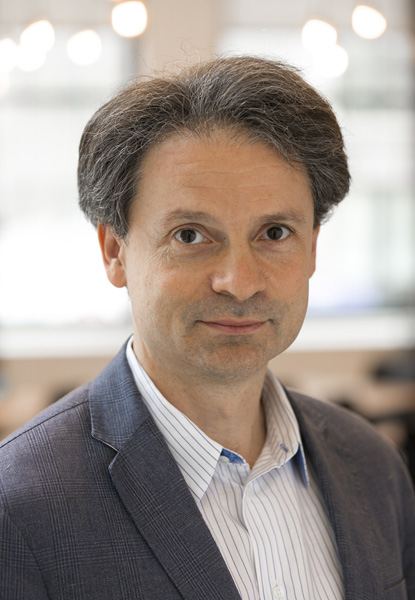
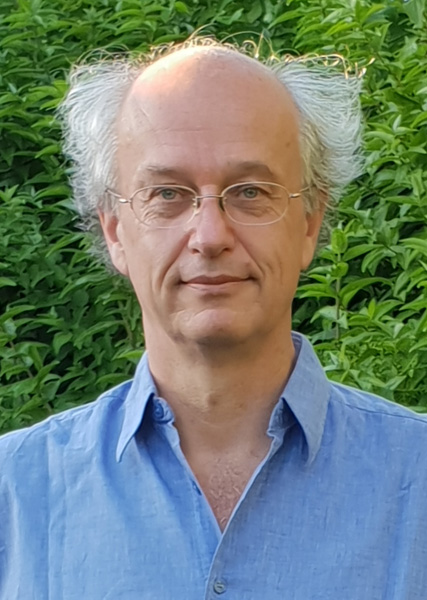
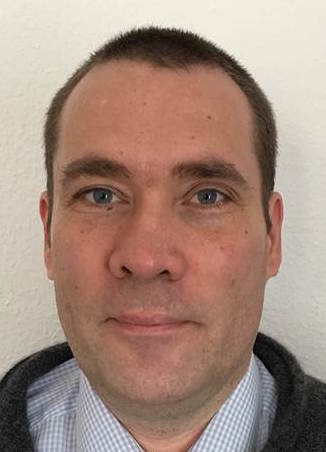
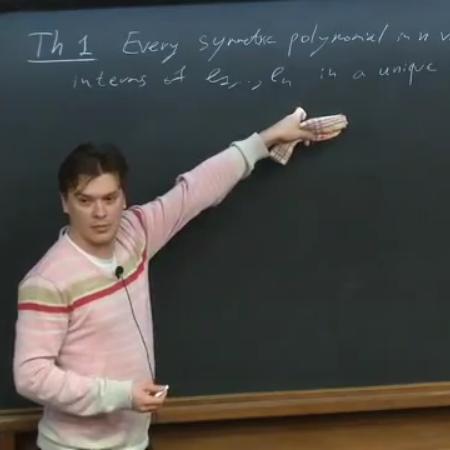
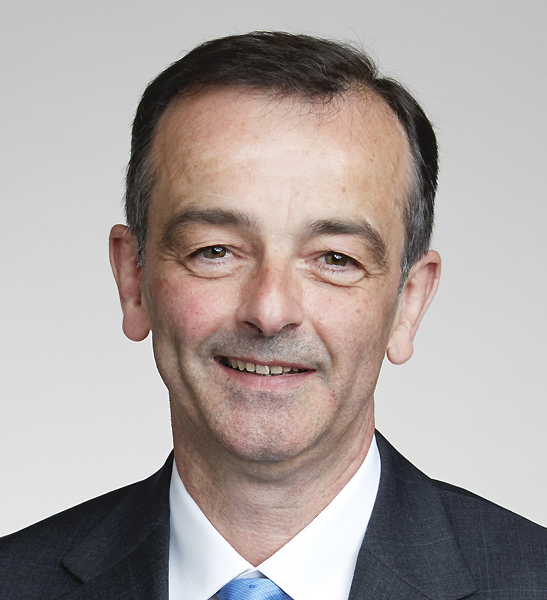
Yuri Tschinkel is a Professor of Mathematics at the Courant Institute of Mathematical Sciences, New York University, and Director of the Mathematics and Physical Sciences Division at the Simons Foundation since 2012. He previously held positions at the University of Goettingen, Princeton University, and the University of Illinois at Chicago. His research spans algebraic geometry, analytic number theory, and arithmetic geometry, focusing on rational points, birational geometry, and algebraic structures. Ph.D. in Mathematics, MIT (1992) His work addresses stable rationality of algebraic varieties, weak approximation over function fields, and distribution of rational points. Key contributions include studies on Mori cones, log Fano varieties, and quadric surface bundles. Recent publications reflect collaborations with leading mathematicians like Kontsevich and Hassett. Scientific accolades include 2018 Member of Leopoldina, German National Academy of Sciences 2014 Fellow of the American Association for the Advancement of Science 2012 Fellow of the American Mathematical Society As Director of the Simons Foundation division, he oversees grants and research initiatives in mathematics and physical sciences. He has authored 135 papers, edited 19 books, and serves on 8 editorial boards and advisory panels.
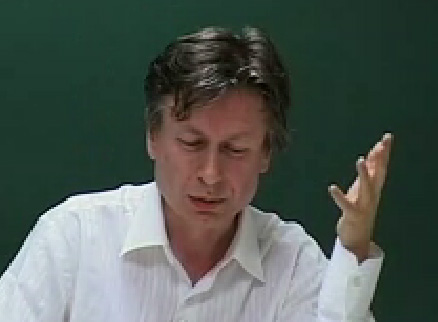
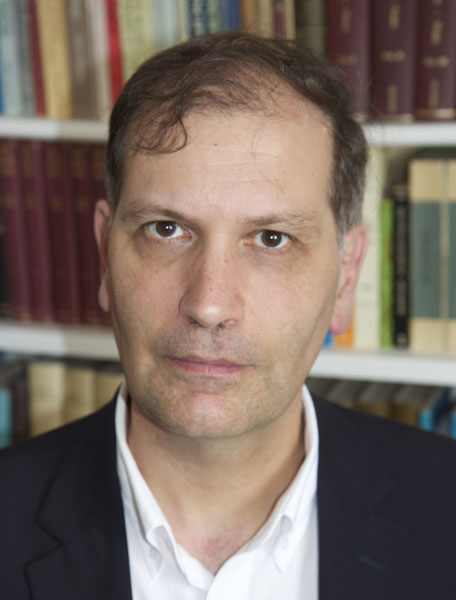
Emmanuel Kowalski is a Professor of Mathematics at ETH Zurich , where he has been since 2008. Previously, he held professorships at Université Bordeaux I (2000–2007) and was a Veblen Research Instructor at Princeton University and the Institute for Advanced Study (1998–2000). His research focuses on analytic number theory, automorphic forms, and algebraic geometry. Education: École Normale Supérieure de Lyon (1989–1992); PhD in Mathematics from Rutgers University (1998). Research Interests include automorphic forms, L-functions, sieve methods, exponential sums, and probabilistic number theory. His work often bridges number theory with algebraic geometry and harmonic analysis. He has authored over 70 research papers and 6 books, including the influential Analytic Number Theory (2004) with Henryk Iwaniec. Scientific Awards and Invitations include the von Neumann Visiting Fellowship at IAS Princeton (2009), membership in the Board of the Institut des Hautes Études Scientifiques (2016–present), and four invitations to lecture at the prestigious Bourbaki Seminar. He has also delivered key lectures at the Riemann International School of Mathematics and conferences honoring major mathematicians. Grants and Leadership He has organized numerous conferences and research programs, including the 2019 Arithmetic, geometry and modular forms conference at FIM and the 2022 goMath program on Women in Mathematics. He co-leads projects funded by the Swiss National Science Foundation (SNF), such as Trace functions and arithmetic Fourier transforms .
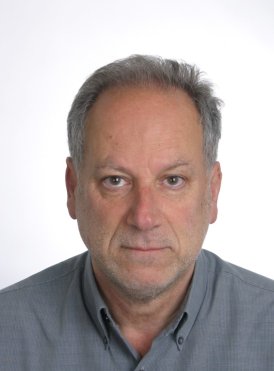
Pierre Colmez is a French mathematician affiliated with the École Polytechnique (1993-2010) and the National Center for Scientific Research (CNRS) at the Institut de Mathématiques de Jussieu since 2010. His academic journey includes postdoctoral positions at the Institut Joseph Fourier (Grenoble) and the Max Planck Institute for Mathematics (Bonn). Ph.D. in 1988 (Grenoble) under Jean-Marc Fontaine and John Coates École Polytechnique: Professor (2006-2010), Teaching Professor (1993-2005) Colmez’s research lies at the intersection of arithmetic geometry , Galois representations , p-adic Hodge theory , and the Langlands program . His work explores connections between automorphic forms, p-adic analysis, and cohomological structures in number theory. His most recent publications focus on p-adic cohomology, Drinfeld towers, and syntomic complexes, reflecting his expertise in advanced topics of nonarchimedean geometry and Galois cohomology . Collaborations with Gabriel Dospinescu and Wiesława Nizioł highlight his contributions to modern arithmetic geometry. Prix Léonid Frank (2016) Aisenstadt Chair (2015) Prix Fermat (2005) Prix Gabrielle Sand et Guido Triossi (1999) Colmez has held editorial roles at Astérisque (1999-2004), directed the SMF Mathematical Documents collection (2001-2016), and served on editorial boards for Annales de l'ENS and Publications de l'IHES . His academic network includes collaborations with Laurent Berger, Christophe Breuil, and Jean-Pierre Serre.
Institute of Science and Technology AustriaAustria
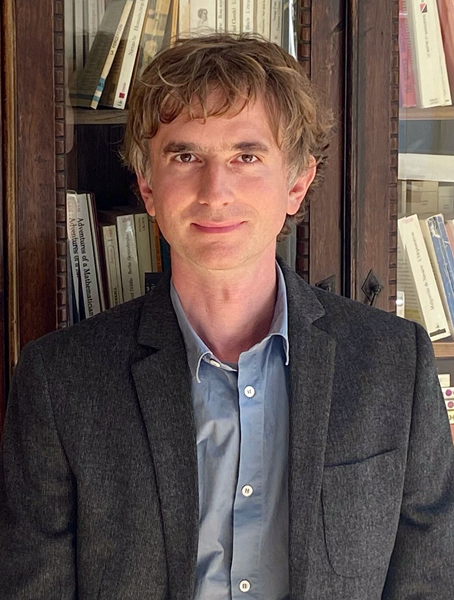
Tim Browning is a Professor of Number Theory at the Institute of Science and Technology Austria (IST Austria). He leads the Browning Group, focusing on analytic number theory and its interfaces with algebraic geometry. His research addresses Diophantine equations, rational points on algebraic varieties, and the distribution of arithmetic objects. He organizes the Algebraic Geometry & Number Theory Seminar and the Women in Math Day. Previously, he held roles at the University of Bristol and University of Oxford. He has authored over 100 publications and received accolades including the Ferran Sunyer i Balaguer Prize and an ERC Starting Grant. His group includes PhD students and postdocs working on topics like rational points, sieve methods, and arithmetic statistics. Education: PhD in Mathematics, University of Oxford (2002) Postdoctoral Fellowships at University of Oxford and Université de Paris-Sud Research Interests: Analytic and arithmetic methods in number theory, Diophantine geometry, rational points on varieties, circle method, sieve theory, and arithmetic statistics. His work often combines geometric and analytic techniques, such as the circle method and algebraic geometry to solve problems like Manin's conjecture and the distribution of solutions to polynomial equations. Grants & Leadership: ERC Starting Grant (2012) Serves on editorial boards of journals like Compositio Mathematica and Commentarii Mathematici Helvetici Organizes international conferences and workshops Labs/Teams: Leads the Browning Group at IST Austria, which includes postdocs and PhD students working on number theory and algebraic geometry. Collaborates with researchers globally on topics like the arithmetic of Fano varieties and rational curves.
Tamas Hausel is a Professor at the Institute of Science and Technology Austria (IST Austria) , holding this position since 2016. He previously served as a Professor and Chair of Geometry at École Polytechnique Fédérale de Lausanne (EPFL) from 2012 to 2016, and held academic roles at the University of Oxford, University of Texas at Austin, University of California, Berkeley, and the Institute for Advanced Study, Princeton. PhD in Mathematics (University of Cambridge, 1999) Diploma in Mathematics (Eötvös Loránd University, Budapest, 1995) Research Focus: Hausel's work bridges algebraic geometry, geometric representation theory, and mathematical physics. His research explores moduli spaces in gauge theory, Higgs bundles, hyperkähler geometry, and the geometric Langlands duality. He has led major projects funded by the European Research Council and other prestigious bodies. Scientific Recognition: Hausel has been awarded two ERC Advanced Grants , the Whitehead Prize , and the Alfred Sloan Research Fellowship . He has delivered invited talks at the International Congress of Mathematicians and the International Congress on Mathematical Physics . 2026-2031: ERC Advanced Grant (EUR 2.5M) 2022-2025: FWF Standalone Grant (EUR 378K) 2013-2018: ERC Advanced Grant (EUR 1.3M) 2009-2013: EPSRC First Grant (GBP 414k) 2005-2013: Royal Society University Research Fellowship (GBP 530k) 2006-2010: NSF Standard Grant (USD 242k)
Michael J. Schlosser is a faculty member at the Faculty of Mathematics , University of Vienna. His research focuses on combinatorics, number theory, and special functions, with a particular emphasis on hypergeometric and q-series, elliptic extensions, and rook theory. He has authored numerous publications in collaboration with prominent mathematicians such as Victor Guo, Meesue Yoo, and Christian Krattenthaler. Research Interests : Combinatorics and hypergeometric series Elliptic functions and their applications Partition theory and supercongruences Matrix inversions and determinant evaluations Students : Josef Küstner (Ph.D., 2022) Christian Stump (Ph.D., 2008) Editorial Roles : Associate Editor, Journal of Mathematical Analysis and Applications Editorial Board Member, The Ramanujan Journal Editorial Board Member, Journal of Algebraic Combinatorics
Institute of Science and Technology AustriaAustria
Anton Mellit is an Associate Professor in the Faculty of Mathematics at the University of Vienna. He holds a Doctor of Natural Sciences from the University of Bonn (2008) and completed postdoctoral positions at institutions including the Hausdorff Center for Mathematics (Bonn), Scuola Internazionale Superiore di Studi Avanzati (Trieste), and the Institute of Science and Technology Austria (Klosterneuburg). His research focuses on algebraic geometry, enumerative geometry, and their connections to representation theory, combinatorics, and number theory, with particular emphasis on moduli spaces, categorification, and character varieties. Education: Doctor of Natural Sciences (2008), University of Bonn Master in Applied Mathematics (2004), National Technical University of Ukraine Bachelor in Applied Mathematics (2002), National Technical University of Ukraine Research Interests: Investigates Poincaré polynomials of moduli spaces, Higgs bundles, and character varieties Studies Khovanov-Rozansky homology and torus knots Explores connections between Macdonald polynomials and affine Springer fibers Develops combinatorial approaches to algebraic geometry via Hilbert schemes and categorification Grants & Projects: ERC Consolidator Grant: Macdonald polynomials and related structures in geometry FWF Standalone Project: Refined invariants in combinatorics, low-dimensional topology, and geometry of moduli spaces Labs/Teams: Collaborates with researchers in geometric representation theory, quantum cohomology, and algebraic combinatorics, including notable co-authors like Erik Carlsson, Eugene Gorsky, and Maxim Smirnov.
Yves André is a Research Director 1st Class at CNRS (French National Center for Scientific Research), working at École Normale Supérieure de Paris in the Département de Mathématiques et Applications. He maintains strong affiliations with Université Paris 6 and the Institut de Mathématiques de Jussieu. André's research centers on the deep connections between number theory and algebraic geometry, with particular expertise in p-adic analysis, motivic theory, and arithmetic differential equations. His work has fundamentally advanced our understanding of p-adic differential equations, Galois representations, and the theory of motives through rigorous proofs of major conjectures including Dwork's conjecture and Crew's local monodromy conjecture. His publication record shows a consistent progression from solving specific conjectures to developing comprehensive theoretical frameworks that bridge different mathematical disciplines. The recurring themes across his work include the interplay between geometry and arithmetic, the structure of differential equations in p-adic contexts, and the development of motivic tools for number-theoretic problems. Foreign Member of the Venetian Academy (2007) Doisteau-Blutet Prize of the French Academy of Sciences (2011) Kempf Lectures (Baltimore 2006) Albert Lectures (Chicago 2009) Ordway Lectures (Minneapolis 2012) André has supervised four PhD theses and has been an active contributor to the mathematical community through numerous international mini-courses and conference organization. His leadership roles include serving on the National Committee of the Department of Mathematics at CNRS (2004-08), directing the mathematical monograph series 'Astérisque' for the French Mathematical Society (2005-11), and responsibility for the Paris node of the network ANR 'Galois theories' (2006-09). He is also a member of the 'collectif Histoire-Philosophie-Sciences' at ENS and a trustee of Rendiconti di Padova.
Michael Rapoport is a Professor at the University of Bonn, with a distinguished academic career spanning multiple institutions including the University of Cologne (1996-2003), University of Wuppertal (1989-1996), and the University of Heidelberg (1982-1986). He is a member of the Academy of Europe (elected 2012) and has held significant roles in mathematical research communities, such as serving on the Scientific Committees of the MPI Bonn (1988-2008) and IHES Paris (2001-2005). Current Position: Professor at University of Bonn Previous Positions: University of Cologne, Wuppertal, Bonn, Heidelberg Academic Affiliation: Mathematics Section Rapoport's research focuses on advanced mathematical structures in Algebraic Geometry and Number Theory. His work explores Shimura varieties, moduli spaces of abelian varieties, and locally symmetric algebraic varieties, with a particular emphasis on their geometric and arithmetic properties. Additionally, he has contributed to the study of p-divisible groups, affine flag varieties, and G-bundles on curves, shaping theoretical frameworks in these domains. His scholarly contributions include influential publications such as "Smooth compactifications of locally symmetric varieties" (2010) and "Period spaces for p-divisible groups" (1996). These works span topics like modular forms, special cycles, and coefficient spaces, reflecting a deep integration of geometry and number theory. Scientific Awards Heinz-Hopf-Preis (2011) Prix Gay-Lussac/Humboldt (2000) Gottfried-Wilhelm-Leibniz-Preis (1992) Akademiestipendium of the VW-foundation (1991) Rapoport has also played a pivotal role in academic governance, serving on editorial boards and selection committees. He was an Associate Editor of the Duke Mathematical Journal (1995-2000) and a member of the Scientific Committee at the Max Planck Institute for Mathematics in Bonn for two decades (1988-2008).
Emmanuel Breuillard is a Professor of Pure Mathematics at the University of Oxford. Previously, he held positions as Sadleirian Professor at the University of Cambridge (2017-2021), Professor at Université Paris-Sud (2008-2017), and Associate Hadamard Professor at École Polytechnique (2006-2008). His academic journey includes a PhD from Université Paris-Sud and Yale University, supervised by Frédéric Paulin and Gregory Margulis, and a Master in Mathematics from Cambridge. PhD: Université Paris-Sud (2004), supervised by Frédéric Paulin; Yale University, supervised by Gregory Margulis Master: University of Cambridge (2000) Ecole Normale Superieure (1997-1999) His research spans Combinatorics , Geometric Group Theory , Ergodic Theory , and Number Theory , focusing on approximate groups, expansion in finite simple groups, and Diophantine geometry. His recent work analyzes Elekes-Szabo problems in projective geometries. He has authored 50+ publications in prestigious journals, addressing topics like random polynomials, C*-simplicity, and uniform independence in linear groups. Fellow of the Royal Society (2024) ERC Consolidator Grant (2014-2019) Prix Charles-Louis de Freycinet (2013) European Mathematical Society Prize (2012) ERC Starting Grant (2008-2013) Cours Péccot, Collège de France (2006)
Martin Bridson serves as President of the Clay Mathematics Institute since 2018 and holds the Whitehead Professorship of Pure Mathematics at the University of Oxford's Mathematical Institute, where he has been a Fellow of Magdalen College since 2007. Previously, he was Head of Oxford's Mathematical Institute (2015-2018), Professor of Pure Mathematics at Imperial College London (2002-2007), and Professor of Topology at Oxford (1999-2002). His academic journey began with undergraduate studies at Hertford College, Oxford, followed by PhD work at Cornell University. Bridson's research centers on Geometric Group Theory, Topology, and Spaces of Non-Positive Curvature. His work explores the deep connections between algebraic structures and geometric properties, particularly focusing on metric geometry, profinite completions, and the topology of non-positively curved spaces. His influential monograph "Metric Spaces of Non-Positive Curvature" (co-authored with André Haefliger) has become a foundational text in the field. His recent publications (2024-2025) demonstrate continued leadership in geometric group theory, with significant contributions to profinite rigidity, CAT(0) geometry, and automorphism groups. These works reveal evolving research directions toward computational aspects of group theory and deeper connections with low-dimensional topology. Steele Prize for Mathematical Exposition (2020, with Haefliger) Fellow of the Royal Society (2016) Fellow of the American Mathematical Society (2015) Royal Society Wolfson Research Merit Award (2012) London Mathematical Society Whitehead Prize (1999) Bridson has secured major research funding including EPSRC Senior Fellowships (2007-2012, 1997-2002), EPSRC Platform Grants (2010-2015), and multiple NSF grants. His leadership extends to directing the Mathematical Institute at Oxford and presiding over the Clay Mathematics Institute, where he influences global mathematical research directions. His collaborative work spans institutions including Princeton, Geneva, and Lausanne, reflecting his international research network.
Antoine Chambert-Loir is a Professor of Mathematics at Université Paris Cité (formerly University Paris-Diderot), holding this position since 2015. His distinguished academic career includes professorships at Université Paris-Sud (2012-2015), Université de Rennes 1 (2003-2012), École polytechnique (2001-2003), and Université Pierre-et-Marie-Curie (1997-2000). He was a Von Neumann Fellow at the Institute for Advanced Study (2009-2010) and Junior member of Institut universitaire de France (2007-2012). His research focuses on the intersection of arithmetic and algebraic geometry, with particular expertise in Non-archimedean geometry (Berkovich spaces) , Arakelov geometry , and proof formalization . His work bridges abstract theory with concrete applications in Diophantine geometry and model theory. As evidenced by his extensive publication record and editorial leadership, he has significantly advanced the understanding of height functions, motivic integration, and equidistribution phenomena in arithmetic contexts. His scholarly contributions include authorship of 8 books and over 40 research papers. Notable trends in his publications reveal a progression from foundational work on semi-abelian varieties to cutting-edge research in motivic integration and non-archimedean analytic geometry, often in collaboration with leading mathematicians like Yuri Tschinkel and François Loeser. His research consistently addresses deep questions in arithmetic geometry with innovative technical approaches. Junior member of Institut universitaire de France (2007-2012) Prize Ferran Sunyer y Balaguer (2017, with J. Nicaise and J. Sebag) Chambert-Loir has supervised 10 PhD and 12 MA students while maintaining significant editorial responsibilities as Editor-in-Chief of Annales scientifiques de l'École normale supérieure and Algebra and Number Theory . He serves on the scientific advisory board of the Institut Henri Poincaré and contributes to major outreach efforts through public lectures and accessible mathematical writing. His research has been supported by prestigious fellowships including the Von Neumann Fellowship at IAS and membership in the Institut universitaire de France.
Jean-Benoît Bost is a Full Professor in the Department of Mathematics at Paris-Sud University (Orsay, France), where he has been employed since 1998. He previously held positions as Directeur de Recherche CNRS (1993-1998) and Chargé de Recherche CNRS (1988-1993) at the Institut des Hautes Études Scientifiques (IHES). His research spans several interconnected fields within mathematics. His work focuses on algebraic geometry, number theory, and their interactions with mathematical physics. Key research areas include Arakelov theory, Diophantine geometry, non-commutative geometry, and applications of geometric methods to number theory. He developed foundational theories like slope estimates and evaluation maps that transformed classical Diophantine approaches. Bost's publications demonstrate consistent exploration of connections between geometry, topology, and arithmetic, with recurring themes in Arakelov theory, geometric invariant theory, and operator algebras applied to number theory problems. His research has influenced developments in foliation theory and arithmetic algebraization. Major scientific recognitions include: IBM Prize 'Young Researcher' (1988) Peccot Prize and Lectures at Collège de France (1990) Elie Cartan Prize (2002) Senior Member of Institut Universitaire de France (2005-2015) Invited Speaker at International Congress of Mathematicians (2006) Fellow of the American Mathematical Society (2013) He leads research within the Arithmetic and Algebraic Geometry team at Paris-Sud University, focusing on arithmetic aspects of algebraic varieties and formal subvarieties.
Tamar Ziegler is a Professor of Mathematics at the Einstein Institute of Mathematics, Hebrew University, holding the Henry and Manya Noskwith Chair in Mathematics since 2018. She currently serves as Chair of the Einstein Institute (2020-present) and has held visiting positions at prestigious institutions including IAS Princeton (2022-2023 Distinguished Visiting Professor), MSRI (2017 Simons Professor), and Stanford University (2012-2013). Her academic journey began with a B.Sc. summa cum laude (1995), M.Sc. (1998), and Ph.D. (2003) in mathematics from Hebrew University under advisor Hillel Furstenberg. Her career progression shows steady advancement from Zassenhaus Assistant Professor at Ohio State University (2002-2005), through positions at Technion (rising from Senior Lecturer to Professor), to her current role at Hebrew University since 2013. Ziegler's research spans number theory, ergodic theory, and combinatorics, with particular focus on additive combinatorics, higher order Fourier analysis, and connections between dynamical systems and number theory. Her work frequently involves collaborations with leading mathematicians including Terence Tao, Ben Green, and David Kazhdan. Analysis of her publication record reveals consistent contributions to fundamental mathematical problems, particularly in establishing polynomial patterns in primes, inverse conjectures for Gowers norms, and connections between ergodic theory and combinatorial number theory. Her research demonstrates a progression from foundational work on characteristic factors to increasingly sophisticated applications in prime number theory. 2025-2030 ERC Advanced grant 2024 Rothschild Prize in Mathematics 2024 9th European Congress in Mathematics, Plenary Speaker 2023 AIM Alexanderson Award 2021 Elected to Academia Europaea 2016 Rector's Prize for Excellence in Research and Teaching 2016-2021 ERC Consolidator grant 2015 Michael Bruno Memorial Award Ziegler has received continuous research funding through prestigious grants including multiple ERC awards and fellowships. Her leadership role as Chair of the Einstein Institute demonstrates significant institutional responsibility. While specific advising information isn't provided in the sources, her Erdős number is 2 (via Hillel Furstenberg) and she has collaborated with many prominent mathematicians throughout her career. As Chair of the Einstein Institute of Mathematics, Ziegler leads one of Israel's premier mathematical research centers, overseeing research programs and academic activities that connect ergodic theory, number theory, and combinatorics with other mathematical disciplines.
Juan P. Aguilera is a researcher at the Institute of Discrete Mathematics and Geometry at TU Wien, Austria. His research focuses on mathematical logic, particularly in proof theory, set theory, reverse mathematics, and infinitary logics. He actively participates in academic events, including organizing workshops and giving invited talks globally. His research interests span foundational questions in logic, including Gödel logics, determinacy axioms, and structural reflection principles. He contributes to interdisciplinary areas such as the model theory of non-classical logics and applications of infinitary proof systems. Aguilera has been involved in major logic events like the Logic Colloquium 2025 (TU Wien) and co-organized the Philosophical Transactions of the Royal Society special issue on proof theory (2023). He has given talks at institutions like Ghent University, the University of Hamburg, and ITAM (Mexico City). No scientific awards are explicitly listed, but his prolific engagement in academic conferences and editorial work highlights his contributions to the field. He has secured grants and leads collaborative projects, though specific grant details are not provided. He is affiliated with TU Wien's discrete mathematics group and collaborates internationally on logic and set theory research.