M.T.O. (Chiel) Jonker is an Assistant Professor at the Faculty of Veterinary Medicine , Utrecht University , affiliated with the Institute for Risk Assessment Sciences (IRAS) and its Toxicology division . He specializes in exposure assessment of hydrophobic organic chemicals (e.g., PFAS , PAHs , PCBs ), focusing on sorption processes , bioaccumulation dynamics , and passive sampling techniques in both in vivo and in vitro settings. His research emphasizes methodological innovation for high-quality chemical analysis (GC-MS, LC-MS) and environmental risk assessment . Recent work includes PFAS degradation , sediment toxicity testing , and temperature/salinity effects on contaminant partitioning. His 2018-2024 publications highlight passive sampling calibration , mechanistic toxicity models , and bioavailability prediction using polyoxymethylene and silicone rubber samplers .
Dr. Tanja Stratmann is a Postdoctoral Researcher at Utrecht University 's Department of Earth Sciences within the Faculty of Geosciences since July 2025, with prior affiliations at NIOZ Royal Netherlands Institute for Sea Research (2022-2025), Max Planck Institute for Marine Microbiology (2019-2022), and Ghent University (2018-2019). PhD in Marine Sciences (2018) from NIOZ/Ghent University MSc in Statistical Data Analysis (2019) from Ghent University MSc in Biology (2014) from Aarhus University Her research focuses on extreme marine environments , particularly deep-sea ecosystems and polar regions . Key areas include: Environmental impacts of deep-sea mining Benthic food web dynamics using isotopic tracers Megafaunal roles in carbon/nitrogen cycling Dissolved organic matter cycling in Arctic systems Recent work analyzes 13C, 15N, 2H tracers in sponge feeding studies (2025) and Clarion-Clipperton zone food web integrity (2023). Her databases ( BenBioDen , ProkaBioDen ) support global marine research. Scientific Recognition: Veni Laureate (2022) Open Science XS Grant (2022) Rubicon Research Fellowship (2019-2022)
Prof. Darren McCauley is a leading academic in environmental and social justice, currently holding a full Professorship at Newcastle University and a Visiting Professor role at Erasmus School of Social and Behavioural Sciences. His work bridges global climate challenges with equity considerations, focusing on just transitions to low-carbon futures. Erasmus School of Social and Behavioural Sciences, Erasmus University Rotterdam Professor of Environmental & Social Justice, Newcastle University His mixed-methods research spans the Arctic, Sub-Saharan Africa, Southeast Asia, Europe, and the US, examining energy justice, fossil fuel dynamics, and climate change impacts. Key themes include: Quantitative and qualitative energy transition analysis Global climate governance frameworks Fossil fuel policy equity Community-centric just transition models Interdisciplinary SDG implementation Recent publications emphasize systematic reviews of sustainability justice (2024) and quantitative methodologies for just transitions (2024), with a focus on harmonizing technical and socioeconomic dimensions. JUSTNORTH (6.2M€ Horizon Europe, 2020-2024) PROBONO (26.4M€ Horizon Europe, 2022-2026) EU Polarnet advisory role His funded work engages British Academy, ESRC, NWO, and Carnegie Trust, combining empirical rigor with policy influence.
Tyler Nagel serves as a full-time instructor in the Journalism Program at the Southern Alberta Institute of Technology (SAIT) in Calgary, Alberta, and as an associate faculty member at Royal Roads University in Victoria, British Columbia. Currently pursuing a PhD in Media Studies at the University of Groningen in the Netherlands under the supervision of Prof. Dr. Marcel Broersma and Dr. Scott Eldridge II, his academic career bridges practical journalism experience with scholarly research. His educational background includes a Master of Business Administration from Royal Roads University (2012) and a Bachelor of Commerce from Athabasca University (2010). Nagel's professional journey began in community newspapers across Alberta and the Northwest Territories, providing him with firsthand experience of local media ecosystems before transitioning to academia. Nagel's research centers on the crisis in Canadian local news media, particularly examining the phenomenon of 'news deserts' where communities have lost all local news coverage. His doctoral work investigates how the closure of over 300 local news outlets since 2008 has affected Canadian communities, with special attention to remote regions disproportionately impacted by these losses. His scholarship spans media literacy, fake news detection, Arctic journalism, and the digital transition of community newspapers. Analysis of his publications reveals a consistent focus on Canadian media ecology, with particular emphasis on rural and remote communities. His work bridges theoretical media studies with practical journalism concerns, often incorporating mixed-methods approaches that examine producer, content, and audience perspectives within shrinking local media ecosystems. SSHRC Doctoral Fellowship (2022) Top Student Paper Award - Journalism Studies Division (2023) Nagel actively contributes to academic discourse through invited presentations at conferences including topics on Alberta local journalism, rural information relationships, and the impact of news shutdowns in Canadian communities. His research has been featured in multiple media outlets, demonstrating its relevance to contemporary media challenges. At SAIT, he teaches online journalism and professional communications with a focus on transitioning traditional journalism skills into digital contexts while maintaining journalistic ethics and standards.
Dr. David Onnekink is an Associate Professor in the Department of History and Art History at Utrecht University's School of Humanities. He is a leading scholar in the history of international relations, focusing on the intersection of religion, ecology, and global power dynamics. Specialization: Global history of Protestant missions (1520-2020), early modern European international relations, missionary cartography, and environmentalism. Key Institutions: Affiliated with the Research Institute for History and Art History and co-founder of an international academic network on the history of international relations. Onnekink's research explores how Protestant missionary activities shaped ecological and political landscapes, particularly through cartographic practices. He has authored influential works such as The Dutch in the Early Modern World (2019) and Reinterpreting the Dutch Forty Years War (2016), while co-hosting the Politics and Culture in Europe book series with Routledge. Recent awards include the Alumni Fellow at NIAS (2019) and VENI-grant (2004). He has taught at prestigious institutions like the University of Edinburgh and UCLA, and his work contributes to UN Sustainable Development Goals (SDGs) related to open societies and environmental stewardship. Current Projects: Missionary cartography and its ecological implications (1520-2020), with a focus on Nigerian landscapes and Greenlandic climate change.
Bas Amelung is an Assistant Professor in Earth Systems and Global Change, specializing in the intersection of tourism, climate change, and sustainability. His research explores climate impacts on tourism destinations, adaptation strategies, and the governance of natural resources. He has supervised multiple PhD projects focusing on Antarctic tourism stewardship, climate vulnerability in Caribbean and Tanzanian tourism, and Arctic resource management. Key research interests include the water-tourism nexus, biodiversity frameworks, and educational approaches to sustainability. Recent work analyzes Mediterranean tourism-water dynamics and the Kunming-Montreal Global Biodiversity Framework. Amelung has contributed to policy discussions on tourism adaptation to climate change and regularly engages in media commentary on topics like eco-tourism and climate skepticism. Notable projects include fostering environmental stewardship in Antarctic governance and assessing climate change effects on wildlife tourism in Kenya and Tanzania. He emphasizes pedagogical innovation, integrating fieldwork and carbon footprint analysis into tourism education.
Professor Thomas Röckmann is a distinguished atmospheric scientist at Utrecht University's Faculty of Science, serving as Professor of Atmospheric Physics and Chemistry and Academic Director of the Marine and Atmospheric Research department. Based at the Buys Ballot building in Utrecht, he leads research at the intersection of atmospheric chemistry, climate science, and isotope geochemistry. His research focuses on development and application of isotope techniques to investigate atmospheric physics and chemistry, with particular emphasis on global trace gas budgets , impact of anthropogenic activities on the atmosphere , stratosphere-troposphere exchange , and stratospheric water vapor . He has pioneered the development of air sampling devices for high-altitude research aircraft and stratospheric balloon experiments. His work on kinetic isotope effects and mass independent isotope effects provides critical insights into atmospheric processes, while his research reconstructs paleo-atmospheric conditions using Arctic and Antarctic ice and firn samples. Analysis of Professor Röckmann's 15 most recent publications (2024-2025) reveals a strong focus on methane emissions quantification across diverse environments including agricultural systems, oil and gas infrastructure, coastal waters, and polar regions. His work integrates advanced isotopic techniques with airborne and ground-based measurements to constrain global methane budgets and identify emission sources. Recent research also explores innovative approaches to atmospheric methane removal and the development of high-sensitivity analytical techniques for clumped isotope analysis. Professor Röckmann serves as Chair of Atmospheric Physics and Chemistry, is a member of the Netherlands Earth System Science Center consortium, sits on the scientific advisory committee of SRON, and serves on the editorial board of Atmospheric Chemistry and Physics. His research involves extensive international collaborations across Europe, North America, and polar regions, with field campaigns spanning from the Amazon rainforest to Greenland's ice sheet.
Dr. Jacqueline Stefels is a Senior Scientist and Lecturer in Marine Microbiology at the University of Groningen's Faculty of Science and Engineering. Her research examines the ecophysiology of marine microalgae, focusing on biogeochemical cycles of climate-relevant gases like dimethylsulfide (DMS) in polar environments. Research interests center on marine phytoplankton interactions with climate systems, including polar sea ice ecosystems, carbon-sulfur cycling, and algal responses to environmental stressors. Her work combines field expeditions (e.g., MOSAiC Arctic mission) with laboratory analysis of algal physiology and gas exchange processes. Recent publications explore carbon fixation pathways in phytoplankton, Arctic ecosystem dynamics, and Antarctic sea ice nutrient cycles, reflecting interdisciplinary approaches to understanding climate-biosphere interactions.
Jan P.M. van Tatenhove is a Professor at Wageningen University & Research's Environmental Policy group, with a focus on Marine and Delta Governance. He also holds an Adjunct Professor position at Aalborg University's Department of Sustainability and Planning, and contributes to the Centre for Blue Governance. His research spans governance of marine ecosystems, Arctic regions, and environmental policy, with a strong emphasis on institutional dynamics and stakeholder engagement. PhD in Sociology (Wageningen University) MSc in Sociology (Wageningen University) Van Tatenhove's research explores reflexive marine governance, transboundary coordination in maritime spatial planning, and the institutionalization of environmental reforms. His work addresses power dynamics, legitimacy in marine restoration, and the interplay of science and policy in coastal management, particularly in the North Sea, Wadden Sea, and Arctic regions. Recent publications focus on multi-layered marine governance models, transformative policy changes for the European Green Deal, and institutional barriers in marine restoration. His studies also examine Arctic shipping governance and the role of reflexivity in addressing environmental uncertainties. Associated Editor of Maritime Studies (MAST) Member of Editorial Board for Politics and Governance Van Tatenhove leads projects like PERMAGOV (Improving the Performance of Marine Governance) and REDRESS (Deep-Sea Habitat Restoration). He is affiliated with the Delta Climate Center in Vlissingen and actively contributes to marine policy frameworks in European seas.
Prof. C.J. (Kees) Bastmeijer is a Professor of Arctic and Antarctic Studies and Director of the Arctic Centre at the University of Groningen's Faculty of Arts (0.8 FTE). He also serves as Board Member of the Wadden Academy (0.2 FTE) and legal adviser to the Dutch government on Antarctic Treaty matters. His research focuses on international governance of polar regions, environmental law, and interdisciplinary approaches to nature conservation. Key areas include Antarctic Treaty System compliance, wilderness protection, indigenous ecological knowledge, and Wadden Sea conservation. He has authored/co-authored over 200 publications including books like Wilderness Protection in Europe (2016) and edited volumes on transboundary environmental assessments. Member: Standing Committee on Humanities/Social Sciences - Scientific Committee for Antarctic Research Arbitrator: Permanent Court of Arbitration (Antarctic Environmental Protocol) Editorial roles: Yearbook of Polar Law , Polar Journal Recent work addresses cumulative environmental impacts in the Wadden Sea and philosophical dimensions of Antarctic rights-of-nature frameworks. Media engagements highlight UNESCO's warnings about Wadden Sea heritage status and legal gaps in implementing international environmental agreements.
Matty Berg is an Adjunct Professor in the Conservation Ecology Group at the University of Groningen's Faculty of Science and Engineering. He holds additional roles as a Professor at Vrije Universiteit Amsterdam (since 2005) and advisor to organizations like Land van Ons and European Invertebrate Survey Netherlands. His research focuses on soil fauna communities, functional traits, and ecosystem processes under environmental stress. He investigates how species-specific traits influence community composition and ecosystem functioning across spatial scales. Research Interests: Soil fauna community dynamics Functional traits and environmental stress responses Ecosystem engineering by organisms like Collembola and Isopoda Non-trophic interactions and biodiversity impacts His work integrates ecological and evolutionary concepts, leveraging study systems such as green beaches, salt marshes, and sub-arctic tundra. Recent Articles: Berg's recent publications emphasize soil fauna roles in organic matter transformation, litter decomposition, and ecosystem restoration. Key themes include agroforestry impacts, invasive species mitigation, and pesticide effects on soil organisms. Grants & Advising: Supervised 4 students and contributed to datasets on soil organism responses to environmental changes. Collaborates internationally on biodiversity projects and policy advocacy for nature restoration. Labs/Teams: Active in the Conservation Ecology Group, with affiliations to Naturalis Biodiversity Center and interdisciplinary networks studying soil health and climate change.
Nathalie Steins (Researcher at Wageningen University) specializes in marine policy, fisheries management, and experiential knowledge integration, with a focus on the North Sea and Netherlands-based research. Her work bridges scientific and practical insights, particularly in sustainability transitions and environmental impact assessments. Key Research Areas : Fisheries co-management, knowledge co-production, marine biodiversity, and sustainable aquaculture. Recent Projects : Policy frameworks for phasing out conventional fishing nets, integrating fishers' experiential knowledge, and assessing mussel farming's ecological impact. Article Trends : Recent publications emphasize systematic reviews of behavioural economics in fisheries, collaborative governance models, and environmental evaluations of marine practices. Scientific Outreach : Active in public engagement through media contributions on topics like Arctic tourism, North Sea productivity, and mussel industry sustainability.
Royal Netherlands Institute for Sea ResearchNetherlands
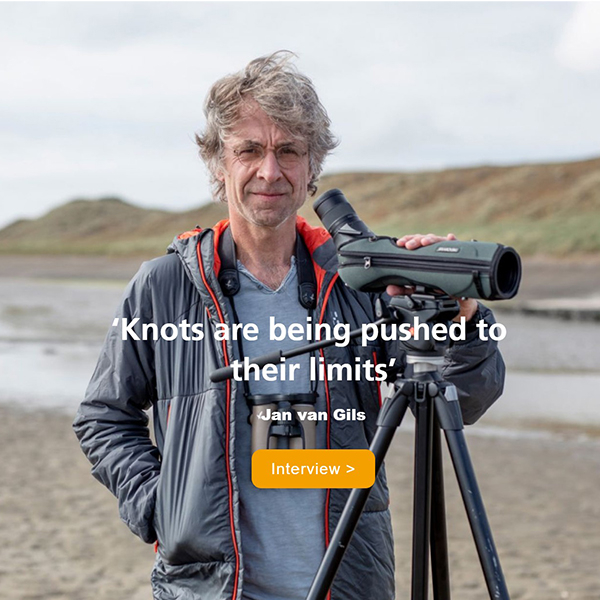
Jan van Gils is a Professor at the University of Groningen and Senior Scientist at the Royal Netherlands Institute for Sea Research (NIOZ) since 2014. His research focuses on the ecological impacts of climate change on migratory shorebirds, particularly the red knot, across Arctic breeding grounds, Dutch Wadden Sea stopover sites, and tropical wintering areas in West Africa and Oman. His work examines phenotypic changes (body size reduction, sex ratio shifts), predator-prey interactions , and global ecosystem linkages . Recent studies investigate trophic mismatches in Arctic food webs and the role of migratory birds in maintaining intertidal biodiversity. 2024 : Trophic mismatch mechanisms in Arctic shorebirds 2018 : Staging site energy budgets in migratory birds 2016 : Climate-driven body shrinkage in red knots Major awards include the NWO-VICI Grant (2019), ALW Open Competition Grants (2018, 2011), and Netherlands Polar Programme Grant (2017). He leads projects on Arctic warming effects and predator-driven ecosystem dynamics, with fieldwork in Siberia, Alaska, Mauritania, and Oman.
Milena Holmgren Urba is an Associate Professor in Wildlife Ecology and Conservation at Wageningen University & Research. Her work focuses on ecosystem resilience, particularly in floodplain forests and Amazonian biodiversity. She investigates climate-driven vegetation transitions, invasive species impacts, and seed dispersal networks. Research interests include forest-savanna dynamics, ENSO wildfire effects, and boreal forest degradation. She has published extensively on ecological thresholds and conservation strategies for threatened ecosystems. Notable collaborations span global institutions studying Arctic shrubs, Amazonian floodplains, and Neotropical pastures. As PhD promotor, she oversees projects on wetland restoration, South American grassland ecosystems, and cyanobacterial blooms. Media contributions include expert commentary on Amazon resilience and fire-driven savanna expansion. Current research emphasizes terrestrial-aquatic coupling in Amazon floodplains and optimal riparian buffer zones.
Guido van der Werf is a Personal Professor in Meteorology and Air Quality at Wageningen University & Research. His research focuses on global fire emissions, climate change, and atmospheric chemistry. He leads projects analyzing wildfire impacts on carbon budgets and methane dynamics, with a strong emphasis on satellite data integration for environmental monitoring. Recent work includes studies on Canadian wildfires, African savanna burning, and Arctic fire aerosol effects. Key contributions include the Global Fire Emissions Database (GFED) and methodologies for emissions abatement in fire-prone ecosystems. He advises two PhD candidates on topics like LiDAR-based vegetation analysis and forest loss dynamics. His datasets provide critical insights into burned area and carbon fluxes, supporting both academic research and policy frameworks.