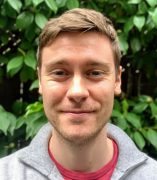
Robert Jenssen is a Professor in the Machine Learning Research Group at UiT The Arctic University of Norway and serves as the Director of Visual Intelligence , an 8-year Research Council of Norway-funded SFI center. His research focuses on solving societal challenges in healthcare, marine mapping, energy, and Earth observation through collaborations with industry and public stakeholders. Director, Visual Intelligence (SFI) Center Professor, UiT Adjunct Professor, Pioneer Centre for AI (University of Copenhagen) and Norwegian Computing Center His methodological expertise spans neural networks, information-theoretic learning, self-learning, and explainable AI (XAI). Recent work emphasizes multimodal learning, uncertainty estimation, and medical image analysis. Scientific awards include: Best Paper, Pattern Recognition Letters (2024) Dissertation Award, Norwegian AI Society (2023) Best Paper, Color and Visual Computing Symposium (2022) IEEE GRS Society Letters Prize (2013) Prize for Young Researchers, University of Tromsø (2007) He contributes to international leadership as a member of the Scientific Advisory Board (SAB) for the Max Planck Institute for Intelligent Systems, France's SequoIA AI Excellence Cluster, and Denmark's DIREC center.
Matthew Osman is an Assistant Professor of Climate Science in the Department of Geography at the University of Cambridge. He leads the Cambridge Computational Climate and PaleOceanography (C3PO) group and serves as a supervisor for the Cambridge NERC Doctoral Landscape Awards (DLA). Dr. Osman's research focuses on understanding climate dynamics across various timescales by integrating geochemical proxy records, modern observations, and climate model simulations. His work centers on: Developing quantitative tools to reconstruct past climates and constrain future projections Using data assimilation and modeling methods for key climate intervals (mid-Pliocene, Last Ice Age, interglacials) Creating probabilistic frameworks combining proxies with climate simulations Developing statistical proxy system models for ice cores and marine records Investigating cryosphere-climate feedbacks, particularly ice sheets and sea ice His research spans sub-seasonal to millennial time intervals, specializing in bridging climate proxies with global climate models. He works closely with the international PMIP/CMIP community on projects spanning Arctic sea ice sensitivity, AMOC weakening, and carbon cycle feedbacks. Dr. Osman actively supervises PhD students through the Department of Geography PhD Program and encourages students interested in quantitative climate science to develop projects in: Using paleo data to constrain future climate projections Developing fingerprinting techniques for proxy records Building probabilistic proxy system models Applying paleoclimate data assimilation during ice sheet collapse Climate risk modeling using physics-informed statistics The C3PO group maintains a strong commitment to diversity and inclusion, welcoming researchers from all backgrounds to address the climate crisis through quantitative, multidisciplinary approaches.
Gavin McNicol is an Assistant Professor in the Department of Earth and Environmental Sciences at the University of Illinois at Chicago (UIC). His research focuses on soil biogeochemistry and its connection to Earth’s climate system, particularly methane emissions from wetlands, temperate rainforests, and waste systems. He employs field measurements, laboratory experiments, and data science to study greenhouse gas dynamics across scales. McNicol teaches courses on data science (EAES 420) and climate-ecosystem interactions (EAES 579). His work integrates machine learning with satellite remote sensing to monitor global wetland methane emissions. Key collaborations include FLUXNET-CH4, CRMRCN, and the SOIL NGO in Haiti. McNicol holds a BS from the University of Stirling (2010) and a PhD from UC Berkeley (2016). Research interests span wetland methane budgets, carbon cycling in coastal ecosystems, and climate impacts of sanitation systems. He has secured grants from NASA, DOE, and NSF, totaling over $87,000. His team, the McNicol Lab, emphasizes interdisciplinary approaches combining fieldwork, lab analysis, and computational modeling. Recent publications (2023–2025) address global methane upscaling, tropical wetland monitoring gaps, and boreal-Arctic methane feedbacks. McNicol’s work bridges local measurements to global climate models, with applications in climate change mitigation and sustainable development.
Tobias Bolch is a full Professor at the Institute of Geodesy, Graz University of Technology (TU Graz), Austria, specializing in cryospheric research with a focus on High Mountain Asia and the Tibetan Plateau. His work integrates advanced geodetic and remote sensing methodologies to address critical climate change impacts on glaciers and related systems. His research spans: Glacier dynamics and mass balance monitoring using InSAR and optical satellite data Rock glacier kinematics and permafrost interactions Glacial lake evolution and outburst flood hazards Climate-glacier-hydrology linkages in Central Asian river basins Long-term cryosphere reconstruction using historical satellite archives Analysis of his 2023-2025 publications reveals dominant trends in quantifying ice loss acceleration, particularly from lake-terminating glaciers, and the application of multi-sensor approaches (Sentinel, ASTER, UAV) for decadal-scale change detection. His work consistently emphasizes the hydrological consequences of glacier retreat for downstream water security across High Mountain Asia. No scientific awards or specific grant programs were documented in the provided materials. While student supervision details are absent, his position at TU Graz's Institute of Geodesy indicates active mentorship within geospatial and cryospheric research programs. His homepage (https://ifg.tugraz.at) serves as the primary hub for research dissemination through the university's PURE portal.
Leif Eriksson is a Professor at Chalmers University of Technology , specializing in Radar Remote Sensing within the Department of Space, Earth and Environment . His career at Chalmers began in 2004, and he was promoted to Professor in 2022 after serving as Group Leader (2012–2017) and Head of Faculty Assembly (2017–2020). His research focuses on developing advanced methods for environmental monitoring using radar data, particularly synthetic aperture radar (SAR) from satellites and aircraft. Leadership Roles: Group Leader (Radar Remote Sensing), Faculty Assembly Head Key Collaborations: Rymdstyrelsen, EU Horizon, VINNOVA, European Space Agency Research Interests : Dr. Eriksson’s work spans forest biomass estimation , sea ice dynamics , and ocean surface current/wind retrieval . He integrates SAR data with in situ observations and climate models to study: Forest degradation (clear cuts, storm damage) via multi-temporal SAR Sea ice concentration, drift patterns, and thickness in Arctic regions Wind vectors and surface currents using interferometric SAR techniques Applications for maritime navigation safety and polar shipping optimization Article Trends : His recent publications emphasize SAR’s role in transport infrastructure monitoring (e.g., Iron Ore Line degradation), pan-Arctic landfast ice stability , and multi-frequency SAR fusion for enhanced sea ice observations. Collaborative work with teams across Europe and the U.S. highlights interdisciplinary approaches to climate and marine research. Projects & Grants : Dr. Eriksson leads or contributes to projects such as: CAISA (2022–2024): Air-ice-sea data assimilation EONav (2016–2019): Copernicus data for maritime navigation SEDNA (2017–2020): Safe Arctic shipping Forest Biomass Monitoring (2017–2018): Spaceborne SAR applications His work is supported by Rymdstyrelsen, EU Horizon, and industry partners like Trafikverket. Labs & Teams : He is central to the Radar Remote Sensing Group at Chalmers, collaborating with institutions like Lund University and international bodies such as ESA. His research often involves satellite campaigns (e.g., TanDEM-X, Sentinel) and field studies in polar regions.
Britney Schmidt is Associate Professor in Earth and Atmospheric Sciences and Astronomy at Cornell University, where she leads the Planetary Habitability and Technology Lab. She develops robotic tools like the Icefin underwater vehicle to study Earth's ice shelves and glaciers, providing insights into climate change and analogs for ocean worlds like Europa. Her research bridges glaciology, planetary science, and astrobiology. Research focuses on ocean world habitability, ice-ocean interactions, and Antarctic climate systems. Fieldwork includes extensive campaigns in Antarctica and the Arctic using robotic explorers. Recent publications explore Europa's habitability, Thwaites Glacier dynamics, microbial communities in hypersaline environments, and planetary analog studies. Technical developments include novel instrumentation for under-ice exploration. Awarded the 2024 Blavatnik National Award for groundbreaking research. Leads multiple international collaborations including NASA's Europa Clipper mission and Thwaites Glacier projects.
Trent K. Bollinger is a Professor in the Department of Veterinary Pathology at the University of Saskatchewan's Western College of Veterinary Medicine (WCVM), and serves as Regional Director for the Western/Northern Region of the Canadian Wildlife Health Cooperative (CWHC). His academic credentials include a BSc (Honours) from the University of Saskatchewan (1984), a DVM (Distinction) from the University of Saskatchewan (1988), and a DVSc in Pathology from the Ontario Veterinary College (1992). Dr. Bollinger's research focuses on the pathology and epidemiology of diseases in wildlife and fish, with particular emphasis on chronic wasting disease in deer/elk and white-nose syndrome in bats. He has conducted extensive studies on disease transmission dynamics, wildlife population health, and the ecological impacts of emerging pathogens. His work bridges veterinary science, ecology, and conservation biology. His publications demonstrate expertise in viral and bacterial zoonoses, fungal pathogens affecting bats, and spatial epidemiology of wildlife diseases. Recent research highlights include investigating sylvatic plague in prairie dogs, coronavirus persistence in hibernating bats, and landscape connectivity's role in chronic wasting disease spread. His studies often combine molecular diagnostics, field observations, and ecological modeling. Dr. Bollinger collaborates with national and international wildlife agencies, contributing to disease surveillance and management strategies for endangered species. His work emphasizes the interconnectedness of wildlife health, ecosystem health, and public health concerns.
Habib Ullah is an Associate Professor in Data Science at the Norwegian University of Life Sciences (NMBU), Norway, where he conducts research at the intersection of computer vision and machine learning. He is affiliated with the Institute of Data Science under the Faculty of Science and Technology. He has previously held academic positions at COMSATS University Islamabad, Pakistan, and the University of Ha'il, Saudi Arabia, and served as a postdoctoral researcher at The Arctic University of Norway. Educational Background: PhD in Information and Communication Technology (Computer Vision), University of Trento, Italy (2011–2015) MSc in Electronics and Computer Engineering, Hanyang University, South Korea (2007–2009) BSc in Computer Systems Engineering, NWFP University of Engineering and Technology, Pakistan (2002–2006) Habib Ullah's research is primarily focused on computer vision and machine learning, with applications in aquaculture, agriculture, and human behavior analysis. He investigates underwater fish feeding sounds using audio classification, develops zero-shot learning models for recognizing unseen classes, and applies deep learning to detect stress in salmon via skin dot patterns. He also explores AI-driven controlled environment agriculture, leveraging sensors and automation for optimal crop growth. His work emphasizes practical AI solutions for real-world challenges in environmental and biological domains. The recent publications highlight a strong trend in leveraging deep learning for zero-shot and semi-supervised learning, particularly in computer vision tasks such as sea ice classification, crowd anomaly detection, and agricultural monitoring. His research spans remote sensing, biomedical signal processing, and human activity recognition, demonstrating interdisciplinary versatility. The keywords reflect a focus on robust feature representation, knowledge transfer, and model generalization. Scientific Awards and Funding: Industrial PhD grant 'Advancing Controlled Environment Agriculture AI' from The Research Council of Norway (Project number 354125, 2 million NOK, 2024) Team member (Coordinator-Participant) in the Battery Cell Assembly Twin (BatCAT) project funded by Horizon Europe (7 mEuro, 2023–2027) Development of an AI-Based Image Analysis System for Monitoring Plant Status (Funding: 1.8 mNOK, starting 2025) Habib Ullah actively supervises PhD projects and contributes to academic service through editorial and organizational roles. He has served as an Associate Editor for IEEE Access, Guest Editor for MDPI Remote Sensing, and Editor of the Springer book Machine Learning Techniques and Sensor Applications for Human Emotion, Activity Recognition, and Support (ML-SHEARS) . He has also been a Track Chair and Program Committee Member for several international conferences, reflecting his leadership in the academic community. His research is supported by significant grants and collaborative projects, indicating strong institutional and international engagement. He is involved in multiple research teams and projects, including the BatCAT project on battery manufacturing and AI applications in controlled environment agriculture with RIFT LABS AS. His lab work integrates deep learning, sensor fusion, and data analytics for environmental and biological monitoring systems.
Mike Willis is an Associate Professor of Cryospheric Science, Geodesy & Remote Sensing at the Department of Geosciences, Virginia Tech's College of Science. His research focuses on advancing remote sensing techniques to study Earth's cryosphere, coastal environments, and natural hazards. He leads projects on glacial dynamics, sea level rise impacts, landslide monitoring, and the application of GNSS and InSAR technologies. His work combines field instrumentation (e.g., OrangePi-GNSS systems) with satellite data analysis to address climate and geohazard challenges in polar regions and coastal communities. Education background: Not explicitly stated in provided text. Research interests include cryospheric science, geodetic monitoring, and environmental remote sensing applications. His lab group maintains a dedicated website at https://sites.google.com/view/4datvt/ . Key research themes include: Glacier and ice shelf mass balance Coastal vulnerability to sea level rise Disaster monitoring using GNSS-IR and InSAR High-resolution digital terrain modeling Recent projects highlight work in Greenland (landslide monitoring, sea level measurements), the Pacific Northwest (subduction zone hazards), and the Dominican Republic (coastal inundation modeling). His interdisciplinary approach bridges geophysical observations with computational geospatial analysis.
Thomas Smith is an Associate Professor in Environmental Geography at the London School of Economics (LSE), specializing in wildland fires, tropical environmental change, and peatland management. He joined LSE in 2018 after lecturing at King’s College London and has held visiting fellowships at institutions including the National University of Singapore and Monash University Malaysia. His research focuses on biomass burning’s role in the Earth system, particularly greenhouse gas emissions from tropical peatlands and savannas. Smith’s expertise includes infrared spectroscopy, wildfire modeling, and land management decision support. He emphasizes interdisciplinary approaches to address fire emissions, agricultural practices, and their environmental impacts. Notable awards include being Highly Commended for Research Guidance & Support at the LSESU Teaching Excellence Awards 2019. His recent work involves field experiments (e.g., GAMBUT project) and citizen science initiatives to measure air pollution. Collaborative research spans global wildfire dynamics, climate change impacts, and policy interventions in Southeast Asia’s haze season. Smith contributes to both academic discourse and practical solutions for sustainable land use and climate resilience.
Jon Hawkings is an Assistant Professor in the Department of Earth and Environmental Science at the University of Pennsylvania School of Arts & Sciences. His research focuses on biogeochemical cycles in glacial environments, particularly the role of glacial meltwater in downstream ecosystems and coastal oceans. He investigates processes such as subglacial weathering, nutrient mobilization, and contaminant transport, with fieldwork conducted in the Arctic, Patagonia, Himalayas, and Antarctica. Education: PhD in Biogeochemistry (University of Bristol, 2015); MSci in Physical Geography (University of Bristol, 2009). Research Interests: Aqueous biogeochemistry and elemental cycles Chemical weathering and mineral dissolution Contaminant transport (e.g., mercury, arsenic) Glaciology and ice sheet dynamics Environmental impacts of glacial meltwater He collaborates on projects such as the Salsa-Antarctica subglacial lake drilling initiative. His work integrates field observations, electrochemical sensing, and lab analyses to address pressing questions in cryosphere science. Awards: None explicitly listed, but active in professional societies like the American Geophysical Union. Advising/Grants: No student advisees listed; funding sources include grants for fieldwork and analytical studies in glacial systems. Labs/Teams: Leads field research groups in remote polar and mountainous regions, emphasizing interdisciplinary collaborations between geochemistry, glaciology, and environmental science.
Ana Paula Da Silva is a Research Fellow at the University of Sydney's Faculty of Science, specializing in coastal oceanography and eco-morphodynamics. Her work focuses on wave climate changes, sediment transport dynamics, coastal adaptation strategies, and Arctic coastal processes. She holds a Ph.D. from Griffith University (Australia) and conducted postdoctoral research at the University of Quebec (Canada), studying High Arctic coastal erosion. Currently, she investigates the Great Barrier Reef's eco-morphodynamics and projected coastal changes through 2100. Education Ph.D. in Coastal Oceanography, Griffith University, Australia (Focus: Fingal Headland sediment bypassing) MSc in Coastal Dynamics, UFSC, Brazil Bachelor (Hons) in Oceanography, UFSC, Brazil Research Interests Ana's research bridges climate science and coastal management, emphasizing: Climate-driven changes in wave regimes and sediment transport Headland bypassing mechanisms and coastal connectivity Arctic coastal morphodynamics impacted by glacier retreat Long-term coastal vulnerability assessments Media Engagement She has participated in science communications through: ABC Radio interviews (2021) explaining Fingal Head sand bypassing impacts Conversation article (2020) on disappearing Australian beaches Lab/Affiliation Affiliated with Sydney Southeast Asia Centre, contributing to interdisciplinary coastal research initiatives.
Cathryn Mitchell is a Professor of Radio Science and Royal Society Industry Fellow at the University of Bath, specializing in ionospheric physics, position, navigation, and timing (PNT). She leads research in the Space & Telecoms Research Group (STAR), focusing on radio propagation, data assimilation, and space weather impacts on communication systems. Her work bridges theoretical, computational, and experimental approaches, with applications in satellite navigation, climate monitoring, and defense sectors. Her research interests include ionospheric tomography, HF communications, and the development of robust PNT systems. Mitchell collaborates extensively with industry partners like Spirent Communications on future navigation technologies and space weather resilience. She has held roles such as Academic Director of the Doctoral College and contributes to interdisciplinary projects like the DRIIVE initiative exploring ionospheric variability with EISCAT-3D radar. Recent work emphasizes ionospheric effects during geomagnetic storms (e.g., the 2024 Gannon Storm) and cooperative autonomous systems under communication constraints. Her projects are funded by the Royal Society, Natural Environment Research Council (NERC), and ESA, addressing challenges in space weather forecasting and PNT system reliability. Awards: Royal Society Industry Fellow (2022–present) Key Projects: Royal Society Industry Fellowship on Future PNT Technologies DRIVERS (DRIIVE): Ionospheric Variability Studies EISCAT-3D FINESSE: Ionospheric Structuring Analysis Mitchell’s lab, STAR, integrates academic and industrial partnerships to advance space weather applications and sustainable navigation systems, contributing to UN Sustainable Development Goals related to climate action and innovation.
Sarah Kang is the Director of the Department of Climate Dynamics at the Max Planck Institute for Meteorology in Hamburg, Germany, a position she has held since August 2023. She leads the Director's Research Group (CDY) focusing on fundamental climate dynamics. Prior to this, she served as Professor in the Department of Urban and Environmental Engineering at Ulsan National Institute of Science and Technology (UNIST) in South Korea from 2011-2023, progressing through assistant, associate, and full professor ranks. Her research examines complex climate system dynamics, with emphasis on: Large-scale atmosphere and ocean circulation patterns Tropical-extratropical climate interactions Hydrological cycle responses to climate change Mechanisms of polar amplification Teleconnections between ocean basins and climate zones Analysis of her recent publications reveals dominant research themes: Ocean-atmosphere coupling mechanisms Radiative forcing and climate sensitivity Hemispheric climate asymmetries Tropical precipitation dynamics Polar warming impacts on global circulation with consistent methodology employing high-resolution climate modeling and observational verification. Major scientific recognitions include: AGU Atmospheric Sciences Ascent Award (2022) AOGS Kamide Lecture Award (2018) Editor's Citation for Excellence in Refereeing (GRL 2018) UNIST Teaching Excellence Award (2012) NCAR Advanced Studies Fellowship (2009) She maintains extensive professional engagement as: Co-chair of CLIVAR Climate Dynamics Panel Science Steering Committee member for CFMIP Associate Editor for Frontiers in Climate Editor for AGU Advances Board member of Korean Meteorological Society
Pavel Tkach is a Researcher at the Arctic Centre , University of Lapland. His research focuses on Arctic governance, subnational decision-making, and policy analysis, with a particular emphasis on environmental policy, migration studies, and indigenous rights. Tkach has been actively involved in EU-funded projects such as Arctic PASSION (observing systems for societal needs), SIRIUS 3.0 (migrant education data mapping), and Co-CREATE (responsible solar radiation modification research). He holds a Law background and has contributed to interdisciplinary research on topics like Nordic forest policy, green transition in the Arctic, and indigenous data sovereignty. Tkach has organized major events such as the Arctic Circle Assembly 2024 and Rovaniemi Arctic Spirit 2023 , showcasing his role in fostering international collaboration. His research outputs include commissioned reports on data-driven governance frameworks and peer-reviewed articles on climate policy, cultural security, and Arctic socio-legal dynamics. Tkach collaborates with institutions across Europe and is a key contributor to pan-Arctic observational systems and sustainable tourism initiatives.