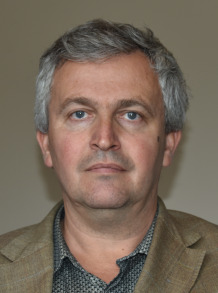
Adrian Bors is a Senior Lecturer in the Department of Computer Science at the University of York. His research focuses on computer vision, computational intelligence, image processing, and pattern recognition, with expertise in neural networks and digital watermarking. He received his MSc from the Polytechnic University of Bucharest (1992) and a PhD from Aristotle University of Thessaloniki (1999). His career includes research roles at Tampere University of Technology, Aristotle University of Thessaloniki, and the University of York, where he has been a Lecturer since 2000 and Senior Lecturer since 2001. His recent publications emphasize task-free continual learning, generative modeling, and steganalysis. Key trends include dynamic neural architectures, vision transformers, and applications of optimal transport theory in lifelong learning systems. He is an IEEE Senior Member and contributes to editorial roles in IEEE Transactions.
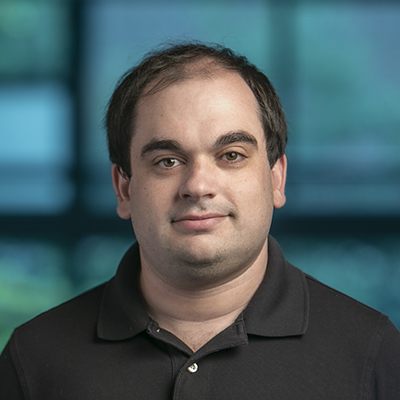
Ryan Marcus is an Assistant Professor in the Department of Computer and Information Science at the University of Pennsylvania. His research focuses on integrating machine learning into data management systems to create adaptive tools that optimize hardware utilization, invent novel processing strategies, and interpret user intentions. Currently based in Office 407, Amy Gutmann Hall, he actively explores query optimization, index structures, intelligent clouds, programming language runtimes, program synthesis for data processing, and reinforcement learning applications to systems challenges. Key research themes include machine learning for databases , learned query optimization , intelligent cloud systems , and blockchain adaptability . Scientific achievements include the Best Paper Award at SIGMOD '21 for the Bao system and the development of AutoSteer, a cross-database learned query optimizer. Notable PhD advisees co-advised include Peizhi Wu (with Zack Ives), Jeffrey Tao (with Andrew Head), and Zixuan Yi (with Zack Ives). His recent work, presented at venues like VLDB and SIGMOD, emphasizes scalable LLM-augmented data systems (ScaleLLM), robust cardinality estimation, and adaptive Byzantine fault-tolerant consensus (BFTBrain). For full system evaluations, he created testing environments such as BFTGym. Contact: rcmarcus@seas.upenn.edu
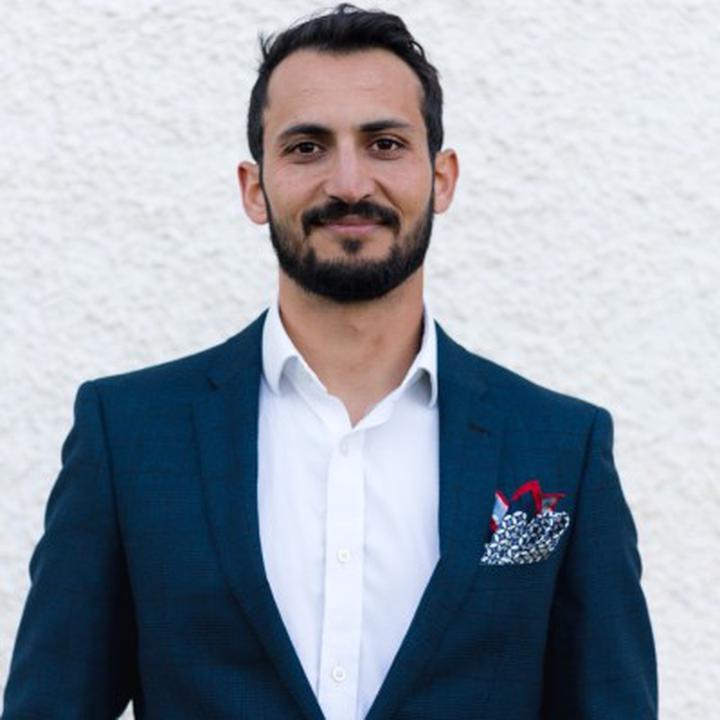
Fazl Barez is a Senior Research Fellow at the University of Oxford leading research on Technical AI Safety and Governance. He is also affiliated with Cambridge's CSER, NTU's Digital Trust Centre, Edinburgh's Informatics, and is a member of ELLIS. Previously, he was a researcher at Amazon and Huawei, and Co-director and Head of Research at Apart Research. He currently serves as an advisor to Martian and has worked with Anthropic's Alignment team (2024-2025). University of Oxford: Senior Research Fellow Cambridge CSER: Affiliate NTU Digital Trust Centre: Affiliate Edinburgh Informatics: Affiliate ELLIS: Member Anthropic: Alignment Team Collaborator (2024-2025) Martian: Advisor Dr. Barez's research focuses on ensuring AI systems remain safe, interpretable, and beneficial as they grow in capability. His work spans four interconnected areas: Interpretability (developing methods to reveal how AI models process information internally), Safety and Alignment (creating tools to detect and address deceptive behaviors), Technical Governance (translating technical insights into governance frameworks), and Societal Impact (examining broader implications of AI on society). His research is funded by OpenAI, Anthropic, Schmidt Sciences, Future of Life Institute, and NVIDIA. The trends in Dr. Barez's publications show a consistent focus on making AI systems more transparent and safer. His recent work explores mechanistic interpretability techniques like sparse autoencoders, investigates how language models relearn removed concepts, examines machine unlearning for safety applications, and develops frameworks for value alignment measurement. His publications appear in top venues including NeurIPS, ICML, ICLR, ACL, and EMNLP, reflecting his significant contributions to both theoretical and practical aspects of AI safety. Future of Humanity Institute PhD Affiliate (2022-2024) EPSRC PhD Student Scholarship (2019-2023) MSc Scholarship (2017-2018) BA (Hons) Sports Performance Scholarship (2013-2017) Dr. Barez has mentored numerous students who have gone on to prominent positions at organizations like Microsoft Research, DeepMind, and Martian. His research is generously funded by major AI organizations including OpenAI, Anthropic, Schmidt Sciences, Future of Life Institute, and NVIDIA. He has served as an Area Chair for ACL 2025 and on program committees for major conferences including ECAI 2024. His work has practical impact, with algorithms like N2G adopted by OpenAI to evaluate sparse autoencoders for interpretability. Dr. Barez leads research at the intersection of technical AI safety and governance. His work connects with multiple research groups including the UK AI Security Institute, Alan Turing Institute, and various university centers. He has co-organized workshops such as the first Mechanistic Interpretability workshop at ICML 2024 and actively collaborates with researchers across the AI safety ecosystem. His research bridges the gap between theoretical safety research and practical implementation in real-world AI systems.
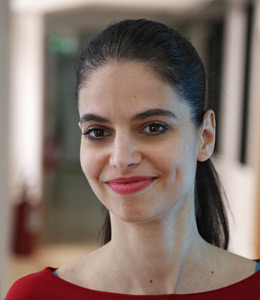
Thomas LaToza is an Associate Professor in the Department of Computer Science at the George Mason University, School of Computing . His research focuses on the intersection of software engineering and human-computer interaction, exploring how developers interact with code and designing novel software development methodologies. He has pioneered crowdsourced programming environments and microtask programming frameworks, with notable projects including RulePad for checkable design rules and Hypothesizer for hypothesis-based debugging. His work emphasizes empirical studies of developer behavior, tool impact analysis, and integration of AI assistants in software development. His recent publications highlight trends in AI-driven development , debugging mental models , and developer information seeking . He has received recognition including the George Mason University Teacher of Distinction award and has served on the editorial board of Empirical Software Engineering . His advising includes PhD students Ruochen Wang, Mainul Hossain, and alumni Abdulaziz Alaboudi, Emad Aghayi, David Samudio, Sahar Mehrpour, and Maryam Arab. He co-founded the OurCode developer tools startup, translating academic research into industry applications.
Zoltán Varady is a Professor in the Department of Medieval Studies at the Faculty of Humanities and Social Sciences of Gáspár Károli Reformed University. He previously served as a college professor at PTE Gyula Illyés Faculty in Szekszárd and as a postdoctoral fellow at ELTE BTK in Budapest. His academic career spans several decades with significant contributions to Hungarian medieval history and epigraphy. Varady earned his MA in History and Linguistics from ELTE BTK in 1982, followed by a university doctor (dr. univ.) qualification in 1994, and completed his doctoral studies at the Hungarian Academy of Sciences in 1996 with a dissertation on epigraphic examination of medieval stone inscriptions in Transdanubia. His research focuses on epigraphic examination of medieval Hungarian inscriptions, Latin-language sources from medieval and early modern Hungary, medieval Hungarian history, and auxiliary historical sciences. He has extensive knowledge of basic archaeology and archival practices. His publications and research output demonstrates a consistent focus on medieval epigraphy, particularly stone inscriptions in the Transdanubian region. His work spans from Romanesque and early Gothic inscriptions through Renaissance capitalis typefaces to inscriptions from the era of King Matthias. His research methodology combines careful epigraphic analysis with historical contextualization, revealing insights about medieval society, royal patronage, and linguistic evolution. His recent publications continue to advance the field of Hungarian medieval epigraphy with sophisticated dating methods and interpretation techniques. Rector's Commendation from University of Pécs (2005) Certificate of Recognition from Board of Trustees of the János Bolyai Research Scholarship of the Hungarian Academy of Sciences (2006) Honorary University Professor title from Pécsi Tudományegyetem Szenátusa (2013) Varady has also served in significant administrative roles including Deputy Director General of General and Educational Affairs at PTE IGYK (1998-2003, 2006-2007), Head of Department at University of PTE IGYK (1997-2002, 2007-2009), and Chairman of the Scientific and R&D Committee of the University of Pécs (2005-2006). He is a member of the Hungarian Academy of Sciences' Public Body and serves as Vice President of the South-Transdanubian Group of the Hungarian Historical Society. His language skills include Latin (superlative), Esperanto (superlative), and English (intermediate). He has organized numerous conferences, particularly the Tolna County Archival Days series, and has participated in important research projects including the Central European Medieval Epigraphy Team since 2008.
Alessandro Russo is a researcher at the Institute of Cognitive Science and Technologies (ISTC) of the National Research Council (CNR) in Italy, where he contributes to the Semantic Technology Laboratory (STLab). Since 2015, he has been engaged in EU-funded projects like MARIO (Managing active and healthy aging with caring service robots), SMART VORTEX, and WORKPAD, focusing on knowledge-driven cognitive robot architectures, ontology engineering, and process-aware systems. He earned a PhD in Engineering in Computer Science from Sapienza Università di Roma (2010–2015), where he explored data-centric methodologies for Business Process Management. His research spans semantic technologies, assistive robotics, and healthcare informatics, with a strong emphasis on ontology-based knowledge management for geriatric assessment and reminiscence therapy. Alessandro has authored influential works in these domains, including foundational articles on social robot architectures and ontology design patterns for cognitive agents. His work often intersects with applications in emergency management, clinical workflows, and financial systems. Recent projects highlight his expertise in neurosymbolic AI, multimodal data integration, and software quality modeling. While no formal awards are listed, his involvement in high-impact EU initiatives underscores his role in advancing semantic and robotic technologies for societal benefit. He collaborates with interdisciplinary teams and contributes to tools like the Text2AMR2FRED pipeline for knowledge graph generation.
Giorgia Lodi is a Researcher at the Semantic Technology Laboratory (STLab) of the Institute of Cognitive Science and Technologies (ISTC) under the National Research Council (CNR) in Italy. She also serves as a consultant at AgID (Agenzia per l'Italia Digitale). Her work integrates Semantic Web technologies, Linked Open Data, and distributed systems to advance smart governance and community development. Research Interests: Semantic Web Technologies Ontology Design Patterns Smart Cities and Communities Linked Open Data Big Data Applications Key Contributions: Recent publications focus on knowledge graphs for water-health domains (2023-2025), semantic modeling in cultural heritage (2017-2024), and ontology design patterns for IoT and public data (2016-2017). Earlier work includes privacy solutions for cloud computing (2012-2013) and failure prediction in distributed systems (2012). Laboratory: Affiliated with STLab at CNR-ISTC, where she contributes to semantic technology research and development.
Grzegorz Krawczyk, PhD, is an Assistant Professor at the John Paul II Catholic University of Lublin, employed in the Department of Social and Humanistic Foundations of Landscape Architecture, Institute of Mathematics, Informatics and Landscape Architecture, Faculty of Natural and Technical Sciences. His research focuses on regional socio-economic development, local public finance, demographic change, FDI, innovation and academic entrepreneurship. Research interests revolve around measuring and explaining patterns of development at municipal and regional level, with particular emphasis on: local public budgets and fiscal capacity socio-economic mapping and typologies of communes demographic ageing and its fiscal consequences foreign-direct-investment determinants and local spill-overs academic entrepreneurship and university-industry knowledge transfer evaluation of cohesion-policy instruments Empirical coverage is dominated by the Lublin Voivodeship and Eastern Poland, but comparative studies (e.g. Poland-Spain FDI) are also present. Methodologically the work combines descriptive statistics, comparative case studies and policy-oriented evaluation. Scientific output comprises over 40 items, including peer-reviewed articles, chapters and conference papers published between 2003 and 2023; no research grants or supervised doctoral candidates are listed in the source material.
Aomar Boum is a Professor in the Department of Anthropology at the University of California, Los Angeles (UCLA), holding the Maurice Amado Endowed Chair in Sephardic Studies. His research focuses on socio-cultural anthropology with an emphasis on Jewish-Muslim relations, Holocaust studies in North Africa, and the historical representation of ethnic/religious minorities. Education: Ph.D. in Anthropology from the University of Arizona (2006) Key research areas include the anthropology of religion, history, youth, festivals, Moroccan sociology, and North African/Middle Eastern studies. His work spans colonial and postcolonial narratives, historiography, and cultural preservation. Recent publications address Holocaust experiences in North Africa, Moroccan Jewish communities, and digital identity formation. He has contributed to encyclopedic works on camps and ghettos. Awards: Maurice Amado Endowed Chair in Sephardic Studies
Jie Wang is a Professor of Computer Science at the University of Massachusetts Lowell's R. Miner School of Computer and Information Sciences. He joined UMass Lowell in 2001 as a Full Professor and chaired the department for 9 years from 2007 to 2016. He serves as Director for China Partnership of the US-based Consortium for Mathematics and Its Applications (COMAP) since 2011. Prior to UMass Lowell, he was Assistant Professor and then Associate Professor of Computer Science at the University of North Carolina. Professor Wang's research spans multiple areas including text mining algorithms and systems, data modeling, combinatorial optimizations, network security, wireless sensor networks, and computational complexity theory. His work has evolved from theoretical foundations in computational complexity (1980s-early 2000s) to practical applications in data analysis, intelligent text automation, and AI systems. His recent publications focus on AI-Oracle machines, LLMs, text mining, document engineering, and network security. His research portfolio demonstrates a clear evolution from theoretical computer science to applied research with practical impact. The publications show increasing focus on AI, text mining, and document engineering in recent years, while maintaining foundations in algorithm design and network security. His work bridges theoretical computer science with real-world applications across multiple domains. Honorary Advisor (2013) - NeoUnion Hong Kong Education Science Culture Organization MHE Scholar (2012) - Ministry of Higher Education, China PMYR Award for Major New Initiatives (2010) - University of Massachusetts Lowell Teaching Excellence Award (2002) - University of Massachusetts Lowell Nominee of Board of Governors' Teaching Excellence Award (2000) - University of North Carolina Professor Wang has graduated 18 PhD students and is currently directing 5 PhD students. His research has been funded by the National Science Foundation, IBM, Intel, and other companies totaling approximately $4.8 million. He is active in professional service, including chairing conference program committees, serving as journal editors, and as editor-in-chief of a book series on mathematical and interdisciplinary modeling. His laboratory work focuses on text mining systems, network security applications, and computational models for practical problems.
Charan Ranganath is a Professor in the Department of Psychology at the University of California, Davis, and director of the Dynamic Memory Lab. He is affiliated with the UC Davis Center for Neuroscience and the Center for Mind and Brain, focusing on human memory and executive control using neuroimaging, electrophysiology, and behavioral methods. His research explores the neural basis of memory, including roles of the prefrontal cortex, medial temporal lobes, and hippocampus in working and long-term memory. Education: Ph.D., Clinical Psychology, Northwestern University M.S., Clinical Psychology, Northwestern University B.A., Psychology, University of California, Berkeley Ranganath’s research spans hippocampal-cortical interactions, curiosity-driven memory enhancement, schizophrenia-related memory deficits, and computational models of memory systems. His work reveals overlapping prefrontal and medial temporal lobe activity in memory tasks and investigates how stress, aging, and neuromodulation affect memory dynamics. His research trends emphasize episodic memory , relational memory , neural oscillations , cortico-hippocampal networks , curiosity-driven learning , and clinical applications in mental illness. Scientific Awards: Guggenheim Fellowship Leverhulme Trust Visiting Professorship Laird Cermak Award Samuel Sutton Award Chancellor’s Fellow award Young Investigator Award (Cognitive Neuroscience Society) National Security Science and Engineering Faculty Fellowship (2015) He has secured grants from the Department of Defense, National Institute of Mental Health, and private foundations. His lab collaborates with Andy Yonelinas on recognition memory and with others on field potentials in hippocampal studies. He teaches Human Learning, Cognitive Neuroimaging, and Current Research in Psychology.
Dr. Stylianos (Stelios) Giamarelos is an Associate Professor at The Bartlett School of Architecture, University College London, where he coordinates PhD programmes and teaches architectural history and theory. His academic journey includes a Diploma in Architecture Engineering from the National Technical University of Athens, an MA in Architectural History & Theory, and a PhD in Architectural History & Theory from UCL. He holds fellowships from Advance HE and is an Associate Fellow of the Higher Education Academy. Giamarelos researches critical regionalism, architectural postmodernism, disability in architecture, and globalisation's impact on design. His work examines how regional identities resist homogenisation through architectural expression, with special focus on Mediterranean modernism and Athenian urbanism. His publications explore intersections of cultural theory, historical preservation, and socio-spatial equity. His scholarly output demonstrates consistent focus on recontextualizing Greek modernism within global discourses, with recent emphasis on neurodiverse spaces, feminist architectural historiography, and digital publishing futures. Publications frequently employ discourse analysis to challenge canonical narratives. Awards: A Weekly Dose of Architecture Books 'Favourite Book of 2023' for Resisting Postmodern Architecture Hartis magazine 'Essay Award 2023' for editing Suzana Antonakaki, Architectural Poetics: Texts 1959-2019 As executive editor of The Journal of Architecture (RIBA) and general editor of Architectural Histories (EAHN), Giamarelos has mentored early-career scholars and shaped architectural discourse. He co-founded the LOBBY journal and currently edits the 'Architecture' series for Crete University Press. Giamarelos co-curated Greece's 2008 Venice Biennale participation and leads the Athens Field School initiative. His research group explores architectural phenomenology through multisensory methodologies, particularly examining how built environments shape neurodiverse experiences.
Robin Wilson is an Associate Professor at the The Bartlett School of Architecture, University College London , specializing in architectural criticism, theory, and media studies. Their work bridges academic research with artistic practice through collaborations like Photolanguage, focusing on visual and textual representations of architecture, urban space, and landscape. Key Research Themes : Utopic critique, architectural media, modernism/brutalism, urban space politics, and interdisciplinary methodologies. Notable Projects : Author of Image, Text, Architecture: The Utopics of the Architectural Media (Ashgate, 2015); co-editor of Land Use Poetics (Swedish Research Council-funded); co-author of Journeys in a Modern Topography (Arts Council England-supported). Robin's recent publications and exhibitions engage with brutalist architecture, postmodern critical theory, and experimental documentation techniques. They have received research grants from the Bartlett Architecture Research Fund and actively contribute to academic discourse through peer reviewing, conference organizing, and teaching. Scientific Awards : Grant (2021) - Bartlett Architecture Research Fund Grant (2019) - Bartlett-UCL Teaching : Courses on architectural theory, utopics, and experimental writing; supervision of PhD students at Bartlett. Emphasizes collaborative knowledge generation and destabilizing hierarchies in design education. Collaborations : Photolanguage (with Nigel Green), Warren & Mosley, Brandon LaBelle/Errant Bodies.
Farshad Firouzi serves as an Adjunct Assistant Professor in the Department of Electrical and Computer Engineering at Duke University, where he teaches EGR 393: Research Projects in Engineering. His academic work bridges hardware and software domains with a strong emphasis on practical applications in critical systems. His research spans Edge Computing, Internet of Things (IoT), Artificial Intelligence, Machine Learning, Healthcare Systems, Chip Design, and Reliability Engineering. This interdisciplinary focus manifests in projects ranging from Parkinson's disease monitoring using edge devices to LLM-enhanced chip design and security-hardened neural networks. His work consistently addresses real-world challenges in system dependability, particularly in healthcare and biomedical contexts where failure is not an option. Analysis of his 2024-2025 publications reveals three dominant research thrusts: (1) LLM applications in hardware design (ChipMnd, Spiced), (2) Edge-based healthcare monitoring systems (freezing of gait recognition, blood glucose prediction), and (3) Security and reliability in AI/ML systems (gradient inversion defense, silent data corruption mitigation). His work demonstrates a clear trajectory toward integrating cutting-edge AI techniques with hardware-aware solutions for mission-critical applications. No scientific awards were mentioned in the source materials. The absence of student listings or grant information suggests his current role may be primarily research-focused without formal advising responsibilities. Similarly, no dedicated labs or research teams were referenced in the available documentation.
Maria Gini is a distinguished Professor in the Department of Computer Science and Engineering at the University of Minnesota's College of Science & Engineering. She holds the titles of CSE Distinguished Professor and Distinguished University Teaching Professor, reflecting her exceptional contributions to both research and education in computing. Dr. Gini's research focuses on artificial intelligence, robotics, and intelligent agents, with particular expertise in decision making for autonomous agents across various application domains. Her work spans swarm robotics, distributed methods for task allocation, robot exploration of unknown environments, navigation in dense crowds, and conversational agents. She leads the Next Generation Robotics Laboratory and has directed significant projects including MAGNET (Intelligent Agents for Electronic Commerce) and TAC-SCM (Autonomous Agents for Supply-Chain Management). Her recent publications demonstrate a consistent trajectory toward increasingly sophisticated autonomous systems capable of operating in complex, dynamic environments. The research shows strong interdisciplinary connections between robotics, artificial intelligence, and real-world applications in emergency response, environmental monitoring, e-commerce, and social interaction. A notable trend in her recent work is the emphasis on diversity and inclusion in AI research and education. Presidential Award for Excellence in Science, Mathematics and Engineering Mentoring (PAESMEM), 2025 Winner of the IJCAI Donald E. Walker Distinguished Service Award, 2024 ACM/SIGAI Autonomous Agents Research Award, 2022 ACM Fellow, IEEE Fellow, and AAAI Fellow Numerous university-level awards for teaching and service Dr. Gini has advised an impressive 34 PhD students throughout her career, demonstrating her commitment to mentoring the next generation of computer scientists. She has secured significant research funding through grants from NSF and other agencies, supporting projects like the Summer Computing Academy for high-school students and MinneWIC (the ACM-W Celebration of Women in Computing in the Upper Midwest). Her service contributions include leadership roles in major professional organizations including serving as President of the International Foundation on Autonomous Agents and Multi-Agent Systems (IFAAMAS) and General Chair of IJCAI 2021. In addition to her research laboratory, Dr. Gini has been instrumental in establishing several important initiatives including the Summer Computing Academy, MinneWIC, and DREU (Distributed Research Experiences for Undergraduates). Her work extends beyond traditional academic boundaries through collaborations with industry and government agencies focused on applying AI to real-world challenges in emergency response, commerce, and environmental sustainability.