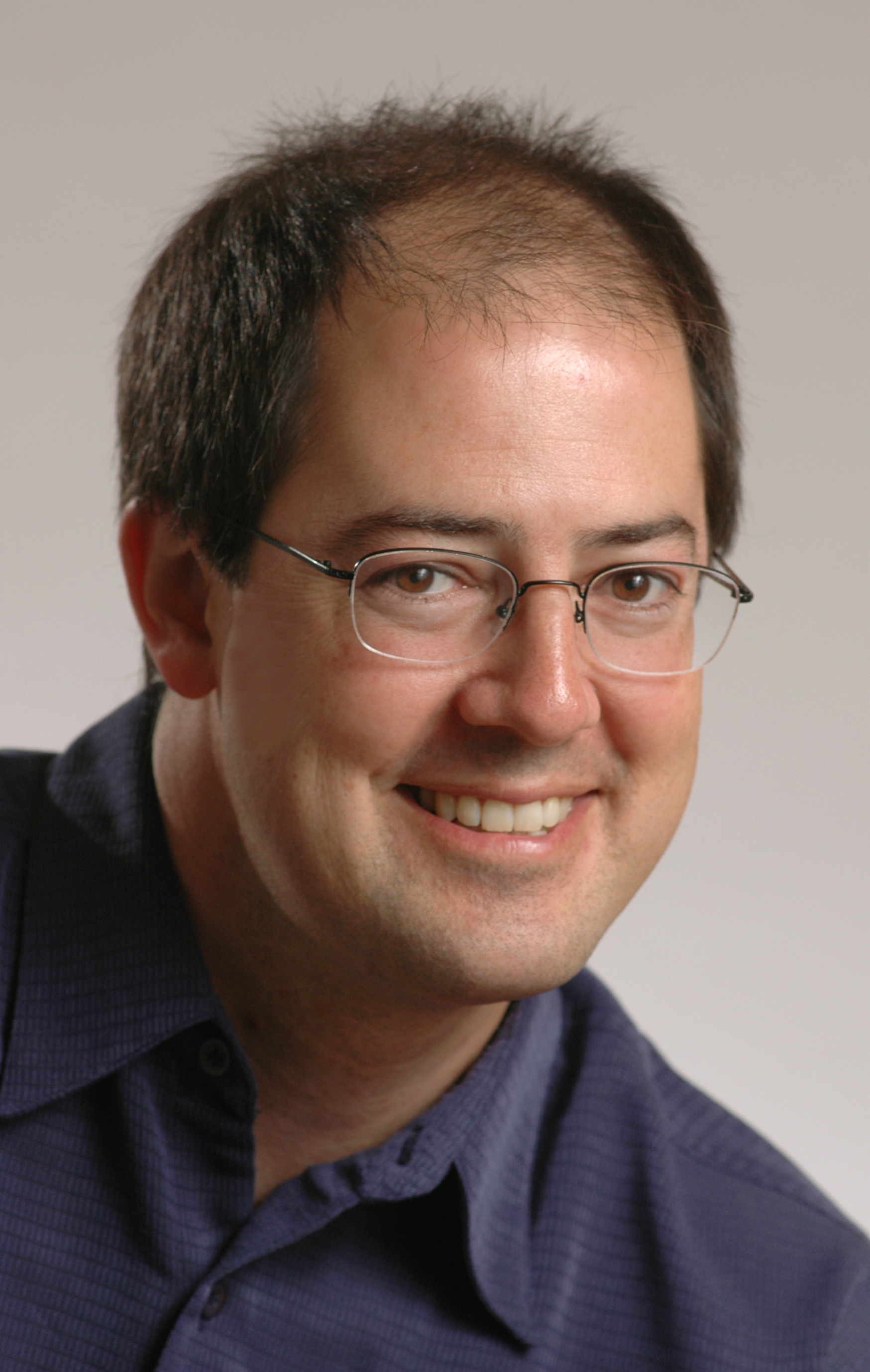
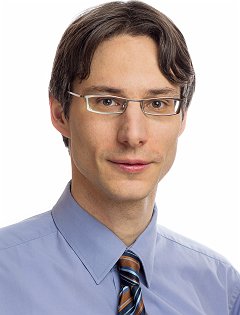
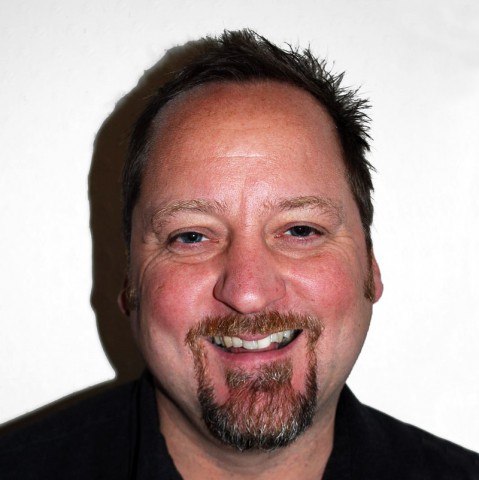
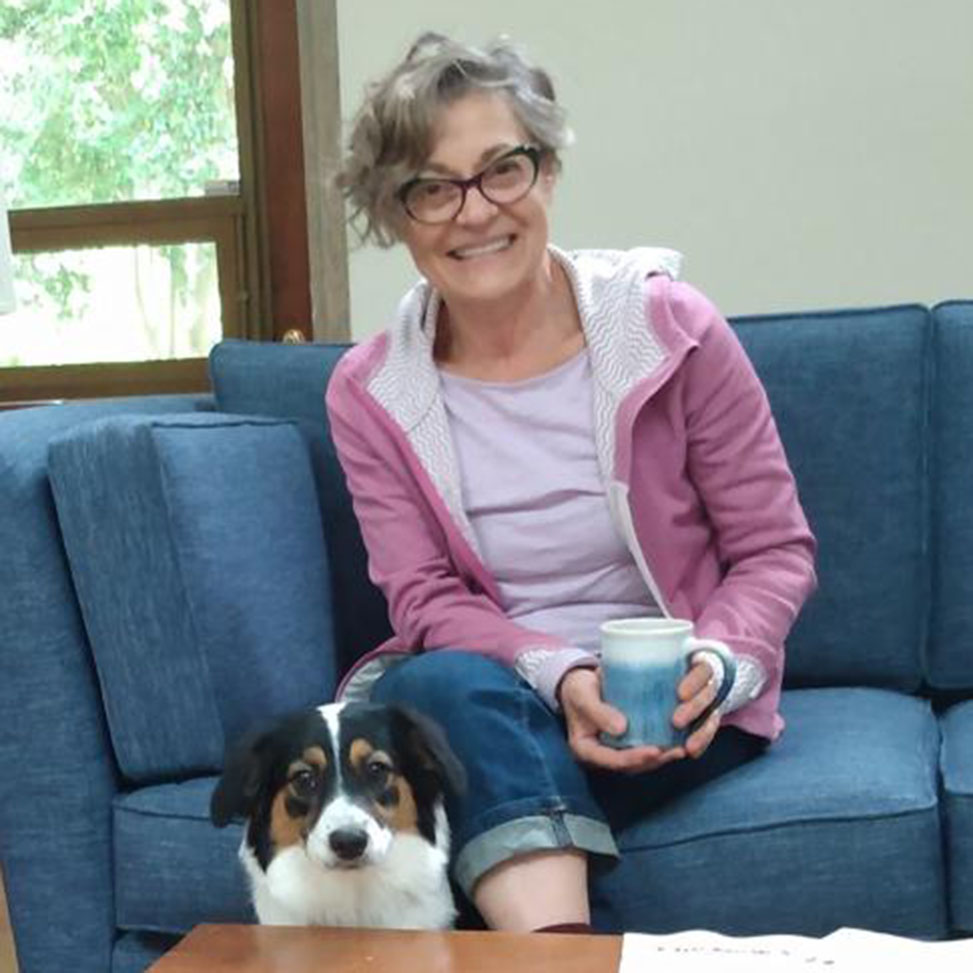
Kristofer Pister is a Professor in the Department of Electrical Engineering and Computer Sciences at the University of California, Berkeley. He co-directs the Berkeley Sensor and Actuator Center (BSAC) and the Ubiquitous Swarm Lab. His career spans groundbreaking innovations in Micro/Nano Electro Mechanical Systems (MEMS), Control Systems, and Low-Power Circuits, with a focus on Smart Dust and synthetic insects. Education: Ph.D. and M.S. in EECS from UC Berkeley (1992, 1989); B.A. in Applied Physics from UC San Diego (1986). His research areas include MEMS , Control Systems , Robotics , and Integrated Circuits , with recent work on self-powered micro-sensors, crystal-free radios, and interplanetary swarm networks. Key awards include the ISA Albert F. Sperry Founder Award (2009) , Alexander Schwarzkopf Prize (2006) , and the NSF CAREER Award (1996) . He has authored numerous influential publications in wireless sensor networks and microrobotics. His lab, Ubiquitous Swarm Lab , explores distributed robotics and swarm intelligence. Pister emphasizes open collaboration in research, ethical conduct in academia, and efficient resource utilization for graduate students.
Adi Ćorović is an Assistant Professor at the International University of Sarajevo , specializing in architectural heritage and conservation. He has served as an expert for the Commission to Preserve National Monuments of Bosnia and Herzegovina since 2007. His work includes coordinating the Preventive Conservation of the National Museum of BH (2019-2022) and overseeing the executive project for the Museum of Contemporary Art in Sarajevo (2022-2023). Notably, he was awarded the Knight Honorship by Italy's President Sergio Mattarella in 2018 for his restoration work on the Red Cross Building. Academic Role: Assistant Professor, International University of Sarajevo Key Projects: Museum of Contemporary Art (Renzo Piano layout), National Museum of BH Conservation Awards: Knight Honorship (2018) Research focuses on architectural heritage, Ottoman hammams, modernization trends in Bosnian architecture, and preventive conservation strategies. His publications span topics from 19th-century Sarajevo Bazaar facilities to intercultural dialogue through heritage restoration. Scientific awards include Knight Honorship by President of Italy (2018)
Professor David C. Dunand is a faculty member in the Department of Materials Science and Engineering at Northwestern University , where he leads the Dunand Research Group . His work focuses on mechanical metallurgy of advanced metallic materials, including alloys, composites, and foams, with applications in energy-efficient transportation and biomaterials. He also investigates additive manufacturing techniques like laser powder-bed fusion and 3D ink extrusion. Research Interests: Physical and mechanical metallurgy of multiphase metals Additive manufacturing (ink extrusion, selective laser melting) Green/sustainable metal production In situ X-ray tomography for microstructure analysis Metallic foams and scaffolds Thermoelectric materials Recent Publications show expertise in redox cycling stability, precipitation strengthening, and hierarchical microstructures, with applications in batteries, shape-memory alloys, and high-entropy systems. Awards: TMS Fellow (2012) Structural Materials Division Distinguished Scientist/Engineering Award (2008) Fellow, ASM International (2007) Department Teacher of the Year (1998) He has held leadership roles including Co-Director of the Initiative for Sustainability and Energy at Northwestern (2008-2015) and Visiting Professor at École Polytechnique Fédérale de Lausanne (2000). The group operates a SISMA MYSINT 100 laser powder bed fusion machine and collaborates extensively.
Prof. Dr. Alex Hall is an Associate Professor at the Department of Environmental Systems Science and Head of the Institute of Integrative Biology at ETH Zürich , Switzerland. He holds a PhD from the University of Edinburgh (2008), followed by postdoctoral work at the University of Oxford and ETH Zürich, including prestigious SNSF Ambizione and Marie Curie Intra-European fellowships. Research Focus: The Hall lab investigates Microbial interactions in human microbiomes Antibiotic resistance evolution Horizontal gene transfer dynamics Computational and in vitro modeling of microbial communities Evolutionary medicine applications Scientific Contributions: His recent studies analyze probiotic treatments for Staphylococcus aureus decolonization, strain-specific ecological success in gut microbiomes, and CRISPR-Cas system roles in plasmid conflicts. The lab employs computational frameworks combined with experimental validations. Scientific Awards: SNSF Ambizione fellowship Marie Curie Intra-European fellowship He also serves on the SNSF PRIMA fellowship evaluation panel and the ETH Zürich Coordination Council Medicine .
Aapo Hyvärinen is a Professor of Computer Science at the University of Helsinki , affiliated with the Helsinki Institute for Information Technology and the Helsinki Probabilistic Machine Learning Lab . He previously held the position of Professor of Machine Learning at the Gatsby Computational Neuroscience Unit, University College London (2016-2019). Education : Undergraduate Mathematics at University of Helsinki, Vienna, and Paris; Ph.D. in Information Science from Helsinki University of Technology (1997) His research focuses on machine learning and computational neuroscience , particularly: Independent Component Analysis (ICA) Natural Image Statistics Causal Representation Learning Neural Signal Processing Applications to brain imaging (MEG, CryoEM) Recent publications emphasize causal discovery , identifiable machine learning , and nonlinear ICA . Key projects include: VETURI (AI for health) DIGIMIND (AI in mental health) CIFAR grants (2022-2025) Scientific awards : Highly Cited Researcher (2010) He serves as Action Editor for the Journal of Machine Learning Research and Neural Computation , and has held Area Chair roles at NeurIPS, ICML, ICLR, AISTATS, and UAI conferences. His work bridges theoretical machine learning with neuroscience and philosophical implications of artificial intelligence .
Federico Fabbrini is a Professor at the School of Law and Government of Dublin City University (DCU) . He serves as founding director of the DCU Brexit Institute and the Dublin European Law Institute, and leads multiple EU-funded research initiatives, including BRIDGE, REBUILD, and EXPRESS2. Education : B.A. from University of Trento (2006), J.D. from University of Bologna (2008), Ph.D. from European University Institute (2012) Former judicial clerk at Italian Constitutional Court (2010-2011), qualified attorney in Italy (2011) Prior roles: Associate Professor at University of Copenhagen (Denmark), Assistant Professor at Tilburg Law School (Netherlands) with tenure His research interests span EU law and policy , with focus on fundamental rights , economic governance , defense integration , and post-Covid-19 reforms , often employing comparative analysis with the United States . He has authored four monographs on Oxford University Press, addressing topics like EU fiscal capacity post-Covid-19 and Brexit's constitutional implications. Recent peer-reviewed publications explore EU fiscal responses to the Ukraine war, defense union dynamics, and recovery facility legal technologies. His work intersects constitutional law , international economics , and crisis governance . Scientific Awards : Young European Leader 2022 Knight (Cavaliere) for high scientific merits by President of Italy (2021) DCU President's Research Award (2021) Charlemagne Prize fellowship (2019-20) Advising and Grants : Supervises doctoral students (e.g., Havva Yesil, Elettra Bargellini) and secures EU funding for projects like REGROUP and EXPRESS2. He provides evidence to European Parliament committees and national governments, while authoring reports for the Irish Ministry of Finance and Eurogroup Presidency .
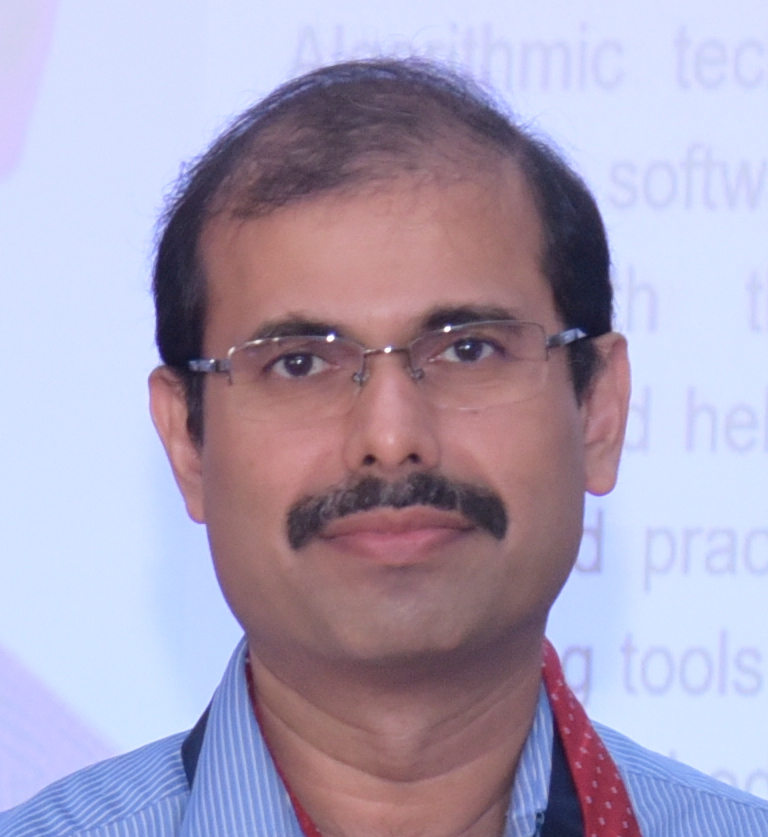
Supratik Chakraborty serves as the Bajaj Group Chair Professor in the Department of Computer Science and Engineering at Indian Institute of Technology Bombay. He maintains dual affiliations with the Centre for Formal Design and Verification of Software and the Centre for Liberal Education at IIT Bombay, demonstrating his cross-disciplinary engagement. Professor Chakraborty's research spans formal methods with focus on formal verification, rigorous analysis of system models, and automated synthesis of systems from specifications. His work bridges theoretical foundations with practical applications, particularly in developing mathematically provable guarantees for increasingly complex hardware, software, and intelligent systems. Current research interests include constrained counting and sampling, scalable formal verification of software and hardware systems, automated synthesis of programs and circuits, and applications of automata, logic and finite model theory to practical verification challenges. His publication trajectory shows a significant evolution from traditional hardware and software verification toward addressing verification challenges in machine learning and AI systems. Recent work increasingly focuses on interpretability of black-box models, verification of neural networks, and synthesis techniques applicable to intelligent systems. The research demonstrates strong interdisciplinary connections between formal methods, programming languages, and artificial intelligence. IIT Bombay Excellence in Thesis (CSE) Award 2011 (for Bhargav Gulavani's thesis) IIT Bombay Excellence in Thesis (CSE) Award 2017 (for Abhisekh Sankaran's thesis) Best Paper in Algorithms and Architecture track at IEEE International Conference on Computer Design: VLSI in Computers and Processors, 1998 Professor Chakraborty has successfully supervised 11 doctoral students, with research spanning formal verification techniques, Boolean functional synthesis, constrained counting, and applications to hardware and software systems. His students have gone on to positions at major institutions including Microsoft Research, TCS Research, Georgia Tech, and BARC, reflecting the strong industry and academic impact of his mentorship. Current research directions show increasing emphasis on verification challenges posed by machine learning systems and AI. His research group at IIT Bombay, while not explicitly named in the materials, appears to focus on formal methods with strong connections to the Centre for Formal Design and Verification of Software. The group maintains active collaborations with international researchers including Moshe Y. Vardi at Rice University, and has made significant contributions to verification tools like VeriAbs that bridge theoretical advances with practical applications.
Prof. Waldemar Kolanus leads the Molecular Immunology and Cell Biology department at the University of Bonn's Life & Medical Sciences Institute (LIMES) . His research bridges immunoregulation , stem cell dynamics , and metabolic stress responses in immune cells. Unit 2 member at LIMES Principal investigator in SFB 704 and ImmunoSensation Cluster Leads a multidisciplinary lab with postdocs, PhD students, and technical staff His work focuses on intracellular signaling pathways connecting immune activation to tissue homeostasis, particularly through: Cytohesin proteins in integrin-mediated adhesion and migration TRIM71 in stem cell regulation and congenital hydrocephalus High-salt environments affecting macrophage function Publication trends show expertise in immune cell migration , genetic models , and chemical inhibition , with frequent use of mice and zebrafish for in vivo studies. Key articles explore: TRIM71's dual role in auditory development and germ cell maintenance Cytohesin family's Golgi regulation and insulin signaling Ruxolitinib's off-target migration inhibition of dendritic cells Contact details: Address: LIMES Institute, Carl-Troll-Straße 31, Bonn Email: kolanus.sekretariat@uni-bonn.de Phone: +49 228 73-62788
Fabio Miranda is an Assistant Professor at the Department of Computer Science, University of Illinois at Chicago (UIC) . His research bridges visualization , machine learning , data management , and computer graphics to enable interactive visual analysis of large-scale urban datasets . He has developed systems like UrbanRama (for VR navigation) and The Urban Toolkit (a grammar-based framework), which have been deployed in academia, industry, and government agencies. Education: Ph.D., Computer Science , New York University (2018) M.S., Computer Science , Pontifical Catholic University of Rio de Janeiro (2011) B.S., Computer Science , Federal University of Minas Gerais (2009) Research Interests center on urban visual analytics , 3D analytics , and machine learning for accessibility . His work addresses challenges like sunlight access , sidewalk quality assessment , and commuting flow modeling , often collaborating with urban planners, climate scientists, and occupational therapists. Scientific Recognition includes awards at IEEE VIS , SIBGRAPI , and SIGMOD . His research is funded by NSF , NIH , DOT , and DPI , with media coverage in The New York Times , The Economist , and Architectural Digest . Teaching includes courses like CS 524: Big Data Visualization and Analytics and CS 424: Visualization and Visual Analytics . He emphasizes web-based systems, dataflow frameworks, and interdisciplinary collaboration, with open positions for PhD , MSc , and undergraduate researchers .
Karl Michael Göschka is an Associate Professor at Vienna University of Technology (TU Wien) in the Department of Distributed Systems (E194-02) within the Faculty of Computer Science. His academic title of Privatdozent indicates he has completed habilitation, the highest academic qualification in the German/Austrian system. He maintains an active research and teaching profile with courses scheduled through 2026S, including Bachelor Thesis supervision, Computer Science Projects, and PhD Seminars. His research spans over two decades with consistent publications from 2004 to 2022. Göschka's primary research interests focus on Dependable Distributed Systems, Web Engineering, and the convergence of voice and data technologies. His work demonstrates particular expertise in middleware, service-oriented architecture, wireless sensor networks, and fault tolerance mechanisms. He has supervised numerous master's and diploma theses since 2006, with his most recent doctoral supervision completed in 2022. Göschka's publication record shows a clear evolution from foundational work in distributed systems and replication (2004-2013) to more recent contributions in wireless sensor networks and dependable computing (2020-2022). His research consistently addresses the challenge of balancing dependability, performance, and security in distributed environments, with notable contributions in temporal decoupling techniques and adaptive systems. GIT-Preis des Österreichischen Vereins für Elektrotechnik (1999) Würdigungspreis des Ministeriums für Wissenschaft und Forschung (1998) GIT-Förderpreis des Österreichischen Vereins für Elektrotechnik (1994) Göschka has led and participated in multiple significant research projects including TRADE (2008-2011) on adaptive performance optimization, COMPASS (2005-2007) for automotive software systems, S-Cube (2008-2012), ALL-TIMES (2007-2010), and DeDiSys (2004-2007) on dependable distributed systems. His research has strong practical applications in automotive systems, online auctions, and critical infrastructure monitoring.
Daniel Varro is a Professor affiliated with McGill University (Faculty of Engineering, School of Computer Science), with strong ties to Budapest University of Technology and Economics and Linköping University. He is a leading researcher in model-driven engineering, cyber-physical systems, and software engineering, actively contributing to top-tier conferences such as MODELS, ICSE, and ASE. His research focuses on model-based systems engineering (MBSE) , automated model generation , model transformations , and constraint-based consistency checking . Recently, his work has expanded into integrating large language models (LLMs) and machine learning into modeling workflows, including model querying, domain modeling, and bug detection. The recent publications reveal a strong trend toward AI-augmented modeling, logic-based solvers (e.g., Refinery), and safety assurance of autonomous systems (e.g., COLREGs compliance). His work bridges formal methods with practical software engineering challenges in industrial and safety-critical domains. Scientific Awards: No specific awards mentioned in the text. Advising and Grants: While no explicit list of students or grants is provided, his mentorship in the Doctoral Symposium and repeated leadership roles suggest active supervision and likely grant funding. He has led projects on automated model generation, model quality, and AI integration in modeling. Labs and Teams: Daniel Varro is associated with research groups focused on model-driven engineering and software evolution, likely leading or co-leading teams working on the VIATRA and Refinery frameworks for model transformation and solving.
Dr. Simon A. Morrison is a Senior Lecturer in the Division of Communication, Screen & Performance within the Faculty of Arts, Humanities and Social Sciences at the University of Chester. He serves as Programme Leader for the Music Journalism degree, which he helped design, build and deliver from its first cohort in 2014. With 25 years of experience as a writer, broadcaster, and academic, Morrison brings extensive industry knowledge to his teaching and research, having worked as a music journalist reporting from locations worldwide including Beijing, Brazil, Moscow, and Marrakech. Dr. Morrison holds a PhD from the University of Leeds (completed 2018), an MA from the University of Manchester (1995-1997), and a BA Hons from the University of Manchester (1989-1992). Prior to his position at Chester, he worked as an Associate Lecturer at Manchester Metropolitan University (2012-2014) and as a Visiting Lecturer at Leeds University (2011-2013). His academic journey follows a substantial career in media where he presented TV for Rapture TV, hosted radio shows in Ibiza, produced and presented for Kiss Radio, and appeared on BBC Breakfast and BBC 5 Live. Dr. Morrison's research centers on the intersection of words and music , with particular focus on Popular Music , Musico-Literary Intermediality , and Electronic Dance Music Culture . His work explores how music subcultures, particularly rave and dance music scenes, are represented in literature and journalism. He examines the connections between different countercultural movements, notably drawing parallels between the Beat Generation writers and contemporary 'Chemical Generation' authors who write about club culture. His research also investigates the relationship between music journalism and subcultural movements across different historical periods. His recent publications reveal a clear trajectory connecting historical dance music developments across continents and eras. Morrison's work traces the evolution of electronic dance music from its American roots in Chicago and Detroit through its transatlantic journey to Europe and back again, examining how cultural exchange shaped musical innovation. His analyses of Pink Floyd demonstrate how rock bands interact with media landscapes, while his investigations of music journalism document the changing nature of music criticism in digital eras. The recurring theme across his scholarship is the examination of how subcultural experiences are translated into written form, whether through journalism, fiction, or academic analysis. Dr. Morrison actively supervises undergraduate dissertation projects and Negotiated Study production projects across all three years of undergraduate study. He has successfully supervised an MRes project to completion and examined PhDs (including one internal and two external, one being an Australian PhD by Artefact & Exegesis). He has served as an External Examiner for Music Journalism programs at Southampton Solent University (2016-2019) and BIMM London, Birmingham and Manchester (2016-2020). His teaching spans modules including Introduction to Journalism, Live Journalism, Dancing About Architecture: Popular Music Media, Histories and Technologies, The Cultural Politics of Music Journalism, The Politics of Social Media, Magazine Publishing and Music PR and Promotional Writing.
Conor Ryan is a Professor in the Department of Computer Science & Information Systems at the University of Limerick. He is a Science Foundation Ireland-funded Investigator since 2002 and a member of multiple research centres including Lero – the Irish Software Research Centre and the Limerick Digital Cancer Research Centre. His research focuses on Genetic Programming, Grammatical Evolution, and their applications in domains like healthcare analytics, digital circuit design, and financial modeling. He has authored over 250 publications, with recent work emphasizing automated feature selection in medical diagnostics, neural architecture search, and blockchain ecosystems. Teaching includes courses on Foundations of Computer Science and Computer Games Programming. Research interests span evolutionary computation, machine learning, and interdisciplinary applications. Collaborations involve global institutions, reflecting his work's impact across computer science, engineering, and healthcare. His research has addressed challenges in breast cancer diagnosis via genetic algorithms, cryptocurrency volatility prediction using random forests, and automated generation of digital circuits. Ongoing projects explore interpretability in AI, energy-efficient computing, and sustainable transport systems through predictive analytics. Professional memberships include roles in the Centre for Research Training in Foundations of Data Science and the Data-Driven Computer Engineering Research Centre, underscoring his commitment to interdisciplinary innovation.
Lucia Binotti is a Professor of Spanish and Digital Humanities at the University of North Carolina at Chapel Hill (UNC-CH), with dual affiliations in the Department of Romance Studies and interdisciplinary Digital Humanities initiatives. She serves as Graduate Advisor for Hispanic Linguistics and Director of the Honors Study Abroad Program in Rome. Her work bridges traditional philology with cutting-edge digital scholarship, emphasizing immersive learning experiences through virtual reality (VR) and augmented reality (AR) technologies. Binotti holds a Ph.D. from UC Santa Barbara (1990), an MA (1985), and a BA (1984) in Romance Philology from the Università degli Studi di Pisa. Her research focuses on linguistic identity, cultural heritage preservation, and innovative educational platforms like Amirabilia—the world’s first experiential learning platform. Notable projects include nXimena (healthcare training for Latinx abuse survivors) and Entiendelo (a linguistic/cultural navigation app for Latinx communities). Her scholarly interests span Early Modern Spanish literature, digital humanities applications, and the intersection of technology with social justice. She has directed grants totaling over $500K for projects involving AR/VR integration in education, including collaborations with the UNC Health Science Library and NCSU’s DELTA initiative. Recent awards include the John K. Walsh Award (2010) and Digital Innovation Fellow status (2014). Grants & Leadership: CFE-Lenovo Technology Grants (2018–2019) for AR/VR expansion iLRN 2020 International Co-Chair XR Faculty Learning Community Leader (UNC) Teaching: Courses span from introductory Hispanic literature to advanced topics like medieval intellectual history and digital humanities methodologies. Binotti’s work emphasizes ‘place, presence, and perspective’ in Cyber-Humanities education, particularly addressing marginalized communities through technology-driven solutions.
Martin Willis Monroe is an Assistant Professor in the Department of Classics and Ancient History at the University of New Brunswick. His research focuses on the ancient Middle East, particularly cuneiform cultures, with an emphasis on the history of scholarly knowledge in Babylonian and Assyrian societies. He specializes in Mesopotamian astronomy and astrology, as well as quantitative approaches to historical data. Dr. Monroe holds a PhD in Assyriology from Brown University (2016), an MPhil and BA in Ancient Near Eastern Studies from the School of Oriental and African Studies (2008, 2007). Previously, he served as a postdoctoral fellow and research associate at the University of British Columbia (2016–2023). His current projects include the publication of his Hellenistic astrology research under contract with Brill, titled Celestial Schemata: A Series of Astrological Tables from Seleucid Babylonia , and his role as associate director of the Database of Religious History , a global initiative to quantitatively analyze religious and cultural data. He has contributed to excavations at the Neo-Assyrian site of Tušhan in southeastern Turkey and advocates for responsible qualitative-to-quantitative data conversion in historical scholarship. Dr. Monroe’s research bridges traditional philological approaches with digital humanities, focusing on topics such as cuneiform astral diagrams, the intersection of ‘scientific’ and ‘religious’ texts in antiquity, and the application of computational methods to undeciphered scripts. He teaches courses on ancient civilizations, Near Eastern history, and archaeology.