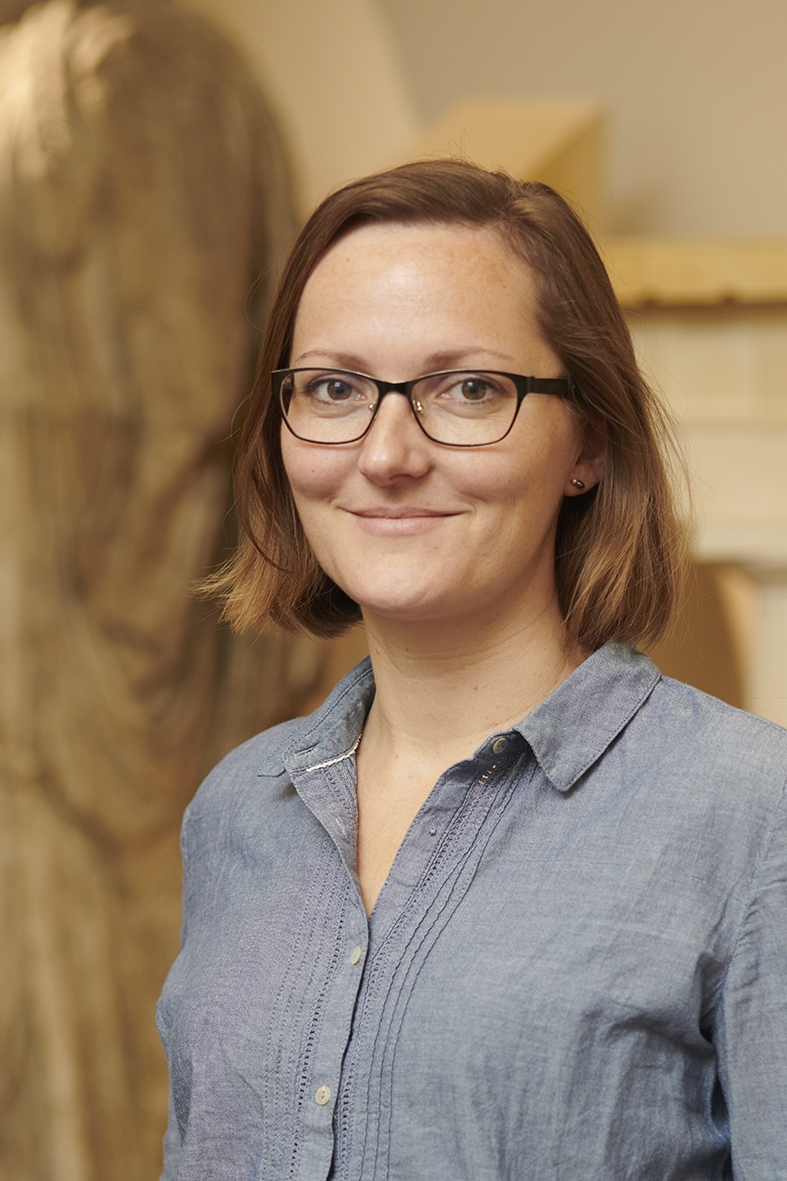
Dr. Leigh McLoughlin is a Professor in Creative Technology at Bournemouth University, leading academic initiatives in interactive media and digital innovation. Their work focuses on virtual sculpting, 3D printing accessibility, serious games, and interdisciplinary education. They hold a PhD in Computer Animation (2013) and a BA in Computer Visualisation (2005) from Bournemouth University. Research interests include assistive technology for disabled users, game engine architecture, educational software design, and mass customization systems. Their team developed the SHIVA platform for inclusive 3D sculpting and contributed to influential studies on cultural heritage serious games. Key publications span 2004-2024, emphasizing accessibility, educational technology, and creative industry innovation. Notable awards include the 2015 Times Higher Education Award for Digital Innovation and a 2009 Best Animation Education Paper at SIGGRAPH Asia. They serve as an external examiner for Coventry University's research programs and contribute to the International Journal of Interactive Worlds editorial board. Their software projects include the 'C-Sheep' programming tool and the 'Reverse Skew-T' cloud modeling system.
Edmund Keefe serves as Senior Lecturer in Industrial Digitalisation within the Engineering Department at Manchester Metropolitan University, leveraging 25+ years of industry experience in Architecture visualisation, Product Design, and Additive Manufacturing since joining in 2014. He established PrintCity—a flagship AM research/teaching facility—and contributes to the Advanced Materials and Surface Engineering Research Centre through cross-disciplinary collaborations with artists, electrochemists, and engineers. Research Focus: His expertise spans Computer-Aided Design (Autodesk Fusion 360, SolidWorks), Additive Manufacturing (FFF/CFF techniques), AI-driven generative design, and circular economy applications. He pioneers sustainable innovations in 3D-printed electrochemical sensors for environmental/healthcare monitoring and recycled material feedstocks for manufacturing, emphasizing functional integration of engineering principles with emerging technologies. Publication Trends: Analysis of 2019-2023 articles reveals dual dominant themes: (1) electrochemical sensing platforms using AM for heavy metal detection and medical diagnostics, and (2) circular economy solutions converting waste (coffee pods, plastic) into functional materials for energy storage and manufacturing. Collaborations span electrochemistry, materials science, and biomedical engineering, yielding high-impact applications in water quality monitoring and sustainable electronics. Grants & Projects: He leads EU-funded initiatives including Cirmap (circular economy furniture), Transform CE (plastic waste valorization), and PrintCity Network. During the pandemic, he coordinated PPE production for Greater Manchester healthcare facilities and delivered government-backed 'Made Smarter' digital skills training to regional companies. Labs & Teaching: As PrintCity founder, he directs a state-of-the-art facility supporting cross-disciplinary R&D in sustainable manufacturing. He teaches BSc Product Design Engineering, MSc Digital Design & Manufacturing, and BEng Biomedical Engineering while collaborating with industry partners (Autodesk, Siemens, Formlabs) on projects ranging from electronic engineering to heritage casting digitization.
Alexandros Fabio Kilias is a Researcher affiliated with the Department of Cultural Technology and Communication at the University of the Aegean (i-Lab). He holds a PhD from this institution and is listed as an alumni. His professional background includes work as a 3D Artist specializing in hard surface modeling, texturing, lighting, rendering, and animation, emphasizing experience in meeting tight deadlines. Education: PhD: University of the Aegean, Department of Cultural Technology and Communication (2022) MSc: University of Kent, Architectural Visualisation (2014) BSc: Ionian University, Dept. of Audio and Visual Arts (2012) His research interests span cutting-edge digital visualization techniques, including: - Three-dimensional computer graphics - Virtual reality applications - Architectural photorealism - Environmental art in virtual spaces - Advanced 3D modeling and rendering methodologies No academic awards or grants are explicitly mentioned in the provided information. He has no current advisees listed, though his alumni status suggests past involvement with academic programs. His primary research environment is the i-Lab at the University of the Aegean.
Egemen Kırkağaç is an Instructor at Bilkent University's Faculty of Art, Design, and Architecture. He holds an M.F.A. in Media and Design from Bilkent University (2017) and is currently pursuing a PhD in Art History at the Faculty of Letters, Hacettepe University. His teaching spans courses in visual communication design, computer graphics, and art history. Research interests focus on data visualization, self-reflexivity in art practices, and methodologies in art writing. His work explores intersections of personal memory, digital media, and self-documentation through projects like corporate identity systems and wayfinding design. His notable research includes an autoethnographic study on digital re-collection of personal memory, published in 2017. He contributes to initiatives like the Bilkent Media Future Initiative and has participated in exhibitions such as COMD EYE 2020/2021.
Corinna Reinhardt is a Professor of Mediterranean Archaeology with a focus on Greek and Roman Antiquity at the University of Zurich since 2023. She holds a Magister degree from Ludwig Maximilian University of Munich and a PhD from the same institution, with a doctoral scholarship from the Gerda Henkel Foundation. Her research interests include classical sculpture, digital methods in archaeology, materiality of text and image, and reception history of antiquity. She has led interdisciplinary projects like 'Iconographics' and co-founded the Digital Visualisation Lab at UZH. She was awarded the 2021 Teaching Award at FAU Erlangen-Nuremberg and has published extensively on topics like acroter architecture, inscriptions, and computer vision applications in cultural heritage. Her work bridges traditional archaeology with digital innovation, emphasizing both material analysis and computational methods. Education: Magister (LMU Munich, 2010), PhD (LMU Munich, 2015) Affiliations: Institute of Archaeology, Digital Visualisation Lab (UZH) Her research focuses on the intersection of classical sculpture with architecture, digital methodologies for analyzing artifacts, and the material culture of ancient writing systems. Recent projects include 3D scanning of Hellenistic Nike statuettes and digital exhibitions like 'Kreuz und quer – Lebensgeschichten antiker Objekte'. She has supervised numerous academic courses and taught advanced digital methods in archaeological studies. Publications highlight interdisciplinary approaches, with key works on Greek acroter design, material text culture, and AI-driven analysis of vase paintings. Awards include the 2021 FAU Teaching Prize and recognition for her doctoral thesis.
Ron Petrick is a Professor in the School of Mathematical & Computer Sciences at Heriot-Watt University, with a secondary position at the University of Edinburgh (2016–2027). His primary research focuses on artificial intelligence, automated planning, knowledge representation, and cognitive robotics. He explores reasoning under uncertainty and develops practical planning systems for robotics applications, including human-robot interaction and social robotics. Research Interests: Automated planning and reasoning mechanisms Formal modeling for robot control Applications in human-robot interaction, natural language dialogue, and pediatric clinical settings Explainable AI and mission specification for underwater robots Key Contributions: Developed the PDSim framework for planning domain simulation and visualization Advanced socio-affective models for human-robot collaboration Pioneered ethical frameworks for AI in children's healthcare Awards: Best Presentation Award (2021) for work on underwater robot handovers Research Team of the Year (2022) for contributions to autonomous robotics Grants & Collaborations: ORCA Hub: Focuses on explainable offshore robotics EU-funded projects on social robotics in healthcare Industry partnerships for autonomous marine robotics Labs/Teams: Leads the Social Robotics and Planning Lab at Heriot-Watt, collaborating with the University of Edinburgh on cognitive robotics systems.
Ale Torkkel serves as a Senior Lecturer at Metropolia University of Applied Sciences, specializing in XR Design Projects within the Conservation and Media Team. His work spans Augmented Urbans initiatives, Finnish Design Academy programs, Creathon, and AgileXR development. Ale Torkkel's educational background includes: Master of Culture and Arts from Helsinki Metropolia of Applied Sciences (2013) in Media Production and Management Bachelor of Culture and Arts from EVTEK University of Applied Sciences (2005) in 3D Visualisation and Animation Architectural studies at Tampere University of Technology (1983-, 140/180 credits completed) Torkkel's research focuses on the intersection of immersive technologies and cultural applications. His expertise spans 3D computer graphics, interactive 3D applications, XR content creation, real-time architectural visualization, and XR implementation in cultural heritage preservation. With competences in 3D Animation, AR, VR, Digital learning environments, and Multimedia production, he bridges traditional media techniques with cutting-edge immersive technologies. He maintains professional proficiency across multiple languages: English: Excellent Swedish: Advanced Italian: Beginner German: Beginner
David Powell is a Professor at the Monash e-Research Centre, Monash University. His research focuses on genomic analysis, immunology, and data-driven approaches in health and disease. He actively collaborates internationally and leads multiple projects addressing cancer, infectious diseases, and environmental health. Powell manages key research infrastructure including High-Performance Computing and the HELIX data platform. Research Interests : His work spans genomic studies of pathogens (e.g., Clostridioides difficile), T-cell biology, and computational methods in healthcare. Recent studies explore immunotherapy resistance mechanisms in cancers and cerebellar atrophy patterns in epilepsy. Projects : Current initiatives include The One Water Consortium (sustainable water systems), pediatric cancer therapeutic targets, and immune checkpoint research. He has secured funding for over 20 projects since 2015. Equipment : Oversees facilities like Immersive Visualisation Capability and Research Cloud, supporting large-scale data analysis in life sciences.
Dr Indae Hwang is a lecturer in the Department of Design at Monash University, where he contributes to research, teaching, and creative practice in interactive design and emerging digital technologies. His work spans academic research, public exhibitions, and interdisciplinary collaborations with industry and healthcare sectors. PhD in Digital Art and Multimedia Design, Monash University (2014) Research focuses on critical engagement with digital technologies through interactive art and design Teaches User Experience and Interactive Design His research interests center on the critical reflection of human relationships with emerging technologies, particularly through the lens of interactive arts. He explores how augmented reality, virtual reality, physical computing, and mixed reality can provoke deeper societal engagement with technology. His work emphasizes behavior change, interface design, and data visualization, often addressing ethical and philosophical dimensions of digital integration in everyday life. The recent body of work shows a strong trend toward public-facing interactive systems, such as self-service airport security and emergency department wait time visualization. These projects reflect a move toward human-centered, socially responsible design that bridges technology, healthcare, and urban environments. His publications and creative outputs demonstrate a blend of artistic and technical rigor, often published in human-computer interaction and design research venues. Dr Hwang has received several prestigious awards for his design work: Good Design Award, Architectural Design - Winner: 'EVERYDAY Australian Design' (2022) Good Design Awards, Design Research Category - Winner: 'Victorian Premier's Design Awards Showcase' (2022) Australian Graphic Design Association Award - Award of Merit (2022) Smarter Hobart Challenge - Finalist (2021) He has been involved in multiple research grants as a Chief or Associate Investigator, including projects funded by industry and health partners. Notable projects include the self-service airport security checkpoint and the digital adverse drug event reporting platform. He actively participates in public design events such as Melbourne Design Week and has exhibited internationally. He leads and collaborates on interdisciplinary teams involving engineers, healthcare professionals, and designers. Dr Hwang is a key contributor to the 'Consenting Cities' project, an interactive urban installation exploring digital consent in public spaces. This work exemplifies his commitment to using design as a medium for social inquiry and public engagement.
Professor David Andrews is Professor of Engineering Design in the Department of Mechanical Engineering at University College London (UCL). A globally recognised authority on naval architecture and ship design methodology, he has held continuous academic appointments at UCL since 1980, punctuated by distinguished service in the UK Ministry of Defence where he rose to Director of Frigates and Mine Countermeasures. Since 2000 he has occupied the Chair in Engineering Design at UCL, leading major research initiatives funded by EPSRC, ONR and the EU, and forging strategic industrial partnerships. Education Bachelor of Engineering, UCL (1970) MSc Naval Architecture, UCL (1971) PhD “Synthesis in Ship Design”, UCL (1984) Research Focus Professor Andrews is acknowledged as the world-leading expert in naval ship design methodology, with seminal contributions to early-stage design processes, submarine architecture, trimaran/multi-hull vessels, and distributed ship service systems. His pioneering Design Building Block approach and SURFCON CAD tool have been integrated into industry-standard platforms such as PARAMARINE. Current work addresses energy balance frameworks, computer-aided sketching, and philosophical foundations of engineering design. Across more than 150 publications, a clear trajectory emerges: from fundamental design theory through tool development to practical application in warship, submarine and advanced multi-hull projects. Recent outputs (2021-2024) emphasise automation of early-stage synthesis, network-based modelling of complex distributed systems, and integration of operational availability considerations into concept design. Honours & Awards Fellow of the Royal Academy of Engineering (2000) Fellow of the Royal Institution of Naval Architects (RINA) Fellow of the Society of Naval Architects and Marine Engineers (SNAME) William Froude Medal, RINA (2020) – highest award David W Taylor Medal, SNAME (2021) – lifetime contribution Advising & Grant Leadership Since flexible retirement in 2012 he continues to lecture and supervise MSc projects in Naval Architecture, Marine Engineering and Submarine Design CPD courses. He has led or co-led research grants exceeding £2 million from EPSRC, EU and industry (BAE Systems, Rolls-Royce, BMT, Dstl). These projects have funded numerous CASE studentships and collaborative PhD programmes that bridge UCL and industrial stakeholders. Research Team & Industrial Links Professor Andrews heads the Design Research group at UCL, mentoring successive MoD Professors of Naval Architecture and maintaining active Memoranda of Understanding with BAE Systems and other maritime primes. He chairs the tri-annual International Marine Design Conference’s Design Methodology Panel and has delivered keynote addresses worldwide, uniquely representing non-US expertise at successive US Navy Ship Design Process Workshops.
Dr. Bonnie Boyana Buyuklieva is a Lecturer in Data Science for Society at University College London's Department of Information Studies. With a background in architecture and computation, including professional experience at Foster and Partners and academic work at Bauhaus University Weimar, she holds a PhD from the Bartlett Centre for Advanced Spatial Analysis (CASA, UCL). Her educational background includes: PhD from the Bartlett Centre for Advanced Spatial Analysis (CASA, UCL) Studies at Bauhaus University Weimar Professional experience at Foster and Partners Dr. Buyuklieva's research focuses on the intersection of the built environment and population studies through computational methods. Her interests span sustainability, data for policy, and household health outcomes, with particular emphasis on women's health. She applies spatial data analysis and visualization techniques to understand urban and regional planning challenges, population geography, and geoscience applications. Her work connects computational approaches with real-world societal issues, particularly in the domains of housing, energy efficiency, and urban sustainability. Her recent publications demonstrate a strong focus on urban sustainability challenges, housing markets, and energy transitions. She has published extensively on residential infrastructure, net-zero transitions, and advanced spatial analysis methods like Geographically Weighted Regression. Her research shows consistent interdisciplinary work bridging technical methods with social science questions, particularly examining spatial patterns in energy efficiency, housing markets, and demographic changes. Dr. Buyuklieva has received recognition through professional fellowships: Fellow of the Higher Education Academy (FHEA) Fellow of the Royal Geographical Society (FRGS) With nearly a decade of teaching experience across Russell Group universities, Dr. Buyuklieva has taught modules to groups ranging from one-on-one supervision to cohorts of 120 students. She has served as Department Course Director for UCL's BSc in Information Studies and currently leads the 'Internet Technologies' module. Her pedagogical approach emphasizes creating 'a safe environment of rigour and refuge where students and collaborators can be met 'where they are'', focusing on individual development and leveraging technology to scale personalized learning experiences. Dr. Buyuklieva's work connects with the UN Sustainable Development Goals, particularly Good Health and Well-Being (SDG 3), Sustainable Cities and Communities (SDG 11), and Life on Land (SDG 15), demonstrating her commitment to research with tangible societal impact.
Stuart Charters is an Associate Professor at the School of Landscape Architecture, Lincoln University, New Zealand. His academic career spans research and teaching in computational agroecology, human-computer interaction, and software engineering. He serves as the Programme Director for the Master of Applied Computing and was previously seconded to be the Director of SIGNAL ICT Graduate School. Currently, he holds the position of Director of the Centre for Geospatial and Computing Technologies at Lincoln University. Dr. Charters holds a PhD and BSc (Hons) from the University of Durham, United Kingdom. His educational background provides a strong foundation for his interdisciplinary research that bridges technology, agriculture, and ecology, with applications in landscape architecture and sustainable agricultural systems. Charters' research focuses on the intersection of technology, agriculture and ecology, which he terms 'computational agroecology,' and on human aspects of computing including Software Engineering, Visualisation and eResearch. His work investigates how humans engage and interact with technology, with emphasis on both the design and deployment of environmental and agricultural technology, data presentation for consumption, and processes around human engagement. He particularly emphasizes that 'the ability for people to effectively engage with technology and interpret data is essential for technology adoption and effective data based decision-making.' His work in Evidence based Software Engineering aims to improve research reporting quality and provide methods to assess research evidence impact on practice or policy. His recent publications reveal a strong interdisciplinary focus spanning computational agroecology, IoT security, digital tools for landscape planning, and human-computer interaction in agricultural contexts. His work frequently employs geospatial modeling, multi-agent systems, and visualization techniques to address challenges in sustainable agriculture, landscape management, and technology adoption. A notable trend is his increasing focus on integrating ecological health with technological solutions in agricultural settings, particularly in New Zealand high-country environments. Charters actively supervises postgraduate research across diverse areas including neural networks for agricultural vehicles, IoT trust systems, technology's impact on elderly quality of life, and agile software development. His teaching includes directing the Master of Applied Computing program, which helps people transition into tech careers from any degree background. He has examined numerous courses including Industry Project COMP693 and Research Essay COMP698. He maintains an active international research network, collaborating with colleagues in New Zealand, Australia, and the UK. His ORCID identifier is 0000-0002-1560-0805, and he is available for collaborative projects, industry engagement, and student supervision in Masters and PhD programs.
Professor Gianluca Memoli is an Associate Professor in Sound-Based Interactions within the Department of Informatics at the University of Sussex's School of Engineering and Informatics. He also serves as Impact Leader for Informatics since June 2023. His academic profile bridges fundamental acoustics research with practical applications and commercialization. Memoli's research focuses on acoustic metamaterials and sound-based interactions, exploring how techniques previously used only for light can be applied to sound. His work spans from fundamental physics of bubbles and cavitation to advanced applications in healthcare, environmental monitoring, and human-computer interaction. He approaches acoustics through an interdisciplinary lens, connecting physics, engineering, materials science, and perception studies. His recent publications (2022-2025) demonstrate consistent output in high-impact acoustics journals, with a clear trajectory toward practical applications of acoustic metamaterials. Key themes include acoustic lens design, sound field manipulation, and the development of tools for virtual acoustic assessment. His work shows increasing emphasis on addressing real-world challenges in environmental noise and healthcare applications. Memoli has secured significant research funding from diverse sources including EPSRC, NERC, Royal Society, and European Union programs. His current major project 'Visualising the Perception of Aircraft Noise for Communities Surrounding Airports' (2023-2027) exemplifies his focus on applying advanced acoustic research to societal challenges. As an educator, Memoli teaches 'Professional Skills' and 'Entrepreneurship' courses, reflecting his dual expertise in technical acoustics and commercialization. His role as CEO of Metasonixx since 2019 demonstrates his commitment to translating academic research into real-world applications, creating a unique bridge between his academic and entrepreneurial pursuits.
Dr. Kaveh Kiani is a faculty member at the University of Salford's School of Science, Engineering & Environment, with a primary affiliation to the Informatics Research Centre. His academic profile demonstrates expertise spanning both theoretical statistics and practical AI applications across multiple industries. Doctoral degree in Applied Statistics Master's degree in Data Science Postgraduate Certificate in Academic Practice (PGCAP) Fellow of the Higher Education Academy (FHEA) Dr. Kiani's research focuses on computer vision, big data analytics, generative AI applications in education, and survival analysis. His work bridges statistical theory with practical implementations, particularly evident in medical AI applications for respiratory disease detection, skin cancer diagnosis, and prostate cancer research. His industry experience informs his approach to solving real-world problems in healthcare, construction sustainability, and financial services. His recent publications (2023-2025) demonstrate strong activity in applying deep learning techniques to medical imaging and developing novel frameworks for industry-specific challenges. The research shows a clear trajectory toward increasingly sophisticated AI applications with practical impact. Fellow of the Higher Education Academy (FHEA) awarded by Advance HE Endorsed by The Royal Academy of Engineering as a Global Talent in Data Science Dr. Kiani actively supervises PhD students and teaches across multiple postgraduate programs including MSc Data Science, MSc Artificial Intelligence, and MSc Internet of Things with Data Science. His teaching modules cover Big Data Tools and Techniques and Applied Statistics and Data Visualisation, reflecting his dual expertise in both theoretical foundations and practical applications of data science.