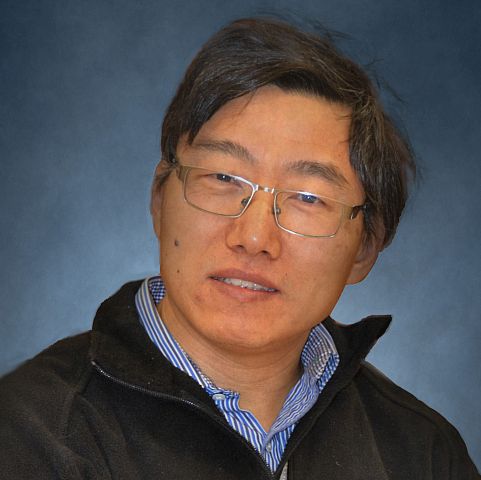
Qingguo Li is a Professor and Associate Head at the Department of Mechanical and Materials Engineering , Queen's University , and a member of the Ingenuity Labs Research Institute . He specializes in biomechanical system design, energy harvesting, wearable sensors, gait analysis, and load carriage systems. His research integrates robotics, biomedical engineering, and sensor technology to develop human-centric devices and mobility aids. Current Roles : Professor, Associate Head, Queen's University Research Institute : Ingenuity Labs Research Institute Lab : Bio-Mechatronics and Robotics Laboratory His work focuses on biomechanical energy harvesting , IMU-based motion analysis , and assistive device development . Key applications include stroke rehabilitation, gait monitoring, and wearable power generation systems. Articles span cable-driven robots , smart walkers , and 3D printing mechanisms , emphasizing human-robot interaction and dynamic modeling . The lab explores sensor calibration , adaptive control algorithms , and human movement optimization . Areas of impact include rehabilitation engineering , load carriage stability , wearable sensor accuracy , and assistive robotics . His team develops solutions for gait asymmetry detection , post-stroke mobility , and low-cost energy systems , leveraging machine learning and kinetic modeling .
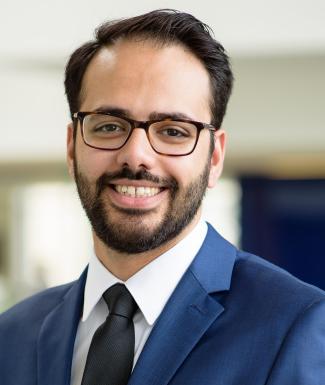
Prof. Dr. Markus Zimmermann leads the Chair of Product Development and Lightweight Design at the Technical University of Munich (TUM). With a background in mechanical engineering from TU Berlin and the University of Michigan, and a doctorate from MIT on solid-state singularities, he bridges academic rigor with industrial application. His career spans 12 years at BMW focusing on vehicle development before transitioning to academia. Specializes in solution space engineering for robust design Expert in additive manufacturing and systems engineering Develops methodologies for managing design complexity and uncertainty His research focuses on multidisciplinary design optimization and lightweight structures , particularly in robotics and automotive systems . His team applies digital twin frameworks and attribute dependency graphs to enhance design processes. Recent publications emphasize topology optimization in robotic systems and thermal management for medical X-ray sources. Key trends in his 2024-2025 publications include: Topological optimization for additive manufacturing and robotics Application of solution spaces to manage design uncertainty Development of compact X-ray systems for medical therapy Integration of digital twin technologies in industrial contexts
Farhad Pourkamali Anaraki is an Assistant Professor in the Department of Mathematical and Statistical Sciences at the University of Colorado Denver, part of the College of Liberal Arts and Sciences. His research focuses on Machine Learning, Data Science, and Computational Mathematics, with interdisciplinary applications in engineering, materials science, and uncertainty quantification. He specializes in developing data-driven methodologies for complex systems, including composite materials, seismic response prediction, and additive manufacturing. Key research themes include probabilistic neural networks, adaptive machine learning for sparse data, and computational techniques for engineering challenges. His work integrates advanced algorithms with domain-specific problems, such as optimizing material properties and enhancing predictive models in civil and mechanical engineering contexts. Despite his prolific publication record, no specific scientific awards or grants are explicitly listed in the provided information. He maintains an active profile in teaching and mentoring, though formal advisee details are not documented here.
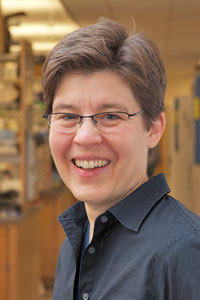
ONG Soh Khim is a Professor in the Department of Mechanical Engineering at the National University of Singapore (NUS) and a member of the NUS Graduate School. She is a Fellow of CIRP (International Academy for Production Engineering), the first Asian and fourth female Fellow globally. Her research focuses on augmented reality (AR) and digital twins in manufacturing, with applications in assistive technology and sustainable design. She has authored/co-edited 6 books, over 300 journal/conference papers, and holds an H-index of 66 (Google Scholar) and 52 (Scopus). She has held leadership roles, including serving as a Nominated Member of the Singapore Parliament (2005–2006) and on multiple NUS governance boards. Her honors include the Singapore Youth Award (2004), M. Eugene Merchant Award (2004), and the 2021 Long Service Medal. She advocates for gender diversity in STEM, leading initiatives like the Girls2Pioneers program. Her current roles include Senior Principal Investigator at NUS Research Institutes in Suzhou and Guangzhou, and Visiting Professorships at Chinese universities.
Professor Hala Zreiqat AM is a leading biomedical engineer at The University of Sydney , serving as the Director of the ARC Training Centre for Innovative BioEngineering . A Fellow of all major Australian academies (AAS, ATSE, FAHMS, FRSN), she develops 3D printed bioceramics for bone regeneration while championing diversity through initiatives like the IDEAL Society and BIOTech Futures mentorship program. Her work bridges academia, clinical practice, and industry in musculoskeletal research . Research Focus: Her lab creates synthetic bone scaffolds that mimic natural bone architecture, strength, and porosity, enabling non-rejected bone regeneration via patient-matched implants. Key applications include orthopaedic, dental, and maxillofacial repair , with over $18M in competitive funding and multiple patents. Current projects explore AI-driven scaffold performance prediction and anti-senescence strategies for aging-related bone loss. Scientific Trends: Recent publications highlight 3D printed nanovoxelated ceramics , antisenescence biomaterials , and multifunctional theranostic platforms . Her team integrates machine learning for scaffold design, atom probe tomography for interface analysis, and two-photon imaging for cellular monitoring in 3D environments. 2021-2022 Fulbright Senior Scholar 2018 NSW Premier's Woman of the Year 2019 Eureka Prize for Innovative Use of Technology Fellow of Australian Academy of Science (2021) Over $18M in research funding Teaching & Leadership: She designed core courses like Tissue Engineering and Nanomaterials in Medicine , mentoring 158 students in 2020 alone. As Chair of CAAR (2020-2023), she strengthens Australia-Arab collaborations. Her lab trains early-career researchers , with alumni now in academia and industry.
Dr. Benjamin C.K. Tee is an Associate Professor at the National University of Singapore (NUS), affiliated with the College of Engineering and the Department of Materials Science and Engineering. He leads the Sensors.AI Labs, focusing on transforming materials science, mechanics, and biology into cutting-edge technologies for robotics and healthcare in the AI era. His research explores novel materials and fabrication techniques to develop flexible, stretchable electronic sensors. These innovations enable applications in human-machine interfaces, biomedical devices, and AI-driven robotic systems. Key areas include self-healing materials, large-scale tactile sensing, and wireless health monitoring. His work has garnered international acclaim, including the James Dyson Foundation Prize (International Winner, 2021), MIT TR35 Innovator (2015), and recognition as a World Economic Forum Young Scientist (2019). His inventions have been commercialized through co-founded startups Privi Medical (acquired in 2021) and Hannah Life Technologies. Scientific Awards: National Research Foundation Fellowship (2017) MIT TR35 Innovator (Global) (2015) World Economic Forum Young Scientist (2019) James Dyson Foundation Prize - International Winner (2021) IES Prestigious Engineering Award (2020) Stanford University Top 2% Scientists (2021)
Prof. Raul Fangueiro is a Full Professor and Vice-Dean at the School of Engineering, University of Minho, Portugal. As a Senior Researcher, he leads FIBRENAMICS – Institute of Innovation on Fiber-Based Materials and Composites. His work spans advanced materials (nano, smart, composites) and structures (3D, auxetic, multiscale) with applications in defense, healthcare, construction, and automotive sectors. Supervised over 20 PhD and Post-Doc researchers Scientific coordinator of 20+ national/international research projects Author of 200+ journal papers (H-index: 47), 500+ conference publications, 36 books, 40 patents Research focuses on nanotechnology , electrospinning , and sustainable material systems : Auxetic composites for personal protection Biodegradable nanofibers for medical use Smart textiles for biological/chemical resistance Recycled mineral/wood-based composites Graphene-reinforced green materials Multiscale fiber architectures Scientific recognition includes: Top 2% most influential scientist (Elsevier/Stanford 2020) Founder of AUXDEFENSE and ICNF conferences Editorial board member of leading composite journals Advisor to European Defense Agency/NATO working groups Active in industry-academia partnerships through spin-offs (Sciencentris, B4Logic, Beyond Composites, Givaware, Pixartidea) and collaborative projects with institutions like Instituto Superior Técnico, University of Aveiro, and international universities.
Kevin A. Shinpaugh is Collegiate Professor in the Department of Aerospace and Ocean Engineering at Virginia Tech’s College of Engineering. Since 2019 he has led instruction and research in spacecraft design and propulsion, leveraging decades of experience in high-performance computing and space-systems engineering. Education Ph.D., Aerospace Engineering, Virginia Tech (1994) M.S., Aerospace Engineering, Virginia Tech (1989) B.S., Aerospace Engineering, Virginia Tech (1986) Research Focus Dr. Shinpaugh’s scholarship centers on the intersection of high-performance computing (HPC) and space systems engineering . He develops and applies advanced computational techniques to spacecraft design, propulsion analysis, and mission planning. His work spans numerical simulation of complex aerospace systems, optimization of propulsion architectures, and creation of scalable HPC frameworks that enable rapid design iteration for spacecraft and launch vehicles. Publication Trends Across more than thirty refereed papers and design-competition reports, a clear trajectory emerges: early contributions in experimental fluid-mechanics instrumentation (laser-Doppler velocimetry, fiber-optic sensors) evolved into large-scale computational studies of space systems, and most recently into student-led mission-concept designs for CubeSats, lunar exploration, and interplanetary missions. Keywords consistently include spacecraft design, propulsion, deployable structures, and mission architecture. Service & Committees Chair, Virginia Tech HPC User Committee (2004–2011) Member, VT HPC Advisory Board (2007–present) NSF TeraGrid/XSEDE Campus Champion for Virginia Tech (2006–2013) IBM HPC/AI Customer Advisory Council DC (2019–present) Member, VT AOE Seminar Committee (2019–present) Laboratory & Computing Resources Dr. Shinpaugh has long stewarded Virginia Tech’s high-performance computing ecosystem. He directs students and collaborators in leveraging the university’s Advanced Research Computing (ARC) clusters, as well as national facilities through XSEDE and DoD HPCMP, to execute spacecraft-design simulations and propulsion analyses at scale.
Assoc. Prof. Dr. Sema Alaçam Doğan has been affiliated with Istanbul Technical University since 2014, serving as an Associate Professor in the Department of Architecture . She has held administrative roles including Deputy Head of Department and Erasmus Coordinator. Education : PhD in Informatics in Architectural Design (2008-2014), MS in Informatics in Architectural Design (2005-2008), and BS in Architecture (1999-2005) from Istanbul Technical University. Her research explores Computational Design , Artificial Intelligence in Architecture , and Sustainable Material Innovation . She investigates digital tools for heritage preservation, daylight optimization in BIM, and cognitive development in architecture students. Recent publications analyze AI-assisted design literacy , machine learning for Sinan mosques , and environmental comfort in Harran houses . Her work integrates algorithmic frameworks with sustainable practices. Scientific awards include multiple ITU Publication and Performance Awards (2021-2024), FABFEST Prizes , and the 2024 Artemis Educator Award from NASA. Active projects like "Physical Computation in Architectural Drawing" and "Robotic Fabrication with Recycled Wind Turbine Blades" demonstrate her leadership in computational and sustainable research.
Scott Kerlin is a Senior Lecturer in the Department of Electrical Engineering and Computer Science at Oregon State University's College of Engineering. He holds an M.S. and B.S. in Computer Science from the University of North Dakota. Prior to academia, he worked at the Mayo Clinic on medical software systems and IBM as a build master for enterprise products. His career spans roles including network administrator, lab manager, and Undergraduate Director at UND. Dr. Kerlin's research focuses on bridging industry experience with academic curriculum, particularly in computer science education, project-based learning, and cybersecurity. He emphasizes practical applications of theoretical concepts, such as integrating 3D printing and scanning technologies with security systems for small satellites. His work also explores student efficacy in AI courses and scalable software project management methodologies. He has taught at multiple institutions, including the University of Minnesota and Augsburg University, and held roles at Michigan Tech as Senior Security Engineer. His 2024 Engineering+ Outstanding Teaching Award highlights his commitment to pedagogical innovation. Current projects include in-space 3D printing, solar energy systems, and cryptographic solutions for satellite communications. Key areas of contribution include: 3D printing/Scanning: Material characterization, key replication, and aerospace applications Cybersecurity: Intrusion detection, satellite communications security, and chaotic cryptosystems Educational Innovation: Active learning frameworks, PBL implementation, and student performance modeling His interdisciplinary approach connects computer science fundamentals with real-world engineering challenges, emphasizing sustainability and industry relevance in curricula.
Prof. Dr.-Ing. Thomas Zwick is a full professor and director of the Institute of High Frequency Engineering and Electronics (IHE) at the Karlsruhe Institute of Technology (KIT). He holds a Dipl.-Ing. (M.S.E.E.) and Dr.-Ing. (Ph.D.E.E.) from the University of Karlsruhe. His career includes roles at IBM Research (2001–2004), Siemens AG (2004–2007 managing automotive radar teams), and KIT since 2007. He leads research in high-frequency technologies, antennas, radar systems, and wireless communications. Research interests include radio wave propagation, antenna design, automotive radar architectures, and millimeter-wave systems. He has authored/co-authored over 400 papers, 20 patents, and received IEEE Fellow status (2018), honorary doctorate from Budapest University (2022), and membership in the Heidelberg Academy and acatech. His work emphasizes integrating sensing and communication systems, 3D-printed RF components, and high-frequency measurement techniques. Teaching focuses on high-frequency engineering, electronic circuits, and radar systems. He oversees the IHE’s laboratories, including the Microwave Engineering Lab and Student Innovation Lab. Recent work explores sub-THz communication, RIS-aided ISAC systems, and beamforming for reduced EMF exposure in urban scenarios.
Robert O. Ritchie is the H. T. & Jessie Chua Distinguished Professor of Engineering at the University of California, Berkeley, where he holds dual appointments as Professor of Materials Science & Engineering and Professor of Mechanical Engineering. He is also a Faculty Senior Scientist at Lawrence Berkeley National Laboratory. His distinguished career spans over four decades with significant contributions to the field of materials science and engineering. Professor Ritchie received his B.A. in Physics & Metallurgy (1969), M.A. in Materials Science (1973), Ph.D. in Materials Science (1973), and Sc.D. in Materials Science (1990), all from Cambridge University, UK. His research focuses on the mechanical behavior of advanced materials, with particular emphasis on fracture mechanics, fatigue properties, and damage tolerance. Professor Ritchie's work spans multiple domains including metallic glasses, high-entropy alloys, biomaterials, and nature-inspired structural materials. His laboratory employs cutting-edge techniques such as in situ high-temperature computed tomography to study failure mechanisms in ceramic-matrix composites and nuclear graphite. His research has significant implications for aerospace, biomedical, and energy applications. Analysis of Professor Ritchie's recent publications reveals a strong focus on advanced structural materials, particularly metallic glasses and high-entropy alloys. His work combines experimental approaches with computational modeling to understand deformation mechanisms at multiple length scales. There is a clear trend toward bioinspired materials design, with several papers examining natural structures like fish scales, horn sheaths, and bone to develop new engineering materials with exceptional mechanical properties. Member, National Academy of Sciences (2025) Foreign Fellow, Academy of Athens, Greece (2024) Robert Henry Thurston Award (ASME) (2022) ASM Gold Medal (ASM Intl.) (2021) William D. Nix Medal, inaugural winner (TMS) (2020) Fellow (Foreign Member) of the Royal Society (FRS), London, UK (2017) Morris Cohen Award (TMS) (2017) Acta Materialia Gold Medal (2014) David Turnbull Award (MRS) (2013) A. Cemel Eringen Medal (Society of Engineering Science) (2010) Professor Ritchie has advised numerous graduate students and postdoctoral researchers throughout his career. His research has been supported by various funding agencies including the Department of Energy, National Science Foundation, and industry partners such as Rolls-Royce. He has served on numerous advisory boards including the Rolls-Royce Materials & Structures Advisory Board (2011-2019) and the Scientific Advisory Board of the Advanced Light Source at LBNL (2013 to date). Professor Ritchie leads the Ritchie Group at UC Berkeley, which maintains strong collaborations with Lawrence Berkeley National Laboratory. The laboratory employs state-of-the-art techniques including electron microscopy, x-ray tomography, and mechanical testing across multiple length and time scales. His team has developed innovative in situ characterization methods that have significantly advanced the understanding of material failure mechanisms under extreme conditions.
Gajanan S. Bhat is a Professor and Department Head at the University of Georgia within the College of Family and Consumer Sciences . He earned his PhD in Textile and Polymer Engineering from Georgia Tech in 1990. Education : PhD (Georgia Tech, 1990) Professional Journey : Joining the University of Tennessee, Knoxville (UTK) in 1990, became Director of UTNRL , researching nanofibers, sustainable materials, and high-performance fibers. Recently transitioned to UGA as department head. Dr. Bhat's research focuses on nonwovens (meltblown, spunmelt), sustainable materials (cotton-based composites, biodegradable polymers), and high-performance fibers (carbon fibers, ballistic materials). His work bridges nanotechnology and industrial applications , addressing challenges in filtration , protective fabrics , and recycling . Recent publications highlight advancements in thermal conductivity modeling , flexible sensors , and ecological composites . His research has expanded into flushable nonwovens , PLA-based filters , and stretchable cotton textiles . Scientific Recognition : Outstanding Young Engineering Alumni, Georgia Tech (1996) Distinguished Achievement Award, The Fiber Society (1999) Technical Achievement Award, TAPPI (2014) He serves on editorial boards of journals like International Journal of Textile Engineering and Processes and Journal of Nanomaterials and Molecular Nanotechnology . Active in professional societies including The Fiber Society , INDA , and Textile Institute .
Daniel Kifer is a Professor in the Computer Science and Engineering department at Pennsylvania State University, with affiliations to the Huck Institutes of the Life Sciences. His work bridges computer science, privacy-preserving machine learning, and geoscience applications. With over 10,000 citations and a high h-index, he focuses on methods to unify theoretical and applied research. Research Interests: Differential Privacy, Privacy-Preserving Machine Learning, Physics-Informed Neural Networks, Landslide Prediction, and Formal Verification of Privacy Systems. Recent projects include grants from the National Science Foundation: SaTC: CORE: Small (2024): privacy-preserving user data embedding in machine learning pipelines. SaTC: CORE: Medium (2017-2023): formal methods for differential privacy and accuracy optimization. His research outputs span domains like geoscience, database systems, and policy analysis, emphasizing precision and scalability of privacy-preserving algorithms.
Jennifer Lewis is the Hansjorg Wyss Professor of Biologically Inspired Engineering and Jianming Yu Professor of Arts and Sciences at Harvard University's Harvard John A. Paulson School of Engineering and Applied Sciences (SEAS). Her research focuses on bioengineering, materials science, and advanced manufacturing, with emphasis on 3D-printed functional materials, organoids, and soft robotics. She leads the Lewis Research Group, which develops biomimetic technologies for regenerative medicine, energy systems, and robotics. Lewis holds appointments in SEAS, the Department of Chemistry and Chemical Biology, and the Wyss Institute for Biologically Inspired Engineering. Her research areas include applied mathematics, fluid mechanics, soft matter physics, and bioengineering applications such as kidney organoid models, vascularized tissues, and programmable materials. Notable innovations include kidney organoid-on-chip systems for drug testing, 3D-printed liquid crystal elastomers, and bioprinted cardiac tissues. Lewis was awarded the 2025 James Prize in Science and Technology Integration for pioneering interdisciplinary research. Her lab's projects span organ building blocks, immune-response modeling in transplanted tissues, and acoustophoretic printing techniques for high-resolution bioprinting. Collaborations include the NIH Somatic Cell Genome Editing Program and industry partnerships for bioprosthetic valve research. She advises on grants totaling over $20M and mentors a multidisciplinary team of postdocs and graduate students in materials science, biomedical engineering, and mechanical engineering. Lewis' lab facilities include the Pierce Hall lab (Cambridge) and Allston SEAS campus, with state-of-the-art 3D printing systems, microfluidics platforms, and bioreactors for organoid culture. Current projects aim to engineer functional human tissues for therapeutic applications and develop smart materials with programmable mechanical/chemical responses.