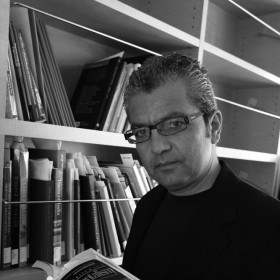
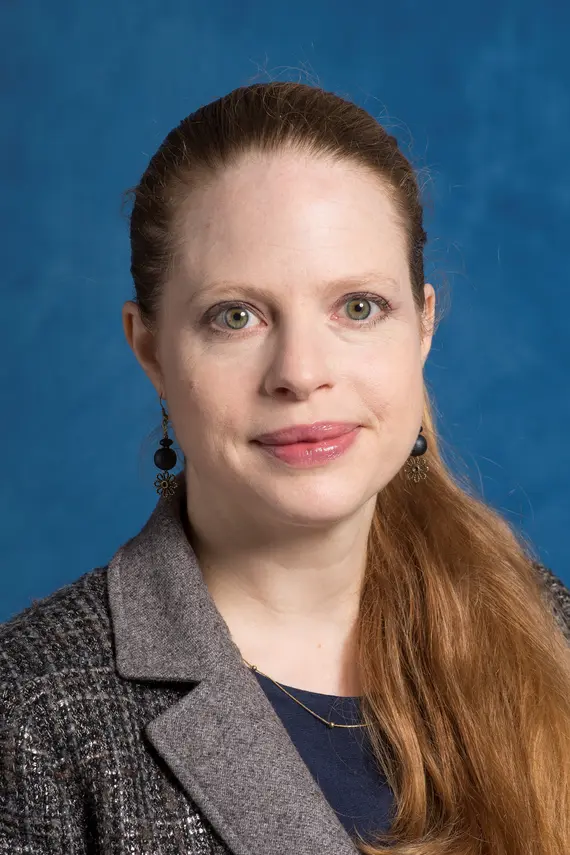
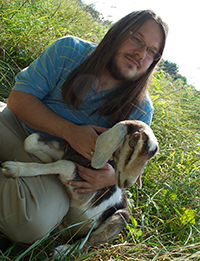
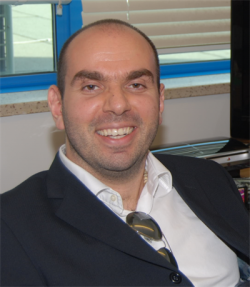
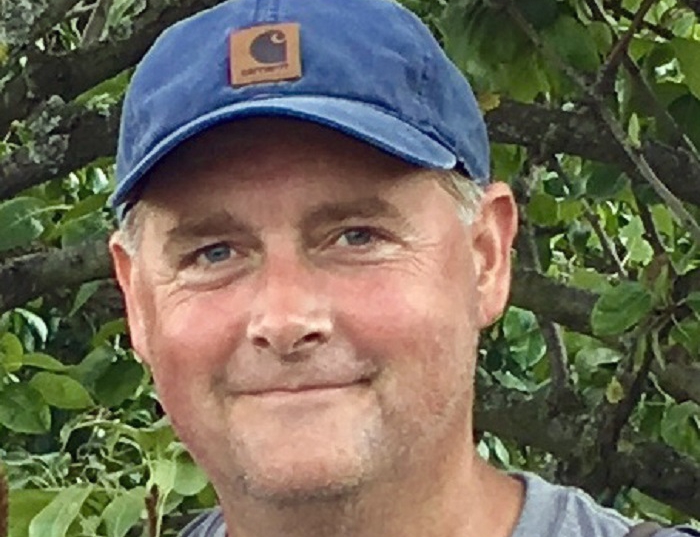
Elif BAŞTÜRK is an Associate Professor at Kırşehir Ahi Evran University's Faculty of Arts and Sciences, Department of Archaeology, specializing in Settlement Archaeology, Hittite studies, and Early Bronze Age ceramics. With a PhD from Ege University (2014), she has led excavations at Tanır Yassıhöyük since 2022 and participated in major projects across Anatolia. Education: PhD in Protohistory and Near Eastern Archaeology, Ege University (2014) MA in Protohistory and Near Eastern Archaeology, Ege University (2006) BA in Archaeology, Ege University (2003) Research Focus: Her work examines archaeological transitions in Anatolia and the Near East, particularly ceramic traditions, settlement patterns, and Assyrian influence during the Bronze and Iron Ages. She employs statistical and technological methods to analyze material culture. Projects: Notable projects include the Tanır Yassıhöyük excavations (2021–present), Assyrian trade influence studies in Afşin-Elbistan plain, and documentation of Early Bronze Age ceramics in Siirt Başur Höyük. She has also led regional surveys threatened by the Ilısu Dam. Publications: Recent outputs include 2025 studies on Iron Age ceramics and Assyrian mill technology, alongside excavation reports from 2016–2024. Her work bridges field archaeology with material analysis, contributing to understanding cultural dynamics in ancient Anatolia.
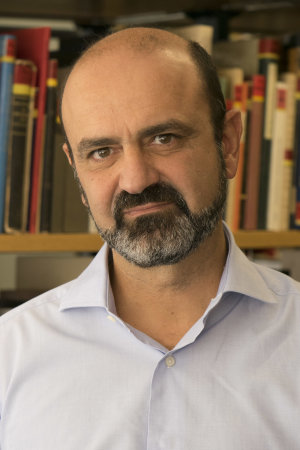
Ali Mousavi is Assistant Professor of Iranian Archaeology in UCLA’s Department of Near Eastern Languages and Cultures and a core faculty member of the Cotsen Institute of Archaeology. A Berkeley PhD and former fellow of the Smithsonian, Maison de l’Orient and Global Heritage Fund, he has directed excavations and UNESCO World-Heritage projects at Pasargadae, Bam, Susa, Sultaniyeh and Turang Tepe and authored prize-winning volumes Ancient Iran from the Air and Persepolis: Discovery and Afterlife of a World Wonder . Education PhD, Near Eastern Studies (Archaeology), University of California, Berkeley (2005) MA, Archaeology, History and Languages of Old World Civilizations, Université Lyon II, France (1997) BA, Archaeology and Art History of Europe and the East Mediterranean, Université Lyon II, France (1996) Research interests span the archaeology and art history of Iran from the Neolithic to the early-20th century, with particular focus on Achaemenid and Sasanian monumental architecture, ancient irrigation (qanats), landscape archaeology, digital heritage, and the modern historiography of Iranian archaeology. His field projects integrate remote sensing, epigraphy, GIS and conservation science to investigate imperial capitals, rock-cut monuments and water-management systems across the Iranian plateau. Across more than 30 peer-reviewed articles and book chapters, Mousavi has re-examined dating criteria for Achaemenid stone monuments, analysed royal inscriptions as visual displays, traced medieval Persian pilgrims’ graffiti at ancient sites, and produced synthetic archaeological surveys of the Sasanian empire and the Central Alborz Iron-Age cultures. The corpus reflects a sustained engagement with primary field data, archival research and critical historiography of 19th- and 20th-century excavations. Selected honours Ehsan Yarshater Book Award (2014) Iranian Ministry of Culture World Book Award (2014) Leon Levy – Shelby White publication grant (2008) UNESCO award for World-Heritage nomination files (2003) Iran Heritage Foundation field-work award (2003) Guitty Azarpay Fellowship, UC Berkeley (2000-2003) IFRI Fellowship, Paris (1998) At UCLA he offers undergraduate courses “Archaeology of Iran” and “Ancient Cities of Iran (4000 BC-AD 1900)” and mentors graduate researchers in the Cotsen Institute. His grants and fellowships from NSF-equivalent European and American agencies underwrite both field seasons and publication of critical archaeological corpora, while his service on Iranian, UNESCO and international heritage boards continues to link scholarly output with heritage-management policy.
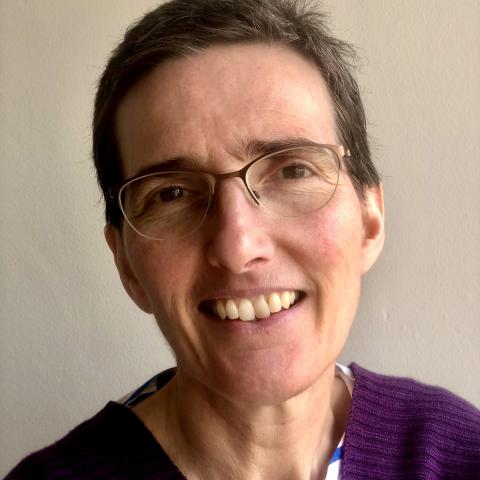
Ian Ewart is an Associate Professor at the University of Reading's School of the Built Environment, serving as Head of Construction and Engineering Management and Research Group Lead for Organisation, People and Technology. He chairs the Research Ethics Committee since 2016 and supervises undergraduate/postgraduate dissertations. His academic journey spans engineering and anthropology: DPhil Social and Cultural Anthropology, University of Oxford, St Hugh's College (2007-2012) MSc Material Anthropology and Museum Ethnography, University of Oxford, St Hugh's College (2006-2007) BA (Hons) Archaeology and Anthropology, University of Oxford, Harris Manchester College (2003-2006) Diploma in Management Studies, University of the West of England (1990-1994) BEng (Hons) Mechanical Engineering, Staffordshire University (1983-1987) Ewart's research integrates ethnographic methods with digital technology studies, examining human-technology interactions in construction and domestic settings. His work bridges engineering practice and social anthropology, focusing on skill transmission, sustainable design, and multisensory experiences in virtual environments. Publications from 2025-2013 reveal a dominant trajectory in digital twins for socio-ecological sustainability, VR-based occupant behavior prediction, and HBIM for heritage conservation. The corpus demonstrates consistent cross-disciplinary innovation, merging archaeological reconstructions with healthcare applications while maintaining anthropological rigor. Key recognition: ESRC Future Research Leader fellowship (2013) for Designing Healthy Homes project He supervises PhD candidates like Afolabi Dania (Nigerian sustainable construction) and Joanna Hull (Heritage BIM), leveraging ESRC funding for ethnography-VR health studies. His grants emphasize participatory design and real-world impact assessment in built environments. Leaders the Organisation, People and Technology research group, developing multisensory Roman town reconstructions with sound/smell integration to advance archaeological and architectural experience modeling.
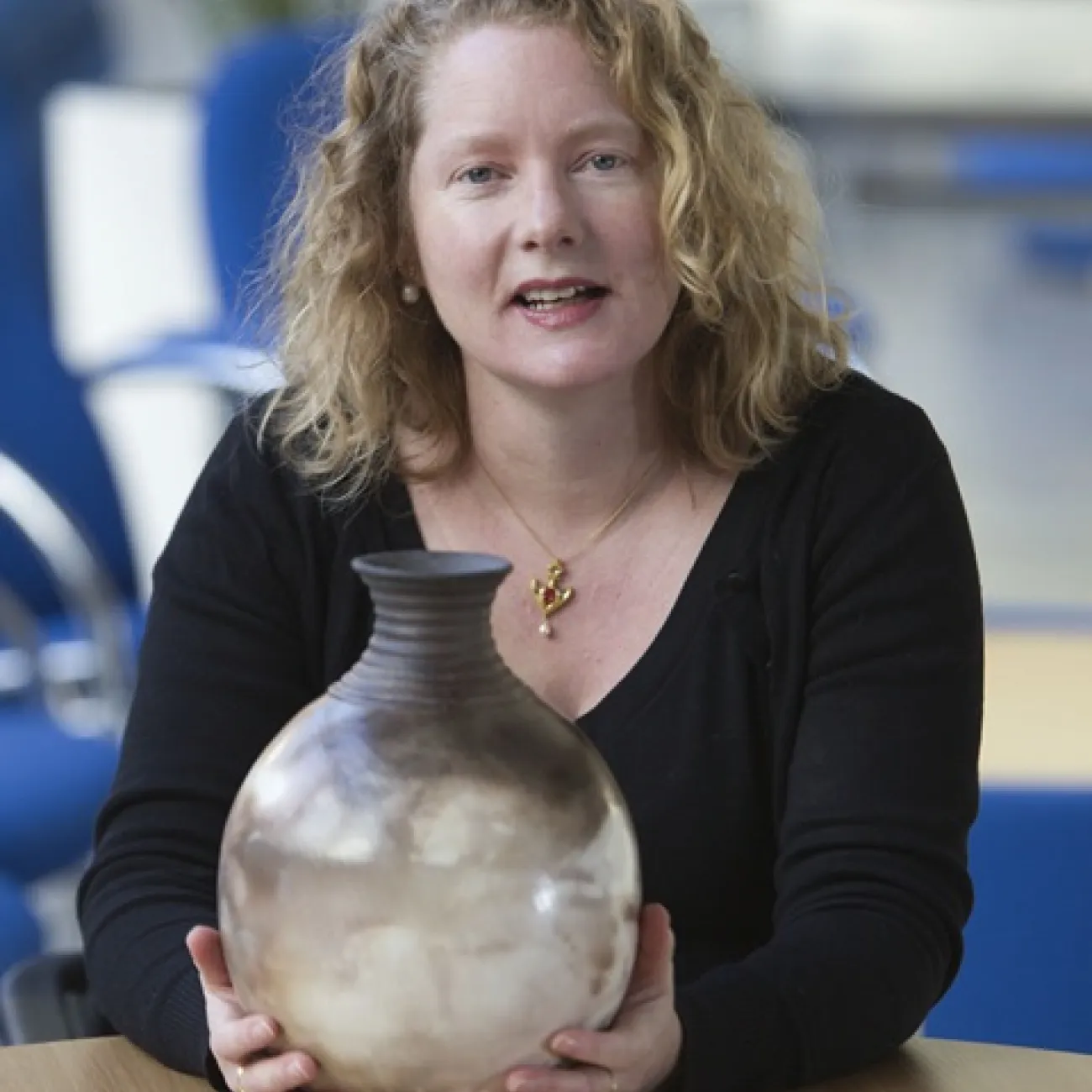
Prof. Dr. Mona Hess is a Full Professor and Chairholder of the Chair of Digital Heritage Technologies at Otto-Friedrich-Universität Bamberg , Germany. She directs the M.Sc. Digital Technologies in Heritage Conservation program and serves as Vice-Speaker at the Centre for Heritage Conservation Studies and Technologies (KDWT) . Her work bridges digital documentation, 3D imaging, and heritage conservation, with a focus on cultural landscapes, historic timber, and artifact preservation. Education : Dipl.-Ing. in Architecture (TUM), M.A. in Heritage Conservation (University of Bamberg), Ph.D. in 3D Imaging Metrology for Cultural Heritage (University College London, 2015) Her research spans 3D laser scanning, photogrammetry, SLAM-based recording , and digital twin environments , particularly for structural monitoring, museum artifacts, and historic gardens. She leads projects like VirScan3D (virtual laser scanner simulator) and 3DPetrie (UCL Petrie Museum 3D models) and collaborates on international initiatives such as the British Museum War Canoe digital repatriation. Recent publications emphasize automated defect analysis in timber, multi-modal imaging for ceiling art, and linked open data in heritage. She has contributed to CIPA ICOMOS as an expert member and will chair their Education and Dissemination Commission (2024). Scientific Awards : Fellow of the UK Higher Education Academy (2016), Associate Fellow of the Higher Education Academy (2014) She teaches courses in Digital Object Recording , 3D Spatial Data Modeling , and Science Communication , and organizes international summer schools on heritage monitoring. Her lab, the Chair of Digital Heritage Technologies , collaborates with institutions in Italy, Spain, and the UK, focusing on interdisciplinary innovation in heritage conservation.
Jay Strader is a Professor in the Department of Physics and Astronomy at Michigan State University, where he serves as Graduate Director for the astronomy PhD program and Associate Chair for astronomy. His research focuses on compact objects, particularly black holes and neutron stars in globular clusters, neutron star binaries in Fermi gamma-ray sources, and intermediate-mass black holes. He has received a Packard Fellowship for Science and Engineering and grants from NSF and NASA. His research group includes postdoc Ryan Urquhart, graduate students Thomas Do and Rebecca Kyer, and several undergraduates, with past students like Teresa Panurach (now director of NoVEL Consortium) and Samuel Swihart (NRC fellow at Naval Research Lab). Education: PhD in Astronomy, UC-Santa Cruz/Lick Observatory Awards: Packard Fellowship Collaborations: Member of Rubin Observatory's Stars, Milky Way, and Local Volume science collaboration since 2008 Previous Positions: Hubble Fellow and Menzel Fellow at Harvard-Smithsonian Center for Astrophysics (2007-2012) Program Initiatives: Co-founder of PAREDS program for early research opportunities at MSU His work has been supported by NSF and NASA grants, and he has contributed to studies on black holes in M22, hypervelocity globular clusters around M87, and transitional millisecond pulsars. His group collaborates with Laura Chomiuk and contributes to data catalogs like the M31 globular cluster velocity dispersion database.
Radu Iovita is an Associate Professor in the Department of Anthropology at New York University. Previously, he held positions at the University of Tübingen (until 2023) and the Leibniz Research Institute for Archaeology in Germany. His research focuses on Paleolithic archaeology, human-environmental interactions, and stone tool technology, with a specific emphasis on the Eurasian loess steppe. He leads the EU-funded PALAEOSILKROAD project in Kazakhstan, investigating human dispersals during the Late Pleistocene. His Anthrotopography lab combines microscopic analysis of tool use and remote sensing to reconstruct past landscapes. Education: PhD in Anthropology (University of Pennsylvania, 2008), MPhil in Archaeology (University of Cambridge, 2002), AB in Anthropology (Harvard University, 2001). Key grants include an ERC Starting Grant (2017–2022). Research interests span lithic technology, experimental archaeology, and geoarchaeological methods. Recent work includes discoveries of Paleolithic sites in Kazakhstan, studies on Neanderthal adhesive use, and AI-driven analysis of use-wear patterns. Collaborations involve institutions like ETH Zurich and the University of Tübingen. He is actively involved in field projects in Central Asia and lab-based experimental studies.
Ketika Garg is a Postdoctoral Scholar Research Associate in the Division of the Humanities and Social Sciences at the California Institute of Technology (Caltech), with an office in the Broad Center for Biological Sciences. Her research focuses on the interplay between individual and social decisions, using experimental and computational methods to explore how social environments influence decision-making and collective behavior. She investigates contexts ranging from traditional foraging paradigms to modern social media landscapes, developing innovative experimental frameworks to study these dynamics. Her research interests span computational neuroscience, social media analysis, and collective behavior, with a particular emphasis on understanding exploration-exploitation trade-offs in both natural and digital environments. She has contributed to studies on hunter-gatherer foraging networks, online toxicity dynamics, and the evolution of search strategies in collective foraging systems. Her work bridges disciplines such as psychology, ecology, and computer science to address fundamental questions in decision-making and social interaction. Dr. Garg’s publications reflect her interdisciplinary approach, covering topics like synergy in collective problem-solving, the roots of online toxicity, and the application of Lévy walks in virtual foraging experiments. While no formal awards or grants are explicitly listed in the provided materials, her research trajectory demonstrates a commitment to advancing methodologies in computational social science. Contact: kgarg@caltech.edu Office: Broad Center for Biological Sciences (96) Phone: 626-395-1755
Søren Munch Kristiansen is an Associate Professor in the Department of Geoscience at Aarhus University, Faculty of Natural Sciences. His interdisciplinary research bridges geoscience and archaeology, focusing on the complex interactions between soil, water, and human societies across time. He is actively engaged in transdisciplinary projects involving geoarchaeology, groundwater, and public health. Research Interests: His work centers on how soil and groundwater have shaped human prehistory and continue to influence modern life. Key areas include safe drinking water from a lifelong perspective, geoarchaeological prospection, Viking Age settlements, and the application of geophysical and geochemical methods in archaeological contexts. He is particularly interested in novel, interdisciplinary methodologies. Recent Research Trends: His recent publications reveal a strong focus on integrating geophysical data (e.g., GPR, borehole databases) with archaeological interpretation, especially in 3D urban modeling and landscape change. Themes include Viking Age sites, interglacial deposits, and anthropogenic soil modifications. His work increasingly employs machine learning and large-scale data synthesis. Scientific Awards: No awards mentioned in the provided text. Advising and Grants: While specific students are not listed, he leads and participates in multiple funded research projects, indicating an active supervisory role. His grants span from 2016 to 2024, including projects like TITAN, SAGA, and 'Fingerprinting displaced molecular substances,' highlighting sustained funding and leadership in interdisciplinary geoscience-archaeology research. Labs and Teams: He is involved in collaborative networks such as the Soil Science & Archaeo-geophysics Alliance (SAGA), suggesting leadership in interdisciplinary research teams. His work often involves multi-proxy analyses and international collaborations, particularly in Scandinavian archaeological geophysics.
Christos Gatzidis serves as Executive Dean of Bournemouth University's Faculty of Science and Technology since October 2023, overseeing six departments including Computing and Informatics, Creative Technology, and Psychology. Previously Deputy Dean (2021-2023) and Head of Creative Technology Department (2016-2021), he was appointed Professor in Creative Technology in November 2019. The Faculty leads five REF Units of Assessment and secures funding from AHRC, NIHR, and Innovate UK for research spanning digital healthcare, gaming technologies, and cultural heritage applications. His educational qualifications include: PhD in Information Science, City University London (2010) PG Cert in Research Degree Supervision, Bournemouth University (2010) MA in Computer Animation, Teesside University (2003) BSc (Hons) in Computer Studies (Visualisation), University of Derby (2002) Professor Gatzidis specializes in computer graphics with research spanning virtual reality, serious games, and digital healthcare applications. His work bridges technical innovation and practical implementation, particularly in mindfulness prototypes for healthcare and stroke rehabilitation systems. Current projects focus on the multidisciplinary application of gaming technologies in medical contexts, emphasizing user experience and therapeutic outcomes through collaborations with industry partners. His publication record (2014-2025) demonstrates evolving expertise from foundational computer graphics research in terrain generation and deformation to applied work in healthcare, cultural heritage, and music education. Key trends include virtual reality for therapeutic mindfulness, usability studies in mobile gaming, and digital cultural presentation techniques, reflecting a trajectory toward socially impactful technological solutions with strong industry translation. No scientific awards are documented in the provided information. He has supervised PhD students and secured competitive research funding, including two Innovate UK Knowledge Transfer Partnerships. His principal investigator role in a virtual reality mindfulness prototype project exemplifies his approach to translating academic research into practical industry solutions, with current focus on expanding knowledge exchange activities to support the University's civic engagement mission. As Executive Dean, he leads faculty-wide research strategy across six departments, fostering interdisciplinary collaborations particularly in digital healthcare and cultural heritage. His personal research integrates computer graphics expertise with clinical applications through partnerships with healthcare providers and technology companies, driving innovation in therapeutic VR systems and educational gaming platforms.
Adam T. Smith is Distinguished Professor of Arts and Sciences in Anthropology at Cornell University, where he has been faculty since 2011. He is a leading scholar in Eurasian archaeology with a focus on the South Caucasus, particularly Armenia. Smith co-founded Project ArAGATS, a long-term archaeological program in Armenia, and co-directs the Aragats Foundation and Caucasus Heritage Watch, organizations dedicated to heritage preservation in the region. His educational background includes: Ph.D. (1996) in Anthropology from the University of Arizona M.A. (1993) in Anthropology from the University of Arizona M.Phil. (1991) in Social and Political Science from the University of Cambridge B.A. (1990) in Anthropology and Political Science from Brown University Smith's research centers on the role of material culture in political life, examining how objects, landscapes, and built environments shape political procedures and values. His work spans archaeological theory, political anthropology, and heritage studies, with a particular focus on the South Caucasus region. He investigates the long-term social and political dynamics from the Bronze Age to contemporary times, exploring themes of sovereignty, heritage preservation, and the political dimensions of material culture. His approach integrates theoretical frameworks with empirical fieldwork to understand political power through material evidence. His recent publications demonstrate a consistent focus on the archaeology of power and politics in Eurasia, with increasing attention to contemporary heritage issues. Smith's work bridges theoretical frameworks with empirical research, particularly through his long-term fieldwork in Armenia and the Caucasus region. His scholarship shows a progression from studies of ancient political systems to contemporary issues of cultural heritage and political violence, with a strong emphasis on ethical engagement with archaeological practice and heritage management. Smith has received numerous prestigious awards including: 2023-2025 Fellow, Milstein Program in Technology and Humanity, Cornell University 2023 Finalist, Falling Walls Science Breakthrough of the Year, Social Sciences and Humanities 2023 Certificate of Communal Partnership, St. James AME Zion Church, Ithaca NY 2010-2011 John Simon Guggenheim Memorial Foundation Fellow 2010-2011 Fellow, Cornell University Society for the Humanities 2006-2007 Fellow, Howard Foundation Smith has directed multiple field seasons and collaborative research projects in Armenia, involving both American and Armenian scholars. His work with Project ArAGATS has received continuous support over two decades, while Caucasus Heritage Watch represents a newer initiative addressing urgent heritage preservation needs through satellite monitoring. He has supervised numerous graduate students and secured significant research funding for his projects, demonstrating strong leadership in both academic and community-engaged research contexts. Smith leads several research initiatives including Project ArAGATS, the Aragats Foundation, and Caucasus Heritage Watch. His Landscapes and Objects Laboratory at Cornell serves as a hub for material culture studies, while his work with the St. James AME Zion Community Excavations demonstrates his commitment to community-engaged archaeology. These teams bring together interdisciplinary scholars to address complex questions about political power, material culture, and heritage preservation across time, with particular attention to how archaeological practice can engage with contemporary political issues and community needs.
Bryan K. Hanks is an Associate Professor in the Department of Anthropology at the University of Pittsburgh's Dietrich School of Arts and Sciences. An archaeologist specializing in prehistoric Eurasian societies, his research spans from the Bronze Age steppes of Russia to Neolithic villages in the Balkans and Native American pit house settlements in Idaho. Education: Dr. Hanks earned his Ph.D. from the University of Cambridge in 2003, establishing his foundation in archaeological research. Research Interests: His work focuses on late prehistoric societies , particularly examining mobile pastoralism , early metallurgy , and settlement patterning . His projects integrate geophysical and geochemical methods to understand subsistence strategies, craft production, and social organization across Eurasia and North America. Research Trends: His publications reveal a consistent focus on Bronze Age societies of the Eurasian steppes, with particular attention to mortuary practices , metallurgical developments , and social complexity . Recent work has expanded to include Neolithic European settlements and Native American archaeology in the American West. Collaborations & Training: Dr. Hanks maintains extensive international collaborations with institutions in Russia, Serbia, the UK, and across the US. He is deeply committed to student training , regularly including graduate and undergraduate students in his international field projects and offering local geophysics training in Pittsburgh.
Prof. Dr. Diamantis Panagiotopoulos is a Professor of Classical Archaeology at Heidelberg University's Institute of Classical Archaeology, serving as its Managing Director since 2012. His academic foundation includes a doctorate from Heidelberg University (1996) and a habilitation from Salzburg University (2003), both focused on Aegean Bronze Age archaeology. Panagiotopoulos's research explores Aegean Bronze Age societies, with emphasis on seal practices, iconography, cultural interactions, and archaeological landscapes. His work integrates theoretical frameworks with material culture analysis to examine Minoan-Mycenaean administration, transcultural exchanges in the Eastern Mediterranean, and heritage preservation strategies. His publications reflect a strong trajectory toward computational methods in archaeology and interdisciplinary approaches, with recent articles leveraging digital tools for seal analysis and landscape modeling. Earlier works established foundations in ritual studies and cross-cultural encounters. Awards include fellowships from the German Archaeological Institute (DAI), DAAD, and DFG, recognizing his contributions to Bronze Age archaeology. He directs excavations at Koumasa (Crete) and co-leads the Heidelberg Corpus of Minoan and Mycenaean Seals.
Laura Blecha is an Associate Professor in the Physics Department at the University of Florida, specializing in astrophysics. Her research focuses on supermassive black hole (SMBH) and galaxy evolution through numerical simulations and observational collaborations. PhD from Harvard University (2012) Full Member of NANOGrav pulsar timing collaboration Associate Member of the LISA Consortium Her work spans three primary areas: SMBH Formation & Evolution : Origins of SMBHs, galaxy merger-driven growth, and intermediate-mass black hole demographics AGN Fueling & Feedback : Hydrodynamic simulations of AGN activation mechanisms and observational bias in AGN detection Binary SMBH Dynamics : Gravitational wave recoil effects, three-body interactions, and pulsar timing array detection strategies Recent publications (2025) focus on dual AGN detection with Keck AO, JWST studies of primordial galaxies, and NANOGrav gravitational wave background analysis. Her group develops sub-grid models for SMBH dynamics in cosmological simulations and investigates signatures of black hole mergers in galaxy clusters. Laura's research combines computational methods (Illustris, BRAHMA simulations) with observational validation through: JWST NIRSpec spectroscopy Pulsar Timing Array analysis Multiwavelength imaging campaigns
Annetta Alexandridis is an Associate Professor in the Department of History of Art and Visual Studies at Cornell University, affiliated with the College of Arts and Sciences and the Institute for European Studies. She earned her Ph.D. from Ludwig-Maximilians-Universität Munich, where her dissertation won the Munich University Association's Förderpreis and a German Archaeological Institute travel scholarship. Her research spans Roman sculpture, Greek mythological iconography, and intersections of gender/animal studies with archaeology. She examines how media like plaster casts and photographs shape archaeological knowledge, particularly through colonialist and Enlightenment discourses. Her current work investigates human-animal boundaries in antiquity and co-directs the Harvard-Cornell Sardis excavation funerary culture survey. Key publications include Destroy the Copy – Plaster Cast Collections in the 19th and 20th Centuries (2022) Mensch und Tier in der Antike (2008) Archäologie der Photographie (2004) Die Frauen des römischen Kaiserhauses (2004) Scientific honors include: 2015–16 Cornell Society for the Humanities Fellow 2005–06 Harvard Center for Hellenic Studies Junior Fellow 1997–98 German Archaeological Institute travel scholarship Munich University Association Förderpreis for dissertation She co-curates Cornell's plaster cast collection with Verity Platt, advises cross-departmental dissertations, and co-ordinates graduate exchange with Freiburg University. Her teaching integrates material analysis with theoretical approaches to antiquity.
Professor Alison Gascoigne serves as Head of Department in the Department of Archaeology within the Faculty of Arts and Humanities at the University of Southampton. A specialist in Egyptian archaeology with particular expertise in the Islamic world, she directs significant fieldwork projects and supervises multiple PhD students while maintaining an active research profile. Her research interests focus on the archaeology of the Islamic world, archaeological ceramics, and Medieval Egyptian urbanism. Gascoigne examines urban development patterns from late antiquity through the medieval period, with particular attention to ceramic production systems and environmental interactions. Her interdisciplinary approach bridges archaeology, environmental science, and historical studies to understand societal transformations. Recent publications reveal strong trends in urban archaeology (particularly Fustat and Tinnis), climate-archaeology intersections, and ceramic analysis. Her work increasingly integrates paleoclimatic data with archaeological evidence to explore societal resilience during environmental change, while maintaining deep engagement with Islamic-era material culture across Egypt and the Near East. Her scientific recognition includes prestigious British Academy fellowships: British Academy Reckitt Travelling Fellowship in Archaeology British Academy Postdoctoral Research Fellowship Gascoigne actively supervises doctoral research and has secured significant funding from the British Academy, Fondation Max Van Berchem, and The Barakat Trust for projects including the Tell Tinnis survey and educational material development. Her external engagements include editorial review for Iran and Journal of Islamic Archaeology, chairing Arts & Humanities Research Council panels, and presenting invited lectures internationally on topics ranging from pottery production to urban water systems in medieval Egypt. She leads research groups including the Centre for Medieval and Renaissance Culture, Southampton Marine and Maritime Institute, and Coastal Communities Ocean Justice initiatives, directing collaborative interdisciplinary work that bridges archaeological practice with contemporary environmental concerns.