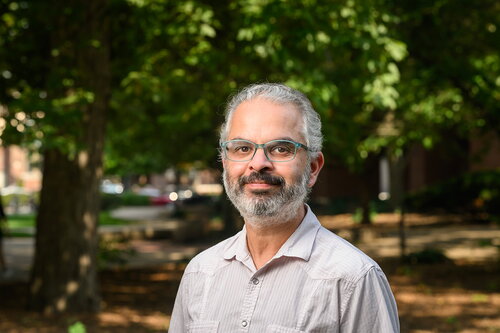
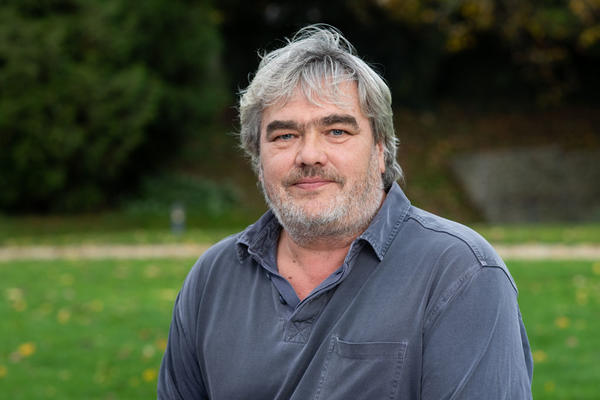
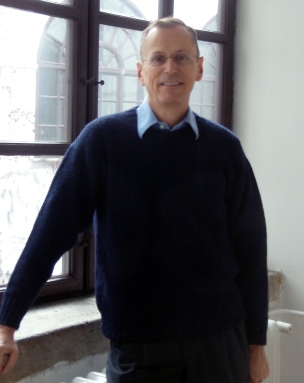
Steffen Patzold is a Professor for Medieval History and Auxiliary Sciences at the Department of History, Faculty of Philosophy, University of Tübingen, since 2008. He previously held research and teaching positions at the University of Hamburg (1999–2006), Max Planck Institute for European Legal History (2007), and University of Kassel (2007–2008). His research focuses include the Carolingian period, political and ecclesiastical history, monasticism, perception patterns in the Middle Ages, and interdisciplinary projects like the DFG-funded 'Migration and Mobility in Late Antiquity' and Collaborative Research Center SFB 923 'Threatened Orders.' Education: University of Hamburg (History, Art History, Journalism, 1996–1999; PhD, 2000) Affiliations: Heidelberg Academy of Sciences, SFB 923 subprojects E02/F02, DFG Centre for Advanced Study in Humanities His recent publications analyze Carolingian political structures, feudal systems, historical semantics, and interdisciplinary topics like archaeogenetics. Key projects examine local societies in Carolingian Europe, bishop networks, and crisis management in early medieval orders. He collaborates extensively in edited volumes and international journals, particularly on comparative medieval studies.
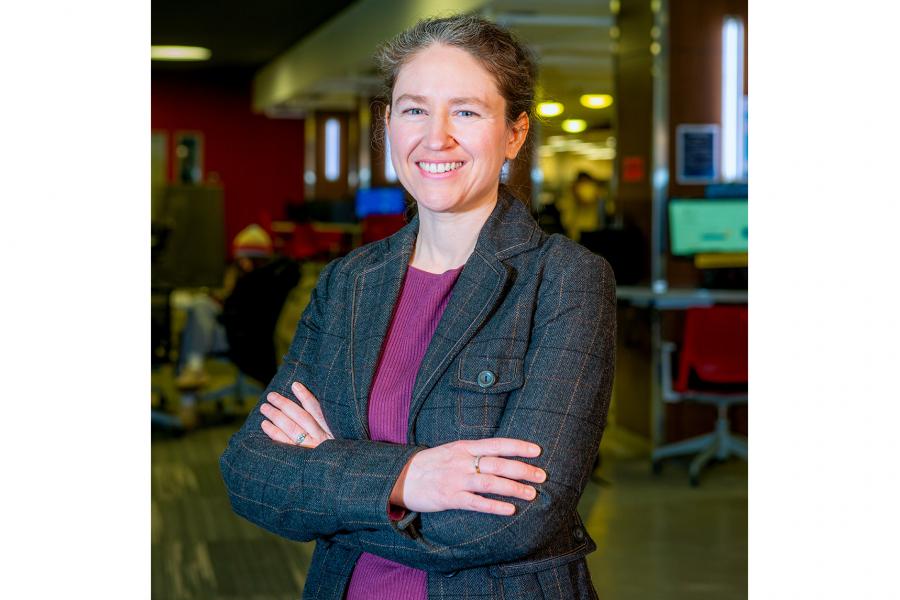
Julia Gamble is an Associate Professor in the Department of Anthropology at the University of Manitoba's Faculty of Arts. A bioarchaeologist and dental anthropologist, her research focuses on medieval European populations, particularly stress and health patterns across the life course. She employs advanced techniques like 3D scanning, laser microscopy, and palaeoproteomics for analysis. Education: PhD in Anthropology, University of Manitoba (2015) MA in European Historical Archaeology, University of Sheffield (2006) BA Honours in Anthropology, University of Winnipeg (2005) Research Interests: Her work bridges dental anthropology, developmental origins of health/disease, palaeodemography, and palaeopathology. She investigates correlations between dental growth disruptions and adult skeletal health markers, with recent collaborations on Avar period bioarchaeology and repatriation efforts. Recent Publications: Spanning 2016–2025, her articles address Black Death genetics, enamel defect analysis, digital osteology education, and sex estimation from proteomics. These studies integrate ancient DNA, microscopy, and historical contextualization. Grants & Affiliations: Principal Investigator for SSHRC-funded projects on early medieval Austria and co-Investigator for repatriation research. Affiliated with the Earth Materials and Archaeometry Centre (EMAC). Teaching: Courses include human osteology, bioarchaeology, and evolutionary anthropology. Actively involved in fieldwork in Europe and Canada.
Kyle Harper is a Professor of Classics and Letters and the G.T. and Libby Blankenship Chair in the History of Liberty at the University of Oklahoma. He serves as Senior Advisor to the President and is Provost Emeritus at his alma mater. Harper’s research bridges the natural sciences and historical analysis, focusing on the interplay between climate, disease, and human societies. His work examines how pandemics like the Justinianic Plague and environmental shifts shaped the Roman Empire’s decline, as well as broader themes in human ecological impact and biodiversity loss. He has authored four influential books, including The Fate of Rome and Plagues upon the Earth , which integrate historical, climatological, and biological perspectives. Harper’s accolades include Guggenheim and Andrew Carnegie Fellowships, and his research often involves interdisciplinary collaborations, such as tracing ancient marble provenance through geochemistry. Current projects include The Last Animal , a global history of human-animal interactions and their environmental consequences. Research Interests : Historical epidemiology and pandemic dynamics Climate change impacts on ancient societies Human ecological transformation and biodiversity Late Antiquity and Roman social history Interdisciplinary methods in historical research Awards and Honors : Guggenheim Fellowship (2025) Andrew Carnegie Fellowship (2020) James Henry Breasted Prize (2011) PROSE Award in History of Science (2021) Recent Work : Harper’s 2025 paper on the origins of the Justinianic Plague reinterprets its spread via the Hephthalite Empire, while his forthcoming book The Last Animal addresses anthropogenic biodiversity loss. He also collaborates on projects like the Nazareth Inscription’s marble provenance analysis, demonstrating the utility of geochemistry in historical research.
Prof. Dr. Elisabeth Timm holds the Chair of Cultural Anthropology at the Institute for Cultural Anthropology and European Ethnology , University of Münster. With a career spanning decades, her work bridges academic research with public engagement through projects like "Erzählen Deine Gene Dir Deine Geschichte?!" , which won the 2024 Citizen-Science-Preis der Universitätsstiftung Münster. She critiques political movements opposing gender and race theory while maintaining scientific rigor. Research Focus: Her scholarship examines genealogy as knowledge practice, single-family homes as social ontologies, and the intersections of culture, science, and politics. She leads interdisciplinary projects connecting archives, museums, and citizen science initiatives. Scientific Awards: Citizen-Science-Preis (2024) Dr. Fritz Landenberger-Preis (2009) Research Fellowship in Vienna (2009) Public Engagement: Regularly participates in exhibitions like "Familienmacher" (Österreichisches Museum für Volkskunde) and debates on topics such as genetic data ethics and urban development.
Elena Irene Zavala serves as an Assistant Professor in the Section of Forensic Genetics and Guest Researcher at the Globe Institute, Section for Geogenetics at the University of Copenhagen's Faculty of Health and Medical Sciences. Her work bridges forensic science with paleogenetic research, focusing on ancient human DNA analysis and population genetics. Dr. Zavala's research interests span ancient DNA analysis, paleogenetics, forensic genetics, human evolution, population genetics, archaeogenetics, and anthropological genetics. Her work demonstrates a consistent focus on understanding human evolutionary history through genetic analysis, with particular emphasis on migration patterns, adaptation to diverse environments, and the development of methodological approaches for analyzing degraded DNA samples. She has made significant contributions to understanding Neanderthal admixture timing and early human dispersal into Europe. Her publication record shows a strong trend toward high-impact interdisciplinary research, with numerous publications in Nature and other top-tier journals. Her work frequently involves international collaborations across multiple institutions, reflecting the global nature of paleogenetic research. A notable pattern in her recent publications is the integration of multiple analytical approaches (genomic, isotopic, archaeological) to reconstruct human history. Young Investigator Award (2019) Miller Postdoctoral Fellowship (2022) Peter M. Schneider ISFG Fellowship (2023) Novo Nordisk Hallas-Møller Emerging Investigator Grant (2024) Dr. Zavala has secured significant research funding including the prestigious Novo Nordisk Hallas-Møller Emerging Investigator Grant in 2024, indicating strong institutional support for her research program. Her work has garnered substantial attention with multiple publications being picked up by hundreds of news outlets and referenced across social media platforms and academic networks. As a Guest Researcher at the Globe Institute's Section for Geogenetics, Dr. Zavala collaborates with interdisciplinary teams focused on ancient DNA and human evolutionary history. Her research often involves large international collaborations, as evidenced by the extensive author lists on her publications, suggesting she works within substantial research networks dedicated to paleogenetic investigations.
Max Planck Institute for Social AnthropologyGermany
Tatjana Thelen is a Full Professor of Social and Cultural Anthropology at the University of Vienna and holds fellowships at the Institute for Advanced Study (IAS) in Paris and the FMSH (Fondation Maison des Sciences de l'homme). She serves as Deputy Director of the Vienna Doctoral School of Social Sciences and co-directs the Research Platform for the Study of Transformations and Eastern Europe. Her work bridges kinship studies , care ethics , and state anthropology , with a focus on post-socialist Europe and interdisciplinary critique of Western epistemologies. Academic Leadership : Deputy Director of Vienna Doctoral School; Co-founder of CAST (Care and State) network; Director of Vienna Ethnography Laboratories Research Themes : Kinship-state interplay, care practices in political belonging, post-socialist transformation, relational theory, social security frameworks Her relational anthropology examines how care responsibilities shape state boundaries and generate inclusion/exclusion dynamics through kinship measurements. She critiques the Western assumption that modernity diminishes political kinship, analyzing its persistence in citizenship, property relations, and welfare systems. Current projects explore political atmospheres and their role in state boundary demarcation. Scientific Recognition : Distinguished Visiting Austrian Chair, Stanford University (2023) Fellow, Institute for Advanced Study (IAS), Paris (2020-21) Fellow, Center for Interdisciplinary Research (ZiF), Bielefeld (2016-17) She has supervised PhD projects on topics including: Ukrainian female labor migration and left-behind families Corporate Social Responsibility in Turkey Ecological villages in China Kinship-politics conceptual history State care in socialist Hungary Rural Hungarian state rescaling Serbian local state practices
Max Planck Institute for Evolutionary AnthropologyGermany
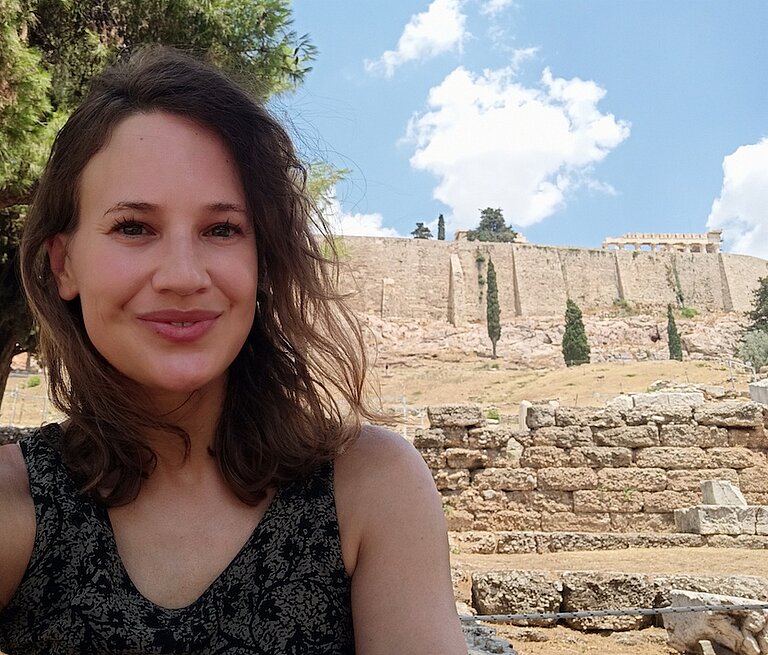
Alissa Mittnik is a Group Leader at the Department of Archaeogenetics, Max Planck Institute for Evolutionary Anthropology in Leipzig, Germany. She leads the 'MySocialBeIng' group, focusing on integrating archaeoscience to reconstruct social systems like kinship, gender roles, and mobility patterns in ancient societies. Her work bridges genetics, archaeology, and cultural studies to understand prehistoric populations. Education: PhD in 2016: University of Tübingen (Investigating Social Dynamics via Ancient DNA) Studies in Biology at Washington University (USA), University of Rostock, and University of Tübingen Research Interests: Genetic correlates of cultural transitions and social hierarchies Mobility in the ancient Mediterranean Archaeogenetic analysis of prehistoric populations Applications of ancient DNA to reconstruct migration and kinship networks Key Projects: Co-led the 'Times of Upheaval' project (2016-2018) on Bronze Age societal changes Published extensively on European, Mediterranean, and African prehistoric populations Lab/Team: Her group combines genomic, isotopic, and archaeological data to address questions about human migration, social organization, and cultural evolution.
Wiebke Kirleis is Professor for Environmental Archaeology and Archaeobotany at the Institute for Pre- and Protohistory, Faculty of Arts and Humanities, Christian-Albrechts-Universität zu Kiel (CAU). She has held this position since May 2014 and was previously a junior professor at the same university from 2008 to 2014. She is actively involved in major interdisciplinary research projects, including the Cluster of Excellence ROOTS and the Collaborative Research Centre 1266 'Scales of Transformation', where she serves as co-speaker and technical platform speaker. PhD in Natural Sciences, University of Göttingen (2002) Diploma in Biology, University of Göttingen (1998) Studies in Botany, Anthropology, and Environmental History, University of Göttingen (1990–1998) Wiebke Kirleis' research centers on the interaction between humans and plants during the late Pleistocene and Holocene, with a focus on plant economy, domestication, agricultural development, and landscape transformation. Her work explores how wild and cultivated plants were used for nutrition, ritual, and technical purposes, and how agricultural innovations such as ploughing and manuring impacted Central European landscapes. She has a strong geographical focus on Northern and Central Germany, Southeastern Europe, the Near and Middle East, and Southeast and East Asia, particularly Indonesia. Her methodological expertise includes archaeobotany (analysis of charred and waterlogged plant remains), palynology (pollen and spore analysis from sediment cores), and anthracology (study of charcoal remains). Her recent research includes studies on broomcorn millet diffusion, early farming in Scandinavia and Russia, and plant use in Bronze Age settlements across Europe and Turkey. She leads and collaborates on numerous interdisciplinary projects, emphasizing the integration of botanical data into broader archaeological narratives. Her publications reflect a consistent trend in environmental archaeology, focusing on plant domestication, agricultural transitions, and human-induced landscape change. Keywords across her recent work include archaeobotany, palynology, Neolithic and Bronze Age subsistence, and environmental reconstruction. Her research spans subfields such as food security, cultural transmission of plant use, early monumentality, and socio-economic aspects of prehistoric agriculture. Board member, Cluster of Excellence ROOTS Co-speaker, CRC 1266 'Scales of Transformation' Speaker, ROOTS Technical Platform Board member, Johanna-Mestorf-Akademie Chair, Scientific Advisory Board, Dithmarschen Stone Age Park (since 2023) Full member, German Archaeological Institute (DAI) Elected member, Commission for Archaeology of Non-European Cultures (KAAK) Wiebke Kirleis has supervised numerous research projects funded by the DFG and other agencies, including the Graduate School 'Human Development in Landscapes'. She has advised students and collaborated internationally with institutions in Italy, Norway, Indonesia, and Australia. Her leadership roles in academic self-administration include serving on planning, budget, and equality committees at CAU Kiel. She is committed to science communication, having launched the digital exhibition 'Alles bleibt anders' and produced educational films on archaeobotany. She is also involved in mentoring female postdocs through the via:mento program. She leads the archaeobotanical component in the 'Superfood' module of the SFB 1266 digital exhibition and is actively involved in the ROOTS Cluster’s Subcluster 'Dietary ROOTS'. Her lab and research team operate within the Institute for Pre- and Protohistory, contributing to the university’s strong focus on interdisciplinary landscape archaeology.
University of Illinois Urbana-ChampaignUnited States
Ripan S. Malhi is a Professor in the Department of Anthropology at the University of Illinois at Urbana-Champaign, with additional affiliations in Evolution, Ecology, and Behavior; American Indian Studies Program; and the Carl R. Woese Institute for Genomic Biology. His research integrates molecular anthropology and genomics to study human and animal evolutionary history. Primary Affiliation : Department of Anthropology, College of Liberal Arts & Sciences Collaborative Roles : Carl R. Woese Institute for Genomic Biology, American Indian Studies Program Malhi's work focuses on ancient DNA analysis, mutualistic human-animal relationships, and Indigenous population genomics. Recent studies include genomic investigations of historic lion populations, Pleistocene human-canid interactions in Alaska, and genetic continuity in the Blackfoot Confederacy. His lab employs interdisciplinary approaches combining archaeology, biology, and Indigenous community partnerships. Recent publications highlight collaborations with colleagues in genomics, ecology, and archaeology. Key themes include biomarker analysis, colonial-era biodiversity impacts, and prehistoric human migration patterns. The Malhi Molecular Anthropology Laboratory serves as a hub for these investigations. Contact: Department of Anthropology, 607 S. Mathews Ave., Urbana, IL 61801 | Phone: 217-265-0721 | Email: malhi@illinois.edu
Adrian Smith is a Professor of Zoology and Director of Graduate Studies (Progression) at the University of Oxford's Department of Zoology. His research focuses on the mechanisms of immunity to infectious diseases in vertebrates, particularly birds and mammals, with an emphasis on gut immunity and T lymphocyte biology. He leads the Infectious Disease and Comparative Immunology Section, investigating pathogens like Eimeria spp. and Salmonella enterica to develop immune interventions, including vaccines. Research Interests: His work spans comparative immunology, T cell subsets in protective immunity, and host-pathogen interactions. Current projects include pattern recognition receptors, γδ T cell biology, and parasite genetics for identifying protective antigens. He has pioneered reverse immunodynamics to identify protective immune targets. Scientific Awards: Recipient of the Daiwa Foundation Lord Adrian Prize (2007) for enteric T cell research and holds Jenner Investigator status for contributions to vaccine development. Advising & Grants: Supervises graduate students (e.g., Denise Wawman, Mirudula Elanchezhian) and collaborates with researchers like Dr. Divya Venkatesh (BBSRC Discovery Fellow). His lab integrates genomic, archaeological, and ecological approaches to understand immune evolution and pathogen dynamics in historical and modern populations. Labs/Teams: Active in the Smith & Bonsall Groups, focusing on avian immunology and pathogen biology. Collaborates across disciplines, including microbiome analysis, ancient DNA studies, and wildlife disease ecology.
Dr. Trish Biers serves as Collections Manager of the Duckworth Laboratory at the University of Cambridge's Department of Archaeology within the School of the Humanities and Social Sciences. As an Osteologist and Paleopathologist, she manages one of the world's most significant anthropological collections while maintaining an active research profile in bioarchaeology and museum ethics. Her research focuses on the ethical considerations surrounding human remains in archaeological contexts, with particular expertise in osteoarchaeology, skeletal biology, and the socio-political dimensions of past populations. Biers has made significant contributions to understanding the handling of human remains in museum settings, exploring complex issues around repatriation, display ethics, and the cultural significance of ancestral remains across diverse geographical contexts including Britain, Europe, the Americas, and Peru. Analysis of her publication record reveals a strong thematic focus on ethical dilemmas in archaeology, particularly concerning the treatment of human remains. Her work spans mortuary archaeology, museum studies, and bioarchaeological methods, with increasing attention to the social and ethical dimensions of displaying human remains in public institutions. Recent publications demonstrate her leadership in developing professional guidelines for handling human remains and addressing contemporary challenges in cultural heritage management. Biers actively engages with the academic community through her role supervising PhD students and contributing to the field through publications that bridge theoretical archaeology with practical museum applications. Her work connects laboratory research with broader societal questions about how we engage with death and ancestral remains. As Collections Manager of the Duckworth Laboratory, she oversees significant anthropological collections and works within Cambridge's extensive archaeological science infrastructure, including specialized facilities for biomolecular archaeology and osteological research. Her position bridges academic research with practical collection management, contributing to both scholarly advancement and public understanding of human history through material remains.
Connie J. Mulligan is a Professor in the Department of Anthropology at the University of Florida (UF) , with affiliations to the Center for African Studies and the Genetics Institute. She has led a distinguished research program since 2005, focusing on molecular genetics, epigenetics, and biocultural approaches to health disparities. Her work bridges evolutionary anthropology and public health, supported by continuous NSF grants since 2005. Educational Background: Ph.D. in Molecular Biophysics and Biochemistry from Yale University (1990) B.S. in Honors Biology and Chemistry from University of Illinois, Champaign-Urbana (1983) Mulligan's research investigates how childhood adversity , maternal stress , and racial discrimination interact with genetic/epigenetic factors to influence health outcomes. Her team studies populations in Tallahassee (hypertension in African Americans), DRC (intergenerational stress effects), and Jordan (Syrian refugee resilience). She pioneered biocultural frameworks showing gene-environment interactions in diseases. Her 15 most recent publications span three major research themes: (1) epigenetic mechanisms linking maternal stress to neonatal health (2016-2020), (2) genetic ancestry analysis in African/Ethiopian populations (2009-2011), and (3) molecular anthropology of prehistoric migrations (2008-2009). Notably, she discovered gene-specific DNA methylation patterns in war-affected DRC mothers and Science -featured refugee resilience research. Scientific Recognition: UF Term Professorship (2017-2018) President of American Association of Anthropological Genetics (2017-2018) Senior Editor at American Journal of Physical Anthropology Workshop Organizer on Social & Behavioral Epigenetics (2014-2019) As an advisor, she has mentored 10 PhD candidates (as chair) , 9 Masters students, and >50 undergraduates (>200 semesters total). Her lab collaborates with Yale , Hashemite University , and Washington University , focusing on trauma epigenetics and global health research. Her work appears in Nature , Science , and PLoS ONE , with media coverage in National Geographic , The Atlantic , and NPR . She co-organized NSF workshops on data sharing in biological anthropology and serves on editorial boards of major journals.
Dr. András Vadas is a habilitated Associate Professor at the Department of Medieval History , Institute of Historical Studies, Eötvös Loránd University (ELTE). He is also an alumnus of Central European University's Medieval Studies program. His career bridges medieval history with environmental history, focusing on the interplay between warfare, climate change, and ecological systems in premodern Hungary.
University of California, Los AngelesUnited States
Patrick Geary is Professor at the Institute for Advanced Study focusing on medieval culture and society (500-1200 CE). His interdisciplinary research integrates historical methods with genetic analysis to study migration patterns. Notable works include The Myth of Nations which challenges nationalist interpretations of medieval history. Geary directs the St. Gall Monastery Plan Digital Project and leads genomic studies of Longobard migrations. Honors include: Anneliese Maier Research Award from Humboldt Foundation Guggenheim Fellowship Elected Corresponding Fellow of the British Academy
Professor Mattias Jakobsson is a faculty member at Uppsala University's Department of Organismal Biology (Human Evolution), holding a PhD and Docent title. His research focuses on population genetics, human evolution, and genomic analysis of modern and ancient human populations. Jakobsson leads a lab using computational methods to study genomic variation, migration patterns, and adaptation in Stone Age Eurasia and sub-Saharan Africa. Key projects include investigations into hunter-gatherer populations, plague infections in Neolithic farmers, and genetic continuity in Scandinavia. Education: PhD (exact field unspecified), Docent Lab: Jakobsson Lab (website: jakobssonlab.iob.uu.se ) Research interests emphasize applying genomic data to understand human migration, admixture, and adaptation. Recent work highlights studies on HLA diversity in Thai hunter-gatherers, ancient European genetic shifts, and plague dynamics in Neolithic communities. Collaborations span global archaeological and genomic projects.