
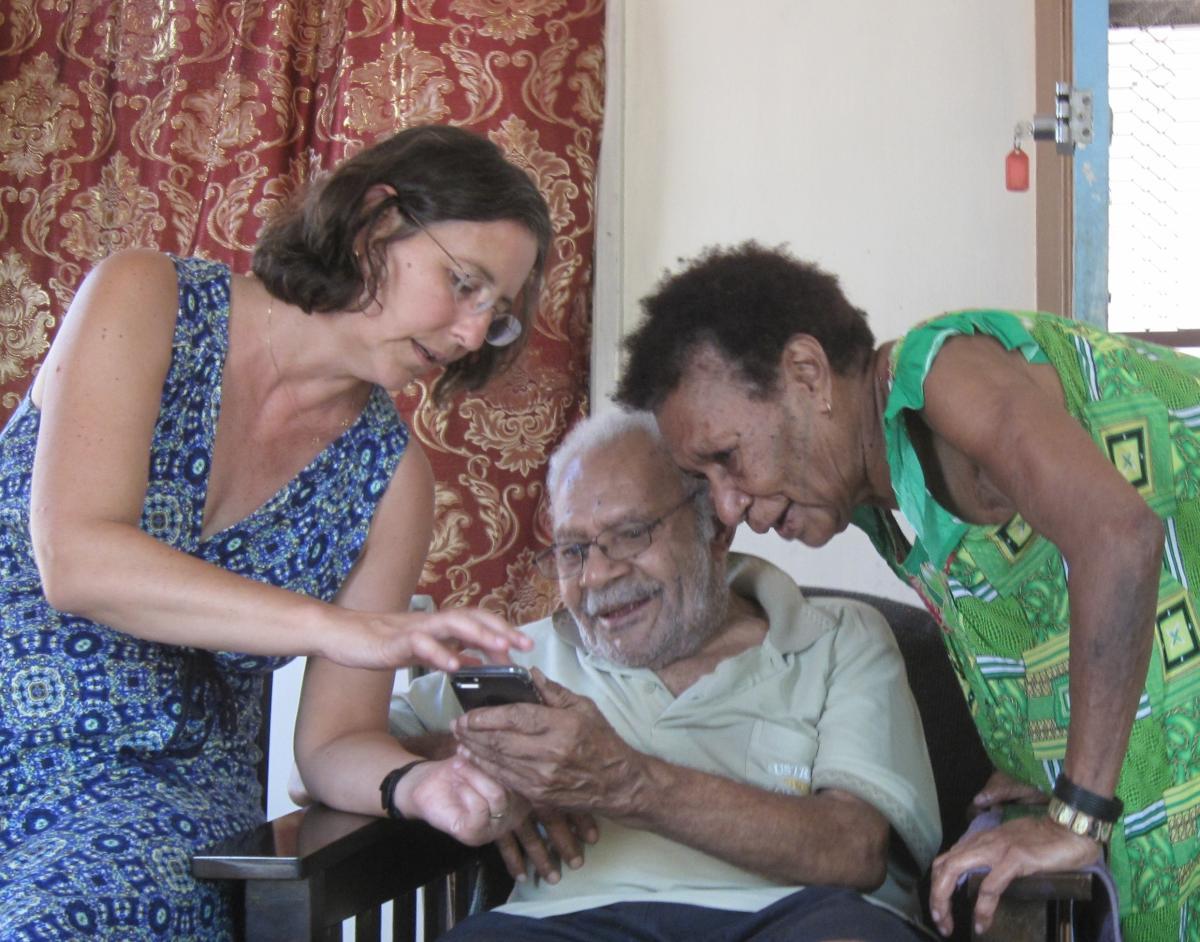
Lise Dobrin is a Professor in the Department of Anthropology at the University of Virginia. Her work focuses on endangered languages, particularly the Arapesh languages of Papua New Guinea, and integrates linguistic documentation with cultural preservation. She holds a Ph.D. in Linguistics from the University of Chicago (1999). Dobrin’s research bridges theoretical linguistics and applied anthropology, emphasizing ethical fieldwork practices and the social dimensions of linguistic study. She co-created the Arapesh Grammar and Digital Language Archive with UVA’s Institute for Advanced Technology in the Humanities and has contributed to projects like the digital edition of Bernard Narokobi’s History of Wautogik Village . Her education includes a doctorate from the University of Chicago, alongside extensive fieldwork in Papua New Guinea. Dobrin’s research interests span language structure, Melanesian culture, the history of anthropology, and the moral responsibilities of linguists. She has explored how power dynamics and ethical considerations shape linguistic fieldwork, particularly regarding endangered languages. Notably, she examines the divergent interpretations of Arapesh culture by Reo Fortune and Margaret Mead, highlighting the role of intercultural collaboration in knowledge production. Her scholarly service includes roles on the University of Virginia’s Social and Behavioral Sciences Institutional Review Board, the American Anthropological Association’s ethics programs, and the Linguistic Society of America’s Ethics Committee. These engagements reflect her commitment to redefining ethical standards in anthropological and linguistic research. Dobrin also serves as managing editor of Language Documentation and Description , further advancing discourse on linguistic preservation and interdisciplinary ethics.
جستجوی استاد راهنمای دانشگاهی
برای مسیر پژوهشیتان، استاد راهنما، استاد دانشگاه و پژوهشگر مناسب را پیدا کنید و با آنها ارتباط بگیرید.
نمایش ۱-۱ از ۱ استاد راهنما
اطلاعات پروفایلها از صفحات عمومی دانشگاهها گرفته شده و ممکن است بهروز نباشد.
University of VirginiaUnited States