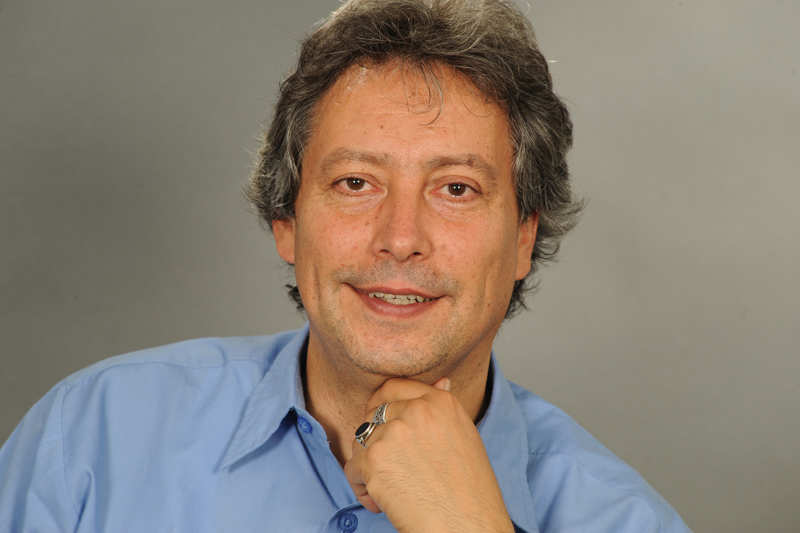
Patrick T. Brandt is a Professor of Political Science, Public Policy, and Political Economy at the University of Texas at Dallas , affiliated with the School of Economic, Political and Policy Sciences . His work integrates advanced statistical methods with political science, focusing on time series analysis, machine learning, and Bayesian modeling to study political dynamics. His research spans international relations , political economy , terrorist targeting , and conflict forecasting . He specializes in developing novel models for event count time series, including the Bayesian Poisson Vector Autoregression and MS-BVAR packages for R. His NSF-funded projects focus on event data generation and real-time conflict forecasting. Recent publications emphasize domain-specific language models (ConfliBERT variants), graph neural networks for conflict prediction, and machine translation challenges in political text analysis. He maintains the OpenEvent Data Repository and develops software like MSBVAR and PESTS for academic use. Scientific Awards : Robert H. Durr Award for Best Methodology Paper, Midwest Political Science Association (2006)
Prof. Ahmed Al-Dubai is a Professor at the School of Computing, Engineering and the Built Environment, Edinburgh Napier University, where he leads the IoT and Networked Systems Research Group and serves as Cybersecurity and Cyber Physical Systems Research Lead. His interdisciplinary research spans Multi-access Edge Computing, High-Performance Networks, Cognitive IoT Systems, VANETs, AI, E-Health, Smart Cities, and Security . He earned his PhD in Computing Science from the University of Glasgow in 2004. His recent publications focus on edge computing architectures, digital twin security, Arabic NLP, wireless energy harvesting, and vehicular communication . His work has been recognized with IEEE Outstanding Service Award, Best Paper Awards at IEEE IUCC 2015 and ACM MoMM 2013 , and fellowships like Senior IEEE Member and British Higher Education Academy Fellow . He supervises 20+ PhD students and has served on 60+ IEEE/ACM conference committees. Current projects include AI-driven fish identification (Innovate UK £265K) , secure IoT protocols (Royal Society £12K) , and COG-MHEAR (EPSRC £3.26M) . He has held visiting professorships at Universite de Valenciennes, University of Sydney, and University of Shenyang.
Dr. Philip Bockholt is a Junior Professor (Tenure Track) for the History of the Turco-Persian World and Emmy Noether Junior Research Group Leader at the Institute of Arabic and Islamic Studies , University of Münster. His research focuses on the history of the Eastern Islamic World (1400–1800), transregional translation processes, knowledge transfer in the Eastern Mediterranean, manuscript studies, and confessional groups in Islam. He is the principal investigator of the DFG-funded TRANSLAPT Emmy Noether Group (2022–2028) and leads the subproject Arabic-Ottoman Translations of Qurʾānic Exegesis (Tafsīr) within the Cluster of Excellence EXC 2060. 2024: Habilitation in Islamic Studies 2018: PhD, Berlin Graduate School Muslim Cultures and Societies 2005–2013: BA/MA in Islamic Studies, History, and Theology (Bochum, Münster, Berlin, Jerusalem, Cairo, Istanbul, Tehran) His research explores intra-Islamic knowledge transfer via Arabic-Persian-Ottoman translations, with a focus on historiography, mirror-of-princes literature, and manuscript variants. He has extensively analyzed the Ḥabīb al-Siyar by Khvāndamīr and its cross-regional dissemination. His recent articles examine textual modifications in Safavid-to-Ottoman translations, multilingualism in Ottoman-Persian contexts, and manuscript annotations as evidence of readership engagement. He co-edited Elsine-i S̱elās̱e: Cultural Analysis of Ottoman Translation (2025) and Multilingualism, Translation, Transfer: Persian in the Ottoman Empire (2024). 2020 Classical Islamic World Book Prize 2019 Annemarie-Schimmel-Stiftung Forschungspreis 2019 S.I.E. European Award Honorable Mention 2015 I.B. Tauris Prize DFG Emmy Noether Funding Bockholt supervises four doctoral candidates on topics including Ottoman Quranic exegesis, biographical dictionaries, and Sufi networks. He has held visiting positions at institutions in Tokyo, Paris, Jerusalem, Madrid, and St. Petersburg. His teaching includes seminars on Islamic manuscript culture, Ottoman translation processes, and confessional groups in the early modern Islamic world. He is a scientific secretary in the Saxon Academy of Sciences’ Afrika – Asien – Europa commission and organizes international conferences on manuscript transmission and Persian-Ottoman exchange.
Panagiotis Papapetrou is a Professor of Data Science and Deputy Head of Department at the Department of Computer and Systems Science , Stockholm University (since 2017). He also serves as Head of the Data Science Research Group and holds an Adjunct Professor position at Aalto University (Finland). As a Board Member of the Swedish Association for Artificial Intelligence (SAIS) , he contributes to shaping AI research directions in Sweden. Research Pillars: Algorithmic data mining, interpretable machine learning, time series classification, and health informatics Key Projects: AI for societal fairness, digital twins for smart buildings, EXTREMUM for explainable medical AI, and e-learning personalization Teaching Legacy: Developed courses in Data Mining (HT2013-2022), Machine Learning (VT2022-2024), and Health Informatics (VT2018-2021) His work focuses on interpretable AI for healthcare applications, particularly through counterfactual explanations for time series classification and forecasting. This includes developing methods like Glacier for constrained counterfactuals and Ijuice for k-justified explanations. His research also explores multimodal clustering of sepsis patient records and federated learning approaches for ICU mortality prediction. Recent scientific contributions include: CounterFair (2024): Group fairness analysis via counterfactual burden metrics M-ClustEHR (2024): Multimodal clustering for electronic health records COMET (2024): Constraint-based glucose forecasting explanations Temporal pattern mining (2024-2025): Enhanced forecasting models through decomposition Z-Time (2024): Interpretable multivariate time series classification His editorial leadership includes: Action Editor at Machine Learning Journal (since 2024) Action Editor at Data Mining and Knowledge Discovery (since 2018) Guest Editorial Board for ECML/PKDD Journal Track (2014-2019)
Dr. Irfan Ahmad serves as an Associate Professor in the Department of Information and Computer Science at King Fahd University of Petroleum and Minerals (KFUPM), Dhahran, Saudi Arabia, where he teaches undergraduate and graduate courses in Computer Science and Software Engineering while conducting research and advising graduate students. His academic service includes committee roles on graduate studies, program development, and competitions. His research expertise centers on Pattern Recognition with specialized focus on Document Image Analysis , Handwriting Recognition , and Machine-Printed Text Recognition . He actively explores Machine Learning applications including Deep Learning and Natural Language Processing , with significant contributions across Artificial Intelligence, Computer Vision, Data Mining, Neural Networks, and Computational Linguistics as evidenced by his PeerJ subject area specializations. Recent publications reveal a strategic emphasis on adaptive deep learning architectures for document analysis, particularly generative methods for handwritten text recognition and knowledge distillation techniques. His editorial work on feature extraction and multilingual fake news detection further demonstrates applied research bridging theoretical machine learning with real-world language processing challenges. As an active Academic Editor for PeerJ Computer Science with 1,205 contribution points, Dr. Ahmad provides substantial service to the scholarly community through manuscript evaluation and editorial oversight across emerging technologies in data science and artificial intelligence.
Jalal Al-Tamimi is an Associate Professor (Maître de conférences) in experimental phonetics and phonology at Université Paris Cité, affiliated with the Laboratoire de Linguistique Formelle (LLF). He holds an HDR (Habilitation à Diriger des Recherches) in Phonetics and Phonology and has extensive experience in teaching and research across institutions including Newcastle University, UK. His research focuses on the interface between phonetics and phonology, particularly the role of acoustic and articulatory correlates in speech production, perception, and acquisition. He specializes in Arabic dialects, using advanced quantitative methods like generalized additive mixed models and machine learning techniques. Al-Tamimi’s academic journey includes a PhD from Lyon 2 University (2007) and postdoctoral roles in the UK before joining Paris. He currently directs the Master in Language Sciences and co-leads research strands on phonetic complexity and language variation. His administrative roles include membership in the AFCP and coordination of experimental linguistics at LLF. Research interests span laboratory phonology, articulatory-acoustic mapping, and the application of automated methods in clinical diagnosis. His work explores epilarynx dynamics in Arabic gutturals and forced-alignment systems for dialectal Arabic. Awards include the Peter Ladefoged Prize (2018) and Leverhulme Fellowships. He supervises numerous PhD and MA students across computational linguistics and phonetics. Publications highlight contributions to vowel dynamics, speech processing in Alzheimer’s, and cross-linguistic phonological studies. His lab collaborations involve the MAUS team and Sorbonne’s SCAI, focusing on speech technology and pathological speech analysis.
Maxim Romanov heads 'The Evolution of Islamic Societies' project at University of Hamburg's Asia-Africa-Institut, funded by DFG's Emmy Noether Program. Former positions include senior research fellow at KITAB Project and University of Vienna. Research reconstructs social history of Islamic world (c.600-1600 CE) through computational analysis of Arabic chronicles and biographical collections. Research Focus: Digital humanities approaches to premodern Islamic history including OCR development for Arabic manuscripts, corpus linguistics, and geospatial modeling of historical data. Technical Contributions: Developed OpenITI corpus infrastructure, al-Ṯurayyā gazetteer system, and computational methods for large-scale historical text analysis. Recent work enhances NLP for classical Arabic with OCR accuracy exceeding 90%.
Hager Ali is a Doctoral Researcher at the German Institute for Global and Area Studies (GIGA), specifically affiliated with the GIGA Institute for Middle East Studies, and is part of the GIGA Doctoral Programme since October 2018. Ali also serves as an External Editor for the thematic series "Autocracies with Adjectives" at the Loop, ECPR's Political Science Blog since March 2022, and maintains a career as a freelance journalist since 2010. German Institute for Global and Area Studies (GIGA) - Institute for Middle East Studies (2018-present) Central European University (CEU) - Teaching appointments (2025) Institute for Peace Research and Security Policy (IFSH) - Teaching appointments (2024) Ali's research focuses on civil-military relations in the Middle East and North Africa, military coups and civilian control of armies, authoritarian regimes and institutions, regime stability and destabilization, party systems and cleavages, and German military deployments in the MENA-Region and Sahel. The doctoral dissertation examines "Praetorianism in the MENA-Region: Military Governance and Civilian Control across Regime Types." Ali's work demonstrates sophisticated methodological approaches to understanding authoritarian resilience and military politics through comparative analysis. Ali's publication record reveals a consistent focus on Sudanese politics and civil-military relations, with increasing attention to contemporary conflicts since 2022. The research combines theoretical insights from comparative authoritarianism studies with detailed empirical analysis of military institutions and political transitions in the Middle East and North Africa. Recent work shows a growing emphasis on practical policy implications, particularly regarding peace negotiations in Sudan and the role of civilian actors in conflict resolution. Shortlisted for the Best Blog Award of 2022 by ECPR's Political Science Blog "The Loop" (2023) Ali actively contributes to academic discourse through conference presentations, policy papers, and media commentary. Recent engagements include serving as a discussant at the ECPR General Conference 2024 on "Trends in autocratic practices and behaviors" and scheduled lectures on the Sudan conflict in 2025. Ali has established collaborations with institutions like the German Institute for International and Security Affairs (SWP) and maintains strong connections with academic networks across Europe. As a member of the GIGA research programme on Accountability and Participation, Ali contributes to interdisciplinary research on governance and political institutions. Ali participates in multiple ECPR Standing Groups including Political Methodology, Political Violence, Comparative Political Institutions, and Critical Peace and Conflict Studies, demonstrating engagement with diverse methodological and theoretical approaches to political science research.
Richard Nielsen is an Associate Professor in the Department of Political Science at MIT, affiliated with the Institute for Data, Systems, and Society (IDSS), the Security Studies Program (SSP), and the Center for International Studies (CIS). His research integrates quantitative methods with ethnographic insights to study Middle East politics, religion, political violence, and gender dynamics. He holds a PhD in Government and AM in Statistics from Harvard University, and a BA in Political Science from Brigham Young University. His first book, *Deadly Clerics* (2017), examines clerical radicalization in Sunni Islam, while current work explores female religious authority in digital spaces. Education: PhD in Government (Harvard, 2013), AM in Statistics (Harvard, 2010), BA in Political Science (BYU, 2007). Research focuses on: Islamic authority dynamics, online religious preaching (especially by women), counterterrorism, and methodological innovations in text analysis. He develops tools for Arabic text analysis and advises on computational social science methodologies. His work bridges political science, computer science, and Islamic studies. Teaching includes courses on international relations, political methodology, and Middle East politics. He has mentored over 20 PhD students, many now in academic and policy roles. Grants and collaborations include Carnegie Fellowship research and MIT's interdisciplinary initiatives. Labs/Teams: Political Methodology Lab (MIT), affiliated with IDSS and SSP. His work emphasizes computational tools for social science, such as the *arabicStemR* package for text analysis.
Dr. Borna Izadpanah is a Lecturer in Typography & Graphic Communication at the University of Reading. His research focuses on the history of printing and type design, particularly in Persian and Urdu languages using the Arabic script. He emphasizes decolonizing curricula and promoting inclusivity through interdisciplinary collaborations and open access initiatives. Education: PhD in Typography (2021), University of Reading MA in Typeface Design (2015), University of Reading MA in Graphic Design (2010), London College of Communication BA in Graphic Design (2006), Soore University Research Interests: Decolonizing typography, preservation of endangered archival materials, digital humanities, and the historical development of Arabic-script typography. His work bridges print history, art history, and Islamic studies, using non-European language sources. Articles Trends: Recent publications explore Urdu typography’s colonial influences, Persian printing in Qajar Iran, and the global history of Arabic-script type design. His research highlights underrepresented communities and historical gaps in type design practices. Awards: Type Directors Club Awards (2024, 2023, 2017) Granshan Typeface Design Competition (2015–2017) Advising & Grants: Supervises doctoral research in Persian and Asian typography, with a focus on underrepresented communities. Collaborates on projects like the Typodiversity exhibition and workshops on non-Latin type design. Labs/Teams: Involved in the Type Design intensive (TDi) program and co-leads courses at the British Library. Active in the Royal Asiatic Society and Google Fonts collaborations.
Michalis Vazirgiannis is a Professor at LIX, École Polytechnique in France, where he leads the Data Science and Mining group (DaSciM). He holds a degree in Physics and a PhD in Informatics from Athens University (Greece), and a Master's degree in AI from Heriot Watt University, Edinburgh (UK). His academic career spans multiple prestigious institutions including Fraunhofer and Max Planck MPI in Germany, INRIA/FUTURS in Paris, AUEB in Greece, Telecom-Paristech, ENS in France, Tsinghua and Jiaotong Shanghai in China, and Deusto University in Spain. Professor Vazirgiannis's research focuses on machine and deep learning methods for graph analysis, including community detection, graph clustering, node embeddings, and influence maximization. His work in text mining encompasses Graph of Words, word embeddings with applications to web advertising and marketing, event detection, and summarization. He has active collaborations with industrial partners in analytics and machine learning for large-scale data repositories across various application domains such as recommendations, meeting summarization, influence metrics for scientific and social networks, and predictive maintenance. His recent publications demonstrate a strong emphasis on Graph Neural Networks, multilingual NLP (particularly for French and Arabic), and applications of deep learning to diverse domains including social networks, legal text, and biomedical data. There's a clear trajectory toward developing more efficient, explainable, and specialized models that address real-world challenges in data analysis. ERCIM fellowship Marie Curie EU fellowship Tencent "Rhino-Bird International Academic Expert Award" (2017) Best Paper Award at IJCAI 2018 Best Paper Award at CIKM 2013 Professor Vazirgiannis has supervised 29 completed PhD theses and has attracted significant R&D funding from national and international sources, including research agencies and industrial partners such as Google, Airbus, Huawei, Deezer, BNP, and LVMH. He leads or has led several academic research chairs including DIGITEO (2013-15), ANR/HELAS (2020-25), and AXA (2015-2018). The DaSciM research group, which he leads at École Polytechnique, has extensive experience in real-world R&D projects involving large-scale data mining. The team maintains active collaborations with major industrial partners including AIRBUS, Google, BNP, Tencent, and Tradelab, working on cutting-edge machine learning projects. The group has co-organized major conferences such as ECML PKDD 2011 and ECML/PKDD 2017 and participates in the senior organization of AI and data mining events like AAAI and IJCAI.
Dr. Christian Morgner is a Senior Lecturer in Cultural and Creative Industries at the Sheffield University Management School. He holds a PhD and MA, with expertise in complexity studies, relational sociology, and cultural networks. His research focuses on: Global cultural processes and innovation Diversity and inclusivity in creative industries Network analysis in urban informal settlements Dementia care through arts interventions Media events and translation dynamics Recent publications analyze cultural transformations in Santiago de Chile, relational creativity in Olympic ceremonies, and digital heritage politics in China. He has secured grants including the Rutherford Fellowship and Japanese Society for the Promotion of Science funding. Scientific awards include: Rutherford Fellowship Japanese Society for the Promotion of Science Postdoctoral Research Fellowship He supervises PhD students and teaches modules on critical theories in cultural and creative industries, marketing, and branding.
Dr. Andrew Hardie is a Reader in Linguistics at Lancaster University, holding a position equivalent to Associate Professor. He is affiliated with the Faculty of Humanities, Arts and Social Sciences and the Department of Linguistics and English Language within the School of Social Sciences. His primary research specialism focuses on corpus-based methodology and its applications across various disciplines: Corpus design and construction methodologies Development of corpus analysis software tools Applications in grammar of English and other languages Extensions to discourse analysis, language teaching, and other humanities and social sciences fields Dr. Hardie's work spans both theoretical and applied linguistics, with particular emphasis on adapting corpus methods for social scientists and humanists in fields including Psychology, Geography, History, and English Literature. His expertise extends to multiple languages, with special focus on South Asian languages such as Nepali, Urdu, and Hindi. He has developed several significant software tools for corpus linguistics, including Corpus Workbench (as a lead developer), CQPweb (as creator), Unicodify, and Unitag, which have substantially advanced the field of corpus linguistics methodology. His research portfolio includes major projects like the ESRC Centre for Corpus Approaches to Social Science (where he serves as Deputy Director) and UCREL (where he is Chair), demonstrating his leadership in the field. His work bridges theoretical linguistics, computational methods, and practical applications across multiple disciplines. Dr. Hardie actively supervises PhD students working on diverse topics from collocational errors in language learning to sociolinguistics of swearing in Arabic, reflecting the breadth of his research interests and influence across linguistic subfields.
Ottmar Ette is Chair of Romance Literature at the University of Potsdam, Germany, where he has held a professorship since 1995. A leading scholar of Alexander von Humboldt and comparative literature, Ette has established himself as a major intellectual figure through his development of TransArea Studies and the conceptual framework of 'Lebenswissenschaft' (science of life). His academic career spans multiple continents with significant contributions to understanding the intersections of literature, globalization, and cross-cultural knowledge. Ette's research interests form a rich interdisciplinary tapestry exploring literary studies as life science , conviviality (living together), and the poetics of movement within TransArea Studies. His work examines how literary knowledge functions as essential repository of human experience, particularly regarding ethically relevant themes such as migration, belonging, and survival. The scholar has pioneered approaches to understanding literature beyond national boundaries, focusing on 'literatures without fixed abode' and the 'vectorial imagination' that transcends traditional dichotomies between national and world literature. His extensive publication record reveals consistent engagement with globalization processes across historical periods, with particular emphasis on the works of Alexander von Humboldt as a lens for understanding interconnected knowledge systems. Ette's scholarship demonstrates remarkable breadth, spanning from 18th century francophone literature to contemporary transareal literary phenomena, while maintaining focus on how literary texts generate knowledge for living in increasingly interconnected worlds. 2014 Research Award Escuela Nacional de Altos Estudios from UNAM 2014 Honorary Member of the Modern Language Association of America 2013 Ordinary Member of the Berlin-Brandenburg Academy of Sciences 2012 Chevalier dans l'Ordre des Palmes Académiques (France) 2010 Ordinary Member of the Academia Europaea 2001 Hugo Friedrich/Erich Köhler Research Award 1991 Young Scholars Award for Romance Literature 1987 Heinz-Maier-Leibnitz Award Ette has directed significant research projects including the 3-year Research Project on Humboldt's American Travel Diaries (2014-2017) and the 18-year project 'Travelling Humboldt - Science on the Move' at the Berlin-Brandenburg Academy of Sciences. He co-founded multiple DFG-funded Research Training Groups including 'lebensformen + lebenswissen' (2006), 'Zwischen Räume' (2009), and 'Sichtbarkeit und Sichtbarmachung' (2011). His editorial work encompasses founding the electronic journal HiN - Alexander von Humboldt in the Net and serving as co-editor of Iberoamericana and Istmo. As co-founder of the ForLaBB (Research Network Latin America Berlin-Brandenburg), Ette has created important institutional frameworks for transnational scholarly exchange. His academic leadership extends through organizing numerous international conferences on topics ranging from 'Caribbean(s) on the Move' to 'Conviviality in Difference,' fostering collaborative research environments that bridge disciplinary and geographical boundaries.
Alexander Refsum Jensenius is a Professor of Music Technology and Director of the RITMO Centre for Interdisciplinary Studies in Rhythm, Time and Motion at the University of Oslo. He also leads the fourMs Lab and co-founded the MishMash Centre for AI and Creativity. His work bridges musicology, psychology, and technology, focusing on embodied music cognition, human motion analysis, and creative applications of AI. Notably, he pioneered research on air guitar motion and human micromotion through projects like the Oslo Standstill Database . Educated at the University of Oslo (BA in Music and Mathematics, MA in Musicology) and Chalmers University of Technology (MSc in Applied IT), Jensenius holds a PhD in Music Technology from UiO. He has held visiting researcher roles at UC Berkeley, McGill University, and KTH. Leadership roles include Department of Musicology Head (2013–2016) and Steering Committee Chair for the International Conference on New Interfaces for Musical Expression (NIME, 2011–2022). Research interests span music-related body motion, AI in creative contexts, and open research practices. Key contributions include the Music Moves and Motion Capture MOOCs, the Musical Gestures Toolbox software, and monographs like Sound Actions and Sonic Design . His work emphasizes interdisciplinary collaboration, with projects addressing ventilation systems' acoustic properties and cell culture vibrational effects. Awards include the European Open Data Champion recognition. He advocates for open science and maintains extensive digital archives of research materials, emphasizing institutional web pages as critical research infrastructure.