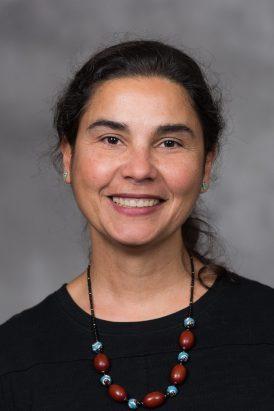
Marlyse Baptista is the President's Distinguished Professor of Linguistics at the University of Pennsylvania, Department of Linguistics. She is affiliated with the School of Arts & Sciences and MindCore initiative. Her research focuses on language contact, creolization processes, bilingualism, and experimental methods in creole studies. Baptista leads the Language Contact and Cognition Lab, previously known as the Cognition, Convergence and Language Emergence (CCLE) group at the University of Michigan. Education includes a PhD in Linguistics (Harvard, 1997), MA degrees from Harvard and the Université de Bordeaux III, and extensive training in multilingual education. Her work bridges generative syntax with experimental approaches, including artificial language learning to study language convergence. Key themes include the cognitive underpinnings of creole formation, bidirectional influences in Cape Verdean Creole, and the role of congruence in language acquisition. Research highlights include studies on Cape Verdean Creole's grammatical properties, genetic-linguistic admixture correlations, and pedagogical resources for creole language education. Recent projects explore experimental validation of creole genesis theories through multilingual acquisition studies. Scientific Awards: President's Distinguished Professorship (University of Pennsylvania) Labs/Teams: Language Contact and Cognition Lab, MindCore Grants/Projects: MULTI Project (creole language educational resources), NSF-funded studies on creole genesis mechanisms Baptista's work emphasizes interdisciplinary approaches, integrating syntax theory, psycholinguistics, and sociolinguistics to address foundational questions in contact linguistics and creolistics.
Walid Magdy is a Professor at the School of Informatics, The University of Edinburgh, where he is a faculty member at the Institute for Language, Cognition and Computation (ILCC). He holds a PhD from Dublin City University's School of Computing and has been a faculty fellow at The Alan Turing Institute. With substantial industry experience, he has worked for Qatar Computing Research Institute (QCRI), Microsoft, and IBM, where he filed nine patents. His research spans computational social science and natural language processing. In computational social science, he focuses on social content analysis, political bias detection, polarization, and users' behavior analysis/prediction, with particular attention to understudied communities. His natural language processing work centers on social applications including sentiment analysis, sarcasm detection, and hate-speech identification, with specialized expertise in Arabic and its dialects as well as Persian. Professor Magdy's recent publications demonstrate a consistent focus on Arabic language processing and social media analysis, with growing attention to cultural factors in NLP systems. His work bridges computational methods with social science questions, particularly regarding misinformation, cultural differences in online behavior, and the impact of platform policies on diverse linguistic communities. He has expanded his research to include Persian language processing and continues to explore social dynamics across different cultural contexts. His significant contributions have been recognized with multiple awards: Best Demo Award for TwiXplorer at CSCW 2024 Outstanding Paper Award at ACL 2024 Best Paper Award Runner-up at SocInfo 2022 Best Paper Award at WANLP-EMNLP 2022 Best Paper Award at AIRS 2015 Best Dataset Award at ICWSM 2013 Professor Magdy serves as an editor for Springer's Social Network Analysis and Mining journal and has held leadership roles in major conferences including ACL 2023, ArabicNLP 2023, ICWSM 2022, and ASONAM 2022. He has co-organized numerous shared tasks focused on Arabic language processing and social media analysis, contributing significantly to community resources and benchmarks. He founded and directs the Social Media Analysis and Support for Humanity (SMASH) research group at the University of Edinburgh, which has organized the Summer School in Computational Social Science (SICSS-Edinburgh) in 2022, 2023, and 2025, training researchers in computational social science methodologies.
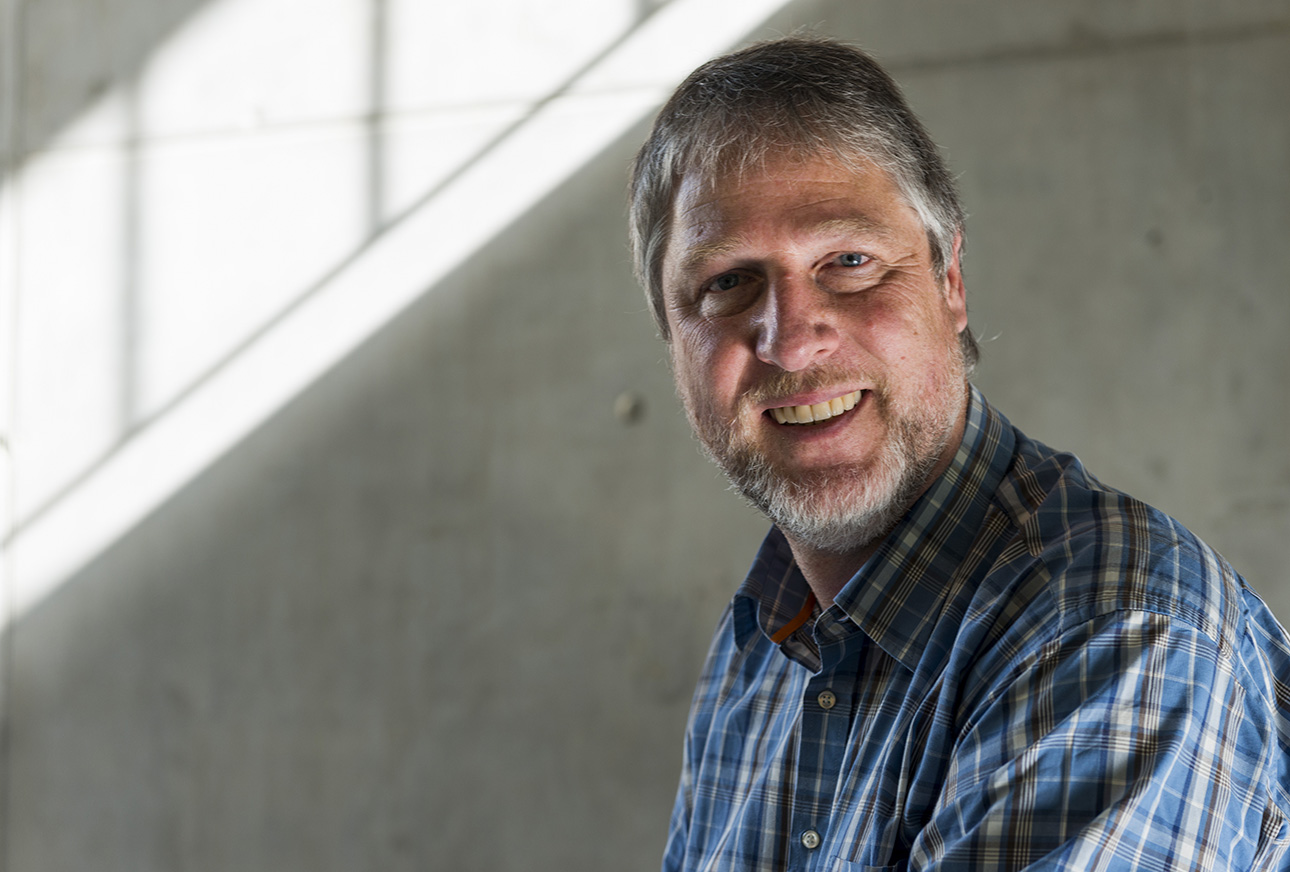
Professor Bernd Möbius is a leading academic in Phonetics and Phonology at the Department of Language Science and Technology, Saarland University. His research bridges phonetic theory with speech technology applications, focusing on text-to-speech systems, prosody modeling, and computational simulations of speech processes. Current research projects: DFG SFB 1102, C1: Information density and phonetic structure predictability DFG SFB 1102, C4: Slavic intercomprehension and surprisal theory (INCOMSLAV) Research Themes: Key areas include text-to-speech synthesis, speech prosody analysis, experimental methods in speech production/perception, information density in phonetics, and cross-linguistic studies of Slavic-Germanic languages. Scientific Contributions: Recent work explores Parkinson-induced dysarthria detection, breath noise acoustics, surprisal-driven speech behaviors, multilingual BERT models for idiomaticity, and perceptual consequences of acoustic adjustments.
Emma Trentman is an Associate Professor of Arabic at the University of New Mexico (UNM) and Director of the Language Learning Center. Her research focuses on Applied Linguistics, particularly on language learning during study abroad programs, virtual exchange, and the impact of language ideologies on multilingual approaches. Research Interests: Multilingualism, Language Ideologies, Study Abroad Programs, Intercultural Communication, Arabic Language Education, and Curriculum Development. Key Publications: Co-editor of Language Learning in Study Abroad: The Multilingual Turn (2021), with works featured in The Modern Language Journal , Foreign Language Annals , and Critical Multilingualism Studies . Teaching: Offers Arabic language courses and the Languages Capstone class, integrating critical perspectives into language pedagogy. Editorial Work: Co-editor for Critical Multilingualism Studies Journal , advocating for plurilingual practices in education. Publications: Explores topics such as translanguaging, sociolinguistic competence, and decolonizing language learning frameworks across diverse contexts (Egypt, Tanzania, China). Advocacy: Engages in critical discussions on equity, identity, and sociocultural dimensions in language education.
Dr. Muhammad Abdul-Mageed is an Associate Professor in the School of Information at The University of British Columbia, with joint appointments in Linguistics and an associate membership in Computer Science. He holds the Canada Research Chair in Natural Language Processing and Machine Learning. His research focuses on deep learning, socio-pragmatics, and speech/language technologies, particularly for Arabic and African languages. He leads the UBC Deep Learning & NLP Group and co-directs SSHRC-funded grants like I Trust AI and Ensuring Full Literacy. He is a founding member of the Center for Artificial Intelligence Decision making and Action and a member of the Institute for Computing, Information, and Cognitive Systems. His work spans automatic speech recognition, machine translation, computational socio-pragmatics, and low-resource language technologies. Notable projects include developing Arabic speech recognition systems, multidialectal Arabic benchmarks, and tools for African language processing. He has authored over 100 peer-reviewed papers and leads initiatives like the NADI Arabic Dialect Identification shared task and the NileChat project for culturally-aware LLMs. His research aims to create equitable, socially-aware AI systems for health, social media, and information management.
Zainab Hermes is an Associate Instructional Professor in the Department of Near Eastern Studies at the University of Chicago, where she has taught since 2018. She holds a PhD in Linguistics from the University of Illinois at Urbana-Champaign (2018), earned through experimental research combining phonetics and neuroscience methodologies. Education PhD in Linguistics, University of Illinois at Urbana-Champaign (2018) Research Interests Her work focuses on experimental linguistics, particularly the articulation of Arabic dialects (Cairene, Lebanese, Jordanian, Saudi). Key projects involve: MRI studies of vocal tract configurations for back consonants MEG investigations of neurological representations during Arabic diglossic code-switching Self-paced reading studies on L2 acquisition of Arabic grammatical gender Publications & Methodologies Her research employs advanced imaging techniques (rt-MRI, EMA) and neurolinguistic methods (MEG) to analyze speech production and processing. Her teaching includes courses on Arabic linguistics, dialectology, and academic reading. Academic Contributions She collaborates on interdisciplinary studies bridging phonetics, neuroscience, and language acquisition frameworks.
Professor Eric Atwell is a Professor of Artificial Intelligence for Language at the University of Leeds' School of Computer Science, part of the Faculty of Engineering and Physical Sciences. He holds additional roles as a LITE Fellow at the Leeds Institute for Teaching Excellence (40% part-time), Turing Fellow at the Alan Turing Institute, and member of the Leeds Institute for Data Analytics (LIDA) and Language at Leeds (LATL). His research focuses on AI applications in corpus linguistics, text analytics, and computational analysis of religious and medical texts, with a strong emphasis on Arabic and Islamic studies. He leads the AI4L research group and has supervised over 60 research students and fellows, many of whom have pursued careers in academia, tech, and AI-driven fields. Education: PhD in Corpus Linguistics and Language Learning (University of Leeds, 2008), BA (First Class) in Computing and Linguistics (Lancaster University, 1981) Grants: Includes EPSRC-funded projects like Natural Language Processing with Arabic and Islamic Studies (£337K, 2013-2015) and EDUBOTS chatbots for education (£94K, 2019-2022) Teaching: Leads modules in Data Mining, Text Analytics, and AI across multiple programs, including online Masters and PhDs. Known for innovative teaching approaches and student support, receiving positive feedback for engagement and course design. Research Interests: AI applied to corpus linguistics, Quranic text analysis, Arabic NLP, chatbots for education, and decolonizing curricula. Notable projects include Quranic semantic search tools, Hadith corpus analysis, and AI-driven fact-checking systems. Publications: Over 277 publications, with recent work focusing on Quranic QA systems, Arabic dialect identification, and generative AI applications in education. His research is widely cited, earning recognition from ResearchGate for high readership. Awards: Recognized for his most-read research items on ResearchGate (June 2021). Gallup StrengthsFinder highlights his top traits as Learner, Achiever, Ideation, Intellection, and Maximizer. Labs/Teams: Leads the AI4L research group and collaborates with international institutions including SUSTECH Sudan, King Saud University, and SWJT University (China). Active in research networks like LIDA and LATL.
Mohammad T. Alhawary is Professor of Arabic Linguistics and Second Language Acquisition at the University of Michigan's Middle East Studies department within the College of Literature, Science, and the Arts. He serves as Director of both the MA Program in Arabic for Professional Purposes (APP) and the MA Program in Teaching Arabic as a Foreign Language (TAFL). His educational background includes a Ph.D. from Georgetown University (1999). Prior to joining the University of Michigan, he contributed to developing Arabic and Middle Eastern Studies programs at various US institutions. Professor Alhawary's research spans both theoretical and applied Arabic linguistics, with particular focus on second language acquisition processes. His work examines how factors like age, input quality, output practice, and first language transfer affect Arabic language learning. He has made significant contributions to understanding Arabic language pedagogy, curriculum design, proficiency testing, and the application of technology in language learning. His research also extends to bilingualism, multilingualism, language impairment, and Arabic medieval grammatical traditions. His publications reflect a strong trajectory in Arabic linguistics research, with recent works focusing on practical language teaching applications, reading comprehension mechanisms, code-switching patterns in digital communication, and multilingual acquisition processes. The 2023 publication 'Teaching Arabic as a Foreign Language' represents his latest contribution to language pedagogy methodology. 2019 AATA Book Award for 'Arabic Second Language Learning and Effects of Input, Transfer, and Typology' As an academic leader, Professor Alhawary serves as Executive Director of the American Association of Teachers of Arabic and edits both the Journal of Arabic Linguistics Tradition and Al-'Arabiyya journal. He continues to develop empirical research on Arabic second language acquisition to inform teaching practices both in America and globally.
Hakan Özkan is a Privatdozent and Research Associate at the Institute of Arabic and Islamic Studies, Department of Middle Eastern Studies, University of Münster, where he has been working since 2007 in various capacities. He was awarded his Venia Legendi (Habilitation) in November 2019 for Arabic and Islamic Studies with his thesis 'History of Eastern Zajal – Dialectal Arabic Verse Poetry from the East of the Arab World.' His academic background includes a Franco-German doctorate completed in 2006 from Université de Provence and University of Cologne, supervised by Claude Audebert and Monika Gronke, with external reviewers including Wolfhart P. Heinrichs from Harvard University. His educational background includes: 2019: Venia Legendi for Arabic and Islamic Studies, University of Münster 2002-2006: Franco-German Doctorate in Arabic Studies and Narratology (Université de Provence and University of Cologne) 1995-2000: Master of Arts in Islamic Studies, Oriental Languages and Literatures (University of Cologne) 2000-2001: Course program in Modern Standard Arabic and Syrian-Lebanese dialect at Institut Français d'Etudes Arabes de Damas Özkan's research focuses on premodern Arabic dialect poetry, particularly zajal and muwashshaḥ forms, narratology, prosimeter literature, socio-literary history, and diachronic dialectology. His interdisciplinary approach bridges linguistic analysis with literary criticism, examining how dialectal forms evolved within Arabic literary traditions across different historical periods and geographical regions. He has conducted extensive field research in Arab countries including Syria, Egypt, Lebanon, Tunisia, and Morocco, with particular emphasis on the historical development of poetic forms from the Mamluk through Ottoman periods. His publication history demonstrates consistent scholarly contributions to Arabic literary studies, with his 2020 monograph 'History of Eastern Zajal' representing a landmark study in the field. His recent work has expanded to include analyses of religious poetry praising the Prophet Muhammad in zajal form, wine poetry in Arabic literary traditions, and the integration of dialects into Arabic language teaching methodologies. His scholarly output spans monographs, critical editions, encyclopedia entries, journal articles, and book chapters across multiple languages including German, English, French, and Turkish. Among his academic recognitions: 2018: Second place on shortlist for W2 Professorship for Arabic Language and Translation Science, University of Leipzig 2008: Offered Junior Professorship at American University in Cairo (declined) 2007: Second place on shortlist for maître de conférence position at University of Nancy 2007: Official Qualification from National University Council (CNU) for positions as maître de conférence at French universities Özkan has served on numerous academic committees, including appointment committees for professorships in Sinology and Arabic and Islamic Studies at the University of Münster. He has been a juror for the Sheikh Hamad Award for Translation and International Understanding in Doha and has served on the steering committee for the 'Translation for Dialogue' program of the Anna Lindh Foundation. His editorial work includes reviewing for Mamluk Studies Review, Die Welt des Islams, and Middle Eastern Literatures since 2012. His scholarly activities extend to linguistic fieldwork on Pontic Greek dialects in Turkey and organizing significant academic conferences including 'The Race Course of Literature – An-Nawāǧī and His Contemporaries' in 2018 at the University of Münster. His multilingual capabilities (Arabic, Turkish, German, French, English, Persian, Ottoman Turkish, and knowledge of Modern Greek) enable his comparative work across multiple linguistic and cultural traditions in the Mediterranean region.
Elsayed Issa is an Assistant Professor in the School of Languages and Cultures at Purdue University. Specializing in Computational Linguistics and Arabic, his interdisciplinary research bridges Natural Language Processing (NLP) with Second Language Acquisition (SLA), focusing on conversational AI and speech technology for under-resourced languages. Ph.D. in Linguistics from the University of Arizona (2023) Research integrates NLP, conversational AI, and SLA methodologies Develops tools for computer-assisted pronunciation training (CAPT) Focuses on Arabic dialectology and large language models (LLMs) His work employs Transformer architectures and end-to-end machine learning to enhance language learning systems. Recent projects include ArabiBot development and dialect identification models. He specializes in speech-to-text systems , prosody modeling , and emotional speech analysis for Arabic language learning applications.
Erik Velldal is a Professor in the Language Technology Group (LTG) at the Section for Machine Learning , Department of Informatics, University of Oslo . With over 25 years of experience in machine learning and natural language processing (NLP), he leads the SANT project focused on sentiment analysis and contributes to major research initiatives including MediaFutures , NorwAI , and Integreat (Norwegian Center for AI Research). His work bridges linguistic theory and computational methods, emphasizing semantic modeling and uncertainty detection. Research interests include sentiment analysis , language modeling , event extraction , and machine learning applications to NLP. Recent publications address cross-domain sentiment classification , generative event analysis , and multilingual model adaptation . He co-developed the Norwegian Review Corpus (NoReC) and Norwegian Anaphora Resolution Corpus (NARC) , foundational resources for Norwegian NLP. His projects often involve collaboration with international institutions, reflected in publications at venues like ACL, COLING, and EMNLP. Current efforts focus on entity-level sentiment analysis , diagnostic datasets for Norwegian , and evaluating compositional generalization in language models. No public record of scientific awards or part-time appointments exists.
Jeanna Matthews is a Full Professor of Computer Science at Clarkson University and an affiliate at Data and Society. She holds a PhD from UC Berkeley (1999) and teaches courses ranging from operating systems to cybersecurity. Her research focuses on algorithmic transparency, AI ethics, and societal impacts of automated systems. Matthews is a prominent ACM leader, serving on multiple committees including the Technology Policy Subcommittee on AI Accountability. She has pioneered work on forensic software analysis in criminal justice systems and delivered DEF CON presentations on virtualization security and adversarial testing. Awards include ACM Distinguished Speaker and Fulbright Specialist roles. Her work emphasizes open-source tools and critical thinking in education, extending to global service learning programs in the Dominican Republic and Brazil. Education: PhD in Computer Science (UC Berkeley, 1999), B.S. in Math/Computer Science (Ohio State, 1994), B.A. in Spanish (SUNY Potsdam, 2016). Research Interests: Cybersecurity vulnerabilities, algorithmic accountability frameworks, automated decision systems in justice contexts, and ethical AI design. Recent projects include investigating bias in DNA forensic software through a Brown Institute grant and analyzing political polarization on social platforms. Awards & Recognition: ACM Distinguished Speaker (2018-present) Fulbright Specialist (2018-present) 2018-2019 Brown Institute Magic Grant ACM SIGOPS Chair (2011-2015) ACM Special Interest Group Governing Board Chair (2016-2018) Teaching & Outreach: Designed courses integrating open-source tools and critical inquiry, including abroad programs in Mexico, Brazil, and the Dominican Republic. Advocates for lifelong learning strategies and questioning underlying assumptions in computing systems. Key Projects: Forensic Software Accountability: Examining discrepancies in DNA analysis tools Algorithmic Transparency: Frameworks for auditing automated systems Cybersecurity Education: Adversarial testing methodologies for justice software
Ahmed Ferhadi is a Clinical Professor of Middle Eastern & Islamic Studies at New York University (NYU), specializing in linguistics with a focus on Second Language Acquisition, Sociolinguistics, and Language Testing. He holds a PhD in Linguistics from the University of Michigan (1990), an MA in Teaching Arabic as a Foreign Language (TAFL) from the same institution, and an M.S. in Applied Linguistics from the University of Edinburgh. His teaching career spans institutions like Princeton University, Columbia University, and Kurdish universities such as Salahuddin and Suleimaniyya Universities. He pioneered video-based language performance evaluation methods during his tenure at Middlebury College in 1991, which became a standard practice. Ferhadi has also served in high-level advisory roles, including President of the Association of American Teachers of Arabic (AATA) since 2017 and Distinguished Global Scholar of Kurdish Studies at American University (2010). Research interests include Kurdish language standardization, advanced Arabic pedagogy, and the sociopolitical dimensions of language. His projects include a Kurdish standardization initiative and curriculum development for advanced Arabic learners. Ferhadi has received numerous accolades, including the Golden Teaching Award (NYU 2000) and Top Language Award (U.S. Department of State 2006). His publications span linguistic theory, pedagogical techniques, and cultural studies, with recent works addressing Arabic dialect dynamics and Kurdish language policy. Ferhadi’s work bridges academic rigor with practical applications, emphasizing technology’s role in modern language education.
Verónica Loureiro-Rodríguez is an Associate Professor in the Department of Linguistics at the University of Manitoba's Faculty of Arts. Her research focuses on sociolinguistics, language identity, and code-switching, with special attention to global hip hop and multilingual communities. She holds a PhD from the University of California, Davis, an MA from the University of Colorado at Boulder, and a BA from the Universidade de Santiago de Compostela. Dr. Loureiro-Rodríguez's work examines language attitudes across diverse contexts, including French-English dynamics in Manitoba, Spanish-Valencian bilingual processing, and code-switching in music. She has also explored language use in robotics and cultural hybridity among Puerto Rican and Mexican communities. Her teaching excellence was recognized with the 2021 Faculty of Arts Teaching Excellence Award. Education: PhD (UC Davis), MA (CU Boulder), BA (USC) Awards: 2021 Teaching Excellence Award (Established Faculty) Research Focus: Language policy, digital sociolinguistics, and cultural identity She currently supervises graduate students in Master's and PhD programs, focusing on sociolinguistic methodologies like the matched-guise technique. Her research often intersects with music studies, robotics, and diaspora linguistics.
Milad Abedi is a PhD candidate in Linguistics at the University of Zurich and Institut national des langues et civilisations orientales (INALCO), Paris, focusing on the cultural history of Sino-Iranian lexical contacts. He has taught Zoroastrian Middle Persian and Middle Iranian languages at the University of Zurich while conducting research on topics including language contact mechanisms and historical Persian grammar. PhD in Linguistics (2020–Present), University of Zurich & INALCO, Paris MA in Ancient Languages and Cultures of Iran (2015–2019), Allameh Tabataba'i University (Highest Distinction) BSc in Cellular-Molecular Biology (2010–2015), Islamic Azad University His research spans ancient Iranian language contact (Elamite-Iranian, Sino-Iranian, Arabic-Iranian), historical grammar of Persian, and Classical Persian literature. He has published on topics such as kinship term evolution, cuneiform epigraphy, and metonymic phrases in Achaemenid Elamite. Recent publications highlight his focus on lexical diffusion across Eurasia, with key works on donkey terminology in cross-cultural contexts and the origins of felt words in Iranian languages. His collaborative research with Wolfgang Behr and Samira Müller demonstrates interdisciplinary approaches combining linguistics and archaeology. 2021 Travel grant, University of Zurich 2016 Travel grant, Allameh Tabataba'i University 2016 Top student award, Allameh Tabataba'i University As a Lecturer at the University of Zurich, he has taught courses on Zoroastrian Middle Persian and historical linguistics. His digital humanities expertise includes ELAN software, GIS, and SQL for language documentation.