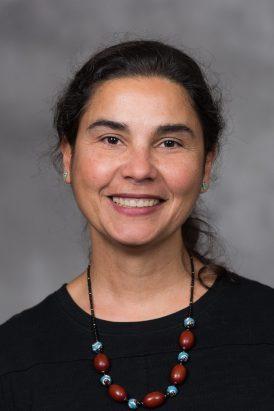
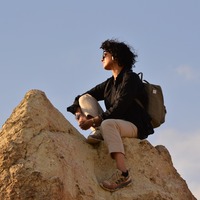
Marlyse Baptista is the President's Distinguished Professor of Linguistics at the University of Pennsylvania, Department of Linguistics. She is affiliated with the School of Arts & Sciences and MindCore initiative. Her research focuses on language contact, creolization processes, bilingualism, and experimental methods in creole studies. Baptista leads the Language Contact and Cognition Lab, previously known as the Cognition, Convergence and Language Emergence (CCLE) group at the University of Michigan. Education includes a PhD in Linguistics (Harvard, 1997), MA degrees from Harvard and the Université de Bordeaux III, and extensive training in multilingual education. Her work bridges generative syntax with experimental approaches, including artificial language learning to study language convergence. Key themes include the cognitive underpinnings of creole formation, bidirectional influences in Cape Verdean Creole, and the role of congruence in language acquisition. Research highlights include studies on Cape Verdean Creole's grammatical properties, genetic-linguistic admixture correlations, and pedagogical resources for creole language education. Recent projects explore experimental validation of creole genesis theories through multilingual acquisition studies. Scientific Awards: President's Distinguished Professorship (University of Pennsylvania) Labs/Teams: Language Contact and Cognition Lab, MindCore Grants/Projects: MULTI Project (creole language educational resources), NSF-funded studies on creole genesis mechanisms Baptista's work emphasizes interdisciplinary approaches, integrating syntax theory, psycholinguistics, and sociolinguistics to address foundational questions in contact linguistics and creolistics.
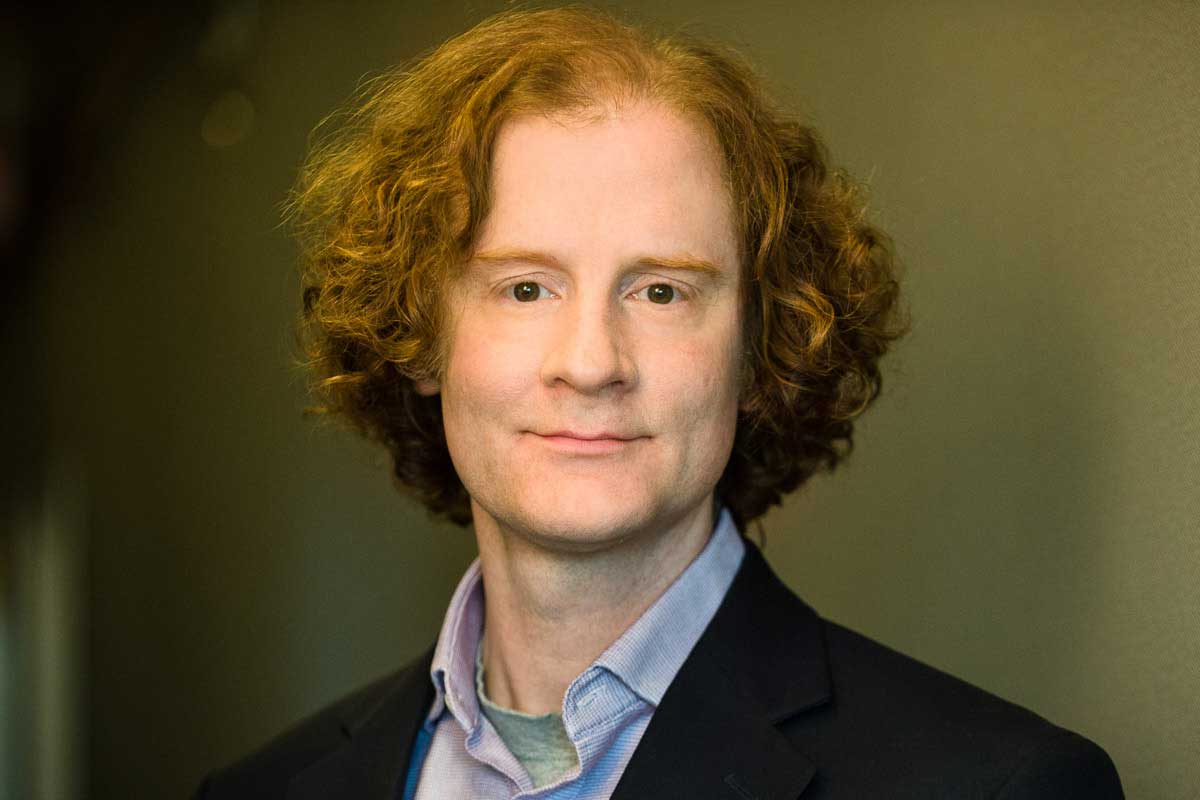
David A. Smith is an Associate Professor at the Khoury College of Computer Sciences, Northeastern University. His research focuses on Natural Language Processing (NLP) and computational linguistics, with applications in machine translation, information retrieval, digital humanities, and social sciences. He is a founding member of the NULab for Texts, Maps, and Networks, a research center focused on digital humanities and computational social sciences. Smith's work has been funded by grants from the Mellon Foundation, NEH, and IMLS, supporting projects such as the Viral Texts initiative analyzing 19th-century newspaper networks and the Oceanic Exchanges project tracking transnational information flows. He has contributed to advancements in OCR for historical texts, text reuse detection, and computational analysis of classical languages. He has advised numerous PhD students, including Shijia Liu, Si Wu, and Ryan Muther, and teaches courses like Natural Language Processing and Information Retrieval. His research has been featured in outlets like Wired and the Economist .
Zainab Hermes is an Associate Instructional Professor in the Department of Near Eastern Studies at the University of Chicago, where she has taught since 2018. She holds a PhD in Linguistics from the University of Illinois at Urbana-Champaign (2018), earned through experimental research combining phonetics and neuroscience methodologies. Education PhD in Linguistics, University of Illinois at Urbana-Champaign (2018) Research Interests Her work focuses on experimental linguistics, particularly the articulation of Arabic dialects (Cairene, Lebanese, Jordanian, Saudi). Key projects involve: MRI studies of vocal tract configurations for back consonants MEG investigations of neurological representations during Arabic diglossic code-switching Self-paced reading studies on L2 acquisition of Arabic grammatical gender Publications & Methodologies Her research employs advanced imaging techniques (rt-MRI, EMA) and neurolinguistic methods (MEG) to analyze speech production and processing. Her teaching includes courses on Arabic linguistics, dialectology, and academic reading. Academic Contributions She collaborates on interdisciplinary studies bridging phonetics, neuroscience, and language acquisition frameworks.
Hakan Özkan is a Privatdozent and Research Associate at the Institute of Arabic and Islamic Studies, Department of Middle Eastern Studies, University of Münster, where he has been working since 2007 in various capacities. He was awarded his Venia Legendi (Habilitation) in November 2019 for Arabic and Islamic Studies with his thesis 'History of Eastern Zajal – Dialectal Arabic Verse Poetry from the East of the Arab World.' His academic background includes a Franco-German doctorate completed in 2006 from Université de Provence and University of Cologne, supervised by Claude Audebert and Monika Gronke, with external reviewers including Wolfhart P. Heinrichs from Harvard University. His educational background includes: 2019: Venia Legendi for Arabic and Islamic Studies, University of Münster 2002-2006: Franco-German Doctorate in Arabic Studies and Narratology (Université de Provence and University of Cologne) 1995-2000: Master of Arts in Islamic Studies, Oriental Languages and Literatures (University of Cologne) 2000-2001: Course program in Modern Standard Arabic and Syrian-Lebanese dialect at Institut Français d'Etudes Arabes de Damas Özkan's research focuses on premodern Arabic dialect poetry, particularly zajal and muwashshaḥ forms, narratology, prosimeter literature, socio-literary history, and diachronic dialectology. His interdisciplinary approach bridges linguistic analysis with literary criticism, examining how dialectal forms evolved within Arabic literary traditions across different historical periods and geographical regions. He has conducted extensive field research in Arab countries including Syria, Egypt, Lebanon, Tunisia, and Morocco, with particular emphasis on the historical development of poetic forms from the Mamluk through Ottoman periods. His publication history demonstrates consistent scholarly contributions to Arabic literary studies, with his 2020 monograph 'History of Eastern Zajal' representing a landmark study in the field. His recent work has expanded to include analyses of religious poetry praising the Prophet Muhammad in zajal form, wine poetry in Arabic literary traditions, and the integration of dialects into Arabic language teaching methodologies. His scholarly output spans monographs, critical editions, encyclopedia entries, journal articles, and book chapters across multiple languages including German, English, French, and Turkish. Among his academic recognitions: 2018: Second place on shortlist for W2 Professorship for Arabic Language and Translation Science, University of Leipzig 2008: Offered Junior Professorship at American University in Cairo (declined) 2007: Second place on shortlist for maître de conférence position at University of Nancy 2007: Official Qualification from National University Council (CNU) for positions as maître de conférence at French universities Özkan has served on numerous academic committees, including appointment committees for professorships in Sinology and Arabic and Islamic Studies at the University of Münster. He has been a juror for the Sheikh Hamad Award for Translation and International Understanding in Doha and has served on the steering committee for the 'Translation for Dialogue' program of the Anna Lindh Foundation. His editorial work includes reviewing for Mamluk Studies Review, Die Welt des Islams, and Middle Eastern Literatures since 2012. His scholarly activities extend to linguistic fieldwork on Pontic Greek dialects in Turkey and organizing significant academic conferences including 'The Race Course of Literature – An-Nawāǧī and His Contemporaries' in 2018 at the University of Münster. His multilingual capabilities (Arabic, Turkish, German, French, English, Persian, Ottoman Turkish, and knowledge of Modern Greek) enable his comparative work across multiple linguistic and cultural traditions in the Mediterranean region.
Erik Velldal is a Professor in the Language Technology Group (LTG) at the Section for Machine Learning , Department of Informatics, University of Oslo . With over 25 years of experience in machine learning and natural language processing (NLP), he leads the SANT project focused on sentiment analysis and contributes to major research initiatives including MediaFutures , NorwAI , and Integreat (Norwegian Center for AI Research). His work bridges linguistic theory and computational methods, emphasizing semantic modeling and uncertainty detection. Research interests include sentiment analysis , language modeling , event extraction , and machine learning applications to NLP. Recent publications address cross-domain sentiment classification , generative event analysis , and multilingual model adaptation . He co-developed the Norwegian Review Corpus (NoReC) and Norwegian Anaphora Resolution Corpus (NARC) , foundational resources for Norwegian NLP. His projects often involve collaboration with international institutions, reflected in publications at venues like ACL, COLING, and EMNLP. Current efforts focus on entity-level sentiment analysis , diagnostic datasets for Norwegian , and evaluating compositional generalization in language models. No public record of scientific awards or part-time appointments exists.
Elsayed Issa is an Assistant Professor in the School of Languages and Cultures at Purdue University. Specializing in Computational Linguistics and Arabic, his interdisciplinary research bridges Natural Language Processing (NLP) with Second Language Acquisition (SLA), focusing on conversational AI and speech technology for under-resourced languages. Ph.D. in Linguistics from the University of Arizona (2023) Research integrates NLP, conversational AI, and SLA methodologies Develops tools for computer-assisted pronunciation training (CAPT) Focuses on Arabic dialectology and large language models (LLMs) His work employs Transformer architectures and end-to-end machine learning to enhance language learning systems. Recent projects include ArabiBot development and dialect identification models. He specializes in speech-to-text systems , prosody modeling , and emotional speech analysis for Arabic language learning applications.
Ahmed Ferhadi is a Clinical Professor of Middle Eastern & Islamic Studies at New York University (NYU), specializing in linguistics with a focus on Second Language Acquisition, Sociolinguistics, and Language Testing. He holds a PhD in Linguistics from the University of Michigan (1990), an MA in Teaching Arabic as a Foreign Language (TAFL) from the same institution, and an M.S. in Applied Linguistics from the University of Edinburgh. His teaching career spans institutions like Princeton University, Columbia University, and Kurdish universities such as Salahuddin and Suleimaniyya Universities. He pioneered video-based language performance evaluation methods during his tenure at Middlebury College in 1991, which became a standard practice. Ferhadi has also served in high-level advisory roles, including President of the Association of American Teachers of Arabic (AATA) since 2017 and Distinguished Global Scholar of Kurdish Studies at American University (2010). Research interests include Kurdish language standardization, advanced Arabic pedagogy, and the sociopolitical dimensions of language. His projects include a Kurdish standardization initiative and curriculum development for advanced Arabic learners. Ferhadi has received numerous accolades, including the Golden Teaching Award (NYU 2000) and Top Language Award (U.S. Department of State 2006). His publications span linguistic theory, pedagogical techniques, and cultural studies, with recent works addressing Arabic dialect dynamics and Kurdish language policy. Ferhadi’s work bridges academic rigor with practical applications, emphasizing technology’s role in modern language education.
Milad Abedi is a PhD candidate in Linguistics at the University of Zurich and Institut national des langues et civilisations orientales (INALCO), Paris, focusing on the cultural history of Sino-Iranian lexical contacts. He has taught Zoroastrian Middle Persian and Middle Iranian languages at the University of Zurich while conducting research on topics including language contact mechanisms and historical Persian grammar. PhD in Linguistics (2020–Present), University of Zurich & INALCO, Paris MA in Ancient Languages and Cultures of Iran (2015–2019), Allameh Tabataba'i University (Highest Distinction) BSc in Cellular-Molecular Biology (2010–2015), Islamic Azad University His research spans ancient Iranian language contact (Elamite-Iranian, Sino-Iranian, Arabic-Iranian), historical grammar of Persian, and Classical Persian literature. He has published on topics such as kinship term evolution, cuneiform epigraphy, and metonymic phrases in Achaemenid Elamite. Recent publications highlight his focus on lexical diffusion across Eurasia, with key works on donkey terminology in cross-cultural contexts and the origins of felt words in Iranian languages. His collaborative research with Wolfgang Behr and Samira Müller demonstrates interdisciplinary approaches combining linguistics and archaeology. 2021 Travel grant, University of Zurich 2016 Travel grant, Allameh Tabataba'i University 2016 Top student award, Allameh Tabataba'i University As a Lecturer at the University of Zurich, he has taught courses on Zoroastrian Middle Persian and historical linguistics. His digital humanities expertise includes ELAN software, GIS, and SQL for language documentation.
Lucia Avallone is an Associate Professor at the University of Bergamo, teaching Arabic language and literature. She holds a PhD in 'Near Eastern and Maghreb Studies. Cultural Specificities and Intercultural Relations' from the University of Naples 'L'Orientale' (2011) and graduated from the University of Turin (1989). National Scientific Qualification for Full Professor in Cultures of the Ancient Near East, Middle East, and Africa (2024-2035) Member of AIMA (International Association for the Study of Middle and Mixed Arabic) Advisor for Master's Degree in Modern Languages for International Communication and Cooperation (LM-38) Member of PhD programs in Philological and Linguistic Studies (Bergamo) and Linguistic Sciences (Bergamo-Pavia) Her research focuses on modern and contemporary Arabic language and literature , especially linguistic variation , code switching between standard and vernacular Arabic , and Arabic-European language contact . She analyzes political discourse and develops methodologies for Arabic language teaching, with particular attention to dialect-standard dynamics in literary and pedagogical contexts. Recent publications examine: Linguistic creativity in contemporary Egyptian fiction Sociolinguistic aspects of modern Arabic narratives Translation challenges between Arabic dialects and Standard Arabic Historical connections between Arabic and Mediterranean cultures She supervises master's theses and participates in doctoral committees, emphasizing: Intercultural communication Postcolonial Arabic literature Language pedagogy innovations
Na'ama Pat-El is a Professor in the Department of Middle Eastern Studies at the University of Texas at Austin, affiliated with the College of Liberal Arts and the Middle Eastern Languages and Cultures Graduate Studies Committee (MELC GSC). She holds a Ph.D. (2008) in Semitic Philology from Harvard University, preceded by studies at Hebrew University under Gideon Goldenberg and Harvard under John Huehnergard. Education: Ph.D., 2008, Harvard University (Semitic Philology) B.A. and M.A., Hebrew University of Jerusalem Her research focuses on Comparative Semitic Linguistics, Historical Linguistics, Syntax, and Language Contact , with a particular emphasis on syntactic change and morphological evolution. She investigates phenomena such as the development of verbal paradigms, plural morphemes, and copulae across Semitic languages, including Akkadian, Hebrew, and Aramaic. Recent publications address topics like the nondevelopment of third-person nominative pronouns in Semitic perfect/stative paradigms, the diachronic shift of East Semitic subordination markers into West Semitic indicative markers, and the reevaluation of Hebrew 'sign' terminology through epigraphic and comparative evidence. Her work also challenges assumptions about paired body part gender assignment in Semitic languages. Selected Publications (2025–2020) explore: Proto-Semitic verbal morphology Historical syntax in Akkadian and Neo-Assyrian Plural-gender mismatches in Hebrew Substrate influences in Levantine Arabic Biblical text linguistics
MUSTAFA KESKİN serves as an Associate Professor in the Department of Arabic Language and Rhetoric within the Faculty of Theology at Gaziantep University, Turkey. Appointed to this position in 2021 after serving as a Doctor Lecturer since 2013, his academic career is deeply rooted in Islamic theological studies with specialized expertise in Arabic linguistics and rhetoric. His institutional affiliation spans both the Department of Fundamental Islamic Sciences and the specialized Department of Arabic Language and Rhetoric, reflecting his dual focus on theological scholarship and linguistic analysis. His educational trajectory includes: Doctorate (2013-2017): Gaziantep University, Institute of Social Sciences, Department of Basic Islamic Sciences Master's (2011-2013): Harran University, Institute of Social Sciences, Tafsir (Thesis) Licence (2008-2010): Ankara University, Faculty of Theology, Theology Undergraduation Completion (Distance Education) Associate Degree (2006-2008): Anadolu University, Faculty of Open Education, Department of Theology Licence (1995-2002): Anadolu University, Faculty of Business Administration Professor Keskin's research centers on the intersection of Arabic linguistic structures and Islamic theological texts, with particular emphasis on rhetorical devices in the Quran and Hadith literature. His work explores how classical Arabic grammatical frameworks inform Quranic exegesis, analyzes historical linguistic schools like the Baghdad tradition, and investigates poetic devices in early Islamic literature. This scholarship bridges philological precision with theological interpretation, revealing how linguistic choices shape religious meaning in foundational Islamic texts. His publications consistently demonstrate methodological rigor in applying classical Arabic linguistic theories to theological source materials. Analysis of his 15 most recent publications (2018-2024) reveals three dominant scholarly trajectories: systematic examination of rhetorical devices in Quranic surahs (particularly tibāq and metaphor), critical engagement with classical Arabic grammatical treatises (including works by Müberred and al-Fārisī), and historical studies of Islamic scholarly networks connecting Anatolia and Syria. His work demonstrates growing international collaboration, with increasing co-authorship in Arabic-language publications alongside Turkish and English outputs. The research consistently applies linguistic analysis to theological questions, creating a distinctive niche in Quranic stylistics and classical Arabic rhetoric. No scientific awards were documented in the source materials. Professor Keskin has supervised 15 graduate students across doctoral and master's programs, with thesis topics reflecting his core research interests. Doctoral work includes semantic analysis of Quranic roots (e.g., 'krm') and classical rhetorical poetry, while master's research spans prophetic traditions in poetry, Quranic command structures, and human values in early Arabic poetry. His editorial work on 6 academic volumes complements this mentoring role, particularly in publishing classical Arabic texts with contemporary commentary. Conference presentations (9 international venues) demonstrate active scholarly engagement, though specific research grants were not documented in the source materials. No dedicated research laboratories or formal research teams were mentioned in the institutional documentation.
Sandra Hajek is a researcher at the Department of Romance Philology, University of Göttingen. She works under the chair of Prof. Dr. Guido Mensching and serves as a scientific assistant in the editorial team of the Zeitschrift für französische Sprache und Literatur (ZFSL) . Current research focuses on: Sprachgeographie/Geolinguistik Dialektometrie Sprachgeschichte Varietätenlinguistik Sprachkontakt Romanische Sprachen in hebräischer Graphie Her publications include monographs on Campanian dialect variation and collaborative studies on Hebrew-scripted Romance glosses. Recent work centers on Judeo-French linguistic traditions, medieval botanical terminology, and dialectometrical analyses of Sardinian and Old Occitan elements. Contact: shajek1@gwdg.de
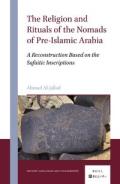
Dr. Ahmad Al-Jallad holds the Sofia Chair in Arabic Studies and is a Professor at Ohio State University, with prior affiliation at Leiden University's Leiden University Centre for Linguistics (LUCL). His research focuses on Arabian epigraphy, pre-Islamic Arabic linguistics, and Semitic philology. He directs the Online Corpus of the Inscriptions of Ancient North Arabia (OCIANA), a central resource for pre-Islamic Arabian epigraphic heritage. Education: Ph.D. in Near Eastern Languages and Civilizations from Harvard University. Key publications include The Religion and Rituals of the Nomads of Pre-Islamic Arabia (2022), An Outline of the Grammar of the Safaitic Inscriptions (2015), and numerous articles on Semitic scripts and pre-Islamic Arabian religious practices. Research interests emphasize deciphering ancient scripts (e.g., Dhofari, Thamudic), reconstructing linguistic histories, and analyzing Safaitic inscriptions for insights into nomadic culture. Recent work includes studies on the pre-Islamic deity Allāh, linguistic divisions between nomadic and sedentary communities, and the decipherment of previously undeciphered scripts. His interdisciplinary approach bridges archaeology, linguistics, and religious studies, often combining epigraphic analysis with textual and paleographic methods.
Jalal Al-Tamimi is an Associate Professor (Maître de conférences) in experimental phonetics and phonology at Université Paris Cité, affiliated with the Laboratoire de Linguistique Formelle (LLF). He holds an HDR (Habilitation à Diriger des Recherches) in Phonetics and Phonology and has extensive experience in teaching and research across institutions including Newcastle University, UK. His research focuses on the interface between phonetics and phonology, particularly the role of acoustic and articulatory correlates in speech production, perception, and acquisition. He specializes in Arabic dialects, using advanced quantitative methods like generalized additive mixed models and machine learning techniques. Al-Tamimi’s academic journey includes a PhD from Lyon 2 University (2007) and postdoctoral roles in the UK before joining Paris. He currently directs the Master in Language Sciences and co-leads research strands on phonetic complexity and language variation. His administrative roles include membership in the AFCP and coordination of experimental linguistics at LLF. Research interests span laboratory phonology, articulatory-acoustic mapping, and the application of automated methods in clinical diagnosis. His work explores epilarynx dynamics in Arabic gutturals and forced-alignment systems for dialectal Arabic. Awards include the Peter Ladefoged Prize (2018) and Leverhulme Fellowships. He supervises numerous PhD and MA students across computational linguistics and phonetics. Publications highlight contributions to vowel dynamics, speech processing in Alzheimer’s, and cross-linguistic phonological studies. His lab collaborations involve the MAUS team and Sorbonne’s SCAI, focusing on speech technology and pathological speech analysis.
Dr. Mara Nicosia is a Postdoctoral Research Fellow at the University of Padua (Department of Historical and Geographic Sciences and the Ancient World) under the ERC Starting Grant FragArist. Previously, she held a British Academy Newton International Fellowship at Durham University (Department of Classics and Ancient History), focusing on Syriac rhetoric's intersection with Greco-Roman and Arabic traditions. Her research explores Syriac intellectual history, Semitic languages, and the transmission of Aristotelian thought. She earned her PhD from the University of Naples 'L'Orientale' with a thesis on Syriac rhetorical vocabulary between Greek and Arabic influences. Her work integrates philological analysis with historical linguistics, emphasizing language contact between Greek, Syriac, and Arabic. Notable contributions include the edited volume Syriac Lexis and Lexica (2024) and studies on Antony of Tagrit's rhetorical treatise. Nicosia has taught courses on ancient rhetoric and co-organized conferences like 'Syriac Studies in the UK' (2024). She holds grants exceeding £114k and has been awarded the Seal of Excellence (2025) and the Gorgias Book Grant (2019).