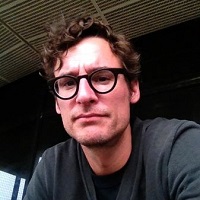
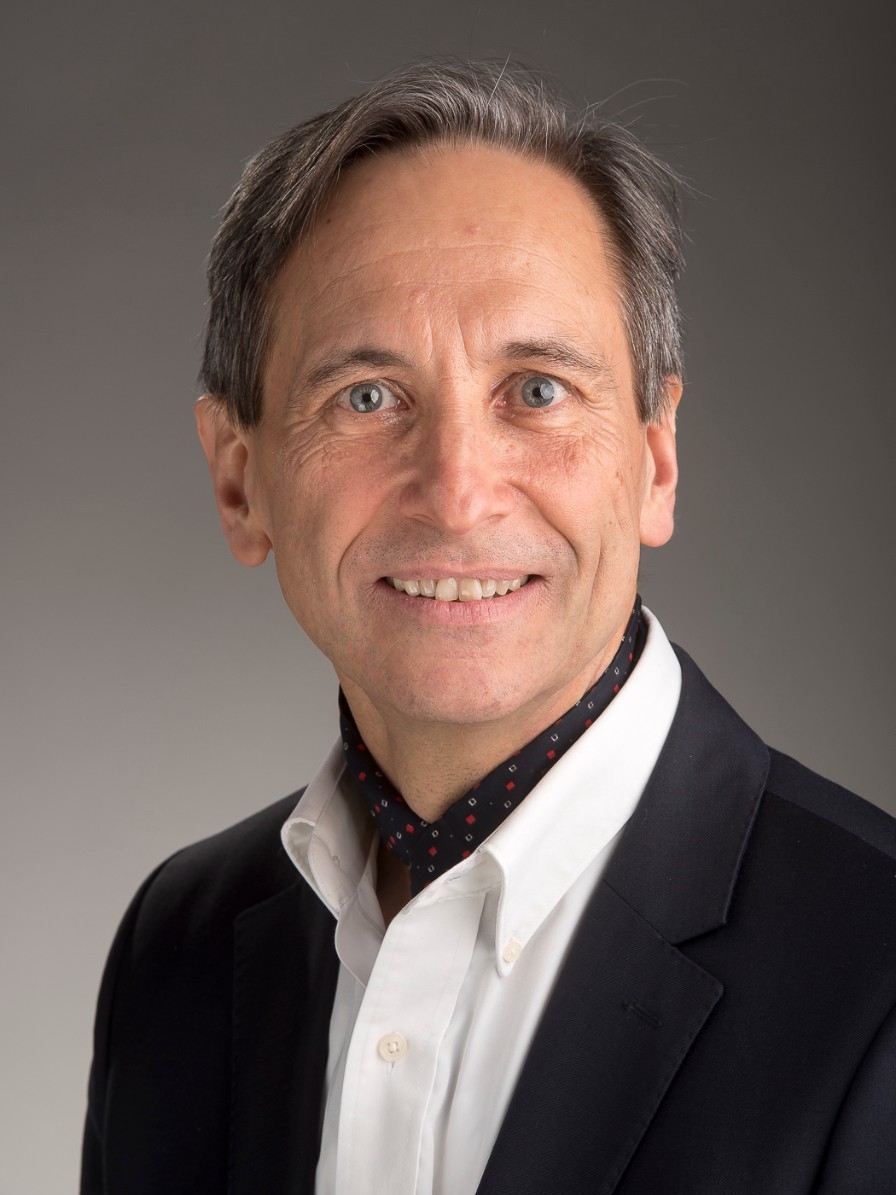
Soumia Bardhan is an Assistant Professor in the Department of Communication at the University of Colorado Denver, specializing in intercultural communication, Islamic studies, and digital media analysis. Her research explores Muslim diasporic identities, counterpublic rhetoric, and communication strategies in authoritarian contexts.
Asma Khalifa is a Doctoral Researcher at the German Institute for Global and Area Studies (GIGA) since October 2018, specializing in the GIGA Institute for Middle East Studies and enrolled in the GIGA Doctoral Programme . Her work focuses on gender dynamics in conflict zones, particularly examining war's impact on gender relations in Libya and Bosnia through comparative analysis. Education: M.A. in Peace and Conflict Studies (Hacettepe University, Turkey), LL.B. (Africa University, Libya) Asma's research spans gender-based violence policies (including during the pandemic), peacebuilding strategies , and post-conflict societal structures . She has contributed to projects like the Policy Tracker on Gender-Based Violence (2020-2021) funded by BMZ, analyzing governmental responses to GBV during crises. Her recent publications explore participatory approaches to conflict and climate challenges in MENA regions, identity formation among Libya's Imazighen during war, and youth struggles in post-conflict environments. She actively participates in academic events as speaker ( GIGA Talk: The Shadow Pandemic 2021) and panelist ( Making Things Worse? The Fight Against Violence and Crime 2019), collaborating with experts like Prof. Dr. Merike Blofield and Johanna Pieper. Her email contact is asma.m.khalifa@gmail.com .
Dr. Richard Gauvain is a Lecturer at the University of Chester's Faculty of Arts, Humanities and Social Sciences , based in the Humanities, Cultures and Environment department. He holds a Ph.D. in Theology and Religious Studies from the University of Glasgow (2002) with specialization in Islamic Studies. His academic career spans universities in the Middle East, Europe, and the UK, encompassing diverse teaching roles in Religious Studies, History, Political Science, and Middle East Studies. Dr. Gauvain's research focuses on Islamic law , Salafism , ritual theory , and Anglican studies , particularly in Middle Eastern contexts. Notable themes include Salafi ritual practices in Egypt, the socio-political dynamics of Islamic reform movements, and the interplay between tradition and modernity in religious discourse. Recent work examines Egyptian Anglican Orthodoxy and UAE national identity narratives . His publications span International Journal for the Study of the Christian Church , Oxford Handbook of Ritual and Worship , and Routledge Handbook of Islamic Ritual , reflecting interdisciplinary engagement with anthropology, theology, and political science. No scientific awards are explicitly mentioned, but his extensive fieldwork and ethnographic contributions highlight scholarly rigor. Teaching expertise includes research methods and theory across undergraduate and graduate levels. His academic language proficiency includes Arabic (fluent) and Spanish (academic competence).
Dr Aljosha Karim Schapals is a Senior Lecturer in Journalism and Political Communication at QUT's School of Communication, part of the Faculty of Creative Industries, Education & Social Justice. He serves as Chief Investigator at the Digital Media Research Centre (DMRC) and Book Review Editor for Media International Australia (Q1 journal). Former roles include Visiting Lecturer at City, University of London and journalist for the Financial Times and German Federal Agency for Civic Education. Education: PhD (City University, London). Research focuses on digital transformation of news production/consumption, social media verification, algorithmic journalism, and political communication. Specializes in autocratic media systems, media concentration, and AI ethics in journalism. Recent publications explore dark political communication, TikTok electioneering, and automated journalism ethics. Awards include 2023 School of Communication Teaching Award and 2022 ICA Top Reviewer honor. Supervises research on digital publics and newsroom practices. Active in professional associations like ANZCA, ICA, and JERAA. Teaching includes Foundations of Journalism (CJB101) and capstone Newsdesk unit (CJB302). Grants include ARC-funded projects on combatting dark political communication and redefining news value. Part of interdisciplinary teams addressing media ethics and democratic accountability.
Dr. Vitaly Chernetsky is a Professor in the Slavic Department at the University of Kansas, specializing in Ukrainian and Russian literature/film, postcolonialism, gender studies, and cultural globalization. He holds a Ph.D. in Comparative Literature from the University of Pennsylvania (1996). His research explores modern/postmodern cultures of Ukraine, Russia, and Eastern Europe, emphasizing diasporic identities, post-Soviet transitions, and queer studies. Affiliations: Director of the Center for Russian, East European, and Eurasian Studies (2015-2020); President of ASEEES (2024); First Vice President of the Shevchenko Scientific Society. Education: Ph.D. in Comparative Literature, University of Pennsylvania, 1996. Key research interests include transnational cultural flows, postcolonial theory, and gender/queer studies in Slavic contexts. He has authored Mapping Postcommunist Cultures and co-edited volumes on Eastern European literatures. His translations include Ukrainian/Russian literary works and historical documents. Chernetsky's publications analyze topics like wartime poetry, diasporic identity, and cinematic representation. Recent articles address Ukrainian cultural resilience, post-Soviet queer narratives, and transatlantic cultural redefinitions. Professional Service: Editor of the Ukrainian Studies book series; member of multiple editorial/advisory boards. Grants/Advising: No specific grants listed; advising roles unspecified but active in academic leadership. He leads interdisciplinary initiatives bridging film, literature, and cultural theory, advocating for global engagement with Eastern European studies. His work emphasizes cultural decolonization and LGBTQ+ visibility in post-Soviet spaces.
Linda Herrera is a Professor and Director of Graduate Studies in the Department of Education Policy, Organization & Leadership at the University of Illinois Urbana-Champaign's College of Education. She also holds affiliations with the European Union Center, Center for South Asian and Middle Eastern Studies, and Center for African Studies at UIUC. Her research focuses on education and power in the Middle East and North Africa (MENA) region, with special emphasis on youth and generations, childhood in global context, and the social effects of technological change. Through a lens of critical pedagogy and movements for participatory democracy, her work examines the intersections of education, media, and society in the digital age. Herrera directs the Education 2.0 Research and Documentation Project (2019-2023), which documents Egypt's major education reform initiative. Her publications reveal consistent themes exploring digital citizenship, youth activism, educational reform in the MENA region, and critical democracy. She has authored or edited numerous books including Educating Egypt: Civic Values and Ideological Struggles (2022), Global Middle East: Into the Twenty-First Century (2021), and Revolution in the Age of Social Media (2014). As an international education advisor, she has consulted with Egypt's Ministry of Education and Technical Education and served on advisory boards for European Commission projects including 'Skills and Integration of Migrants, Refugees and Asylum Applicants in European Labour Markets' and 'Power2Youth.' Herrera has curated several YouTube channels including 'Critical Voices in Critical Times,' 'Democracy Dialogue,' and 'Education 2.0,' demonstrating her commitment to knowledge dissemination through digital platforms. She teaches graduate courses on global youth and citizenship, education and power in the Middle East, and advanced graduate seminars in educational policy studies.
Nermin Allam is an Associate Professor of Political Science at Rutgers University–Newark, a Nonresident Fellow at the Middle East Program of the Carnegie Endowment for International Peace, and a 2024-2025 Visiting Fellow at the Kellogg Institute for International Studies, University of Notre Dame. Her work bridges academia and policy through affiliations with institutions focusing on global governance and regional studies. Education : Doctor of Philosophy in International Relations and Comparative Politics from the University of Alberta, Canada. Allam’s research specializes in gender politics and social movements in the Middle East and North Africa (MENA), with a focus on Egypt, Saudi Arabia, and broader regional dynamics. Her scholarship examines how transnational experiences, such as studying abroad, influence gender norms , professional trajectories , and activist engagement . She situates her work at the intersection of democracy studies , political reform , and civil society development . Allam’s publications span peer-reviewed journals like Perspectives on Politics , Politics & Gender , and Sociology of Islam , alongside policy-oriented pieces in the Washington Post , The Conversation , and Inside Higher Ed . Her research trends emphasize gendered dimensions of political upheaval and educational mobility as a catalyst for societal change . Scientific Awards : Carnegie Endowment Nonresident Fellowship Kellogg Institute Visiting Fellowship SSHRC Postdoctoral Fellowship at Princeton University Allam has secured research funding from the Social Science Research Council (SSRC), SSHRC Canada, and the International Development Research Center (IDRC). She serves on the board of the Arab Political Science Network and as an at-large officer for the American Political Science Association (APSA) Middle East Section.
André Singer is a Research Professor at the Department of Anthropology and Sociology, SOAS University of London, and Adjunct Professor of Anthropology at the University of Southern California. He holds a DPhil from Oxford University and served as President (2014-2018) and Emeritus President of the Royal Anthropological Institute. His twin-track career spans academic anthropology and documentary filmmaking, with fieldwork in Iran and Afghanistan. Research focuses on ethnographic film, cultural representation, and visual anthropology, particularly examining how media intersects with anthropological inquiry. Key areas include: Sedentarisation of nomadic communities Ethnographic methodologies in film Cultural impacts of conflict and genocide Historical trauma representation Publications demonstrate interdisciplinary engagement across anthropology, film studies, and history, with recent work emphasizing Holocaust documentation and post-conflict memory. Articles predominantly explore visual storytelling ethics, cultural preservation, and the anthropology of media. Scientific honors include a BAFTA for Best Documentary Series, two Emmy Awards, Peabody Award, and multiple international film festival prizes. Notable productions include Night Will Fall and collaborations with Werner Herzog. As CEO of Spring Films Ltd., he leads documentary productions addressing historical and social themes. He has supervised restoration projects like the 1945 Holocaust documentary German Concentration Camps, a Factual Survey .
Hamid Dabashi is the Hagop Kevorkian Professor of Iranian Studies and Comparative Literature at Columbia University, where he has taught since receiving his dual Ph.D. in Sociology of Culture and Islamic Studies from the University of Pennsylvania (1984), followed by a postdoctoral fellowship at Harvard University. His research spans Iranian Studies, comparative literature, medieval/modern Islam, and world cinema, with a focus on trans-aesthetics and postcolonial theory. He has authored 25 books, including Iran: A People Interrupted (2007), Post-Orientalism (2009), and The Arab Spring (2012), and over 100 essays. Dabashi is a prominent media commentator, contributing regularly to Al Jazeera and Middle East Eye, addressing geopolitical issues like the Syrian conflict, Gaza genocide, and U.S.-Iran relations. His work bridges academia and activism, advocating for global justice and decolonial thought. Education: Dual Ph.D. in Sociology of Culture and Islamic Studies (University of Pennsylvania, 1984); postdoctoral fellowship at Harvard University. Research Interests: Iranian Studies, comparative literature, Islam’s medieval and modern contexts, global cinema, and postcolonial critique. His essays critique Western hegemony and explore cultural resistance, particularly in the Middle East. Awards: Works translated into 20+ languages, cited globally, and celebrated by peers like Edward Said and Gayatri Spivak for their intellectual rigor and accessibility. His Close Up: Iranian Cinema (2001) remains a seminal text on Iranian film.
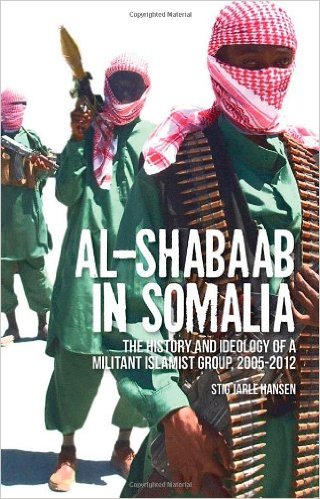
Dr. Stig Jarle Hansen is a Professor at the Department of International Environment and Development Studies (Noragric), Norwegian University of Life Sciences (NMBU), where he teaches courses in International Relations, Security Studies, Piracy, and Religion & Politics. He leads Norway’s only Master’s program in International Relations and is a leading expert on Islamism, Al-Shabaab, and maritime security in the Horn of Africa. Professor, Department of International Environment and Development Studies, NMBU Course Leader: EDS 203, EDS 372, EDS 373, EDS 376 Research Focus: Horn of Africa, Yemen, Somalia, Eritrea, Kenya Media Contributor: BBC, CNN, Al Jazeera, Reuters, CCTV His research centers on religious politics, terrorism, political theory, organized crime, and maritime security, with a deep focus on the Horn of Africa and the Red Sea region. He has conducted annual field research in Mogadishu from 2005 to 2014 and has extensive expertise in Islamic political thought and British idealism. The recent publications reflect a strong thematic focus on militant Islamism (particularly Al-Shabaab), regional conflict dynamics, piracy, and state formation in fragile contexts. His work bridges academic rigor with policy relevance, often analyzing current security challenges in Somalia, Yemen, and the Sahel, with an emphasis on transnational threats, governance, and counterterrorism strategies. Dr. Hansen has no listed scientific awards in the provided text. He supervises students on topics including religion and politics, terrorism, international relations theory, maritime security, organized crime, and regional studies (Somalia, Yemen, Kenya, Ethiopia, Eritrea, Qatar, UAE, Israel-Palestine, Muslim Brotherhood). While no specific grants are mentioned, his commissioned publications and policy commentaries suggest active engagement with research funding and policy institutions. There is no mention of specific labs or research teams in the provided text, though his leadership of a Master’s program and publication record implies academic mentorship and collaborative research networks.
Ebrahim Moosa is Professor of Islamic Studies at the Keough School of Global Affairs, University of Notre Dame, with concurrent appointments at the Kroc Institute for International Peace Studies and Department of History. He co-directs Contending Modernities , a global research initiative examining religious-secular interactions. Ph.D., University of Cape Town M.A., University of Cape Town Islamic and Arabic studies, Darul Ulum Nadwatul `Ulama, India B.A., Kanpur University Postgraduate diploma in journalism, City University London Research Focus : Critical analysis of classical and modern Islamic thought, emphasizing legal pluralism, ethical reasoning, and the interplay between tradition and contemporary challenges. His work spans theological debates, madrasa reform, and post-colonial Muslim identity. Recent Publications : Explored water ethics in Islamic thought (2025), Ghazali's pedagogy (2023), and Sharia debates (2021). His scholarship bridges historical Islamic discourses with modern issues like secular governance (2020) and pandemic-era religious practice (2020). American Academy of Religion’s Best First Book (2006) Carnegie Scholar (2005) Engagement : Active media commentator, podcast host ( Diffused Congruence: The American Muslim Experience ), and contributor to Harvard Law School’s Islamic Law Blog. Led madrasa reform initiatives in India and Qatar.
Dr. Lucia Sorbera is Senior Lecturer in the Department of Arabic Language and Cultures at the University of Sydney, specializing in gender history of the Arab world. She teaches Arabic and Islamic Studies, contributes to International Comparative Literatures and European Studies programs, and supervises postgraduate research in women's history and Middle Eastern politics. PhD in Egyptian Feminism (Università di Venezia) Chair of Arabic Studies Co-editor of Sex and Desire in Muslim Cultures (2020) Her research focuses on Egyptian feminist movements, Arab women's political leadership, and cross-cultural narratives. She has published extensively on transnational feminism, postcolonial studies, and the intersection of gender with contemporary Arab cinema. Recent scholarly activities include a 2025 monograph on feminist human rights foundations and a 2022 editorial on Middle East women's studies. She leads projects analyzing women's narratives in the 2011 Egyptian revolution and chairs the Religion State and Society in the Muslim World research cluster. Scientific Awards: Fernand Braudel Senior Research Fellowship (2021-2022) Kathleen Fitzpatrick Visiting Fellow (2017) Multiple Faculty Research Support Scheme grants (2011-2020) Dr. Sorbera serves on editorial boards for Women and Gender History series and Third Space journal, organizing academic events like the 2013 Competing Visions in the Muslim World symposium.
Dr. Mina Ibrahim is a Researcher at the Center for Conflict Research (ZfK) at Philipps University of Marburg , Germany. She is also the founder and director of Shubra’s Archive for Research & Development (SARD) in Cairo, Egypt, and serves as a project manager for the MENA Prison Forum and Institute for Foreign Relations (IFA) in Lebanon and Germany. PhD in Cultural Studies & Social Sciences (2022, Summa Cum Laude), Justus Liebig University & GCSC Giessen Master of Arts (2015, Cum Laude), Central European University (CEU), Hungary Bachelor of Arts (2014, Highest Honours), American University in Cairo (AUC), Egypt Her research explores minority dynamics , prison studies , urban sociology , and archives of conflict in the Middle East. Recent publications focus on Coptic Christian identity, sectarianism, and post-revolutionary Egypt. She has received prestigious fellowships from the DFG , Arab Council for Social Sciences , and Carnegie Endowment . Dr. Ibrahim supervises graduate students and teaches courses on prison systems, ethnography, and Middle Eastern cultural studies. Her fieldwork bridges Germany , Egypt , and Lebanon , emphasizing interdisciplinary approaches to power, memory, and urban marginalization .
Peter N. Funke is an Associate Professor of Politics at the University of South Florida (USF), specializing in social movements, capitalism & class, and media & technology. He teaches courses on Social Movements, Europe, Politics of Development, Global Political Economy, and Marxism, and leads the 'Germany Beyond the Classroom' study abroad program through the Honors College. Education: Ph.D., Political Science, University of Pennsylvania M.A., Political Science, University of Pennsylvania Vordiplom, Politikwissenschaft, Freie Universität Berlin His research explores the intersection of social movements, media activism, and neoliberal capitalism. Key themes include class formation, movement building, and the role of technology in political resistance. He has published in journals such as South Atlantic Quarterly , New Media & Society , and Interface , and co-edited volumes on social movements. Recent publications (2016–2018) examine urban movements in Philadelphia, media practices in working-class mobilization, and theoretical frameworks like rhizomatic organizing. These works emphasize neoliberal austerity, transnational networks, and radical democratic alternatives. Funke has received funding from institutions including the Social Science Research Council, International Studies Association, and University of Pennsylvania. He serves as faculty advisor for USF’s Young Democratic Socialists of America and participates in editorial collectives for open-access journals.
Ken Seigneurie is a Professor in the Department of World Languages and Literatures at Simon Fraser University’s Faculty of Arts and Social Sciences. His work bridges comparative literature, world literature, and Eastern Mediterranean cultures, with a focus on English, Arabic, and French literary traditions in postcolonial and wartime contexts. He has held leadership roles such as Chair (ad interim) at SFU (2021–2022) and Director of the World Literature Program (2009–2015). PhD in Comparative Literature (University of Michigan, 1995) MA in Comparative Literature (University of Michigan, 1991) BSc and BA (Michigan State University, 1982) His research examines elegiac humanism in wartime and postwar Lebanon, mid-20th-century novelistic responses to liberal thought crises, and the role of Arabic literature in global contexts. He co-edited How My Days Passed: An Armenian Picaresque (2024) and served as Editor-in-Chief of the six-volume Wiley Blackwell Companion to World Literature (2020), which was shortlisted for a PROSE award. Current projects include A Concise Companion to World Literature (2025) and a monograph on liberal nihilism in global novels (2026). His scholarly work spans comparative literature theory, postwar memory, and trans-Mediterranean cultural intersections, reflecting publications in journals like Middle Eastern Literatures and Public Culture . Awards include SFU research fellowships, a Choice magazine Outstanding Academic Title (2012), and grants from SSHRC and Lebanese American University. Key themes: Cultural mediation, war narratives, liberal thought, and postcolonial humanism Language expertise: Near-native French, advanced Modern Standard and Levantine Arabic Professional affiliations: American Comparative Literature Association, Modern Language Association, Lebanese Studies Association