
Georgios Kontogeorgis is a Professor at DTU Chemical Engineering , Department of Chemical and Biochemical Engineering, Danmarks Tekniske Universitet (DTU). His research focuses on advanced thermodynamic modeling and equations of state, with particular emphasis on ionic liquids , CO2 capture , and electrolyte solutions . Email: gk@kt.dtu.dk Affiliations: AT-CERE, KT-Konsortium Professor Kontogeorgis' work spans from fundamental thermodynamic theories (e.g., Debye-Hückel, SAFT) to industrial applications like energy-efficient chemical processes and solvent design . Recent studies include modeling water anomalies, ion association effects, and phase equilibria in complex solvent systems. His publications reveal trends in machine learning integration for thermodynamic predictions, CO2 mineralization studies, and multifunctional solvent design for separation processes. Collaborative projects with AT-CERE and KT-Konsortium focus on carbon capture and chemical engineering innovation . Labs/Teams: Affiliated with AT-CERE (Center for Energy Resources Engineering), KT-Konsortium (Chemical and Biotechnological Consortium)
جستوجوی استاد و پژوهشگر
استاد راهنما، استاد دانشگاه یا پژوهشگر مناسب برای مسیر پژوهشیتان را پیدا کنید و با او ارتباط بگیرید.
نمایش ۱۲۱-۱۲۵ از ۱۲۵ استاد راهنما
اطلاعات این پروفایلها از صفحات عمومی دانشگاهها جمعآوری شده و ممکن است بهروز نباشد.
- Materials Science
- Fluid Dynamics
- Colloidal Physics
- +۳ مورد دیگر
Jean Colombani is a Professor at the Institute of Light and Matter (Université Claude Bernard Lyon 1). He leads the Liquids and Interfaces team and focuses on materials science, fluid dynamics, and colloidal physics. Previously, he was active in the Mechanical and Production Engineering department for over two decades. Research Highlights: His work explores colloidal gel mechanics solute transport phenomena (Soret effect) durability of mineral materials dissolution-precipitation processes drop evaporation on reactive substrates recycling of paper electronics Collaborations span institutions like UCLA, Tokyo University, Padua, and Grenoble, with multiple Arqus grants supporting international exchanges. He mentors PhD candidates such as Alexandra Mailleur and engages in science-art partnerships. Scientific Awards: Arqus grant (2022) Arqus grant (2020) Arqus grant (2017)

Ella Raquel Acuña-González is an Adjunct Researcher at Tecnológico de Monterrey's School of Engineering and Sciences, Department of Biotechnology, pioneering molecular bioacoustics —the study of sound effects on bacterial systems. Her interdisciplinary work bridges biotechnology with sustainability, arts, and LGBTQ+ advocacy through her venture El Laboratorio de Reichel . Education: PhD in Biotechnology, Tecnológico de Monterrey Biotechnology Engineer, Tecnológico de Monterrey (graduated 2013 with 94.9/100 average) Her research centers on sound-induced microbial responses , environmental biotechnology (e.g., estuary bacterial communities post-Hurricane Harvey), and plant-based protein extraction. She integrates scientific rigor with artistic expression—leveraging her background as a semi-professional drummer—to advance neurodivergent-inclusive science communication. Publications reveal a trajectory from foundational plant bioprocess engineering (2015) to interdisciplinary environmental microbiology (2022), consistently emphasizing sustainable bioproduct development and microbial adaptation mechanisms. Scientific Awards: National System of Researchers (SNI) Candidate (2020-2022) Dr. Acuña-González coordinated the Bioprocesses Laboratory (2019-2022), leading glycosylated carotenoid production projects with industry partners. She founded El Laboratorio de Reichel in 2021 to promote science education through non-binary gender philosophy and music, reflecting her commitment to intersectional knowledge dissemination.
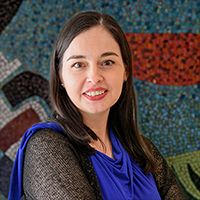
Mirna Alejandra González-González is an Assistant Professor in the Department of Chemical Engineering at Tecnológico de Monterrey's School of Engineering and Sciences, where she leads research at the Institute for Obesity Research. Her work bridges chemical engineering principles with biomedical applications, focusing on innovative diagnostic and therapeutic approaches. Her educational background includes: Chemical Engineering degree from Tecnológico de Monterrey (2008) PhD in Engineering Sciences with Biotechnology specialization from Tecnológico de Monterrey (2013) González-González's research spans multiple interdisciplinary fields with a strong emphasis on developing novel diagnostic platforms and separation techniques. Her primary research interests include aqueous two-phase systems for biomolecule separation, enzyme-based colorimetric detection of biomarkers, stem cell culture techniques, and disease-specific research in diabetes, Parkinson's disease, and vascular tumors. She has made significant contributions to adapting separation technologies for biomedical applications, particularly in non-invasive diagnostic methods using alternative biofluids like saliva. Her publication record shows consistent growth in high-impact journals, with a clear trajectory toward increasingly complex biomedical applications of chemical engineering principles. Recent work demonstrates expansion into clinical applications of her separation technologies, with growing emphasis on disease-specific research in Latin American populations. Her scientific recognition includes: Premio Mujer TEC 2016 in Science and Technology category Mexican Researcher Certification - Level 1 Multiple awards for innovation and patent generation Recognition from the Red de Oficinas de Transferencia de Tecnología (2019) As an educator, González-González supervises doctoral research and teaches advanced courses including Doctoral Research I, Doctoral Research Proposal III, and Translational Research Project. Her teaching focuses on bridging fundamental engineering principles with practical biomedical applications. She has received recognition for her publications with high indexing levels and has been honored for thesis supervision excellence. Her research group operates at the intersection of chemical engineering and biomedical sciences, with particular strength in aqueous two-phase system applications for cell culture and biomarker detection. The team maintains active connections with clinical researchers studying Parkinson's disease, diabetes, and vascular conditions, facilitating translational research pathways.
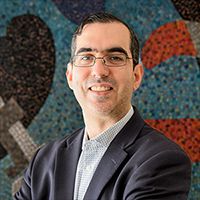
Omar Lozano-Garcíaمشاهده پروفایل
استاد پژوهشی
Omar Lozano-García is a Research Professor at Tecnológico de Monterrey, where he serves as the Institute for Obesity Research Leader. His academic work spans bioengineering, medical devices, and nanomedicine, with a strong focus on cardiovascular and obesity-related research. He is actively involved in doctoral education, supervising research proposals and thesis work in the Life Sciences department. Doctor of Philosophy in Physics, University of Houston USA Master of Physicist Sciences, University of Houston USA Industrial Physicist Engineer, Tecnológico de Monterrey Dr. Lozano-García's research focuses on the intersection of nanotechnology and biomedical applications, particularly in cardiovascular disease and obesity. His work explores nanoparticle toxicology, drug delivery systems, and mitochondrial function in cardiac cells. He investigates how nanomaterials interact with biological systems, with particular attention to cardiotoxicity mechanisms and therapeutic applications for obesity treatment. His research spans from fundamental biophysics to translational applications, with numerous publications in high-impact journals. Analysis of his recent publications (2023-2025) reveals a strong emphasis on nanomedicine applications for cardiovascular and obesity research. His work consistently explores mitochondrial function in cardiac cells, nanoparticle toxicity mechanisms, and novel drug delivery systems for metabolic diseases. A significant portion of his recent research involves snake venom components for obesity treatment and the cardiotoxic effects of nanoparticles and cancer therapies. Nombramiento 'chargé de recherche' conferred by FNRS (2014) Mexican Researcher Certification - Level 2 Dr. Lozano-García actively mentors doctoral students through various research stages and thesis development. His research is supported by substantial scientific output, with 36 publications in the last 10 years. His work has gained significant attention, with numerous citations across social media platforms, policy documents, news outlets, and patents. He leads the Bioengineering and Medical Devices strategic research group at Tecnológico de Monterrey, focusing on innovative approaches to obesity and cardiovascular disease. As leader of the Institute for Obesity Research, Dr. Lozano-García directs a multidisciplinary team investigating novel therapeutic approaches for obesity and related metabolic disorders. His research group combines expertise in nanotechnology, biophysics, and molecular biology to develop innovative solutions for metabolic diseases, with particular emphasis on natural compounds and nanomedicine applications.