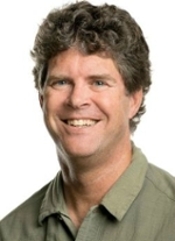
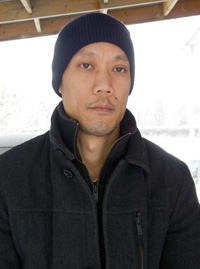
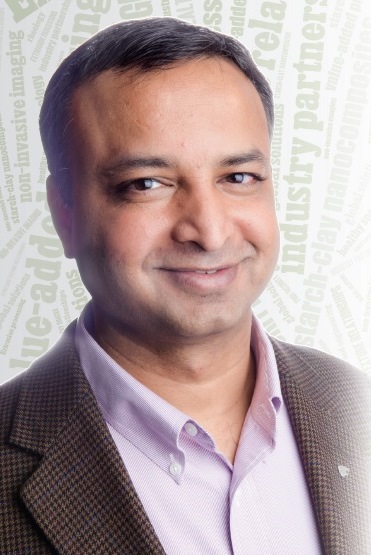
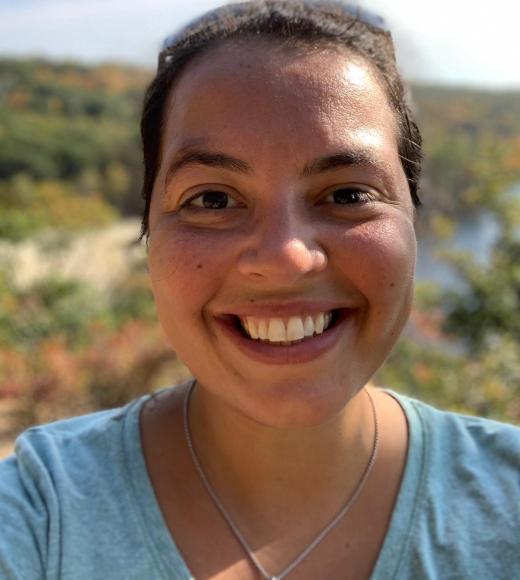
Mark Lewis is the Kennedy Chair in Mathematical Biology at the University of Victoria, holding joint appointments in the Departments of Mathematics and Statistics and Biology. His research focuses on spatial ecology and mathematical modeling, addressing ecological challenges such as animal movement, invasive species, and disease dynamics. Lewis earned his D.Phil. in Mathematical Biology from the University of Oxford and has been elected a Fellow of the Royal Society UK. His work integrates mathematical analysis, field studies, and interdisciplinary approaches to solve ecological problems. Current projects include modeling polar bear populations, cyanobacteria dynamics, and the impact of climate change on wildlife. Lewis supervises students across both UVic and his former University of Alberta lab. Education: D.Phil. in Mathematics (Mathematical Biology), University of Oxford Awards: Royal Society Fellowship, CRM-Fields-PIMS Prize, and Okubo Prize Key Research Areas: Animal movement modeling, aquatic ecology, wildlife disease, and invasive species management Publications highlight his contributions to understanding disease spread, parasite dynamics, and ecological responses to environmental changes. Lewis collaborates widely, applying mathematical tools to real-world conservation and health challenges.
Dr. Michael Ivie is a Professor in the Department of Plant Sciences & Plant Pathology at Montana State University (MSU), affiliated with the College of Agriculture. His research focuses on insect systematics, faunistics, and taxonomy, with a particular emphasis on beetles and bees. He holds a Ph.D. in Systematic Entomology from The Ohio State University (1985), an M.S. in Entomology (1981), and a B.S. in Entomology from the University of California, Davis (1977). His research contributions include groundbreaking work on beetle phylogenetics, integrative taxonomy of Coleoptera, and biodiversity studies of North American insects. Notable projects include phylogenomic analyses of Phengodidae and revisions of Lycidae genera. He has authored or co-authored numerous articles in journals like the Zoological Journal of the Linnean Society and The Coleopterists Bulletin. Grants: Exotic Woodborer traps (MDA), Pollinator Surveys (US Forest Service), Wild Bees of Montana (MDA/BLM), and biodiversity studies funded by BLM. Awards: Nominated for Fellow of the Royal Entomological Society (1991) and Honorary Member of the Coleopterists Society (2009). Service: Editor for Zootaxa and ZooKeys, former President of the Bozeman Creek Neighborhood Association, and President of the Coleopterists Society. Dr. Ivie is the Curator of the Montana Entomology Collection (MTEC), a major repository of North American invertebrates, with strengths in Coleoptera, Diptera, and Apoidea. The collection supports regional and global research, including studies on pollinators and aquatic insects.
Wolfram Mey serves as Curator of the Lepidoptera and Trichoptera Collection (Butterflies, Moths, Caddisflies) at the Museum of Natural History, Leibniz Institute for Evolution and Biodiversity Research in Berlin since 1990. His role encompasses collection management, providing specialized services to the international entomological community, and public outreach through lectures and information dissemination. Education: Biology studies at Martin Luther University Halle-Wittenberg (1973-1978) Doctorate in Natural Sciences (Dr. rer. nat.) from Martin Luther University Halle-Wittenberg (1980) Dr. Mey's research centers on the taxonomy, phylogeny, biogeography, and biodiversity of Lepidoptera and Trichoptera in the Old World, with significant fieldwork in southwestern Africa, the Philippines, and Colombia. His work integrates morphological analysis with ecological and historical biogeographical frameworks to document species diversity in understudied regions. Key methodologies include systematic revision of genera, fauna inventories, and development of identification tools for complex insect groups. His publication record demonstrates sustained focus on African Lepidoptera systematics (particularly the Brandberg Massif in Namibia) and global Trichoptera diversity. Recent works emphasize field-based inventory projects in biodiverse hotspots like the Colombian Páramo, reflecting a commitment to documenting micro-endemic species in threatened ecosystems. The 2002 Trichoptera symposium proceedings highlight his role in fostering international taxonomic collaboration. Research Leadership: Basic pattern of Lepidoptera diversity in southwestern Africa Identification book for Lepidoptera of southwestern Africa Caddisfly fauna survey of the Philippines Trichoptera and Micro-Lepidoptera inventory in Colombia's Páramo
Dr. Albert Ruhi is Associate Professor in Environmental Science, Policy and Management at UC Berkeley. His research examines freshwater ecosystem responses to global change, with focus on hydrologic alteration and drought impacts across river networks. The Ruhi Lab integrates field experiments, time-series analysis, and hydrologic modeling to understand metacommunity dynamics and ecosystem resilience. Educational background: PhD in Ecology, University of Girona BS in Biology, University of Girona Research explores: Drought impacts on aquatic communities Climate change effects on stream metabolism Wetland restoration outcomes Metacommunity recovery pathways Ecohydrological feedbacks Recent publications address: Phenological shifts in estuarine food webs Flow alteration cascades in river networks Beaver-mediated drought resilience Groundwater-riparian interactions Awards and honors: NSF CAREER Award (2021) California Sea Grant Award (2021) Hellman Fellowship (2020) Winkler Scholar (2023) Research group includes 7 graduate students and postdocs studying: Urban river restoration Tidal marsh food webs Alpine stream thermal regimes Vernal pool seedbanks Field sites span Sierra Nevada streams, San Francisco Bay wetlands, and Mediterranean rivers.
Brian Leung is an Associate Professor at McGill University, jointly affiliated with the Department of Biology and the Bieler School of the Environment . He holds the prestigious UNESCO Chair for Dialogues on Sustainability and serves as Director of the McGill Neotropical Environment Option (NEO) , a collaborative program with the Smithsonian Tropical Research Institute. His work bridges ecological theory, computational modeling, and environmental policy. Dr. Leung earned his PhD in Biology from Carleton University and completed postdoctoral research at the University of Cambridge and the University of Notre Dame. His academic journey at McGill began in 2004 as an Assistant Professor, advancing to Associate Professor in 2010. His research centers on predictive ecology , particularly modeling biological invasions and sustainability challenges . He develops and applies mathematical, statistical, and computational models to understand invasion dynamics across terrestrial, aquatic, and marine systems. His recent work includes the Panama Research and Integrated Sustainability Model (PRISM) , a spatially explicit framework for sustainability science in the Global South. His research spans scales from local to global and integrates ecological, economic, and social factors. His recent publications show a strong focus on invasion risk assessment , species distribution modeling , economic costs of invasions , and ecological forecasting . He frequently publishes in top journals such as Nature , Ecology Letters , and Global Ecology and Biogeography , emphasizing data-driven decision-making and policy relevance. Dr. Leung has received significant recognition through invitations to contribute to major reports and has co-edited influential works on invasive species economics. While specific named awards are not listed, his leadership roles and publication record reflect high scientific esteem. He actively mentors a dynamic research group, supervising multiple Ph.D. and M.Sc. students on projects related to invasion modeling, mangrove conservation, forest pest dynamics, and urban ecology. His lab emphasizes quantitative skills and interdisciplinary collaboration. He has secured research funding to support these projects, though specific grants are not detailed in the text. He leads the Leung Lab , which focuses on predictive modeling in ecology and sustainability. The lab collaborates with institutions such as the Smithsonian Tropical Research Institute and environmental firms like Habitat. Current projects include multi-species connectivity modeling, mangrove ecosystem services, and forecasting forest pest outbreaks.
Dr. Sajid Alavi is a Professor in the Department of Grain Science and Industry at Kansas State University. He joined the faculty in 2002 after earning his Ph.D. in Food Science/Food Engineering from Cornell University (2002), M.S. in Agricultural and Biological Engineering from Penn State (1997), and B.S. in Agricultural Engineering from IIT (1995). His research focuses on extrusion processing in food, pet food, and feed applications, with expertise in rheology, food microstructure imaging, and process sustainability. He leads global projects in Africa, Brazil, India, and beyond, emphasizing sustainable food technologies and AI-driven processing innovations. Dr. Alavi is a recipient of the 2010 Young Research Scientist Award from the Cereals & Grains Association. He teaches GRSC 620 (Intro to Extrusion Processing) and GRSC 820 (Advanced Extrusion Processing), and has trained over 1,000 industry leaders through his renowned 'Extrusion Processing: Technology and Commercialization' short course. His work bridges food science and engineering, addressing challenges in plant-based meat analogs, nutrient bioavailability, and food aid product development. Key facilities associated with his work include the BIVAP Feed Quality Assurance Lab and Hal Ross Flour Mill. His research spans sensory analysis of meat alternatives, fiber utilization in pet food, and sustainability assessments of novel crops like intermediate wheatgrass. Recent studies explore insect protein in pet food, AI-driven extrusion optimization, and iron bioavailability in fortified foods. Dr. Alavi’s contributions span academic, industrial, and global food security domains, reflecting a commitment to innovative, scalable food solutions.
Anya L. Brown is an Assistant Professor in the Department of Evolution and Ecology at the University of California, Davis, based at the Bodega Marine Lab. Her research focuses on the community ecology of marine systems, particularly coral reefs, investigating how host-associated microbes and trait variation influence species resilience to stress, ecological interactions, and adaptive plasticity. Education: B.S. (Brown University, 2009), M.S. in Biology (California State University, Northridge, 2012), Ph.D. in Ecology (University of Georgia, 2018). Postdoctoral Experience: Ewel Postdoctoral Fellow in Tropical Ecology (University of Florida, 2018-2020); Postdoctoral Scholar in Marine Chemistry and Geochemistry (Woods Hole Oceanographic Institution, 2020-2022). Her recent publications highlight microbial dynamics in coral reefs, antibiotic effects on reef microbiomes, and trait-mediated interactions. She emphasizes interdisciplinary approaches, combining molecular tools with observational and experimental studies. The Brown Lab actively engages students in cross-system marine research, prioritizing inclusivity in scientific communities. Key trends in her work include understanding microbial responses to environmental stressors, coral disease mechanisms, and the role of extended phenotypes in reef ecology. These studies span tropical and temperate marine ecosystems, with implications for conservation and restoration. Scientific Awards: Hellman Fellowship 2024-25 Ewel Postdoctoral Fellowship in Tropical Ecology Dr. Brown's lab fosters research across coral reefs and local coastal systems, integrating ecological and microbial perspectives. She advocates for inclusive teaching and research practices while advancing microbial ecology frameworks in marine conservation.
Stephanie Rogers is an Assistant Professor of Geosciences at Auburn University's College of Sciences and Mathematics, specializing in geospatial technologies and environmental applications. She leads the GeoIDEA Lab, focusing on GIScience, water quality modeling, and environmental impacts on honey bee colonies. Her research integrates emerging technologies like drones for ecological monitoring and addresses interdisciplinary challenges such as groundwater management and pollution tracking. Education: PhD in Geosciences from the University of Fribourg, Switzerland. Research Interests: Rogers' work bridges geospatial innovation with real-world problem-solving. Key areas include: GIS-driven environmental monitoring and modeling Drone-based assessment of water quality and algal blooms Groundwater contamination dynamics and public health implications Honey bee colony health through spatial analysis Advising & Grants: Currently mentors two trainees (Bethany Foust and Mallory Jordan) and collaborates on projects funded by environmental agencies. Her grants focus on geospatial data integration for ecological decision-making. Labs/Teams: GeoIDEA Lab coordinates multidisciplinary efforts in environmental geoscience, with active projects in Alabama's Black Belt region and international glacial archaeology initiatives.
Markus Friedrich is a Professor in the Department of Biological Sciences at Wayne State University, affiliated with the College of Liberal Arts and Sciences. His research focuses on insect development, gene family evolution, and arthropod visual systems, with a particular interest in cave-adapted species. He has held roles including Editor-in-Chief of the Molecular Biology and Genomics Section for the journal Insects and advised on the Australian Research Council project DP230100731 (2023-2024). Education: PhD in Zoology from Ludwig-Maximilians-Universität München (1995), postdoctoral training at Caltech (1996–1999). His research interests span comparative genomics, evolutionary developmental biology, and the genetic basis of sensory adaptations. Notable work includes studies on opsin gene evolution, cave animal adaptations, and the genomic basis of arthropod diversification. Recent publications highlight discoveries in harvestmen relict eyes, horseshoe crab Pax6 homologs, and cave beetle sleep behavior. Teaching includes courses like BIO4220 Biological Dimensions of Evolutionary Psychology and BIO1500 Basic Life Diversity . He has supervised numerous students and volunteers, fostering a dynamic research lab environment. His work integrates genomic, developmental, and evolutionary approaches to unravel mechanisms of trait evolution in insects. Grants/Awards: Australian Research Council funding, editorial leadership in entomology journals. Labs/Teams: The Friedrich Lab focuses on evolutionary genetics, with projects involving Tribolium beetles, cave organisms, and comparative genomics.
Alexandre Poulain is a Full Professor in the Department of Biology at the University of Ottawa and Vice Dean for Research and Infrastructure in the Faculty of Science. His multidisciplinary research bridges biogeochemistry, microbial physiology, and environmental toxicology. Education: B.Sc. (Angers, France), M.Sc. (INRS, Canada), Ph.D. (Université de Montréal, Canada), Postdoc (MIT, USA) Research Interests: Mercury cycling in Arctic and temperate ecosystems, microbial metal transformations, biosensor development for contaminants, redox reaction dynamics, bioremediation using environmental microbes, and mercury-organic matter interactions. His lab (2017-2025) has produced 15 recent publications on mercury biogeochemistry in oil sands, rice paddies, and Arctic lakes, alongside arsenic speciation studies and pesticide impacts on pollinators. Current students explore archaeal mercury regulators, acidothermophilic biosensors, and microbial remediation. Scientific contributions include: NSERC Postdoctoral Fellowship (2007-2009) Co-PI on Microbright, a startup commercializing microbial water treatment Developed portable arsenic biosensor tested in Cambodia Co-edited mercury-climate synthesis in Nature Communications
David Buchwalter is a Professor in the Department of Biological Sciences at North Carolina State University (NCSU). His research focuses on contaminants and abiotic stressors in freshwater environments, with particular emphasis on aquatic insects' physiological responses. He leads the Buchwalter Lab, studying ecological physiology and toxicology in aquatic invertebrates, linking biological organization levels to understand human impacts on aquatic life. Research interests include trace metal bioaccumulation, thermal stress, osmoregulation, and PFAS effects. His work integrates comparative physiology, ecotoxicology, and environmental monitoring. Key projects involve the NCSU Center for Environmental and Health Effects of PFAS and Center for Human Health and the Environment (CHHE). Awards: 2015 Fulbright Senior Scholar (University of Otago, New Zealand). Advising includes students like Dr. Jamie Cochran and Dr. Sara Orr. Collaborative grants include NSF-funded studies on thermal physiology and ion transport in freshwater ecosystems. The lab emphasizes experimental approaches to understand stressor impacts across physiological and ecological scales. Lab affiliations: Biological Sciences; Affiliated with Toxicology & Environmental Health Sciences, Ecology, Evolution and Conservation Biology, and Integrative Physiology and Neurobiology programs.
Dr. Noboru Yonemitsu is an Associate Professor of Teaching in the Department of Civil Engineering at the University of British Columbia (UBC), affiliated with the Faculty of Applied Science. He specializes in Hydrotechnical Engineering and has been with UBC since 1992, contributing to both teaching and research. His research focuses on IR-NDT technologies, turbulent fluid mechanics, and environmental fluid mechanics, with applications in wastewater treatment and ecological systems. Education: M.A.Sc. in Engineering Physics from Hokkaido University (Japan), specializing in Turbulent Fluid Dynamics and Non-destructive Testing (NDT). Ph.D. in Water Resources Engineering from the University of Alberta, Canada. Research Interests: Non-destructive testing (NDT) for infrastructure assessment Fluid dynamics in environmental and ecological contexts Wastewater treatment technologies Awards: 2019 3rd Year Student Appreciation Award 2002 Civil Engineering Teaching Award (UBC) Alberta Ministry of Advanced Education Scholarship (1987-1989) Teaching: Instructs courses including CIVL 303 (Computational Tools), CIVL 315 (Fluid Mechanics II), and Civil Engineering Design Projects. His pedagogical approach integrates practical engineering challenges with theoretical foundations. Professional Experience: Extensive consulting and research work with organizations like Northwest Hydraulics Consultants, NASA, BCIT, and major industries, spanning hydraulics, NDT, and environmental engineering.
Martin Kaltenpoth serves as Director at the Max Planck Institute for Chemical Ecology in Jena since 2020 and Professor for Evolutionary Ecology at Johannes Gutenberg University of Mainz since 2015. Previously, he led the Research Group Insect Symbiosis at the MPI for Chemical Ecology from 2009 to 2015. Education: PhD in Biology (summa cum laude), University of Würzburg, 2006 Diploma in Biology (with honors), University of Würzburg, 2003 His research centers on insect-bacterial symbioses , investigating evolutionary, ecological, and chemical dimensions of host-microbe interactions. Key foci include nutritional and defensive symbiosis in beetles, genomic adaptations of symbiotic bacteria, and chemical mediation of symbiotic relationships. His work bridges entomology, microbiology, and chemical ecology to unravel coevolutionary mechanisms. Analysis of recent publications reveals dominant trends in beetle-microbe systems, emphasizing symbiont roles in cuticle synthesis, antifungal defense, and host-plant adaptation. His studies frequently employ genomic, biochemical, and experimental approaches across diverse insect lineages. No scientific awards were documented in the source material. While specific advisees and grants remain unlisted, his leadership of research groups and dual academic appointments indicate active supervision of graduate researchers and externally funded projects in symbiosis evolution. Currently directing research at the Max Planck Institute, Kaltenpoth advances understanding of symbiotic systems with implications for evolutionary theory and sustainable pest management strategies.
Michael T. Monaghan is a Professor at the Faculty of Biology, Chemistry and Pharmacy, Freie Universität Berlin, and leads the Research Group in Molecular Ecology and Genomics at the Leibniz Institute of Freshwater Ecology and Inland Fisheries (IGB). His work bridges evolutionary biology, molecular ecology, and environmental monitoring, focusing on freshwater systems and urban aquatic habitats. Education: B.S. (The Ohio State University, 1995), M.S. (Idaho State University, 1998), Dr. sc. nat. (ETH Zürich, 2002) Key Positions: Senior Scientist/Research Group Leader at IGB (2008–present), Visiting Professor at Duke-NUS Medical School (2016), Guest Professor at Ehime University (2015–2016) Dr. Monaghan's research explores freshwater biodiversity dynamics using molecular tools like metabarcoding and phylogenomics. His team investigates how environmental changes—climate warming, urbanization, pollution—affect microbial and insect communities, with a focus on eDNA applications and ecohydrology. His publications (2022–2025) span topics such as climate-driven plankton shifts, urban habitat adaptation by bees, toxin genetics in algae, and metagenomic monitoring of aquatic systems. Collaborative projects like BiNatUr and ODER~SO emphasize urban resilience and disaster ecology. Teaching includes data science in biology, evolutionary ecology, and environmental genomics at Freie Universität Berlin and the Institute of Computer Science. He mentors doctoral and master’s students in molecular ecology and trains interns in biodiversity genomics. Lab Members: Dr. Dagmar Frisch (Scientific Staff) Dr. Katrin Kiemel (Postdoc) Elisabeth Funke (Research Technician) Doctoral Candidates: Onur Erk Kavlak, Athena Karapli-Petritsopoulou, Daniel Wewer
Professor Riikka Rinnan (University of Copenhagen) is a leading expert in ecosystem-atmosphere interactions, focusing on volatile organic compounds (VOCs) in Arctic environments. Her groundbreaking discovery of VOCs in permafrost has advanced climate prediction models, revealing complex interactions between climate warming, insect herbivory, microbial activity, and vegetation shifts. Current position: Professor, Department of Biology, University of Copenhagen Major research themes: Permafrost VOCs, Arctic climate feedbacks, plant-insect-microbial interactions International collaborations: China, Germany, Russia Her work combines field expeditions in extreme Arctic conditions with laboratory experiments and advanced VOC analysis. Climate warming experiments show VOC emissions could increase 40-fold with combined warming and insect attacks, while Arctic soils may act as unexpected VOC sinks. Key publications appear in Nature Communications , Nature Geoscience , and Global Change Biology . Riikka Rinnan has received prestigious awards including the EliteForsk Award, European Research Council Consolidator Grant, and Sapere Aude Research Leader. She leads international research teams, advises five PhD candidates, and supervises four postdocs (including two Marie Curie fellows). Her Siberian expedition plans demonstrate commitment to real-world scientific challenges.