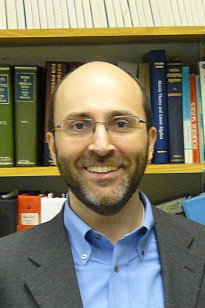
Stefan Sosnowski is a Research Fellow at the Chair of Information-Oriented Control, Technical University of Munich (TUM). He has been affiliated with TUM since 2007, including roles as a research assistant and PhD candidate. His work spans Control Systems , Robotics , and Human-Robot Interaction . PhD in Electrical Engineering (2014), TUM Diploma Engineer (2007), TUM B.Sc. in Electrical Engineering (2005), TUM His research focuses on Data-driven Control (e.g., Koopman Operator theory, Gaussian Processes), Human-Centered Control , and Bio-inspired Design for autonomous systems. Recent publications emphasize learning-based control frameworks and stability analysis for nonlinear systems. Notable projects include SeaClear2.0 , CO-MAN , and ReHyb . He coordinates external theses at ITR and has an Erdős number of 4.
Joseph S.B. Mitchell is a SUNY Distinguished Professor at the Department of Applied Mathematics and Statistics, State University of New York at Stony Brook. His office is located in Math Tower, Room P-138A. His research spans computational geometry, algorithms, optimization, and related fields. Research Interests: Prof. Mitchell's work focuses on fundamental and applied problems in geometric computing, including: Algorithm design for spatial optimization (e.g., art gallery problems, dispersion) Robotics applications (multi-agent path planning, sensor deployment) Efficient solutions for geometric data structures and visibility constraints Recent Publications: His 15 most recent articles (2024-2025) demonstrate a consistent focus on geometric optimization, visibility problems, and algorithm design for polygons and networks. Common themes include approximation algorithms, multi-robot coordination, and combinatorial solutions for spatial challenges. Awards: SUNY Distinguished Professor (recognizing exceptional academic contributions)
Dr. Robert Smyk is an Assistant Professor in the Department of Automation at Gdańsk University of Technology's Faculty of Electrical and Automation Engineering. His office is located on floor 112 of the faculty building, and he can be contacted via email at robert.smyk@pg.edu.pl or by phone at +48 58 347 1332. Dr. Smyk's research spans several interconnected domains: Hardware-focused computing : FPGA implementations, residue arithmetic systems, and high-speed digital converters Algorithm development : Novel approaches to residue number system operations and signal processing optimizations Engineering applications : Computer vision for infrastructure inspection, cryptographic systems, and sensor data processing His publications demonstrate consistent focus on improving computational efficiency through mathematical optimizations and hardware-aware designs. With 67 publications documented in institutional repositories, his recent works explore: algorithmic improvements for residue arithmetic (2023-2025), thresholding/edge detection for industrial vision systems (2018-2022), and hardware architectures for specialized converters. Teaching activities include extensive involvement with 163 documented educational engagements.
Alfonso Carlos Martínez Estudillo is a Full Professor in the Department of Quantitative Methods at Loyola University's School of Business and Economics. He serves as Director of the Master's Program in Research Methods Applied to the Social Sciences and is a member of the Quantitative Research Methods and Applications (MICA) research group. With a PhD in Computer Science and Artificial Intelligence (2008) and a Computer Engineering degree (1995), both from the University of Granada, his academic journey includes previous roles as Network and Systems Administrator, Database Programmer, and IT Service Coordinator at ETEA-Faculty of Economics and Business. His research focuses primarily on evolutionary computation and neural networks for solving machine learning problems, with specialization in product-unit neural networks. His doctoral thesis opened an important research line within the AYRNA Research Group, where he has been a member since 2001. This work has led to publications in leading journals such as IEEE Transactions and Systems, Man and Cybernetics, and Neural Networks, with applications spanning predictive microbiology, chemical kinetics, pollen prediction, remote sensing, and financial risk assessment. Currently, he is working on multi-objective optimization, ordinal classification, and data mining with large databases using Big Data techniques. Professor Martínez Estudillo has participated in numerous research projects including R&D initiatives funded by the Ministry of Science and Technology, excellence projects from the Regional Government of Andalusia, and international cooperation projects analyzing social aspects of indigenous populations in Honduras. His recent publications demonstrate continued application of artificial intelligence techniques to economic problems, with his most recent work (2022) examining sovereign debt ratings in Europe. His teaching portfolio includes Databases, Fundamentals of Computer Science I, Computing Infrastructures and Databases, Applied Mathematics for Business Management, and Programming I, reflecting his expertise in both theoretical and applied computational methods for business and economics.
Graziano Vernizzi serves as Professor in the Department of Physics and Astronomy at Siena University (formerly Siena College) since 2016, having previously held Associate Professor (2013-2016) and Assistant Professor (2010-2013) positions at the same institution. His academic journey includes a Research Professor role at Northwestern University (2006-2010) and prestigious postdoctoral appointments at the Niels Bohr Institute, University of Oxford, CEA/Saclay, Spinoza Institute, and Northwestern University. His educational background includes: B.S. in Physics, University of Parma, Italy (1995) Ph.D. in Physics, University of Parma, Italy (2000) Vernizzi's research integrates computational and theoretical physics to address nanoscale phenomena, with core interests in Random Matrix Theory, biophysics (RNA/ssDNA structures and membrane theory), soft condensed matter physics, and nanoscale science. He develops computational models to analyze complex systems where theoretical frameworks are essential for interpreting experimental data, driving technological innovation and expanding career opportunities in emerging scientific fields. His methodology frequently bridges mathematical rigor with physical applications across disciplinary boundaries. Analysis of his publication trends reveals consistent interdisciplinary work connecting mathematics, physics, and engineering. Key recurring themes include topological constraints in biological and electronic systems, statistical mechanics approaches to soft matter, and algorithmic innovations for verification problems. His research demonstrates particular strength in applying abstract mathematical concepts like random matrix theory to concrete biophysical and engineering challenges, resulting in publications spanning Physical Review journals, Soft Matter, and specialized engineering conferences. His scientific recognition includes: Trust-Co Excellence Honor for advancing the mission of Siena College (Trustco Bank, 2015) No information regarding student advising, research grants, or dedicated laboratory facilities was provided in the source material. His professional activities focus on computational research, course development in nanoscale physics, and interdisciplinary collaboration without mention of specific research teams or experimental facilities.
Shiva Nejati is a Professor at the School of Electrical Engineering and Computer Science at the University of Ottawa, where he leads research in software engineering with a focus on verification and analysis of cyber-physical systems. Previously, he served as a senior scientist (2012-2019) at the SnT Center, University of Luxembourg, and as a scientist (2009-2012) at the Simula Research Laboratory. He earned his M.Sc. and Ph.D. from the University of Toronto in 2003 and 2008, respectively. His research interests span Software Testing and Verification, Cyber Physical Systems, Applications of AI to Software Engineering, and Search-based Software Engineering. Nejati's work draws on techniques from formal software modeling, meta-heuristics optimization, machine learning, system engineering, and empirical methods. He has extensively worked on testing and fault localization of cyber physical systems, particularly applied to autonomous vehicles and IoT systems, while also exploring requirements traceability, automated configuration of product line systems, and simulation modeling of CPS. His recent publications demonstrate a strong trend toward integrating artificial intelligence with traditional software verification techniques, particularly for complex cyber-physical systems. His work bridges search-based testing with formal verification methods to address the challenges of testing compute-intensive models in domains like autonomous vehicles and satellite systems. The research shows increasing focus on applying machine learning to solve longstanding problems in software testing and requirements engineering. Nejati serves in significant leadership roles across major software engineering conferences, including PC Chair for ASE 2026, General Chair for CASCON 2026, and various program committee and organizing committee roles for ICSE, ISSTA, MODELS, and other top-tier conferences. He is also an Associate Editor for EMSE Journal and ASE Journal, and previously served on the IEEE Transactions on Software Engineering editorial board. He teaches advanced courses including 'AI-enabled Software Verification and Testing' and 'Software Construction' at the University of Ottawa, while leading the Sedna lab which focuses on verification, analysis, and testing of complex systems. His research is conducted in close collaboration with industry partners across telecommunication, maritime, energy, automotive, and aerospace sectors.
Michael Veatch is a Professor of Mathematics at Gordon College in the School of Science, Technology and Health. Holding a Ph.D. from MIT with prior industry experience in defense logistics, he bridges theoretical operations research with practical humanitarian applications. His educational background includes: B.A. from Whitman College M.S. from Rensselaer Polytechnic Institute Ph.D. from Massachusetts Institute of Technology Dr. Veatch specializes in applying probability models and optimization techniques to humanitarian logistics and queueing networks. His research spans pandemic vaccine allocation strategies, gift-in-kind donation systems for organizations like World Vision, and airport congestion management during disaster relief operations. He investigates how faith-based values influence operational decisions in Christian relief organizations through collaborations with Wheaton College and MIT. His work uniquely integrates mathematical rigor with real-world humanitarian challenges, particularly in crisis response scenarios. Analysis of his publication record reveals a strategic evolution from theoretical queueing network research toward increasingly applied humanitarian logistics work. His recent publications demonstrate sophisticated optimization frameworks addressing urgent global health challenges like pandemic response, while maintaining strong theoretical foundations in stochastic modeling and dynamic programming. The interdisciplinary nature of his work connects mathematics, operations research, public health, and ethical decision-making. Dr. Veatch has made significant contributions through his textbook Linear and Convex Optimization: A Mathematical Approach (Wiley, 2021) designed for mathematics majors. He developed an industry-focused course through the Preparation for Industrial Careers in Mathematical Sciences program and contributes to vocational guidance for mathematics students. His active research collaborations include: International Vaccine Allocation with MIT researchers Gift-in-Kind Acceptance Strategies for World Vision Informed Compassion project on faith-based operational decisions Disaster airport scheduling using Haiti earthquake data