
Andrea Marchese is an Associate Professor in the Department of Mathematics at the University of Trento since 2019. He holds a PhD from the University of Pisa (2013) and has held academic positions at the University of Pavia, University of Zurich, and Max Planck Institute for Mathematics in the Sciences (Leipzig). His research focuses on Geometric Measure Theory, Calculus of Variations, and Optimal Transport, with contributions to minimal surfaces, branched transportation networks, and singular measure analysis. Education: PhD in Mathematics, University of Pisa (2013), Thesis: 'Two applications of the theory of currents' Master's in Mathematics, University of Milan (2008), Thesis: 'Singular points for coverings of Banach spaces' Bachelor's in Mathematics, University of Milan (2006), Thesis: 'Weak topologies and their metrizability in Banach spaces' Research Interests: Geometric Measure Theory, Calculus of Variations, Optimal Transport, Minimal Surfaces, and their applications to real analysis and geometric flows. Awards & Grants: Habilitation for Full Professor in Mathematical Analysis (2022) ERC Starting Grant (2020, ranked A with a score of 484/3272 proposals) Coordinated multiple INdAM/GNAMPA projects totaling over €25,000 Awarded grants from the University of Pavia, SNF, and Marie Sklodowska-Curie Actions Teaching: Has taught courses on Mathematical Analysis, Geometric Measure Theory, and Functional Analysis at the University of Trento, Pavia, Zurich, and Freiburg. Professional Activities: Organized international workshops, served as referee for over 30 journals (e.g., Inventiones Mathematicae , Journal of Differential Geometry ), and contributed to conferences worldwide.
جستجوی استاد راهنمای دانشگاهی
برای مسیر پژوهشیتان، استاد راهنما، استاد دانشگاه و پژوهشگر مناسب را پیدا کنید و با آنها ارتباط بگیرید.
نمایش ۱-۱۵ از ۲۷۹ استاد راهنما
اطلاعات پروفایلها از صفحات عمومی دانشگاهها گرفته شده و ممکن است بهروز نباشد.
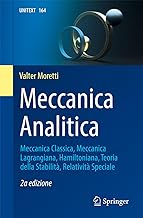
Valter Moretti is a Full Professor in the Department of Mathematics at the University of Trento. His academic career spans roles from Research Fellow to Full Professor, focusing on Mathematical Physics and Quantum Field Theory (QFT) in curved spacetime. He earned an MSc in Physics from Genova University and a PhD in Theoretical Physics from Trento University. Research Interests : Algebraic QFT, General Relativity, Quantum Mechanics, Operator Algebras, and Spectral Theory. His work bridges mathematical rigor with physical applications, particularly in quantum localization, entanglement, and curved spacetime phenomena. Publications : Authored 15+ recent papers on topics like quantum particle localization, entanglement certification, and QFT on curved backgrounds. Collaborated on a 2022 patent for generating entangled photon states. Awards : Holds a patent for a quantum-certified random number generator (2022). Supervision : Advised 8 PhD students, including N. Pinamonti, L. Franceschini, and C. van de Ven. Coordinated national and international research projects (e.g., H2020-MSCA-COFUND-2015). Labs & Collaborations : Affiliated with INFN, TIFPA-INFN, and Q@TN (Quantum@Trento). Organized conferences like Quantum Physics and Geometry (2014) and Quantum Machine Learning (2023). Teaching : Lectures on Analytical Mechanics, Quantum Relativistic Theories, and Special Relativity. Authored textbooks on Spectral Theory and Quantum Mechanics.
Dr. Sonia Petrone is a Full Professor of Statistics at Bocconi University's Department of Decision Sciences. She earned her PhD in Statistics from Bocconi University and has held academic positions at the University of Pavia and University of Insubria before joining Bocconi. Her extensive international experience includes research visits across North America, Latin America, Europe, India, and Russia. Her research specializes in Bayesian statistics, with contributions to foundational theory, predictive modeling, Bayesian nonparametrics, and stochastic processes. She currently directs the Bocconi Summer School in Advanced Statistics and Probability and previously led the PhD program in Statistics (2011-2018). Her research portfolio demonstrates consistent focus on Bayesian nonparametric methods, predictive modeling, and applications to complex data structures. Recent work explores urn processes, time series analysis, and network modeling using innovative Bayesian approaches. Awards & Honors: IMS Medallion Lecture Award (2018) ISBA Foundational Lecture Award (2016) Fellow of International Society for Bayesian Analysis Fellow of Institute of Mathematical Statistics Fellow of European Laboratory for Intelligent Systems Fellow of Bocconi Institute of Data Science She has held editorial leadership positions as Editor of Statistical Science (2020-2022) and Bayesian Analysis (2010-2014), and served as President of the International Society for Bayesian Analysis (2014).

Antonio De Rosa is an Associate Professor in the Department of Decision Sciences at Bocconi University, Italy. Previously, he held positions at the University of Maryland, College Park (2020–2024), and the Courant Institute of Mathematical Sciences, New York University (2017–2020). He earned his Ph.D. in Mathematics from the University of Zurich in 2017 under Camillo De Lellis and Guido De Philippis. Education: Ph.D. in Mathematics, University of Zurich (2017). His research spans Geometric Analysis , Partial Differential Equations , Calculus of Variations , Geometric Measure Theory , Optimal Transport , and Non-convex Optimization . Recent work focuses on anisotropic geometric variational problems, including existence, regularity, and uniqueness of anisotropic minimal surfaces and CMC (constant mean curvature) surfaces. He has also contributed to interdisciplinary applications in Explainable Risk Assessment and Data Analysis . The 15 most recent articles highlight advancements in anisotropic surfaces , min-max theory , optimal transport , and mathematical programming (e.g., K-means clustering, linear programming). Key trends include the intersection of geometric measure theory with nonlinear PDEs and applications in machine learning and transportation networks . Scientific Awards and Grants: 2023 Maryland Research Excellence Carlo Ciliberto Prize (2019) ERC Starting Grant ANGEVA (101076411, 2023–2028) Air Force Office of Scientific Research (AFOSR) grant (FA9550-23-1-0123) NSF CAREER Award (DMS-2143124) NSF DMS Awards (DMS-1906451, DMS-2112311) AMS Simons Travel Grant Antonio actively supervises research and teaches courses such as Optimization and Introduction to Partial Differential Equations . His work is supported by significant funding totaling approximately €3 million.
Stefano Leonardi is a Full Professor in the Department of Computer, Control and Management Engineering Antonio Ruberti at Sapienza Università di Roma. His research focuses on Algorithm Theory, Algorithms and Data Science, and Economics and Computation. He leads the ERC Advanced Grant project AMDROMA, exploring algorithmic mechanisms for online markets. He has held roles as Conference Chair for STOC 2021, WWW 2015, and FUN 2018, and coordinates the Sapienza School of Advanced Studies (2016-2018). His work spans approximation algorithms, online algorithms, and mechanism design. Awards include the ERC Advanced Grant and EATCS Fellowship. His research interests emphasize foundational algorithmic problems in web-based markets, leveraging rigorous design and large-scale data analysis. Recent projects include ALGADIMAR (PRIN 2019-2022) for digital market algorithms. He chairs the Highlights of Algorithms conference series and serves on program committees for top venues like EC, ICALP, and SODA. His lab focuses on web algorithmics and data mining, addressing challenges in online labor markets and fair division. Leonardi's academic contributions include over 100 publications, with recent work on fair algorithms, prophet inequalities, and mechanism design in auctions. He has pioneered methods for submodular optimization, online learning, and multi-agent systems. Grants and awards reflect his leadership in bridging theory with real-world applications, particularly in digital economies. Grants: ERC Advanced Grant (2018-2023), PRIN ALGADIMAR (2019-2022) Leadership: Chair of ACM STOC 2021, WWW 2015, and 9th FUN Conference Labs/Teams: Laboratory on Web Algorithmics and Data Mining Key Projects: AMDROMA (algorithmic mechanisms), ALGADIMAR (digital markets)
Stefano Grivet-Talocia is a Full Professor at the Department of Electronics and Telecommunications at the Polytechnic University of Turin, where he also serves as Director of the Doctoral School and President of the Doctoral School Council. He is a member of the Interdepartmental Center SmartData@PoliTO - Big Data and Data Science Laboratory, the University Committee for Research, Technology Transfer and Services to the Territory, and the Commission for the Promotion of Library, Archive and Museum Heritage. His academic career spans over two decades at Politecnico di Torino, where he has established himself as a leading researcher in electromagnetic modeling and signal integrity. Grivet-Talocia earned his Laurea degree (summa cum laude) in Electronic Engineering in 1994 and his Ph.D. in Electronic and Communication Engineering in 1998, both from the Polytechnic University of Turin. Between 1994 and 1996, he conducted research at NASA/Goddard Space Flight Center in Greenbelt, Maryland. His educational background laid the foundation for his expertise in electromagnetic modeling, wavelet analysis, and signal processing. His research focuses on behavioral modeling, electromagnetic compatibility, macromodeling, model order reduction, numerical modeling, passivity, power integrity, signal integrity, transmission lines, and wavelets . Grivet-Talocia is particularly renowned for his work on passive macromodeling of interconnect structures, development of the TOPLine technique for transmission line simulation, and pioneering contributions to passivity enforcement algorithms. He has co-authored the first book entirely dedicated to Macromodeling (2016) and developed innovative approaches to waveform relaxation and wavelet-based signal processing. His recent publications (2024-2025) demonstrate continued leadership in model order reduction, with significant contributions to data-driven modeling of linear and nonlinear systems, power integrity analysis, and electromagnetic compatibility. His work spans both theoretical advances in numerical methods and practical applications in circuit design, with strong industry relevance particularly for semiconductor and electronic design automation companies. IEEE Fellow (2018-present) Three Intel SRS Grants (2022-2024) Three IBM SUR Grant Awards (2007-2009) Best Associate Editor Award - IEEE Transactions on Components, Packaging and Manufacturing Technology (2020) Multiple Best Conference Paper Awards (2006-2020) URSI Young Scientist Awards (1999) Ranked among the "top 2% worldwide researchers" (Stanford) since 2019 Grivet-Talocia actively supervises doctoral students including Michele Cusano, Sara Paknezhad Panahi, Antonio Carlucci, and Kun Zhao. He has secured numerous research grants from competitive national calls (PRIN) and commercial contracts with industry partners including Intel, IBM, Nokia, Hitachi, Infineon, and Cadence. His technology transfer activities include co-founding the spin-off IdemWorks (2007-2016), which was acquired by CST in 2016. He also developed the autoCircuits web service for automated circuit problem generation, widely used in electrical engineering education. He leads the EMC Group (Electromagnetic Compatibility) at DET and has been instrumental in establishing the Compact Dynamical Modeling research area. His work has practical applications in high-speed electronics design, with algorithms embedded in commercial tools like IBM PowerSPICE. Grivet-Talocia maintains strong industry connections through his research projects and serves as Associate Editor for IEEE Transactions on Components, Packaging and Manufacturing Technology.
Andrea Pinamonti is an Associate Professor at the University of Trento. His research focuses on geometric analysis, partial differential equations, calculus of variations, and functional analysis in metric measure spaces, particularly in sub-Riemannian and Carnot group settings. He frequently collaborates with researchers from institutions such as the Universities of Pisa, Jyväskylä, and others, addressing topics like geometric measure theory, regularity of solutions, and nonlocal functionals. His recent work examines structures in Heisenberg groups, such as perimeter minimization, CR geometry, and differentiability theorems. He has also explored equations involving the p-Laplacian, fractional operators, and universal differentiability sets in non-Euclidean spaces. These studies reflect a sustained engagement with the interplay between geometry and analysis in sub-Riemannian frameworks. Events and Contributions: Speaker at Warsaw Analysis Days Event WADE25 (2025), Summer school in fluid dynamics (2024), and Workshop on Synthetic Curvature Bounds (2024). Organizer of Three days between Analysis and Geometry in Trento (2025, 2024) and EUregio School on Control Theory and Applications (2024). He has maintained a prolific publication record across high-impact journals such as Journal of Geometric Analysis , Advances in Mathematics , and Communications in Contemporary Mathematics . His academic activities include promoting collaborative research through workshops and open positions at his institution.
Laura Sanitàمشاهده پروفایل
دانشیار
Laura Sanità is an Associate Professor in the Department of Computing Sciences at Bocconi University, Milano, Italy. She previously held academic positions at TU Eindhoven (Netherlands) and the University of Waterloo (Canada). Education: Bachelor's in Management Engineering (2003), Università di Roma Tor Vergata Master's in Management Engineering (2005), Università di Roma Tor Vergata PhD in Operations Research (2009), Università Sapienza di Roma Postdoctoral Fellow at EPFL (Switzerland, 2009-2011) Laura's research focuses on discrete mathematics, theoretical computer science, and operations research, with particular emphasis on algorithmic solutions for combinatorial optimization problems. Her work spans approximation algorithms, network design, polyhedral combinatorics, and algorithmic game theory, advancing methodologies for solving complex optimization challenges in theoretical and applied contexts. Her publications demonstrate expertise in network design problems, spanning from fundamental polyhedral characterizations to game-theoretic applications. Key contributions include iterative randomized rounding techniques for Steiner trees, circuit augmentation algorithms, and stabilization approaches for network games. Scientific Awards: NWO-VIDI Award (Netherlands) Discovery Accelerator Supplements Award (NSERC, Canada) Golden Jubilee Research Excellence Award (University of Waterloo) Early Researcher Award (Ontario) Best Paper Award at STOC 2010 Advising & Collaborations: Laura advises PhD students Dylan Hyatt-Denesik and Lucy Verbeck, and collaborates with postdoctoral researchers like Afrouz Jabal Ameli. She has served on program committees and as Associate Editor for top journals including Mathematical Programming, Mathematics of Operations Research, and Operations Research Letters.
Luigi Ambrosio is a Full Professor at the Scuola Normale Superiore di Pisa (SNS), specializing in geometric measure theory, optimal transport, and partial differential equations. His research focuses on the interplay between geometric analysis, functional analysis, and calculus of variations, with applications to metric measure spaces and stochastic processes. He has organized numerous conferences and schools on optimal transport and geometric analysis, including the 2025 'XXXV Convegno Nazionale di Calcolo delle Variazioni.' Key research interests include the theory of currents, regularity of flows, and the application of optimal transport to problems in probability and geometry. Notable contributions include foundational work on metric Sobolev spaces, RCD spaces, and the analysis of geometric flows. Ambrosio frequently collaborates with leading institutions and has supervised numerous seminars on topics ranging from gradient flows to non-smooth geometric structures. His publications span over 150 papers, addressing topics such as the regularity of vector fields, entropy flows in Carnot groups, and the stability of action functionals. Recent works (2021–2025) explore superposition principles for currents, sharp PDE estimates for random matching, and embedding theorems for metric spaces. Ambrosio is also active in academic leadership, contributing to editorial boards and international research networks.

Simon Masnou is a Full Professor at Université Claude Bernard Lyon 1, affiliated with the Institut Camille Jordan (CNRS UMR 5208). He holds leadership roles as Head of the 'Applied Mathematics, Statistics' Master's degree and Head of the 'M2 Maths in Action' program. Previously, he served as Director of the Camille Jordan Institute (2018-2022). His research focuses on applied mathematics, image processing, shape optimization, and geometric measure theory, with contributions to variational models, geometric flows, and applications in computer vision and materials science. Education: PhD in Mathematics (1998, Paris Dauphine) and HDR (2008, Paris 6). Research projects include ANR STOIQUES (2024-2028), PEPR PDE-AI (2023-2028), and collaborations with industry on topics like defect prediction in aluminum production and high-dimensional data analysis. Teaching includes courses on linear algebra, optimization, and machine learning at undergraduate and graduate levels. Key contributions span phase field models, varifold-based surface approximation, and image inpainting. He supervises PhD students in geometric variational problems and computational methods. His work bridges theoretical mathematics with industrial challenges, addressing issues in materials science, medical imaging, and cultural heritage preservation.
Alfonso Sorrentino is a full professor of mathematical analysis at the Department of Mathematics, University of Rome Tor Vergata. He specializes in Hamiltonian dynamical systems, with expertise in nonlinear analysis, differential geometry, and mathematical physics. He earned his Ph.D. in mathematics from Princeton University (2008) and held academic positions at the Fondation des Sciences Mathématiques de Paris (2008–2009) and the University of Cambridge (2009–2012). His research focuses on invariant structures in Hamiltonian systems, billiard dynamics, and spectral rigidity. Key recognitions include the Fubini Prize (2018), Barcelona Dynamical Systems Prize (2019), Best Paper Award (Gold medal, 2020), and Frontiers of Science Award (2023). His work bridges pure mathematics and applications, emphasizing geometric and analytic approaches to dynamical systems. Recent studies explore topics like invariant Lagrangian graphs, spectral properties of billiards, and homogenization of Hamilton-Jacobi equations on networks. His contributions reflect a commitment to advancing theoretical frameworks in dynamical systems and their interdisciplinary implications.
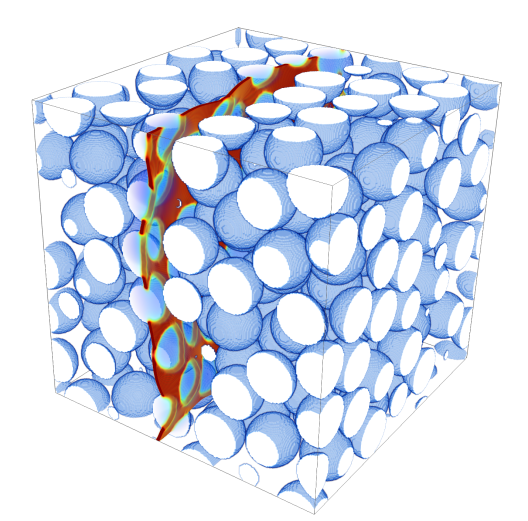
Professor Caterina Ida Zeppieri is an Associate Professor at the Institute for Numerical and Applied Mathematics , University of Münster, Germany. Her research focuses on homogenization theory, calculus of variations, and applications in material science. She leads the Analysis and Modelling Research Group , which explores variational methods and their computational implications. Research Interests: Her work centers on stochastic and deterministic homogenization of free-discontinuity problems, Γ-convergence, and the analysis of heterogeneous materials. She investigates mathematical models for fracture mechanics, phase transitions, and plasticity, often employing advanced techniques from calculus of variations and partial differential equations. Recent Contributions: Recent articles address topics such as strong approximation of SBV functions (2025), stochastic homogenization in perforated domains (2024), and gradient damage models (2022). These studies emphasize rigorous mathematical analysis with applications to real-world material behavior. Grants & Collaborations: Zeppieri’s research is supported by grants from the German Research Foundation (DFG), including projects within the Cluster of Excellence 2044 (e.g., C1: Evolution and Asymptotics). She collaborates with institutions globally, advancing interdisciplinary approaches to material modeling. Teaching: She teaches advanced courses like Applied Functional Analysis and Calculus of Variations , and mentors students through seminars and thesis supervision. Her group hosts regular colloquia and workshops, fostering academic exchange in applied mathematics.

Bernardo Tellini is a Full Professor of Electrical and Electronic Measurements at the Department of Energy, Systems, Land, and Construction Engineering (DESTEC) at the University of Pisa, where he also serves as Vice-Rector for Doctoral Research. He has held this institutional role since 2020, overseeing doctoral program planning, accreditation, and admission procedures. Previously, he chaired the doctoral program in Energy, Electrical, and Thermal Engineering from 2012 to 2016 and served on the Leonardo da Vinci Doctoral School in Engineering from 2008 to 2016. Education: PhD in Electrical Engineering, University of Pisa (1999) Degree in Electrical Engineering, University of Pisa (1993) Postdoctoral research at Karlsruhe Research Center for Technology and Environment Industry experience at ABB Tellini's research focuses on electrical and magnetic measurement methodologies for high-power pulsed applications, characterization of electrical and magnetic properties of materials, aging processes in battery cells, and electromagnetic emissions from power circuits. His work spans from fundamental measurement theory to practical industrial applications, particularly in railway technologies where he represents the University on the Steering Committee of the District for Railway Technologies, High-Speed, and Network Safety in Tuscany. He has served as president of the European Pulsed Power Laboratories agreement and chaired major IEEE conferences including I2MTC 2015 and MELECON 2020. His recent publications reveal a strong emphasis on RFID-based localization systems , nanoparticle-enhanced optical sensors , and advanced battery characterization techniques . The research trajectory shows increasing integration of measurement science with emerging technologies like plasmonic sensing, microwire-based transducers, and smart systems for industrial monitoring. His team has developed innovative approaches for battery health monitoring under vibration stress, temperature sensing using magnetic materials, and precise localization methods using phase-based RFID systems. Professional Service: President of Italian Section of IEEE (2019-2021) Scientific director of Pisa research unit in Association of Electrical and Electronic Measurements (GMEE) Member of Certification Committee of Italcertifer SpA (since 2019) Representative on District for Railway Technologies Steering Committee (since 2013) Tellini has authored approximately 200 publications in international journals and conference proceedings. His leadership extends to academic governance through roles on the DESTEC Department Human Resources Committee and various university committees overseeing scientific qualifications and doctoral programs. His research bridges theoretical measurement principles with practical engineering solutions for energy systems, transportation infrastructure, and industrial monitoring applications.

Dr. Laurence T. Yang is a Professor at the School of Computer Science and Technology, Huazhong University of Science and Technology, China, and Department of Computer Science of St. Francis Xavier University, Canada. He maintains active research and professional service commitments across both institutions with significant contributions to computing disciplines. His research spans parallel and distributed systems, embedded platforms, ubiquitous/pervasive computing environments, sensor networks, supercomputing infrastructure, and scalable computing methodologies. These interests drive his extensive publication record and leadership in advancing computational theory and applications. Dr. Yang has received numerous accolades including: Honorable Mention, PROSE Awards for "Mobile Intelligence" (2010) Best Paper Award at IEEE AINA-06 (2006) Best Paper Nomination Distinguished Achievement Awards (2005, 2011) Canada Foundation for Innovation Award (2003) Multiple Best Paper Awards at international conferences His professional service includes chairing the IEEE Technical Committee of Scalable Computing (2008-2011), leading the IEEE Task Force on Ubiquitous Computing and Intelligence (2009-present), and serving on Compute Canada's National Resource Allocation Committee (2009-present). As editor-in-chief for multiple journals and author/editor of over 25 books, he has shaped scholarly discourse while delivering approximately 20 keynote addresses globally.

Ciriaco D'Ambrosio is a Research Fellow at the Department of Mathematics, University of Salerno, specializing in combinatorial optimization and its applications to wireless sensor networks. He teaches courses in operations research and maintains regular reception hours for students on Tuesdays (3:00-5:00 PM) and Wednesdays (4:00-5:00 PM), conducted both in-person and via Microsoft Teams. Education: PhD in Computer Science, University of Salerno (2015) - Thesis: models and algorithms for coverage in Wireless Sensor Network Laurea cum laude in Computer Science, University of Salerno (2011) Research Focus: D'Ambrosio specializes in combinatorial optimization, developing heuristics, metaheuristics, and math-heuristics for mixed integer linear programming problems. His work addresses challenging optimization problems in wireless sensor networks, particularly network lifetime maximization under coverage, connectivity, and interference constraints. His research bridges theoretical computer science with practical applications in sensor network design, seismic monitoring systems, and resource allocation problems. His methodology often combines exact approaches with sophisticated heuristic techniques to solve computationally difficult problems. Publication Trends: Analysis of D'Ambrosio's publications (2017-2025) reveals a progression from foundational work on sensor network lifetime problems toward increasingly sophisticated algorithmic approaches for combinatorial optimization. His recent work shows expansion into seismic monitoring applications while maintaining strong focus on knapsack problem variants and network optimization. His publications appear in high-quality journals including Soft Computing, Computers & Operations Research, and Networks, demonstrating both theoretical rigor and practical relevance of his research. Professional Activities: Member of the Italian Operations Research Society (AIRO) Associate Editor for Soft Computing, A Fusion of Foundations, Methodologies and Applications Active collaborator with researchers including Andrea Raiconi, Raffaele Cerulli, and Francesco Carrabs Research Infrastructure: D'Ambrosio works within the Department of Mathematics at University of Salerno's Fisciano Campus (Building F2, Room 040). His research contributes to the university's growing expertise in computational optimization and has practical applications in environmental monitoring systems like SEISMONOISY.