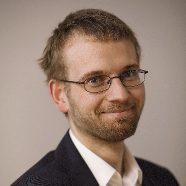
Piotr Augustyniak is a Professor in the Department of Biocybernetics and Biomedical Engineering at the Faculty of Electrical Engineering, Automatics, Computer Science and Biomedical Engineering, AGH University of Science and Technology, Kraków, Poland. His research spans biomedical signal processing, wearable health monitoring systems, and advanced diagnostic algorithms. Key areas include ECG/EEG analysis, non-invasive physiological measurements, and human-computer interaction in medical contexts. Recent publications highlight his work on: mobile ECG monitoring with approximate computing video thermography for heart failure diagnostics CO2-based occupancy estimation eye-tracking in forensic deception detection neural network optimization for non-uniform sampling EEG entropy metrics for anesthesia monitoring His methodological focus combines: empirical mode decomposition machine learning real-time physiological analytics multimodal sensor fusion
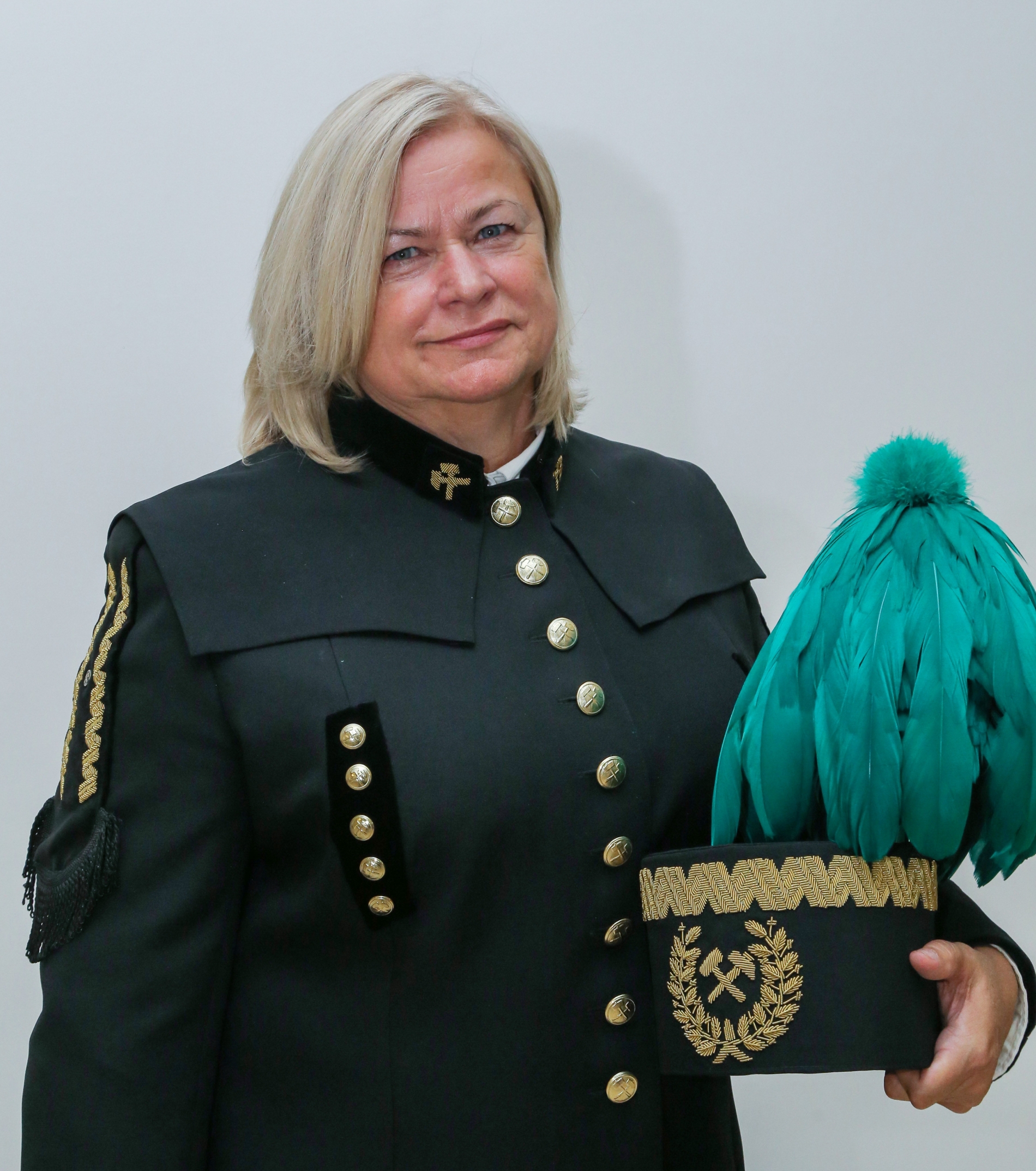
Joanna Bac-Bronowicz serves as an Associate Professor at Wrocław University of Science and Technology within the Faculty of Geoengineering, Mining and Geology. Her primary affiliation is with the Department of Geodesy and Geoinformatics, where she conducts research on geospatial modeling and cartographic applications. She maintains active office hours through both physical and virtual (Zoom) channels. Her research focuses on spatio-temporal data modeling , cartographic generalization , and topographic database integration . Key interests include GIS-based environmental analysis, urban green space assessment, and spatial data infrastructure development. She has pioneered methodologies for integrating national geospatial registers and developing multi-resolution topographic databases. Analysis of her 15 most recent publications reveals strong emphasis on Geometric simplification techniques for cartographic features Urban ecosystem service evaluation using 3D geoportals Integration of LiDAR and remote sensing in smart city frameworks Topographic influences on precipitation patterns Her work consistently bridges theoretical cartography with practical applications in environmental management. Professional recognition includes membership in key national bodies: National Council of Geodesy and Cartography of the Surveyor General of Poland Council of Spatial Information Infrastructure at Minister of Development and Technology Founding member and President (since 1999) of the Association of Polish Cartographers She manages significant research projects including 'Methodology and procedures for integration, visualization, generalization and standardization of reference databases' and has authored over 130 publications. Her work with the Lower Silesian Spatial System demonstrates applied expertise in regional geospatial infrastructure. Current laboratory activities center on the Geocentrum facility (building L-1, room 372) where she develops advanced visualization techniques for spatio-temporal datasets using GIS environments. Her team specializes in converting national geospatial registers into actionable environmental conflict analysis tools.
Krzysztof Sornat is a Lecturer at the Institute of Computer Science , Faculty of Computer Science, AGH University of Science and Technology in Kraków. His research focuses on computational aspects of voting theory, including multiwinner elections, participatory budgeting, and liquid democracy systems. His recent work analyzes approximation algorithms for submodular optimization (2024), complexity of subelection isomorphism (2024), and fine-grained hardness results in voting mechanisms (2021-2025). Publications demonstrate expertise in algorithmic fairness, preference aggregation, and parameterized complexity. Key collaborations include studies on Schulze voting methods (2021), minimax approval voting approximations (2018), and multiwinner rule comparisons (2023). Active in both theoretical algorithm design and practical implementation challenges.
Prof. Dariusz Dereniowski serves as a Professor in the Department of Algorithms and Systems Modelling at the Faculty of Electronics, Telecommunications and Informatics, Gdańsk University of Technology. His active research profile is evidenced by recent publications and ongoing projects, with contact maintained via darderen@pg.edu.pl and phone 583471956. His research centers on theoretical computer science, specializing in graph algorithms and computational complexity. Key areas include evacuation strategies in graphs, noisy binary search under error probability, energy-constrained exploration methods, and bicriteria tree-depth optimization. This work addresses fundamental challenges in algorithm design under constraints like congestion avoidance and query inaccuracies. Analysis of his 2023-2025 publications reveals a cohesive research trajectory focused on optimizing graph traversal under physical and informational constraints. These studies advance theoretical foundations while enabling applications in network routing, multi-agent coordination, and combinatorial optimization through novel algorithmic approaches. Prof. Dereniowski leads OPUS-funded projects including "Graph modeling of search processes" (2019-2022, UMO-2018/31/B/ST6/00820) and "Przeszukiwanie struktur grafowych" (2016-2019, UMO-2015/17/B/ST6/01887), demonstrating sustained grant acquisition within the Department of Algorithms and Systems Modelling. Though formal advisees aren't listed, his project management role indicates research team leadership.
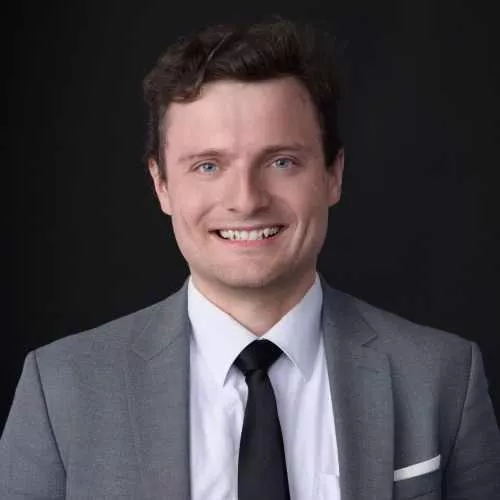
Szymon Olewniczak serves as an Assistant lecturer and Deputy Head of Department at the Department of Computer Architecture within the Faculty of Electronics Telecommunications and Informatics at Gdańsk University of Technology. His academic career is focused on natural language processing and related computational linguistics fields. His educational background includes: Master of Engineering (mgr inż.) in Technical Informatics and Telecommunications from Gdańsk University of Technology (2019-07-12) Engineer (inż.) in Technical Informatics and Telecommunications from Gdańsk University of Technology (2018-02-02) Olewniczak's research primarily centers on natural language processing with specific expertise in entity linking, named entity recognition, and information retrieval systems. His work demonstrates a strong focus on practical applications of NLP techniques, particularly in creating systems that bridge natural language with structured knowledge bases like Wikipedia. He has developed innovative approaches to word embeddings, question answering systems, and domain-specific information retrieval. His publication record shows consistent research output from 2020 through 2025, with a notable emphasis on improving entity linking systems, developing specialized datasets, and applying neural network techniques to text analysis tasks. Recent work includes creating a gold standard multi-genre dataset for entity recognition and developing question answering systems for technical documentation. As Deputy Head of Department, Olewniczak contributes to academic administration while maintaining an active research profile. His work bridges theoretical NLP concepts with practical implementations, particularly in the information technology domain.
Jacek Błażewicz is a distinguished Professor at Poznan University of Technology, affiliated with the Institute of Computing Science. He is a member of the Polish Academy of Sciences (since 2002), IEEE Fellow (2013), and has held numerous prestigious positions including Vice President of IFORS (2014-2019). His educational background includes: B.Sc. in Control Engineering (June 1973) M.Sc. with distinction in Control Engineering (June 1974) Ph.D. in Computer Science (November 1977) Dr. habil. in Computer Science (May 1980) Professor Błażewicz is a world-renowned expert in scheduling theory, operations research, and computational biology. His research bridges theoretical computer science with practical applications in bioinformatics, particularly in DNA sequencing, RNA structure analysis, and protein structure prediction. He has pioneered the application of combinatorial optimization techniques to solve complex problems in molecular biology. His recent publications (2023-2025) demonstrate continued leadership in both traditional scheduling theory and cutting-edge interdisciplinary research. While maintaining strong contributions to classical scheduling problems (late work minimization, machine scheduling), he has expanded into computational biology applications including RNA world modeling, microRNA analysis in cancer research, and DNA algorithms. His work increasingly integrates modern AI techniques like graph neural networks with traditional operations research methods. His numerous scientific awards include: Member of the Polish Academy of Sciences (since 2002) 8 Scientific Awards of the Ministry of Science, Higher Education and Technology (1978-2008) Gold Medal of the Association of the European Operational Research Societies (1991) Doctor Honoris Causa at the University of Siegen (2006) Copernicus Prize awarded by FNP and DFG (2012) IEEE Fellow (2013) Member of Academia Europea (since 2023) Member of The National Academy of Artificial Intelligence (since 2025) Throughout his career, Professor Błażewicz has supervised numerous students and researchers, contributing significantly to the development of young scientists in both computer science and computational biology. He has led multiple EU projects and grants, establishing collaborative networks across Europe. His work has resulted in influential editorial roles, including Series Editor of International Handbooks in Information Systems for Springer Verlag and membership on editorial boards of leading journals like IEEE Transactions on Industrial Informatics and Journal of Scheduling. He directs several research initiatives including the Laboratory of Algorithm Design and Programming Systems, the BioServer - Computational Biology Server, and the European Centre for Bioinformatics and Genomics. His RNApolis project represents a significant contribution to RNA structure analysis and prediction.
Dr. Filip Strobin is an Associate Professor in the Division of Applications of Contemporary Mathematical Analysis at Lodz University of Technology. His research centers on theoretical aspects of fractal geometry and functional analysis. Key research themes include: Topological and geometric properties of fractal attractors Generalizations of iterated function systems (IFS) Embedding theorems for metric spaces Fixed point theory applications to fractals Lineability and spaceability in function spaces Recent work characterizes conditions for connected attractors in IFS, establishes embedding capabilities of fractals in various spaces, and develops algorithms for fractal visualization. His publications frequently appear in analysis and topology journals.
Prof. Pawel M. Idziak is a distinguished academic at the Faculty of Mathematics and Computer Science, Jagiellonian University, where he holds a Professorship in the Department of Algorithmics. His primary research focuses on algebra, computational complexity, and theoretical computer science, with notable contributions to the study of algebraic structures, satisfiability problems, and modular circuits. Idziak has led and contributed to numerous grants, including managing the 'Numerical and Structural Invariants in Algebra, Logic and Constraint Satisfaction Problems' (2015–2022) and co-ordinating initiatives like 'Programmers of the Future 4.0'. His work bridges abstract algebra with computational challenges, addressing topics such as group theory, circuit satisfiability, and algorithmic complexity. His research interests span a broad spectrum of theoretical computer science and algebra, including the interplay between algebraic structures and computational problems. Idziak has advised over 20 PhD students, mentoring them in areas such as algorithm design, logic in computer science, and discrete mathematics. He has also contributed to foundational works like Generative Complexity in Algebra (2005) and co-authored influential papers in journals like SIAM Journal on Computing and Transactions of the American Mathematical Society . Idziak’s academic leadership is evident through his roles in institutional committees and his active participation in international conferences. His recent work (2024) on equation satisfiability in solvable groups highlights his ongoing contributions to advancing computational algebra and complexity theory.
Dr. hab. Marcin Kozik is a Professor at the Department of Algorithmics within the Faculty of Mathematics and Computer Science at Jagiellonian University. His research focuses on Constraint Satisfaction Problems (CSP), Universal Algebra, and Computational Complexity. He has led multiple grants including 'Constraint Satisfaction Problems: Beyond the Finite Case' (2022–2026) and organized AAA 101 conference (2022). His work bridges algebraic methods with computational complexity, contributing to foundational theories in CSP dichotomy and robust algorithms. Research interests include algebraic approaches to CSP, complexity of finite algebras, and robust algorithms for near-unanimity CSPs. Recent publications emphasize quantum CSP strategies, unifying algebraic frameworks, and injective hardness conditions. He has received awards for his habilitation research (2011) and contributions in 2021. Grants Managed: Topological Correction Codes in Error-Resistant Quantum Computing (2022–2026) "Constraint Satisfaction Problems: Beyond the Finite Case" (Ministry of Science & Higher Education, 2022–2026) Key Contributions: Over 35 peer-reviewed articles, including foundational work on bounded width CSPs and absorption theory in universal algebra. Labs/Teams: Part of the Algorithmics Research Group, collaborating with Libor Barto, Andrei Bulatov, and others on CSP and algebraic complexity.
Jakub Kozik is a Professor in the Department of Algorithmics at the Faculty of Mathematics and Computer Science, Jagiellonian University. His research focuses on probabilistic methods, graph coloring, and analytical combinatorics, with notable contributions to hypergraph coloring algorithms and combinatorial optimization. He has authored over 30 peer-reviewed articles and led multiple research grants, including the National Science Centre-funded projects on hypergraph coloring and online graph coloring algorithms. Position: Professor, Department of Algorithmics University: Jagiellonian University (Kraków, Poland) Key Research Areas: Graph Theory, Combinatorics, Probabilistic Methods His work bridges combinatorial mathematics and theoretical computer science, addressing problems in algorithm design, randomized algorithms, and structural graph theory. Recent research explores the Alon-Tarsi method, entropy compression techniques, and applications of probabilistic methods to hypergraphs. Grants include leadership roles in projects like 'Random Greedy Hypergraph Coloring Algorithms' (2024–2027) and 'Online Coloring from Lists' (2017–2021). These projects address fundamental challenges in combinatorial optimization and algorithmic efficiency. He collaborates with institutions globally and is part of the Algorithmics Research Group, contributing to the Foundations of Computer Science at his faculty.
Jarosław Byrka is a Professor in the Combinatorial Optimization group at the Institute of Computer Science, University of Wrocław. He has held postdoctoral positions at TU Eindhoven and EPFL, and has been a full professor since 2021. His research focuses on algorithmic and mathematical aspects of discrete optimization problems. Research Interests: His primary research areas include Discrete Optimization, Location and Covering Problems, Network Design, and LP-rounding Approximation Algorithms. He employs advanced techniques such as randomized rounding to develop efficient approximation algorithms for NP-hard problems. His work bridges theoretical foundations with practical applications in network design and resource allocation. The recent publications, such as the 2024 result on the integrality gap of BCR, reflect a strong trend in pushing the limits of approximation guarantees in combinatorial optimization. His research consistently contributes to the theoretical understanding of LP-based methods and their applications in graph and network problems. Scientific Awards: STOC 2010 Best Paper Award Witold Lipski Prize Advising and Grants: He has successfully supervised five PhD students to graduation and mentored several postdoctoral researchers including Joachim Spoerhase, Meesum Syed Mohammad, Martin Boehm, Sandip Banerjee, and Yongho Shin. While specific grant details are not listed, his long-term research productivity and leadership in major conferences suggest sustained funding support. Labs and Teams: He is a key member of the Combinatorial Optimization group at the University of Wrocław, contributing to its international visibility through editorial work and conference organization.
Dr Paweł Wójcicki is an Assistant Professor of Mathematics affiliated with two leading Polish institutions: the Faculty of Mathematics and Information Science at Warsaw University of Technology and the Faculty of Design in Warsaw at SWPS University, where he serves in the Department of Mathematics and Logic as well as the Department of Computer Science. Education & International Experience PhD in Mathematics (Bergman space theory) – Warsaw University of Technology Visiting researcher – Missouri University of Science and Technology (MST), USA (one-year stay during doctoral studies) Research Focus Dr Wójcicki’s scholarly work revolves around several core areas of pure and applied mathematics. Using tools from real and complex analysis , he investigates reproducing kernel Hilbert spaces and harmonic functions , with a particular emphasis on Bergman spaces . His interest in fuzzy logic and fuzzy measurement theory extends his expertise into uncertainty modelling and intelligent systems. Teaching Excellence & Awards Students at the Warsaw University of Technology have repeatedly recognised his outstanding teaching by honouring him with the Golden Chalk and Golden Heart awards—distinctions reserved for the university’s most appreciated educators. Research Output & Collaborative Projects He is the author and co-author of numerous peer-reviewed articles appearing in high-impact journals such as Advances in Mathematics , Fuzzy Sets and Systems , Journal of Nonlinear Mathematical Physics , Advances in Intelligent Systems and Computing , and Przegląd Elektrotechniczny . His publications collectively advance theoretical frameworks that bridge classical analysis with modern computational and fuzzy-systems methodologies. Affiliated Labs & Teams At SWPS University, he is associated with the Department of Mathematics and Logic within the Faculty of Design in Warsaw, and also collaborates with the Department of Computer Science , fostering interdisciplinary links between mathematics, logic and computer science.
Adam Doliwa is a Professor at the Department of Discrete Mathematics and Theoretical Foundations of Computer Science within the Faculty of Mathematics and Computer Science at the University of Warmia and Mazury in Olsztyn, Poland. Holding the title of Prof. Dr. hab., he maintains an active research program with 54 publications indexed in Web of Science, accumulating 637 citations (WoS) and 1774 citations (Google Scholar), with corresponding H-indices of 17 and 22 respectively. Professor Doliwa's research spans several interconnected areas of pure and applied mathematics, with a particular focus on integrable systems, discrete mathematics, and their geometric interpretations. His work bridges theoretical mathematics with applications in quantum computing and mathematical physics. He has made significant contributions to the understanding of orthogonal polynomials, non-commutative algebra structures, and discrete differential geometry. His recent publications demonstrate a consistent research trajectory exploring the deep connections between algebraic structures, geometric configurations, and integrable systems. Analysis of his 15 most recent publications reveals a strong emphasis on non-commutative extensions of classical mathematical structures, discrete integrable systems, and their geometric interpretations. His work frequently connects orthogonal polynomials with integrable equations, explores non-commutative versions of classical algebraic structures, and investigates geometric configurations related to integrable mappings. A distinctive feature of his research is the consistent application of geometric methods to understand algebraic and combinatorial properties of discrete systems. Professor Doliwa has successfully supervised one doctoral student to completion and indicates willingness to supervise additional doctoral candidates. His research is supported by statutory research funds, and his department is equipped with necessary infrastructure to support planned research activities. His scientific contributions have established him as a recognized researcher in the fields of integrable systems and discrete mathematics, with an international presence evidenced by his publications in prestigious journals and his ResearchGate profile.
Dr. Joanna Kapusta is an Assistant Professor in the Department of Applied Computer Science at the John Paul II Catholic University of Lublin, Poland. She is affiliated with the Faculty of Natural and Technical Sciences, where she conducts research in computational mathematics and cryptography. Her work primarily focuses on the design and optimization of algorithms for polynomial interpolation, numerical transformations, and cryptographic protocols. Her research interests span several key areas: Numerical Algorithms : Development of efficient methods for polynomial evaluation, interpolation, and transformation. Cryptography : Designing secure systems for secret sharing, e-voting, and encryption. Computational Mathematics : Applications in knot theory, semigroup evaluation, and matrix operations. Her publications demonstrate a consistent focus on optimizing computational efficiency in mathematical operations, with applications ranging from cryptographic security to educational tools. Articles frequently involve collaborative work, particularly with co-author Ryszard Smarzewski. No awards, students, or grant activities are mentioned in the provided materials.
Magdalena Wilkołazka is an Assistant Professor in the Department of Artificial Intelligence at the John Paul II Catholic University of Lublin, affiliated with the Faculty of Natural Sciences and Technology. Her research focuses on computational geometry and numerical methods. Specializes in interpolation techniques for curve modeling Active in academic publishing since 2015 Participant in science communication initiatives Research interests center on: Exponential parameterization algorithms Spline interpolation methods Trajectory estimation Curve length estimation Recent publications (2015-2019) demonstrate expertise in modifying classical interpolation schemes for improved geometric approximations. Scientific achievements include: National Science Centre project management Participation in international conferences (CISIM 2015, ICNAAM 2016, ICNAAM 2015) Collaboration with researchers like Ryszard Kozera and Lyle Noakes She contributes to academic community through peer-reviewed publications and science outreach events.