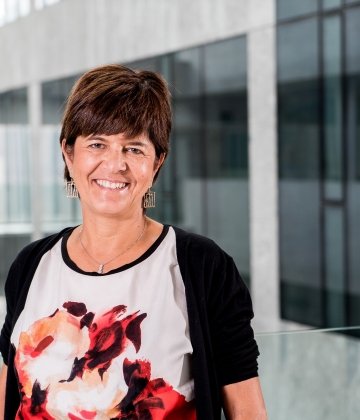
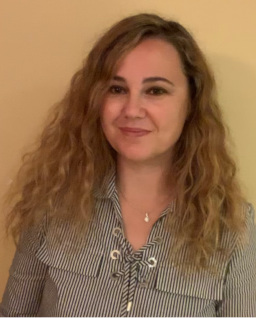
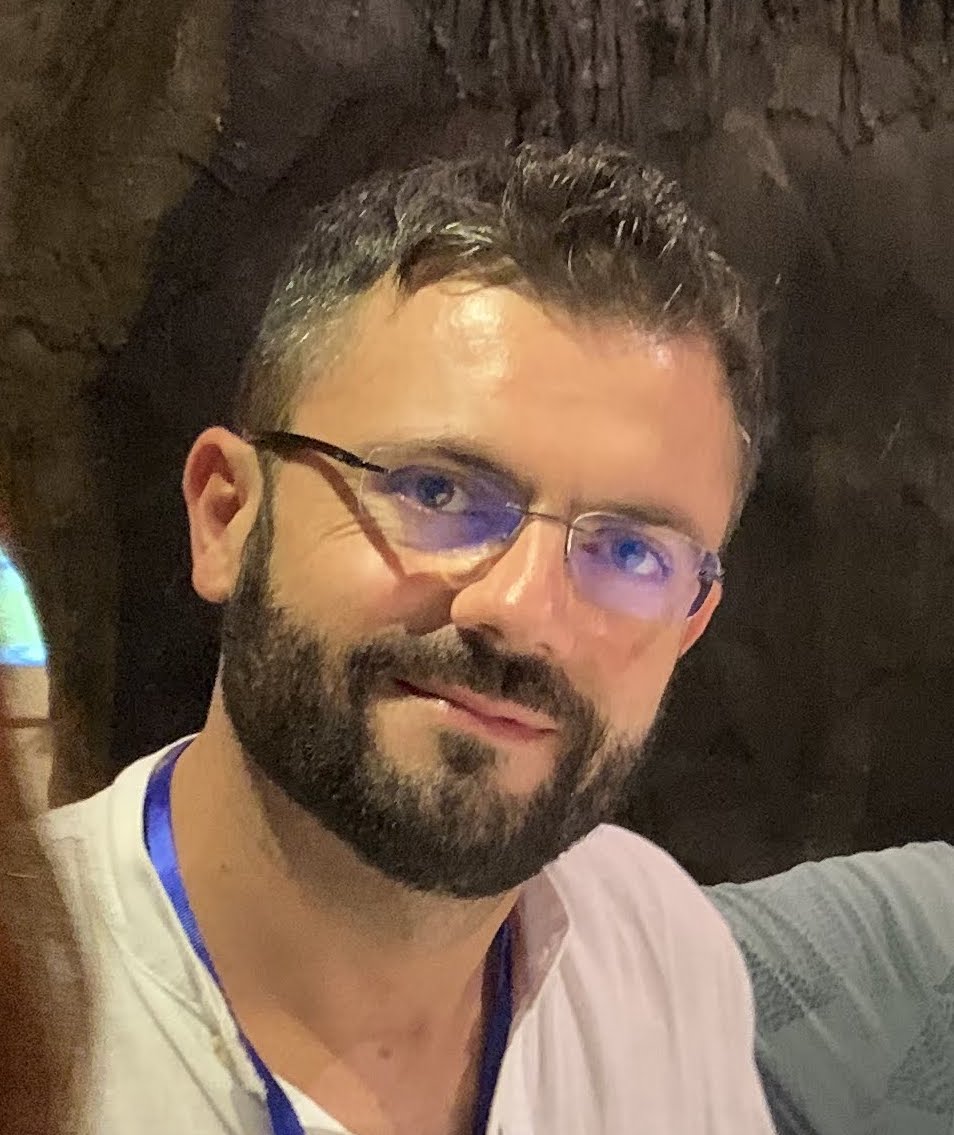
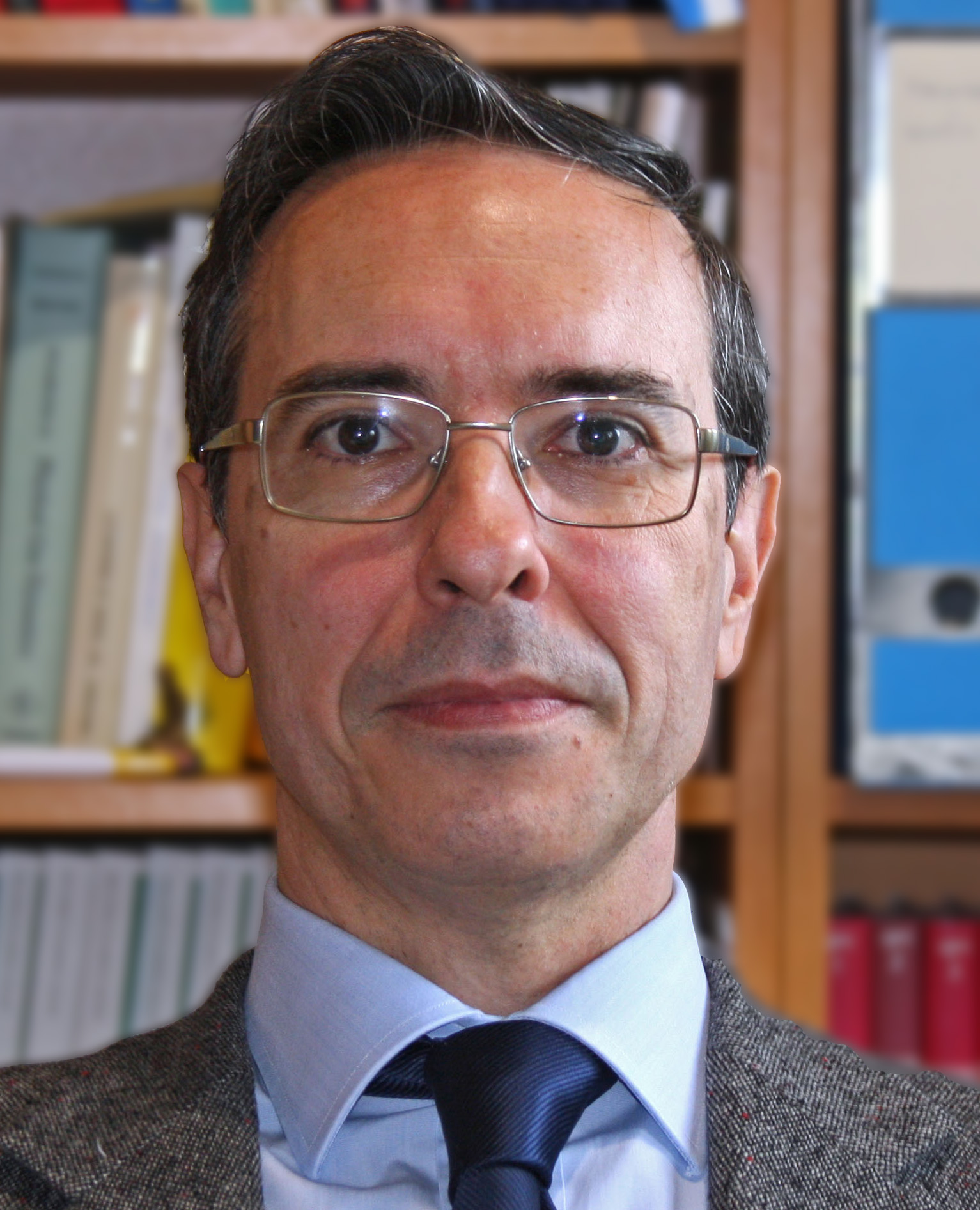
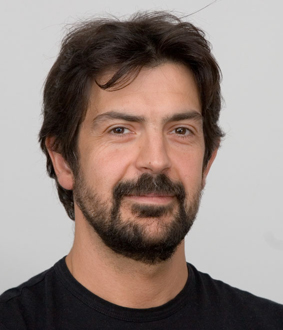
Dr. Sonia Petrone is a Full Professor of Statistics at Bocconi University's Department of Decision Sciences. She earned her PhD in Statistics from Bocconi University and has held academic positions at the University of Pavia and University of Insubria before joining Bocconi. Her extensive international experience includes research visits across North America, Latin America, Europe, India, and Russia. Her research specializes in Bayesian statistics, with contributions to foundational theory, predictive modeling, Bayesian nonparametrics, and stochastic processes. She currently directs the Bocconi Summer School in Advanced Statistics and Probability and previously led the PhD program in Statistics (2011-2018). Her research portfolio demonstrates consistent focus on Bayesian nonparametric methods, predictive modeling, and applications to complex data structures. Recent work explores urn processes, time series analysis, and network modeling using innovative Bayesian approaches. Awards & Honors: IMS Medallion Lecture Award (2018) ISBA Foundational Lecture Award (2016) Fellow of International Society for Bayesian Analysis Fellow of Institute of Mathematical Statistics Fellow of European Laboratory for Intelligent Systems Fellow of Bocconi Institute of Data Science She has held editorial leadership positions as Editor of Statistical Science (2020-2022) and Bayesian Analysis (2010-2014), and served as President of the International Society for Bayesian Analysis (2014).
Stefano Leonardi is a Full Professor in the Department of Computer, Control and Management Engineering Antonio Ruberti at Sapienza Università di Roma. His research focuses on Algorithm Theory, Algorithms and Data Science, and Economics and Computation. He leads the ERC Advanced Grant project AMDROMA, exploring algorithmic mechanisms for online markets. He has held roles as Conference Chair for STOC 2021, WWW 2015, and FUN 2018, and coordinates the Sapienza School of Advanced Studies (2016-2018). His work spans approximation algorithms, online algorithms, and mechanism design. Awards include the ERC Advanced Grant and EATCS Fellowship. His research interests emphasize foundational algorithmic problems in web-based markets, leveraging rigorous design and large-scale data analysis. Recent projects include ALGADIMAR (PRIN 2019-2022) for digital market algorithms. He chairs the Highlights of Algorithms conference series and serves on program committees for top venues like EC, ICALP, and SODA. His lab focuses on web algorithmics and data mining, addressing challenges in online labor markets and fair division. Leonardi's academic contributions include over 100 publications, with recent work on fair algorithms, prophet inequalities, and mechanism design in auctions. He has pioneered methods for submodular optimization, online learning, and multi-agent systems. Grants and awards reflect his leadership in bridging theory with real-world applications, particularly in digital economies. Grants: ERC Advanced Grant (2018-2023), PRIN ALGADIMAR (2019-2022) Leadership: Chair of ACM STOC 2021, WWW 2015, and 9th FUN Conference Labs/Teams: Laboratory on Web Algorithmics and Data Mining Key Projects: AMDROMA (algorithmic mechanisms), ALGADIMAR (digital markets)
Stefano Grivet-Talocia is a Full Professor at the Department of Electronics and Telecommunications at the Polytechnic University of Turin, where he also serves as Director of the Doctoral School and President of the Doctoral School Council. He is a member of the Interdepartmental Center SmartData@PoliTO - Big Data and Data Science Laboratory, the University Committee for Research, Technology Transfer and Services to the Territory, and the Commission for the Promotion of Library, Archive and Museum Heritage. His academic career spans over two decades at Politecnico di Torino, where he has established himself as a leading researcher in electromagnetic modeling and signal integrity. Grivet-Talocia earned his Laurea degree (summa cum laude) in Electronic Engineering in 1994 and his Ph.D. in Electronic and Communication Engineering in 1998, both from the Polytechnic University of Turin. Between 1994 and 1996, he conducted research at NASA/Goddard Space Flight Center in Greenbelt, Maryland. His educational background laid the foundation for his expertise in electromagnetic modeling, wavelet analysis, and signal processing. His research focuses on behavioral modeling, electromagnetic compatibility, macromodeling, model order reduction, numerical modeling, passivity, power integrity, signal integrity, transmission lines, and wavelets . Grivet-Talocia is particularly renowned for his work on passive macromodeling of interconnect structures, development of the TOPLine technique for transmission line simulation, and pioneering contributions to passivity enforcement algorithms. He has co-authored the first book entirely dedicated to Macromodeling (2016) and developed innovative approaches to waveform relaxation and wavelet-based signal processing. His recent publications (2024-2025) demonstrate continued leadership in model order reduction, with significant contributions to data-driven modeling of linear and nonlinear systems, power integrity analysis, and electromagnetic compatibility. His work spans both theoretical advances in numerical methods and practical applications in circuit design, with strong industry relevance particularly for semiconductor and electronic design automation companies. IEEE Fellow (2018-present) Three Intel SRS Grants (2022-2024) Three IBM SUR Grant Awards (2007-2009) Best Associate Editor Award - IEEE Transactions on Components, Packaging and Manufacturing Technology (2020) Multiple Best Conference Paper Awards (2006-2020) URSI Young Scientist Awards (1999) Ranked among the "top 2% worldwide researchers" (Stanford) since 2019 Grivet-Talocia actively supervises doctoral students including Michele Cusano, Sara Paknezhad Panahi, Antonio Carlucci, and Kun Zhao. He has secured numerous research grants from competitive national calls (PRIN) and commercial contracts with industry partners including Intel, IBM, Nokia, Hitachi, Infineon, and Cadence. His technology transfer activities include co-founding the spin-off IdemWorks (2007-2016), which was acquired by CST in 2016. He also developed the autoCircuits web service for automated circuit problem generation, widely used in electrical engineering education. He leads the EMC Group (Electromagnetic Compatibility) at DET and has been instrumental in establishing the Compact Dynamical Modeling research area. His work has practical applications in high-speed electronics design, with algorithms embedded in commercial tools like IBM PowerSPICE. Grivet-Talocia maintains strong industry connections through his research projects and serves as Associate Editor for IEEE Transactions on Components, Packaging and Manufacturing Technology.
Laura Sanità is an Associate Professor in the Department of Computing Sciences at Bocconi University, Milano, Italy. She previously held academic positions at TU Eindhoven (Netherlands) and the University of Waterloo (Canada). Education: Bachelor's in Management Engineering (2003), Università di Roma Tor Vergata Master's in Management Engineering (2005), Università di Roma Tor Vergata PhD in Operations Research (2009), Università Sapienza di Roma Postdoctoral Fellow at EPFL (Switzerland, 2009-2011) Laura's research focuses on discrete mathematics, theoretical computer science, and operations research, with particular emphasis on algorithmic solutions for combinatorial optimization problems. Her work spans approximation algorithms, network design, polyhedral combinatorics, and algorithmic game theory, advancing methodologies for solving complex optimization challenges in theoretical and applied contexts. Her publications demonstrate expertise in network design problems, spanning from fundamental polyhedral characterizations to game-theoretic applications. Key contributions include iterative randomized rounding techniques for Steiner trees, circuit augmentation algorithms, and stabilization approaches for network games. Scientific Awards: NWO-VIDI Award (Netherlands) Discovery Accelerator Supplements Award (NSERC, Canada) Golden Jubilee Research Excellence Award (University of Waterloo) Early Researcher Award (Ontario) Best Paper Award at STOC 2010 Advising & Collaborations: Laura advises PhD students Dylan Hyatt-Denesik and Lucy Verbeck, and collaborates with postdoctoral researchers like Afrouz Jabal Ameli. She has served on program committees and as Associate Editor for top journals including Mathematical Programming, Mathematics of Operations Research, and Operations Research Letters.
Simon Masnou is a Full Professor at Université Claude Bernard Lyon 1, affiliated with the Institut Camille Jordan (CNRS UMR 5208). He holds leadership roles as Head of the 'Applied Mathematics, Statistics' Master's degree and Head of the 'M2 Maths in Action' program. Previously, he served as Director of the Camille Jordan Institute (2018-2022). His research focuses on applied mathematics, image processing, shape optimization, and geometric measure theory, with contributions to variational models, geometric flows, and applications in computer vision and materials science. Education: PhD in Mathematics (1998, Paris Dauphine) and HDR (2008, Paris 6). Research projects include ANR STOIQUES (2024-2028), PEPR PDE-AI (2023-2028), and collaborations with industry on topics like defect prediction in aluminum production and high-dimensional data analysis. Teaching includes courses on linear algebra, optimization, and machine learning at undergraduate and graduate levels. Key contributions span phase field models, varifold-based surface approximation, and image inpainting. He supervises PhD students in geometric variational problems and computational methods. His work bridges theoretical mathematics with industrial challenges, addressing issues in materials science, medical imaging, and cultural heritage preservation.
Fabrizio Falchi is a researcher at the Artificial Intelligence for Media and Humanities (AIMH) Lab of the Institute of Information Science and Technologies (ISTI) within Italy's National Research Council (CNR). He also maintains an associate position at the Biorobotics Institute of Scuola Superiore Sant'Anna. His work focuses on developing advanced multimedia retrieval systems, with the VISIONE platform being his most notable contribution, which has won international competitions including the Video Browser Showdown in 2024 and placed second in 2023. Falchi's educational background includes: Ph.D. in Information Engineering from University of Pisa (Italy) Ph.D. in Informatics from Faculty of Informatics of Masaryk University of Brno (Czech Republic) M.B.A. from Scuola Superiore Sant'Anna in Pisa His research spans deep learning, convolutional neural networks, deep features extraction, similarity search algorithms, distributed indexing systems, multimedia information retrieval, computer vision applications, and peer-to-peer systems. Falchi has made significant contributions to fine-grained visual understanding, cross-modal retrieval (particularly image-text matching), and robustness of deep learning systems against adversarial attacks. His work demonstrates a strong focus on practical applications of these technologies, particularly in video retrieval systems and safety monitoring solutions. Analysis of Falchi's recent publications reveals a strong focus on video and image retrieval systems, with the VISIONE platform being central to his work. His research shows increasing emphasis on fine-grained understanding in computer vision, cross-modal retrieval, and addressing practical challenges like cross-resolution face recognition. Recent work demonstrates innovation in making these systems more efficient through techniques like knowledge distillation (ALADIN) and leveraging virtual worlds for training data. His publications consistently bridge theoretical advances with practical applications in surveillance, safety monitoring, and multimedia search. Falchi's work has received significant recognition: Best paper award at CBMI 2024 for 'Is ClLIP the main roadblock for fine-grained open-world perception?' VISIONE 2024 won the Video Browser Showdown competition in Amsterdam VISIONE obtained second place at Video Browser Showdown 2023 in Bergen Best Paper Award for 'Learning Safety Equipment Detection using Virtual Worlds' at CBMI 2019 Falchi collaborates extensively with researchers at ISTI-CNR, particularly within the AIMH Lab. His work on VISIONE involves collaboration with Giuseppe Amato, Paolo Bolettieri, Fabio Carrara, Claudio Gennaro, Nicola Messina, Lucia Vadicamo, and Claudio Vairo. As co-chair of Ital-IA 2023, the 3rd National Conference on Artificial Intelligence, he plays an active role in the academic community. He is a member of ACM (since 2012), the Computer Vision Foundation, the Italian Association for Computer Vision Pattern Recognition and Machine Learning (CVPL), and the CINI Lab on Artificial Intelligence and Intelligent Systems. Falchi is a key member of the Artificial Intelligence for Media and Humanities (AIMH) Lab at ISTI-CNR, where he leads research on video retrieval systems. The lab has developed the award-winning VISIONE platform, which combines multiple scientific results in content-based video retrieval. His team focuses on developing systems that enable users to search for target videos using textual prompts, drawing objects and colors, or images as query examples. The lab's work demonstrates strong interdisciplinary collaboration, bridging computer science with practical applications in media, safety monitoring, and urban environments.
Guido Masera is a Full Professor at the Department of Electronics and Telecommunications (DET) at the Polytechnic University of Turin, where he has been actively involved in teaching and research for over two decades. He serves as a Member of the Board of Directors, Member of the GEDI Observatory for Gender Equality, Diversity and Inclusion, and Member of the Permanent University Observatory for monitoring the academic supply chain. His research interests span across channel decoders, circuits for communications, cryptography, deep learning, digital integrated circuits, field programmable gate arrays (FPGA), and hardware design. His work focuses on VLSI architectures for image and video coding, digital architectures for error correcting codes, application specific approximate computing, VLSI architectures for machine learning, digital architectures for bio-inspired processing, digital architectures for post-quantum cryptography, bio-inspired electronics for robotics and biomedical applications, RISC-V extensions and hardware accelerators, and circuit architectures for efficient machine learning and artificial intelligence. His recent publications (2025) demonstrate a strong focus on RISC-V architecture, particularly in the context of cryptographic implementations, hardware security, and post-quantum cryptography. His research group VLSILAB is actively engaged in cutting-edge research in hardware security, efficient processor design, and specialized computing architectures. Among his notable recognitions are the Premio Francesco Carassa awarded by the Telecommunications and Information Technologies Group Association (gtti) in 2010, and his recognition as a Fellow of the Institute of Electrical and Electronics Engineers (IEEE) since 2007. He also serves as an Associate Editor for several prestigious journals including ELECTRONICS (2019-present), IEEE TRANSACTIONS ON CIRCUITS AND SYSTEMS (2015-2019), and IET CIRCUITS, DEVICES & SYSTEMS (2013-2016). Professor Masera has advised numerous PhD students working on advanced topics in VLSI design, post-quantum cryptography, hardware accelerators, and machine learning implementations. His current research projects include ISOLDE (2023-2026) and TRISTAN (2022-2025), both EU-funded projects focused on RISC-V technology and domain-specific ecosystems. He leads the VLSILAB research group at the Department of Electronics and Telecommunications, which focuses on cutting-edge research in VLSI architectures, hardware security, and specialized computing systems. The group collaborates with industry partners and participates in major European research initiatives.
Bernardo Tellini is a Full Professor of Electrical and Electronic Measurements at the Department of Energy, Systems, Land, and Construction Engineering (DESTEC) at the University of Pisa, where he also serves as Vice-Rector for Doctoral Research. He has held this institutional role since 2020, overseeing doctoral program planning, accreditation, and admission procedures. Previously, he chaired the doctoral program in Energy, Electrical, and Thermal Engineering from 2012 to 2016 and served on the Leonardo da Vinci Doctoral School in Engineering from 2008 to 2016. Education: PhD in Electrical Engineering, University of Pisa (1999) Degree in Electrical Engineering, University of Pisa (1993) Postdoctoral research at Karlsruhe Research Center for Technology and Environment Industry experience at ABB Tellini's research focuses on electrical and magnetic measurement methodologies for high-power pulsed applications, characterization of electrical and magnetic properties of materials, aging processes in battery cells, and electromagnetic emissions from power circuits. His work spans from fundamental measurement theory to practical industrial applications, particularly in railway technologies where he represents the University on the Steering Committee of the District for Railway Technologies, High-Speed, and Network Safety in Tuscany. He has served as president of the European Pulsed Power Laboratories agreement and chaired major IEEE conferences including I2MTC 2015 and MELECON 2020. His recent publications reveal a strong emphasis on RFID-based localization systems , nanoparticle-enhanced optical sensors , and advanced battery characterization techniques . The research trajectory shows increasing integration of measurement science with emerging technologies like plasmonic sensing, microwire-based transducers, and smart systems for industrial monitoring. His team has developed innovative approaches for battery health monitoring under vibration stress, temperature sensing using magnetic materials, and precise localization methods using phase-based RFID systems. Professional Service: President of Italian Section of IEEE (2019-2021) Scientific director of Pisa research unit in Association of Electrical and Electronic Measurements (GMEE) Member of Certification Committee of Italcertifer SpA (since 2019) Representative on District for Railway Technologies Steering Committee (since 2013) Tellini has authored approximately 200 publications in international journals and conference proceedings. His leadership extends to academic governance through roles on the DESTEC Department Human Resources Committee and various university committees overseeing scientific qualifications and doctoral programs. His research bridges theoretical measurement principles with practical engineering solutions for energy systems, transportation infrastructure, and industrial monitoring applications.
Ciriaco D'Ambrosio is a Research Fellow at the Department of Mathematics, University of Salerno, specializing in combinatorial optimization and its applications to wireless sensor networks. He teaches courses in operations research and maintains regular reception hours for students on Tuesdays (3:00-5:00 PM) and Wednesdays (4:00-5:00 PM), conducted both in-person and via Microsoft Teams. Education: PhD in Computer Science, University of Salerno (2015) - Thesis: models and algorithms for coverage in Wireless Sensor Network Laurea cum laude in Computer Science, University of Salerno (2011) Research Focus: D'Ambrosio specializes in combinatorial optimization, developing heuristics, metaheuristics, and math-heuristics for mixed integer linear programming problems. His work addresses challenging optimization problems in wireless sensor networks, particularly network lifetime maximization under coverage, connectivity, and interference constraints. His research bridges theoretical computer science with practical applications in sensor network design, seismic monitoring systems, and resource allocation problems. His methodology often combines exact approaches with sophisticated heuristic techniques to solve computationally difficult problems. Publication Trends: Analysis of D'Ambrosio's publications (2017-2025) reveals a progression from foundational work on sensor network lifetime problems toward increasingly sophisticated algorithmic approaches for combinatorial optimization. His recent work shows expansion into seismic monitoring applications while maintaining strong focus on knapsack problem variants and network optimization. His publications appear in high-quality journals including Soft Computing, Computers & Operations Research, and Networks, demonstrating both theoretical rigor and practical relevance of his research. Professional Activities: Member of the Italian Operations Research Society (AIRO) Associate Editor for Soft Computing, A Fusion of Foundations, Methodologies and Applications Active collaborator with researchers including Andrea Raiconi, Raffaele Cerulli, and Francesco Carrabs Research Infrastructure: D'Ambrosio works within the Department of Mathematics at University of Salerno's Fisciano Campus (Building F2, Room 040). His research contributes to the university's growing expertise in computational optimization and has practical applications in environmental monitoring systems like SEISMONOISY.
Massimo Poncino is a Full Professor at the Department of Control and Computer Science (DAUIN) within the Faculty of Engineering at Politecnico di Torino. He serves as Scientific Advisor for the STMicroelectronics partnership and coordinates basic engineering subjects. A Senior Member of IEEE since 2012 and Fellow since 2012, he has served on editorial boards for IEEE Transactions on Computer-Aided Design, IEEE Design & Test of Computers, and ACM Transactions on Design Automation. Education: Laurea in Electronic Engineering (1989) and PhD in Computer and Systems Engineering (1993) from Politecnico di Torino Academic Career: Visiting Scientist University of Colorado (1993-1994), Researcher at Politecnico di Torino (1995-2001), Associate Professor at University of Verona (2001-2004), Full Professor at Politecnico di Torino (2006-present) His research focuses on energy-efficient digital systems , including design automation of SoCs, hardware-aware AI, battery management, cyber-physical systems, and embedded systems. Recent publications highlight advancements in digital twins for batteries , low-power neural network deployment , and IoT privacy . Scientific Awards: Recognition of Service Award - ACM (2013) Certificate of Appreciation - IEEE Circuits and Systems Society (2006, 2008, 2009) IEEE Fellow (2012-) Research Involvement: EU H2020, VI/VII Framework Programs evaluator Scientific Director for projects: Approxim@ction, EMBAI, DISLO-MAN, DAMASCO Member of EDA research group Teaching: Course director for Energy Management for IoT (2019-2025) Lecturer for Computer Science courses (2003-2025)
Antonio Corradi is a Full Professor of Computer Networks and Infrastructures supporting Cloud and Big Data at the University of Bologna's School of Engineering, within the Department of Computer Science - Science and Engineering. His roles include President of the regional CLUSTER RER for service innovation, President of the Alma Mater FAM Foundation, and Director of the UNIBO High Studies Center in Buenos Aires. He previously served as Director of the DISI department (2018–2021) and International Delegate for Latin America (2014–2018). His research focuses on distributed systems, middleware for pervasive computing, cloud solutions, mobile systems, smart cities, Industry 4.0/5.0, and 5G communication standards. Education: Laurea cum laude in Electrical Engineering (University of Bologna, 1979) and a Master's in Computer Engineering from Cornell University (1981, supported by a Fulbright-Hayes grant). He joined the University of Bologna as a Researcher in 1983 and became Full Professor in 2000. Research interests span distributed/parallel systems, middleware for mobile agent systems, cloud computing, smart city monitoring, and Industry 4.0 protocols. He emphasizes QoS-aware solutions, edge computing, and IoT integration. His work includes designing frameworks for big geospatial data and novel architectures for serverless and fog computing environments. Selected scientific awards include the 1980 'Cavalieri del Lavoro' prize for his thesis. He actively contributes to institutional duties, including the CCIB (Computer Services Centre of the Engineering School) and CINI Bologna University Section (Italian Interuniversity Consortium). In advising and grants: He coordinates PhD programs and has led projects funded by MIUR, CNR, and European initiatives. Notable collaborations include industry grants with Jakala, OTConsulting, ENAV-Sicta, and the Zefiro Consortium. His projects address challenges in energy efficiency, smart manufacturing, and healthcare management during crises. Labs/Teams: Developed platforms like SOMA and REDMAN middleware. Involved in initiatives such as ParticipAct (mobile crowdsensing), COLOMBO (vehicular traffic monitoring), and the Audit4Cloud platform for cloud performance auditing.
Giovanni Russo is a Full Professor of Numerical Analysis at the Department of Mathematics and Computer Science, University of Catania, Italy . He coordinates the PhD program in Pure and Applied Mathematics and has been a visiting scholar at institutions including Courant Institute, University of California, Los Angeles, University of Michigan, and University of Bordeaux. His career spans over four decades across academia and research institutions. Education: PhD in Physics (1986, University of Catania), Laurea in Nuclear Engineering (1982, Politecnico di Milano). Research Interests: Russo specializes in Computational Fluid Dynamics , Numerical Methods for Conservation Laws , and Kinetic Equations . His work includes asymptotic preserving schemes , IMEX methods , semi-Lagrangian schemes , and high-order numerical techniques for PDEs with applications to fluid dynamics, plasma physics, and multiscale modeling. Scientific Trends: Recent publications focus on modeling epidemic dynamics , kinetic equations for inert mixtures , semi-Lagrangian methods , and uncertainty quantification in quantum systems. These works reflect his expertise in high-order numerical schemes , multiscale analysis , and applied mathematical modeling . Scientific Awards: CNR-NATO Fellowship (1987) Advising and Grants: Russo has supervised nine PhD students and served as Principal Investigator (PI) for major projects including MOSCOVID (modeling COVID-19) and ModCompShock (Horizon 2020 Marie Curie project). He has also organized international conferences like the 18th European Conference on Mathematics for Industry with 370 participants. Labs and Teams: Russo collaborates with research groups at the University of Catania and has been a visiting researcher at Courant Institute, University of Michigan, and GSSI L’Aquila. He contributes to journals as an editor and reviewer, including SIAM Journal of Numerical Analysis and Journal of Computational Physics .
Andrea Celli is an Assistant Professor in the Department of Computing Sciences at Bocconi University. He is affiliated with the ELLIS Society and the Bocconi Institute for Data Science and Analytics. Previously, he was a postdoctoral researcher at Meta (formerly Facebook Research) in London. He holds a Ph.D. in Computer Science from Politecnico di Milano and conducted research at Carnegie Mellon University's Electronic Marketplaces Lab. His research focuses on intersections of computer science, machine learning, and economics, particularly in strategic interactions and online learning environments. Notable achievements include a NeurIPS 2020 Best Paper Award and the 2017 Lesmo Prize for his MSc thesis. His research is supported by grants including an ERC Starting Grant (2024) for the PLA-STEER project and an MUR-PRIN grant (2022). He teaches courses such as Deep Learning and Reinforcement Learning, Machine Learning, and Optimization at the Ph.D. level. His work spans topics like equilibrium finding, online learning under constraints, and mechanism design. Key publications include contributions to ICLR, NeurIPS, EC, and other top venues. Celli advises Master’s students including Annalisa Barbara, Emanuele Coccia, Davide Drago, and Antonio Preiti. He collaborates with postdocs like Riccardo Poiani and Martino Bernasconi. He actively organizes academic events, such as the EC 2025 workshop on Online Learning and Economics. His research emphasizes theoretical foundations while addressing practical challenges in algorithmic game theory and data-driven decision-making.
Diego Regruto Tomalino is an active Associate Professor in the Department of Control and Computer Engineering (DAUIN) at Polytechnic University of Turin, Italy, with contact details +39 0110907077 and diego.regruto@polito.it. He holds leadership roles in the IEEE Control Systems Society as Scientific Committee member of the Technical Committee on System Identification and Adaptive Control (2008-present) and served as its President (2013-2015). His work spans academic research, teaching, and international collaboration within control engineering. Education : Laurea in Electronic Engineering, Politecnico di Torino (2000) Ph.D. in Systems Engineering, Politecnico di Torino (2004) Research Interests : System Identification : Specializing in set-membership, sparse, and LPV techniques for nonlinear systems with applications in automotive and biomedical domains. Optimization & Control : Developing convex relaxation methods for model predictive control, robust control algorithms, and electrified vehicle propulsion systems. Control Education : Innovating through remote laboratories and industrial platforms to enhance engineering pedagogy globally. Publication Trends : Recent work (2021-2024) focuses on sparse optimization for cyber-physical security and electrified vehicles, extending set-membership identification to continuous-time systems, and educational frameworks. Dominant fields include control theory, optimization, and automotive applications with increasing emphasis on data-driven methods and sparse computing. Scientific Awards : No specific prizes, medals, or fellowships were documented in the provided texts. Advising and Grants : PhD Supervision : Alice Re (2024-present, sparse optimization for identification), Francesco Ripa (2023-present, electric vehicle propulsion management), Simone Pirrera (2021-2025, dynamical systems learning). Research Projects : Principal investigator for OpThermEV (2021-2022) on thermal management of electric vehicles, plus corporate-funded automotive research initiatives. Labs and Teams : Core member of the SIC (System Identification & Control) research group and LAB 11 at DAUIN. Leads international control education collaborations, notably a remote laboratory partnership between Asian and European institutions.
Giorgio Vinciguerra is a Research Fellow (RTD-A) at the Department of Computer Science of the University of Pisa since January 2023, and a member of the A³ Lab. His research focuses on compact data structures, data compression, and algorithm engineering, with a specialization in learned data structures that leverage machine learning to improve space-time trade-offs. He holds a PhD from the University of Pisa (2022), awarded the Best PhD thesis in Theoretical Computer Science by the Italian Chapter of EATCS. His academic journey includes postdoc research (2022), a visiting researcher role at KTH Royal Institute of Technology (2024), and Harvard University (2020). He has contributed to EU-funded projects like SoBigData.it and owns patents for innovations in data structure design. Key research interests include: Learned compression techniques for time series and string dictionaries Space-efficient indexing for massive datasets Algorithmic integration of machine learning into traditional data structures His work has been published in top venues including ICDE, Inf. Syst., and ACM Trans. Algorithms. Awards include the 2025 WSDM Outstanding Reviewer Award. He has co-supervised multiple theses on topics like adversarial query optimization and compressed indexing. Teaching roles include courses on programming, algorithms, and information retrieval at the University of Pisa. His software libraries (e.g., LeMonHash, PGM-index) are widely used in database systems and bioinformatics.