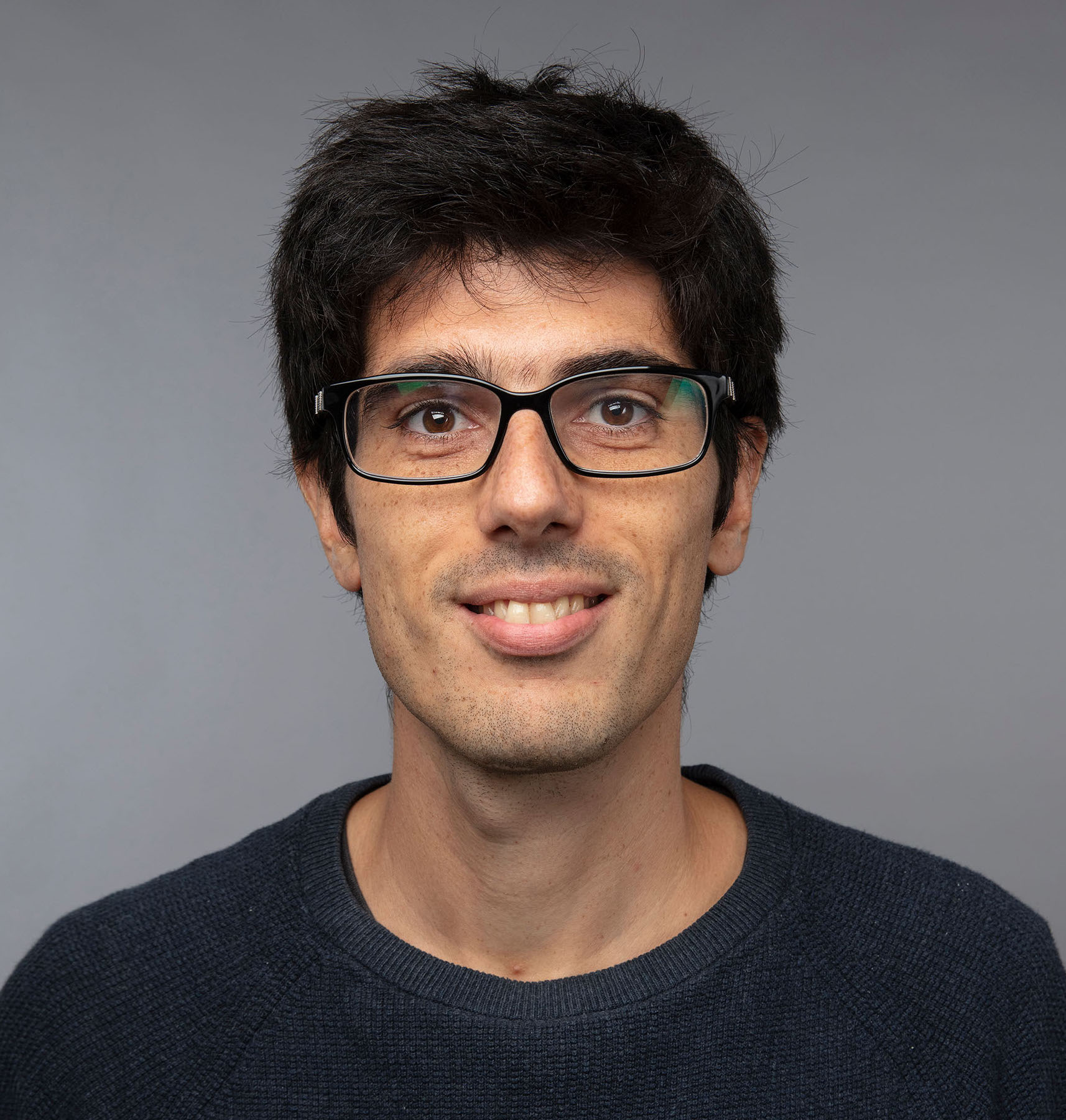
Mikkel N. Schmidt is an Associate Professor in the Department of Applied Mathematics and Computer Science at the Technical University of Denmark (DTU). His research focuses on statistical modeling, Bayesian methods, and their applications in science and industry. He has held visiting roles at Columbia University (2007) and Cambridge University (2008-2009). His work integrates probabilistic modeling with computational inference to address complex problems in diverse fields such as molecular discovery, optical communication, and brain connectivity analysis. Education highlights include visiting scholar and postdoctoral experiences at top-tier institutions. Research interests span statistical methodology development, machine learning applications, and interdisciplinary problem-solving. Current projects involve Bayesian neural networks for molecular discovery and federated learning optimization. Advising efforts include supervising multiple PhD students in areas like molecular discovery and denoising diffusion models. Notable collaborations involve work on materials science, quantum communication, and medical signal processing. His contributions bridge theoretical advancements with practical industrial applications, emphasizing interdisciplinary innovation.
Jesper Rindom Jensen is an Associate Professor in the Department of Electronic Systems at Aalborg University, Denmark, under the Technical Faculty of IT and Design. He is the Head of the Audio Analysis Lab, a leading research group in audio signal processing, since 2023. His work bridges theoretical signal processing and practical applications in artificial intelligence and audio systems. Full Name: Jesper Rindom Jensen Institution: Aalborg University School: The Technical Faculty of IT and Design Department: Department of Electronic Systems Research Lab: Audio Analysis Lab Email: jrj@es.aau.dk Office: Fredrik Bajers Vej 7B, B5-206, 9220 Aalborg Øst, Denmark Education: M.Sc. in Electronic Systems, Aalborg University (cum laude, 2009) Ph.D. in Signal Processing, Aalborg University (2012) Research Interests: Jesper Rindom Jensen's research centers on audio signal processing, with a strong emphasis on artificial intelligence, speech enhancement, noise reduction, beamforming, and multichannel systems. His work applies to diverse domains including robot and drone audition, spatial audio, and active noise control. He develops novel filtering techniques, including variable span linear filters and harmonic beamformers, to improve speech quality and intelligibility in noisy and reverberant environments. Publication Trends: His recent publications (2023–2025) show a strong trend toward integrating deep learning with classical signal processing, particularly in direction-of-arrival estimation, underwater acoustics, and robust multichannel systems. There is a clear focus on real-world applications, including sound zone control, active noise control, and limited-data scenarios using knowledge distillation. His work consistently emphasizes robustness, efficiency, and practical deployment. Scientific Awards and Recognition: AAU Talent for emerging research leaders Recipient of a competitive postdoc grant from the Danish Independent Research Council Advising and Grants: Jesper has supervised multiple PhD and master’s students, including Nørholm, Karimian-Azari, Zhang, and Wang. He has led significant research projects such as 'Sound Processing for Robots and Drones' (2018–2020) and participated in others related to joint audio-visual tracking and speech enhancement. His research has been supported by national funding bodies, reflecting its innovation and impact. Labs and Teams: He is a founding and core member of the Audio Analysis Lab at Aalborg University, which focuses on cutting-edge audio signal processing and AI-driven solutions. The lab fosters interdisciplinary collaboration and has produced numerous publications, datasets, and real-world applications. Jensen’s leadership since 2023 underscores his pivotal role in shaping the lab’s research direction.
Melih Kandemir is an Associate Professor at the Department of Mathematics and Computer Science, Southern Denmark University. He also serves as Research Group Leader at the Bosch Center for Artificial Intelligence (2018–2021) and held a previous role as Assistant Professor at Ozyegin University (2017–2018). His research focuses on machine learning, Bayesian methods, reinforcement learning, and uncertainty quantification. **Education**: PhD in Computer Science from Aalto University (2013), specializing in 'Learning Mental States from Biosignals'. **Research Interests**: Machine Learning, Bayesian Inference, Reinforcement Learning, Deep Neural Networks, Stochastic Processes. His work emphasizes theoretical foundations and practical applications in domains like medical imaging, control systems, and robotics. **Awards**: Two Best Paper Awards (2017). **Grants & Projects**: Includes the Carlsberg Young Researcher Fellowship (2022–2026), Novo Nordisk Foundation grants (2021–2024), and DFF-funded research on PAC-Bayesian reinforcement learning (2025–2027). **Labs/Teams**: Leads research on Bayesian deep learning and reinforcement learning within the Bosch Center for AI and SDU's interdisciplinary groups.
Jun Yang is a Tenure Track Assistant Professor at the Department of Mathematical Sciences, University of Copenhagen. His research spans computational statistics and machine learning, with a focus on high-dimensional inference, time series analysis, and Monte Carlo methods. Current Position: Tenure Track Assistant Professor, University of Copenhagen (2023–present) Previous Role: Florence Nightingale Bicentennial Fellow, University of Oxford (2020–2023) Education: Ph.D. in Statistics, University of Toronto (2020), advised by Daniel M. Roy and Jeffrey S. Rosenthal Research Interests: Jun’s work addresses the intersection of computational statistics and machine learning, including: - High-dimensional Markov chain Monte Carlo (MCMC) algorithms - Bayesian variable selection in complex models - Spectral inference for nonlinear time series - Quantitative bounds and complexity analysis for MCMC Publications: His publications highlight advancements in high-dimensional sampling, time series analysis, and algorithm design. Key contributions include: - Dimension-free mixing results for Bayesian variable selection - Stereographic projection techniques for MCMC - State-domain change point detection in nonlinear regression Awards: Florence Nightingale Bicentennial Fellow, University of Oxford (2020–2023) Collaborations: Jun collaborates with researchers like K. Łatuszyński, G.O. Roberts, and J.S. Rosenthal, advancing statistical theory and applications in econometrics, machine learning, and stochastic processes.
Sadegh Talebi is a Tenure Track Assistant Professor in the Machine Learning Section at the Department of Computer Science, University of Copenhagen . His research focuses on theoretical aspects of reinforcement learning, Markov decision processes, online learning, stochastic multi-armed bandit problems, and resource allocation in networks. Education BSc in Electrical Engineering (minor: Electronics) from Iran University of Science and Technology (IUST) (2004) MSc in Electrical Engineering (minor: Communication Systems) from Sharif University of Technology (2006) PhD in Electrical Engineering from the Department of Automatic Control at KTH Royal Institute of Technology (supervised by Alexandre Proutiere and Mikael Johansson) Research Specializes in theoretical foundations of reinforcement learning and online learning Key contributions in stochastic optimization, MDPs, and bandit algorithms Collaborates on applications in resource allocation and quantum computing Publications include high-impact work on offline RL, differentially private exploration, and scalable MDP solutions in journals like Neural Processing Letters and conferences such as NeurIPS and UAI.
Jes Frellsen is an Associate Professor at the Department of Applied Mathematics and Computer Science (DTU) since 2016. Previously, he held academic positions at the IT University of Copenhagen (2016-2019), postdoctoral roles at University of Cambridge (2013-2016) and University of Copenhagen (2011-2013). Education: PhD in Bioinformatics (2011), University of Copenhagen MSc in Bioinformatics (2007), University of Copenhagen BSc in Mathematics and Computer Science (2005), University of Copenhagen EAP Exchange at University of California, Santa Cruz (2004-2005) Research Focus Jes Frellsen specializes in statistical machine learning , particularly generative AI and deep generative models with applications in bioinformatics . His work integrates Bayesian inference , directional statistics , and Markov chain Monte Carlo methods to address challenges in macromolecular structure prediction and missing data imputation . Recent efforts explore uncertainty quantification in image segmentation and generative modeling for materials science. Advising & Collaborations He actively supervises PhD students and postdoctoral researchers in projects spanning news recommendation systems , medical imaging , and 3D structure generation . Collaborations include work with Zoubin Ghahramani (Cambridge) and Thomas Hamelryck (Copenhagen), with contributions to protein structure prediction and statistical methods in structural bioinformatics .
Martin Aumüller is a Lecturer in Theoretical Computer Science Algorithms at the IT University of Copenhagen . He serves as Head of Education and Master of Software Design , focusing on algorithm engineering, differential privacy, and similarity search. Research interests include: Algorithm engineering for high-dimensional data Locality-sensitive hashing and nearest neighbor search Privacy-preserving machine learning Fairness in approximate search algorithms Benchmarking and evaluation of similarity search tools Publications trends highlight his work on approximate nearest neighbor search , privacy-preserving techniques , clustering algorithms , and scalable outlier detection in high-dimensional spaces. His recent projects (2024-2025) focus on fairness, differential privacy, and efficient indexing. Grants and projects : DIREC (2020-2025): Digital Research Centre Denmark (Innovation Fund Denmark) DIREC: Bias and Benefit of Approximate Nearest Neighbor Search (2022-2025): Principal Investigator (Innovation Fund Denmark) BARC (2017-2024): Basic Algorithms Research Copenhagen (Villum Fonden) SSS (2014-2019): Scalable Similarity Search (European Commission)
Matthias Oliver Wilhelm is an Associate Professor in the Department of Mathematics and Computer Science at the University of Southern Denmark, affiliated with the Quantum Mathematics research group. His work focuses on advanced theoretical physics topics including scattering amplitudes in gauge/gravity theories, Feynman integrals, special functions, and applications of machine learning in physics. He has contributed to groundbreaking research at the intersection of quantum field theory and mathematical physics, particularly in understanding gravitational wave phenomena and high-energy particle interactions. Research Interests: His research combines quantum field theory with algebraic geometry and computational methods, exploring topics like elliptic Feynman integrals, post-Minkowskian expansions, and machine learning-driven amplitude calculations. Recent work includes leveraging Calabi-Yau manifolds for gravity-related Feynman integrals and developing transformer-based algorithms for scattering amplitude computations. Awards: He received the Velux Grant - Villum Young Investigator in 2018, recognizing his innovative contributions to theoretical physics. Projects: Leveraging Algebraic Geometry for High-Precision Fundamental Physics (2024-2028, DFF-funded) Thermodynamics of strongly coupled Quantum Field Theory (2019-2027, private foundation-funded) Key Themes in Recent Work: His articles emphasize novel computational techniques (e.g., machine learning for integration-by-parts reduction), formal developments in scattering amplitude theory, and geometric approaches to quantum gravity problems. Notable contributions include classifying Feynman integral geometries for black-hole scattering and advancing elliptic function methodologies in perturbative QFT.
Morten Nielsen is a Professor in the Department of Mathematical Sciences at the Faculty of Engineering and Science, Aalborg University, Denmark. His research is centered on harmonic analysis, approximation theory, and sparse signal processing, with strong emphasis on modulation spaces, wavelet systems, and matrix-weighted function spaces. His research interests include: Harmonic and Functional Analysis Approximation Theory and Sparse Representations Wavelet and Time-Frequency Analysis Nonlinear Approximation in Banach Spaces Matrix-Weighted Function Spaces Applications in Signal and Image Processing The recent publications show a consistent focus on theoretical developments in function spaces, particularly α-modulation and Triebel-Lizorkin spaces, with applications to sparse representations and nonlinear approximation. His work often involves deep connections between operator theory, frame theory, and signal decomposition techniques. Although no specific scientific awards are listed, his extensive publication record in top-tier journals and book chapters in prestigious series such as Applied and Numerical Harmonic Analysis indicates significant recognition in the mathematical community. Morten Nielsen has been involved in multiple research projects, including 'Generalized Wavelet Systems', 'Sparse Representation of Data', and 'Muckenhoupt Matrix Weights', often in collaboration with researchers like Hrvoje Šikić. He has supervised at least one PhD student and continues to be actively involved in research, as evidenced by publications in 2025. His work is supported by ongoing research grants and collaborations across Europe. He leads and participates in research groups focused on harmonic analysis and approximation theory, contributing to both theoretical advancements and practical applications in data science and engineering.
Jesper Møller is a Professor in the Department of Mathematical Sciences at Aalborg University's Faculty of Engineering and Science, specializing in Statistics and Mathematical Economics. His research focuses on advanced statistical methodologies with applications across various scientific domains. His educational background includes extensive training in mathematical sciences, though specific degree details aren't provided in the current materials. His research interests span: Applied probability theory Markov chain Monte Carlo methods (MCMC) Spatial statistics Stochastic geometry Stochastic simulation Point process modeling Professor Møller's recent publication record shows consistent productivity with 239 research outputs including journal articles, reports, and book chapters. His work demonstrates strong focus on spatial point processes, Bayesian inference methods, and applications of stochastic geometry. The research trends indicate increasing sophistication in modeling complex spatial patterns and developing computational methods for statistical inference. His scientific contributions have been supported by numerous research projects, with 28 projects documented including the current "Peculiar Distribution Functions and Interesting Stochastic Processes" (2022-2026). His work has generated significant scholarly impact with citations across multiple disciplines. Professor Møller has supervised 8 PhD students and maintains active collaborations across international research networks. His current projects suggest continued research activity in developing novel statistical methodologies for complex spatial data analysis with applications in materials science, neuroscience, and environmental statistics.
Martin Skovgaard Andersen is an Associate Professor in the Department of Applied Mathematics and Computer Science at the Technical University of Denmark (DTU), where he specializes in Scientific Computing. His research integrates numerical methods, optimization, and machine learning to solve complex computational problems in engineering and data science. Education: Ph.D., University of California, Los Angeles (2006–2011) M.Sc., Aalborg Universitet (2001–2006) Postdoc, Linköping University, Sweden (2011–2012) His research interests include optimization (particularly conic and stochastic programming), numerical algorithms, signal processing, system identification, and fast solvers for integral equations. He works extensively on matrix analysis, regularization, and low-rank approximations, contributing to both theoretical and applied advancements in computational mathematics. The recent publications highlight a strong trend in developing efficient numerical algorithms for large-scale optimization and solving integral equations. His work emphasizes preconditioning, matrix truncation, and Bayesian inversion, with applications in electromagnetics, structural health monitoring, and network identification. There is a consistent focus on improving computational efficiency and scalability of solvers. Scientific Awards: No specific awards mentioned in the provided text. Andersen actively supervises PhD students and leads multiple research projects, including those on non-symmetric conic optimization, data-sparse models, and fast direct solvers. He is the Principal Investigator (PI) on projects related to physics-informed structural health assessment. His collaborative network spans Denmark and international institutions, particularly in computational mathematics and engineering. Labs and Research Teams: He is affiliated with the Scientific Computing section at DTU, which focuses on high-performance computing, numerical algorithms, and mathematical modeling. His work is embedded in a collaborative environment involving researchers in optimization, control theory, and computational electromagnetics.
Robert Krarup Feidenhans'l is a Professor in X-ray Physics and Visiting Professor in Condensed Matter Physics at the Niels Bohr Institute, University of Copenhagen. His research bridges fundamental physics with practical applications in materials characterization, biological imaging, and nanotechnology through advanced X-ray techniques. Feidenhans'l earned his Master's degree in Physics and Mathematics in 1983 and his Ph.D. in Physics from the University of Aarhus in 1986, where he was awarded the A. Angelo prize. His career progressed from staff scientist at Risø National Laboratory to leadership positions including Head of the Materials Research Department at Risø, Professor at the Niels Bohr Institute, Vice Institute Leader for Research, and Interim Institute Leader. His research interests span Surface and Interface Science, X-ray Physics, Synchrotron Radiation, Materials Science, Crystallography, Nanoscience, and Biophysics. His work demonstrates a progression from fundamental materials research toward innovative applications of X-ray techniques in biological systems while maintaining strong contributions to materials characterization. With approximately 140 publications and an h-index of 31, his research has garnered over 3,940 citations as of 2012, reflecting significant impact across multiple disciplines. Feidenhans'l has held prestigious leadership positions including Chairman of the Council of European Synchrotron Radiation Facility (2006-2010, with a €90M annual budget and 600 employees), Chairman of the European XFEL Council (2010-present, overseeing a €1.1 billion construction project), and Director of DANSYNC/DANSCATT. He has served on advisory committees for major international facilities including MAXLAB in Lund, HASYLAB/DESY, and the LCLS in Stanford. As an educator, Feidenhans'l has supervised approximately 21 master's students and 15 Ph.D. students, currently guiding 6 Ph.D. and 8 master's students. He teaches core courses including Introduction to Solid State Physics, Experimental X-ray Physics, and Structural Tools in NanoScience. His leadership extends to chairing the PhD Committee at the Faculty of Sciences and serving on the Academic Council of the Faculty of Science at the University of Copenhagen. He has co-organized numerous international conferences and summer schools, including the Nordic Summerschool on Synchrotron Radiation and the International Conference on Solid Films and Surfaces.
Mogens Bladt is a Professor of Applied Probability and Insurance Mathematics at the Department of Mathematical Sciences, University of Copenhagen. He has held positions since 2018 after 24 years as Principal Researcher at the National University of Mexico (1994-2018), with visiting professorships at Technical University of Denmark and University of Copenhagen since 2001. Research: Focuses on time-inhomogeneous phase-type distributions, matrix-oriented life insurance models, heavy-tailed distributions, and diffusion bridge simulation Teaching: Offers graduate/undergraduate courses in Applied Probability, Stochastic Processes, Risk Theory, and Numerical Analysis Scientific Contributions: Developed R packages for Markov jump processes, phase-type distributions, and diffusion bridges. Holds grants from Mexico and Denmark, including Danish Research Council funding (2007–2008). Supervised 5 PhD, 8 Master’s, and 13 Bachelor’s theses Organized academic workshops and served as Associate Editor for Stochastic Models since 1997
Andreas Pavlogiannis is an Associate Professor in the Department of Computer Science at Aarhus University. His research focuses on formal methods , algorithmic verification , automata theory , concurrency , static and dynamic program analysis , network diffusion , evolutionary graph theory , and evolutionary game theory . Teaching courses: Programming Languages (Bachelor) , Algorithmic Model Checking (Master) , and Program Analysis (Master) Service: Program committee member for POPL, ESOP, AAAI, IJCAI, CONCUR, OOPSLA, and organizer of CONFEST'25 His research has been supported by the Austrian Science Fund (FWF), VILLUM Foundation, Stibo Foundation, and Danish Council for Independent Research (DFF). He is actively recruiting PhD and PostDoc researchers. Recent publications span quantum computing , concurrent systems , evolutionary dynamics , and network science , with particular emphasis on symbolic algorithms , dynamic analysis , and graph-based models .
Yan Zhao is an Associate Professor in the Department of Computer Science at Aalborg University, Denmark, affiliated with The Technical Faculty of IT and Design. His research focuses on data engineering, science, and systems, with a particular emphasis on anomaly detection, machine learning, and spatio-temporal data analysis. He holds a Ph.D. in Computer Science (specific education details not explicitly provided). Research Interests: Dr. Zhao's work spans anomaly detection, autoencoders, attention mechanisms, preference learning, multivariate time series, and computational efficiency. His research often integrates machine learning with real-world applications in spatial crowdsourcing, trajectory analysis, and data privacy. Publications: With 72+ publications, his recent work emphasizes spatio-temporal prediction frameworks, federated learning, and efficient time series analysis. Notable contributions include frameworks for continuous learning on streaming data and privacy-preserving clustering in spatial crowdsourcing. Grants & Supervision: He has supervised one Ph.D. student and actively contributes to research grants focusing on data engineering and smart systems. His work bridges theoretical advancements with practical applications in transportation, social networks, and IoT.