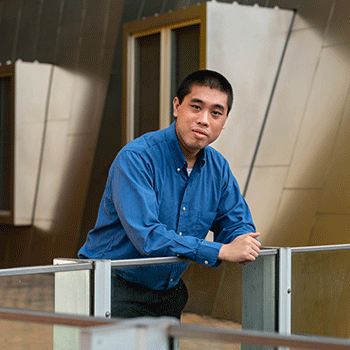
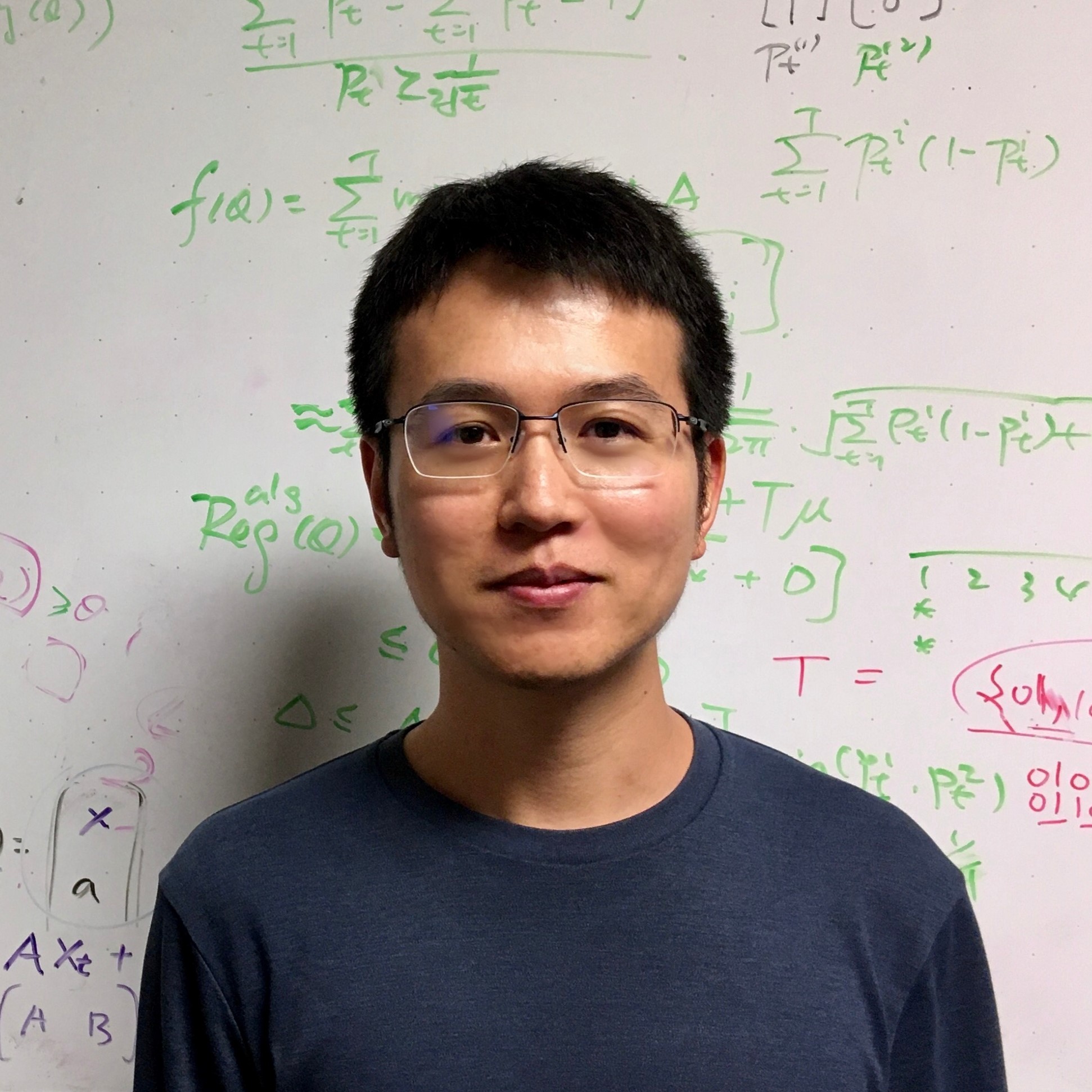
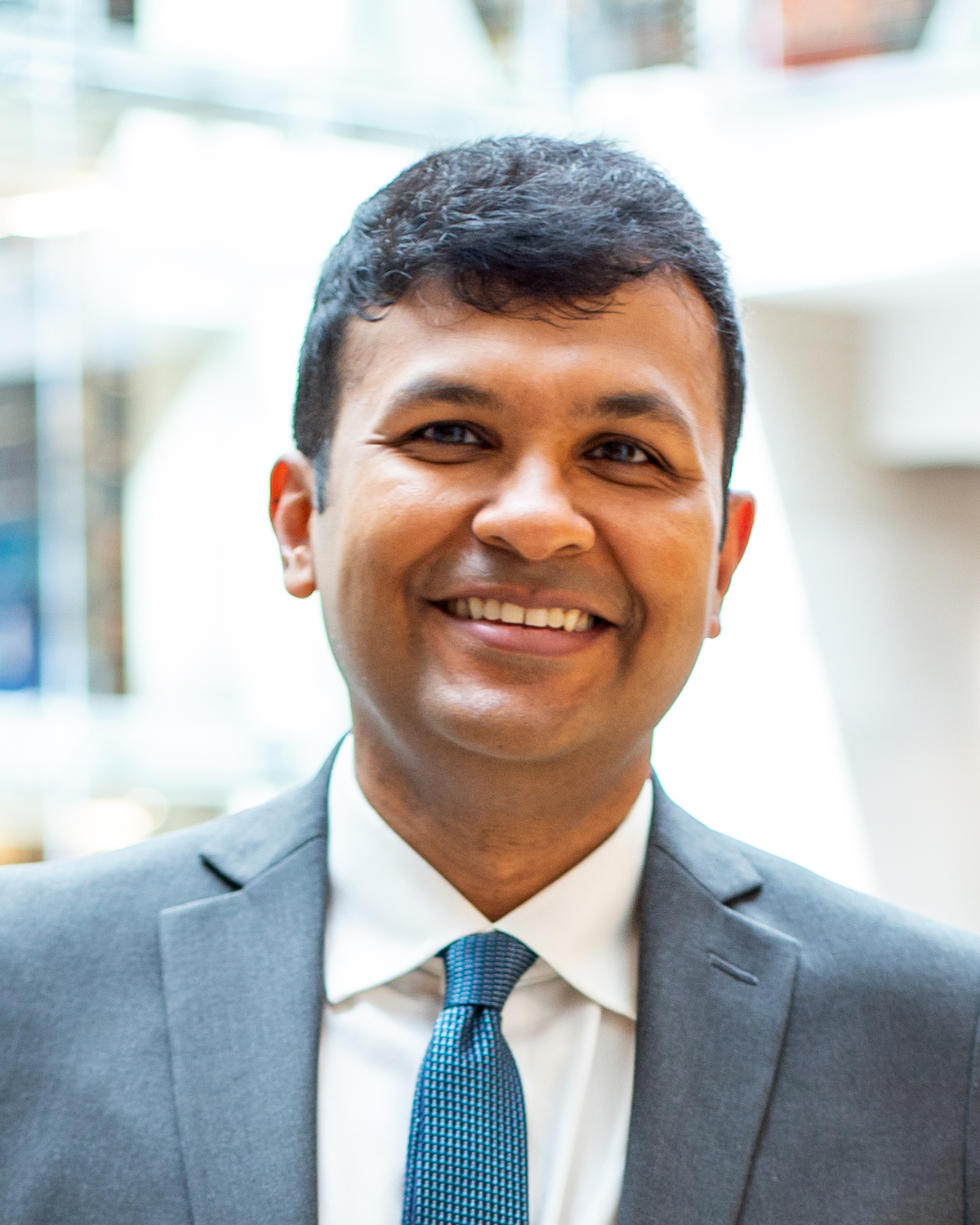
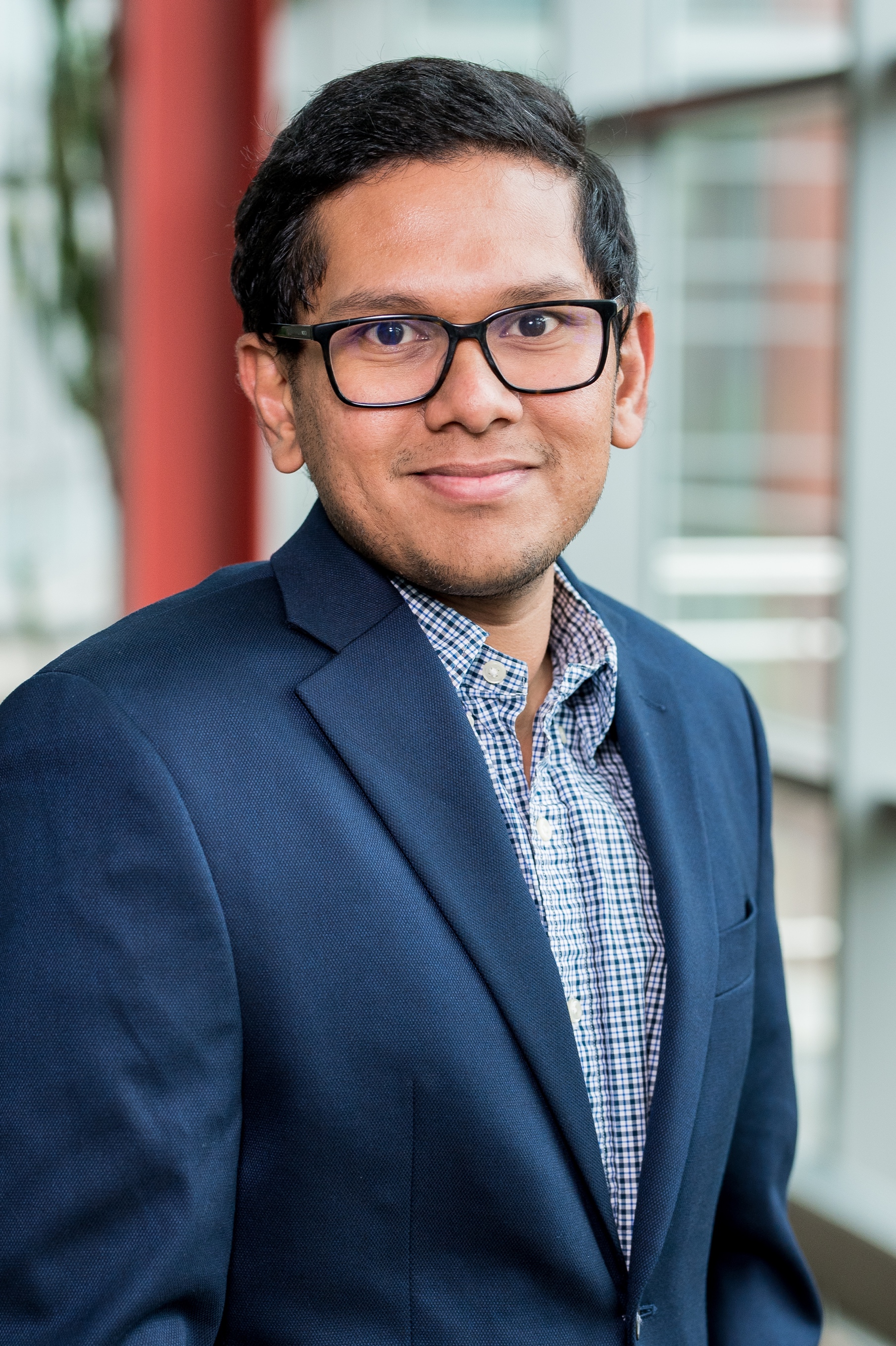
Julian Shun is an Associate Professor at the Massachusetts Institute of Technology (MIT) in the Department of Electrical Engineering and Computer Science (EECS) and a principal investigator in the Computer Science and Artificial Intelligence Laboratory (CSAIL). Previously, he was a Miller Research Fellow at UC Berkeley and earned his Ph.D. from Carnegie Mellon University under Guy Blelloch. His research focuses on parallel and high-performance computing, with emphasis on graph analytics, spatial/graph clustering, and dynamic algorithms. He designs algorithms with theoretical guarantees and empirical efficiency, along with high-level programming frameworks to simplify parallel code development. His work spans cache-oblivious, external-memory, and streaming graph algorithms, addressing scalability and performance across diverse computational architectures. Julien's recent publications highlight advancements in parallel graph traversal, dynamic connectivity, and approximation algorithms for centrality metrics. His research also explores domain-specific languages like GraphIt for graph analytics and frameworks such as Julienne for work-efficient bucketing. Scientific Awards: Miller Research Fellow at UC Berkeley He has taught graduate-level courses at MIT, including 6.506 (Algorithm Engineering) and 6.886 (Graph Analytics), emphasizing theoretical foundations, experimental analysis, and open-ended research projects.
Dr. Oliver Kennedy is an Associate Professor in the Department of Computer Science and Engineering at the University at Buffalo's School of Engineering and Applied Sciences. He serves as Co-Director of Graduate Studies and leads the Online Data Interactions (ODIn) Lab. His research focuses on databases, programming languages, and user interfaces for data science, with particular emphasis on scalable compilers and managing uncertainty in data. Kennedy holds a PhD in Computer Science from Cornell University (2011), MS from Cornell (2008), and dual BS degrees in Computer Science and Computer Engineering from NYU and Stevens Institute of Technology (2005). His work bridges theoretical computer science with practical data management challenges. His recent publications demonstrate a strong focus on improving database query processing, uncertainty management in data systems, and developing practical tools for data integration and exploration. Awarded the NSF CAREER Award in 2018, Kennedy's research has significant implications for efficient data processing in scientific and commercial applications.
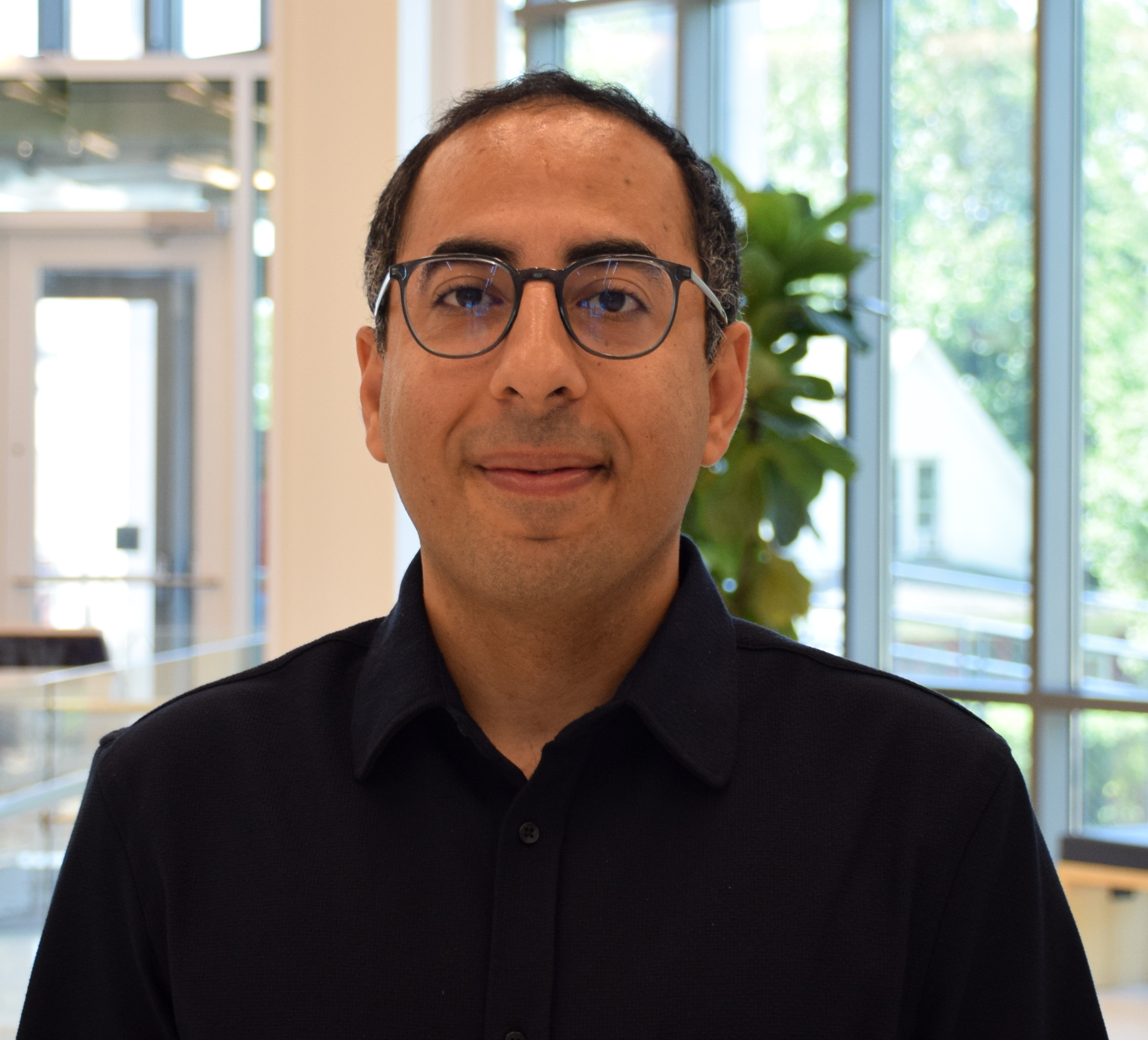
Mohsen Heidari is an Assistant Professor in the Department of Computer Science at Indiana University, Bloomington. He is affiliated with the IU Quantum Science and Engineering Center (QSEc) and the NSF Center for Science of Information (CSoI). He previously held positions as a Visiting Assistant Professor at Purdue University and as a Postdoctoral Research Associate at CSoI. Ph.D. in Electrical Engineering (2019) and M.Sc. in Applied Mathematics (2017) from the University of Michigan His research focuses span quantum computing, theoretical machine learning, and information theory. Key themes include: Quantum algorithm design and sample complexity Fourier-based learning frameworks Quantum-classical duality in learning problems Information-theoretic approaches to biological systems Article trends show a strong emphasis on quantum-classical learning intersections (6/15 papers), Fourier analysis applications (5/15), and information-theoretic foundations (12/15). Notable venues include NeurIPS, IEEE Transactions, and ISIT. He directs research involving: Quantum Neural Network development Quantum measurement simulation Quantum data compression techniques Quantum algorithm implementation constraints
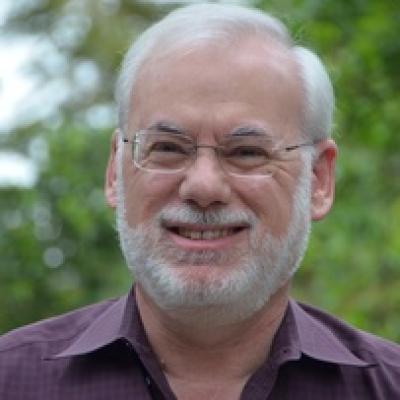
David Mount is a Professor in the Department of Computer Science at the University of Maryland, with an additional appointment at the University of Maryland Institute for Advanced Computer Studies (UMIACS). His primary research focus is Computational Geometry, particularly in designing, analyzing, and implementing data structures and algorithms for geometric problems. Applications of his work span image processing , pattern recognition , information retrieval , and computer graphics . He is a Fellow of the ACM and has received the ACM Recognition of Service Award twice. A member of the Algorithms and Theory Group, Mount has authored over 200 publications, many of which are available on Google Scholar, DBLP, and ArXiV. Research Focus Computational Geometry Algorithm Design and Analysis Geometric Data Structures Nearest Neighbor and Range Searching Clustering Algorithms Recent Publications Mount's recent publications (2023-2025) emphasize non-Euclidean geometry (e.g., Hilbert metric), dynamic geometric structures , and approximation algorithms for polytopes, Voronoi diagrams, and Delaunay triangulations. Collaborative works with students and researchers address challenges in kinetic data compression , label tracking , and geometric software development (e.g., Ipelets for polygonal geometry). Professional Activities Editorial Board Member, TheoretiCS (2021-present) Senior Associate Editor, ACM Trans. on Spatial Algorithms and Systems (2013-2020) Program Committee Member, FOCS , ESA , SODA , and other major conferences Awards ACM Fellow ACM Recognition of Service Award (twice)
Rocco Servedio is a Professor in the Department of Computer Science at Columbia University, where he leads research in theoretical computer science with a focus on computational complexity theory, learning theory, and the role of randomness in computation. He previously served as Chair of the Computer Science Department from 2018 to 2021. He holds a Ph.D., MS, and AB in Mathematics from Harvard University. His research interests include property testing, computational learning theory, and algorithmic lower bounds. He has contributed to foundational work in areas like junta testing, trace reconstruction, and convexity testing. Servedio has held leadership roles in major conferences such as STOC, CCC, and COLT, and has mentored students through courses like Unconditional Lower Bounds and Derandomization . Education: Ph.D. in Computer Science, Harvard University MS in Computer Science, Harvard University AB in Mathematics, Harvard University His research bridges theoretical computer science and applied mathematics, with recent work exploring the intersection of Gaussian processes, convex geometry, and algorithmic efficiency. Servedio's contributions to the field are exemplified through his involvement in high-impact conferences and his leadership in advancing fundamental computational theories.
Peter Haas is a Professor at the Manning College of Information and Computer Sciences at the University of Massachusetts Amherst, with an adjunct role in Industrial Engineering. Previously, he spent 30 years as a Principal Research Staff Member at IBM Research and held a consulting professorship in Management Science and Engineering at Stanford University. His research focuses on applying probability and statistics to data management, simulation of complex systems, and machine learning scalability. Education : PhD, Operations Research, Stanford University, 1986 MS, Statistics, Stanford University, 1984 MS, Environmental Engineering, Stanford University, 1979 SB, Engineering and Applied Physics, Harvard University, 1978 Research Interests : Haas’s work spans stochastic systems, probabilistic databases (e.g., MCDB and SimSQL), sampling techniques, and simulation optimization. He pioneered methods for managing uncertain data and scalable machine learning, including compressed linear algebra for declarative systems. His recent focus includes in-database decision support and hybrid simulation metamodeling with neural networks. Key Contributions : He developed the Online Aggregation framework (SIGMOD 1997), which earned a Test-of-Time Award in 2007. His work on matrix factorization and distributed stochastic gradient descent (DSGD) revolutionized large-scale machine learning. He also advanced techniques for estimating distinct-values and correlation discovery in databases. Awards : A six-time recipient of IBM’s Pat Goldberg Memorial Award, he is an ACM and INFORMS Fellow. His honors include the VLDB Best Paper Award (2016), EDBT Best Paper (2018), and recognition in Communications of the ACM. Advising & Grants : He advises four current PhD students and has graduated Matteo Brucato. His IBM career included over 30 patents, including foundational work for DB2’s sampling capabilities and IBM Watson analytics. He leads the DREAM Lab, focusing on data systems for exploration and analytics. Labs/Teams : Directs the Data systems Research for Exploration, Analytics, and Modeling (DREAM) Lab, advancing projects like Splash (health system simulation) and SuDocu (document summarization by example).
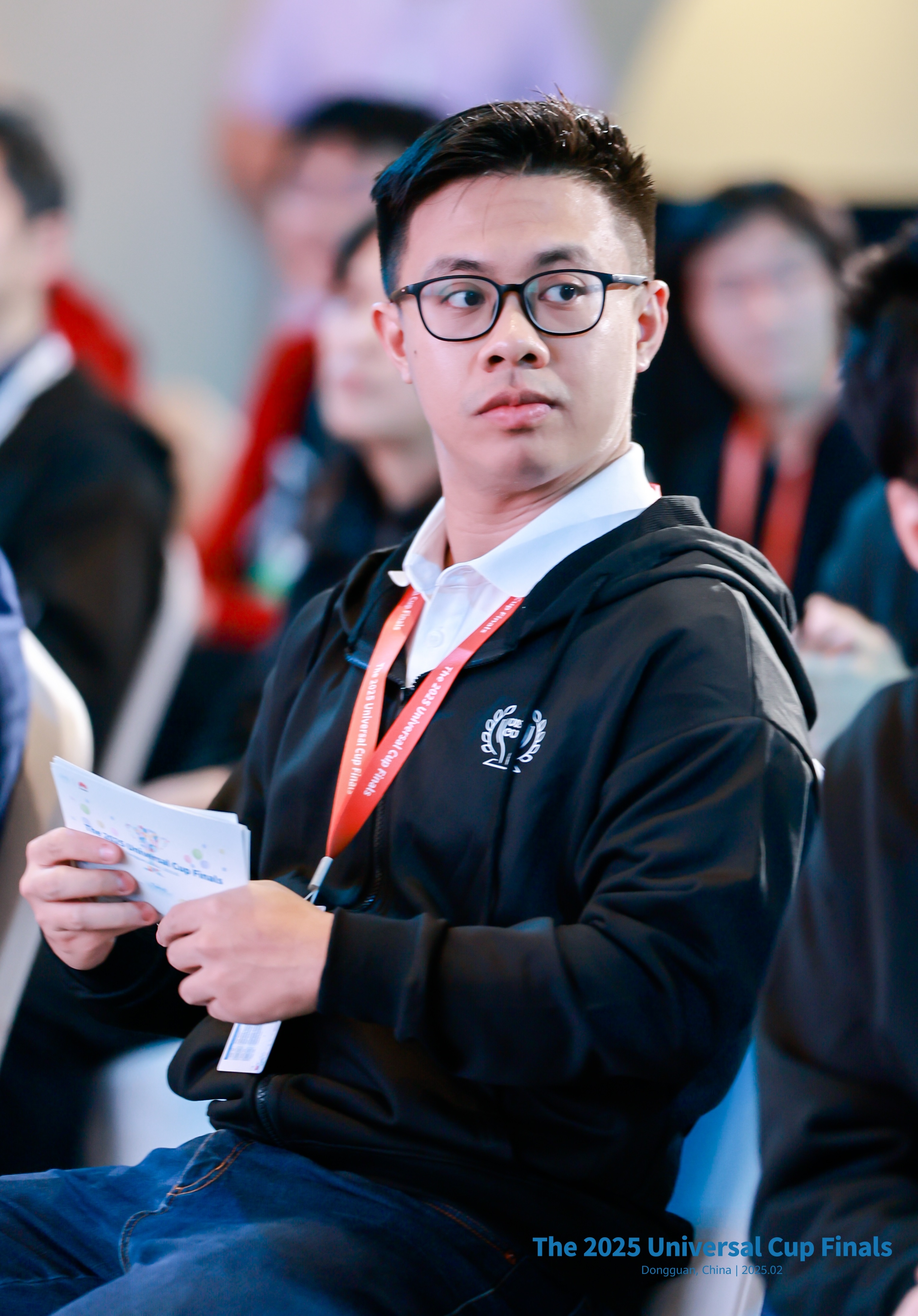
Jingbang Chen is a Research Assistant Professor at the School of Data Science, The Chinese University of Hong Kong, Shenzhen (CUHK-Shenzhen) and holds a joint faculty position at Shenzhen Loop Area Institute (SLAI) starting September 2025. His academic journey includes a Ph.D. from the University of Waterloo, an M.S. from Georgia Institute of Technology, and a B.Eng (Honors) from Zhejiang University under the supervision of Can Wang. Education: Ph.D., Computer Science, University of Waterloo (2023-2025) M.S., Computer Science, Georgia Institute of Technology (2020-2022) B.Eng. (Honors), Pursuit Science Class, Chu Kochen Honors College (Joint Program with College of Computer Science and Technology), Zhejiang University (2016-2020) High School, Guangzhou No.2 High School (2010-2016) Dr. Chen's research focuses on the design, analysis, and implementation of provably efficient algorithms and data structures, with a particular emphasis on graph theory. He is also exploring intersections between traditional algorithm design and artificial intelligence. His work bridges theoretical computer science with practical applications in network analysis, temporal data processing, and optimization. The publication record shows a strong trajectory with papers in top venues including ICML, VLDB, KDD, and theoretical computer science conferences. Scientific Contributions: Published in premier venues including ICML 2025, VLDB 2025, KDD 2024, and multiple theoretical conferences Research spans graph algorithms, optimization techniques, network analysis, and the emerging field of learning-augmented algorithms Active contributor to the competitive programming community as both researcher and practitioner Dr. Chen is deeply involved in Competitive Programming activities, having competed in ICPC World Finals 2018 (Beijing) and 2022 (Egypt), winning regional champion titles and several gold medals. He serves as chief judge for multiple ICPC Asia regionals and coaches training camps including the North American Programming Camp (NAPC). He is also the founder and co-president of the Universal Cup, an international competitive programming contest platform. Currently, he is recruiting highly motivated PhD students with strong backgrounds in competitive programming and interest in research, collaborating with Prof. Chenhao Ma on algorithm design projects.
Haipeng Luo is an Associate Professor at the Thomas Lord Department of Computer Science, University of Southern California, holding the IBM Early Career Chair. He previously worked as a Postdoctoral Researcher at Microsoft Research, NYC, and has held visiting roles at Google and Amazon. His research focuses on developing practical machine learning algorithms with strong theoretical guarantees, particularly in online learning, bandit problems, reinforcement learning, and game theory. PhD in Computer Science, Princeton University (2011–2016) BSc in Computer Science, Peking University (2007–2011) His work spans adversarial and stochastic environments, addressing challenges in reinforcement learning, game dynamics, calibration, and omniprediction. Recent publications highlight advancements in regret minimization, game equilibrium computation, and robust optimization frameworks. Key contributions include algorithms for zero-sum games, bandit problems with feedback graphs, and theoretical analyses of convergence properties in multi-agent systems. Scientific accolades include Best Paper Awards at COLT 2021, COLT 2018, NeurIPS 2015, and ICML 2015. He has received prestigious grants such as the NSF CAREER Award (2020), Google Faculty Research Award (2020), and NSF CRII Award (2018). His students have secured academic and industry positions, and he actively teaches graduate courses in machine learning and online optimization.
Professor Yahya Fathi specializes in optimization and operations research at North Carolina State University. His research includes mathematical programming, production systems, and quality engineering, with applications in manufacturing and data analytics. Awarded multiple teaching excellence honors.
Patrick Jaillet is the Dugald C. Jackson Professor in the Department of Electrical Engineering and Computer Science at MIT's School of Engineering. He holds joint appointments with the Laboratory for Information and Decision Systems (LIDS), the Operations Research Center (ORC), the Operations Research and Statistics Group at MIT Sloan, and the Department of Civil and Environmental Engineering. Previously, he served as Head of Civil and Environmental Engineering at MIT (2002-2009) and Chair of the Department of Management Science and Information Systems at UT Austin (1997-2002). Dr. Jaillet's research focuses on online optimization and learning, sequential decision-making under uncertainty, and security and resilience in complex networks. His work spans theoretical foundations in optimization and machine learning with applications in transportation, online market analytics, and network security. He has developed mathematical frameworks for problems involving uncertainty, dynamic resource allocation, and strategic behavior in complex systems. His recent publications reveal strong trends in bridging theoretical optimization with practical machine learning applications. Key themes include Bayesian optimization for black-box functions, online learning with limited information, mechanism design for resource allocation, and network security applications. His work increasingly integrates large language models with traditional optimization techniques, reflecting the evolving landscape of AI-driven decision-making systems. Fulbright Scholar (1990) Fellow of the Institute for Operations Research and Management Science (INFORMS) Best Applications Paper Award at ICAPS 2019 Long-standing Associate Editor for top journals including Operations Research and Transportation Science Dr. Jaillet has advised over 40 doctoral students who now hold prominent positions in academia and industry, including faculty positions at MIT, Georgia Tech, and ETH Zurich, and research scientist roles at Amazon, Microsoft Research, and Google. His research has been consistently funded by major agencies including NSF, ONR, AFOSR, and international partners like Singapore NRF, with current projects focusing on learning algorithms for autonomous security and fundamental tradeoffs in optimization. He leads a vibrant research group spanning MIT's EECS department and ORC, with current funding supporting work on neural bandits, federated optimization, and network security applications. His research group operates at the intersection of theory and practice, with strong connections to industry through collaborations with IBM, Microsoft, Google, and various transportation and technology companies. The group maintains active partnerships with international institutions, particularly through SMART in Singapore, reflecting Dr. Jaillet's global research impact.
Leila De Floriani is a Professor at the University of Maryland, with appointments in the Department of Geographical Sciences and the University of Maryland Institute for Advanced Computer Studies (UMIACS). She previously served as a professor at the University of Genova (Italy) since 1990, where she developed Italy's first undergraduate and graduate curricula in computer graphics and directed the Ph.D. program in Computer Science for eight years. Her professional activities include serving as the 2020 President of the IEEE Computer Society and currently as IEEE Division VIII Director for 2023-24. Professor De Floriani's research spans geometric modeling, data visualization, spatial data representation and processing, computer graphics, shape analysis, and topological data analysis. Her work focuses on developing mathematical models and algorithms for representing, analyzing, and visualizing complex spatial data, particularly through hierarchical models, mesh-based representations, and topology-based approaches. Her research group, the GeoVis group, investigates applications in terrain modeling, environmental data analysis, and forest structure mapping using LiDAR technology. Analysis of her recent publications reveals a strong focus on terrain representation and processing, with increasing emphasis on topological data analysis, machine learning integration, and efficient algorithms for large-scale spatial data. Her work bridges theoretical foundations in computational topology with practical applications in geospatial sciences, demonstrating consistent innovation in data structures and visualization techniques. Scientific Awards & Recognitions Fellow of IEEE (2016) for contributions to geometric modeling and scientific visualization Fellow of International Association for Pattern Recognition (IAPR) (1998) for contributions to geometric modeling and image analysis Fellow of Eurographics Association (2020) for outstanding contributions to computer graphics and visualization Pioneer of Solid Modeling Association (2017) for seminal work in solid and feature-based modeling Inducted Member of IEEE Visualization Academy (2020) IEEE Computer Society Golden Medal Award (2018) Inducted Member of IEEE Honor Society Eta Kappa Nu (2019) Multiple best paper awards at major conferences including Shape Modeling International (2015), IEEE/EG Symposium on Volume and Point-Based Graphics (2008), and ACM SIGSPATIAL (2008) Professor De Floriani has successfully advised numerous PhD students including Xin Xu, Yunting Song, and Noel Dyer, whose recent dissertations focused on topology-based individual tree mapping, efficient terrain analysis, and bathymetric data visualization respectively. Her research has been funded by prestigious agencies including the National Science Foundation, NASA, and the European Commission. As the leader of the UMD GeoVis group, she oversees a research program that develops open-source tools for spatial data analysis available on GitHub, with current projects focusing on forest point cloud processing and topology-based geospatial data visualization. The GeoVis group, affiliated with the Department of Geographical Sciences, UMIACS, and the Center for Geospatial Information Sciences, maintains a strong collaborative environment with ongoing projects in geometric modeling, spatial data structures, topology-based machine learning, and mesh-based terrain modeling. The group has received recent funding from NASA's HPOSS program for developing an open-source library for forest point cloud processing based on topological data analysis.
Arnab Nandi is a Professor in the Department of Computer Science & Engineering at The Ohio State University. His work bridges human interaction with data infrastructure, focusing on database systems, LLM-augmented analytics, and immersive query interfaces. Education: PhD in Computer Science & Engineering from the University of Michigan Leadership: Co-founder of OHI/O Hackathon Program and STEAM Factory interdisciplinary network Research spans human-in-the-loop data analytics , vibe querying (natural language + gestural interfaces), LLM integration into education, and climate response systems . Key projects include Omni (multimodal exploration), GestureDB , and Icarus (clinical pipelines). Recent publications analyze LLM-driven query stacks (HILDA 2025), video analytics (SIGMOD 2022), and data sunglasses for cognitive limits (HILDA 2025). Awards include NSF CAREER Google Faculty Research Award IEEE TCDE Early Career Award ACM Distinguished Member Advises students in database innovation , with alumni at Amazon, AWS, Roblox, and Meta. Teaches CSE 3241 (Database Systems), CSE 5889 (Software Startups), and CSE 5242 (Advanced Databases).
Charith Mendis is an Assistant Professor in the Siebel School of Computing and Data Science at the University of Illinois at Urbana-Champaign, with joint appointments in the Department of Computer Science, Electrical and Computer Engineering, and the Coordinated Science Lab. His research focuses on the intersection of compilers, program optimization, and machine learning systems. Dr. Mendis received his educational background from prestigious institutions: Ph.D. in Computer Science from Massachusetts Institute of Technology (2020) S.M. in Computer Science from Massachusetts Institute of Technology (2015) B.Sc. in Electronics and Telecommunication Engineering from University of Moratuwa (2013) His primary research interests center around compiler technology and machine learning systems. Mendis leads the ADAPT lab at UIUC, where his team works on creating high-performance ML optimization techniques and automated compiler construction using machine learning and formal methods. His work bridges the gap between traditional compiler design and modern machine learning approaches, with applications in tensor compilers, graph neural networks, and sparse computation. He has developed novel frameworks for optimizing deep learning workloads, verification of compiler transformations, and performance modeling for emerging hardware architectures. Mendis has established himself as a leading researcher in compiler optimization for machine learning systems, with a particular focus on tensor compilers, graph neural networks, and performance modeling. His recent publications demonstrate increasing sophistication in combining formal methods with machine learning techniques to solve challenging problems in compiler optimization and verification, with multiple papers accepted at top-tier conferences including OOPSLA, PLDI, POPL, and SIGMOD. His notable scientific achievements include: Google ML and Systems Junior Faculty Award (2025) DARPA Young Faculty Award (2024) NSF CAREER Award (2024) Distinguished Paper Award at POPL (2025) William A. Martin Thesis Award for Outstanding SM thesis, MIT (2015) Multiple teaching excellence awards at UIUC (2021-2023) Dr. Mendis actively mentors students through the ADAPT lab, offering research opportunities for undergraduates, master's students, and PhD candidates interested in compiler technology and machine learning systems. His research is supported by significant funding from the ACE center (part of JUMP 2.0), National Science Foundation (NSF), DARPA, IIDAI, and industry partners including Google, Intel, Amazon, and Qualcomm. He teaches advanced courses in compiler construction and machine learning for compilers. He leads the ADAPT lab at UIUC, which focuses on developing advanced compiler technologies for modern machine learning workloads. The lab maintains active collaborations with industry partners and has established itself as a leading research group in compiler optimization for AI systems. Current projects include tensor compilers, graph neural network optimization, and automated verification of deep learning systems.
Qiang Zhu is a Professor in the Department of Computer and Information Science at the University of Michigan-Dearborn, holding the William E. Stirton Professorship (2017–2024). He founded the Data Science/Management Research Laboratory and is affiliated with the Michigan Institute for Data Science (MIDAS). His research spans data science, data management, and machine learning. Ph.D., University of Waterloo M.S., McMaster University M.Eng., Southeast University B.S., Southeast University Research focuses on advanced data indexing, query optimization, and AI-driven data management, with applications in genomics, network systems, and education. His work integrates machine learning with database systems for scalable solutions. Recent publications include topics in federated learning fairness, digital twin middleware, project-based CS education, and genome data indexing. Scientific contributions recognized through awards like the Wilkes Award (2008), ACM Distinguished Scientist (2013), and Springer Nature Editor of Distinction (2025). 2013–2018: Department Chair NSF, IBM, and Ford grants Over 250 conference committee roles He directs the Data Science/Management Research Lab, focusing on collaborative projects in genome analytics and smart computing infrastructures.
Johes Bater is an Assistant Professor of Computer Science at Tufts University's School of Engineering. He joined Tufts in 2022 after postdoctoral research at Duke University's Database Group and a Ph.D. in Computer Science at Northwestern University. Education B.Sc. in Electrical Engineering (2011) from Stanford University M.Sc. in Electrical Engineering; Computer Systems (2013) from Stanford University Ph.D. in Computer Science (2020) from Northwestern University Research Focus Bater's research focuses on privacy-preserving analytics , balancing security , privacy , and utility in trustworthy database systems . His work spans differential privacy , secure computation , and data federation to enable robust distributed analytics with provable guarantees. Publications & Trends His publications since 2016 emphasize secure multi-party computation (SMCQL, 2016), differentially private indexing (Longshot, 2023), and privacy-utility trade-offs in federated databases. Key subfields include private data sharing , access pattern security , and incremental computation for outsourced systems. Awards & Grants 2022: Cisco Systems grant for "A Usable and Shareable Tool for Software Threat Modeling" Teaching & Service Bater teaches courses like Database Systems , Dissertation Research , and Special Topics in Data Infrastructure . He served on Tufts' CS PhD Admissions Committee (2022) and as a reviewer for the ACM Conference on Computer and Communications Security (2022).