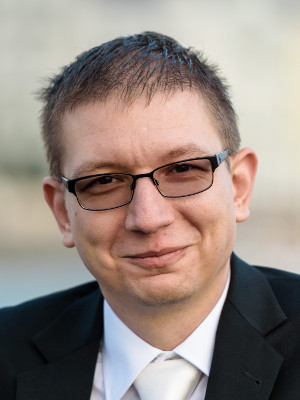
Sándor Kisfaludi-Bak is an Assistant Professor in the Department of Computer Science at Aalto University, specializing in theoretical computer science with a focus on computational geometry. He develops algorithms for geometric problems involving points, curves, shapes, and spatial networks. His research interests include Algorithm design for geometric optimization Computational geometry fundamentals Spatial network analysis Hyperbolic and planar graph algorithms Parameterized complexity in geometric contexts Recent publications demonstrate expertise in Traveling Salesman Problem optimization, Steiner network construction, and hyperbolic graph analysis. Key research trends span computational geometry, graph theory, and algorithmic complexity in spatial domains. He has no listed scientific awards in the provided materials. No information about student advising or organizational affiliations beyond Aalto University was found.
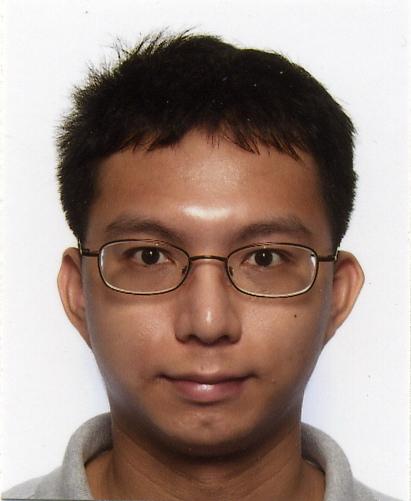
Weng Fai WONG is an Associate Professor and Deputy Head of the Department of Computer Science at the School of Computing, National University of Singapore (NUS). With over three decades of academic experience at NUS, he has established himself as a leading researcher in computer systems, with particular expertise in the interface between hardware and software stacks. Dr. Wong received his B.Sc. (First Class Honors) and M.Sc. from the National University of Singapore in 1989 and 1991 respectively, followed by a Dr.Eng.Sc. from the University of Tsukuba in 1993. His academic journey began at NUS (then DISCS) in 1985, where he progressed from student to Senior Tutor in 1989, and later returned from Japan as a Lecturer in 1993. Dr. Wong's research focuses on systems and networking, with special emphasis on hardware-software co-optimization. His current research interests include approximate computing , neuromorphic computing , and hardware acceleration for deep learning. His work spans computer architecture , embedded systems , compilers and runtime systems , and programming languages . He has made significant contributions to optimizing software for novel hardware including FPGAs, GPUs, and non-volatile memory technologies. His recent publications (2023-2025) demonstrate a strong focus on energy-efficient AI computing, with particular emphasis on spiking neural networks, large language model acceleration, and FPGA-based solutions for graph processing and machine learning workloads. His research shows a clear trajectory toward green AI through hardware-software co-design that minimizes energy consumption while maintaining computational effectiveness. Dr. Wong is a Member of ACM and a Senior Member of IEEE. His paper "Exploiting half precision arithmetic in Nvidia GPUs" was a Best Paper Finalist at the IEEE High Performance Extreme Computing Conference (HPEC 2017). As Deputy Head of the Department of Computer Science at NUS, Dr. Wong plays a key leadership role in academic administration while maintaining an active research program. His work has been supported by numerous research grants, though specific details are not provided in the available information. Dr. Wong leads research in the Systems & Networking area at NUS, with particular focus on the Hardware-Software Interface Laboratory. His team explores innovative approaches to bridge the gap between theoretical computer science and practical hardware implementation, with applications spanning from edge computing to large-scale data centers.
Claudio Lucchese is a Full Professor in the Department of Environmental Sciences, Computer Science and Statistics at Ca' Foscari University of Venice. His research focuses on Machine Learning in Information Retrieval, specifically Learning to Rank, Adversarial ML, and Explainable AI. He has published over 100 articles and won awards including the 2015 ACM SIGIR Best Paper Award. He coordinates the Hospitality Innovation and e-Tourism degree program and leads the Data Mining and Information Retrieval Lab. Research Interests: Efficiency-Effectiveness Trade-offs in IR Adversarial Machine Learning Explainable AI Large-Scale Data Mining Recent Projects: Data Science for Mobility (Humco S.r.l., 2020) Flexymob (Currant s.r.l., 2022) Lucchese serves on editorial boards for ACM Transactions on Information Systems and Data Mining and Knowledge Discovery. His teaching spans Computer Science and Engineering Physics programs, emphasizing Massive Data Learning and High-Performance Computing.
Dr. Danupon Na Nongkai is an Associate Professor in the Division of Theoretical Computer Science at KTH Royal Institute of Technology's School of Electrical Engineering and Computer Science. His research focuses on theoretical computer science, with specialization in graph algorithms for dynamic and distributed environments. Supported by prestigious grants including the Swedish Research Council's VR Young Researcher Grant (2015) and the European Research Council's Starting Grant (2016), his work spans approximation algorithms, communication complexity, game theory, verification, theoretical databases, quantum algorithms, and social network analysis. PhD in Algorithms, Combinatorics, and Optimization (ACO) from Georgia Tech (2011) Co-winner of Principles of Distributed Computing Doctoral Dissertation Award (2013) Research Interests: Dr. Na Nongkai investigates fundamental problems in graph theory and algorithm design, particularly in dynamic, distributed, and quantum computing paradigms. His research connects theoretical computer science with practical applications in network processing, optimization, and complexity analysis. Article Trends: Recent publications demonstrate expertise in near-linear time algorithms for shortest paths, cut problems, and connectivity in diverse computational models. Key themes include cross-paradigm optimization (dynamic/static, distributed/parallel, quantum), expander decomposition applications, and submodular function analysis. Scientific Recognition: FOCS 2022 Best Paper Award ERC Starting Grant recipient VR Young Researcher Grant PODC Doctoral Dissertation Award Advising & Grants: As a principal investigator, Dr. Na Nongkai has mentored numerous researchers through collaborative publications with 85 co-authors. His group's funding includes competitive national and European grants for cutting-edge algorithm research.
M. Sadegh Riazi is an Assistant Professor in the Department of Computer Science and Engineering at the University of California, San Diego's Jacobs School of Engineering. He completed his PhD at UCSD in 2020 with a dissertation titled 'Towards A Private New World: Algorithm, Protocol, and Hardware Co-Design for Large-Scale Secure Computation.' Dr. Riazi's research focuses on the critical intersection of cryptography, machine learning, and hardware security, with particular emphasis on making secure computation practical for real-world applications. His work spans secure multi-party computation, homomorphic encryption, privacy-preserving machine learning, and hardware acceleration for cryptographic protocols. He has made significant contributions to optimizing secure computation frameworks for deep learning applications, developing techniques that balance security guarantees with computational efficiency. His publication record shows a clear progression from foundational secure computation techniques to increasingly sophisticated applications in privacy-preserving AI. Notably, his work on HEAX (Homomorphic Encryption Acceleration) and XONN (XNOR-based Oblivious Neural Network) demonstrates practical approaches to making encrypted deep learning feasible. The research trends in his publications indicate a consistent focus on bridging theoretical cryptographic security with practical system implementations. Dr. Riazi has established a strong collaborative network, most prominently with Professor Farinaz Koushanfar's research group at UCSD, with whom he has co-authored numerous papers across multiple domains including biometric security, secure hardware design, and privacy-preserving machine learning. His research has been published in top-tier venues including IEEE Security & Privacy, USENIX Security, ASPLOS, and CCS, reflecting the high impact and quality of his work in both the security and systems communities.
Ken M. L. Yiu is a Professor in the Department of Computing at Hong Kong Polytechnic University , Faculty of Engineering. He received his PhD and Bachelor's degree from the University of Hong Kong in 2006 and 2002, respectively, and was previously affiliated with Aalborg University (2006–2009). He is a leading researcher in databases, with a focus on spatiotemporal data, query processing, and multidimensional data management. PhD, University of Hong Kong (2006) Bachelor of Computer Engineering, University of Hong Kong (2002) His research interests lie at the intersection of database systems and spatial analytics. He investigates efficient indexing, query optimization, and privacy-preserving techniques for large-scale spatial and temporal datasets. His recent work explores learned index structures, GPU-accelerated query processing, and high-dimensional data retrieval. He has made significant contributions to spatial query processing, trajectory analytics, and location-based services. The trends in his recent publications (2021–2025) reflect a strong focus on high-performance database systems, including GPU acceleration (GHive), perfect hashing on GPUs (GPH), and learned cardinality estimation. His work increasingly integrates machine learning with traditional database techniques, as seen in AlayaDB for LLM inference and learning-based query optimization. He also continues to advance core database problems such as spatial indexing, trajectory analysis, and similarity search. SSTD 2025 10-Year Impact Award Ken Yiu has successfully led multiple competitive research projects funded by the Hong Kong GRF, including grants on learned index structures (2024–2026), smart memory for vector data mining (2021–2023), and efficient spatial data management (2017–2019). He has supervised numerous PhD and MPhil students, many of whom now hold academic positions (e.g., Bo Tang at SUSTech, Yu Li at HDU) or work in top tech companies (e.g., Huawei, Alibaba). His professional service is extensive, including roles as PI for major grants, area chair (ICDE 2024), and program committee member for top conferences like SIGMOD, VLDB, and ICDE. He is actively involved in research groups and projects related to database systems, particularly in spatiotemporal data management and efficient query processing. His lab collaborates closely with students and co-supervisors like Bo Tang on topics such as trajectory mining, spatial indexing, and learned databases. The research group maintains strong ties with international institutions and contributes to major open problems in database performance and scalability.
Muhammad Rajabinasab is a PhD student at the University of Southern Denmark , affiliated with the Faculty of Science and the Department of Mathematics and Computer Science . His research focuses on data science and machine learning, with a particular emphasis on feature selection, synthetic data analysis, and approximate neighbor search algorithms. Current affiliation: PhD student, Department of Mathematics and Computer Science Research areas: Data Science, Machine Learning, Feature Selection, Synthetic Data, k-Nearest Neighbor Algorithms Muhammad’s research explores dynamic evaluation metrics for feature selection, inter-dataset similarity in synthetic data, and randomized PCA forests for efficient neighbor search. His work addresses both theoretical foundations and practical applications in data mining and machine learning. Recent publications demonstrate expertise in feature extraction , dimensionality reduction , and computational efficiency . Collaborations span institutions like IMADA (SDU) and researchers in Denmark and Finland.
Laxman Dhulipala is an Assistant Professor in the Department of Computer Science at the University of Maryland, College Park, and a research scientist at Google Research. He holds a Ph.D. from Carnegie Mellon University, advised by Guy Blelloch, and was a postdoc at MIT under Julian Shun. His research focuses on scalable parallel algorithms, high-performance graph processing, and models of computation for emerging hardware. Dhulipala has contributed to parallel graph clustering, dynamic graph algorithms, and practical implementations of parallel computational geometry. Affiliations: University of Maryland, College Park (Department of Computer Science) UMIACS (University of Maryland Institute for Advanced Computer Studies) Google Research (Graph Mining team) Education: Ph.D. in Computer Science, Carnegie Mellon University (2020) B.S. in Computer Science, Carnegie Mellon University (2014), with University Honors and Phi Beta Kappa. Research Interests: Efficient parallel algorithms for static, dynamic, and streaming graphs; parallel clustering techniques; models of computation for emerging hardware; scalable static/dynamic/streaming graph algorithms. His work bridges theory and practice, emphasizing algorithm design, system implementation, and performance optimization. Awards and Honors: 2024 ACM Paris Kanellakis Theory and Practice Award 2023 Allen Newell Award for Research Excellence 2022 Best Paper at SPAA 2019 Distinguished Paper at PLDI 2018 Best Paper at SPAA Grants: NSF SHF: REU Site (Co-PI) NSF SHF: Scalable Graph-Based Clustering (PI) NSF SATC: Differential Privacy in Graph Mining (Co-PI) Teaching: Recent courses include CMSC858N (Scalable Parallel Algorithms), CMSC451 (Design and Analysis of Algorithms), and workshops on parallel computing and graph algorithms. Labs and Teams: He leads research in parallel graph algorithms and systems at the University of Maryland, collaborating with Google Research and MIT on projects like the Graph-Based Benchmark Suite (GBBS) and ParGeo library.
Michalis Vazirgiannis is a Professor in the Department of Informatics at the Athens University of Economics and Business (AUEB), specializing in data mining and machine learning with applications in web and social network analysis. His work bridges theoretical algorithms and real-world scalability challenges. Education: Bachelor Degree in Informatics, National and Kapodistrian University of Athens, 1986 Master (M.Sc.) in Robotics, National and Kapodistrian University of Athens, 1988 Master (M.Sc.) in Knowledge Based Systems, Heriot Watt University, Edinburgh, 1989 Ph.D. in Informatics, National and Kapodistrian University of Athens, 1994 Research Focus: Professor Vazirgiannis pioneers clustering algorithms with subjective/objective validation, distributed feature selection for evolving graphs, and temporal link analysis for dynamic page ranking. His research addresses critical gaps in semi-supervised learning for large-scale web and social networks, emphasizing dimensionality reduction and ranking predictability in temporal contexts. Publication Trends: His 2007-dominated publications reveal a strategic shift toward graph-based web mining, with recurring themes of distributed processing (P2P similarity search), clustering validity frameworks, and semantic web personalization. The work consistently targets scalability bottlenecks in real-world network data. Scientific Recognition: ERCIM Post-doctoral Scholarship (2001) Marie Curie European Scholarship (2006) Leadership & Collaboration: As ERASMUS coordinator for AUEB's Informatics Department and editorial board member of Intelligent Data Analysis journal, he bridges academia and industry. His EU project leadership (FP6 SQO-OSS, Marie Curie NGWeMiS) and program committee roles (IEEE/ICDM 2008, ECML/PKDD 2008) highlight his influence in data mining standardization. International collaborations span INRIA, Fraunhofer, Max Planck, and IBM Research. Technical Innovation: His patent contributions and invited lectures at ECML/PKDD 2006/SIAM/SDM 2006 demonstrate applied impact, particularly in web personalization engines (SEWeP) and evolving graph analytics.
George P. Kontoudis is an Assistant Professor in Mechanical Engineering at Colorado School of Mines, leading the Motion Planning, Active Learning, and Autonomy (MPALA) Lab. He is a core faculty member of the Robotics program at Mines and co-founder of the OpenBionics initiative, which focuses on affordable, open-source robotic hands and prosthetics. Current Appointment: Assistant Professor (2024–present) Postdoctoral Research Associate, University of Maryland (2022–2023) Ph.D. in Electrical Engineering (2021), M.S. in Mechanical Engineering (2018) from Virginia Tech Diploma in Mechanical Engineering (2016) from National Technical University of Athens His research integrates robotics, control theory, and machine learning to develop hybrid frameworks for autonomous systems. Key themes include decentralized multi-agent coordination, adaptive sampling algorithms using Gaussian processes, and biomechatronic prosthetic devices. The MPALA Lab emphasizes diversity, equitable mentorship, and societal impact through robotics applications in healthcare, search-and-rescue, and urban mobility. Recent publications focus on scalable federated learning for multi-agent systems, real-time motion planning with reinforcement learning, and wearable sensor platforms for medical rehabilitation. Articles span robotics, control systems, and biomedical engineering, with applications in underwater communication modeling, prosthetic hand design, and dynamic environment navigation. Robotics: Science and Systems (RSS) Pioneer (2022) Robotdalen Innovation Award (2015) Hackaday Prize Second Place (2015) Dr. Kontoudis mentors a diverse cohort of graduate and undergraduate researchers, including students working on robot hands, multi-robot learning, and wearable medical devices. The lab collaborates with institutions like Oregon State University and Brigham Young University, and he serves as Associate Editor for IEEE Robotics and Automation Letters (RAL).
Rajiv Gupta is a Professor at the University of California, Riverside and holds the Amrik Singh Poonian Chair in Computer Science . He serves as Associate Dean for Academic Personnel in the BCOE Deans Office . His research spans Compiler Design , Computer Architecture , Graph Analytics , and Software Engineering , with a focus on Parallel & Distributed Heterogeneous Systems and Runtime Behavior Monitoring . Education : Ph.D. in Computer Science from the University of Pittsburgh (1987); B.Tech. in Electrical Engineering from IIT Delhi (1982). His work includes over 326 publications with an h-index of 69 and 9 US patents . He has supervised 42 PhD students , including two ACM SIGPLAN Outstanding Dissertation Award recipients and 5 NSF CAREER awardees . His supervised papers have won Best Paper Awards at ICSE, PACT, HiPC, and LCPC. Scientific awards : ACM Fellow (2009) IEEE Fellow (2008) AAAS Fellow (2011) NSF Presidential Young Investigator Award (1991) UCR Doctoral Dissertation Advisor/Mentor Award (2012) IITDAA Global Alumni Recognition Award (2025) Professional service : Consecutive general/program chair roles at FCRC , PPoPP , ASPLOS , PLDI , and HiPC . Associate Editor for ACM TACO and IEEE TC , and current editorial board member for Parallel Computing and Computer Languages .
Aleksandar Nikolov is an Associate Professor in the Department of Computer Science at the University of Toronto, holding the Canada Research Chair in Algorithms and Private Data Analysis. He is affiliated with the Vector Institute and a faculty fellow at the Schwartz Reisman Institute. His research focuses on theoretical computer science, algorithm design, and their connections to high-dimensional geometry, differential privacy, discrepancy theory, and approximation algorithms. Nikolov completed his PhD at Rutgers University under Muthu's advisement and was a postdoctoral researcher at Microsoft Research. Research Interests: Nikolov explores high-dimensional geometry's applications in algorithm design, particularly in private data analysis (differential privacy), discrepancy theory, and experimental design. His work bridges geometric tools with computational challenges, including nearest neighbor search and geometric optimization. He also delves into approximation algorithms and sublinear/parallel algorithms for large-scale data analysis. Awards: Nikolov received the Best Paper Award at SoCG 2015 and a $100 prize from Joel Spencer for resolving Beck's 3-permutations conjecture. His contributions span theoretical computer science with a focus on algorithmic foundations and privacy. Supervision and Education: He has mentored several graduate and undergraduate students, including current PhD candidates Haohua Tang and Lily Li. Teaching includes advanced courses like CSC2420 (Algorithm Design) and a discrepancy theory course. His research spans over 50 publications, with recent work emphasizing differential privacy and geometric algorithms. Affiliations: Beyond his academic role, Nikolov collaborates with industry and academic institutions, contributing to Canada's AI ecosystem through Vector Institute and interdisciplinary efforts at Schwartz Reisman.
Dr. Dong Ryeol Lee is an Assistant Professor in the Data Science Department at Saint Peter's University. His research focuses on large-scale machine learning, geometric problems in natural science, web, and IoT applications. Previously, he worked as a research scientist on web search engines, fleet prognostics, and revenue forecasting models. He holds a Ph.D. in Computer Science from Georgia Institute of Technology (2012), M.S. in Mathematics (2011) from the same institution, and dual B.S. degrees in Mathematical Sciences and Computer Science from Carnegie Mellon University (2005). Education : B.S. Mathematical Sciences & Computer Science, Carnegie Mellon University (2005) M.S. Mathematics, Georgia Institute of Technology (2011) Ph.D. Computer Science, Georgia Institute of Technology (2012) Dr. Lee’s research bridges computational methods and real-world applications, emphasizing efficient algorithms for high-dimensional data and metric space problems. His work spans celestial body simulations, web search optimization, and predictive maintenance in IoT systems. Recent publications explore dual-tree algorithms, kernel summation frameworks, and multitree methods in astrostatistics. His articles reflect a focus on algorithm efficiency, statistical analysis, and cross-disciplinary applications. Notable trends include scalable machine learning infrastructure and geometric problem-solving in astronomy and computer vision. No scientific awards have been listed. He currently teaches DS-600 (Data Mining) and DS-630 (Machine Learning). No grants or advising records are mentioned. His academic contributions emphasize algorithmic innovation and industrial applicability without explicit lab affiliations detailed in the source text.
Miao Qiao is a faculty member at the School of Computer Science , University of Auckland , where she has worked since 2018. Her research bridges theoretical and applied aspects of data science and management , focusing on vector data management , graph search and analytics , and brain network analytics . Research Interests : Data Science, Graph Analytics, Brain Network Analytics Grants : Royal Society of New Zealand (NZD 300,000, 2018–2024): Subgraph Matching: Theory and Practice The Ministry of Business, Innovation and Employment (NZD 3,000,000, 2020–2024): Advanced Graph Analytics for Human Brain Connectivity Professional Services : Review Board Member, PVLDB 2021 Program Committee Member: PODS 2023, ADC 2018, IJCAI 2019–2021, CIKM 2019, AAAI 2020–2021 Invited Reviewer: SCG 2019, TODS 2015–2019, TKDE 2018–2021, KDD 2016, ICDM 2013–2014, WISE 2013, VLDBJ 2013–2021, NIPS 2021 Program Chair: ISWC Doctoral Consortium 2019, ADC 2021 Teaching : Database Systems (2017–2023) Algorithms for Massive Data (2018–2019) Systems Analysis and Modeling (2016–2018) Algorithms (2017–2018) Scientific Awards : PREMIA Best Student Paper Honourable Mention Award VLDB 2013 Travel Fellowship Shanghai Jiao Tong University 1st Class Scholarship ACM/ICPC 3rd Place, Singapore Computer World Scholarship Singapore Technology Engineering Scholarship ACM/ICPC 1st Place, Korea Silver medal, National Olympiad in Informatics, China
Gert Tamberg is a Senior Lecturer at Tallinn University of Technology, School of Science, Department of Cybernetics, where he has been employed since September 2019. Previously, he served as a Senior Research Fellow (2017-2019) and held various academic positions including Chair Holder of the Chair of Mathematical Analysis (2012-2016) within the Faculty of Science at Tallinn University of Technology. His academic career spans nearly two decades at this institution, demonstrating deep commitment to mathematical research and education in Estonia. Tamberg earned his PhD in Natural and Exact Sciences from Tallinn University of Technology in 2004, with a dissertation titled "On sampling operators defined by Rogosinski, Hann and Blackman windows," supervised by Andi Kivinukk. He previously obtained a Research Master's Degree from the same institution in 2000, with thesis "Approximation by generalized and by the Rogosinski-type sampling series." His educational background includes doctor's studies (2000-2004), master's studies (1996-2000), and graduate studies (1991-1996) in technical physics at Tallinn University of Technology. Dr. Tamberg's research focuses primarily on sampling theory, Fourier analysis, and functional analysis. His work bridges pure mathematics with practical applications in signal processing, image analysis, and biomedical engineering. He has made significant contributions to understanding sampling operators, particularly those involving window functions like Rogosinski, Hann, and Blackman windows. His research has evolved to include applications in wireless sensor networks and medical signal processing, demonstrating the interdisciplinary nature of modern mathematical research. Tamberg's publication record shows a clear progression from theoretical mathematics to applied research. His early work focused on pure sampling theory and approximation methods, while more recent publications demonstrate applications in biomedical engineering (particularly impedance cardiography) and wireless sensor networks. This trajectory reflects both the versatility of sampling theory and Tamberg's ability to apply mathematical concepts to solve real-world engineering problems. His work spans multiple disciplines including mathematics, electrical engineering, computer science, and biomedical engineering. Among his honors and awards, Tamberg received the II Prize in the Estonian National Contest for Young Scientists at university level in 2004 and the III Prize in the same competition in 2000, recognizing his early contributions to mathematical research. As an academic supervisor, Tamberg has guided multiple students to completion of their degrees, including Olga Orlova (Master's), Olga Graf (Master's), and Faisal Ahmed (PhD). His administrative roles are extensive, including serving as Vice President of the Estonian Mathematical Society (2022-present), IEEE SP/CAS/SSC Joint Societies Chapter Chair (2021-present), and coordinator of the Estonian Doctoral School in Mathematics and Statistics. He has also been involved in numerous research projects, with principal investigator roles in projects like "Weighted means" and "Functional transformations." Tamberg is an active participant in the international mathematical community, serving as a guest editor for the "Applied and Numerical Harmonic Analysis" series and "Sampling Theory in Signal and Image Processing." He has been instrumental in organizing major conferences including the 12th International Conference on Sampling Theory and Applications (SampTA2017) and the 17th International Conference on Mathematical Modelling and Analysis (MMA2012), demonstrating leadership in his field.