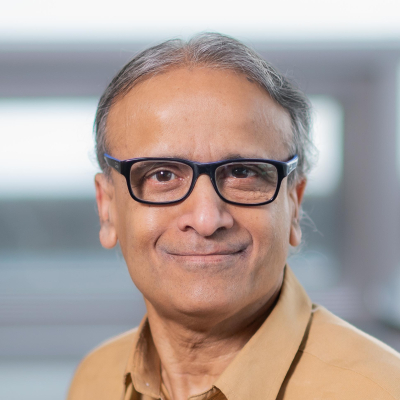
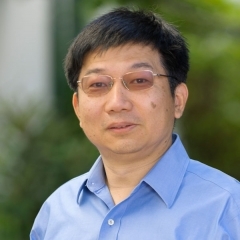
Moncef Gabbouj is a Professor of Signal Processing at the Department of Computing Sciences, Tampere University, Finland. He holds a PhD from Purdue University and has held academic positions including Academy of Finland Professor (2011–2015) and Head of the Department of Signal Processing (2002–2007). His research focuses on artificial intelligence, machine learning, multimedia signal processing, and nonlinear signal/image processing. He has authored over 800 papers and supervised 64 doctoral and 72 master’s theses, earning accolades such as IEEE Fellow, Finnish Cultural Foundation Award, and TUT Foundation Grand Award. Education: BS (Electrical Engineering, Oklahoma State University, 1985), MS and PhD (Electrical Engineering, Purdue University, 1986–1989). Visiting roles include Hong Kong University of Science and Technology and University of Southern California. Research interests include Big Data analytics, multimedia content analysis, pattern recognition, and video coding. He leads the Artificial Intelligence Research Task Force of the Research Alliance on Autonomous Systems (RAAS) and directs the NSF IUCRC Center for Visual and Decision Informatics (CVDI). Awards highlight contributions to signal processing and AI, including IEEE Fourier Award Committee membership and leadership roles in EURASIP and IEEE. Grants and projects span EU Horizon programs, NSF, and industry collaborations.
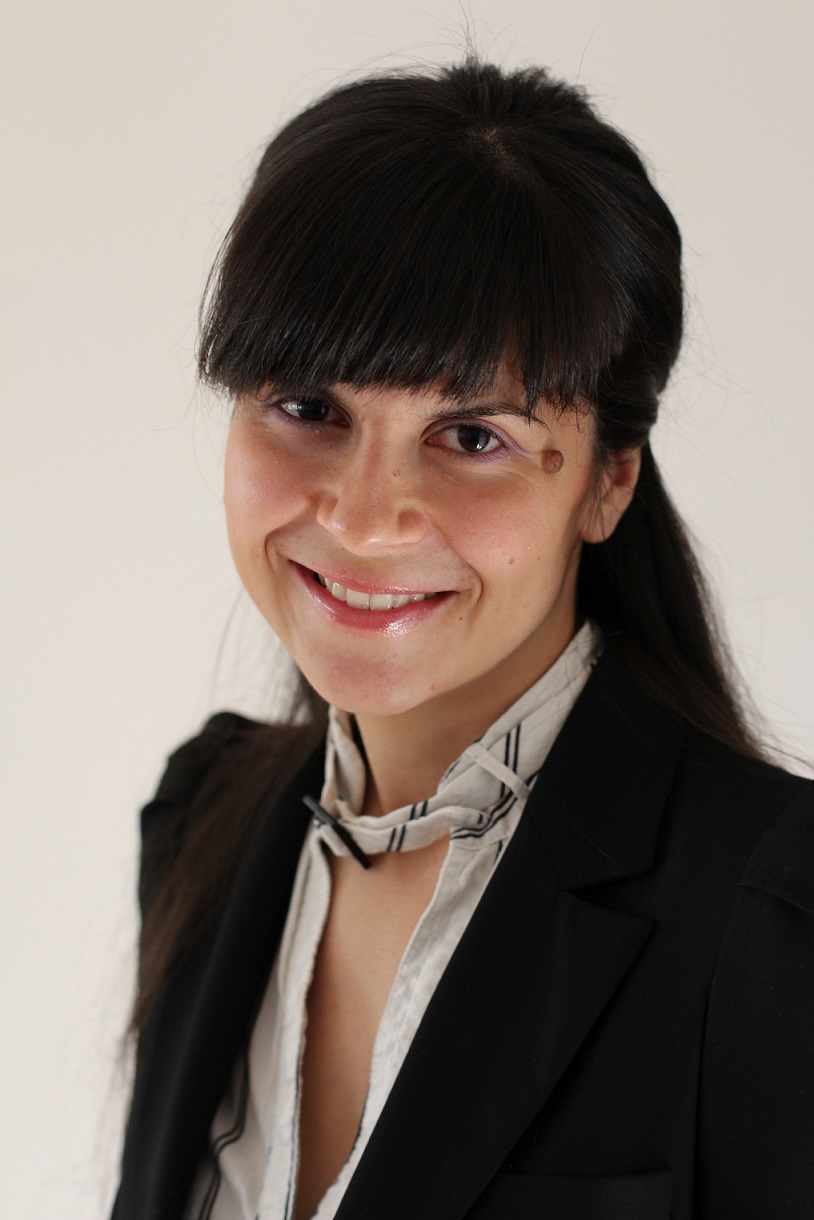
Yifan Wang is Assistant Professor of Computer Science at University of Hawaii at Manoa, specializing in database systems and information retrieval. His research develops efficient algorithms for high-dimensional data processing. Educational background: PhD in Computer Science from University of Florida (2024) Master's in Computer Science from University of Florida BS from Huazhong University of Science and Technology Research innovations include: Vector database indexing techniques Machine learning-enhanced query optimization Scalable similarity search algorithms Publications focus on improving efficiency of high-dimensional data operations, with applications in large-scale information retrieval. Wang serves on program committees for major database conferences including VLDB and ICDE.
Laks V.S. Lakshmanan is a Professor in the Department of Computer Science at the University of British Columbia (UBC), within the Faculty of Science. His research focuses on data management, graph computing, machine learning, and algorithms, with notable contributions to dense subgraph discovery, influence maximization, and healthcare informatics. He teaches advanced courses on databases and data management, including CPSC 404 (Advanced Relational Databases) and CPSC 534L (Topics in Data Management). His awards include the ACM SIGMOD Research Highlight Award, the IEEE Data Science Best Paper Award, and recognition as an ACM Distinguished Scientist (2016). His work bridges theoretical algorithm design with practical applications in social networks, bioinformatics, and healthcare. Key research themes include optimizing graph algorithms for large-scale data, combating misinformation through network analysis, and developing efficient methods for subgraph enumeration and influence propagation. His recent publications explore topics like clinical event prediction (TRACE), cost-effective LLM selection (ThriftLLM), and cross-modal consistency in AI systems. Education: Details not explicitly provided in sources. Grants & Funding: Recipient of NSERC Discovery Accelerator Supplements. Labs/Teams: Engaged in UBC's data management research groups and collaborative initiatives with industry partners.
Renata Borovica-Gajic is an Associate Professor in Data Analytics and an ARC DECRA Fellow at the School of Computing and Information Systems (CIS), University of Melbourne. She also serves as Associate Dean (Diversity and Inclusion) for the Faculty of Engineering and IT, demonstrating leadership in both research and academic community development. Her research lies at the intersection of database systems, machine learning, and artificial intelligence, with a vision of creating adaptive, self-driving database engines that optimize query execution in real-time. Her work spans learned indexes, query optimization, data quality, and data-driven traffic optimization, aiming to reduce costs and improve performance in data analytics. The recent publications reflect a strong trend toward integrating machine learning into core database operations—particularly through learned indexes, bandit-based tuning, and reinforcement learning for traffic systems. These works emphasize automation, provable guarantees, and real-time adaptation, showcasing a cohesive research agenda focused on intelligent, self-optimizing data systems. Her scientific excellence is recognized by numerous awards, including: L'Oréal-UNESCO for Women in Science Fellowship (2023) Victorian Young Tall Poppy (2024) Test of Time Award at SIGMOD 2022 Multiple Research and Teaching Excellence Awards from the University of Melbourne Google Research Inclusion Award (2021) She actively mentors PhD students and leads significant research projects funded by the Australian Research Council, Google, and Telstra. Her service includes roles as Associate Editor for SIGMOD Record, conference organization (e.g., aiDM, ADC, VLDB), and leadership in diversity and inclusion initiatives. She has also contributed to influential publications such as a chapter in the 7th edition of Database System Concepts . Her research lab focuses on AI-powered databases, traffic optimization via reinforcement learning, and self-healing data systems, positioning her at the forefront of next-generation data management.
Abolfazl Asudeh is an Associate Professor at the University of Illinois Chicago , affiliated with the Department of Computer Science and director of the Innovative Data Exploration Laboratory (InDeX Lab) . His work bridges data management, fairness, and AI. ACM and IEEE Senior Member VLDB Ambassador VLDB Endowment’s NSF Liaison Associate Editor for IEEE TKDE Research Interests focus on Algorithmic Fairness and Data-centric Responsible AI , with applications to ranking systems, LLMs, social networks, and misinformation detection. His work leverages Approximation Algorithms , Computational Geometry , and Randomized Methods to build efficient, fair systems. Scientific Awards : 2021: Google Research Scholar Award 2021: Communications of the ACM Research Highlight 2019: ACM SIGMOD Research Highlight 2020: VLDB Journal Special Issue on Best of VLDB 2017: ACM SIGMOD Most Reproducible Paper Grants include NSF IIS-2348919 (2024-2027) for fairness-aware data structures and NSF IIS-2107290 (2021-2024) for collaborative fairness research. Labs & Collaborations : Leads InDeX Lab with interdisciplinary teams, collaborating with institutions like University of Michigan, University of Texas at Arlington, and industry partners including Google and ACM.
Thijs M.M. Laarhoven is a researcher in the Coding Theory and Cryptology group within the Mathematics and Computer Science department at the Eindhoven University of Technology (TU/e) . He completed his PhD in 2016 with honors and previously worked at the IBM Research laboratory in Zurich, Switzerland. PhD in Cryptography, TU/e (2016) Master’s in Mathematics, TU/e (2011) Bachelor’s in Mathematics, TU/e (2009) His research focuses on cryptographic algorithms, lattice-based cryptography, quantum computing, and nearest neighbor search techniques. He has made significant contributions to angular locality-sensitive hashing and lattice sieving algorithms . His publications highlight advancements in time-space trade-offs for approximate near neighbors and quantum optimization of lattice-based problems. His awards include the NWO Veni Grant (2018) and multiple Best Paper Awards (2012, 2014, 2015).
Kenneth W Church is a Professor in the Department of Computer Science at Northeastern University. He received his PhD from MIT in 1983 and has held positions at AT&T Bell Labs (20 years), Microsoft, Johns Hopkins University, IBM, and Baidu. He is the founder of VecML, a startup focused on vectors, machine learning, and approximate nearest neighbors for AI applications. His research focuses on computational linguistics and large language models (LLMs), with applications including web search, language modeling, text analysis, spelling correction, word-sense disambiguation, terminology, translation, lexicography, compression, optical character recognition, speech recognition, synthesis, and diarization. He was an early advocate of empirical methods and founded the Conference on Empirical Methods in Natural Language Processing (EMNLP). ACM Fellow (2023) ACL Fellow (2015) AT&T Fellow (2001) President of ACL (2012) President of ACL SIGDAT (1993-2011) He teaches courses including CS6120: Practical Natural Language Processing and CS7290 at Northeastern University. As founder of VecML, he develops products for search, machine learning, chat, RAG and agentive systems available on mobile platforms.
Donald R. Sheehy is an Associate Professor of Computer Science in the College of Engineering at North Carolina State University. His research focuses on the intersection of geometric algorithms and topological data analysis, with significant contributions to computational geometry and persistent homology. Sheehy's research interests span geometric algorithms, topological data analysis, computational geometry, persistent homology, metric spaces, Voronoi diagrams, and Delaunay triangulations. His work bridges theoretical computer science with practical applications in data analysis, where he develops algorithms that extract meaningful topological information from complex datasets. His research has particular relevance for understanding the structure of high-dimensional data through geometric and topological lenses. Analysis of his recent publications reveals a strong focus on developing efficient algorithms for topological data analysis. His work on sparse filtrations, greedy permutations, and metric properties of persistence diagrams has advanced the field by providing computationally tractable methods for analyzing large datasets. Sheehy frequently explores how geometric structures like Voronoi diagrams and Delaunay triangulations can be adapted to topological contexts, creating bridges between classical computational geometry and modern data analysis techniques. Sheehy actively collaborates with researchers across multiple institutions, as evidenced by his extensive publication record in top venues like SOCG (Symposium on Computational Geometry) and SODA (Symposium on Discrete Algorithms). His work demonstrates a consistent trajectory of advancing both theoretical foundations and practical applications of geometric and topological methods in computer science.
Romain Raveaux is an Associate Professor at the LIFAT Computer Science Laboratory, University of Tours, affiliated with Polytech Tours. His research focuses on Image Analysis, Machine Learning, Structural Pattern Recognition, Graph Matching, Graph Neural Networks, Discrete Optimization, Reinforcement Learning, and Transfer Learning . Email: romain.raveaux@gmail.com , romain.raveaux@laposte.net Address: 64 av. Jean Portalis, Tours, France, 37200 Phone: +33 (0)2 47 36 14 27 Research Interests Graph Matching and Neural Networks Discrete Optimization for Pattern Recognition Transfer Learning in Graph-Based Models Historical Document Analysis Scientific Trends His recent work bridges Graph Neural Networks with Mixed-Integer Programming , focusing on Image Semantic Segmentation and Graph Cycle Detection . Earlier studies emphasize Genetic Algorithms for graph classification and Graph Edit Distance optimization in pattern recognition.
Tao Yang is a Professor in the Department of Computer Science at the University of California, Santa Barbara, where he has been a faculty member since 1993. His research spans web search and mining, database and information systems, machine learning and data mining, parallel and distributed systems, and cloud computing. He serves as an active educator, teaching courses including CS170 Operating Systems (Spring 2024), CS291A Neural Information Retrieval (Fall 2024), and CS140 Parallel Computing (Winter 2025). PhD in Computer Science, Rutgers University ME in Artificial Intelligence, Zhejiang University MS in Computer Science, Rutgers University BS in Computer Science, Zhejiang University Professor Yang's research focuses on advancing the field of information retrieval with particular emphasis on neural approaches to search and ranking. His recent work explores neural document ranking, privacy-aware search systems, and versioned data search. He has led significant projects including Neptune clustering infrastructure, Sorrento self-organizing storage cluster, and TMPI for MPI execution optimization. His research bridges theoretical advances with practical implementations, particularly in scaling search architectures to handle billions of documents while maintaining relevancy, performance, and freshness. His publication record shows a clear evolution from foundational work in parallel and distributed systems toward contemporary research in neural information retrieval. Recent publications demonstrate expertise in optimizing both sparse and dense retrieval methods, with particular focus on efficiency improvements for multi-vector representations. His work consistently addresses real-world challenges in search scalability and privacy preservation. Faculty Research Award, Google Research Research Initiation Award, NSF (1994) UC Regents' Junior Faculty Award (1994) Computer Science Faculty Teacher Award (1995) CAREER Award, NSF (1997) Noble Jeeviant Award, AskJeeves (2002) Professor Yang has supervised numerous graduate students, many of whom have gone on to prominent positions at companies like Google, Apple, and Coursera, or academic positions at universities worldwide. His industry experience as Chief Scientist for Ask.com (2001-2010) and founding Chief Scientist for Teoma (2000-2001) has informed his research direction and provided valuable practical context for his academic work. He has served on program committees for major conferences including WWW, SIGIR, KDD, WSDM, CIKM, ECIR, and EMNLP. His research group maintains active projects in neural information retrieval, privacy-aware search, similarity computing, and parallel computing systems. The group collaborates closely with industry partners, particularly in the search technology space, and has developed systems that power major search engines serving over 100 million users.
Dr. Ji Sun Shin is a Professor in the Department of Computer and Information Security at Sejong University, where she has been faculty since 2012. Her research bridges theoretical cryptography with practical security applications across multiple domains including IoT, smart devices, and critical infrastructure systems. Education: Ph.D. in Computer Science, University of Maryland at College Park (2009) B.S. in Computer Engineering, Seoul National University (2001) Professor Shin's research focuses on applied cryptography and network security with particular expertise in authentication systems. Her work spans password-based key exchanges , keystroke dynamics authentication , privacy-preserving protocols , and IoT security . She has made significant contributions to provably secure cryptographic protocols including HB/HB+ protocols, forward-secure identity-based signatures, and functional signatures. Her research addresses both theoretical foundations and real-world implementation challenges in cryptographic systems. Analysis of her recent publications reveals a strong trend toward privacy-preserving techniques in distributed systems, with significant work in federated learning security, blockchain applications for IoT, and efficient cryptographic implementations. Her research demonstrates consistent evolution from theoretical cryptography toward practical security solutions for emerging technologies like smart grids, drone systems, and smartphone authentication. Research Leadership: Principal Investigator of the Information Security Lab at Sejong University Active research collaboration across multiple domains including smart cities, healthcare systems, and critical infrastructure security Extensive patent portfolio with numerous domestic and international patents related to location verification, blockchain security, and authentication systems Professor Shin's laboratory focuses on practical security implementations with research areas spanning smartphone security, short-range communication protocols, IoT authentication mechanisms, and smart car security systems. Her team develops fundamental security technologies that address both theoretical security guarantees and real-world usability constraints.
Yan Zhao is an Associate Professor in the Department of Computer Science at Aalborg University, Denmark, affiliated with The Technical Faculty of IT and Design. His research focuses on data engineering, science, and systems, with a particular emphasis on anomaly detection, machine learning, and spatio-temporal data analysis. He holds a Ph.D. in Computer Science (specific education details not explicitly provided). Research Interests: Dr. Zhao's work spans anomaly detection, autoencoders, attention mechanisms, preference learning, multivariate time series, and computational efficiency. His research often integrates machine learning with real-world applications in spatial crowdsourcing, trajectory analysis, and data privacy. Publications: With 72+ publications, his recent work emphasizes spatio-temporal prediction frameworks, federated learning, and efficient time series analysis. Notable contributions include frameworks for continuous learning on streaming data and privacy-preserving clustering in spatial crowdsourcing. Grants & Supervision: He has supervised one Ph.D. student and actively contributes to research grants focusing on data engineering and smart systems. His work bridges theoretical advancements with practical applications in transportation, social networks, and IoT.
ZHENG Baihua serves as Professor of Computer Science at Singapore Management University's School of Computing and Information Systems (SCIS), concurrently holding leadership roles as Associate Dean for SCIS Post-Graduate Research Programmes and Director of the Master of Science in Computing programme. Currently on leave but maintaining full-time faculty status, his academic career spans over two decades with foundational training from Hong Kong University of Science and Technology. Professor Zheng's research program integrates artificial intelligence, data science, and urban computing to solve critical challenges in mobility and sustainability. His expertise centers on trajectory data management, social network analysis, and spatio-temporal modeling, with significant contributions to trajectory compression algorithms, influence minimization in social networks, and real-time traffic prediction systems. His work bridges theoretical database innovations with practical applications in smart city infrastructure and public health interventions. Analysis of recent publications (2024-2025) reveals a dominant focus on physics-informed trajectory processing, GPU-accelerated indexing for high-dimensional data, and transformer-based models for urban mobility prediction. Key trends include the fusion of graph neural networks with spatio-temporal dynamics, novel approaches to contact tracing through timeline graphs, and differentiable search techniques for structured data discovery. These works consistently target real-world deployment in transportation systems and epidemic control. No scientific awards are documented in available institutional records. Information regarding student supervision, research grants, laboratory facilities, or collaborative teams remains unspecified in current public profiles.
Laxman Dhulipala is an Assistant Professor in the Department of Computer Science at the University of Maryland, College Park, and a research scientist at Google Research in the Graph Mining team. He holds a Ph.D. from Carnegie Mellon University, advised by Guy Blelloch, and was a postdoctoral researcher at MIT with Julian Shun. Ph.D., Carnegie Mellon University Postdoctoral Research, MIT His research focuses on efficient parallel algorithms, particularly for graph processing and clustering. He explores theoretical and practical models of parallel computation aligned with modern hardware. His work spans parallel graph algorithms, computational geometry, and scalable systems for massive datasets. The recent publications demonstrate a strong trend in scalable and dynamic graph algorithms, with a focus on hierarchical clustering, connectivity, and benchmarking. Key themes include batch-dynamic updates, memory-efficient data structures, and practical parallel implementations for massive-scale problems. Many works appear in top venues such as SPAA, VLDB, NeurIPS, and SIGMOD. Best Paper Award at VLDB'25 Best Paper Award at SPAA'22 Best Paper Runner Up at VLDB'22 Distinguished Paper Award at PLDI'19 Best Paper Award at SPAA'18 Memorable Paper Award Finalist at NVMW'20 Honorable Mention, CMU SCS Dissertation Award Nominated for ACM Dissertation Award Dhulipala has advised and collaborated with numerous students and researchers, including Quinten De Man, Shangdi Yu, Jessica Shi, and others, contributing to influential projects such as Aspen, ParGeo, GBBS, and ParlayLib. He has received recognition for both theoretical and practical contributions to parallel computing. He teaches courses such as CMSC858N (Scalable Parallel Algorithms and Data Structures) and CMSC451 (Design and Analysis of Computer Algorithms). He is actively involved in building tools and frameworks for parallel algorithm development and evaluation, including benchmark suites and graph processing systems. His dual affiliation with academia and Google Research enables impactful, scalable research bridging theory and practice.
David M. Mount is a leading researcher in algorithms and computational geometry, with seminal contributions to nearest-neighbor search methods, k-means clustering, and high-dimensional data structures. His work is highly influential, evidenced by over 16,000 citations and an h-index of 38. He frequently publishes in top-tier venues like Journal of the ACM , IEEE Transactions , and ACM/SIAM symposiums. Research Interests: Mount focuses on developing efficient algorithms for geometric problems, including approximate nearest-neighbor searches, clustering optimization, and spatial data structures. His research bridges theoretical foundations with practical applications in machine learning and large-scale data analysis. Publications: His recent articles emphasize scalability in high-dimensional spaces, optimization techniques for clustering, and theoretical guarantees for approximation algorithms. Common themes include reducing computational complexity and enhancing real-world applicability.