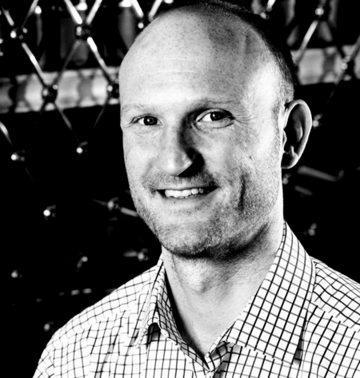
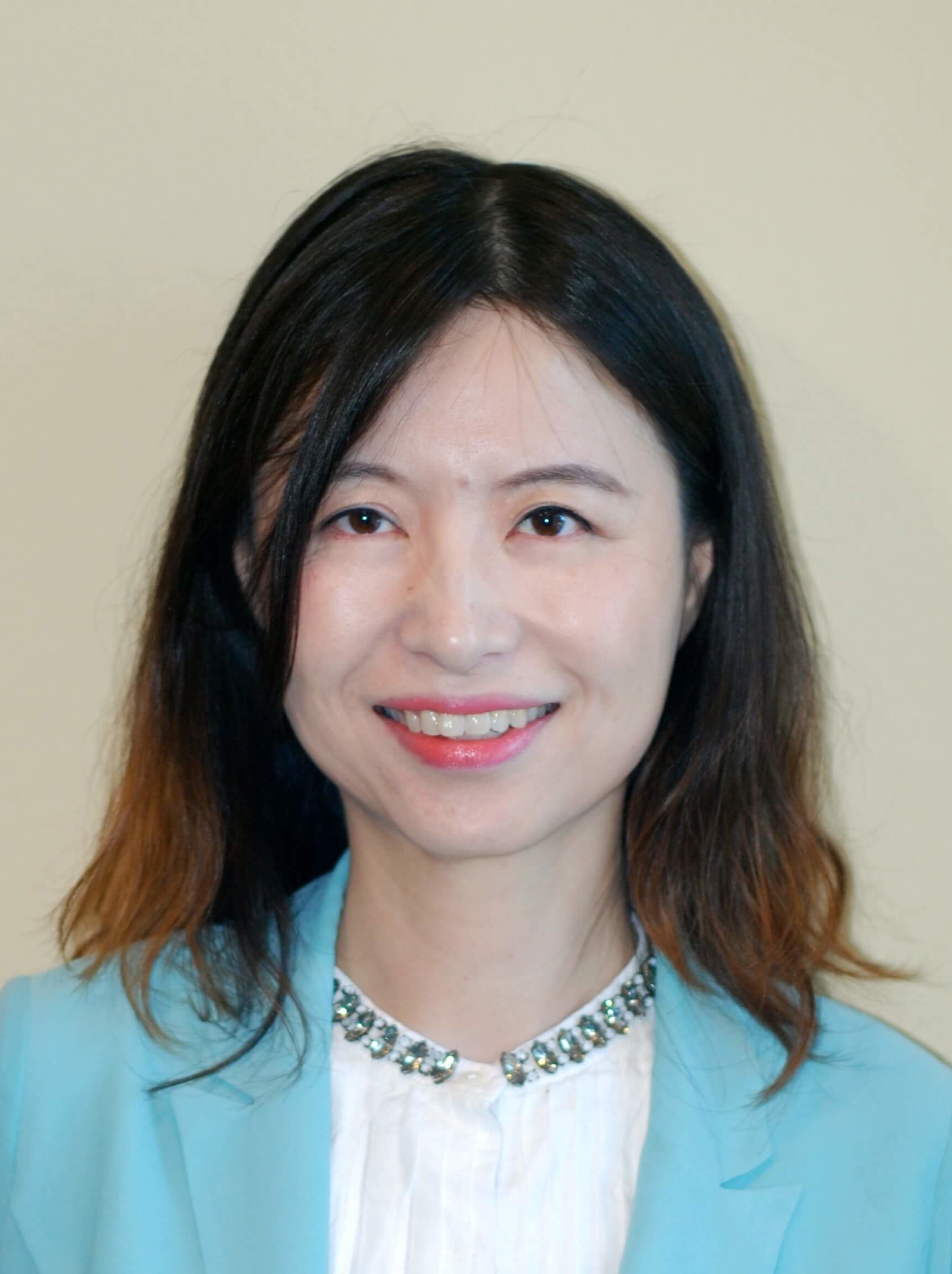
Volodymyr Kuleshov is an Assistant Professor at Cornell Tech and Cornell University's Department of Computer Science. His research focuses on machine learning, particularly generative models, probabilistic methods, and applications in health and sustainability. He co-founded Afresh, an AI startup reducing food waste, and has commercialized genome sequencing work via Moleculo (now part of Illumina). Kuleshov earned his PhD from Stanford University, advised by prominent figures like Stefano Ermon and Serafim Batzoglou. He teaches courses like CS 5785 (Applied Machine Learning) and CS 6785 (Advanced Topics in Machine Learning). His awards include the NSF CAREER Award and Arthur Samuel Best Thesis Award. Education: PhD in Computer Science from Stanford University (2018), advised by Stefano Ermon, Serafim Batzoglou, Michael Snyder, Christopher Re, and Percy Liang. Research Interests: Core ML (generative models, approximate inference), health tech (genome sequencing, clinical decision support), sustainability (AI-driven food waste reduction). Notable projects include Caduceus for DNA sequence modeling and Diffusion Duality theory. Awards: Google Research Scholar Award (2025), Outstanding Paper Award (EMNLP 2023), NIH MIRA Award (2023). Students/Advising: Over 20 advisees across PhD, Master’s, and undergraduate programs, including Edgar Marroquin (PhD) and Charlie Marx (Stanford). Alumni include Allan Bishop (Bloomberg) and Yong Huang (UCI PhD). Labs/Teams: Leads research groups at Cornell Tech focusing on generative AI and its real-world applications. Collaborates with institutions like MILA (Montreal) and DeepMind.
Yang Weng is an Associate Professor at the School of Electrical, Computer and Energy Engineering, Arizona State University. He leads the U.S.-Israel International Consortium on Energy Cyber Initiative on Cybersecurity R&D and directs a research lab focused on smart grid resilience and machine learning applications. Previously, he was a TomKat Postdoctoral Scholar at Stanford University. Education: Ph.D. in Electrical and Computer Engineering, Carnegie Mellon University M.S. in Machine Learning, Carnegie Mellon University Research: His interdisciplinary work bridges power systems, machine learning, and cybersecurity, emphasizing renewable integration, grid optimization, and cyber-physical resilience. Key themes include physics-informed AI, adversarial robustness in energy infrastructure, and real-time control algorithms for dynamic grids. Publications: Recent articles (2024–2025) demonstrate strong trends in AI-driven grid security, adaptive control under uncertainty, and climate-impact modeling. Dominant domains include neural network applications for stability guarantees, cyber-attack mitigation, and data-efficient renewable integration. Awards: NSF CAREER Award (2021), Amazon Research Award (2023) Best Paper Awards at IEEE SmartGridComm (2012, 2013), PES GM (2014), PMAPS (2016) IEEE Senior Member, Sun Award (ASU), Centennial Award (ASU) Grants & Leadership: Secured DOE, NSF, and AFOSR funding for projects on AI-enhanced grid resilience. Advises PhD/postdoc candidates and chairs the U.S.-Israel Energy Center consortium. Organized international workshops (e.g., ICRDE 2023) and validated research via hardware-in-the-loop experiments. Lab & Team: Directs a research group developing deployable ML solutions for utilities (e.g., OPAL-RT collaborations). Focus areas: cybersecurity toolchains, reinforcement learning for grid control, and anomaly detection architectures.
Dr. Vincent Fortuin is a tenure-track Assistant Professor at the Technical University of Munich (TUM) and a research group leader at Helmholtz AI in Munich. He leads the Efficient Learning and Probabilistic Inference for Science (ELPIS) group and holds multiple prestigious fellowships including the Branco Weiss Fellowship. His academic affiliations include the TUM School of Computation, Information and Technology, the Konrad Zuse School of Excellence in Reliable AI, and the Munich Center for Machine Learning. Dr. Fortuin earned his BSc in Molecular Life Sciences from the University of Hamburg (2012-2015), followed by an MSc in Computational Biology and Bioinformatics from ETH Zürich (2015-2017), where he received the ETH Excellence Scholarship and the Willi Studer Prize. He completed his PhD in Machine Learning at ETH Zürich (2017-2021) under the supervision of Gunnar Rätsch and Andreas Krause, supported by a Swiss Data Science Center PhD Fellowship. Prior to joining TUM, he was a Research Fellow at St. John's College, University of Cambridge (2022-2023). His research focuses on the intersection of Bayesian statistics and deep learning, specifically developing methods for more robust, data-efficient AI systems with reliable uncertainty estimates. His work addresses critical limitations in standard deep learning approaches, particularly their tendency to be overconfident in predictions and require large datasets for training. He investigates better priors and more efficient inference techniques for Bayesian deep learning, deep generative modeling, meta-learning, and PAC-Bayesian theory, with applications in scientific and biomedical domains. Dr. Fortuin's recent publications demonstrate a consistent focus on improving uncertainty quantification in deep learning systems, with increasing emphasis on practical applications in scientific contexts. His work spans from theoretical foundations of Bayesian deep learning to practical implementations in protein design, materials science, and medical applications. A notable trend is his exploration of how to make Bayesian methods more scalable and applicable to modern large-scale AI systems while maintaining theoretical guarantees. Branco Weiss Fellowship (2023) St John's College Research Fellowship (2022) Swiss National Science Foundation Postdoc.Mobility Fellowship (2022) Swiss Data Science Center PhD Fellowship (2018) ETH Excellence Scholarship (2015) Willi Studer Award (2018) Dr. Fortuin actively supervises PhD and Master's students through his ELPIS research group at Helmholtz AI. He serves as a regular reviewer and area chair for major machine learning conferences and is an action editor for TMLR. He co-organizes the Symposium on Advances in Approximate Bayesian Inference (AABI) and the ICBINB initiative, demonstrating his commitment to advancing the field through community building. His research group receives funding from multiple sources including Helmholtz AI, the Branco Weiss Fellowship, and collaborations with international institutions. Dr. Fortuin leads the Efficient Learning and Probabilistic Inference for Science (ELPIS) group at Helmholtz AI, which focuses on fundamental machine learning research motivated by real-world scientific problems. The group collaborates extensively with researchers across Helmholtz centers and international institutions, particularly in biomedical applications where reliable uncertainty estimates are crucial.
Yiping Lu is an Assistant Professor in the Department of Industrial Engineering and Management Sciences at Northwestern University's McCormick School of Engineering. His research focuses on developing interdisciplinary approaches combining domain knowledge (differential equations, stochastic processes), machine learning, and experiments. Key interests include scientific machine learning (AI4Science), stochastic simulation, and robust machine learning. Education: Ph.D. in Applied and Computational Mathematics, Stanford University (2023) B.S. in Computational Mathematics, Peking University (2019) Research Highlights: Hybrid research integrating ML with scientific domains like PDEs and inverse problems Development of Physics-Informed Learning frameworks Contributions to deep learning theory (ResNets, neural collapse) Advances in kernel operator learning and adversarial robustness Awards: CPAL Rising Star Award (2024) University of Chicago Data Science Rising Star (2022) Stanford Interdisciplinary Graduate Fellowship (2021) Labs/Teams: SCALE Lab (Scientific Computation and Learning at Northwestern) Collaborations with NYU's Courant Institute and Stanford
Damek Davis serves as an Associate Professor of Statistics and Data Science and Co-Academic Director of the Dual Master's Degree in Statistics at the Wharton School, University of Pennsylvania. His academic base is the Department of Statistics and Data Science within the Wharton School, with his office located at the Academic Research Building in Philadelphia, PA. His research expertise centers on optimization theory for data science, with deep specialization in nonsmooth and stochastic optimization problems. Key focus areas include convergence analysis of first-order methods, variance reduction techniques, and theoretical guarantees for algorithms in nonconvex settings. His work bridges mathematical rigor with practical applications in machine learning and statistical inference, particularly in developing efficient computational frameworks for large-scale data analysis. Analysis of his 2022-2024 publications reveals dominant themes in optimization for modern data challenges: nonsmooth stochastic approximation, linear convergence under sharpness conditions, and global optimality in mixture models. His research consistently appears in premier venues across optimization (Mathematical Programming, SIAM Journal), statistics (The Annals of Statistics), and machine learning (IEEE Transactions), demonstrating cross-disciplinary impact in both theoretical foundations and computational methodologies.
Hadi Esmaeilzadeh is an Associate Professor at the University of California, San Diego in the Department of Computer Science and Engineering . He leads the Alternative Computing Technologies (ACT) Laboratory and serves as Associate Director of the Center for Machine Integrated Computing and Security (MICS) . Previously, he was an Assistant Professor at Georgia Institute of Technology. Ph.D., Computer Science and Engineering, University of Washington (2013) Research focuses on computer architecture , machine learning acceleration , and approximate computing His work has produced 15+ publications spanning IEEE Micro Top Picks , CACM Research Highlights , and ISCA . Key projects include: Tabla : Cross-stack ML acceleration framework DnnWeaver : Open-source DNN acceleration platform Major honors include: IEEE TCCA Young Computer Architect Award ISCA Hall of Fame Qualcomm Innovation Fellowship Georgia Tech PURA Award Teaching roles: CSE 141: Introduction to Computer Architecture CSE 240D: Accelerator Design for Deep Learning CSE 240A: Principles of Computer Architecture
Juan Zhai is an Assistant Professor in the Manning College of Information and Computer Sciences (CICS) at the University of Massachusetts Amherst. She co-directs the Laboratory for Advanced Software Engineering Research (LASER) and is a member of the UMass NLP group. Her research advances software engineering through automated techniques for building high-quality systems with emphasis on behavioral specifications, AI safety, and trustworthy AI. Her work addresses the fundamental challenge of aligning software behavior with intended specifications through two main directions: automated specification synthesis (translating natural language comments to formal specifications via tools like C2S and LLMCup) and defect detection/repair (developing frameworks for AI system testing, bias mitigation, and training diagnostics). Her vision integrates these into end-to-end assurance systems that continuously validate, repair, and audit evolving software in dynamic environments. Recent publications (2024-2025) reveal dominant trends at the software engineering/AI intersection: formal specification synthesis for IoT and code generation, comment maintenance using LLMs, deep learning framework testing (DevMuT, Citadel), bias detection in LLMs, and automated training repair (AutoTrainer, DREAM). These contributions appear in top venues including ICSE, FSE, ASE, ISSTA, and ACL. Professor Zhai currently advises PhD student Gehao Zhang (focusing on Software Engineering and AI Safety) and actively recruits new PhD/Master's students. Her LASER lab develops practical tools for specification inference, LLM-driven synthesis, and trustworthy AI, while collaborating with the UMass NLP group on language-centric software analysis. The LASER lab, co-directed by Zhai, pioneers techniques for behavioral specification enforcement across traditional and AI-powered systems. Key projects include CPC for bidirectional code-comment analysis, ModelMeta for deep learning framework testing, and frameworks for bias mitigation across the ML lifecycle. The lab emphasizes practical, scalable tools that enhance correctness, robustness, and fairness in critical AI applications.
Michael U. Gutmann is a Senior Lecturer in Machine Learning at the School of Informatics, University of Edinburgh, and a member of the Institute for Adaptive and Neural Computation. His research lies at the intersection of machine learning, statistics, and scientific applications, with a focus on developing inference methods for complex and implicit models. Education: PhD in Computational Neuroscience, University of Tokyo MSc in Engineering and Applied Mathematics, Swiss Federal Institute of Technology (ETH) Zurich MSc, Ecole Centrale Paris His primary research interests include Bayesian inference, likelihood-free inference, optimal experimental design, unsupervised learning, and applications in computational biology and neuroscience. He is best known for introducing Noise-Contrastive Estimation (NCE), a foundational technique for training unnormalized statistical models. His recent work spans variational inference, density ratio estimation, flow models for missing data, and AI-driven experimental design in behavioral and biological sciences. His publications, including in NeurIPS , ICML , JMLR , and eLife , demonstrate a strong emphasis on methodological innovation for scientific discovery. He has contributed to open-source tools such as ELFI (Engine for Likelihood-Free Inference) and developed practical implementations of robust inference algorithms. Scientific Awards: No specific awards listed in the provided texts. Michael Gutmann actively supervises students and collaborates with leading researchers in machine learning and computational biology. He has secured research funding from EPSRC and BBSRC for projects in generative modeling and infectious disease epidemiology. He teaches advanced courses such as Probabilistic Modelling and Reasoning and Data Mining, reflecting his deep engagement with both theoretical and applied aspects of machine learning. Labs and Research Groups: Institute for Adaptive and Neural Computation (ANC), University of Edinburgh Former affiliations with Department of Mathematics and Statistics and Department of Computer Science at the University of Helsinki and Aalto University
Professor Carl Edward Rasmussen is affiliated with the University of Cambridge , where he focuses on Machine Learning , Probabilistic Inference , Decision Making , and Reasoning Under Uncertainty . His work bridges theoretical advancements with practical applications in robotics, control systems, and computational biology. Academic Affiliation: University of Cambridge Academic Role: Professor His research emphasizes scalable Gaussian process methods, Bayesian system identification, and reinforcement learning. Recent projects include transfer learning for antibacterial discovery , graph neural processes for molecular functions , and efficient variational inference techniques . Key themes in his publications highlight uncertainty quantification , model generalization , and nonparametric approaches . Notable Scientific Contributions Advancements in sparse Gaussian process hyperparameter estimation Framework for Bayesian system identification in dynamic systems Hybrid models combining transformers and Gaussian processes
Professor Nick Chater is a leading figure in the field of Behavioural Science, affiliated with the University of Warwick at Warwick Business School since 2010. He has held previous chairs in psychology at Warwick and UCL. His research spans cognitive and social foundations of rationality, with applications to business and public policy, and he has authored over 200 papers and six books. He is a fellow of the British Academy, Cognitive Science Society, and Association for Psychological Science. His research interests include cognitive science, behavioral economics, decision making, and computational psychology, with a focus on reasoning, language, and mathematical modeling of mental processes. He has been recognized with prestigious awards such as the Spearman Medal, Experimental Psychology Society Prize, and the David E Rumelhart Prize for lifetime achievement in cognitive science. His work extends to practical applications through co-founding Decision Technology and advising the UK government's Climate Change Committee and the Behavioural Insight Team. Recent publications highlight his interdisciplinary approach, bridging economics, cognitive science, computational modeling, and behavioral public policy. Topics include thermal macroeconomic theory, Bayesian sampling, paradoxes in cognition, and language emergence via social interaction. These works emphasize probability judgments, moral cognition, and computational limitations in human inference. British Psychological Society's Spearman Medal (1996) Experimental Psychology Society Prize (1997) David E Rumelhart Prize (2023) PROSE Award (2019) Chater's academic contributions include collaborations with researchers like Adam N. Sanborn, Hossam Zeitoun, and Morten H. Christiansen, focusing on Bayesian inference, behavioral public policy, and cognitive modeling. He has also been a resident scientist on BBC Radio 4's The Human Zoo.
Vladimir Spokoiny is a Professor at the Departments of Mathematics and Economics of the Humboldt University of Berlin and Head of the Research Group "Stochastic Algorithms and Nonparametric Statistics" at the Weierstrass Institute for Applied Analysis and Stochastics (WIAS) in Berlin, Germany. His research spans multiple areas of statistics, machine learning, and financial mathematics, with significant contributions to nonparametric statistics, high-dimensional data analysis, and statistical methods in finance. Spokoiny received his M.Sc. in applied mathematics from the Moscow Institute of Railway Engineering in 1981 and his Ph.D. in mathematics from Lomonosov Moscow State University in 1988. He completed his Habilitation at Humboldt University in 1996. His academic career includes positions at the All-Union Institute of Railway Transport in Moscow, the Institute for Information Transmission Problems in Moscow, and the Institute for Applied Analysis and Statistics in Berlin before joining the Weierstrass Institute and Humboldt University where he has been a professor since 2002. Spokoiny's research focuses on adaptive nonparametric smoothing and hypothesis testing, high dimensional data analysis, statistical methods in finance, image analysis with applications to medicine, classification, and nonlinear time series. His work often addresses the challenges of nonstationarity in time series data and develops innovative methods for volatility estimation and risk management. He has made significant contributions to the development of adaptive weights smoothing procedures, which have applications in image processing, community detection, and manifold learning. His recent work has expanded into high-dimensional statistics, Bayesian inference, and optimization methods for machine learning, with publications demonstrating novel approaches to Gaussian approximation, Laplace methods, and statistical inference in non-Euclidean spaces. Spokoiny has supervised numerous PhD students including Oliver Reiss, Danilo Mercurio, Ying Chen, Elmar Diederichs, and Mstislav Elagin, whose research has focused on mathematical finance, time series analysis, and statistical methods. He serves as an Associate Editor for The Annals of Statistics (since 2004) and Statistics and Decisions (since 2002), and has previously served on the editorial board of the Journal of Statistical Planning and Inference. His professional activities include reviewing for major statistical journals including Annals of Statistics, Bernoulli, Econometrica, and Journal of American Statistical Association, as well as reviewing grant proposals for the National Science Foundation (USA), German Research Foundation, and Netherlands Organisation for Scientific Research. Spokoiny is a member of several professional societies including the International Statistical Institute, American Statistical Association, Institute of Mathematical Statistics, and Bernoulli Society. He is fluent in Russian (mother tongue), English, and German, and has good knowledge of French. His research group at WIAS focuses on developing novel statistical methodologies with applications across various scientific domains, particularly emphasizing adaptivity and robustness in complex data environments. The group's work has significant implications for financial risk management, medical imaging, and machine learning applications, with recent publications addressing fundamental questions in high-dimensional statistics and nonparametric inference.
Professor Wayne Luk is a Professor of Computer Engineering at the Department of Computing, Faculty of Engineering, Imperial College London. He leads the Programming Languages and Systems Section and the Custom Computing Research Group, and directs the EPSRC Centre for Doctoral Training in High-performance Embedded and Distributed Systems and the Centre for Advanced Financial Engineering. He previously served as a Visiting Professor at Stanford University from 2006 to 2009. His research spans FPGA acceleration, quantum computing, deep learning optimization, and algorithm-hardware co-design, with affiliations to the CRUK Convergence Science Centre and the Engineering Secure Software Systems group. His research interests include computational modeling for particle physics, causal discovery in agent-based systems, and high-throughput digital electronics. Notable contributions include FPGA-accelerated algorithms for neural networks, quantum circuit simulation, and Bayesian optimization frameworks. His work emphasizes practical applications of reconfigurable hardware in fields like medical imaging, high-energy physics, and financial systems. Professor Luk is a Fellow of the Royal Academy of Engineering, IEEE, and BCS. His publications focus on advancing hardware-aware machine learning, FPGA-based acceleration techniques, and scalable design methodologies. His research bridges theoretical computer science with applied engineering, addressing challenges in real-time systems, embedded computing, and next-generation computing architectures. His academic leadership includes directing interdisciplinary centers and training programs, fostering collaboration across computing, engineering, and physics. Current projects explore quantum computing tools, causal inference systems, and high-performance graph neural networks for particle physics applications.
Huiyan Sang is a Professor and Director of the Undergraduate Program in the Department of Statistics at Texas A&M University (College of Arts & Sciences). She earned her Ph.D. in Statistics from Duke University and a B.Sc. in Mathematics and Applied Mathematics from Peking University. Her research focuses on spatial statistics, Bayesian nonparametric methods, machine learning, computational statistics, and applications in environmental sciences, geosciences, urban planning, and biomedical research. Her interdisciplinary work integrates statistical methodologies with real-world challenges, such as analyzing extreme environmental events, optimizing urban infrastructure, and modeling complex systems like human mobility during pandemics. She has contributed to advancing spatio-temporal modeling, Gaussian processes, and Bayesian hierarchical frameworks for large datasets. Recent publications highlight innovations in nonparametric regression, spatial functional data analysis, and stochastic frontier analysis, often leveraging computational efficiency and scalability. Her work addresses critical societal issues, including the impact of community design on public health and environmental monitoring through remote-sensing data. No scientific awards are explicitly listed in the provided texts. She advises no students or grants in the current dataset but collaborates widely on interdisciplinary projects. Her research lab focuses on developing cutting-edge statistical tools with applications in engineering, public health, and environmental science.
Professor Paul Fearnhead is a leading academic in Statistics at Lancaster University 's School of Mathematical Sciences . His research focuses on Bayesian and Computational Statistics , with applications in Anomaly Detection , Continuous-time Markov Processes , and Changepoint Analysis . Department: Mathematics and Statistics Academic Rank: Professor Email: p.fearnhead@lancaster.ac.uk His work bridges theoretical statistics and computational efficiency, notably through pruning techniques for change detection and novel Monte Carlo methods. Current projects include AI Hub initiatives, probabilistic AI foundations, and real-time anomaly detection in streaming data. Research outputs span Bayesian Analysis , Time Series Modeling , and Scalable Statistical Algorithms , with applications in fields like astronomy and epidemiology. Recent publications emphasize simulation-based composite likelihoods and efficient distributed changepoint detection. Scientific contributions include leadership roles in the STOR-i Centre for Doctoral Training and Data Science Institute (DSI) projects such as CoSInES and Statscale. He supervises PhD students including Dylan Bahia, Yuntang Fan, and Ziyang Yang.
Scientia Professor Robert Kohn is a distinguished academic at the University of New South Wales, holding a position in the School of Economics within the UNSW Business School. With a career spanning several decades, Professor Kohn has established himself as a leading expert in statistical methodology and econometric modeling. His research has significantly contributed to Bayesian statistics and computational methods for complex data analysis. Professor Kohn's research focuses on advanced statistical methodologies including Bayesian methodology, variable selection and model averaging, nonparametric regression models, time series modeling, multivariate Gaussian and non-Gaussian regression, and Markov chain Monte Carlo simulation algorithms. His work bridges theoretical statistics with practical applications across economics, finance, and cognitive science. His research demonstrates a consistent trajectory toward developing more efficient computational methods for complex statistical models, with recent work emphasizing variational Bayesian methods, particle filtering techniques, and applications to time series analysis. Analysis of his recent publications (2022-2025) reveals a strong focus on advancing computational statistical methods, particularly in Bayesian inference for complex models. His work shows increasing integration of machine learning techniques with traditional statistical methods, especially in handling high-dimensional data and complex time series structures. Professor Kohn has made significant contributions to variational inference methods, particle-based computational techniques, and applications to financial time series and cognitive modeling. Professor Kohn has maintained an exceptionally productive research career with continuous publication output since the 1970s, demonstrating remarkable longevity and adaptability in his research focus as statistical methodologies have evolved. His work shows strong international collaboration, particularly with researchers in Australia, the United States, and Europe, reflecting his standing in the global statistical community.