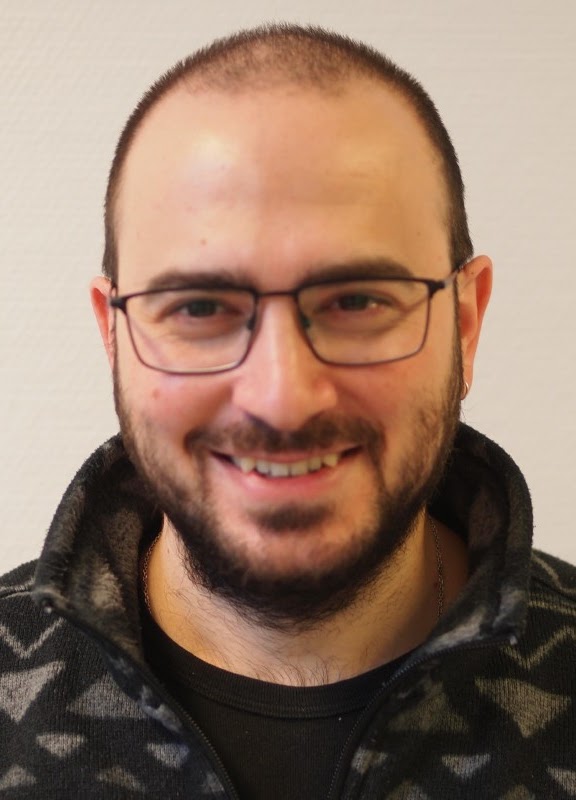
Mikkel N. Schmidt is an Associate Professor in the Department of Applied Mathematics and Computer Science at the Technical University of Denmark (DTU). His research focuses on statistical modeling, Bayesian methods, and their applications in science and industry. He has held visiting roles at Columbia University (2007) and Cambridge University (2008-2009). His work integrates probabilistic modeling with computational inference to address complex problems in diverse fields such as molecular discovery, optical communication, and brain connectivity analysis. Education highlights include visiting scholar and postdoctoral experiences at top-tier institutions. Research interests span statistical methodology development, machine learning applications, and interdisciplinary problem-solving. Current projects involve Bayesian neural networks for molecular discovery and federated learning optimization. Advising efforts include supervising multiple PhD students in areas like molecular discovery and denoising diffusion models. Notable collaborations involve work on materials science, quantum communication, and medical signal processing. His contributions bridge theoretical advancements with practical industrial applications, emphasizing interdisciplinary innovation.
Melih Kandemir is an Associate Professor at the Department of Mathematics and Computer Science, Southern Denmark University. He also serves as Research Group Leader at the Bosch Center for Artificial Intelligence (2018–2021) and held a previous role as Assistant Professor at Ozyegin University (2017–2018). His research focuses on machine learning, Bayesian methods, reinforcement learning, and uncertainty quantification. **Education**: PhD in Computer Science from Aalto University (2013), specializing in 'Learning Mental States from Biosignals'. **Research Interests**: Machine Learning, Bayesian Inference, Reinforcement Learning, Deep Neural Networks, Stochastic Processes. His work emphasizes theoretical foundations and practical applications in domains like medical imaging, control systems, and robotics. **Awards**: Two Best Paper Awards (2017). **Grants & Projects**: Includes the Carlsberg Young Researcher Fellowship (2022–2026), Novo Nordisk Foundation grants (2021–2024), and DFF-funded research on PAC-Bayesian reinforcement learning (2025–2027). **Labs/Teams**: Leads research on Bayesian deep learning and reinforcement learning within the Bosch Center for AI and SDU's interdisciplinary groups.
Susanne Ditlevsen is a Professor at the Department of Mathematical Sciences , University of Copenhagen. Her research focuses on statistical inference for stochastic processes , mathematical modeling of physiological systems , nonlinear dynamics , neuroscience , and biomathematics . Research : She develops statistical methods for diffusion processes, hidden Markov models, and stochastic differential equations, with applications in biomedical data and marine mammal behavior. Teaching : Covers basic statistics, probability, stochastic processes, regression, and generalized linear models. Publications highlight her work on climate tipping points (2023, Nature Communications ), nonlinear neuronal systems (2017), and statistical ecology (2020). Her collaborations span Denmark, France, and international institutions.
Raghavendra Selvan, an Assistant Professor (Tenure Track) at the University of Copenhagen, holds joint appointments in the Machine Learning Section (Department of Computer Science), Kiehn Lab (Department of Neuroscience), and the Data Science Laboratory. His academic journey includes a PhD in Medical Image Analysis (2018), MSc in Communication Engineering (2015), and BSc in Electronics and Communication Engineering (2009). PhD - Medical Image Analysis, University of Copenhagen (2018) MSc - Communication Engineering, Chalmers University (2015) BSc - Electronics and Communication Engineering, BMS Institute of Technology, India (2009) His research focuses on Bayesian Machine Learning with emphasis on Medical Image Analysis, Graph-based Learning, Tensor Networks, Approximate Inference, and Multi-Object Tracking Theory. Recent publications highlight his contributions to environmentally sustainable AI practices, efficient deep learning in medical imaging, and novel applications of tensor networks. Key research areas: Green AI and Environmental Sustainability Medical Image Analysis Graph Neural Networks Crystal Structure Prediction Model Compression Materials Science Applications
Jun Yang is a Tenure Track Assistant Professor at the Department of Mathematical Sciences, University of Copenhagen. His research spans computational statistics and machine learning, with a focus on high-dimensional inference, time series analysis, and Monte Carlo methods. Current Position: Tenure Track Assistant Professor, University of Copenhagen (2023–present) Previous Role: Florence Nightingale Bicentennial Fellow, University of Oxford (2020–2023) Education: Ph.D. in Statistics, University of Toronto (2020), advised by Daniel M. Roy and Jeffrey S. Rosenthal Research Interests: Jun’s work addresses the intersection of computational statistics and machine learning, including: - High-dimensional Markov chain Monte Carlo (MCMC) algorithms - Bayesian variable selection in complex models - Spectral inference for nonlinear time series - Quantitative bounds and complexity analysis for MCMC Publications: His publications highlight advancements in high-dimensional sampling, time series analysis, and algorithm design. Key contributions include: - Dimension-free mixing results for Bayesian variable selection - Stereographic projection techniques for MCMC - State-domain change point detection in nonlinear regression Awards: Florence Nightingale Bicentennial Fellow, University of Oxford (2020–2023) Collaborations: Jun collaborates with researchers like K. Łatuszyński, G.O. Roberts, and J.S. Rosenthal, advancing statistical theory and applications in econometrics, machine learning, and stochastic processes.
Georgios Arvanitidis is an Associate Professor at the Technical University of Denmark (DTU) in the Department of Applied Mathematics and Computer Science, specifically within the Section for Cognitive Systems (CogSys). He has established himself as a leading researcher in geometric machine learning, focusing on the application of differential geometry principles to enhance machine learning models. His work bridges theoretical mathematics with practical applications in artificial intelligence, with particular emphasis on understanding the geometric structure of data manifolds and latent spaces. Dr. Arvanitidis completed his educational journey with a Bachelor's degree from the Department of Informatics at the Aristotle University of Thessaloniki, followed by a Master's degree in Computer Science from Saarland University supported by the Max Planck Institute for Informatics. He earned his PhD at DTU's Cognitive Systems section under the supervision of Søren Hauberg, with additional research experience at Philipp Hennig's Probabilistic Numerics group. Prior to his current position as associate professor, he was a PostDoc at the Max Planck Institute for Intelligent Systems working with Bernhard Schölkopf. Dr. Arvanitidis's research primarily focuses on differential geometry in machine learning , where he explores how geometric structures can enhance representation learning and statistical modeling. His work in generative models investigates how learning the geometry of data manifolds can improve deep learning architectures. In the domain of deep learning theory , he examines why deep learning models generalize effectively on unseen data, with particular attention to the curvature properties of loss landscapes. His research in approximate Bayesian inference applies geometric principles to improve uncertainty quantification in neural networks. Through his innovative approaches, Dr. Arvanitidis has established himself as a leading researcher in geometric machine learning, contributing to both theoretical foundations and practical applications across various domains including robotics and life sciences. The publication trends of Dr. Arvanitidis reveal a consistent and evolving focus on geometric approaches to machine learning problems. His recent work (2023-2025) demonstrates increasing sophistication in applying Riemannian geometry to deep learning architectures, with particular emphasis on latent space geometry, optimization on manifolds, and geometric interpretations of neural network behavior. A notable pattern is the progression from foundational work on geometric representations to more applied research in areas like robotics and causal inference. His publications span top-tier conferences including NeurIPS, ICML, ICLR, and AISTATS, reflecting the high impact of his research. The interdisciplinary nature of his work is evident in collaborations across mathematics, computer science, and robotics domains, with recent papers addressing challenges in multimodal sampling, safety guarantees for dynamical systems, and counterfactual explanations. Dr. Arvanitidis has received several notable scientific awards and recognitions: Sapere Aude starting grant from the Independent Research Fund Denmark (DFF) GADL funding i-Rase, Pathfinder, and EIC (European Innovation Council) funding Best reviewer award for NeurIPS 2019 Best reviewer award for NeurIPS 2018 Best student paper award at Robotics: Science and Systems (R:SS) 2021 Dr. Arvanitidis actively mentors PhD students and researchers, currently supervising Alejandro Valverde, Johanna Gegenfurtner, and Albert Kjøller Jacobsen. He has previously co-supervised Alison Pouplin's PhD and worked with research assistant Georgios Pantis. His group receives substantial funding through multiple prestigious grants including the Sapere Aude starting grant from the Independent Research Fund Denmark, as well as European Innovation Council funding. He has been instrumental in creating opportunities for students interested in geometric machine learning, offering BSc and MSc thesis projects focused on generative models, deep learning theory, and optimization techniques. Dr. Arvanitidis also contributes significantly to the academic community as a reviewer for top conferences including ICLR and TMLR, and as an area chair for NeurIPS, ICML, AISTATS, and UAI. He co-organized the Machine Learning Summer School 2020 in Tübingen, further demonstrating his commitment to education and community building. Dr. Arvanitidis leads a vibrant research group focused on geometric machine learning within the Cognitive Systems section at DTU. His team includes multiple PhD students working on cutting-edge research at the intersection of differential geometry and artificial intelligence. The group has developed notable software tools, including the "geometric_ml" GitHub repository with over 70 stars, which contains implementations for applying Riemannian geometry in machine learning. His research has practical applications in robotics, where geometric approaches enable more robust motion planning, as evidenced by his work on "Reactive Motion Generation on Learned Riemannian Manifolds" which received a best student paper award. Additionally, his methodologies have found applications in life sciences, as mentioned in his 2022 AISTATS paper. The collaborative nature of his work is evident through extensive partnerships with researchers at institutions including the Max Planck Institute for Intelligent Systems, University of Cambridge, and various European universities. His recent news items indicate active engagement with the academic community through talks, conference presentations, and ongoing supervision of new PhD students joining his group.
Christian Pascal Hirsch is an Associate Professor for Data Science and Statistics at the Department of Mathematics, Aarhus University. His research focuses on random networks inspired by biology and health sciences, utilizing techniques from topological data analysis and stochastic geometry. He is affiliated with the Stochastics group, AU DIGIT Centre, and AU Quantum Campus. Research Interests: Topological data analysis, large deviations theory, spatial random networks, and stochastic geometry. His work includes studies on percolation theory, Gibbs measures, and applications to neural networks and geometric functionals. Publications span journals such as the Journal of Applied and Computational Topology, Journal of Statistical Physics, and Stochastic Processes and Their Applications, covering topics from network topology to Poisson approximation.
Jes Frellsen is an Associate Professor at the Department of Applied Mathematics and Computer Science (DTU) since 2016. Previously, he held academic positions at the IT University of Copenhagen (2016-2019), postdoctoral roles at University of Cambridge (2013-2016) and University of Copenhagen (2011-2013). Education: PhD in Bioinformatics (2011), University of Copenhagen MSc in Bioinformatics (2007), University of Copenhagen BSc in Mathematics and Computer Science (2005), University of Copenhagen EAP Exchange at University of California, Santa Cruz (2004-2005) Research Focus Jes Frellsen specializes in statistical machine learning , particularly generative AI and deep generative models with applications in bioinformatics . His work integrates Bayesian inference , directional statistics , and Markov chain Monte Carlo methods to address challenges in macromolecular structure prediction and missing data imputation . Recent efforts explore uncertainty quantification in image segmentation and generative modeling for materials science. Advising & Collaborations He actively supervises PhD students and postdoctoral researchers in projects spanning news recommendation systems , medical imaging , and 3D structure generation . Collaborations include work with Zoubin Ghahramani (Cambridge) and Thomas Hamelryck (Copenhagen), with contributions to protein structure prediction and statistical methods in structural bioinformatics .
Jesper Møller is a Professor in the Department of Mathematical Sciences at Aalborg University's Faculty of Engineering and Science, specializing in Statistics and Mathematical Economics. His research focuses on advanced statistical methodologies with applications across various scientific domains. His educational background includes extensive training in mathematical sciences, though specific degree details aren't provided in the current materials. His research interests span: Applied probability theory Markov chain Monte Carlo methods (MCMC) Spatial statistics Stochastic geometry Stochastic simulation Point process modeling Professor Møller's recent publication record shows consistent productivity with 239 research outputs including journal articles, reports, and book chapters. His work demonstrates strong focus on spatial point processes, Bayesian inference methods, and applications of stochastic geometry. The research trends indicate increasing sophistication in modeling complex spatial patterns and developing computational methods for statistical inference. His scientific contributions have been supported by numerous research projects, with 28 projects documented including the current "Peculiar Distribution Functions and Interesting Stochastic Processes" (2022-2026). His work has generated significant scholarly impact with citations across multiple disciplines. Professor Møller has supervised 8 PhD students and maintains active collaborations across international research networks. His current projects suggest continued research activity in developing novel statistical methodologies for complex spatial data analysis with applications in materials science, neuroscience, and environmental statistics.
Martin Skovgaard Andersen is an Associate Professor in the Department of Applied Mathematics and Computer Science at the Technical University of Denmark (DTU), where he specializes in Scientific Computing. His research integrates numerical methods, optimization, and machine learning to solve complex computational problems in engineering and data science. Education: Ph.D., University of California, Los Angeles (2006–2011) M.Sc., Aalborg Universitet (2001–2006) Postdoc, Linköping University, Sweden (2011–2012) His research interests include optimization (particularly conic and stochastic programming), numerical algorithms, signal processing, system identification, and fast solvers for integral equations. He works extensively on matrix analysis, regularization, and low-rank approximations, contributing to both theoretical and applied advancements in computational mathematics. The recent publications highlight a strong trend in developing efficient numerical algorithms for large-scale optimization and solving integral equations. His work emphasizes preconditioning, matrix truncation, and Bayesian inversion, with applications in electromagnetics, structural health monitoring, and network identification. There is a consistent focus on improving computational efficiency and scalability of solvers. Scientific Awards: No specific awards mentioned in the provided text. Andersen actively supervises PhD students and leads multiple research projects, including those on non-symmetric conic optimization, data-sparse models, and fast direct solvers. He is the Principal Investigator (PI) on projects related to physics-informed structural health assessment. His collaborative network spans Denmark and international institutions, particularly in computational mathematics and engineering. Labs and Research Teams: He is affiliated with the Scientific Computing section at DTU, which focuses on high-performance computing, numerical algorithms, and mathematical modeling. His work is embedded in a collaborative environment involving researchers in optimization, control theory, and computational electromagnetics.
Mogens Bladt is a Professor of Applied Probability and Insurance Mathematics at the Department of Mathematical Sciences, University of Copenhagen. He has held positions since 2018 after 24 years as Principal Researcher at the National University of Mexico (1994-2018), with visiting professorships at Technical University of Denmark and University of Copenhagen since 2001. Research: Focuses on time-inhomogeneous phase-type distributions, matrix-oriented life insurance models, heavy-tailed distributions, and diffusion bridge simulation Teaching: Offers graduate/undergraduate courses in Applied Probability, Stochastic Processes, Risk Theory, and Numerical Analysis Scientific Contributions: Developed R packages for Markov jump processes, phase-type distributions, and diffusion bridges. Holds grants from Mexico and Denmark, including Danish Research Council funding (2007–2008). Supervised 5 PhD, 8 Master’s, and 13 Bachelor’s theses Organized academic workshops and served as Associate Editor for Stochastic Models since 1997
Andreas Asp Bock is a postdoctoral researcher at the Department of Applied Mathematics and Computer Science within the Technical University of Denmark . His work focuses on scientific computing and numerical linear algebra, with particular emphasis on matrix approximation techniques, preconditioning strategies, and optimization methods. Current affiliation: Technical University of Denmark (College of Engineering) Academic role: Researcher (postdoctoral level) Research interests include: Matrix factorization and truncation Bregman divergence applications Baysian inversion frameworks Curve registration algorithms High-dimensional data analysis Preconditioning for iterative solvers Recent publications demonstrate expertise in improving approximate factorization preconditioners, geometric curve registration, and divergence-based preconditioner design. Collaborations with Martin S. Andersen and others indicate ongoing contributions to sparse linear algebra and computational statistics. Supervision : Currently mentoring J. V. Galvão da Mata in a PhD project focused on Optimization methods for data-sparse models , active from 2022-2025.
Manfred Jaeger is an Associate Professor at the Department of Computer Science, Technical Faculty of IT and Design, Aalborg University. His research focuses on Artificial Intelligence , Bayesian Networks , and Graph Neural Networks , with significant contributions to probabilistic reasoning and relational learning. University: Aalborg University School: Technical Faculty of IT and Design Department: Department of Computer Science Jaeger's research explores inductive and probabilistic reasoning , statistical relational learning , and model checking . His recent work integrates heterogeneous graph neural networks with relational Bayesian network encodings to enhance reasoning capabilities in complex systems. Key trends in his publications include relational deep learning , probabilistic inference , and graph-based modeling . He has contributed to applications in social network community detection , reinforcement learning for MDPs , and latent variable models for graph learning . Jaeger collaborates on projects involving incomplete data analysis , modularization of complex tasks , and probabilistic logic . His datasets on multi-multi-instance learning networks are publicly available for research use.
Orimar Sauri Arregui is an Associate Professor in the Department of Mathematical Sciences at Aalborg University's Faculty of Engineering and Science, Denmark. His research lies at the intersection of mathematical statistics, stochastic processes, and financial modeling. Research Interests: His work focuses on ambit fields , trawl processes , Lévy and infinite divisible random fields , and nonparametric estimation in continuous time. He investigates asymptotic behavior, limit theorems, and statistical inference for complex stochastic models, with applications in financial market microstructure and energy flux modeling. The analysis of his recent publications reveals a strong trend in theoretical statistics and probability, particularly in developing and analyzing models driven by non-Gaussian noise and long-range dependence. His work often involves high-frequency data and contributes to the foundations of spatiotemporal modeling. Scientific Contributions: Developed mathematical frameworks for financial market microstructure. Advanced theory for nonparametric estimation of trawl processes. Derived asymptotic error distributions for numerical schemes in stochastic delay equations. Proved local limit theorems for energy fluxes in random fields. Advising and Research Activity: He has been involved in PhD supervision and maintains an active research output, primarily through preprints on arXiv and SSRN. His collaborations span topics in financial econometrics and statistical physics. Though specific grants are not listed, his consistent publication record suggests ongoing research funding. Laboratory and Teams: While no formal lab is mentioned, his work is part of the broader research network in mathematical statistics and financial mathematics at Aalborg University, with notable collaborations in stochastic modeling and econometrics.
Konstantin Pavlikov is an Associate Professor at the Department of Business & Management (DBM) under Strategic Organization Design (SOD) at the University of Southern Denmark. His research focuses on Operations Research, Integer Programming, and Stochastic Programming , with particular emphasis on vehicle routing optimization and network flow modeling. Education : PhD in Operations Research (University of Florida, 2014), MSc in Applied Mathematics (Moscow State University, 2007) His work spans combinatorial optimization and network interdiction problems , developing exact and approximate solution algorithms for complex logistics challenges. Recent publications analyze heterogeneous vehicle routing capacity inequalities and two-commodity flow formulations for routing problems. Scientific contributions have been recognized with the Best Reviewer Award (2019). He actively reviews for journals like Computational Management Science and supervises academic works through examination roles.