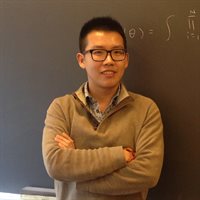
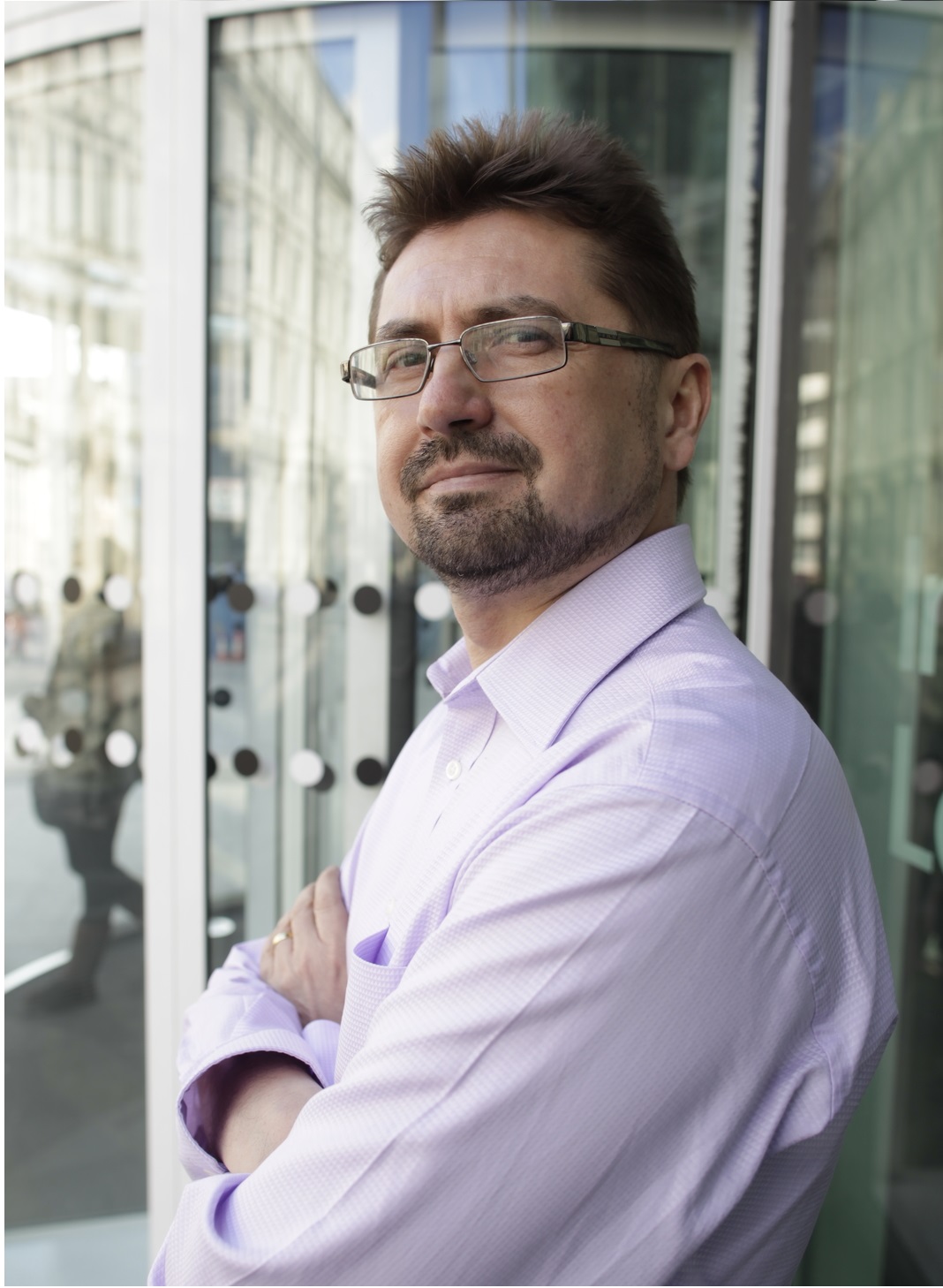
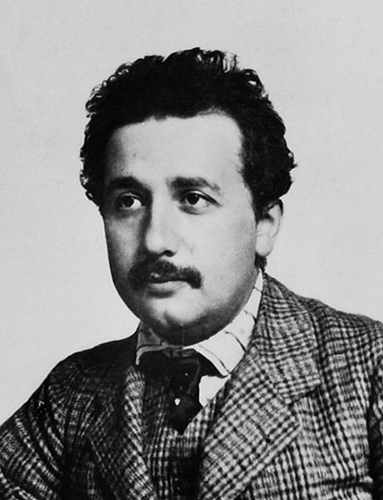
Lu Yin is an Assistant Professor in the School of Computer Science and Electronic Engineering at the University of Surrey. He holds affiliations as a long-term visiting researcher at Eindhoven University of Technology (TU/e) and collaborator with the Visual Informatics Group (VITA) at the University of Texas at Austin. Previously, he served as a Postdoctoral Fellow at TU/e and worked as a research scientist intern at Google's New York City office. His work bridges academic and industrial research, focusing on AI Efficiency, AI for Science, and Large Language Models. His research emphasizes optimizing neural networks through sparsity techniques, including pruning strategies for LLMs and vision models. Notable contributions include the OWL method for LLM pruning and Lottery Pools for improving sparse network performance. Yin actively collaborates with institutions like TU/e, Google Research, and Intel Research, and has organized conferences such as CAPBS 2025 and CAI 2025 Workshops. Yin has secured significant grants, including a 10,000,000 NWO-funded grant for NVIDIA A100 GPU resources. He has delivered invited talks at prestigious institutions like Carnegie Mellon University and City University of Hong Kong. His work has been recognized with the Best Paper Award from LoG 2022.
Dr. Yunxiao Chen is an Associate Professor in the Department of Statistics at the London School of Economics and Political Science (LSE), where he co-leads a psychometric lab with Professor Irini Moustaki. Previously, he was an Assistant Professor at Emory University (2016–2018) and earned his PhD in Statistics from Columbia University (2016). His research focuses on developing statistical and computational methods for social data science, addressing challenges in high-dimensional data analysis, latent variable models, and educational assessment. Education: PhD in Statistics, Columbia University, 2016 Research Interests: High-dimensional factor models (matrices, tensors, counting processes) Dynamic behavioral data analysis Sequential decision theory in personalized learning Statistical inference for large-scale item response data Applications in education, psychology, and marketing Publications: Recent work includes advancements in factor analysis, change-point detection, and DIF statistical inference Key journals: Journal of the American Statistical Association , Psychometrika , Journal of Machine Learning Research Awards: 2024 Psychometrics Society Best Reviewer Award 2022 Early Career Award 2018 NCME Loyd Dissertation Award Advising & Grants: Accepts PhD students in statistical methodology Funded by National Academy of Education/Spencer Fellowship (2018–2020) and IEA R&D grants (2022–2023) Labs & Teams: Runs LSE’s psychometric lab focused on educational measurement Collaborates with interdisciplinary teams on machine learning applications
Professor Theodore Papamarkou is a leading researcher in Bayesian and topological approaches to deep learning, with a focus on healthcare applications. His work addresses scalability challenges in machine learning by integrating Bayesian inference and topological data analysis into deep learning frameworks. He contributes to the UN Sustainable Development Goals through his research in Digital Futures and the Centre for Digital Trust and Society. Key projects include collaborations on financial crime prevention and digital trust. He received the 2023 ECML PKDD best paper award and serves as Editor-in-Chief of ACM Transactions on Probabilistic Machine Learning. His research spans topics like uncertainty quantification, material microstructure analysis, and predictive model interpretability. Professor Papamarkou has contributed to 19 peer-reviewed publications and actively participates in academic activities such as editorial work and conference organization. His interdisciplinary approach bridges computer science, statistics, and healthcare, emphasizing ethical and practical AI applications.
Professor Dan Crisan is a Professor of Mathematics at Imperial College London and Director of the EPSRC Centre for Doctoral Training in the Mathematics of Planet Earth. He holds a PhD in Mathematics from the University of Edinburgh and an MSci in Mathematics from the University of Bucharest. His research focuses on Stochastic Analysis, Stochastic PDEs, Fluid Dynamics, Nonlinear Filtering, and Data Assimilation. He leads the Stochastic Transport in Upper Ocean Dynamics (STUOD) project, supported by an ERC Synergy Grant, exploring stochastic models in geophysical fluid dynamics. His academic roles include directing the MPE CDT and teaching advanced courses like Stochastic Calculus with Applications to Non-Linear Filtering. He collaborates extensively with researchers globally on topics including stochastic fluid dynamics, particle methods, and Bayesian inference. His work bridges theoretical advancements with applications in climate modeling and environmental systems. Education: PhD (University of Edinburgh, 1996), MSci (University of Bucharest, 1992). Professional roles include Director of MPE CDT (2013–present), Professor at Imperial College (2011–present), and prior academic appointments at the University of Cambridge and Imperial College. His research emphasizes stochastic processes in fluid dynamics, with projects funded by EPSRC and EU grants. Current PhD supervision opportunities are available in areas like stochastic fluid dynamics and data assimilation. Key achievements include foundational contributions to particle filtering, numerical methods for stochastic PDEs, and stochastic transport models. His work on the Camassa-Holm equation and rotating shallow water models demonstrates expertise in nonlinear wave dynamics and stochastic parametrization. He actively engages in international collaborations and serves on editorial boards for leading journals in stochastic analysis.
Professor Nikolaos Dervilis is a faculty member in the Department of Mechanical Engineering at the University of Sheffield, serving as Director of Research and Innovation for the School of Mechanical, Aerospace and Civil Engineering. He holds a BSc from the National and Kapodistrian University of Athens, an MSc in Sustainable and Renewable Energy Systems from the University of Edinburgh, and a PhD from the University of Sheffield in Mechanical Engineering with a focus on machine learning for Structural Health Monitoring (SHM). His research emphasizes SHM, renewable energy systems (particularly wind turbines), data analysis, nonlinear dynamics, and advanced signal processing. His work spans population-based SHM (PBSHM), machine learning applications in structural dynamics, and probabilistic modeling. Recent publications focus on active learning frameworks, Bayesian methods, and generative models for damage prognosis. He collaborates with industry on wind energy and has contributed to datasets for experimental bridges and aerospace components. Notably, he leads efforts in transfer learning and domain adaptation for heterogeneous structural populations. Research highlights include developing frameworks for risk-informed decision support, model selection via approximate Bayesian computation, and digital twin tools for engineering systems. His lab, part of the Dynamics Research Group, addresses challenges in energy systems, composite materials, and condition monitoring of critical infrastructure.
Petros Dellaportas holds dual appointments as a Professor of Statistical Science at University College London (UCL) and a Professor of Statistics at the Athens University of Economics and Business (AUEB). His research focuses on Bayesian statistics, machine learning, financial econometrics, and dynamic pricing. He leads projects on topics such as Poisson processes for cybersecurity, reservoir computing for macroeconomic forecasting, and probabilistic fault detection in wind parks. His recent publications emphasize advancements in Bayesian methods, variational autoencoders, and spatio-temporal point processes. Dellaportas has supervised over 20 PhD students, contributing to areas like stochastic volatility models and inverse reinforcement learning. He co-founded Thales and Friends, an organization bridging mathematics and cultural activities, and organizes the Greek Stochastics workshop series on topics ranging from causal learning to computational statistics. Key projects include anomaly detection in VAT networks and scalable Gaussian process models. His work often integrates statistical theory with applications in finance, sports analytics, and environmental science. Dellaportas maintains active collaborations with institutions globally, advancing interdisciplinary research and methodological innovations in statistical science.
Yanbo Tang is a Lecturer (assistant professor) in the Department of Mathematics at Imperial College London, focusing on statistical inference and computational statistics. He earned his PhD (2022), MSc (2016), and BSc (2015) from the University of Toronto and Concordia University, respectively. PhD in Statistics, University of Toronto (2017-2022) MSc in Statistics, University of Toronto (2016) BSc in Actuarial Science, Concordia University (2015) His research spans high-dimensional statistics, computational statistics, statistical genetics, and astrostatistics, with a focus on methods for handling nuisance parameters, adaptive quadrature in Bayesian inference, and approximation techniques like Laplace and saddlepoint methods. His work addresses challenges in reproducibility (P-value behavior) and practical applications in astronomy and genetics. Recent publications highlight trends in high-dimensional statistical theory , Bayesian computational methods , and interdisciplinary applications such as analyzing parental control effects and astrophysical data variability. These works emphasize mathematical rigor and practical utility in complex models. Scientific Awards : NSERC CGS D (2020-2021), NSERC PGS D (2018-2020), Ontario Graduate Scholarship, ISBA Best Student/Postdoc Paper Award (2021), and multiple departmental teaching awards. He supervises MSc and PhD students in statistics and statistical machine learning, emphasizing projects in high-dimensional inference and computational methods. His service roles include organizing workshops and admissions panels, with referee duties for journals like JRSSB and Statistical Sciences.
Brooks Paige serves as an Associate Professor in Machine Learning at University College London's Department of Computer Science, where he leads research at the intersection of artificial intelligence, computational biology, and environmental science. His work bridges theoretical machine learning with high-impact applications in drug discovery, genomics, and climate modeling. His research portfolio spans: Machine Learning (core methodology development) Artificial Intelligence (generative models and deep learning) Information Systems (data-intensive applications) Cognitive and Computational Psychology (human-AI interaction aspects) Analysis of his 56 publications (2021-2025) reveals a dominant focus on generative modeling for molecular design, particularly protein-ligand binding prediction and antibody-epitope analysis. His methodological innovations include Gibbs sampling variants, Gaussian processes on non-Euclidean domains, and active learning frameworks, applied across biomedical and environmental domains including Arctic sea ice forecasting and urban analytics. No scientific awards are documented in available sources. Similarly, student advisement records, research grant details, laboratory facilities, and collaborative team structures remain unspecified in the current dataset.
Professor Christopher Nemeth of Lancaster University's School Of Mathematical Sciences is a leading researcher in computational statistics and probabilistic machine learning. His work focuses on Markov chain Monte Carlo (MCMC), sequential Monte Carlo (SMC), Gaussian processes, and approximate Bayesian computation, with applications in environmental science, target tracking, and econometrics. He currently holds a UKRI Turing AI Acceleration Fellowship and leads the ProbAI research hub. Research Interests: Development of probabilistic AI algorithms for large-scale learning, state-space modeling, and intersections between sampling and optimization algorithms. Grants: £9M UKRI-EPSRC ProbAI hub (2024-2029), £1.1M Turing AI Acceleration Fellowship (2021-2026), and multiple NERC grants. Academic Roles: Turing University Academic Liaison (2023-present), Associate Editor for ACM Transactions on Probabilistic Machine Learning (2023-present), and leadership roles in the Royal Statistical Society. Supervision: Completed supervision of 7 PhD students with projects on scalable Gaussian processes, Monte Carlo methods, and network modeling.
Jingjie Li is a Lecturer (Assistant Professor) in the School of Informatics at the University of Edinburgh, where he conducts interdisciplinary research at the intersection of computer systems, cybersecurity, and human-computer interaction. He is a member of the Institute for Computing Systems Architecture and the School of Informatics Ethics Committee. Ph.D. in Computer Engineering, University of Wisconsin-Madison (2017–2023) B.Eng. (R&D) with First-Class Honours, Australian National University (2015–2017) B.Sc., Beijing Institute of Technology (2013–2015) His research focuses on user-centric security and privacy , measuring human behavior in digital systems , and efficient human-machine interfaces . He investigates risks in emerging technologies such as smart homes, AR/VR, and AI systems, aiming to make them safer and more human-centric. His work combines technical innovation with behavioral insights to design practical privacy controls, measure digital risks, and build efficient computing platforms. The recent publications highlight a strong trend in privacy transparency , AI explainability , smart home and AR/VR security , and hardware-software co-design . His work frequently appears in top-tier venues including IEEE S&P, USENIX Security, ACM CHI, and ISCA, reflecting a consistent focus on both technical depth and human factors. Notable scientific awards include: ACM CHI Best Paper Award (2019) Facebook Trustworthy Products in AR, VR, and Smart Devices Award (2021) CPS Rising Star, NSF (2022) Generative AI Laboratory Seedcorn Award, University of Edinburgh (2024) Qualcomm Innovation Fellowship Finalist (2019, 2021) Jingjie Li actively supervises PhD students including Jiuming Jiang and Karen Jiamin Zheng, and co-supervises Lawrence Piao and Temima Hrle. He has received research support through fellowships such as the UW–Madison Chancellor’s Opportunity Fellowship and has collaborated globally with institutions including Max Planck Institute, Visa Research, and CSIRO. He serves on the program committees of major conferences like ACM CCS, USENIX Security, and ACM CHI. He leads a dynamic research team focused on systems security and human-centered computing, hosting undergraduate researchers and mentoring students through projects in privacy, AI transparency, and hardware security. His lab fosters interdisciplinary collaboration and real-world impact through community engagement, such as the 'Hack Your Age' workshop with intergenerational participants.
Marcelo Pereyra is a Professor in Statistics at the School of Mathematical & Computer Sciences of Heriot-Watt University and the Maxwell Institute for Mathematical Sciences in Edinburgh, UK. His academic journey began with a double M.Eng. degree from ITBA (Argentina) and INSA Toulouse (France), followed by a M.Sc. from INSA Toulouse in 2009. He earned his Ph.D. in Signal Processing from the University of Toulouse in 2012, after which he served as a Research Fellow in Statistics at the University of Bristol from 2012 to 2016. In 2017, he joined Heriot-Watt University as an Assistant Professor in Statistics, was promoted to Associate Professor in 2019, and subsequently to Professor in Statistics in 2023. His educational background includes: Ph.D. in Signal Processing, University of Toulouse (2012) M.Eng. (double degree) from ITBA (Argentina) and INSA Toulouse (France), with M.Sc. from INSA Toulouse (2009) Professor Pereyra's research advances the statistical foundations of quantitative and scientific imaging. He has made important contributions to Bayesian imaging sciences and developed significant connections between statistical, variational, and machine learning approaches to imaging. His specific interests include robust uncertainty quantification in imaging inverse problems, automatic calibration and verification of statistical image models, scalable Bayesian computation algorithms derived from stochastic diffusion processes, and applications of imaging with high social or environmental value. His work sits at the intersection of statistics, computational mathematics, and imaging science, with a strong emphasis on developing mathematically rigorous methods that provide reliable uncertainty quantification alongside point estimates. His recent publications demonstrate a clear trajectory toward integrating modern machine learning techniques, particularly diffusion models and generative approaches, with traditional Bayesian statistical methods for imaging problems. The research spans applications from medical imaging to astronomical observations and industrial inspection, with consistent emphasis on uncertainty quantification. His work increasingly focuses on developing scalable computational methods that can handle the high-dimensional nature of modern imaging problems while maintaining statistical rigor. Professor Pereyra has received numerous prestigious awards throughout his career: SIAM SIGEST Award in Imaging Sciences for contributions to proximal Markov chain Monte Carlo methodology Marie Curie Intra-European Fellowship for Career Development (2013) Brunel Postdoctoral Research Fellowship in Statistics (2012) Postdoctoral Research Fellowship from French Ministry of Defence (2012) Leopold Escande PhD Thesis award from the University of Toulouse (2012) INFOTEL R&D award from the Association of Engineers of INSA Toulouse (2009) ITBA R&D award from the Buenos Aires Institute of Technology (2007) Professor Pereyra is deeply committed to developing early career talent, currently supervising five PhD students and two Postdoctoral Research Associates (PDRAs), having previously supervised four PhD students and three PDRAs to completion. His research has received significant support from Heriot-Watt University and the UK Engineering and Physical Sciences Research Council (EPSRC). He is known for fostering multidisciplinary collaboration, having organized eleven international interdisciplinary research meetings in the UK since 2012 and chaired the IMA Conference on Inverse Problems in Edinburgh (2022). As a leader in his field, Professor Pereyra has held Invited Professor positions at prestigious institutions including Institut Henri Poincaré (Paris, 2019), Ecole Normale Supérieure Lyon (2023), and Université Paris Cité (2024). He frequently delivers invited talks at leading mathematical centers worldwide (CIRM, BIRS, IHP, Flatiron, Hausdorff School, INI, and ICMS) to promote multidisciplinary collaboration in imaging sciences.
Professor Robert Elliott is a Professor of Economics and Director of Research in the Department of Economics at the University of Birmingham's Birmingham Business School. His work spans international economics, development economics, environmental and energy economics, and international business, with particular expertise in the Chinese economy, firm behavior, natural disasters, and globalization's environmental impacts. Professor Elliott holds a BA in Economics from the University of Leicester, an MA in Economics from the University of Essex, and completed his PhD at the University of Nottingham under the supervision of Professor David Greenaway, Dr Peter Wright, and Robert Hine. His research focuses on empirical environmental, international trade, development, energy, and labor economics. Key areas include the economics of China and East Asia, empirical environmental economics, economic geography, globalization and environment, natural disasters (floods, typhoons, earthquakes), biodiversity and deforestation, trade and environment, FDI and industrial restructuring, and energy economics. His interdisciplinary approach often combines large dataset manipulation with advanced econometric techniques. Analysis of his recent publications reveals a strong focus on environmental economics, particularly examining the intersection of climate change, natural disasters, and economic outcomes. His work spans historical environmental events in China, contemporary energy and transportation economics, air quality policy evaluation, and the economic impacts of natural disasters across different regions and time periods. A significant portion of his research applies advanced statistical and machine learning methods to environmental policy questions. Professor Elliott serves as an editor for the Sustainable Future Policy Lab and Director of the Trade, Environment, Development and Energy (TEDE) research group. He is also a Co-Investigator on ReLIB as part of the Faraday Institute, a member of Water Challenges in a Changing World IGI, and an Affiliate of the Lloyds Bank Centre for Responsible Business. He actively supervises PhD students across international and development economics and environmental and energy economics. His current projects include the "Brexit Uncertainty Index" and Leverhulme Trust research projects in "Globalisation and the Environment" with Matthew Cole. He has received significant funding including an ESRC grant for "China-UK energy issues" worth approximately £1 million. Professor Elliott is a key member of the Birmingham Plastics Network, an interdisciplinary team of over 40 academics addressing the global plastics problem. This network brings together experts from diverse fields including chemistry, environmental science, engineering, philosophy, linguistics, economics, and law to develop holistic solutions for plastics sustainability.
Professor Dennis Kristensen is a faculty member at the Department of Economics, University College London (UCL). He holds affiliations with prominent institutions including CeMMAP, the Institute for Fiscal Studies, Aarhus Center for Econometrics (ACE), and the Centre for Macro and Financial Econometrics at Essex University. His research focuses on econometric theory, applied microeconomics, and quantitative finance. Key areas include structural dynamic models, nonlinear econometrics, and financial econometrics. His work integrates advanced computational methods and nonparametric techniques to address complex economic problems. Research interests span stochastic volatility models, demand inversion in consumer behavior, and indirect estimation methods. He has contributed to methodologies for handling unobserved heterogeneity and time-varying parameters in economic models. Prof. Kristensen's publications emphasize methodological innovation, with recent work addressing continuous-time Markov models, diffusion copulas, and dynamic discrete choice frameworks. His articles often bridge theoretical econometrics with applied contexts, such as corporate defaults and financial market analysis. He is actively engaged in the academic community, contributing to journal editorials and interdisciplinary collaborations. His affiliations reflect a commitment to advancing econometric theory and its applications in policy and finance.
Massimiliano Pontil is a **part-time Professor of Computational Statistics and Machine Learning** in the Department of Computer Science at University College London (UCL) and a Senior Researcher at the **Istituto Italiano di Tecnologia (IIT)**, leading the **Computational Statistics and Machine Learning (CSML)** research group. He holds an MSc and PhD in Physics from the University of Genova (1994 and 1999) and has held postdoctoral positions at MIT and research roles at institutions like the University of Siena and City University of Hong Kong before joining UCL in 2003. **Research Interests**: Focuses on machine learning, including statistical learning theory, kernel methods, multitask and transfer learning, online learning, sparsity regularization, and applications in computer vision, bioinformatics, and user modeling. His work bridges theoretical foundations (e.g., regularization, optimization) with practical applications. **Publications**: Over 100 papers in top venues like NIPS/NeurIPS, ICML, COLT, and JMLR, covering topics such as structured sparsity, multitask learning, and optimization frameworks. Recent work emphasizes meta-learning, fair algorithms, and dynamical systems learning. **Grants & Awards**: EPSRC Advanced Research Fellowship. His research has been applied to diverse domains, including bioinformatics (e.g., protein-protein interface prediction) and social network analysis (e.g., mobility patterns). **Labs/Teams**: Leads the CSML group at IIT, collaborating on projects like Koopman operator regression and conditional meta-learning. Active in organizing workshops on multi-task learning and structured outputs (e.g., PASCAL thematic programs).
Hanwen Xing is a Research Associate at St Peter's College and a Postdoctoral Researcher in Artificial Intelligence at the Nuffield Department of Women's & Reproductive Health, University of Oxford. He holds a DPhil in Statistics (2022) and MSc in Statistical Science (2018) from Oxford, following a Bachelor of Mathematics from the University of Waterloo (2017). Affiliations: University of Oxford, St Peter's College Roles: Academic support for MSc/DPhil students, Bayesian methodology development His research focuses on computational statistics and Bayesian modelling, particularly applying approximate Bayesian inference methods to healthcare and medical science challenges. He has developed novel Bayesian approaches for integrating drug response and protein profiling data to identify tumor-specific cancer dependencies, demonstrated through projects like DepInfeR-GP. His work bridges statistical theory with practical applications in precision oncology. Key research outputs include advancements in Gaussian process modelling for single-cell perturbation data, continual learning frameworks using probabilistic methods, and improved bridge estimators via f-GAN techniques. These contributions highlight his expertise in both foundational statistical theory and applied computational methods. No scientific awards explicitly mentioned. He advises students in statistics programs and contributes to collaborative projects involving ex-vivo drug sensitivity analysis. His GitHub repository hosts implementations of his Bayesian models, reflecting a commitment to open-source scientific software development.