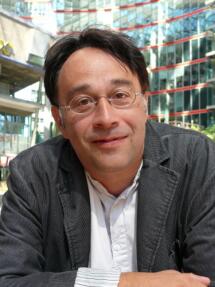
Prof. Dirk Becherer is a full professor at the Institute of Mathematics, Humboldt University of Berlin, within the Faculty of Mathematics and Natural Sciences. His research focuses on stochastic analysis, financial mathematics, and optimal control with applications in risk management and utility theory. He actively contributes to collaborative research initiatives such as the Berlin Mathematical School (BMS) and MATH+, Berlin’s mathematics excellence cluster. His academic work bridges theoretical stochastic processes with practical financial market challenges, addressing topics like optimal consumption, hedging strategies under price impact, and mean-field games. Becherer’s publications span advanced mathematical finance topics, including liquidity frictions, large investor strategies, and model uncertainty. He maintains a dedicated teaching portfolio in stochastic analysis and financial mathematics, supervising doctoral students through programs like the IRTG 2544 'Stochastic Analysis in Interaction.' Becherer’s research has been supported by grants from the German Research Foundation (DFG), including extensions to collaborative projects in stochastic dynamics and financial modeling.
Sujoy Bhore is affiliated with the Indian Institute of Technology Bombay (Department of Computer Science & Engineering), Université libre de Bruxelles, and Technische Universität Wien. His research focuses on algorithms , computational geometry , and graph theory , with a strong emphasis on geometric optimization , dynamic data structures , and parameterized algorithms . Recent publications highlight advancements in Euclidean spanners for sparse network design online algorithms for dynamic geometric problems Steiner trees and tree covers in planar domains k-median/means approximation using coresets His collaborative work spans institutions, with frequent joint research on geometric intersection graphs , map labeling , and planar graph embeddings . Co-authors include prominent researchers like Csaba D. Tóth, Martin Nöllenburg, and Timothy M. Chan. While no formal awards are documented here, his contributions to algorithmic complexity and geometric networks remain significant.
Adamantios Koumpis is a Professor at the University of Passau, Faculty of Computer Science and Mathematics, Germany. With an extensive publication record spanning from 1995 to 2025 (89 publications), he maintains an active research profile with recent contributions in medical AI, health technology innovation, and cybersecurity. His work demonstrates strong interdisciplinary collaboration, particularly with Oya Beyan (12 co-authored papers), Siegfried Handschuh (10 co-authored papers), and Charalampos Karagiannidis (13 co-authored papers). Dr. Koumpis's research interests span Human-Computer Interaction, Artificial Intelligence, Medical Informatics, Semantic Web technologies, Assistive Technology, and e-Learning Systems. His work has evolved from early focus on intelligent user interfaces and adaptive educational systems toward contemporary applications in medical AI, health technology ecosystems, and transparency frameworks for AI systems. He has made significant contributions to understanding healthcare innovation ecosystems, particularly in cardiovascular medicine and mental health domains. His recent publication trend (2022-2025) shows a strong focus on medical AI applications, health technology innovation ecosystems, and cybersecurity management. Approximately 40% of his recent work addresses medical AI and health technology innovation, 30% focuses on cybersecurity and privacy-preserving technologies, and 30% explores semantic web and data management frameworks. His work demonstrates increasing interdisciplinary collaboration across medical, technical, and social science domains. Dr. Koumpis has been involved in several significant research projects including the Horizon Europe Shift-Hub Project, the CS-AWARE-NEXT cybersecurity initiative, and various EU-funded health technology innovation programs. His work shows consistent funding support for collaborative, interdisciplinary research addressing real-world challenges in healthcare and technology.
Hendrik Ranocha is a Professor in Numerical Mathematics at Johannes Gutenberg University Mainz, Germany. His research focuses on the analysis and development of numerical methods for partial and ordinary differential equations, with particular emphasis on stability and structure-preserving techniques that transfer results from continuous to discrete levels. His educational background includes: PhD in Mathematics from TU Braunschweig (2016-2018), advised by Thomas Sonar MSc in Mathematics from TU Braunschweig (2014-2016) BSc in Mathematics from TU Braunschweig (2011-2014) Exchange student at Yonsei University, Seoul (2013) BSc in Physics from TU Braunschweig (2010-2013) Hendrik Ranocha's research spans Numerical Analysis and Scientific Computing . His work focuses on developing numerical schemes for hyperbolic balance laws and dispersive-dissipative equations, including Discontinuous Galerkin methods, spectral element methods, finite difference schemes, and flux reconstruction. He specializes in structure-preserving methods that conserve entropy/energy, utilizing summation by parts operators and mimetic properties. His research also encompasses Runge-Kutta methods, stability of time integration schemes, adaptivity in time and space, data-driven approaches, and uncertainty quantification. His recent publications demonstrate a strong focus on entropy-stable numerical methods, structure-preserving discretizations, and high-performance computing implementations in Julia. The research trends show increasing emphasis on practical software implementations (Trixi.jl, SummationByPartsOperators.jl), applications to physical systems like compressible Euler equations and shallow water equations, and addressing fundamental numerical challenges in stability and convergence. Hendrik Ranocha leads a research group at Johannes Gutenberg University Mainz with several PhD students and postdocs, including Louis Petri, Marco Artiano, Sebastian Bleecke, Saurav Samantaray, Arpit Babbar, and Valentin Churavy. He collaborates extensively with researchers such as Gregor Gassner, Andrew R. Winters, Michael Schlottke-Lakemper, and Jesse Chan on numerical methods and software development. He is actively involved in open-source scientific computing, contributing to projects like Trixi.jl (a Julia package for adaptive high-order numerical simulations of conservation laws), SummationByPartsOperators.jl, OrdinaryDiffEq.jl, NodePy, and RK-Opt. He is part of the SciML organization, which develops high-performance Julia libraries for scientific machine learning and computational science.
Professor Norbert Schuch is a full Professor of Physics and Mathematics at the University of Vienna, where he leads the Research Group "Quantum Information and Quantum Many-Body Physics" at both the Faculty of Physics and Faculty of Mathematics. He joined the University of Vienna in October 2020 after serving as a tenured Research Group Leader at the Max-Planck-Institute of Quantum Optics in Garching, Germany and as a Lecturer at the Technical University Munich. Prior to that, he held a Tenure-Track-Professor position at the Institute for Quantum Information at RWTH Aachen University. Professor Schuch's research focuses at the intersection of Quantum Information and Computation with the Physics of Complex Quantum Many-Body Systems. His work combines mathematical, physical, and computational approaches to understand quantum correlations in many-body systems. Key research areas include tensor networks (such as Matrix Product States and Projected Entangled Pair States), topological order, entanglement theory, quantum algorithms, and quantum complexity theory. His interdisciplinary approach integrates methods from physics, mathematics, and theoretical computer science to address fundamental questions about quantum systems. His recent publications show a continued focus on tensor network theory and applications, with particular emphasis on topological phases, entanglement structure, quantum algorithms, and computational aspects of quantum many-body systems. His work spans mathematical foundations, physical applications, and computational implementations, demonstrating the cross-disciplinary nature of his research program. As an educator, Professor Schuch teaches courses on Quantum Information, Quantum Computing, and Quantum Algorithms, as well as specialized topics like Entanglement in Quantum Many-Body Systems. He actively supervises PhD students, postdocs, and master's students in his research group, which maintains strong connections with the international quantum information community.
Sergio Lucia is a Full Professor (W3) for Process Automation Systems at Technische Universität Dortmund within the Department of Biochemical and Chemical Engineering since 2023. He previously served as a W2/W3 Professor (2020-2023) and W1 Assistant Professor at TU Berlin (2017-2020). His research focuses on the intersection of control engineering, numerical optimization, and machine learning, with applications in chemical processes, biotechnology, and energy systems. He leads the Laboratory of Process Automation Systems (Building G2, North Campus) and has held prestigious roles including Vice Chair of IFAC Technical Committee on Optimal Control since 2020. Education: Dr.-Ing. (summa cum laude) in "Robust multi-stage nonlinear model predictive control" (2014) Postdoctoral: Massachusetts Institute of Technology (2016), Otto-von-Guericke University Magdeburg (2015-2017) Alumni: Research Assistant at TU Dortmund (2010-2014), Diploma in Electrical Engineering (2010) His research explores novel methods to bridge theory and applications in control engineering, particularly through model predictive control (MPC) innovations. Recent work emphasizes robustness under uncertainty , Bayesian optimization , deep learning integration , and privacy-preserving federated learning for industrial applications. His 2025 publications address challenges in chemical recycling networks, crystallization processes, and serverless computing triggers. Scientific recognition includes: Teaching award (2023) Best student paper awards (2022, 2021) VAA Dissertation Award (2015) Erasmus Scholarship (2010) M.Sc. Extraordinary Career Award (2011) As a dedicated educator, he refines courses to enhance learning outcomes and mentors PhD students Sarah Braun and Benjamin Karg. His laboratory at TU Dortmund's North Campus is strategically located near the H-Bahn monorail system for accessibility.
Cédric Elloumi is a Professor at the CEDRIC Laboratory within Conservatoire National des Arts et Métiers (CNAM), specializing in combinatorial optimization and mathematical programming. With a continuous publication record since 1992, he has established himself as a leading researcher in quadratic programming, binary optimization, and facility location problems. His research interests focus on developing exact and approximate methods for discrete optimization problems, particularly through convex reformulation techniques. Elloumi has made significant contributions to the p-center and p-median problems, quadratic assignment problems, and more recently, quantum-inspired optimization methods. His work bridges theoretical advancements with practical applications in network design, energy systems, and telecommunications. Analysis of his recent publications (2022-2025) reveals a continued focus on facility location problems, with increasing attention to robust optimization under uncertainty and emerging applications in quantum computing. His research demonstrates consistent methodological innovation, particularly in reformulation techniques that transform difficult non-convex problems into tractable forms. Throughout his career, Elloumi has maintained extensive collaborations with researchers including Billionnet, Lambert, Alès, and Plateau, resulting in numerous publications in top-tier optimization journals such as Journal of Global Optimization, Computers and Operations Research, and Mathematical Programming.
Prof. Tal Raviv is an Associate Professor in the Department of Industrial Engineering at the Iby and Aladar Fleischman Faculty of Engineering, Tel Aviv University. He serves as head of the Shlomo Shmeltzer Institute for Smart Transportation and co-heads the Transportation and Logistics Lab. His educational background includes: BA in Economics from Tel Aviv University (1993) MBA from Recanati School of Business, Tel Aviv University (1997) PhD in Operations Research from Technion (2003) Postdoctoral fellowship at Sauder School of Business, University of British Columbia (2004-2006) Prof. Raviv's research focuses on operations research with emphasis on transportation and logistics, particularly smart transportation and sustainable logistics. His work develops optimization models for bike-sharing systems, vehicle routing, and urban mobility to enhance efficiency and user satisfaction while addressing sustainability challenges. Recent publications reveal a strong trend in shared mobility systems optimization, including inventory control and repositioning strategies for bike-sharing networks, analysis of user dissatisfaction due to unusable vehicles, and flexible delivery solutions using parcel lockers. His research bridges theoretical operations research with practical industry applications in transportation networks. Prof. Raviv has advised startup companies, applying his expertise to real-world business challenges. While specific grant details are not provided, his work demonstrates significant industry relevance through practical implementations. He leads the Transportation and Logistics Lab and the Shlomo Shmeltzer Institute for Smart Transportation, where his team develops innovative solutions for modern transportation challenges including data-driven routing, sustainable logistics, and smart infrastructure optimization.
Lukasz Grabowski is Professor for Theoretical Mathematics at the Institute of Mathematics, Leipzig University, actively engaged in research, teaching, and academic outreach. His institutional affiliation places him within Germany's prominent research-focused university system. His research centers on advanced mathematical structures with three core emphases: Group Theory (discrete groups, group rings, l2-invariants, and finite approximations), Measured and Borel Combinatorics (expansion properties, Kazhdan property, Aldous-Lyons conjecture, and equidecompositions), and Algorithms/Complexity Theory for graphs and groups (including Lovasz Local Lemma applications). These interconnected fields address fundamental questions in theoretical mathematics with implications for computational theory. Professor Grabowski currently supervises PhD students Jardon Hector Sanchez (Aldous-Lyons conjecture and Kazhdan property in groupoids) and Onur Bilge (Borel and measurable combinatorics), building on mentorship of former postdocs Joan Claramunt and Tomasz Ciesla. He actively promotes mathematical talent through the Mathe-Zirkel program for secondary students and delivers specialized lectures internationally, as evidenced by his 2024 Bonn talk on unimodular random graphs and 2018 Madrid lecture notes on L2-invariants. He leads a dynamic research group within Leipzig University's Institute of Mathematics, fostering collaboration through seminar presentations and academic exchanges while maintaining strong institutional ties through departmental teaching responsibilities including Algebraic Topology courses.
Henryk Zähle is a Full Professor of Stochastics at Saarland University's Department of Mathematics, where he has held a W3 position since 2014. He previously served as a W2 Professor (2013-2014) and W1 Junior Professor (2010-2012) at Saarland, and earlier at TU Dortmund University (2007-2010). He earned his Ph.D. in Mathematics from Technical University Berlin (2004) and a Diploma in Mathematics from University of Göttingen (2000). His research focuses on statistical robustness of risk measures asymptotic theory for empirical processes quantitative risk management Markov decision models insurance and financial mathematics with methodological contributions to bootstrapping, quasi-Hadamard differentiability, and sensitivity analysis. Article trends show sustained engagement with stochastic process theory nonparametric estimation robust statistical functionals applications to insurance and finance asymptotic error distributions time series analysis spanning both theoretical and applied domains. Scientific awards include Marie Curie Fellowship (University of Warwick, 2001) DFG Fellowship (2000-2003) He has supervised numerous Ph.D., Master's, and Bachelor's theses on topics like risk measure asymptotics empirical process convergence copula robustness Markov decision sensitivity nonparametric risk estimation statistical bootstrap methods and serves as Associate Editor for Metrika .
Danny Segev is a Professor at the School of Mathematical Sciences within the Faculty of Exact Sciences at Tel Aviv University . His research focuses on mathematical optimization and computational/analytical revenue management, with specific emphasis on stochastic, dynamic, and combinatorial optimization frameworks, as well as assortment planning, inventory control, dynamic pricing, and resource allocation. His recent publications explore advanced approximation algorithms and adaptivity gaps in continuous-time optimization, revenue management under complex choice models like MNL and Exponomial, and quasi-polynomial time schemes for constrained resource allocation. These works often intersect operations research, computer science, and applied mathematics. His current editorial roles include Associate Editor positions at Operations Research and Management Science , covering optimization and market design areas. He is contactable via email at segevdanny@tauex.tau.ac.il and is based in Schreiber, Room 118.
Giovanni Fantuzzi serves as a W1 Professor (equivalent to Assistant Professor) in the Department of Mathematics at Friedrich-Alexander University Erlangen-Nuremberg. He leads research within the FAU DCN-AvH Chair for Dynamics, Control, Machine Learning and Numerics under the Alexander von Humboldt Professorship framework, holding office in Room 03.318 with contact details including giovanni.fantuzzi@fau.de and +49 9131 85-67134. His educational background includes a PhD and Master of Engineering in Aeronautics from Imperial College London, supplemented by a research position in Engineering Science at the University of Oxford during his doctoral studies. Key academic milestones are documented through his ORCID, Google Scholar, and LinkedIn profiles. Fantuzzi's research program integrates mathematical analysis with computational optimization to solve nonlinear differential equations, focusing on deriving a priori scaling laws for heat transport and developing provable numerical schemes for PDE-constrained optimization. His methodology bridges convex optimization, polynomial optimization, and dynamical systems theory, with recent applications extending to transformer neural networks and sentiment analysis through hardmax mechanisms. Current teaching includes Data-driven methods for dynamical systems and Polynomial optimization and applications for WS 24/25. Analysis of his 15 most recent publications reveals dominant trends in fluid mechanics (particularly convection and heat transfer), polynomial optimization techniques, and data-driven dynamical systems analysis. His work consistently applies convex optimization frameworks to derive rigorous bounds in physical systems while expanding into machine learning applications like transformer model analysis. Geophysical Fluid Dynamics Fellowship at WHOI (2015) EPSRC Doctoral Prize Fellowship (2018) Imperial College Research Fellowship Fantuzzi's research program is supported by prestigious fellowships including the Imperial College Research Fellowship and EPSRC Doctoral Prize. His academic service includes organizing the FAU MoD Lecture & Workshop on AI for maths and maths for AI (June 2025) and co-hosting the #MLPDES25 Machine Learning and PDEs Workshop. He actively supervises research within the FAU DCN-AvH group, focusing on polynomial optimization applications in dynamical systems and PDEs. As core faculty in the FAU DCN-AvH Chair, Fantuzzi collaborates within a multidisciplinary team specializing in dynamics, control, machine learning, and numerical methods. The group maintains strong international connections through workshops like the Oberwolfach Seminar on Polynomial Optimization for Nonlinear Dynamics and participates in conferences including CIN-PDE and Nečas Seminar on Continuum Mechanics, driving innovation at the intersection of mathematics and computational physics.
Dr. Janine Kutzsche leads a research group at the Institute of Biological Information Processing - Structural Biochemistry (IBI-7) at Forschungszentrum Jülich, affiliated with Heinrich-Heine-Universität Düsseldorf's Faculty of Mathematics and Natural Sciences. Her research program focuses on developing D-enantiomeric peptide therapeutics for neurodegenerative diseases, particularly Alzheimer's disease. Dr. Kutzsche's primary research interest is in developing D-peptide compounds that specifically target toxic amyloid-β oligomers while sparing monomeric forms that may have neuroprotective functions. Her team identified D3 through mirror image phage display from a library of approximately one billion peptides. This innovative approach has yielded compounds with significant advantages over conventional therapeutic approaches: D-peptides demonstrate greater protease resistance and reduced immunogenicity compared to their L-enantiomeric counterparts. Her research spans from basic molecular mechanisms to preclinical animal studies and clinical translation, with D3 derivatives progressing toward human clinical trials. Analysis of Dr. Kutzsche's publication record reveals a consistent focus on Alzheimer's disease therapeutics, with recent expansion into related neurodegenerative conditions including Parkinson's disease and ALS. Her work demonstrates progression from in vitro characterization to animal models and clinical translation, with increasing focus on drug delivery optimization, pharmacokinetics, and expanding therapeutic applications beyond Alzheimer's disease. The research shows strong interdisciplinary collaboration across biochemistry, neuroscience, and clinical medicine. Dr. Kutzsche leads an active research team comprising current members including Ian Gering, Esther Wollert, and Markus Tusche, along with numerous alumni who have completed doctoral degrees under her supervision. Her work involves significant collaboration with Dr. Willuweit and Prof. Dr. Langen at Forschungszentrum Jülich and Prof. van Groen at the University of Alabama. The research has progressed to the point where a D3 derivative is anticipated for phase I clinical trials in humans, representing successful translation from basic research to potential therapeutic application.
Matthias Löwe is a Professor at the Institute of Stochastics within the Faculty of Mathematics and Computer Science at the University of Münster. His academic career spans several decades with continuous contributions to probability theory and statistical physics. His research focuses on deep theoretical investigations of complex stochastic systems, particularly in the context of disordered systems and random structures. Löwe's research interests center on Probability Theory , Statistical Physics , and Random Matrix Theory . His work examines phase transitions in spin systems, fluctuation phenomena in random graphs, and the mathematical foundations of neural network models. His research program consistently bridges theoretical probability with applications in statistical physics, particularly in understanding the behavior of complex interacting particle systems at critical points. His publication record shows consistent output in top probability journals including Annals of Probability , Electronic Journal of Probability , and Annales de l'Institut Henri Poincaré . His most recent work (2020-2023) focuses on propagation of chaos in mean-field models, fluctuations in Ising models on random graphs, and exact recovery problems in block spin systems. Löwe frequently collaborates with researchers including Zakhar Kabluchko, Kristina Schubert, and Jonas Jalowy. Löwe has supervised multiple doctoral students including Raphael Meiners, Mirko Ebbers, Jens Ameskamp, and Sarah Behrens. His research group has included postdoctoral researchers and doctoral candidates working on various aspects of probability theory and its applications.
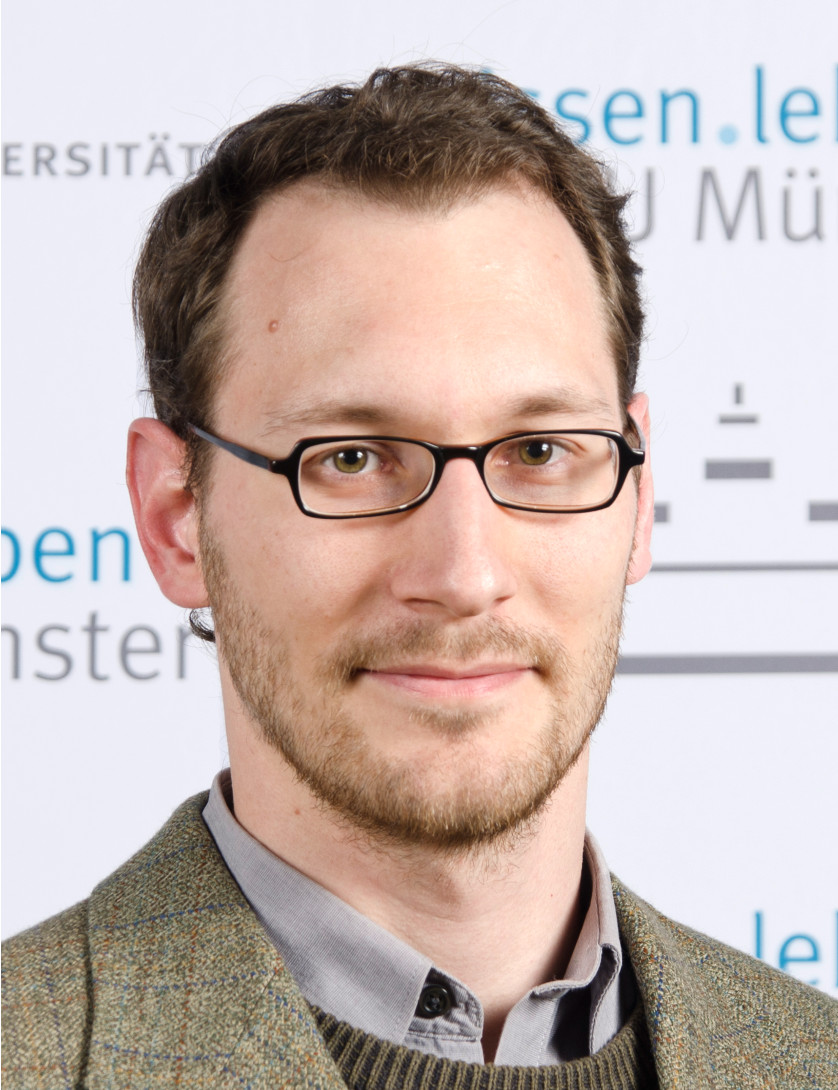
Prof. Dr. Benedikt Wirth is a Professor of Mathematics at the University of Münster, Germany, affiliated with the Institute for Analysis and Numerics within the Department of Mathematics and Computer Science. He is an active researcher and educator specializing in optimization and calculus of variations, with significant contributions to mathematical imaging and shape analysis. His research interests include image processing, scientific computing, numerical analysis, optimization, shape spaces, geodesics in shape space, variational methods, elastic deformation, and optimal transport. Wirth has developed innovative mathematical frameworks for shape analysis, particularly focusing on Riemannian metrics for shape spaces and variational approaches to shape comparison and optimization. His recent publications (2023-2025) demonstrate continued leadership in mathematical optimization, with particular focus on PET reconstruction, dimension reduction techniques, manifold embeddings, and branched transport theory. His work bridges theoretical mathematics with practical applications in medical imaging and computer vision, showing particular strength in connecting geometric analysis with computational methods. CRC 1450 - A05: Targeting immune cell dynamics by longitudinal whole-body imaging and mathematical modelling CRC 1450 - A06: Improving intravital microscopy of inflammatory cell response by active motion compensation EXC 2044 - C1: Evolution and asymptotics EXC 2044 - C2: Multi-scale phenomena and macroscopic structures EXC 2044 - C3: Interacting particle systems and phase transitions EXC 2044 - C4: Geometry-based modelling, approximation, and reduction Prof. Wirth actively supervises numerous bachelor's and master's students, with over 40 theses completed under his guidance since 2015. His teaching portfolio includes courses on inverse problems, numerical methods for partial differential equations, shape spaces, optimization, and optimal transport. He has consistently maintained an active research program while contributing significantly to the education of the next generation of mathematicians.