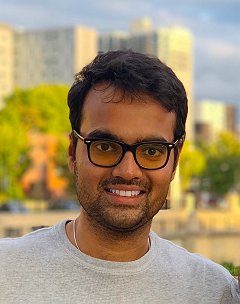
Stefanopoulos Vangelis is a Professor at the University of Patras, affiliated with the Division of Applications and Foundations of Computer Science. His research spans mathematics and computer science, focusing on theoretical and applied problems. University: University of Patras Department: Division of Applications and Foundations of Computer Science Academic Rank: Professor Research Interests: His work centers on Partial Differential Equations, Dynamic Systems, and Applied Analysis, with applications in mathematical physics, algorithmic modeling, and computational theory. Key areas include eigenvalue problems, universal series, and stability analysis. Email: vstefan@ceid.upatras.gr Office Hours: Tuesday (9:00-11:00, 10:00-11:00 when no meetings), Friday (12:00-14:00) or by appointment.
Symeon Retalis is a Professor at the Department of Digital Systems, School of Information and Communication Technologies, University of Piraeus, specializing in Design Models for Technologically Supported Learning. With over 15 years of experience, he has established himself as a leading researcher in educational technology and learning systems design. Professor Retalis has authored more than 150 research articles and has served as principal investigator and coordinator for over 30 international research projects funded by the European Union, national grants, and major technology companies including Google. His work focuses on designing innovative interactive learning systems and educational games that enhance children's skill acquisition. His recent research shows a strong emphasis on embodied and multimodal learning approaches, particularly for early childhood education. He has developed several innovative educational tools including CADMOS (a learning process design tool), LAER (a learning data analysis tool for Moodle), WWFEducationalAtlas (a digital game), and ComicStripCreator. His publications demonstrate expertise across educational technology, learning analytics, game-based learning, and special education technologies. Professor Retalis received significant recognition as the "reviewer with great influence" from ACM Computing Reviews in June 2017. His research teams have also earned distinctions in international competitions including Microsoft ImagineCup and Intel Business Challenge. As the scientific director of CoSyLlab (Computer Supported Learning Engineering Lab), he mentors doctoral students and leads research teams in developing cutting-edge educational technologies. His work bridges theoretical research with practical applications through collaborations with educational institutions worldwide. Professor Retalis actively contributes to the academic community as a reviewer for prominent international journals in Learning Technologies and has delivered approximately 30 invited speeches at international conferences globally.
Antonis Dimakis serves as an Assistant Professor in the Department of Informatics at Athens University of Economics and Business (AUEB), School of Information Sciences and Technology, specializing in theoretical and applied network systems analysis. His academic credentials include: Bachelor's in Computer Science, University of Crete (1996) Master's in Computer Science, University of Crete (1999) PhD in Electrical Engineering and Computer Sciences, UC Berkeley (2006) Research focuses on Queuing Theory, Applied Probability, and Network Control algorithms, addressing stability conditions and congestion management in communication networks through fluid limit techniques and stochastic modeling. His work bridges theoretical frameworks with internet traffic optimization. Publication trends reveal sustained contributions to queueing network analysis since 2002, progressing from traffic modeling in multiplexers to current research on slowly varying environments, emphasizing approximation methods and second-order stability properties. No scientific awards are documented in the provided materials. Advising activities and research grants remain unspecified, though his PhD thesis 'Stability and Approximation of Queueing Networks' indicates foundational expertise. Laboratory affiliations or team structures are not referenced.
Dimitrios Soudris is a Professor at the School of Electrical and Computer Engineering, National Technical University of Athens (NTUA), leading the Microprocessor and Digital Systems Lab (MicroLab). Previously, he served as Lecturer, Assistant, and Associate Professor at Democritus University of Thrace from 1995 to 2008. Diploma in Electrical Engineering (1987), University of Patras PhD in Electrical Engineering (1992), University of Patras His research focuses on Embedded Systems , Reconfigurable Architectures (FPGAs) , Hardware Accelerators for data centers/space/cloud, Edge Computing , and Low Power VLSI Design . Recent publications highlight trends in: AI/ML acceleration for edge and space applications Secure FPGA architectures for 6G networks Energy-efficient heterogeneous memory systems Approximate computing techniques Transformer optimization for low-power contexts Scientific Awards: INTEL and IBM awards (project LPGD #25256) HiPEAC, DAC, and ISCA awards (2010–2024) XILINX Open Hardware Design Contest (2017, 2019, 2021) He has coordinated >70 R&D projects funded by the European Commission, ENIAC-JU, ESA, and industry partners. As Associate Editor of ACM TODAES and conference chair (PATMOS, VLSI-SOC), he contributes to academic leadership. His lab, MicroLab, specializes in hardware-software co-design for emerging computing paradigms.
Shachar Itzhaky is an Associate Professor in the Department of Computer Science at Technion - Israel Institute of Technology, Haifa. His research spans multiple areas of programming languages, formal methods, and software engineering, with a focus on making program development and verification more accessible and efficient. He has served on program committees for numerous prestigious conferences including PLDI, POPL, SPLASH, and ICFP. Dr. Itzhaky's research interests center around program synthesis, automated reasoning, and formal verification. His work in program synthesis explores techniques for automatically generating programs from high-level specifications, with applications in end-user programming and software development. In automated reasoning, he has made significant contributions to e-graph based reasoning, invariant inference, and property-directed verification. His research in formal methods focuses on practical applications for program verification, particularly for data structures and security properties. An analysis of his recent publications reveals a strong focus on leveraging advanced formal techniques for practical program understanding and generation. His work consistently bridges theoretical foundations with practical applications, particularly in program synthesis, verification, and end-user programming tools. The trend shows increasing integration of machine learning techniques with traditional formal methods, as well as expanding applications to security and privacy domains. ACM SIGPLAN John C. Reynolds Doctoral Dissertation Award Dr. Itzhaky has been actively involved in the programming languages research community, serving on numerous program committees and contributing to the advancement of formal methods and program synthesis. His work has practical implications for software development tools, security analysis, and end-user programming environments. While specific grant information isn't detailed in the provided text, his extensive publication record in top-tier venues suggests successful funding for his research endeavors. His work on projects like Object Spreadsheets and Lifty demonstrates a commitment to creating practical tools that address real-world programming challenges. Dr. Itzhaky's research is conducted within the vibrant programming languages and formal methods group at Technion's Computer Science department. His work intersects with multiple research threads including program synthesis, verification, and security, suggesting collaboration across these areas within the department. His tools like EPR-based Verification, PDR∀, and VeriCon represent significant technical contributions that likely form the basis of ongoing research projects with students and collaborators.
Rajiv Gupta is a Distinguished Professor and the Amrik Singh Poonian Professor of Computer Science at the University of California, Riverside (UCR), where he serves as Associate Dean for Academic Personnel in the Bourns College of Engineering (BCOE). He is a member of the RIPLE research group and has co-authored 327 papers with an h-index of 69 and over 16,600 citations. His extensive service includes chairing major conferences such as FCRC 2015, PPoPP 2020, ASPLOS 2011, and PLDI 2008. Professor Gupta's research focuses on Programming, Compiler, Runtime & Architectural Support for Parallel & Distributed Heterogeneous Systems and Software Tools for Monitoring and Managing Runtime Behavior . His work spans graph analytics with scalability and performance, understanding and managing the dynamic behavior of parallel programs, software speculation for irregular parallelism, dynamic program analysis for secure and reliable computing, and compiler optimizations with architectural support. His research has significant applications in high-performance computing, GPU programming, and distributed systems. Analysis of his recent publications reveals a strong focus on graph processing systems, with particular emphasis on evolving and streaming graph analytics. His work addresses critical challenges in memory management for large-scale graph processing, hardware acceleration for graph algorithms, and optimization techniques for concurrent and distributed graph computations. The research demonstrates a progression from foundational compiler and architecture work to increasingly sophisticated systems for handling modern data-intensive computing challenges. Fellow of the ACM (2009) Fellow of the IEEE (2008) Fellow of the AAAS (2011) NSF Presidential Young Investigator Award (1991) UCR Doctoral Dissertation Advisor/Mentor Award (2012) Multiple best paper awards across major conferences Two students won ACM SIGPLAN Outstanding Doctoral Dissertation Award Five advisees received NSF CAREER Award Professor Gupta has supervised 42 PhD students to completion and currently advises several doctoral candidates. His advising success is reflected in his students' achievements, including multiple award-winning dissertations and significant career accomplishments in academia and industry. His research has been supported by numerous grants from NSF, DARPA, and industry partners, enabling sustained investigation into parallel computing systems. The RIPLE research group under his leadership has produced influential work that bridges theoretical foundations with practical system implementations. As the leader of the RIPLE research group at UC Riverside, Professor Gupta oversees a vibrant team focused on innovative approaches to parallel and distributed computing. The group maintains strong collaborations with industry partners and other academic institutions, contributing to the development of next-generation computing systems. Current projects include GRASP (Graph Analytics with Scalability & Performance) and research on understanding and managing the dynamic behavior of parallel programs, reflecting the group's continued focus on cutting-edge computing challenges.
Umang Mathur is a Presidential Young Professor (Assistant Professor) in the School of Computing at the National University of Singapore (NUS), where he leads the FOCS Lab and is affiliated with PLSE@NUS (Programming Languages and Software Engineering group). He has established himself as a leading researcher in Formal Methods, with significant contributions to concurrency analysis and program verification. Dr. Mathur received his PhD from the University of Illinois at Urbana-Champaign under Prof. Mahesh Viswanathan. Prior to joining NUS, he worked as a Research Scientist at Facebook Inc. and as a Research Fellow at the Simons Institute for the Theory of Computing. His doctoral work was supported by a Google PhD Fellowship. PhD: University of Illinois at Urbana-Champaign Current Position: Presidential Young Professor at NUS School of Computing Previous Positions: Research Scientist at Facebook, Research Fellow at Simons Institute His research spans Formal Methods and Logic with applications to Programming Languages, Software Engineering, and Cyber-Physical Systems. Dr. Mathur specializes in developing algorithmic techniques for analysis of concurrent software and understanding decidability boundaries in verification and synthesis. His work bridges theoretical foundations with practical implementations, making verification techniques more efficient for real-world systems. Analysis of his recent publications reveals a strong focus on practical concurrency analysis, with many papers addressing race detection, deadlock prediction, and memory model verification. His research consistently demonstrates how theoretical computer science can solve practical software engineering challenges, particularly in making verification techniques scalable and efficient for industrial applications. Google PhD Fellowship ESEC/FSE 2018 Distinguished Paper Award ASPLOS 2022 Best Paper Award POPL 2023 ACM SIGPLAN Distinguished Paper Award CPP 2024 Distinguished Paper Award Dr. Mathur actively mentors numerous PhD students, Master's students, and undergraduates through the FOCS Lab. His research group has received support from Google Research grants and other funding sources. He serves on program committees for major conferences including PLDI, POPL, and ASPLOS, and has organized events like PLMW@PLDI. His teaching includes courses on Data Structures and Algorithms, Foundations of Logic in Computer Science, and advanced topics in Programming Languages. As director of the FOCS Lab, Dr. Mathur oversees a vibrant research group focused on foundational aspects of computer science with direct applications to programming languages and software engineering. The lab maintains strong international collaborations and regularly publishes in top-tier venues, reflecting its significant contributions to the field of formal methods and programming languages.
Erez Petrank is a Professor of Computer Science at the Technion - Israel Institute of Technology, where he holds the Andrew and Erna Viterbi Chair. His academic career spans decades with significant contributions to systems research, particularly in memory management and concurrent programming. He has maintained continuous academic service through leadership roles in major conferences including SPAA'24, ISMM 2023, and PPOPP 2021. His research focuses on concurrent computing, programming languages, and systems with special emphasis on memory management. Additional interests include parallelism, cryptography, data structures, approximation algorithms, and distributed computing. Petrank's work bridges theoretical foundations with practical systems implementation, particularly evident in his persistent memory research and garbage collection innovations. Petrank's publication record shows consistent contributions to ACM SIGPLAN conferences over two decades, with recent work focusing on non-volatile memory systems, lock-free data structures, and memory reclamation techniques. His research demonstrates a clear trajectory from foundational memory management concepts toward modern persistent memory architectures, reflecting adaptability to evolving hardware paradigms while maintaining theoretical rigor. H-index: 41 (Google Scholar) Erdos number: 2 62 co-authors across diverse research collaborations Petrank has mentored numerous researchers through his academic position and conference leadership roles, serving on program committees for major venues including PLDI, PPoPP, and ISMM. His professional service includes executive committee membership in ACM SIGPLAN (2009-2012) and steering committee roles for multiple conferences. He maintains active research collaborations with institutions worldwide, as evidenced by his extensive co-author list spanning theoretical computer science to practical systems implementation. His academic lineage traces back through Oded Goldreich, Shimon Even, and Hao Wang to intellectual giants including Isaac Newton and Galileo Galilei, reflecting deep roots in theoretical computer science and mathematics.
Orestis Telelis is an Assistant Professor at the University of Piraeus, specializing in Algorithms Design, Computational Complexity, and Algorithmic Game Theory. His current research focuses on Mechanism Design, Pricing Algorithms, and Approximation Methods for computationally hard problems. Education: Degree in Informatics and Telecommunications, National and Kapodistrian University of Athens (2001) M.Sc. in Advanced Information Systems, National and Kapodistrian University of Athens (2003) Ph.D. in Theoretical Computer Science, National and Kapodistrian University of Athens (2006) Post-doctoral Research: Evry-Val d’Essonne University, France (2007) Aarhus University, Denmark (2007-2009) Center for Mathematics and Computer Science (CWI Amsterdam), Netherlands (2009-2010) Research Associate, University of Liverpool, UK (2010-2012) Athens University of Economics and Business, Greece (2012-2014) Awards and Funding: Allain Bensoussan Fellowship, European Research Consortium for Informatics and Mathematics (ERCIM, 2009-2010) Research funding from General Secretariat of Research and Technology, Greece (2012-2014)
Dimitrios Karapiperis serves as an Academic Scholar at the School of Science and Technology, International Hellenic University (IHU), specializing in Entity Resolution and Privacy-Preserving Record Linkage. Previously, he held a post-doctoral position at the Hellenic Open University. He earned his PhD from the Hellenic Open University and his MSc from the University of York (UK). His doctoral thesis was featured in the IEEE Intelligent Informatics Bulletin of August 2017, highlighting its significance in the field. Dr. Karapiperis' research centers on developing advanced algorithms for entity resolution, including similarity measures, data structures, and scalable distributed solutions using randomization techniques. His work extends to privacy-preserving methods for record linkage with applications in electronic health records, cryptocurrency analysis, and social media sentiment. He has made significant contributions to efficient record linkage in data streams and spatio-temporal data through innovative blocking techniques and approximation schemes. His recent publications (2020-2022) reveal a consistent focus on scalable and privacy-aware record linkage, with increasing applications in financial technology and affective computing. Collaborations with prominent researchers like V.S. Verykios have resulted in numerous publications in top venues including IEEE Big Data and IEEE TIFS, demonstrating expertise in both theoretical foundations and practical implementations. Scientific Recognition Doctoral thesis featured in IEEE Intelligent Informatics Bulletin (2017) Research Projects University of York: Development of Java servlets for converting VisioXML into GSML within the High Integrity Systems Engineering research group University of Macedonia: Standardization of distance learning systems University of Macedonia: Establishment of a data bank for the fur sector in Kastoria University of Macedonia: System for organizing business processes of the Ministry of Macedonia and Thrace Dr. Karapiperis has collaborated with research teams across multiple institutions, contributing to diverse projects from healthcare data integration to government business process optimization, while maintaining active research in scalable entity resolution methodologies.
Dr. Nikolaos Bakas serves as an Assistant Professor in the Information Technology Department at the School of Liberal Arts and Sciences, The American College of Greece, Deree. His academic profile centers on bridging theoretical mathematics with practical machine learning implementations through rigorous algorithmic development. His research program focuses on fundamental mathematical modeling of machine learning systems , with specialized expertise in Numerical Methods and High-Performance Computing (HPC) . Key contributions include stochastic optimization algorithms (notably the ITSO framework), gradient-free neural network training techniques, and computational mechanics applications. This interdisciplinary work connects theoretical mathematics with engineering solutions in structural analysis and environmental risk assessment. Analysis of his 2019-2023 publications reveals a clear trajectory toward practical HPC implementations of machine learning frameworks, with increasing emphasis on domain-specific applications. His research consistently addresses computational efficiency challenges while maintaining mathematical rigor, particularly in stochastic search methods and partition-based approximation systems. As Principal Investigator for multiple industry and academic projects, Dr. Bakas demonstrates active research leadership with direct organizational consulting experience. His project portfolio indicates strong translation of theoretical research into real-world AI and HPC adoption, though specific grant details remain undisclosed.