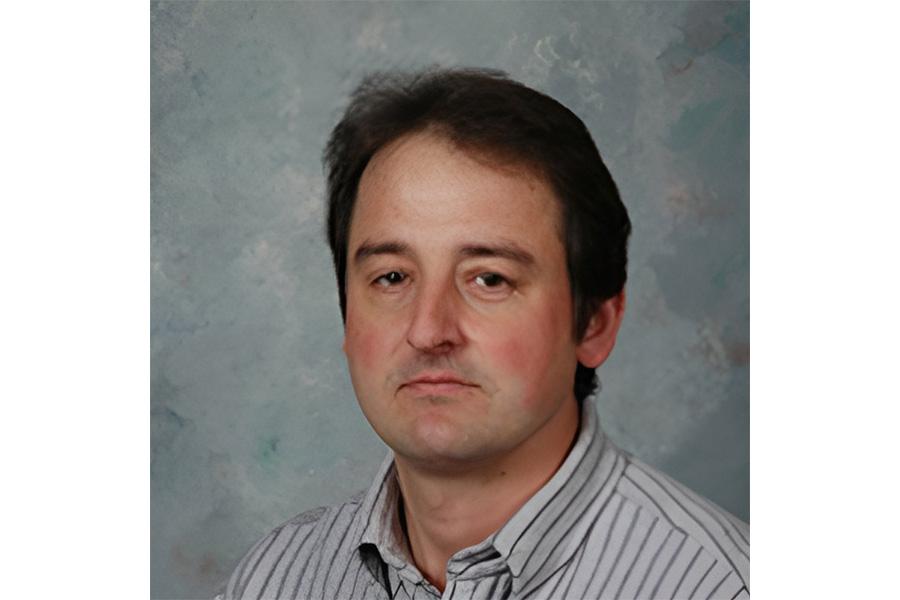
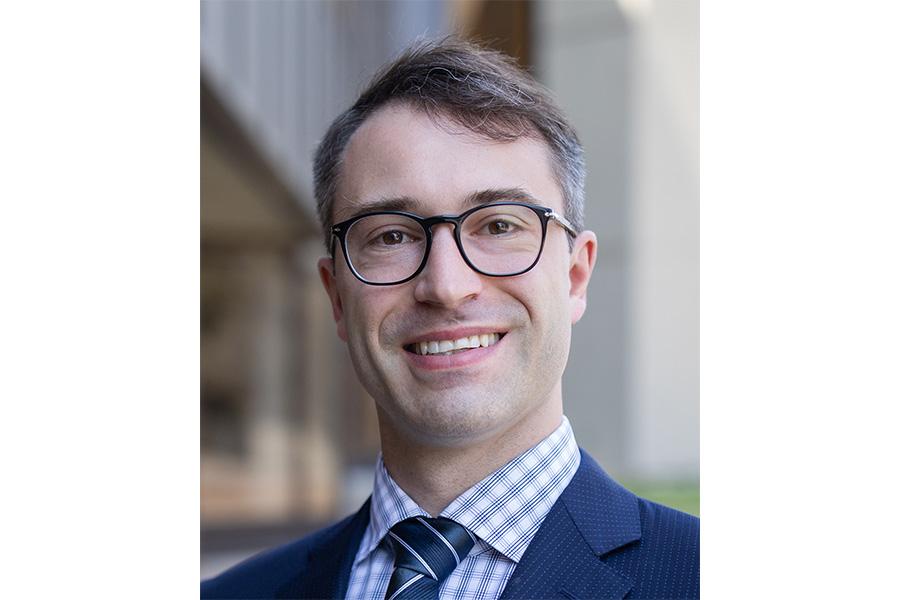
Susanne Bradley is a Teaching Professor in the Department of Computer Science at the University of British Columbia (UBC). She specializes in algorithm design, parallel computation, and numerical analysis. Her teaching responsibilities include courses such as CPSC 320 (Intermediate Algorithm Design and Analysis) and CPSC 418 (Parallel Computation). Her research focuses on preconditioners for saddle-point systems, eigenvalue analysis, and innovative educational methodologies like inverted two-stage exams. Bradley’s academic contributions span numerical linear algebra, computational methods, and biomechanical simulation. She has published extensively on topics such as eigenvalue bounds for saddle-point systems and the application of machine learning in sensorimotor control. Her work emphasizes practical solutions for complex computational challenges and pedagogical innovations to enhance learning outcomes. Her office is located in ICCS 241, and she can be reached at smbrad@cs.ubc.ca .
Margarida Carvalho is an Associate Professor in the Department of Computer Science and Operations Research at Université de Montréal, where she holds the FRQ-IVADO Research Chair in Data Science for Combinatorial Game Theory. She is also an Associate Academic Member at Mila (Quebec AI Institute), contributing to their research in AI for Humanity. Her academic journey spans from Portugal to Canada, where she has established herself as a leading researcher at the intersection of operations research and game theory. Carvalho earned her bachelor's and master's degrees in mathematics from the Faculty of Sciences of the University of Porto (FCUP), followed by a PhD in Computer Science from the same institution in 2016. Her doctoral work, which focused on game theory applications for kidney exchange programs, earned her the prestigious 2018 EURO Doctoral Dissertation Award, making her the first Portuguese woman to receive this honor. After completing her PhD, she worked as an IVADO Postdoctoral Fellow at Polytechnique Montréal before joining Université de Montréal as an Assistant Professor in 2018. Her research focuses on combinatorial optimization and algorithmic game theory, with applications spanning healthcare (kidney exchange programs, hospital operations), sustainable development (electric vehicle infrastructure, urban planning), and education (school choice systems). She develops novel mathematical programming approaches to model and solve problems involving multiple decision-makers with potentially conflicting objectives. Her work bridges theoretical advances in optimization with practical implementations that address real-world challenges in resource allocation and decision-making under uncertainty. Notably, her research on fairness in kidney exchange programs has contributed to more equitable organ allocation policies. Her 15 most recent publications reveal a strong trend toward integrating game-theoretic concepts with practical optimization challenges, particularly in healthcare and sustainable infrastructure. She has pioneered approaches that balance utilitarian objectives with fairness considerations, developed novel formulations for bilevel and multilevel optimization problems, and created learning-based frameworks for complex decision environments. Her work consistently demonstrates how mathematical rigor can inform practical policy decisions in critical domains. 2018 EURO Doctoral Dissertation Award for her PhD thesis on game theory applications for kidney exchange programs Mathematical Programming 2024 Meritorious Service Award Teaching Excellence Award from Université de Montréal Supervised student Maria Bazotte receiving the Dupačová-Prékopa Best Student Paper Prize in Stochastic Programming Carvalho actively advises graduate students, with Marylou Fauchard (Master's) and William St-Arnaud (PhD) among her current advisees. Her research is supported by grants from Hydro-Québec, the Natural Sciences and Engineering Research Council of Canada (Discovery grant 2017-06054 and Collaborative Research and Development Grant CRDPJ 536757–19), and FRQ-IVADO. She serves as an associate editor for INFORMS Journal on Computing, OR Spectrum, and Dynamic Games and Applications, and is a founding board member and treasurer of the Bilevel Optimization Society. She teaches courses in Mathematical Programming, Operational Research Models, and Discrete Mathematics at Université de Montréal. Carvalho is affiliated with Mila (Quebec AI Institute), where she contributes to research initiatives focused on AI for Humanity, particularly in the areas of algorithmic fairness and sustainable development. Her FRQ-IVADO Research Chair supports her work on combinatorial game theory applications, and she collaborates with researchers across disciplines through the IVADO research community. She has been instrumental in establishing the Bilevel Optimization Society, creating a dedicated forum for researchers working on hierarchical decision-making problems.
Bartosz Protas is a Professor in the Department of Mathematics and Statistics at McMaster University , where he served as Director of the School of Computational Science & Engineering (2009-2019) and currently holds the Chair of the Department. His research bridges computational fluid dynamics, optimization theory, and applied mathematics, focusing on extreme behavior in fluid models, vortex dynamics, and electrochemical systems. Research Themes: Finite-time singularity formation in Navier-Stokes/Euler equations, vortex stability analysis via shape calculus, optimal turbulence closures, electrochemical inverse problems with binder migration and dendrite growth, and Riemann-Hilbert applications in fluid mechanics. Collaborations: Kyoto University (Takashi Sakajo), University of Rouen (Ionut Danaila), University of Michigan (Charles Doering), and industrial partners like General Motors. Awards & Invitations: JSPS Visiting Fellow (2017), SHARCNET Chair (2003), and multiple visiting professorships at top European institutions. Advising: Supervised 15+ Ph.D./M.Sc. students including Diego Ayala (recipient of Canadian Applied Mathematics Society's Cecil Graham Award) and Vladislav Bukshtynov. His recent publications analyze lithium plating in batteries, singularities in 3D Euler flows, and Sobolev gradient methods for PDE optimization.
Deeksha Adil is a Junior Fellow at the Institute for Theoretical Studies in ETH Zurich since January 2023. Her research focuses on designing fast algorithms with provable guarantees for problems in optimization, machine learning, and theoretical computer science. In August 2026, she will transition to an Assistant Professor (Reader) position in the School of Technology and Computer Science at the Tata Institute of Fundamental Research in Mumbai. Ph.D. in Computer Science from University of Toronto (2022), supervised by Prof. Sushant Sachdeva BS-MS in Mathematics from Indian Institute of Science Education and Research, Pune (2017) Visiting Researcher at Simons Institute for Theory of Computation (2023) Research Associate at University of Michigan (2022) Visiting Student at Institute for Advanced Study, Princeton (2019) Dr. Adil's research program centers on algorithm design for optimization problems, particularly lp-norm regression and related challenges. She develops methods that leverage optimization theory and continuous analysis to create efficient algorithms with theoretical guarantees. Her work spans theoretical computer science, machine learning, and numerical analysis, with applications in network optimization and statistical learning. Her publication record shows consistent progress in developing faster algorithms for fundamental optimization problems. Recent work extends into non-convex optimization, covariate shift adaptation, and dynamic algorithms for linear algebra problems. She publishes regularly in top-tier venues including Journal of ACM, NeurIPS, ICALP, and SODA. At the University of Toronto, she served as Teaching Assistant for multiple advanced courses including Algorithm Design, Algorithmic Game Theory, Theory of Computation, and Numerical Analysis, demonstrating strong pedagogical skills alongside her research excellence.
X. Sheldon Lin is a Professor of Actuarial Science at the Department of Statistical Sciences, University of Toronto. His research focuses on actuarial science, specifically in areas like Loss Modelling , Insurance Risk Management , and Financial Insurance . He has authored two influential books in the field: Introductory Stochastic Analysis for Finance and Insurance and Lundberg Approximations for Compound Distributions With Insurance Applications . Research Interests : Actuarial science, mathematical finance, applied probability, loss modeling, insurance risk management, financial insurance, and algorithmic trading. His work includes developing computational models like the GEM-CMM algorithm for fitting Erlang mixture distributions to insurance data and creating R codes for loss modeling. Teaching : Sheldon Lin teaches advanced courses in actuarial science, including ACT452H1S: Loss Models II , where he provides lecture notes, videos, and practice problems for actuarial exams. Scientific Awards ASA (Associate of the Society of Actuaries) ACIA (Associate of the Canadian Institute of Actuaries) Books Authored : Introductory Stochastic Analysis for Finance and Insurance (Wiley Series in Probability and Statistics) Lundberg Approximations for Compound Distributions With Insurance Applications (Lecture Notes in Statistics 156, Springer with Gordon E. Willmot)
Dr. Vladimir Vinogradov is a Professor of Mathematics at Ohio University and holds a status-only appointment at the University of Toronto, Scarborough (UTSC) within the Department of Statistical Sciences. He has affiliations with the Fields Institute as a Visiting Member and has previously served in administrative roles at Ohio University and UTSC. M.Sc. in Mathematics, Moscow State University Ph.D. in Probability and Statistics, Moscow State University Professor Vinogradov's research spans Probability Theory, Stochastic Processes, Mathematical Statistics, Financial Mathematics, and Mathematical Oncology. His work includes extensions of the Feller–Spitzer distribution, properties of Wright functions in probability, and stochastic models in tumor control probability. He has presented at numerous international conferences and contributed to the Fields Undergraduate Summer Research Program. Recent trends in his research include equi-/over-/underdispersion in probability distributions and connections between analysis and probability theory. He has also explored discontinuous superprocess approximations. Scientific Awards: NSERC International Research Fellowship BC Asia Pacific Scholars' Award Japan Society for the Promotion of Science Fellowship Professor Vinogradov has advised Actuarial Science and Mathematical Statistics majors and held leadership roles such as Chair of the Mathematics Promotion and Tenure Committee at Ohio University. He has served as an NSERC Canada external reviewer and graduate coordinator at the University of Northern British Columbia. He has co-organized international conferences, including the International Conference in Probability and Statistics 2022 and International Conference on Analysis, Applications, and Computations 2015 , and maintains an active research presence in probability and statistics.
Debbie Leung is a Research Professor at the University of Waterloo, holding positions in the Department of Combinatorics and Optimization and the Institute for Quantum Computing (IQC). She is a University Research Chair (since 2015) and former Tier II Canada Research Chair (2005–2015). Affiliated with the Perimeter Institute for Theoretical Physics as an Associate Member since 2019, she focuses on quantum information theory, including quantum communication capacities, entanglement, and fault-tolerant computation. Her work bridges foundational quantum physics and practical protocols. Leung earned her Ph.D. in Physics from Stanford University (2000) and B.S. in Physics/Mathematics from Caltech (1995). She has taught courses like Introduction to Quantum Information Processing and Theory of Quantum Information, emphasizing quantum channel capacities and error correction. Her research explores quantum resource capacities, non-additivity phenomena, and cryptographic applications. Current advising includes students like Kohdai Kuroiwa and Andy Liu. Past advisees include notable figures such as Aram Harrow and Andrew Childs. Publications span theoretical quantum communication, including breakthroughs on quantum reverse Shannon theorems and fault-tolerant protocols. She collaborates with leading institutions globally, contributing to foundational and applied quantum science.
Patricia Evans is a Professor and Associate Dean at the Faculty of Computer Science , University of New Brunswick. She holds a B.Sc. from the University of Alberta and M.Sc./Ph.D. from the University of Victoria. Research Focus : Computational Biology, Bioinformatics, Algorithm Design and Analysis, Graph Theory, Parameterized Complexity Current Projects : RNA structure comparison, haplotype inference, biological network analysis, parallelization of dynamic programming Collaborations : Eric Aubanel (UNB), Todd Wareham (Memorial University), Ken Kent (UNB), Jackie Rice (University of Lethbridge) Grants : NSERC, Genome Atlantic, AIF, NBIF Her research applies computer science theory to molecular biology problems, including RNA structure analysis and phylogenetic network modeling. Past work includes FPGA implementations for bioinformatics algorithms and parameterized complexity analysis for motif finding. Publications span 1999-2008, with key topics in RNA pseudoknot detection, haplotyping, and computational complexity. Her lab has mentored 13 graduate students, including 2 Ph.D. graduates.
Przemyslaw Pochec is an Associate Professor at the Faculty of Computer Science , University of New Brunswick, where he has held a faculty position for approximately 27 years. He holds a Master of Science in Computer Science and a Ph.D. from the University of New Brunswick. Research Interests: Data Communication, Image Processing, Three-dimensional Computer Vision His recent research focuses on queueing models for parallel computer systems , data communication system modeling, and stereo vision matching algorithms . While specific grants, awards, or student advisement records are not detailed in the provided text, his work bridges theoretical and applied aspects of computer science, particularly in communication systems and computer vision.
Stephane Durocher is a Professor in the Department of Computer Science at the University of Manitoba. He is affiliated with the Geometric, Approximation and Distributed Algorithms (GADA) Lab , where his research focuses on computational geometry, discrete algorithms, and data structures. His work includes theoretical results in geometric covering, routing, range searching, and wireless communication models. Research interests include: Computational Geometry Discrete Algorithms Data Structures Geometric Optimization Graph Theory Combinatorial Geometry Contact: Office E2-474 EITC, Phone 204-474-8674, Email Stephane.Durocher@umanitoba.ca . He teaches courses such as Advanced Data Structures, Automata Theory, and Computational Geometry.
Julien Arino is a Professor in the Department of Mathematics at the University of Manitoba , specializing in Mathematical Epidemiology and Mathematical Population Dynamics . He is an active member of the Mathematical Biology group and focuses on the role of movement in disease transmission, with applications to both human and animal health. Department of Mathematics Faculty of Science University of Manitoba His research spans: Metapopulation dynamics with explicit movement Multi-pathogen and multi-species transmission modeling Computational epidemiology with data science integration Evaluation of travel control measures for disease variants Recent work includes publications on: Cholera transmission in Chad Multi-species bovine tuberculosis dynamics Measles resurgence patterns Software tools for R compilation and data visualization He maintains a public YouTube channel with lecture videos on Mathematical Epidemiology and contributes open-source code for scientific computing in R and Python. His methodological contributions include novel approaches to plot formatting and computational efficiency in epidemic modeling.
Kirill Kopotun is a Professor in the Department of Mathematics at the University of Manitoba , where he has held a faculty position since at least 1995. His research focuses on approximation theory , particularly in polynomial and spline approximation , moduli of smoothness , and convex/constrained approximation . He actively contributes to numerical analysis , linear algebra , and partial differential equations . Research Themes : Uniform/pointwise estimates for polynomial approximation, applications of Jacobi weights, shape-preserving approximation, k-monotone functions Collaborations : Extensive co-authorship with D. Leviatan , I. A. Shevchuk , and others in approximation theory. Publications span 2019–2015, emphasizing shape-preserving approximation , Jacobi-weighted approximation , and moduli of smoothness . His work appears in journals like Constructive Approximation , Journal of Approximation Theory , and Ukrainian Mathematical Journal . Contact : Office 422 Machray Hall, Kirill.Kopotun@umanitoba.ca
Richard Mikaël Slevinsky is an Associate Professor in the Department of Mathematics at the University of Manitoba. Originally from Edmonton, Alberta, he previously held a postdoctoral position at the University of Oxford and earned his Ph.D. at the University of Sydney under Sheehan Olver, with co-supervision from Hassan Safouhi and Tony Lau at the University of Alberta. Education: B.Sc. in Engineering Physics, M.Sc. in Applied Mathematics, Ph.D. in Applied Mathematics (University of Alberta) Postdoctoral Experience: NSERC Postdoctoral Research Fellow at University of Oxford His research focuses on numerical analysis, scientific computing, and spectral methods for differential/integral equations. He develops high-precision software in Julia for polynomial transforms and function approximation, available on GitHub . NSERC Discovery Grant (2024–2029) Terry G. Falconer Emerging Researcher Award (2022) Research Manitoba Operating Grant (2019–2021) He teaches courses such as Numerical Analysis, Ordinary Differential Equations, and Spectral Methods for PDEs, emphasizing hands-on learning and open-access resources.
Richard S. Sutton is a pioneering researcher and Professor of Computing Science at the University of Alberta, where he serves as Chief Scientific Advisor for the Alberta Machine Intelligence Institute (Amii). He is also a Canada CIFAR AI Chair, Senior Fellow at CIFAR, and Research Scientist at Keen Technologies. Sutton is widely recognized as one of the founders of reinforcement learning, a field in which he continues to lead globally. His work has profoundly shaped modern AI research and applications. Education: B.A., Psychology, Stanford University (1978) M.S., Computer Science, University of Massachusetts (1980) Ph.D., Computer Science, University of Massachusetts (1984) Sutton's research focuses on identifying computational principles underlying intelligence and goal-directed behavior. He emphasizes learning from experience and extending reinforcement learning to create empirically grounded approaches to knowledge representation based on prediction. His work bridges artificial and natural intelligence, exploring how systems can predict and influence the world through learning, perception, action, and cognition. Sutton's research has produced foundational contributions including temporal-difference learning theory, actor-critic algorithms, the Dyna architecture, and Horde architecture. His recent publications reveal a continued focus on reinforcement learning fundamentals while expanding into broader AI applications. The articles show strong emphasis on theoretical foundations, convergence analysis, and practical implementations of reinforcement learning algorithms. There's also evidence of applying these techniques to real-world problems like pandemic forecasting, suggesting growing interest in practical societal applications of his theoretical work. Scientific Awards: 2024 Turing Award (with Andrew Barto) Fellow of the Royal Society (2021) Fellow of the Royal Society of Canada (2016) CAIAC Lifetime Achievement Award (2018) Outstanding Achievement in Research Award, UMass Amherst (2013) Sutton has mentored approximately 60 early-career researchers, including notable figures like David Silver (lead researcher behind AlphaGo), Doina Precup (DeepMind Montreal), Adam White (Amii Fellow), and Cam Linke (CEO of Amii). His Reinforcement Learning & Artificial Intelligence Lab at the University of Alberta has become a global hub for RL research. Sutton is currently collaborating with John Carmack through Keen Technologies to accelerate AGI development, documented in part through 'The Alberta Plan' which outlines his vision for creating long-lived computational agents. Sutton founded the Reinforcement Learning & Artificial Intelligence (RLAI) Lab at the University of Alberta and co-authored the seminal textbook 'Reinforcement Learning: An Introduction' with Andrew Barto. His work has been cited over 130,000 times and featured in major publications including Science, The Economist, New York Times, and Wall Street Journal. He is also known for his 'Tea Time Talks' tradition at Amii, fostering new ideas among researchers and students.
Nikolas Provatas serves as an Adjunct Professor in the Department of Materials Science and Engineering within the Faculty of Engineering at McMaster University. His academic career spans over three decades with extensive contributions to computational materials science, particularly in phase-field modeling techniques. Provatas' research focuses on phase-field modeling, solidification phenomena, microstructure evolution, and computational materials engineering. His work bridges theoretical modeling with practical applications in additive manufacturing, metallurgy, and materials processing. He has developed advanced computational frameworks for simulating solidification processes, phase transformations, and microstructural development in various materials systems including metals, alloys, and nanomaterials. His research has significant implications for understanding fundamental materials phenomena and improving industrial manufacturing processes. Analysis of Provatas' extensive publication record reveals a strong trend toward increasingly sophisticated computational modeling approaches, particularly the phase-field crystal method. His work spans fundamental theoretical developments to practical applications in additive manufacturing, welding, and casting processes. The research shows particular emphasis on understanding microstructure evolution during solidification, phase transformations, and the relationship between processing conditions and final material properties. Provatas has mentored numerous students and collaborated extensively across the materials science community, though specific details of his advising record are not provided in the available information. His research has attracted significant attention, as evidenced by the substantial readership metrics across multiple platforms. His laboratory work centers on computational materials science, developing advanced simulation frameworks to model solidification phenomena, phase transformations, and microstructure evolution across multiple length and time scales. These computational approaches enable detailed investigation of materials behavior that would be challenging to observe experimentally.