- Economic History
- Labor Economics
- Migration Studies
- +۷ مورد دیگر
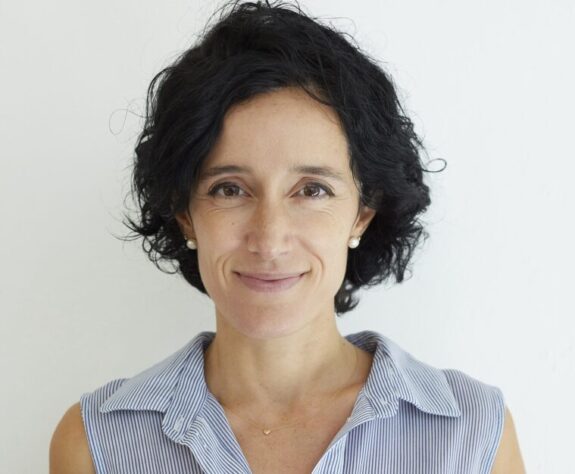
Leah Boustan is a Professor of Economics and Director of the Economic History Program at Yale University. She is a research associate at the National Bureau of Economic Research (NBER), where she co-directs the Development of the American Economy Program, and serves as co-editor of the American Economic Journal: Applied Economics . Her research lies at the intersection of economic history and labor economics, with a focus on migration, intergenerational mobility, and racial economic disparities. She employs large-scale historical datasets, particularly digitized U.S. census records, to study long-term economic trends. Her work has demonstrated that children of immigrants consistently achieve higher economic mobility than children of the U.S.-born, and that immigrants assimilate culturally and economically at rates comparable across historical periods. The themes in her recent publications reflect a strong emphasis on empirical methods, historical data linkage, and policy-relevant findings. Her research spans topics such as immigrant incarceration, enclave effects, occupational assimilation, and the economic impacts of the Great Black Migration. She has also contributed to understanding political discourse on immigration through textual analysis of congressional speeches. Alfred P. Sloan Research Fellowship (2012) IZA Young Labor Economist Award (2019) Fellow of the Econometric Society (2022) Fellow of the Society of Labor Economists (2024) Allan Sharlin Memorial Book Award Alice Hanson Jones Award Boustan has advised major research initiatives such as the Census Linking Project, which enables longitudinal analysis of historical U.S. census data. She has not publicly listed formal PhD or Master’s students in the provided materials. Her work is supported by prestigious fellowships and institutional affiliations, and she plays a key role in shaping research agendas in urban economics and economic history through editorial leadership. She is affiliated with interdisciplinary research teams focused on digitizing and analyzing historical records, and her collaborations with scholars like Ran Abramitzky have produced influential books and policy insights. Future work is likely to expand on big data applications in economic history and intergenerational inequality.