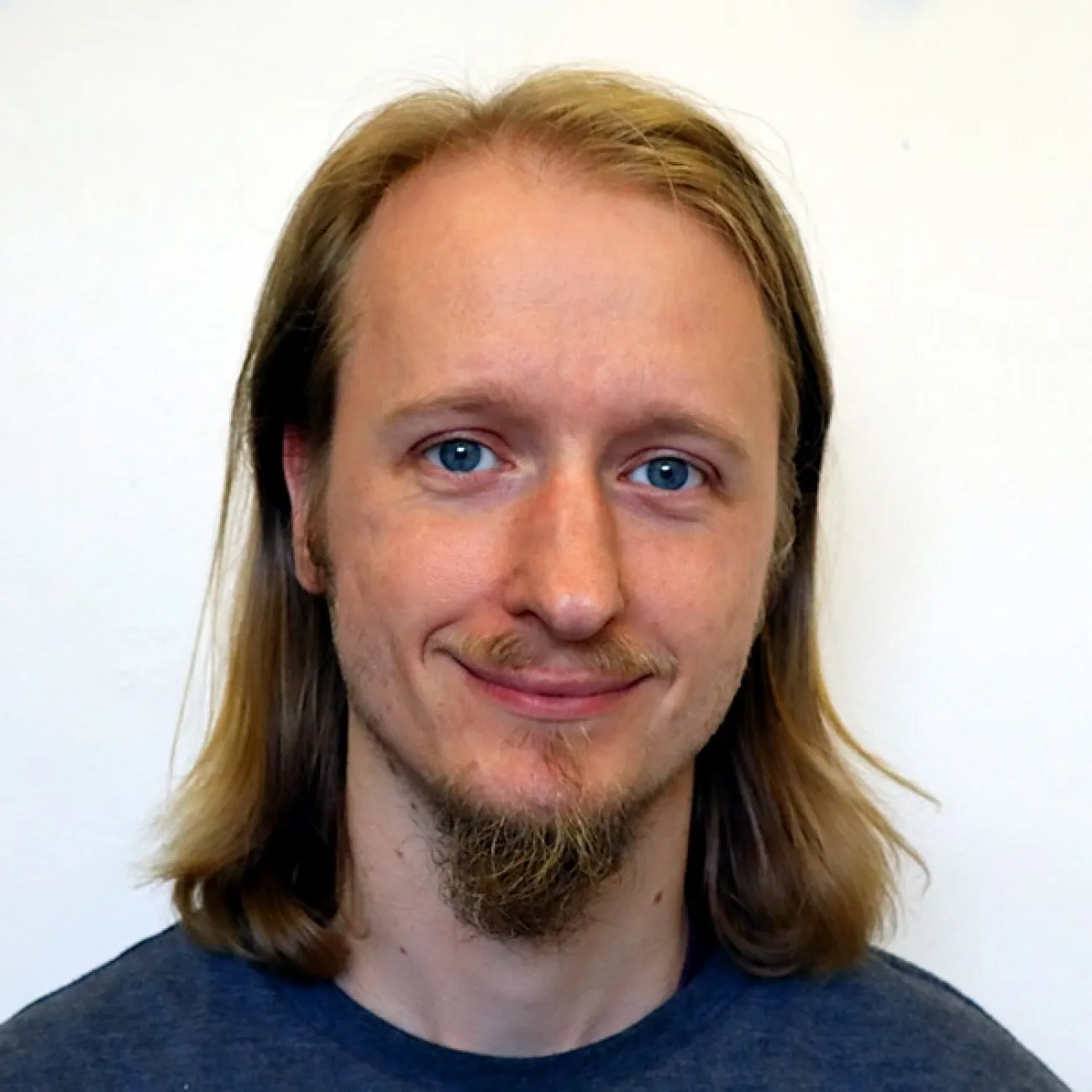
Felix Langfeldt is an Associate Professor and Doctoral Programme Director at the Institute of Sound and Vibration Research (ISVR), part of the Faculty of Engineering and Physical Sciences at the University of Southampton . His work focuses on developing active and passive acoustic metamaterials for low-frequency noise reduction in transport systems and living spaces. Research Interests : Acoustic Metamaterials Low-Frequency Sound Insulation Aircraft Cabin Noise Control Vibro-acoustics of Lightweight Structures Analytical Modeling of Multi-layered Partitions Teaching Roles : Module Lead for Electroacoustics (ISVR6137) since 2022/23 Module Lead for Active Control of Sound and Vibration (ISVR6139) since 2024/25 Lecturer for Theoretical and Computational Acoustics (ISVR3073/6148) since 2023/24 Academic Background : BEng, MSc in Aeronautical Engineering (2012) PhD (2018) on Membrane-type acoustic metamaterials for aircraft noise shields Industry Collaborations : Airbus, 3M. Professional Timeline : 2021: Visiting Academic at ISVR 2022: Lecturer appointment 2023: Doctoral Programme Director 2024: Promoted to Associate Professor
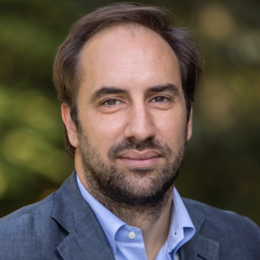
Xinyu Jia is currently a Humboldt Research Fellow at the Engineering Risk Analysis Group, Technical University of Munich since June 2024, and concurrently serves as Associate Professor in the Department of Mechanical Engineering at Hebei University of Technology, China since October 2022. Her research focuses on advancing uncertainty quantification, structural reliability, and risk assessment methodologies for engineering systems. Her academic background includes: PhD in Mechanical Engineering, University of Thessaly, Greece (2018-2021) Bachelor of Engineering and Master of Science in Mechanical Engineering, Hunan University, China (2011-2018) Dr. Jia specializes in Bayesian learning frameworks for physics-based models, with particular expertise in uncertainty propagation in structural dynamics and industrial robotics applications. Her work develops hierarchical Bayesian approaches that integrate multi-level data to enhance predictive accuracy for complex engineering systems, addressing critical challenges in structural health monitoring and risk-informed decision making. Analysis of her 2022-2023 publications reveals a concentrated research trajectory in applying Bayesian inference to structural dynamics, with emphasis on hierarchical modeling techniques, variational inference schemes, and nonlinear model updating. These contributions predominantly appear in top-tier mechanical engineering journals, demonstrating methodological innovations that bridge theoretical statistics with practical engineering reliability problems. Her scientific recognition includes: Humboldt Research Fellowship (2023) Marie Curie Early Stage Researcher Fellowship (2018) No specific student advisement records are documented, though her Associate Professor role implies teaching responsibilities. Her fellowship awards represent significant research funding supporting her work in uncertainty quantification. As an active member of TUM's Engineering Risk Analysis Group, she contributes to high-impact projects including digital twins for ships, S3UQDyn, Navigating Risk, and infrastructure resilience initiatives like BIG-ROHU and INFRA.RELEARN, focusing on probabilistic risk modeling across civil and mechanical engineering domains.
Sami Äyrämö is an Associate Professor at the Faculty of Information Technology , University of Jyväskylä. His research bridges machine learning and health science , focusing on innovative applications in biomechanics , medical imaging , and exercise physiology . Specializes in automated scoring systems for medical diagnostics Pioneer in domain-specific transfer learning for healthcare data Develops synthetic data for wellbeing sector innovation His work spans colorectal cancer tissue analysis , ACL injury risk modeling , and dementia detection from speech , with recent studies applying cluster analysis and deep learning to sports biomechanics challenges. Current projects include the WellbeingDataLab initiative for synthetic exercise data, and collaborations with the Computational Data Science Research Group on spectral imaging and health analytics.
Stefano Bonetti is an Associate Professor in the Department of Physics at Stockholm University , leading the Ultrafast Condensed Matter Dynamics Group . His research focuses on manipulating quantum materials using terahertz (THz) and near-infrared laser fields to study spin dynamics and ultrafast phenomena at nanoscale and femtosecond timescales. PhD in Materials Physics (KTH Royal Institute of Technology, Sweden) MSc in Engineering Physics (KTH) BSc in Technical Physics (Politecnico di Milano, Italy) Recent research efforts involve time-resolved X-ray microscopy to visualize spin currents and magnetization dynamics, leveraging facilities like free-electron lasers. His work bridges experimental physics and applied materials science, aiming to enhance energy efficiency in data storage technologies by understanding ultrafast spin-lattice interactions . Key scientific awards and grants: ERC Starting Grant (2017-2021) Wallenberg Academy Fellow (2018-2023) VR's free grant (2019-2023) International Career Grant (COFUND) (2015-2019) He has contributed to developing THz-based techniques for magnetic control and authored foundational work on spin-wave solitons and nonlinear magnetoelastic coupling . His group collaborates internationally, utilizing advanced synchrotron and free-electron laser facilities.
Dr.-Ing. Ullrich Mönich is a Senior Researcher and Lecturer at the Technical University of Munich (TUM) , affiliated with the Chair of Theoretical Information Technology and leading research activities at the Advanced Communication Systems and Embedded Security Lab (ACES Lab) . Since 2019, he has been instrumental in shaping experimental and theoretical research in 6G communications, physical layer security, and signal processing. Education: Dr.-Ing. in Electrical Engineering, Technische Universität München (2011) – supervised by Prof. Holger Boche Previous affiliations include MIT (2012–2015) and TU Berlin Research Focus: His research spans signal processing, wireless communications, machine learning, and sampling theory , with a strong emphasis on physical layer security , computability in signal processing , and 6G communications . He explores theoretical foundations and practical implementations, including neuromorphic computing, digital twinning, and secure modular coding schemes. Publications & Trends: His recent publications (2023–2025) are heavily concentrated in 6G communications , integrated sensing and communications (ISAC) , semantic physical layer security , and digital twinning . These works often combine theoretical analysis with experimental validation using 5G/6G testbeds and neuromorphic hardware. Teaching & Supervision: Regularly teaches "Foundations of Analog, Digital, and Quantum Computers" (tutorials since 2018) Previously taught "Applied Functional Analysis" and "Advanced Signal Theory" Involved in practical courses like "Software Defined Radio Laboratory" Labs & Teams: He leads the ACES Lab at TUM, which focuses on experimental validation of advanced communication systems, including physical layer security, neuromorphic computing, and 6G testbeds. The lab collaborates with national and international partners, including MIT, and is supported by major funding bodies such as the German Federal Ministry of Education and Research (BMBF) and the German Research Foundation (DFG).
Dr. Erma Perenda serves as Professor and Chair of Distributed Signal Processing at RWTH Aachen University, Germany, leading research within the Department of Distributed Signal Processing. Her contact details include email perenda@dsp.rwth-aachen.de and phone +49 241 80-27879, with office location at Kopernikusstraße 16, 52074 Aachen in the ICT Cubes facility. Her research spans: Distributed Signal Processing Wireless Communications Machine Learning (Deep Reinforcement Learning, Federated Learning) Modulation Classification AI-driven Network Optimization She focuses on solving real-world challenges in wireless systems including hardware impairments, channel variations, and energy efficiency through advanced AI techniques. Analysis of her 2018-2024 publications reveals consistent innovation in applying multi-agent deep reinforcement learning to wireless power allocation, developing robust modulation classification methods resilient to channel impairments, and implementing federated learning for industrial edge computing. Her work bridges theoretical machine learning with practical wireless communication constraints. Scientific Awards: No awards documented in available sources Advising and Grants: No student advisees or grant information provided Labs and Teams: Leads Distributed Signal Processing research group at RWTH Aachen University Based in ICT Cubes building focusing on wireless AI systems
Luka Radic is a Researcher in the Machine Learning Section at the Department of Computer Science, University of Copenhagen. His work bridges theoretical and applied research in machine learning, with a focus on quantum machine learning , large language models , and fairness in AI systems.
A. Lynn Abbott is a Professor in the Bradley Department of Electrical and Computer Engineering at Virginia Tech , specializing in computer vision, biometrics, and AI-driven sensing systems. His work bridges theoretical and applied domains, including autonomous vehicle perception, physiological signal analysis, and secure healthcare monitoring. Education: Ph.D., University of Illinois, 1990 M.S., Stanford University, 1981 B.S., Rutgers University, 1980 Research Interests focus on computer vision for autonomous systems, biometrics using physiological signals, and deep learning applications in transportation safety and healthcare. Recent projects include neural networks for intersection safety modeling and vision-based cardiovascular signal recovery. Publications highlight advancements in graph neural networks for traffic analysis, spatiotemporal filtering for 3D object detection, and privacy-preserving biometric authentication. His work spans disciplines like transportation safety, biomedical signal processing, and computer architecture. Labs & Teams: Affiliated with the Center for Embedded Systems for Critical Applications , contributing to real-time vision systems and hardware-software co-design for safety-critical domains.
Cameron Taylor is an Assistant Professor in the Lampe Joint Department of Biomedical Engineering at UNC Chapel Hill and NC State University . His research focuses on neuromuscular sensing and stimulation , electromagnetics , and computational science . He teaches BMME 385 - Bioinstrumentation and leads the Hi-PHI Lab , which develops transformative human interfacing technologies to restore ability in persons with movement disorders. His work integrates magnetoquasistatics , neural interfacing , and muscle physiology . Ph.D. in Media Arts and Sciences (Biomechatronics) MIT, 2020 M.S. in Media Arts and Sciences (Biomechatronics) MIT, 2016 B.S. in Electrical Engineering Brigham Young University, 2014 A.S. Mesa Community College, 2012 His research interests include novel electromagnetic strategies for sensing and imaging the human body, with applications in wearable technologies and clinical interventions. His lab’s innovations include magnetomicrometry —a first-of-its-kind technology for real-time muscle tissue tracking in humans. Awards : - 2023 Promising Investigator Award from the Rocky Mountain Muscle Symposium Lab and Team : The Hi-PHI Lab, launching Fall 2025, seeks graduate students and postdocs with expertise in electromagnetics , algorithm development , or signal processing . Current advisees include Mahavir Prasad (PhD candidate focused on affordable human interfacing technologies) and John Goebel (PhD candidate working on bioelectronic equipment for tissue measurements). His work has been featured in Physics World , MIT Technology Review , and Electronic Design .
Dr. Taran Rai is a Researcher at the University of Surrey, affiliated with the Centre for Vision, Speech and Signal Processing (CVSSP) and the School of Veterinary Medicine. His work focuses on computational pathology, deep learning for medical imaging, and applying AI to veterinary medicine. Rai holds a PhD and has contributed to advancements in necrosis and mitosis detection in canine tumors, leveraging CNNs and digital pathology. His research interests include AI-driven diagnostic tools, social media listening for health insights, and optimizing neural networks for medical applications. He has published extensively on topics like synthetic histopathology data evaluation, diffusion models, and adaptive thresholding methods in pathology. Rai's recent work explores the integration of large language models with medical imaging (e.g., the IPATH dataset) and addresses challenges in veterinary healthcare through social media data. His studies often bridge computational methods with real-world clinical needs, aiming to improve diagnostic accuracy and patient care.
Brian Hedlund is a Professor in the Department of Life Sciences at the University of Nevada, Las Vegas (UNLV). His research focuses on microbial ecology and genomics, particularly in extremophilic environments such as geothermal springs. He leads studies exploring microbial biodiversity, including 'dark' lineages of bacteria that remain underexplored. Hedlund employs advanced techniques like single-cell genomics, metagenomics, and stable isotope analysis to understand microbial roles in ecological processes. His work bridges fundamental research with applied biotechnology, including biofuels development and disease diagnostics. Hedlund’s research is funded by major agencies like NSF, NASA, DOE, and NIH. He co-authored the SeqCode, a nomenclatural system for naming uncultivated prokaryotes based on genomic data, and serves on grant review panels for national funding bodies. Education: Ph.D., Microbiology, University of Washington B.S., Biology, University of Illinois Research Interests: Microbial biodiversity in extreme environments Functional genomics of uncultivated microorganisms Applications in astrobiology and biotechnology International collaborations, particularly with China Grants & Funding: Major support from NSF, NASA, DOE, and NIH SeqCode development and microbial naming initiatives Labs & Teams: Hedlund collaborates with industrial and academic partners on projects ranging from biofuels to human microbiome studies, emphasizing interdisciplinary approaches.
Marc Roussel is a Professor in the Department of Chemistry and Biochemistry at the University of Lethbridge, affiliated with the Alberta RNA Research and Training Institute. His research focuses on mathematical modeling of biochemical systems, enzyme kinetics, and systems biology. He has authored multiple books, including Foundations of Chemical Kinetics and A Life Scientist's Guide to Physical Chemistry . His work bridges mathematics and biology, emphasizing dynamical systems, delay differential equations, and model reduction techniques. He has received the 2024 Distinguished Teaching Award from the University of Lethbridge. Key research areas include biochemical networks, gene expression dynamics, and metabolic modeling. Roussel collaborates with experimentalists to study complex biological phenomena such as circadian rhythms, somite formation, and enzyme mechanisms. His contributions span theoretical frameworks, computational methods, and interdisciplinary applications in systems biology.
Javier Vela is a University Professor and Associate Chair of the Department of Chemistry at Iowa State University, where he also serves as a faculty scientist with the Ames National Laboratory. His research program focuses on the synthesis and characterization of nanostructured materials with applications in energy conversion, chemical catalysis, and fluorescence imaging, with over one hundred peer-reviewed publications and patents to his name. Dr. Vela received his educational training at prestigious institutions: B.S. (with Honors) in Chemistry from UNAM (2001) M.S. in Chemistry from University of Rochester (2003) Ph.D. in Chemistry from University of Rochester (2005) Following his doctoral studies, he completed postdoctoral research at the University of Chicago and Los Alamos National Laboratory before joining Iowa State University in 2009, where he received tenure in 2015, became a full professor in 2019, and was named University Professor in 2020. Dr. Vela's research program centers on the development of novel nanomaterials, particularly focusing on: Synthesis of nanostructured materials for energy applications Development of inorganic compounds for chemical catalysis Design of fluorescent materials for imaging applications Surface chemistry and structural characterization of nanocrystals Lead-free semiconductor materials for sustainable technologies Advanced solid-state NMR techniques for nanomaterial characterization His group employs a range of advanced techniques including solid-state NMR spectroscopy, dynamic nuclear polarization, and computational methods to understand nanomaterial structure-property relationships at the atomic level. Analysis of Dr. Vela's recent publication record reveals a strong focus on advanced materials characterization techniques, particularly solid-state NMR applications to nanomaterials. His work spans multiple disciplines including materials science, analytical chemistry, and environmental chemistry, with particular emphasis on sustainable energy solutions and advanced characterization methods. A significant portion of his recent work addresses challenges in nitrate reduction for sustainable ammonia production and the development of lead-free semiconductor alternatives through innovative synthesis approaches. Dr. Vela has received numerous prestigious awards and honors: Fulbright Scholar in Italy (2024) ACS Fellow (2021) John D. Corbett Endowed Professor (2020-2023) AAAS Fellow (2018) NSF CAREER Award (2013) Multiple LAS awards including Cassling Innovator (2018) and Early Achievement in Research (2014) ACS Midwest Stanley C. Israel Award (2014) As an educator and mentor, Dr. Vela has directed twenty doctoral and four master's theses while successfully mentoring numerous undergraduate researchers, including three NSF graduate research fellowship awardees. His research has been supported by significant funding including the NSF CAREER Award and various other grants that have enabled his group to investigate nanostructured materials for energy conversion, chemical catalysis, and fluorescence imaging applications. His service to the chemical community includes serving as Councilor for the Ames local section of the American Chemical Society, Program Chair for the Midwest Regional Meeting in 2018, and Treasurer of the Division of Inorganic Chemistry. Dr. Vela leads an active research group focused on inorganic and materials chemistry, with strong connections to the Ames National Laboratory where he has been a faculty scientist since 2010. His group collaborates extensively with researchers across disciplines to address challenges in sustainable energy and advanced materials development, maintaining an active presence in the scientific community through publications, conference presentations, and editorial board service for journals including ACS Energy Letters, Chemistry of Materials, and ACS Applied Engineering Materials.
Edoardo Serra is an Associate Professor in the Department of Computer Science at Boise State University (BSU), a role he has held since July 2021. He previously served as an Assistant Professor at BSU from 2015 to 2021 and holds a joint appointment as a Senior Researcher at Pacific Northwest National Laboratory (PNNL) since June 2021. Since January 2023, he has co-directed the Computing Ph.D. Program at BSU and serves as General Chair of the 2024 ACM CIKM Conference. His academic journey includes a Ph.D. in Computer Science Engineering from the University of Calabria, Italy (2012), followed by postdoctoral positions at the University of Calabria and the University of Maryland. He also served as a Visiting Researcher at UCLA (2010–2011). His research focuses on AI/ML applications in cybersecurity, graph representation learning, generative AI, and robust AI systems. Notable projects include: NSF-funded cybersecurity curriculum integration Department of Defense-funded analysis of terrorist networks Idaho Department of Commerce precision agriculture initiatives Key research areas include graph neural networks, adversarial robustness, and ML-driven security solutions. His work has been recognized with awards such as Best Application Paper (2021) and Best Paper Award (2018). He actively contributes to professional service roles, including program chairs and editorial boards. Current projects emphasize AI ethics, generative models, and scalable graph algorithms. He advises on applied AI consulting for industry and government, focusing on model interpretability and cybersecurity implications.
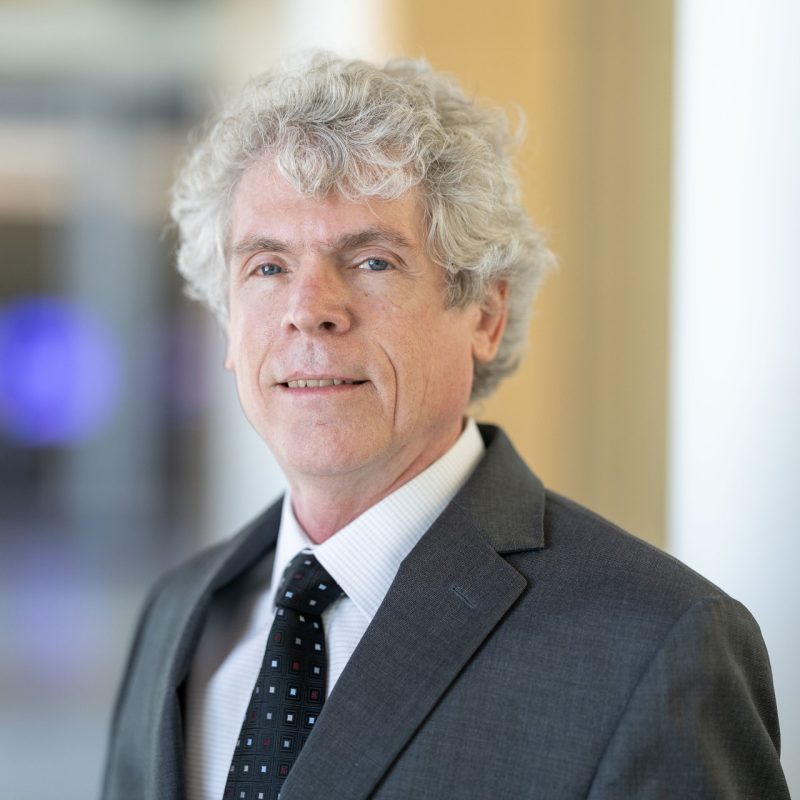
Comlan de Souza is a Professor of Mathematics at Fresno State, affiliated with the College of Science and Mathematics. He holds a Ph.D. in Mathematics from Southern Illinois University at Carbondale. His research focuses on Fourier Analysis, Digital Signal/Image Processing (particularly the phase recovery problem), Numerical Linear Algebra, and B-splines interpolation. Dr. de Souza teaches a wide range of mathematics courses at both undergraduate and graduate levels. His academic contributions include advancing theoretical and applied aspects of his research areas. While no specific articles or awards are listed, his teaching encompasses courses such as Math 6 through Math 271, reflecting his broad expertise in foundational and advanced mathematical topics.