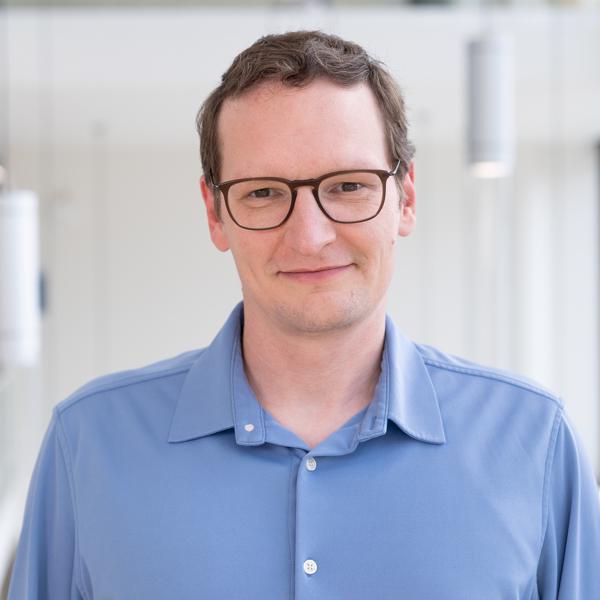
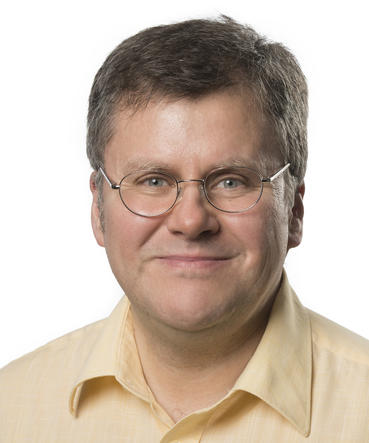
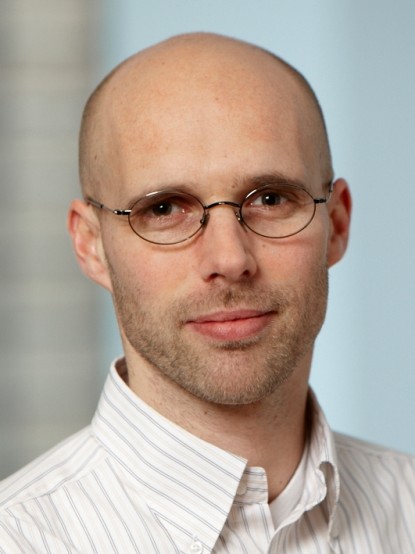
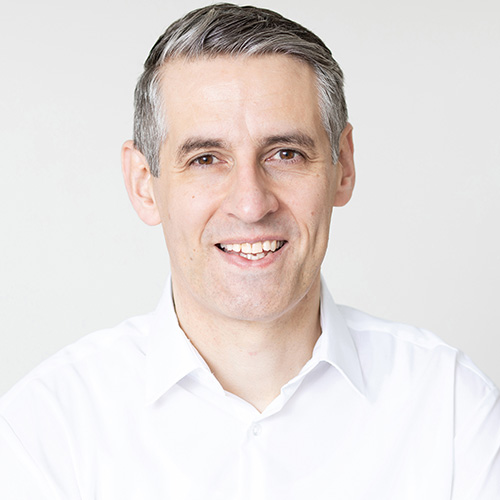
Prof. Dr. Dennis Säring is a faculty member at the University of Applied Sciences Wedel , specifically affiliated with the School of Engineering. His academic and research activities focus on Deep Learning , Medical Image Analysis , and applications of Artificial Intelligence in healthcare and biomedical imaging. He has led seminars on Deep Learning topics and supervised student projects in Autonomous Driving at Audi's AADC 2018 competition. Research Highlights : Cardiovascular imaging, forensic age estimation via MRI, neural network-based bone segmentation, and cerebrovascular aneurysm analysis. Technical Expertise : Cardiac MRI, 3D/4D image processing, parametric mapping, and spatiotemporal data fusion. His recent publications (2018-2023) emphasize 3D MR segmentation for age assessment, CMR strain analysis in athletes, and T1/T2 mapping for myocarditis. Key collaborations include institutions like the University Medical Center Hamburg-Eppendorf and Wedler Hochschulbund, with funding for autonomous vehicle research. While no explicit scientific awards are listed, his work spans clinical cardiology, forensic radiology, and AI-driven medical diagnostics.
Anders Rantzer is a Professor of Automatic Control at the Department of Control Engineering, Faculty of Engineering, Lund University, Sweden. He has held visiting positions at Caltech (2004–2005) and the University of Minnesota (2015–2016) as the Taylor Family Distinguished Visiting Professor. His academic journey began with a PhD from KTH Stockholm in 1991, followed by a postdoc at the Institute for Mathematics and its Applications (IMA), University of Minnesota. His research interests center on modeling, analysis, and synthesis of control systems , with a strong focus on scalability, adaptation, and applications in energy networks . He is particularly known for foundational work in positive systems and integral quadratic constraints (IQCs) . These theoretical frameworks are critical in analyzing stability and robustness of large-scale interconnected systems. His work bridges mathematical rigor with practical engineering applications, especially in sustainable energy and networked systems. The recent publications and lecture materials reflect a consistent trajectory in scalable and robust control, optimization, and distributed systems. Themes such as large-scale convex optimization , nonlinear and stochastic control , and network dynamics dominate his scholarly output, indicating a sustained commitment to advancing control theory for complex, real-world systems. Scientific honors include: Fellow of IEEE Member of the Royal Swedish Academy of Engineering Sciences (IVA) Chairman of the Swedish Scientific Council for Natural and Engineering Sciences Chairman of the Royal Physiographic Society of Lund Rantzer has supervised numerous students and contributed extensively to academic leadership and education. He has been involved in major national and international research initiatives such as WASP (Wallenberg AI, Autonomous Systems and Software Program) and ELLIIT. His work includes developing educational tools and courses in control, optimization, and machine learning. He leads and contributes to research projects on autonomous systems, cloud control, and smart energy networks. He is affiliated with the Control Lab at LTH and participates in collaborative efforts such as the Nordic University Hub on Industrial Internet of Things (HI2OT). His work integrates theoretical advances with practical implementations in robotics, biomedical systems, and industrial automation.
Wolfgang Porod is a Professor of Electrical Engineering and holder of the Frank M. Freimann Chair at the University of Notre Dame. He is also a Hans Fischer Senior Fellow at the TUM Institute for Advanced Study (TUM-IAS) since 2009, affiliated with the Nanoimprint and Nanotransfer Focus Group led by Paolo Lugli. His research focuses on nanoelectronics and quantum devices, notably co-inventing the Quantum-Dot Cellular Automata (QCA) framework, a molecular-scale information processing paradigm. Porod earned his Diplom (M.S.) and Ph.D. from the University of Graz, Austria, and held postdoctoral roles at Colorado State and Arizona State Universities before joining Notre Dame in 1986. He directs Notre Dame’s Center for Nano Science and Technology, advancing interdisciplinary nanotechnology research. His academic accolades include Fellowships from the AAAS (2005) and IEEE (2001), and teaching awards such as the Kaneb Teaching Award (2005) and the Ruth and Joel Spira Award (2000). Porod’s work bridges quantum physics and engineering, with applications in low-power computing, spintronics, and nanoscale device fabrication. At TUM-IAS, he collaborates on nanoimprint lithography and nanotransfer technologies, advancing scalable nanomanufacturing methods.
Anna Levina is an Assistant Professor for Computational Neuroscience at the University of Tübingen , affiliated with the Department of Computer Science under the Faculty of Science. Her research focuses on the self-organization of neuronal activity, critical dynamics in neural networks, and the excitation/inhibition balance in cortical circuits. Current positions: Assistant Professor (since 2018), Group Leader (2017-2018), Equality Officer (Computer Science) Previous roles: IST Fellow (2015-2017), Associated Researcher (2011-2015), Postdoc/PI (2011-2015), Postdoc (2008-2011) Her research integrates mathematical modeling , statistical physics , and computational neuroscience to study criticality phenomena, neural avalanches, and adaptive network dynamics. Key interests include: Self-organized criticality in neural systems Excitation/Inhibition balance mechanisms Network topology and dynamics Timescale analysis in neural processing Stochastic modeling of neural activity Recent publications reveal trends in understanding critical dynamics across biological and artificial networks, with applications to memory systems, sensorimotor integration, and disease modeling. She has received recognition as an IST Fellow .
Prof. Massimo Fornasier holds the Chair of Applied Numerical Analysis at the Technical University of Munich (TUM), within the School of Computation, Information and Technology and the Department of Mathematics. His research focuses on mathematical modeling, numerical analysis, and data-driven methods, particularly in areas like compression, sparse recovery, and optimization. He has made significant contributions to consensus-based optimization, control of multiagent systems, and applications in image/signal processing. Education: PhD in Computational Mathematics, University of Padua (2003) Postdoctoral fellowships at University of Vienna, Sapienza University of Rome, and Princeton University Awards: ERC Starting Grant (2012) START Prize (2011) Prix de Boelpaepe (2009) His work bridges theoretical analysis and computational methods, with applications ranging from compressive sensing to machine learning. Recent research emphasizes consensus-based optimization frameworks and their global convergence properties. Editorial roles include journals like Networks and Heterogeneous Media and Calcolo . He leads research groups in areas such as Data Science and Numerical Analysis at TUM.
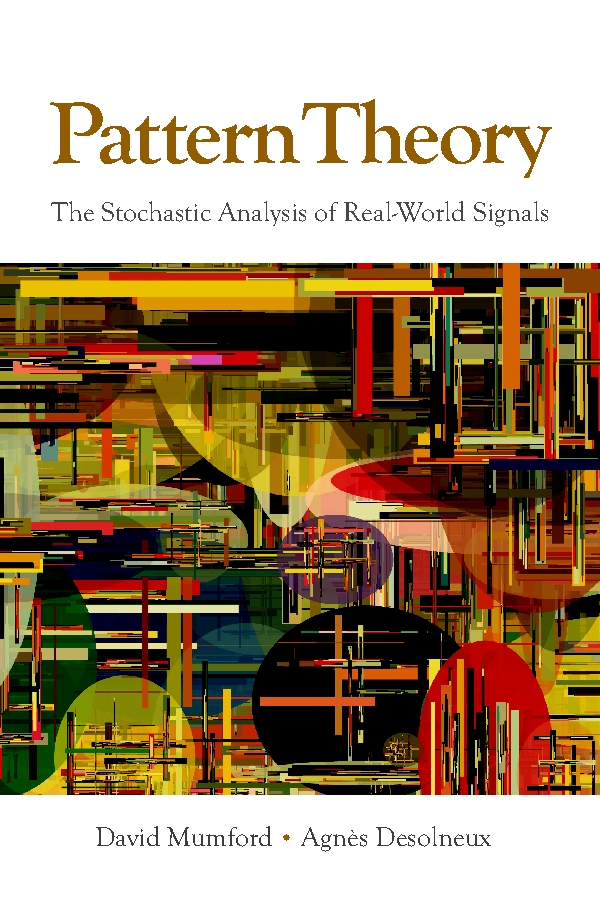
Agnes Desolneux is a CNRS Research Director at the Borelli Centre (formerly CMLA) and a Professor attached to the Mathematics Department at ENS Paris-Saclay. Education: PhD in Applied Mathematics (2000) from ENS Cachan Habilitation in Applied Mathematics (2010) from Université Paris Descartes Her research focuses on image analysis via statistical methods , particularly a contrario approaches, image restoration, texture synthesis, Determinantal Point Processes (DPP), optimal transport, Gaussian mixtures, geometry of random field excursions, shot-noise models, and mathematical modeling of visual perception through Gestalt theory. The articles extracted reflect her expertise in applied mathematics and computer vision , with recent works (2025-2020) on optimal transport algorithms, DPP applications, multiscale texture analysis, and stochastic modeling in medical imaging. Keywords span machine learning, probability theory, medical imaging, and computer vision . She has no listed scientific awards but has authored influential works including the book From Gestalt Theory to Image Analysis: A Probabilistic Approach (Springer, 2008) and Pattern Theory: the stochastic analysis of real-world signals (AK Peters, 2010).
Prof. Dr.-Ing. Ahmad Osman is a Professor at the Saarland University of Applied Sciences (htw saar), specializing in Test Technologies and Test Methods within the Faculty of Engineering. He also holds an Adjunct Professor position at Laval University in Quebec, Canada, in the Department of Electrical Engineering and Computer Science. His research focuses on Artificial Intelligence applications in Signal and Image Processing for Non-destructive Testing (NDT) , with extensive work on Deep Learning , 3D Ultrasound Tomography , and Sensor Data Fusion in industrial contexts. Engineering Artificial Intelligence Signal Processing Image Processing Non-destructive Testing Quality Control Augmented Reality Osman leads the AutomaTiQ research group and serves as Head of the Algorithms/Signal and Data Processing Department at Fraunhofer IZFP . His recent publications (2017–2022) emphasize Deep Learning for defect detection in CFRP , Terahertz Imaging for artwork diagnostics, and Acoustic Sensors for agricultural quality control. He has organized international conferences on Structural Health Monitoring and contributed to Springer books on NDT technologies. His projects include ComforTex-AI (2024) and development of 3D positioners for ultrasound measurements. Collaborations span institutions in Germany, Canada, Italy, and Brazil, with advisory roles in the German Society for NDT and technical committees for conferences in Montreal and Egypt.
Dongwoo Kim is a researcher affiliated with Hanyang University, ERICA Campus (Department of Electronics and Communication Engineering) and has previously collaborated with institutions like POSTECH , Chungnam National University , and Microsoft . His work spans interdisciplinary domains in Computer Science and Engineering . Hanyang University, ERICA Campus - Department of Electronics and Communication Engineering POSTECH - Power Analog Electronics & Semiconductor Devices Lab Microsoft Chungnam National University Kim's research focuses on formal verification of automotive control software, deep learning applications in environmental monitoring, 3D modeling for indoor positioning, and machine learning for signal processing. His recent publications highlight advancements in graph neural networks (GNNs), including analyzing oversmoothing and gradient dynamics, as well as developing geometric vision-language models with domain-agnostic encoders. His 15 most recent articles (2023-2025) address topics like: Optimizing hybrid electric vehicle engine performance 3D modeling for indoor localization GNN training stability UAV-based environmental monitoring Algorithm difficulty prediction for programming problems Millimeter-wave antenna design Kim collaborates with researchers in software engineering , signal processing , and environmental science domains. His work intersects formal methods , applied machine learning , and embedded systems research.
Nils Ole Tippenhauer is a faculty member at the CISPA Helmholtz Center for Information Security , leading the SCy-Phy research group . His academic journey includes an Assistant Professorship at the Singapore University of Technology and Design (SUTD) (2014–2018), a PhD in Computer Science from ETH Zurich (2012), and a Diploma in Computer Engineering from Hamburg University of Technology (2007). He also holds an exchange study year at the University of Waterloo (2004–2005) supported by a DAAD scholarship. Research Interests focus on practical systems security , particularly Security of Cyber-Physical Systems Industrial Control Systems (ICS) and Industrial IoT (IIoT) Physical-Layer Security and Wireless Security Privacy-Preserving Technologies (e.g., DP3T project) Embedded Systems Security Threat Detection & Defenses His work integrates both theoretical and applied approaches, addressing vulnerabilities in critical infrastructures like water systems and power grids. Recent Publications highlight trends in Anomaly detection evasion in industrial networks Microarchitectural side-channel defenses Localization techniques in cellular networks Security analysis of ICS protocols Data-driven vulnerability assessments for robotics Cyber-physical simulation for infrastructure security Scientific Awards include Best paper at DIMVA'23 Distinguished Paper at ACSAC 2022 Best paper at CPSIOTSEC 2022 Best paper at CPSS 2017 K-H Ditze Award for diploma thesis (2007) SG Mark Institution award (2016) Runner-Up at smart energy hackathon (2013) Advising and Grants feature PhD defenses of Daniele Antonioli and Hamid Reza Ghaeini (2022), co-organizing conferences like WiSec and CPSS , and leading projects such as the National Science Experiment (NSE) with 50,000 mobile sensors in Singapore. He also contributed to the DP3T project for privacy-preserving contact tracing. Labs and Teams include the SCy-Phy research group at CISPA and the development of testbeds like SWaT (Secure Water Treatment), WADI (Water Distribution), and EPIC (Electric Power and Industrial Control) at SUTD. These platforms enable hands-on security research in realistic industrial environments.
Joachim Weickert is a Professor of Mathematics and Computer Science at Saarland University where he heads the Mathematical Image Analysis Group since 2001. He received his diploma and Ph.D. in mathematics from the University of Kaiserslautern (1991, 1996), and a habilitation degree in computer science from the University of Mannheim (2001). Prior to his current position, he worked as a research assistant at the University of Kaiserslautern, as a post-doctoral researcher at the universities of Utrecht and Copenhagen, and as an assistant professor at the University of Mannheim. His research focuses on image processing, computer vision, and scientific computing, with special emphasis on techniques based on partial differential equations, variational principles, wavelets, morphological and nonlocal methods, as well as neuroexplicit approaches. He has developed mathematical models and efficient numerical algorithms for image restoration, enhancement, segmentation, compression, optic flow computation, stereo reconstruction, shape from shading, and signal processing methods for tensor fields. These ideas have been successfully applied in industry, biomedical image analysis, and other fields. Analysis of his recent publications reveals a strong trend toward combining traditional PDE-based methods with modern deep learning approaches, particularly in the areas of image inpainting and compression. His work increasingly explores the connections between numerical algorithms for partial differential equations and neural network architectures, demonstrating how mathematical foundations can inform cutting-edge AI techniques while maintaining strong theoretical guarantees. Gottfried Wilhelm Leibniz Prize (2010), considered the most important research award in Germany ERC Advanced Grant (2017) for "Inpainting-based Compression of Visual Data" Elected member of Academia Europaea - The Academy of Europe Jan Koenderink Prize for Fundamental Contributions in Computer Vision (2014) Multiple DAGM Prizes and Best Paper Awards throughout his career AAIA Fellow (2021) and Highly Ranked Scholar (2024) distinctions Professor Weickert has supervised over 250 bachelor's and master's theses and initiated the Master Programme in Visual Computing at Saarland University, the first of its kind in Germany taught in English. He has established numerous interdisciplinary collaborations with colleagues from medicine, bioinformatics, pharmacy, physics, mechatronics, and mechanical engineering. As Principal Investigator for Visual Computing within the Multimodal Computing and Interaction Cluster of Excellence, and former dean of the Faculty of Mathematics and Computer Science (2008-2010), he has played a significant leadership role in advancing visual computing research and education. He heads the Mathematical Image Analysis Group, which has been at the forefront of developing mathematical methods for image analysis. The group maintains strong connections with both theoretical mathematics and practical applications, bridging the gap between fundamental research and real-world implementation across various domains including medical imaging, industrial inspection, and multimedia processing.
Prof. Dr. Robert Blick is a faculty member at the University of Hamburg , leading the Institute for Nanostructure and Solid State Physics under the Faculty of Mathematics, Informatics, and Natural Sciences. He serves as Director of the Center for Hybrid Nanostructures (CHyN) and Head of the Board of Examiners of Nano-Science. Research Focus: Atomic Layer Deposition (ALD), quantum dots, superconducting thin films, biomaterials, and nanomechanical devices. Key Collaborations: Deutsches Elektronen-Synchrotron (DESY), molecular-beam epitaxy groups, Forschungslabor Mikroelektronik Deutschland. His academic contributions span nanoscience, materials growth, and biomedical applications. Current funding includes support from the Deutsche Forschungsgemeinschaft (DFG), Exzellenzcluster CUI, and the Joachim Herz Foundation. The CHyN research group operates a state-of-the-art clean room facility for electron-beam and focused-ion-beam lithography, enabling 8nm feature definition on 6-inch wafers. Applications of his work include memristor technology, quantum devices, and advanced biosensors. His PhD students include Ahmed Alshaikh, Kristian Deneke, Daniel Hensel, Marianna Brede, Daniel Schmidt, Malte Siegmund, and Jan Stelzner. Senior researchers Dr. Stefanie Haugg and Dr. Robert Zierold contribute to materials growth and atomic layer deposition.
Saurabh Bagchi is a Professor at Purdue University, West Lafayette, USA. He holds a PhD in Computer Science from the University of Illinois Urbana-Champaign (2001). His research focuses on distributed systems security, networking, and embedded systems. Key areas include IoT security, cyber-physical systems resilience, and machine learning applications in edge computing. Bagchi's work spans theoretical and applied domains, addressing challenges in distributed algorithms, fault tolerance, and secure communication protocols. His contributions to firmware analysis, serverless computing optimization, and anomaly detection in industrial IoT systems have been widely recognized. He has published over 300 papers in top-tier conferences and journals such as IEEE Transactions on Dependable and Secure Computing, ACM Transactions on Sensor Networks, and CVPR. He collaborates with researchers in academia and industry to advance resilient networked systems, including projects funded by NSF and industrial partnerships. His lab explores cutting-edge topics like federated learning security, edge computing architectures, and game-theoretic approaches to cyber defense.
Prof. Heinz Koeppl is a Professor in the Department of Electrical Engineering and Information Technology at TU Darmstadt. His research focuses on self-organizing systems, systems biology, and control theory, with applications in synthetic biology, robotics, and stochastic processes. He explores interdisciplinary topics such as genetic circuit design, UAV swarm dynamics, and machine learning-driven modeling of biochemical systems. Key research areas include the development of deep learning frameworks for kinetic modeling, Bayesian optimization for riboswitch design, and mean field control theory for sparse networks. His work bridges theoretical foundations with practical engineering solutions, addressing challenges in molecular communication, gene regulation, and robotic swarm coordination. Publications from 2023–2025 highlight advancements in bio-inspired algorithms, swarm intelligence, and computational biology. Notable contributions include studies on RNA-based circuits, active matter dynamics, and optimization strategies for large-scale systems. His research emphasizes interdisciplinary collaboration, leveraging tools from electrical engineering, mathematics, and life sciences. No scientific awards are explicitly listed in the provided text. Advising and grants details are not available. Prof. Koeppl’s lab focuses on integrating systems biology approaches with engineering principles to solve complex problems in healthcare, environmental sustainability, and technological innovation.
Prof. Dr. Martin Burger is a leading scientist at DESY and a Full Professor in the Department of Mathematics at Universität Hamburg, where he leads the Computational Imaging Group. His research bridges applied mathematics, imaging sciences, and machine learning, with a focus on inverse problems, mathematical modeling, and partial differential equations. He has held professorial positions at Universität Münster and FAU Erlangen-Nürnberg prior to his current dual appointment. Full Professor, Universität Hamburg (2023–present) Leading Scientist, DESY, Hamburg (2023–present) Full Professor, FAU Erlangen-Nürnberg (2018–2023) Full Professor, Universität Münster (2006–2018) His research interests include inverse problems, variational regularization, optimal transport, kinetic models, and mathematical modeling in biology and social sciences. He has made significant contributions to imaging reconstruction, sparse neural networks, and the analysis of transformer architectures. His work often integrates theoretical analysis with computational methods, influencing both pure and applied mathematics. The most recent articles reflect a strong trend toward interdisciplinary applications, combining deep learning with PDE-based modeling, analyzing social and biological systems via kinetic and mean-field models, and advancing mathematical imaging through graph-based and optimal transport methods. His publications span high-impact venues in applied mathematics and computational science. Calderon Prize, Inverse Problems International Association (IPIA) ERC Consolidator Grant (2014) Invited speaker at ECM (2021), ICM (2022), and ICIAM (2023) Editor-in-Chief, European Journal of Applied Mathematics (since 2017) Prof. Burger has supervised numerous PhD students and postdoctoral researchers, many of whom appear as co-authors in his publications. His research is supported by major grants, including funding from the German Federal Ministry of Education and Research (BMBF). He is actively involved in collaborative projects across mathematics, physics, and engineering disciplines. He leads the Computational Imaging Group at DESY, fostering a collaborative environment for developing novel mathematical tools in imaging science. The group works on both theoretical foundations and practical implementations, contributing to advancements in tomography, machine learning, and data analysis.
Prof. Dr. Ralph Bock serves as Director of Department 3: Organelle Biology, Biotechnology and Molecular Ecophysiology at the Max Planck Institute of Molecular Plant Physiology in Potsdam, Germany, where he also leads the Organelle Biology and Biotechnology research group. Previously, he held positions as C4 Professor for Plant Biochemistry and Biotechnology at the University of Münster (2001-2004) and Group Leader at the Institute of Biology III, University of Freiburg (1996-2001). His academic credentials include: Habilitation: University of Freiburg, 1999 Doctorate: University of Freiburg, 1996 Diploma: University of Halle, 1993 Prof. Bock's research focuses on plant molecular biology with particular emphasis on chloroplast biology, organelle biotechnology, and molecular ecophysiology. His work spans genetic engineering of plastids, photosynthesis research, plant biotechnology applications, and understanding organelle-nucleus communication. He has made significant contributions to developing chloroplast transformation systems and applying them to molecular farming, metabolic engineering, and understanding fundamental processes in plant cell biology. His research has important implications for sustainable agriculture, bioenergy, and pharmaceutical production, particularly through the development of plant-based systems for producing vaccines and therapeutic proteins. Analysis of Prof. Bock's recent publications (2023-2025) reveals a strong focus on chloroplast biology, genetic engineering, and molecular farming applications. His work spans fundamental research on organelle genetics, photosynthesis, and stress responses, as well as applied research on using plant and algal systems for biopharmaceutical production. A notable trend is the increasing use of advanced genetic engineering techniques, including CRISPR-based approaches, to manipulate organelle genomes. His research also shows growing interest in algal systems as alternative expression platforms for molecular farming, particularly red algae like Porphyridium for producing viral antigens and glycoproteins.