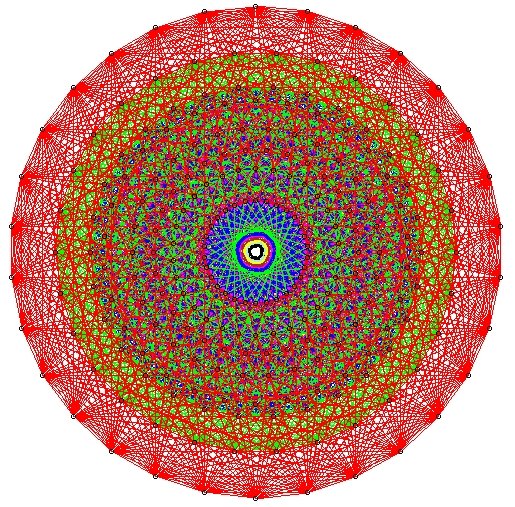
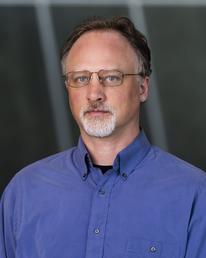
Jeffrey Adams is a Professor in the Department of Mathematics at the University of Maryland , specializing in Lie groups and representation theory . He serves as the Policy Coordinator for Information Technology within the department. University: University of Maryland Department: Mathematics Academic Rank: Professor Email: jda@math.umd.edu Research Interests: Adams' work focuses on computational methods in Lie theory, particularly through the Atlas of Lie Groups and Representations project. His research encompasses unitary representations , Kazhdan-Lusztig theory , and automorphic forms , with significant contributions to the computation of the Unitary Dual using the Atlas software. Scientific Contributions: His publications include foundational studies on real reductive groups, nonlinear simply laced groups, and Shimura correspondences. The atlas software developed by his team enables computation of complex Lie group structures, including unipotent orbits and affine root systems. Teaching: Adams has taught courses such as Math 401 (Applied Linear Algebra) , Lie Groups , and Representation Theory , with video lectures and outlines available for educational outreach.
Professor Elizabeth Baldwin is a Tutorial Fellow in Economics at Hertford College and Roger Van Noorden Fellow at the University of Oxford, holding a professorship in the Department of Economics. She teaches microeconomics to Hertford undergraduates, including first-year microeconomics and a third-year environmental economics paper. Her academic journey began with Mathematics at Oxford: Undergraduate Mathematics (2003) DPhil in Mathematics (2006) MPhil in Economics DPhil in Economics (2014) Her research specializes in microeconomic theory and environmental policy , applying advanced mathematical tools to auction and market design. This work has been implemented by the Bank of England, in renewable energy subsidy auctions, and for turtle dove conservation habitat provision, demonstrating direct policy impact through rigorous theoretical frameworks. Publication trends reveal a strategic shift from pure mathematics (2008 algebraic geometry papers) to applied environmental economics (2012 climate change analysis, 2013 low-carbon energy systems). Her interdisciplinary approach leverages mathematical precision to solve complex real-world problems in energy markets and ecological conservation. Prior to joining Hertford, she held research positions at the Grantham Research Institute (LSE) and Nuffield College, Oxford. Her work consistently bridges theoretical economics with tangible policy applications across banking, energy, and biodiversity sectors.
Eleni Tzanaki is an Assistant Professor in the Department of Mathematics & Applied Mathematics at the University of Crete, Greece. Her office is located in room Δ330 at the Voutes Campus in Heraklion. She can be contacted via telephone at +30-2810-393747 or by email at etzanaki@uoc.gr. Her academic work spans both pure mathematics and educational research, with a particular focus on algebraic and geometric combinatorics as well as innovative approaches to science and physics education. Dr. Tzanaki's research interests center on algebraic and geometric combinatorics, with specific focus areas including: Combinatorics of Coxeter groups Hyperplane Arrangements Polytopes Poset structures, lattices, and patterns Real rootedness of polynomials Her publication record demonstrates a dual research trajectory. From 2016-2021, her work was predominantly in pure combinatorial mathematics, focusing on hyperplane arrangements, lattice paths, and combinatorial structures related to Coxeter groups. More recently (2022-2025), she has expanded her research to include educational applications, particularly examining how artificial intelligence tools like ChatGPT can be effectively integrated into junior high school physics education. This interdisciplinary approach connects her mathematical expertise with practical educational challenges, exploring innovative teaching methods like flipped classrooms and escape-room activities. Dr. Tzanaki appears to be actively involved in interdisciplinary collaborations that bridge mathematics, computer science, and education. Her work on fractal geometry across science, computer science, and art lessons demonstrates her commitment to cross-disciplinary approaches. She is investigating how emerging AI technologies can enhance physics instruction and address student misconceptions in areas like hydrostatic pressure and buoyancy, while maintaining her foundational work in combinatorial mathematics.
Marshall Hampton is a Professor in the Department of Mathematics and Statistics at the University of Minnesota Duluth, part of the Swenson College of Science and Engineering. He holds a Ph.D. in Mathematics from the University of Washington (2002) and a B.S. in Mathematics and Physics from Stanford University (1994). His academic career includes positions as Assistant Professor (2005-2011), Associate Professor (2011-2016), and Professor (2016-present) at UMD, along with visiting positions at institutions in China, France, and South Africa. Ph.D., Mathematics, University of Washington, Seattle, WA (2002) Thesis: Concave Central Configurations in the Four-Body Problem Advisor: C. Robin Graham B.S., Mathematics and Honors in Physics, Stanford University (1994) Honors Thesis: On the electronic structure, magnetism, and spectroscopy of manganese catalase enzyme models Hampton's primary research interests span Mathematical Biology/Bioinformatics, Dynamical Systems, Celestial Mechanics, Vortex Dynamics, Convex Geometry, and Computational Algebra and Geometry . His work bridges pure mathematics with biological applications, particularly in the areas of nectar biochemistry, trypanosome biology, and celestial mechanics. He has developed mathematical models for hibernation physiology, RNA processing in parasites, and plant-pollinator interactions. His interdisciplinary approach combines computational methods with theoretical frameworks to address complex biological questions. Hampton's research output shows a clear trend toward interdisciplinary collaborations, particularly between mathematics and biology. His recent publications demonstrate expertise in both theoretical mathematics (central configurations in celestial mechanics) and applied bioinformatics (RNA processing in trypanosomes, nectar biochemistry). The mathematical techniques he employs range from algebraic geometry and dynamical systems to statistical modeling and computational algorithms. His work often involves close collaboration with biologists, reflecting his commitment to solving real-world scientific problems through mathematical approaches. University of Minnesota Informatics Institute Transdisciplinary Fellowship (2015) Swenson College of Science and Engineering Young Teacher Award (2011) Red Socks Award, SIAM Dynamical Systems meeting (2007) University of Washington NSF VIGRE Graduate Fellowship (1999-2001) Hampton has supervised numerous graduate and undergraduate students, with projects spanning mathematical biology, celestial mechanics, and computational mathematics. His research has been supported by multiple NSF grants (as co-PI on projects related to plant biology), NIH grants (focusing on trypanosome biology), and other funding sources. He has served as Director of Graduate Studies for the Mathematics Department (2020-2023) and on the SCSE Executive Committee (2016-2022). Hampton is actively involved in the Sage mathematical software project and has developed educational materials including "Mathematical Foundations of Bioinformatics" and "Introduction to Differential Equations with Sage." He has organized departmental demonstrations for UMD Science Day and participated in "Math on a Stick" at the Minnesota State Fair, demonstrating his commitment to mathematics education and public outreach.
Gergely Kiss is a Research Fellow at the Alfréd Rényi Institute of Mathematics, specializing in functional equations, Fourier analysis, and discrete geometry. He earned his PhD at Eötvös Loránd University under Miklós Laczkovich. Research Interests : Exponential bases, spectral theory, tiling theory, measure theory, and additive combinatorics. Teaching : Lectured at Eötvös Loránd University (2020-2023), Budapest University of Technology and Economics, and University of Luxembourg. Collaborations : Worked with researchers like Zoltán Balogh, Máté Matolcsi, and Gábor Somlai on tiling problems and functional equations. His recent publications focus on geometric rigidity, tiling conditions, and algebraic solutions to functional equations. He actively participates in workshops on additive combinatorics and Fourier analysis.
Joseph Kileel is an Assistant Professor in the Department of Mathematics at the University of Texas at Austin, with additional appointments as a Core Faculty Member of the Oden Institute for Computational Engineering and Sciences and as a member of the Machine Learning Laboratory. His academic journey includes a Ph.D. in Mathematics from UC Berkeley (2017) under Bernd Sturmfels and a postdoctoral fellowship at Princeton University (2017-2020) with Amit Singer. Professor Kileel's research spans applied mathematics, mathematical data science, and computational algebra, with particular expertise in inverse problems for imaging science, tensor methods, and non-convex optimization. His work has important applications in cryo-electron microscopy, 3D reconstruction, and mathematical theory for machine learning algorithms. His research program is supported by the NSF, DOE, and Sloan Foundation. His publication record demonstrates consistent high-impact contributions across multiple venues including IEEE Transactions, SIAM journals, Foundations of Computational Mathematics, and NeurIPS. His recent work shows a strong trend toward developing algebraic and geometric methods for data science problems, with increasing focus on tensor decompositions and their applications to molecular imaging. His research bridges theoretical mathematics with practical computational methods. Charles Chui Young Researcher Best Paper Award Bernard Friedman Memorial Prize for Best Thesis in Applied Mathematics Professor Kileel currently advises six doctoral students and postdocs, maintaining an active research group that combines theoretical depth with practical applications. His students work on diverse projects spanning tensor methods, optimization theory, and applications to imaging science. The group benefits from strong connections with the Oden Institute and Machine Learning Laboratory at UT Austin, providing access to interdisciplinary collaborations and resources. His research group focuses on developing mathematical foundations for data science problems, particularly those involving algebraic structure. Current projects include tensor decomposition algorithms, geometric methods for 3D reconstruction, and theoretical analysis of non-convex optimization landscapes. The group maintains active collaborations with researchers at Princeton, Berkeley, and international institutions, reflecting the interdisciplinary nature of his work.
Yifan Chen is an Assistant Professor in the Department of Computer Science and affiliate faculty in the Department of Mathematics at Hong Kong Baptist University's Faculty of Science. He joined HKBU in Fall 2023 after completing his PhD in Statistics from the University of Illinois Urbana-Champaign in 2023 under the guidance of Prof. Yun Yang. His educational background includes: B.S. in Statistics from Fudan University (2018), advised by Prof. Juan Shen and Prof. Chenghong Zhang Ph.D. in Statistics from University of Illinois Urbana-Champaign (2023), advised by Prof. Yun Yang Dr. Chen's research focuses on developing efficient algorithms for machine learning, with particular emphasis on non-parametric models and neural networks featuring intensive matrix operations. His work bridges statistical theory with practical computational challenges in modern machine learning systems, especially those involving Transformers (language models) and Graph Neural Networks (GNNs). He approaches machine learning from both theoretical and applied perspectives, seeking to understand statistical structures while addressing real-world computational constraints. His publication record shows consistent output in top-tier venues including ICML, NeurIPS, KDD, and EMNLP, with recent work spanning graph coarsening, optimal transport, efficient language model fine-tuning, and causal inference. His research demonstrates strong mathematical foundations combined with practical applications in AI systems. Among his notable achievements: NSFC Young Scientists Fund (2025) GDSTC General Program funding (2024) RGC Early Career Scheme proposal grant (2024) ICML 2023 Grant Award ($1,500) Dr. Chen actively mentors students through his research group, supervising PhD students and visiting research assistants. He has successfully guided students who have gone on to PhD programs at institutions including Institute of Science Tokyo, HKU, Fudan, and NUS. His teaching includes COMP 7070 Advanced Topics in Artificial Intelligence and Machine Learning, which covers core machine learning concepts for AI application research, and COMP 2027 Applied Linear Algebra for Computing. His research group focuses on efficient machine learning algorithms, with current projects spanning graph neural networks, optimal transport, language model efficiency, and causal inference. He collaborates with researchers from institutions including UIUC, Fudan University, and industry labs like Amazon Alexa AI.
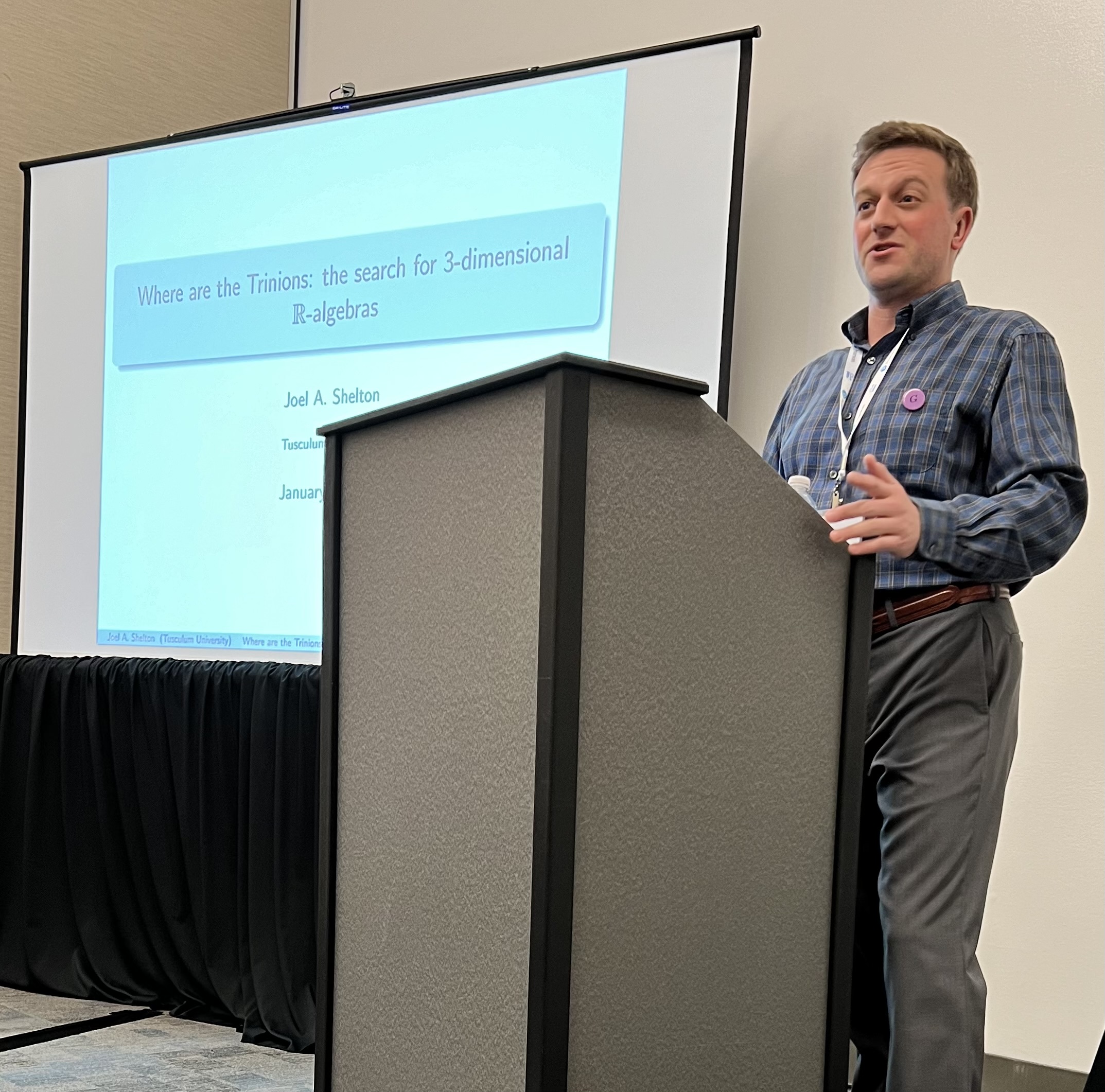
Joel Shelton is an Assistant Professor of Mathematics at Tusculum University, affiliated with the College of Math & Science and the Division of Math & Science department. He joined Tusculum in Fall 2022 and was promoted to his current rank in Spring 2024. Education B.S. in Pure Mathematics, East Tennessee State University (2013) M.S. in Applied Mathematics, East Tennessee State University (2016) Prof. Shelton’s research focuses on noncommutative algebra and the history of mathematics , with recent work exploring hypercomplex number systems and algebraic structures. His earlier research bridged applied mathematics and computer science , particularly through tensor-based Fourier analysis for image reconstruction. His publications reflect interdisciplinary trends in mathematics, spanning abstract algebraic theory and computational applications. Notable works include studies on hypercomplex numbers, R-algebras, and tensor-based image processing algorithms. Joel Shelton teaches a range of courses, from foundational subjects like college algebra to advanced topics in linear algebra and calculus. He emphasizes integrating abstract beauty with real-world problem-solving in his pedagogy.
Professor Eduardo Jose Bayro Corrochano is a faculty member at Poznań University of Technology, affiliated with the Faculty of Automation, Robotics and Electrical Engineering and the Institute of Automation and Robotics. His scientific discipline focuses entirely on Automation, electronics, electrical engineering and space technologies. His research interests center around the innovative application of geometric algebra (Clifford algebra) to solve complex problems in robotics, machine learning, and quantum computing. Professor Bayro Corrochano has demonstrated expertise in developing mathematical frameworks that bridge theoretical concepts with practical engineering applications, particularly in robot dynamics modeling and neural network architectures. Recent publications reveal a strong focus on cutting-edge intersections of mathematics and computing, with significant contributions in 2024 including a major Springer book volume, a featured article in IEEE Signal Processing Magazine, and multiple conference papers. His work shows consistent innovation in applying geometric algebra to quantum neural networks, adaptive control systems, and robot dynamics modeling. Professor Bayro Corrochano maintains active research output with multiple high-impact publications in 2024, demonstrating ongoing contributions to his fields of expertise. His email contact is eduardo.bayro@put.poznan.pl for professional inquiries.
Maxim Evgenievich Beketov is a Research Fellow at the Faculty of Computer Science of the National Research University Higher School of Economics (HSE), where he has been working since 2020. He is affiliated with the Institute of Artificial Intelligence and Digital Sciences and the International Laboratory of Stochastic Algorithms and Multidimensional Data Analysis, contributing to cutting-edge research in computational methods and artificial intelligence. His educational background includes: Master's degree (2017) in Applied Mathematics and Physics from Moscow Institute of Physics and Technology Bachelor's degree (2015) in Applied Mathematics and Physics from Moscow Institute of Physics and Technology Beketov's research spans multiple interdisciplinary fields with a strong mathematical foundation. His primary interests include topological data analysis, machine learning, mathematical and Bayesian statistics, differential geometry, and computational neuroscience. He applies these methods to problems in dimensionality reduction, variety assessment, and graph neural networks. His work bridges theoretical mathematics with practical applications in artificial intelligence and neuroscience, particularly in understanding cognitive processes through topological approaches. An analysis of his recent publications reveals a strong focus on topological methods in machine learning, with increasing emphasis on applications to neuroscience and cognitive mapping. His work demonstrates a progression from theoretical mathematical foundations toward practical implementations in spiking neural networks, traffic control systems, and music information retrieval. The interdisciplinary nature of his research connects computer science, mathematics, and neuroscience through topological approaches. His scientific achievements include: High Professional Potential Group (HSE Personnel Reserve), Category: New Researchers (2025) Beketov has been actively involved in academic teaching, offering courses including Introduction to Discrete Differential Geometry and Mathematical Analysis. His research is supported through the HSE University Basic Research Program, as acknowledged in his publications. He collaborates with researchers across multiple institutions, as evidenced by his co-authorship on papers with numerous collaborators. He is a core member of the International Laboratory of Stochastic Algorithms and Multidimensional Data Analysis, where he contributes to projects involving topological data analysis, machine learning, and computational neuroscience. His work in the laboratory focuses on developing advanced mathematical methods for analyzing complex data structures, with applications ranging from cognitive neuroscience to transportation systems.
Charles Louis Fefferman is the Herbert E. Jones, Jr. '43 University Professor of Mathematics at Princeton University, where he has held a faculty position since 1977. Previously, he served as a full professor at the University of Chicago from 1971 to 1977, becoming the youngest full professor in U.S. history at age 22. His academic journey began at the University of Maryland, College Park, where he earned his undergraduate degree at 17 before completing his PhD at Princeton under Elias Stein at age 20. Fefferman's research spans mathematical analysis with particular emphasis on harmonic analysis, partial differential equations, and complex analysis. His groundbreaking work on singular integrals, Hardy spaces, and the Bergman kernel revolutionized these fields, leading to his Fields Medal in 1978. More recently, he has made significant contributions to Whitney extension problems, fluid dynamics singularity formation, and mathematical aspects of topological materials. His publication record shows remarkable consistency over five decades, with recent work (2019-2023) focusing on manifold learning, smooth function interpolation, and quantum systems. These publications demonstrate both theoretical depth and increasing connections to data science applications, maintaining his position at the forefront of mathematical research. Fefferman's scientific honors form an exceptional constellation of recognition: Fields Medal (1978) Alan T. Waterman Award (1976, inaugural recipient) Salem Prize (1971) Bergman Prize (1992) Bôcher Memorial Prize (2008) Wolf Prize in Mathematics (2017) BBVA Foundation Frontiers of Knowledge Award (2021) As an advisor, Fefferman has mentored numerous doctoral students who have become leaders in their fields, including Matei Machedon, Luis Seco, and Michael Christ. His research group continues to explore fundamental questions in analysis while developing mathematical frameworks for emerging applications in data science and quantum physics. Fefferman remains actively engaged in research, with publications through 2023 demonstrating his continued intellectual vitality and mathematical creativity.
Michael Lambert serves as a Lecturer in the Department of Mathematics at Norwich University's College of Arts & Sciences, where he teaches undergraduate mathematics courses. His institutional affiliation is exclusively with this department within the university's primary liberal arts and sciences division, and he can be contacted via mlamber2@norwich.edu. His academic focus centers on Mathematics as a discipline, with substantive engagement in both Pure Mathematics (encompassing theoretical frameworks like algebra, analysis, and geometry) and Applied Mathematics (addressing practical implementations in statistical modeling, computational methods, and real-world problem solving). This dual emphasis reflects the department's broad curriculum spanning foundational theory and technical applications. No scientific awards, research grants, or student advising records are documented in the available faculty directory information. Similarly, there are no references to laboratory affiliations, research teams, or specialized academic initiatives beyond standard departmental teaching responsibilities.
Michael Veatch is a Professor of Mathematics at Gordon College in the School of Science, Technology and Health. Holding a Ph.D. from MIT with prior industry experience in defense logistics, he bridges theoretical operations research with practical humanitarian applications. His educational background includes: B.A. from Whitman College M.S. from Rensselaer Polytechnic Institute Ph.D. from Massachusetts Institute of Technology Dr. Veatch specializes in applying probability models and optimization techniques to humanitarian logistics and queueing networks. His research spans pandemic vaccine allocation strategies, gift-in-kind donation systems for organizations like World Vision, and airport congestion management during disaster relief operations. He investigates how faith-based values influence operational decisions in Christian relief organizations through collaborations with Wheaton College and MIT. His work uniquely integrates mathematical rigor with real-world humanitarian challenges, particularly in crisis response scenarios. Analysis of his publication record reveals a strategic evolution from theoretical queueing network research toward increasingly applied humanitarian logistics work. His recent publications demonstrate sophisticated optimization frameworks addressing urgent global health challenges like pandemic response, while maintaining strong theoretical foundations in stochastic modeling and dynamic programming. The interdisciplinary nature of his work connects mathematics, operations research, public health, and ethical decision-making. Dr. Veatch has made significant contributions through his textbook Linear and Convex Optimization: A Mathematical Approach (Wiley, 2021) designed for mathematics majors. He developed an industry-focused course through the Preparation for Industrial Careers in Mathematical Sciences program and contributes to vocational guidance for mathematics students. His active research collaborations include: International Vaccine Allocation with MIT researchers Gift-in-Kind Acceptance Strategies for World Vision Informed Compassion project on faith-based operational decisions Disaster airport scheduling using Haiti earthquake data